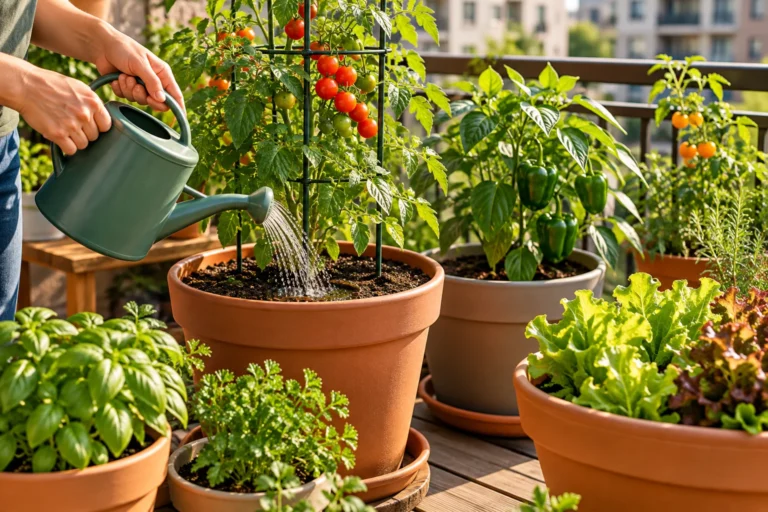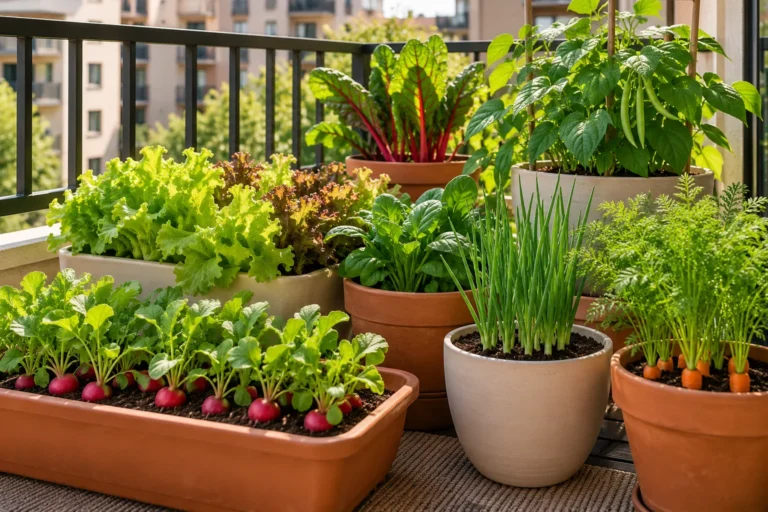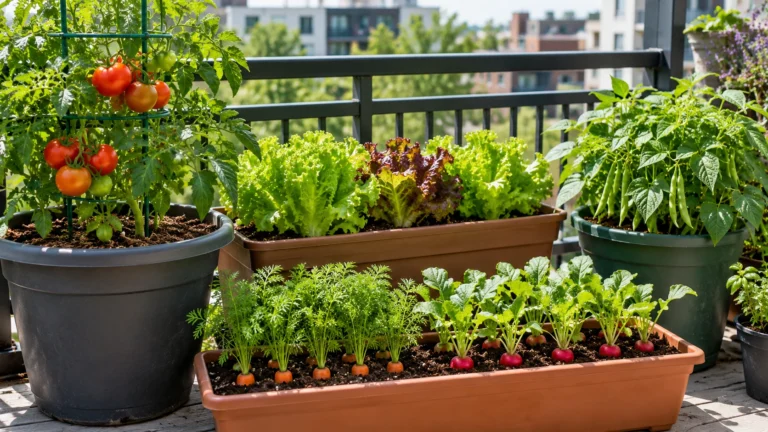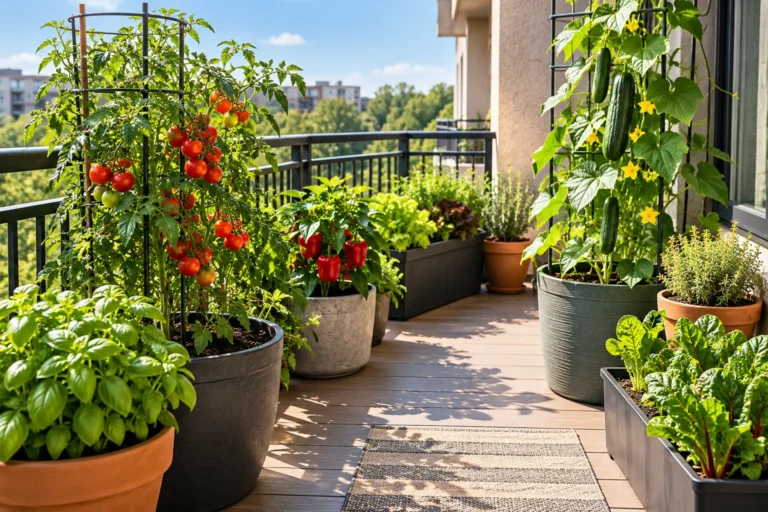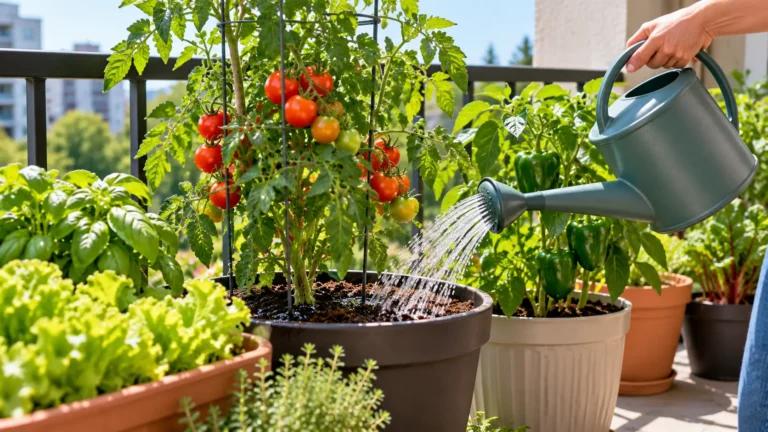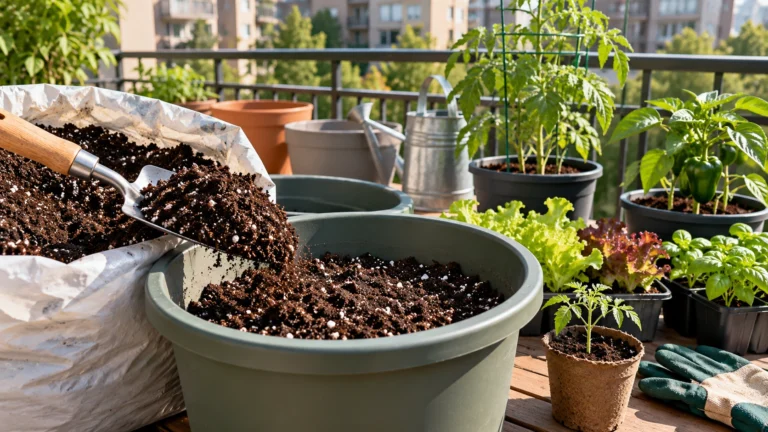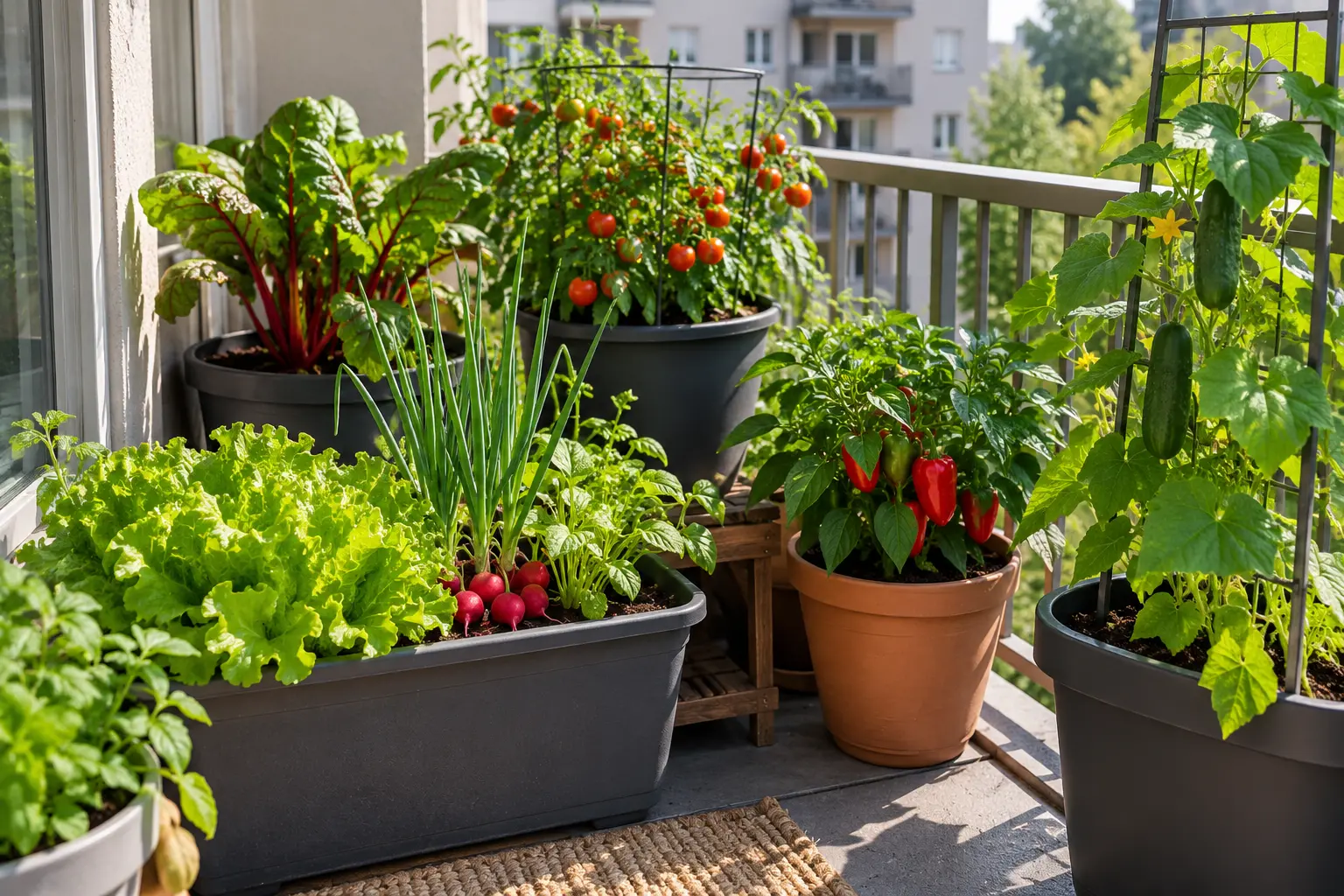
13 Best Vegetables to Grow in an Apartment for Beginners
Leaf lettuce, radishes, green onions, spinach, Swiss chard, kale, carrots, beets, bush beans, compact peppers, cherry tomatoes, bush cucumbers, and dwarf eggplant are among the most practical vegetables to grow in an apartment. Which ones make sense for you depends mainly on sunlight, container space, and the conditions you can provide.
If space is especially tight, leafy greens, radishes, and green onions are good places to start. A sunny balcony or patio gives you more options, including beans, peppers, tomatoes, cucumbers, and eggplant.
This guide focuses on choosing vegetables that fit apartment conditions. If you still need to plan containers, potting mix, drainage, watering, and general care, start with our apartment vegetable gardening beginner’s guide.
In This Guide
What Makes a Vegetable Good for Apartment Growing?
A good apartment vegetable does not have to be tiny. It needs to produce reasonably well without demanding more space, light, or support than your growing area can provide.
Space is usually the first consideration. Lettuce and radishes can fit into much smaller areas than tomatoes or cucumbers, and the mature size of a plant matters much more than its size when you first bring it home.
Virginia Tech recommends considering vegetables that use little space or produce over a longer period, including compact crops such as carrots, radishes, and lettuce, along with productive crops such as tomatoes and peppers.
The amount of direct sun you receive may narrow the choices faster than container size does. Leafy and cool-season crops tend to be more flexible, while warm-season vegetables that produce fruit generally need stronger light.
What happens below the soil is just as important. Carrots do not spread far across a balcony, for example, but they still need enough depth for their roots. Tomatoes need both adequate root room and enough space above the container for the mature plant and its support.
Variety selection can also make a large crop easier to manage. University of Maryland Extension recommends looking for bush, dwarf, or compact varieties when space is limited and notes that some tomato and cucumber varieties are specifically bred for small-space gardening.
Quick Comparison of the Best Vegetables for Apartments
| Vegetable | Light | Container Space | Support | Season | Main Consideration |
|---|---|---|---|---|---|
| Leaf lettuce | Sun to partial shade | Small | No | Cool | Heat |
| Radishes | Sun to partial shade | Small | No | Cool | Hot weather |
| Green onions | Sun to partial shade | Small | No | Cool | Consistent moisture |
| Spinach | Sun to partial shade | Small | No | Cool | Heat and bolting |
| Swiss chard | Sun to partial shade | Small–medium | No | Cool | Mature size |
| Kale | Sun to partial shade | Medium–large | No | Cool | Plant size |
| Carrots | Sun to partial shade | Medium/deep | No | Cool | Container depth |
| Beets | Sun to partial shade | Medium/deep | No | Cool | Root spacing |
| Bush beans | Full sun | Medium | Usually no | Warm | Sun and water |
| Compact peppers | Full sun | Medium–large | Sometimes | Warm | Heat and light |
| Cherry or patio tomatoes | Full sun | Large | Yes | Warm | Space and support |
| Bush or compact cucumbers | Full sun | Large | Often | Warm | Water and vines |
| Dwarf or compact eggplant | Full sun | Large | Sometimes | Warm | Heat and light |
These are practical comparisons rather than universal container-size rules. Cultivar, spacing, container shape, and mature plant size all affect how much room a vegetable needs. University of Maryland Extension recommends considering both container depth and total soil volume and notes that bush, dwarf, and compact varieties may fit into smaller containers than their full-size counterparts.
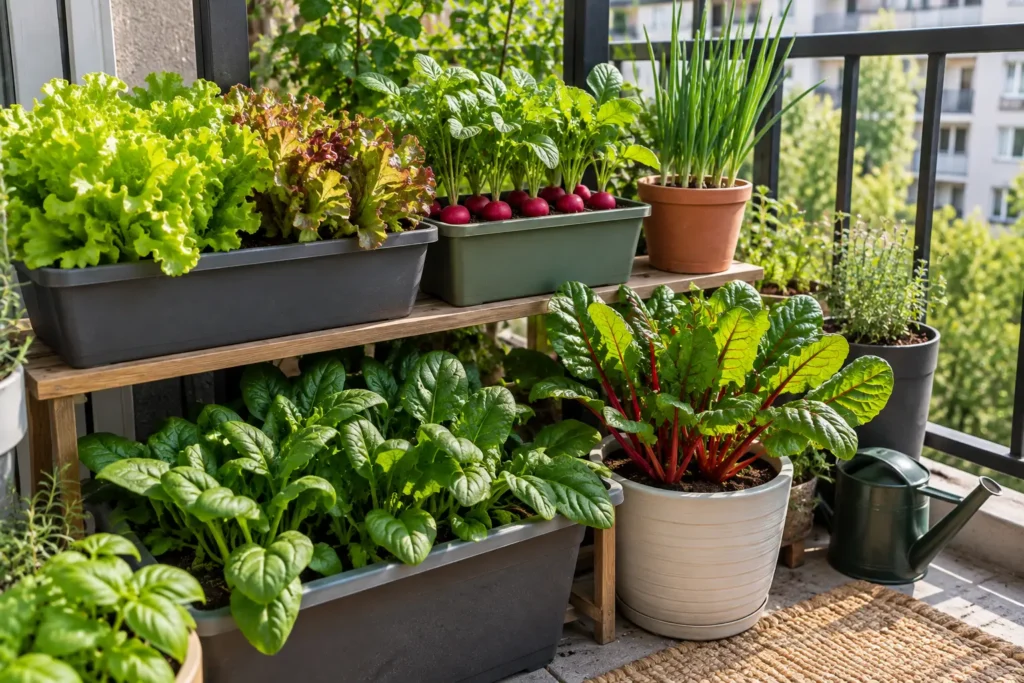
13 Best Vegetables to Grow in an Apartment
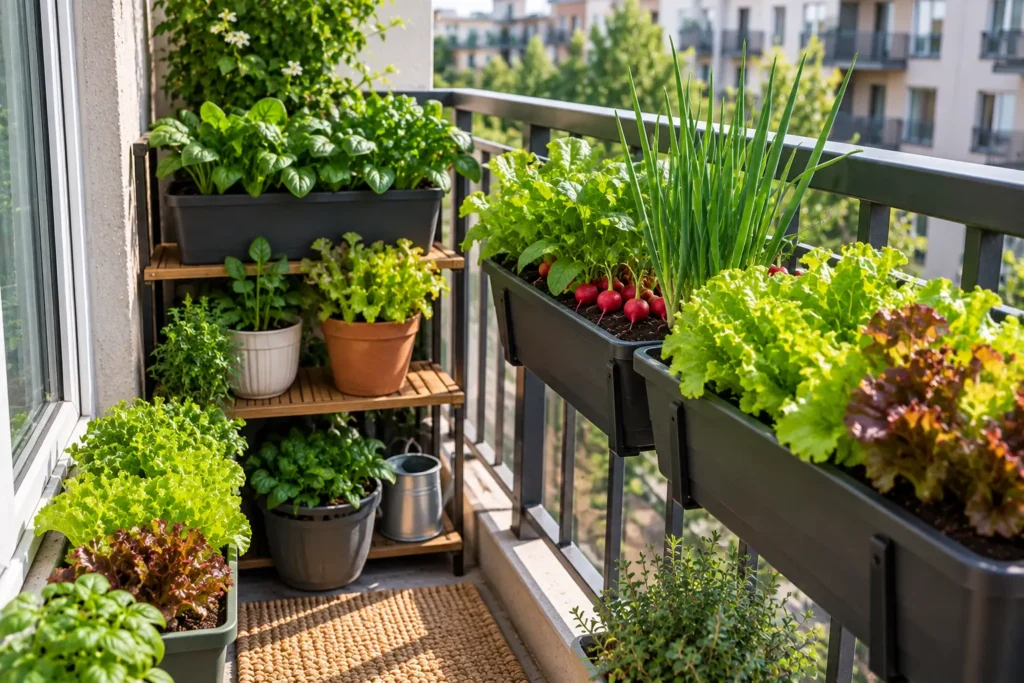
1. Leaf Lettuce
Few vegetables make better use of a small container than leaf lettuce. It stays compact, does not need staking, and can be harvested a few outer leaves at a time instead of waiting for an entire head to mature.
Lettuce is also useful when your growing area receives good light but not the long hours of intense sun demanded by fruiting vegetables. Virginia Tech includes leaf lettuce among container crops that tolerate partial shade.
Its modest size makes lettuce useful in window boxes, railing planters, shallow growing boxes, and other places where a large pot would be inconvenient.
Heat is the bigger concern. Lettuce is a cool-season crop, and hot conditions can cause plants to bolt and reduce leaf quality.
2. Radishes
If you want a quick crop without giving up much floor space, radishes deserve a spot near the top of the list.
The plants stay small above the soil and do not require a trellis, cage, or stake. A wide container can hold several radish plants while occupying far less space than a large tomato setup.
Colorado State University Extension includes radishes in its container gardening guidance for radishes and other vegetables and recommends about 8 inches of container depth for radishes.
Radishes prefer cooler growing conditions. Hot weather can reduce root quality or push the plant toward flowering instead of producing the crisp root you want.
3. Green Onions or Scallions
Green onions grow upward rather than outward, which makes them especially useful when every inch counts.
Their narrow leaves allow several plants to fit into a modest planter, and they do not need the deep, wide container required by many larger vegetables. They also avoid the space demands of growing full-size storage onions.
A narrow balcony planter or window box can often accommodate scallions without crowding everything around them.
They do appreciate steady moisture. Because small containers dry more quickly than large ones, pay attention to the potting mix rather than assuming a small crop needs very little water.
4. Spinach
Spinach is often a better match than tomatoes or peppers when your growing area gets good light but not long periods of direct sun.
It stays compact, requires no support, and can grow in relatively modest containers. Like lettuce, it can also be harvested while the leaves are young instead of waiting for the plant to reach maximum size.
Spinach is a cool-season vegetable, so its biggest challenge is heat. Once temperatures rise, plants can bolt quickly and leaf quality can decline.
For an apartment grower with limited space and moderate light, that tradeoff can still be much easier to manage than the needs of a large fruiting crop.
5. Swiss Chard
Swiss chard earns its space by producing leaves over an extended period instead of giving you a single harvest.
The plant eventually becomes larger than lettuce or spinach, but it still adapts well to containers. Harvesting outer leaves allows the center to continue growing, which makes one healthy plant useful for a relatively small garden.
Maryland’s current container guide lists Swiss chard among crops suited to containers and gives it more container volume than leaf lettuce, which reflects the difference in mature plant size.
Plan for that mature size from the beginning. A chard plant that looks small early in the season can eventually occupy much more room than a young lettuce plant.
6. Kale
Kale is another leafy vegetable that can provide repeated harvests from one container.
It tolerates cool conditions, requires no trellis, and allows you to harvest individual leaves while the rest of the plant continues growing.
The tradeoff is size. A mature kale plant can become substantial, so it makes more sense in its own medium or large container than crowded into a small window box.
If every inch of space matters, lettuce or spinach gives you more flexibility. If you have room for one larger leafy plant, kale becomes a practical alternative.
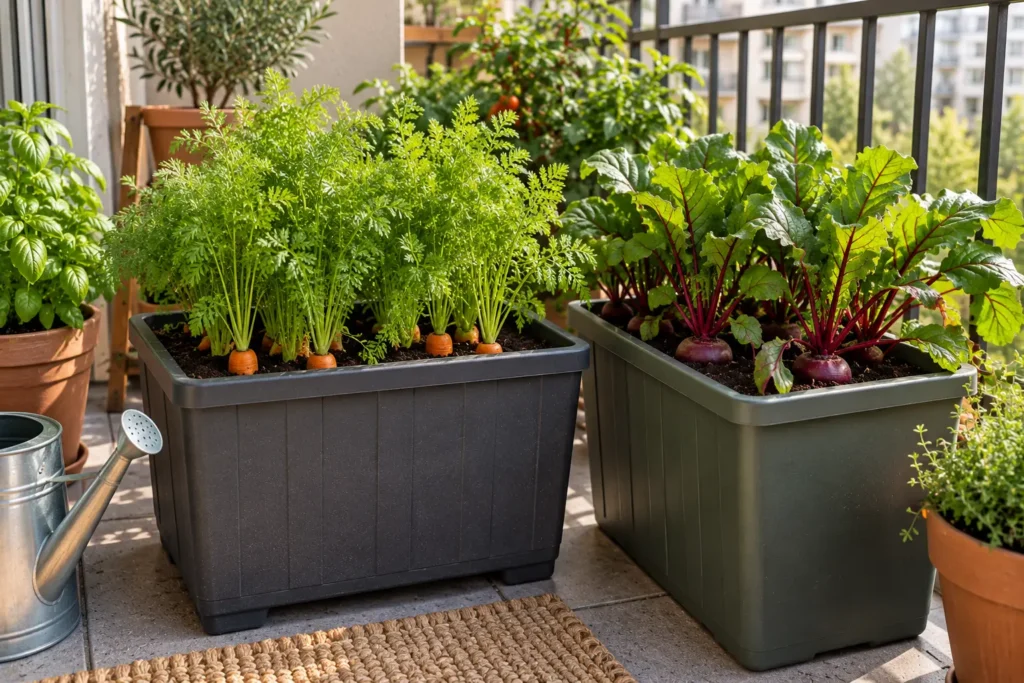
7. Carrots
Carrots do not need much horizontal room, but they do need enough space below the soil.
That makes container depth more important than the amount of balcony floor the plant occupies. Shorter-rooted carrot varieties can be especially useful because they are easier to accommodate in a container than long-rooted types.
NC State Extension provides crop-specific guidance for vegetables grown in containers, including information for choosing containers based on the needs of the plants being grown.
Crowding is easy to underestimate with carrots. The foliage looks narrow above the soil, but the developing roots still need enough room to grow without competing heavily with neighboring plants.
8. Beets
Beets give an apartment gardener two edible parts from one crop: the roots and the greens.
They remain much more compact than most fruiting vegetables and do not need any type of support. Their upright leaves also make them relatively easy to fit among other containers.
Maryland Extension’s current container-size table lists beets at a much smaller minimum volume than cucumbers, eggplant, peppers, or standard tomatoes.
Like carrots, beets need enough room below the soil. Plants may look healthy above ground even when overcrowding is limiting root development.
9. Bush Beans
Bush beans are a practical choice when you want beans without adding a tall trellis.
Unlike pole beans, bush varieties stay comparatively compact and can produce well without sending long vines up a large support. That makes them easier to fit into an apartment growing area where vertical structures are inconvenient.
Colorado State’s container vegetable recommendations include bush beans as an option for containers. Bush beans are warm-season crops and are best suited to a sunny location.
The main limitation is light. Beans need considerably stronger sun than lettuce, spinach, or other leafy vegetables, so a heavily shaded balcony is not an ideal location.
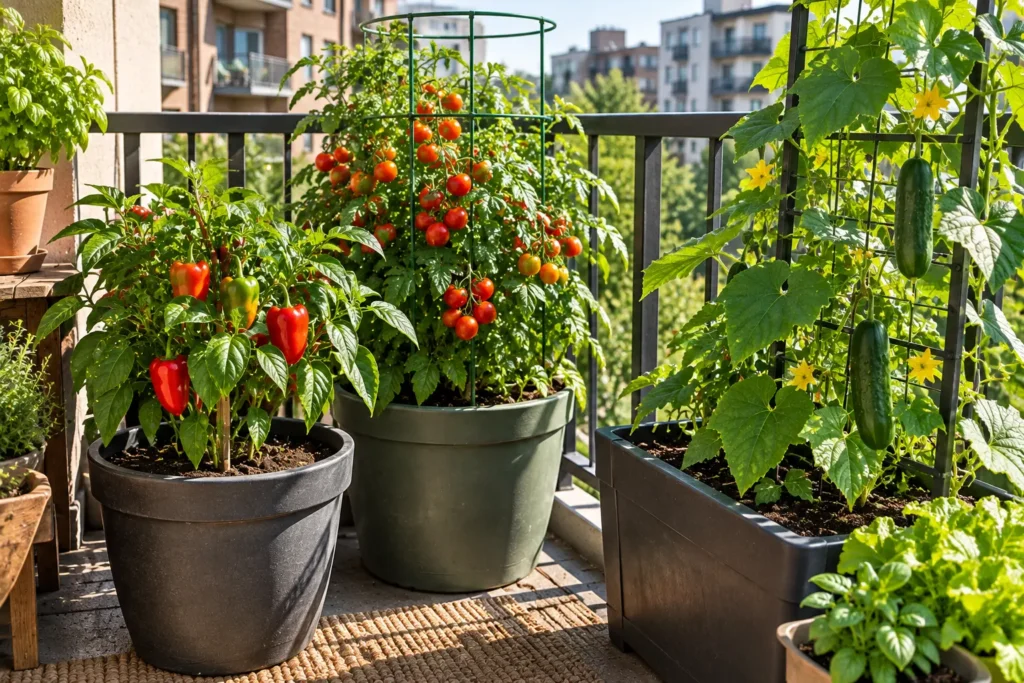
10. Compact Peppers
Peppers are one of the more apartment-friendly fruiting vegetables because the plants grow mostly upward and can produce repeatedly from one container.
Compact varieties make especially good sense when floor space is limited. They require more root room than leafy greens, but they do not spread across the growing area the way a long cucumber vine can.
University of Maryland Extension includes peppers among the common vegetables grown in containers and currently lists a 5-gallon minimum container volume for peppers.
That figure is best treated as guidance rather than a universal rule for every cultivar. A larger container gives roots more room and usually provides a larger moisture reserve than a very small pot.
A compact pepper plant may remain upright on its own, but one carrying a heavy crop can benefit from a stake or other light support.
Peppers also need warmth and strong sunlight, making them much better candidates for a sunny exposure than a dim corner.
11. Cherry or Patio Tomatoes
Tomatoes are popular container vegetables, but the word tomato covers plants with very different growth habits.
For apartment gardening, cherry, patio, dwarf, and other compact cultivars are generally easier to manage than large sprawling plants. Illinois Extension discusses growing tomatoes and other vegetables in containers, including the use of staking and caging when plants need support.
A sturdy cage or stake helps keep the plant contained and can prevent stems from spreading into neighboring plants or walking areas.
Container size matters too. Maryland currently lists a 2-gallon minimum for cherry tomatoes and 5 gallons for standard tomatoes, while also showing that larger tomato plants can grow and produce more in larger containers.
That is why the smallest listed minimum should not automatically become your target pot size. Match the container to the mature cultivar you plan to grow.
Tomatoes can be rewarding in a sunny apartment garden, but they ask for more light, root room, consistent watering, and support than the leafy vegetables near the beginning of this list.
12. Bush or Compact Cucumbers
Cucumbers can work surprisingly well in an apartment garden when you control where the vines go.
Bush varieties reduce the sprawling growth associated with traditional cucumbers. A compact vining variety can also be trained upward on a trellis, using vertical space instead of allowing the plant to spread across the balcony floor.
University of Maryland Extension lists cucumbers among popular container vegetables, recommends looking for small-space varieties, and currently gives cucumbers a 5-gallon minimum container volume.
That extra soil volume is useful because cucumbers grow quickly and can use water rapidly during warm weather.
They require more planning than lettuce, radishes, or green onions, but a sunny balcony with usable vertical space can make a compact cucumber worthwhile.
13. Dwarf or Compact Eggplant
Eggplant asks more of you than lettuce, radishes, or leafy greens, but a compact variety can still work well in a sunny apartment growing space.
The plant grows mostly upright and can be kept to one substantial container rather than spreading over a large area. University of Maryland Extension includes eggplant among popular container crops and recommends looking for bush or dwarf varieties when garden space is limited.
Eggplant needs a generous root zone, warmth, and strong sunlight. Maryland’s current guide lists a 5-gallon minimum container volume for eggplant.
A plant carrying several fruits may also benefit from support.
If you have a hot, sunny balcony, compact eggplant can make good use of one container. In a shaded growing area, the leafy vegetables on this list are more realistic choices.
Which Vegetables Need the Least Space?
If floor space is your biggest limitation, start with vegetables that stay compact both above and below the soil.
The smallest-footprint choices include:
- leaf lettuce
- radishes
- green onions
- spinach
These crops fit into smaller growing areas and do not require cages or large trellises.
If you have a little more room, Swiss chard, carrots, beets, and kale become practical options. They are still manageable, but they need either more root depth or additional room as they mature.
Reserve more space for peppers, tomatoes, cucumbers, and eggplant. Bush beans fall somewhere between the two groups.
Think about the mature plant rather than the seedling. A young tomato in a nursery pot may look like it will fit anywhere, but the mature plant, its container, and its support can occupy a meaningful portion of a small balcony.
Best Vegetables Based on How Much Sun You Have
Available sunlight can narrow your choices before container size does.
University of Maryland Extension’s container vegetable guide notes that southern and western exposures tend to be sunnier and warmer, while northern and eastern exposures are generally shadier and cooler. Containers can also be moved to adjust light exposure when the space allows.
If you’re not sure how much direct sunlight your growing space receives, our guide to how much sun a balcony garden needs explains how to measure balcony sunlight and what you can grow with different amounts of direct sun.
If You Have Less Direct Sun
Start by considering:
- leaf lettuce
- spinach
- radishes
- Swiss chard
- kale
- green onions
These crops generally give you more flexibility than tomatoes, peppers, cucumbers, eggplant, or beans when direct sunlight is limited.
Partial shade does not mean darkness. Vegetables still need usable light for healthy growth.
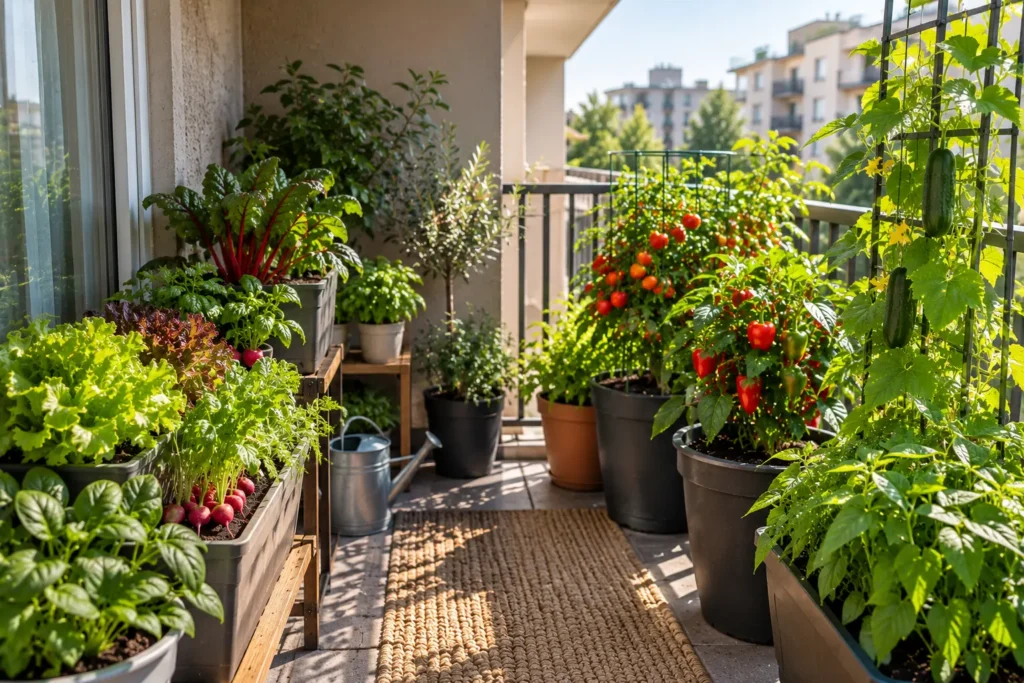
If You Have a Sunny Balcony or Patio
Your options expand to include:
- bush beans
- compact peppers
- cherry or patio tomatoes
- bush cucumbers
- dwarf eggplant
These warm-season vegetables are better suited to locations that receive strong direct sunlight.
If your main growing area is outdoors, our apartment balcony gardening guide covers the broader challenges of gardening on a balcony, including light, wind, containers, and limited space.
If vegetables are your main goal, our apartment balcony vegetable garden guide walks through planning the entire setup, including sunlight, crop selection, container placement, watering, wind, heat, and runoff.
Which Vegetables Are Easiest for Beginners?
If you are looking for the easiest vegetables to grow in an apartment, start with crops that stay compact and do not require large containers, cages, or trellises.
Five especially practical choices are:
- leaf lettuce
- radishes
- green onions
- spinach
- Swiss chard
They are not foolproof. Light, temperature, spacing, and watering still matter.
What makes these vegetables approachable is the relatively small amount of space and equipment they require. Starting with two or three crops that match your conditions is usually more manageable than filling a balcony with large fruiting plants at once.
Can You Grow These Vegetables Indoors?
Some vegetables on this list are physically small enough to fit inside an apartment, but being container-friendly does not automatically make a vegetable windowsill-friendly.
Light is often the limiting factor indoors.
Leafy crops such as lettuce and spinach are generally easier to accommodate than tomatoes, peppers, cucumbers, or eggplant, but they still need enough usable light to grow well. Fruiting vegetables typically place much greater demands on the growing environment.
An indoor vegetable garden also has to account for available light, temperature, growing space, and the needs of each crop.
For now, this article stays focused on choosing vegetables. A dedicated indoor vegetable gardening guide will cover the indoor-specific growing requirements in detail.
Frequently Asked Questions About Growing Vegetables in an Apartment
Can You Grow Vegetables in an Apartment Without a Balcony?
Yes. Some vegetables can be grown indoors if you can provide enough usable light and appropriate growing conditions.
Leafy vegetables are generally easier to accommodate than large fruiting crops, but whether a vegetable fits in a pot is only part of the equation. The light available inside the apartment still has to meet the needs of the plant.
A bright window may work for some crops and situations, while other vegetables may need supplemental lighting.
What Vegetables Grow Well in Small Containers?
Leaf lettuce, radishes, green onions, and spinach are among the most space-efficient choices on this list.
Carrots and beets can also work in compact growing areas, but container depth becomes more important because their edible roots develop below the soil.
Tomatoes, cucumbers, eggplant, and larger pepper plants need considerably more soil volume and above-ground room.
Can You Grow Tomatoes in an Apartment?
Yes, particularly if you have a sunny balcony, patio, or another growing area with strong light.
Cherry, patio, dwarf, and other compact tomato varieties are usually easier to manage in limited spaces than large sprawling plants. They still need adequate root space, consistent moisture, and appropriate support.
Final Thoughts on Choosing Vegetables for an Apartment
Start with the conditions you actually have. Lettuce, radishes, green onions, and spinach are easier to fit into tight spaces, while beans, peppers, tomatoes, cucumbers, and eggplant make more sense when you have strong sunlight and room for larger containers.
Choosing two or three vegetables that genuinely fit your space is better than trying to grow every crop at once. Once you know what you want to grow, containers, potting mix, drainage, watering, and ongoing care become the next decisions.