Indoor Vegetable Garden: How to Grow Vegetables in an Apartment
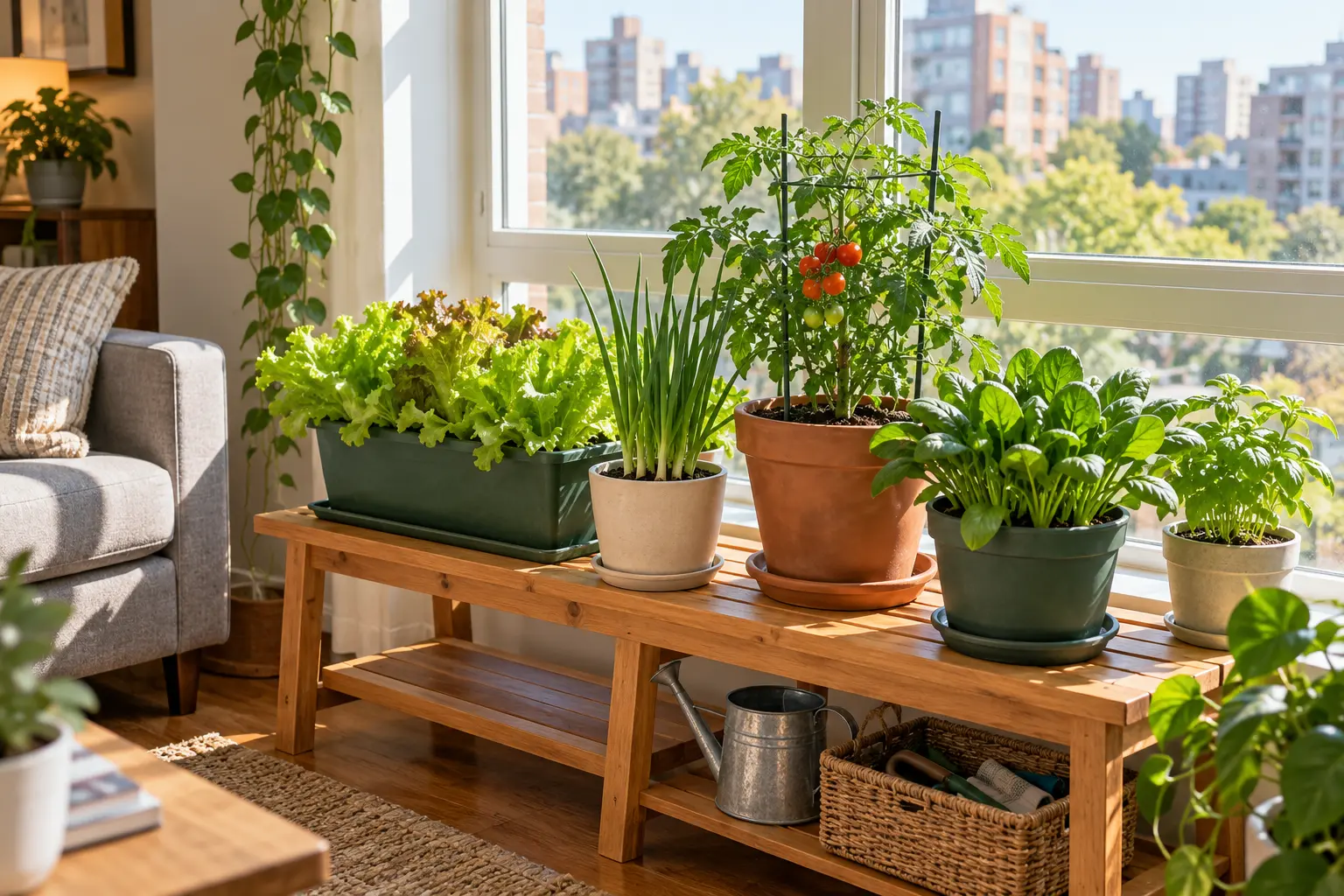
An indoor vegetable garden can work in an apartment, but the amount of usable light you have will determine what you can realistically grow. Leafy vegetables can fit into relatively modest setups, while tomatoes, peppers, and other fruiting crops usually require stronger light, larger containers, and more room.
You also need to account for drainage, root space, temperature, airflow, and how easily you can water and maintain the plants in your living space. The best setup is not the biggest one. It is the one that matches the conditions you can consistently provide.
If you are still deciding whether to grow vegetables indoors, on a balcony, or on a patio, our broader guide to apartment vegetable gardening explains the main growing options and setup considerations.
This guide focuses specifically on growing vegetables inside an apartment using containers, windows, shelves, and supplemental light when natural light is not enough.
In This Guide
Can You Grow Vegetables Indoors in an Apartment?
Yes, but indoor growing removes several things vegetables normally receive outdoors without much help from you.
Outside, plants may receive intense sunlight, rain, natural air movement, and access to pollinating insects. Indoors, you have to provide or compensate for some of those conditions yourself.
Light is usually the first limitation to evaluate. Iowa State University Extension explains that light is often one of the limiting factors for indoor plant growth. A room that looks bright to you may still provide much less usable light than an outdoor garden.
Root space matters too. A vegetable growing in a container can only use the soil volume available to it, and excess water needs somewhere to drain. Temperature and airflow can also vary from one part of an apartment to another.
That does not mean you need a complicated indoor growing room. A few well-chosen vegetables may fit beside a bright window or on a small shelf. The key is choosing crops that match what that particular space can support.
Which Vegetables Are Most Practical to Grow Indoors?
Some vegetables are easier to accommodate indoors than others.
Compact leafy vegetables are often more manageable because they do not need to flower and set fruit before you can harvest them. Fruiting vegetables can also grow indoors, but they usually place greater demands on light, container size, space, support, and pollination.
Here is a practical starting comparison:
| Vegetable | Relative indoor difficulty | Main consideration |
|---|---|---|
| Leaf lettuce | Lower | Light and consistent moisture |
| Spinach | Lower to moderate | Light and temperature |
| Green onions | Lower | Small growing footprint |
| Radishes | Moderate | Root depth and spacing |
| Compact peppers | Higher | Strong light and time |
| Compact tomatoes | Higher | Strong light, support, and pollination |
Illinois Extension lists vegetables such as lettuce, spinach, chard, radishes, carrots, peppers, tomatoes, beans, and cucumbers among crops that can be grown in containers. Mature plant size and cultivar still matter, especially when you are working with limited indoor space.
If you are still deciding what to plant, our guide to the best vegetables to grow in an apartment compares individual crops by light, container space, support needs, and overall apartment suitability.
Start With the Light You Actually Have
Before buying containers or planting seeds, look closely at the location where the vegetables will actually grow.
Indoor light is easy to overestimate. A room may feel bright enough for everyday living while still providing less light than a vegetable crop needs.
Check Your Window Light
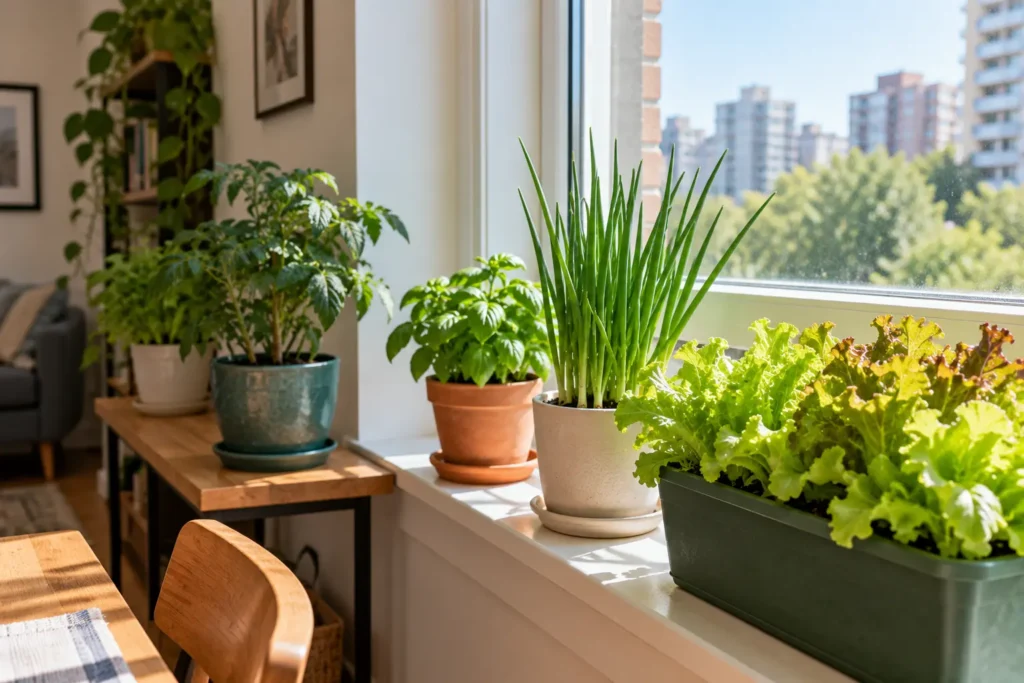
The amount of usable light indoors depends on more than the direction your window faces. Season, nearby buildings, trees, overhangs, and the distance between the plant and the glass can all change the growing conditions.
A plant positioned close to a bright window can receive substantially more usable light than one sitting several feet farther into the room.
Watch how light moves through the space during the day rather than assuming a particular room is automatically suitable. Seasonal changes matter as well. A location that works well during one part of the year may provide less light during another.
Leafy and Fruiting Vegetables Have Different Demands
The type of vegetable you want to grow affects how demanding the lighting setup becomes.
With lettuce or spinach, you are primarily growing leaves. Tomatoes and peppers must produce leaves and stems, flower, and then develop fruit.
That makes adequate light especially important for fruiting vegetables.
Leafy crops still need good light. The difference is that a fruiting crop usually has more work to do before it produces the part you want to harvest.
Know When Supplemental Light May Be Necessary
If your windows do not provide enough usable light, supplemental lighting can make additional indoor locations practical.
Indoor lighting is not simply a matter of putting any lamp above a plant. Iowa State University Extension explains that light intensity, duration, and light quality all affect indoor plant growth. Fixture type and distance from the leaves also affect how much usable light reaches the plant.
A timer can help provide a consistent routine, but there is no single fixture height or lighting schedule that is correct for every vegetable and every grow light.
If your windows are not providing enough light, our guide to grow lights for indoor plants explains the lighting options and how to choose a setup for a small indoor growing area.
Choose the Best Place for Your Indoor Vegetable Garden
Once you understand your available light, decide where the garden will actually fit into daily apartment life.
A container fitting into a space is only part of the decision. You also need enough room for the plant to mature, a way to water it without damaging nearby surfaces, and enough access to inspect and maintain it.
Windowsills
A bright windowsill can work well for smaller containers when the sill is wide and stable enough to support them.
Check how much direct light reaches the area and make sure mature leaves will have room to grow without being pressed against the glass.
Also consider temperature. Glass can become cold in winter or hot under intense sun, so watch how the plants respond rather than assuming every windowsill provides the same conditions.
Use a waterproof tray or saucer to protect the surface beneath the container.
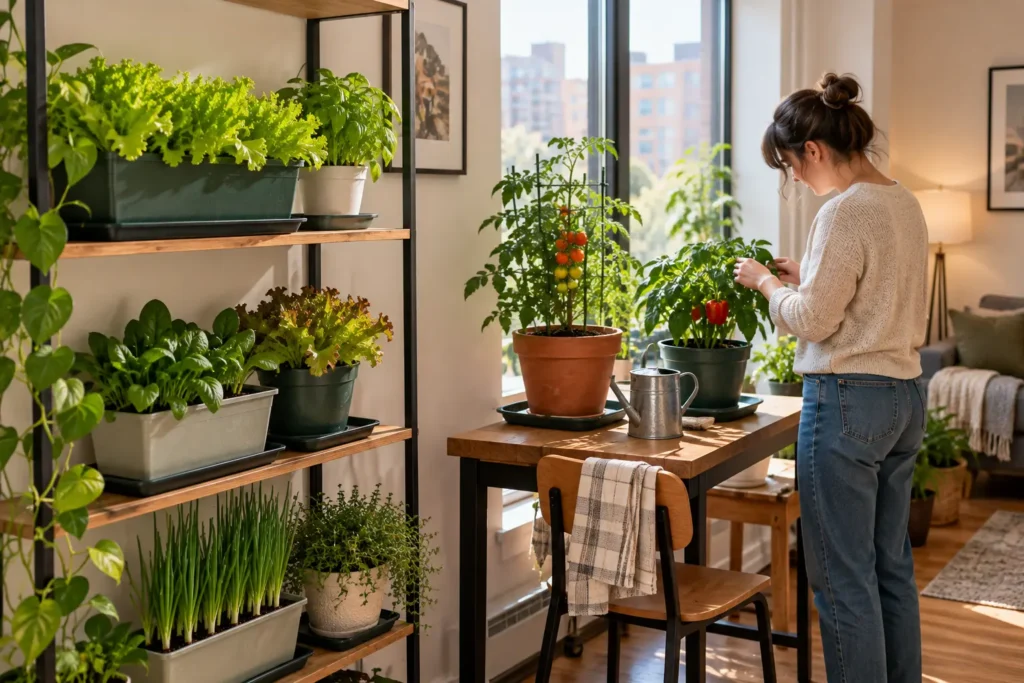
Shelves
Shelves can make good use of vertical space in a small apartment, especially for compact crops or a supplemental-light setup.
Before planting, check the vertical clearance between shelves. Seedlings may fit easily at first and then become crowded as they mature.
Ask yourself whether the shelf will still work when the plant reaches full size, not just whether the starter pot fits today.
A Dedicated Table or Growing Area
A small table, stand, or dedicated corner can provide more flexibility for larger containers and multiple plants.
Choose a location you can water and inspect easily without moving other household items every time. If you use supplemental lights, make sure you have enough room to position them safely as the plants grow.
Drainage water also needs to be considered from the beginning. Utah State University Extension recommends protecting floors and furniture from irrigation water when selecting an indoor growing location.
A growing area that is easy to reach and maintain is more useful than one that technically fits but becomes inconvenient every time you need to water.
Choose Containers That Fit the Crop
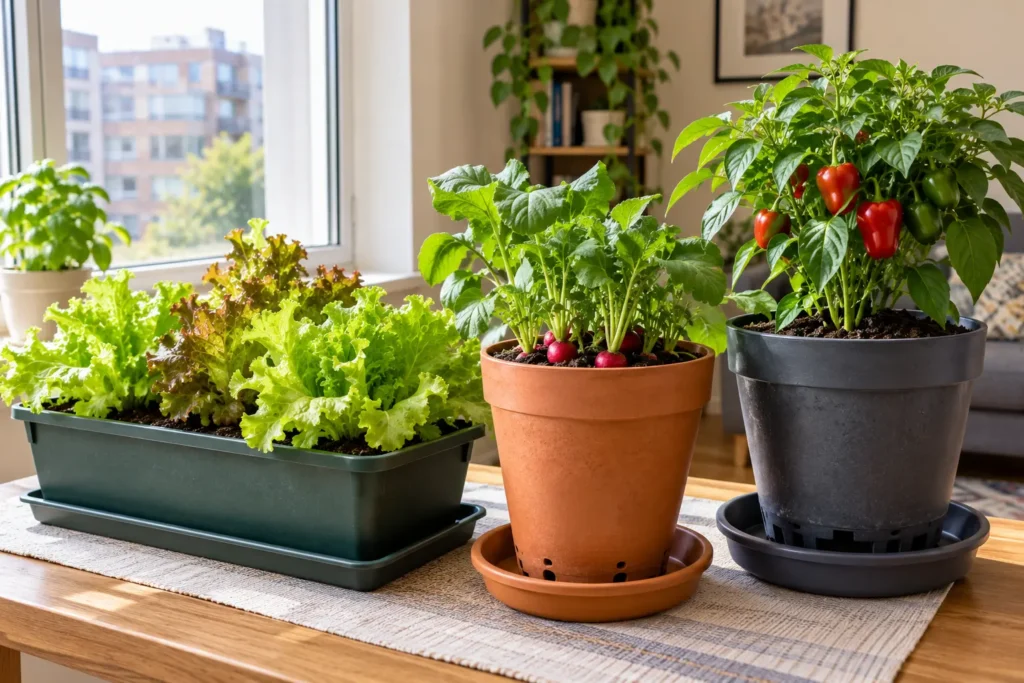
Choose containers for the mature plant rather than the seedling you are planting today.
Both depth and overall container volume matter because different vegetables develop different root systems and mature sizes. Illinois Extension notes that container diameter and depth should be matched to the vegetables being grown.
Drainage is just as important as size.
Use containers with drainage holes so excess water can leave the root zone. Indoors, place a suitable tray or saucer underneath to protect floors, furniture, shelves, and windowsills.
Do not allow the pot to remain sitting in collected drainage water for long periods.
Container size also affects how much living space the garden takes up. A crop that needs a large pot may be perfectly possible to grow indoors but still be impractical in a narrow window or small shelf area.
Think about both the plant and the apartment before choosing the container.
Use a Potting Mix Made for Containers
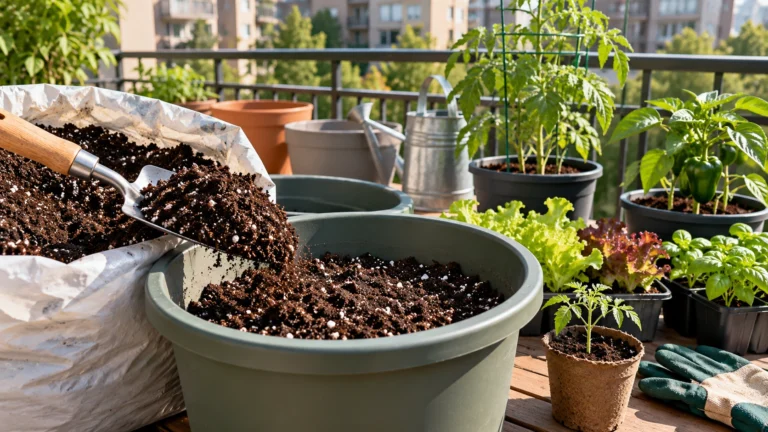
Fill indoor vegetable containers with a growing medium intended for container use rather than ordinary soil dug from outside.
Container potting mixes are designed to hold moisture while still allowing drainage and air around the roots. Ordinary garden soil can become dense when confined to a pot, making it less suitable for container growing.
Leave enough room near the top of the container to water without immediately washing potting mix over the edge.
Check the potting-mix label as well. Some mixes already contain fertilizer, while others contain little or none. That information will matter later when you decide whether the vegetables need additional feeding.
How to Plant an Indoor Vegetable Garden
Once you have chosen the location, crop, and container, planting can stay fairly simple.
1. Prepare the Container
Make sure the pot has adequate drainage and is sitting on a tray or another protected surface.
Fill it with container potting mix, leaving some space below the rim for watering.
2. Plant Seeds or Transplants
Follow the seed packet or cultivar instructions for planting depth and spacing.
Vegetables do not all have the same planting requirements, so avoid using one depth or spacing rule for every crop.
Some vegetables can be started directly in their final container, while others may be transplanted. Follow crop-specific instructions rather than assuming every vegetable should be started the same way.
3. Give the Plants Enough Room
Indoor space is limited, but crowding more plants into one container does not necessarily produce a better harvest.
Think about mature size and thin seedlings when needed. Leaves need room to develop, and larger vegetables may eventually require support.
4. Place the Container in Its Growing Location
Move the planted container into the light and growing environment you evaluated earlier.
As the vegetables mature, continue checking whether the location still provides enough light and physical space. A setup that works for seedlings can become crowded later.
Watering Vegetables Indoors
Indoor vegetables should not be watered according to a rigid calendar.
A container under strong light may dry faster than one in a cooler or dimmer location. Container size, plant size, temperature, air movement, and the growing medium all affect how quickly water is used.
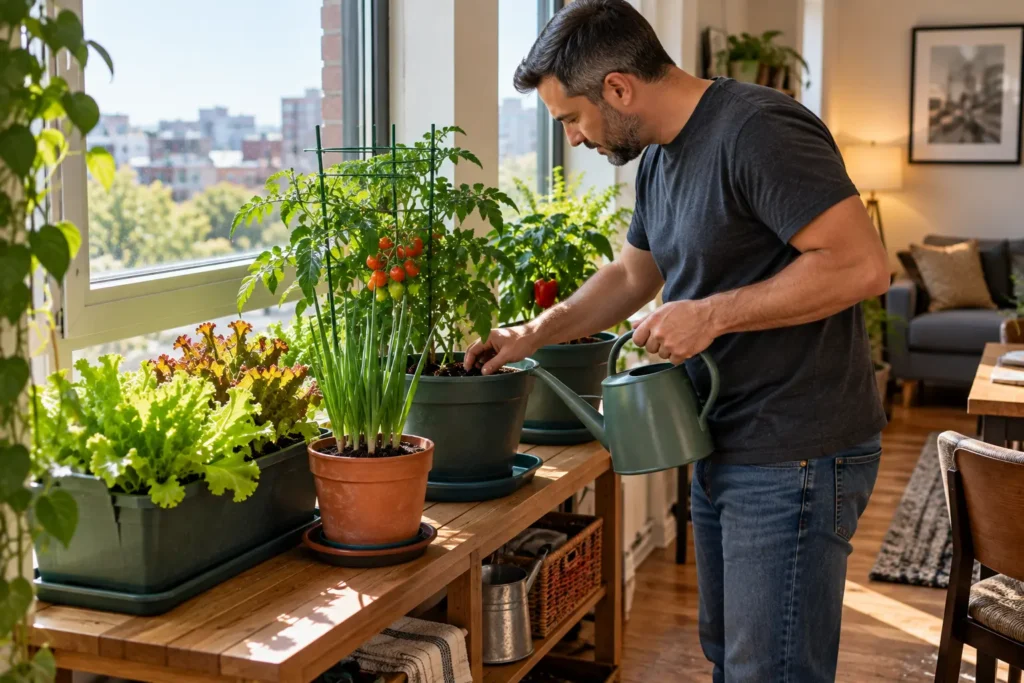
Check the growing mix before watering rather than automatically adding water because a certain number of days have passed.
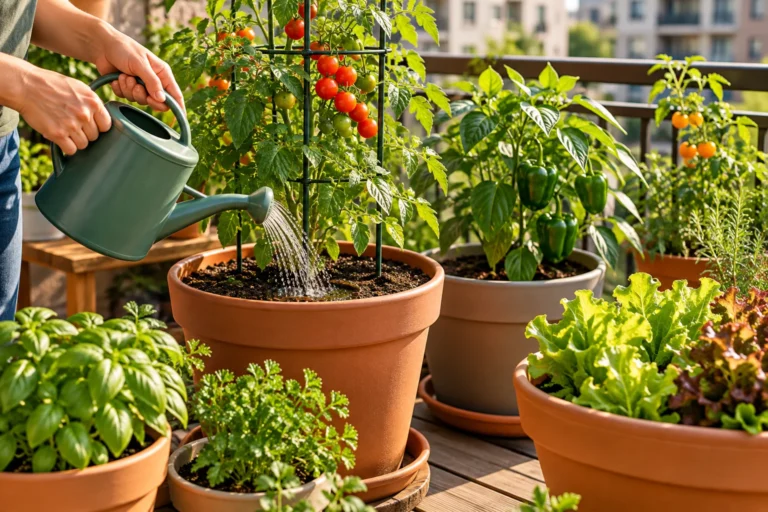
When watering is needed, apply enough to moisten the root zone while allowing excess water to drain. Empty collected drainage water rather than letting the pot sit in it indefinitely.
Persistent waterlogging can create poor root conditions, while repeatedly allowing a vegetable to become severely dry can also stress the plant.
The goal is to maintain moisture appropriate for the crop while still allowing the root zone to drain and remain aerated.
Feeding Vegetables Growing in Containers
Vegetables grown in containers have access only to the nutrients available in their growing medium and any fertilizer you provide.
Start by checking the potting-mix label. Some products contain fertilizer intended to support plants for a period of time, while others do not.
If additional fertilizer is needed, follow the product label and crop-specific recommendations rather than using one feeding schedule for every vegetable.
More fertilizer is not necessarily better. Excess fertilizer can damage plants, and it cannot compensate for inadequate light, poor drainage, or too little root space.
If a vegetable is not growing well, look at the entire growing environment before assuming fertilizer is the solution.
Temperature and Airflow Matter Indoors
Indoor temperatures usually fluctuate less than outdoor temperatures, but conditions can still vary considerably within an apartment.
The temperature beside a winter window may be very different from the temperature near a heating vent or several feet into the room.
Avoid Temperature Extremes
Cool-season and warm-season vegetables do not have identical temperature preferences.
Rather than looking for one perfect indoor temperature, follow the requirements of the crop you are growing.
Pay attention to local temperature extremes as well. Cold glass, heating vents, radiators, and air-conditioning vents can create conditions that are different from the rest of the room.
Give Plants Room for Air Movement
Crowded plants can reduce air movement around leaves and keep the growing area damp for longer periods.
You do not need strong air blowing directly on vegetables all day. Start by avoiding overcrowding and stagnant growing conditions.
If additional circulation is needed, gentle air movement is preferable to a strong fan constantly drying the plants and potting mix.
Do Indoor Vegetables Need Pollination?
It depends on what part of the plant you are growing to harvest.
Leaf and Root Crops
If you are growing lettuce for leaves or radishes for roots, fruit production is not the objective.
Pollination is therefore not required to produce the portion of those crops that you normally harvest.
This removes one potential challenge that comes with some fruiting vegetables grown indoors.
Tomatoes and Other Fruiting Vegetables
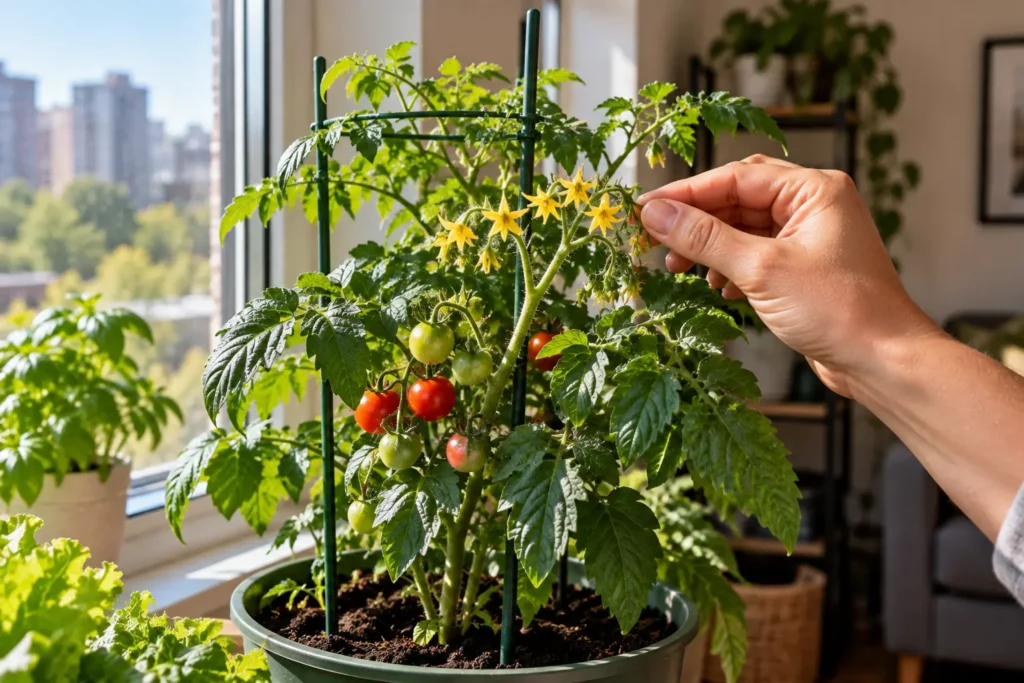
Tomato flowers are self-pollinating, but pollen still has to move within the flower for successful fruit set.
University of Missouri Extension explains that tomato flowers are self-pollinating and that vibration can help release pollen. Outdoors, wind and other natural movement can provide that disturbance. Inside an apartment, there may be much less movement around the flowers.
Gentle vibration or lightly tapping the flowering structure can help move pollen when necessary.
Do not automatically apply the same method to every fruiting vegetable.
Cucumber pollination requirements, for example, can vary by cultivar. Check the seed packet or cultivar information to determine what the specific plant requires rather than assuming every cucumber behaves the same way.
Common Indoor Vegetable Garden Problems
Indoor vegetables can show similar symptoms for different reasons. Use the symptom as a starting point for investigation rather than assuming one problem has one guaranteed cause.
| What you notice | What to investigate |
|---|---|
| Long, weak, or stretched growth | Insufficient usable light |
| Growing mix stays wet for a long time | Drainage, container size, and watering frequency |
| Plants wilt repeatedly | Moisture, root space, heat, and light conditions |
| Flowers appear but fruit does not develop | Light, temperature, and pollination |
| Mold, fungal growth, or persistently damp conditions | Moisture and air circulation |
| Slow or pale growth | Light, moisture, and nutrition |
Start with the most obvious mismatch between the vegetable’s needs and its growing environment. Change one likely factor at a time when possible so you can better judge whether the adjustment helped.
What About Growing Vegetables Hydroponically?
Soil-filled containers are not the only option for growing vegetables inside an apartment.
Hydroponic systems grow plants without traditional potting mix and can work well for certain indoor crops. The method also brings different considerations, including nutrient solutions, water management, and the type of system being used.
Because those requirements are different from soil-based container gardening, we cover them separately in our indoor hydroponic garden beginner’s guide.
Frequently Asked Questions About Indoor Vegetable Gardens
Can You Grow Vegetables Indoors Without a Sunny Window?
Yes, if you can provide enough usable light another way.
A bright room is not automatically bright enough for vegetable production. If natural window light is inadequate, supplemental lighting may be necessary.
The amount of light required depends on the crop and the growing setup.
What Vegetables Are Easiest to Grow Indoors?
Compact leafy crops such as leaf lettuce and spinach are often practical starting choices because you can harvest them without waiting for flowers and fruit to develop.
Green onions can also fit into relatively small growing spaces.
No vegetable is completely effortless indoors. Even compact crops still need appropriate light, moisture, root space, and temperature.
Can You Grow Tomatoes Indoors?
Yes, but tomatoes are more demanding indoors than many leafy vegetables.
They need strong usable light, adequate root space, enough room for the mature plant, support, and suitable conditions for flowering and fruit set.
Compact or patio-type cultivars can make the plant’s size easier to manage, but they still need adequate light and container space.
Can You Grow Vegetables Indoors Year-Round?
Indoor growing reduces exposure to outdoor weather, but it does not automatically guarantee year-round harvests.
Seasonal changes can still affect window light, and different vegetables have different temperature and light requirements. Supplemental lighting and a more controlled growing location can reduce some of those limitations.
The better question is whether you can maintain the conditions that a particular crop needs throughout the year.
Final Thoughts on Growing Vegetables Indoors
Start with one growing location and two or three vegetables that fit it.
A bright window may support a modest leafy-green setup, while tomatoes, peppers, and other fruiting crops may require stronger supplemental light and more physical space.
Once you see how vegetables respond to the light, temperature, watering, and container conditions inside your apartment, you can expand without guessing what the space will support.
Indoor vegetable gardening becomes much easier when the setup is built around the apartment you actually have rather than trying to recreate an outdoor vegetable garden indoors.