How Much Sun Does a Balcony Garden Need?
How much sun does a balcony garden need? For many vegetables and herbs, six or more hours of direct sunlight gives you the widest range of choices, but a balcony with four to six hours can still support plenty of plants. The amount of sun you actually need depends on what you want to grow, when that sunlight reaches the balcony, and how hot the space becomes.
The important part is figuring out how much direct sun reaches the spot where your plants will actually sit. A balcony can look bright for most of the day while an overhang, railing, tree, or neighboring building keeps direct sunlight off the containers.
Before buying plants, spend a day measuring the light.
In This Guide
How Much Sun Does a Balcony Garden Need?
There isn’t one sunlight requirement that works for every balcony garden. What you can grow depends largely on how many hours of direct sun you receive and which plants you choose.
Here’s a practical starting point:
| Direct Sun Per Day | What It Means | Good Starting Choices |
|---|---|---|
| 6–8+ hours | Widest range of options | Tomatoes, peppers, eggplant, squash, many herbs |
| 4–6 hours | Partial sun | Lettuce, kale, arugula, radishes, beets, peas, some herbs |
| 2–4 hours | Limited direct sun | Spinach, bok choy, mustard greens |
| Little or no direct sun | Difficult for edible crops | Consider non-edible shade plants or another growing location |
Treat these ranges as guidelines, not hard cutoffs. A plant receiving five hours and 45 minutes of direct sun doesn’t suddenly fail because it missed six hours. Variety, season, temperature, and other growing conditions matter too.
The University of Maryland Extension’s container gardening guidance recommends 6–8 hours of direct sun for warm-season crops such as tomatoes, peppers, eggplant, and squash, compared with 3–5 hours for cool-season crops such as lettuce, spinach, and Asian greens.
Iowa State takes a similar approach. Edible gardens generally perform best with at least six hours of direct sunlight, but several crops can still grow with less, particularly vegetables grown for their leaves rather than their fruits.
The goal isn’t to decide whether your balcony is simply “sunny” or “shady.” It’s to figure out how many hours of usable direct sun you actually have.
What Counts as Direct Sunlight on a Balcony?
A bright balcony and a sunny balcony aren’t necessarily the same thing.
Direct sunlight means the sun’s rays are reaching the plant without being blocked by a building, balcony overhang, wall, tree, or another obstruction. If sunlight is hitting the leaves and producing a distinct shadow, the plant is receiving direct sun.
Bright indirect light means the area is well illuminated, but the sun’s rays aren’t directly reaching the plant.
That distinction matters in apartments. Your balcony may face a bright, open area while the balcony above blocks direct overhead sun. A solid railing may shade small containers even though taller plants receive sunlight above it.
Measure the light where your plants will actually grow, not simply by looking outside and deciding that the balcony seems bright.
How to Measure How Much Sun Your Balcony Gets
You don’t need a light meter or special gardening equipment to get a useful estimate.
Choose a reasonably clear day and check the locations where you plan to put your containers about once every hour. Record whether each spot is receiving direct sunlight.
For example:
| Time | Light |
|---|---|
| 8 a.m. | Shade |
| 9 a.m. | Direct sun |
| 10 a.m. | Direct sun |
| 11 a.m. | Direct sun |
| Noon | Direct sun |
| 1 p.m. | Shade |
In this example, the growing location receives approximately four hours of direct sunlight.
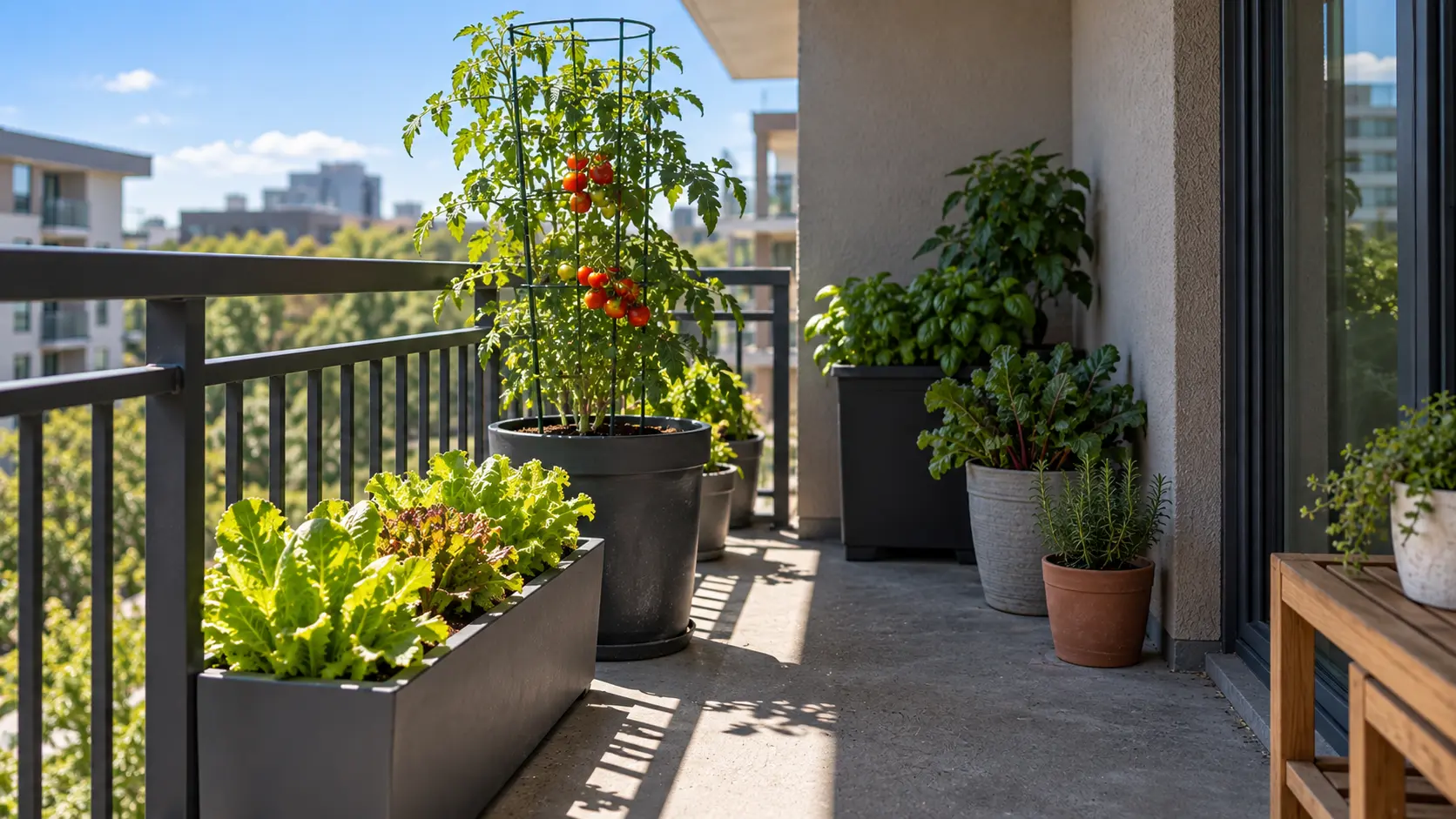
Don’t just measure from the balcony door. Check the exact spot where each container will sit.
A railing might shade a pot of lettuce sitting on the floor while the upper leaves of a tomato plant a few feet away are already receiving direct sun. Even moving a container to another part of the balcony can change its exposure.
If you have several possible growing spots, measure each one. You may discover that you don’t really have one “sunny balcony” or “shady balcony” at all. Instead, you have several small light zones.
Checking again on another clear day can give you a better picture of the balcony’s normal light pattern.
What Can You Grow With the Sunlight Your Balcony Gets?
Once you know approximately how much direct sunlight reaches your growing area, choosing plants becomes much easier.
6–8+ Hours of Direct Sun
A balcony receiving six to eight hours or more gives you the widest range of edible choices.
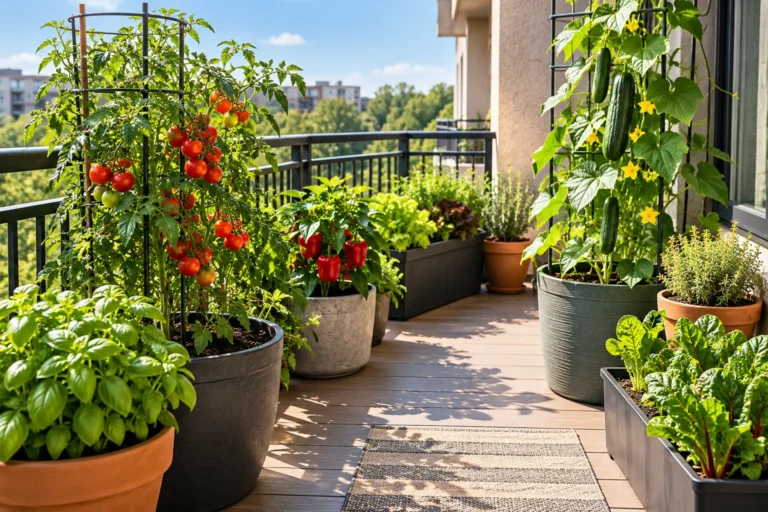
Warm-season fruiting vegetables such as tomatoes, peppers, eggplant, and squash are much better suited to these conditions than to a balcony receiving only a few hours of direct sun. Maryland Extension uses 6–8 hours as its recommendation for these warm-season container crops.
That doesn’t mean eight hours of sunlight guarantees a successful harvest. Container size, variety, temperature, watering, and other conditions still matter. But adequate sunlight removes one major limitation.
4–6 Hours of Direct Sun
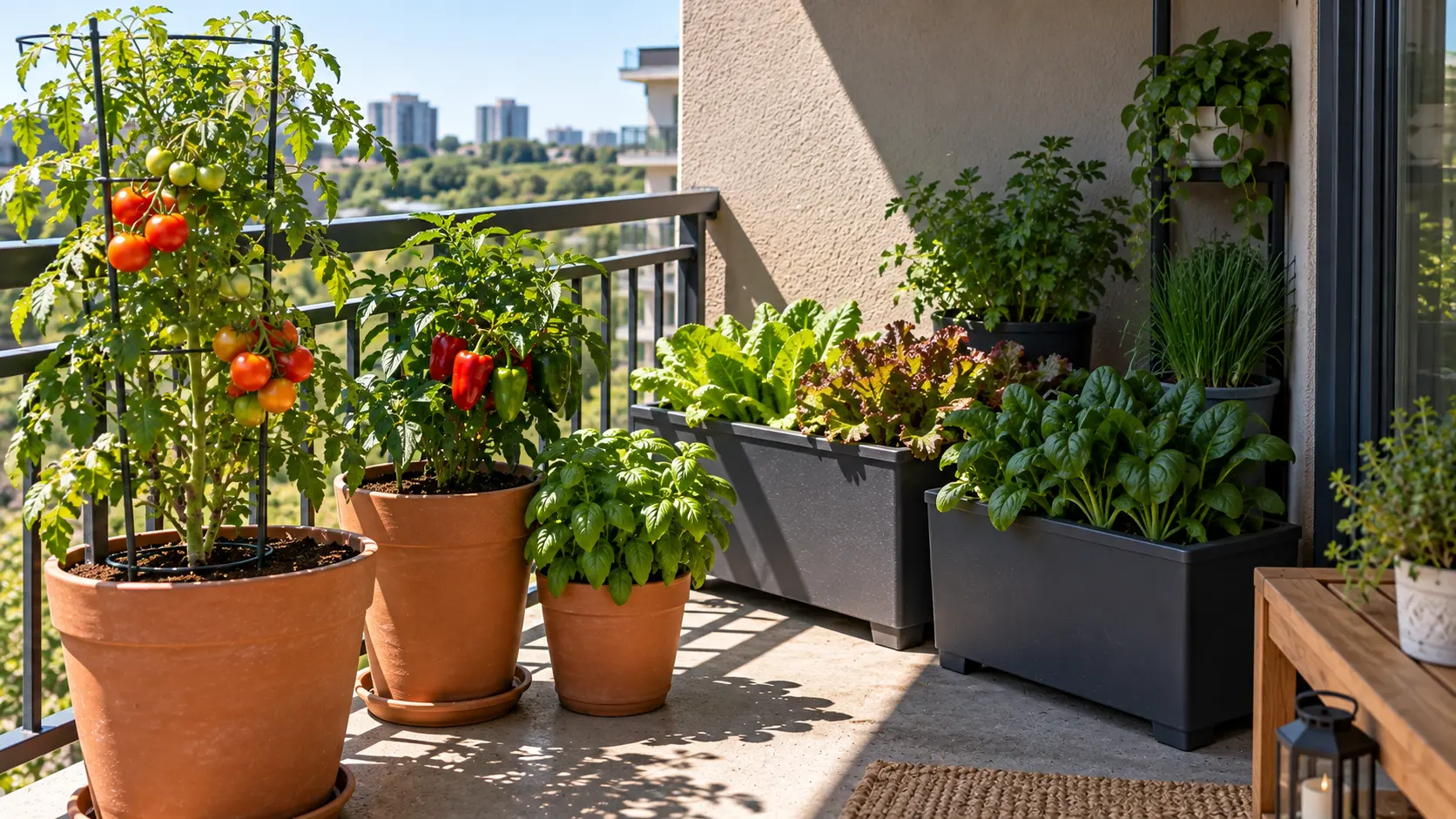
Four to six hours of direct sunlight can still support a useful edible balcony garden, but crop selection becomes more important.
Iowa State University Extension lists lettuce, kale, arugula, beets, peas, radishes, spinach, and Swiss chard among the vegetables that can tolerate partial-sun conditions.
Leafy vegetables are especially useful in these conditions because you’re harvesting leaves rather than asking the plant to flower and produce fruit. Some herbs can also work well with this amount of light.
Once you know your balcony’s light level, use our guide to the best balcony plants for different light conditions to narrow down the plants that fit your space.
Less Than 4 Hours of Direct Sun
A balcony receiving less than four hours of direct sunlight is more challenging for edible gardening, but that doesn’t necessarily mean you can’t grow anything.
Iowa State identifies a smaller group of leafy vegetables, including bok choy, mustard greens, and spinach, as candidates for areas receiving 2–4 hours of direct sunlight. It also cautions that vegetables, fruits, and herbs won’t be productive in full shade.
Expectations matter here. A plant that tolerates lower light may grow more slowly or produce less than the same plant growing with better exposure.
Rather than trying to force a sun-loving vegetable into a shady location, start with plants that fit the conditions you actually have.
Is 4 Hours of Sun Enough for a Balcony Garden?
Yes. Four hours of direct sunlight can be enough for a balcony garden, but your plant choices become more important.
Leafy vegetables are generally better candidates for these conditions than fruiting vegetables such as tomatoes and cucumbers.
The Iowa State University Extension guidance on edible plants in partial sun identifies lettuce, kale, arugula, beets, radishes, spinach, Swiss chard, and peas among the edible crops that can tolerate partial-sun conditions.
Plants growing with less-than-ideal light may take longer to produce, so four hours shouldn’t be treated as equivalent to full sun.
If four hours is what your balcony provides, build your garden around that amount of light instead of treating it as something you need to overcome.
Can Tomatoes Grow on a Balcony With 4 Hours of Sun?
Four hours of direct sunlight is generally less than ideal for balcony tomatoes.
Tomatoes are less flexible about light than leafy greens. Iowa State’s guidance for growing tomatoes in containers recommends at least six hours of direct sunlight per day for container tomatoes.
If one part of your balcony receives six or more hours while another receives four, put the tomato in the sunnier location and reserve the lower-light area for a crop that tolerates partial sun.
If the entire balcony gets about four hours of direct sun, I’d focus on crops better suited to partial sun rather than making tomatoes your first choice.
How Much Sun Do Herbs Need on a Balcony?
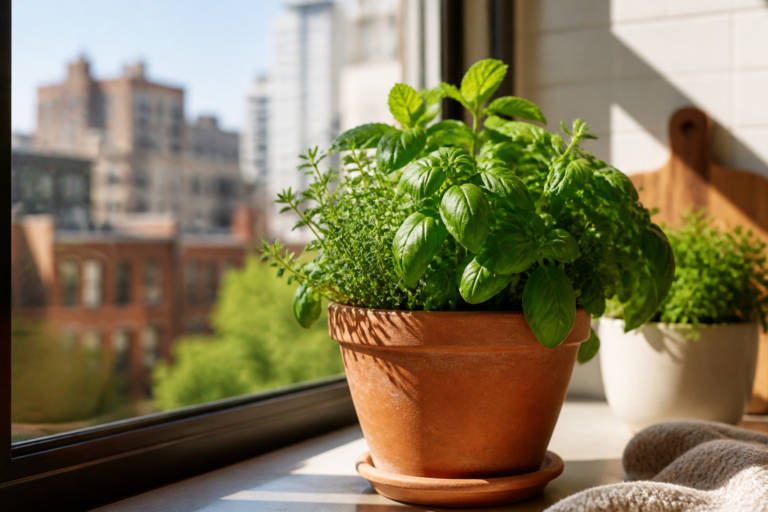
Many common herbs need at least 4–6 hours of sunlight per day, although the exact requirement depends on the herb.
Iowa State recommends placing container herbs where they receive at least 4–6 hours of sunlight each day.
That can make herbs worth considering when a balcony doesn’t receive enough direct sun for some fruiting vegetables. Just don’t assume every herb has identical light requirements.
Does Balcony Direction Affect Sunlight?
Yes, but direction is only a starting point.
| Balcony Direction | Typical Light Pattern |
|---|---|
| South | Often sunnier and warmer |
| West | Stronger afternoon sun and potentially more heat |
| East | Morning sun with more shade later |
| North | Usually cooler and shadier |
University of Maryland Extension notes the same general pattern: southern and western exposures tend to be sunnier and warmer, while northern and eastern exposures tend to be shadier and cooler.
Treat those patterns as clues, not rules.
An apartment building can completely change them. A south-facing balcony beneath a deep overhang may receive less usable direct sun than an unobstructed east-facing balcony. Nearby buildings and trees can change the picture even more.
Direction is a clue. Measurement is the answer.
Morning Sun, Afternoon Sun, and Balcony Heat
Two balconies can each receive five hours of direct sunlight and still create very different growing conditions.
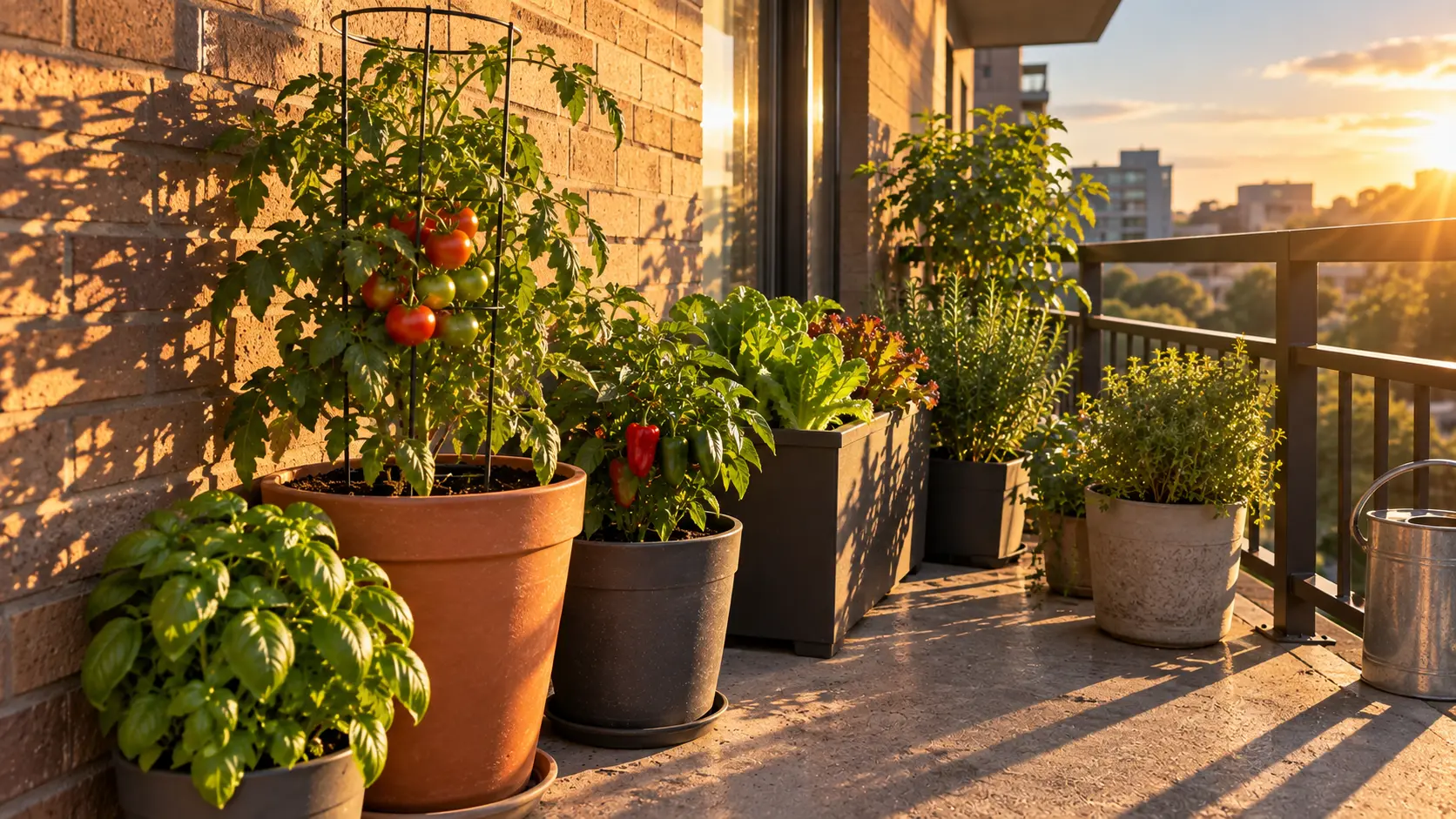
Five hours of morning sun generally comes with cooler temperatures than five hours of strong late-afternoon exposure. On a west-facing balcony, afternoon sun can also combine with heat absorbed or reflected by the surfaces surrounding your plants.
Concrete, brick, stone, decking, and metal can absorb or reflect solar energy. Maryland Extension warns that these hard surfaces around container gardens can raise temperatures and contribute to heat stress.
Watch the plant, not just the clock.
Pay attention to how quickly the potting mix dries, whether leaves regularly wilt during the hottest part of the afternoon, and whether walls, windows, or flooring make the growing area noticeably hotter.
A plant can receive an appropriate number of sunlight hours and still struggle if its container repeatedly dries out or the root zone becomes excessively hot.
Sun is only one part of the growing environment. Our beginner’s guide to apartment balcony gardening covers containers, watering, wind, plant selection, and other balcony-specific conditions.
Different Parts of Your Balcony May Get Different Amounts of Sun
Don’t assume your entire balcony has one light level.
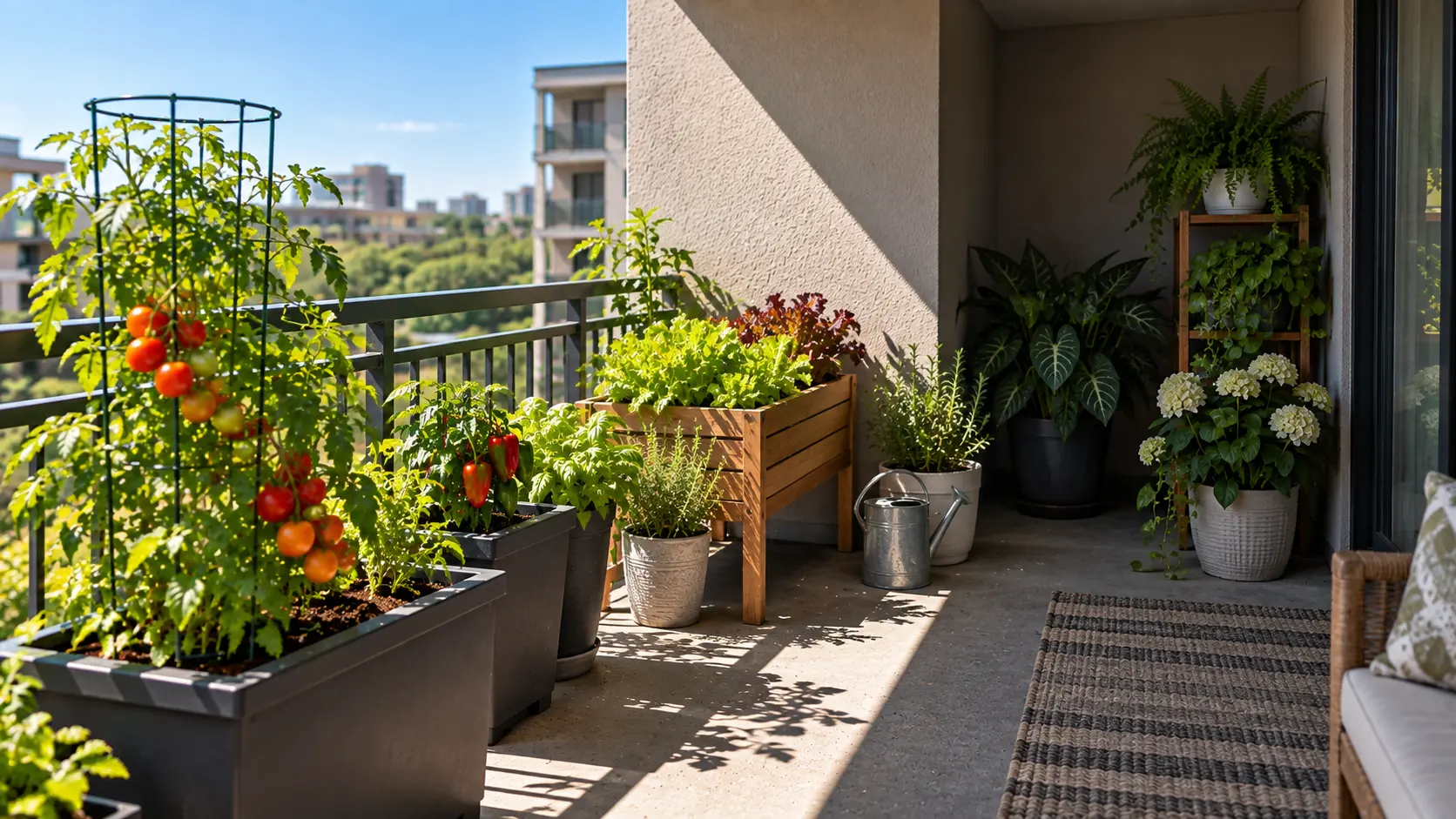
You might find that containers along the railing receive six hours of direct sun, pots against a wall receive four, and a corner under an overhang receives only two.
That variation can actually be useful.
Think of the balcony as a few small growing zones:
- Sunniest areas: about 6 hours or more
- Partially sunny areas: about 4–6 hours
- Lower-light areas: less than 4 hours
Put plants that need the most sunlight in the brightest locations and reserve partially shaded areas for crops that can tolerate less.
Once you’ve mapped the sunny and shaded areas, you can plan your balcony garden layout around those different light levels instead of treating the entire balcony as one growing environment.
Recheck Your Balcony Sunlight as the Seasons Change
A balcony’s sunlight pattern isn’t necessarily permanent.
As the sun’s position changes through the year, shadows from buildings, balcony overhangs, and other structures can fall differently across your growing area. Trees may also block substantially more light when fully leafed out.
So a spot that receives six hours of direct sunlight during one part of the year may receive a different amount several months later.
You don’t need to obsessively measure the balcony throughout the season. But if a previously sunny container becomes shaded—or a shaded area starts receiving substantially more direct sun—it’s worth checking again.
Frequently Asked Questions About Balcony Sunlight
Is 6 Hours of Sun Enough for a Balcony Garden?
Yes. Six hours of direct sunlight is enough for many balcony vegetables and herbs.
It reaches the minimum generally recommended for many full-sun edible crops, although some warm-season plants may benefit from additional sunlight. Maryland recommends 6–8 hours for warm-season vegetables, while Iowa State recommends at least six hours for edible gardens generally.
Can You Grow Vegetables on a Shady Balcony?
It depends on what “shady” means on your particular balcony.
If the growing area still receives four or five hours of direct sunlight, you have several options, particularly leafy vegetables. Some crops can tolerate 2–4 hours, although growth and production may be reduced.
A balcony receiving little or no direct sunlight is much more limiting for edible crops.
Does a Bright Balcony Count as Full Sun?
Not necessarily. A balcony can look bright all day without receiving enough direct sunlight to count as a full-sun growing location.
What matters is the amount of direct sunlight reaching the plants, not simply how bright the space looks.
An overhang, railing, tree, or neighboring building can block direct sun while still allowing plenty of ambient light onto the balcony.
The Bottom Line
Measure first, plant second.
Spend a clear day checking where direct sunlight actually reaches your balcony. You may find six sunny hours along the railing, four near a wall, and almost none by the door.
Once you know those numbers, choosing plants becomes much easier. Put sun-loving crops in the brightest spots and save the lower-light areas for plants that can handle them.
You don’t need the perfect balcony. You need plants that fit the balcony you have.