How to Fertilize Vegetables in Containers
Learning how to fertilize container vegetables starts with understanding that there is no single feeding schedule for every plant. How often container vegetables need fertilizer depends on the fertilizer type, potting mix, vegetable, growth stage, and watering frequency.
The safest way to fertilize vegetables in containers is to check what nutrients are already in the potting mix, follow the fertilizer label, apply liquid fertilizer to moist growing mix, and monitor plant growth before feeding again. There is no single fertilizer schedule that works for every vegetable container. NC State Extension explains that fertilizer amount and frequency depend on factors including the plant, growth stage, fertilizer type, and irrigation method.
In This Guide
Why Container Vegetables Need Fertilizer
Container vegetables need regular fertilizer because their roots are confined to a limited volume of growing mix, while plant growth and repeated watering gradually reduce the nutrients available in that root zone. Water draining from containers can carry soluble nutrients with it, so container vegetables generally need an ongoing nutrient source during the growing season. Illinois Extension explains that frequent container watering leaches nutrients that need to be replaced regularly.
Fertilizer cannot compensate for poor growing conditions. Container vegetables still need the right potting mix for container vegetables, adequate root space, sufficient light, proper watering, and effective drainage.
When Should You Start Fertilizing Container Vegetables?
When to start fertilizing container vegetables depends largely on the nutrients already in the potting mix and how the plants were started. A vegetable planted in a mix containing slow- or controlled-release fertilizer may not need supplemental fertilizer as soon as a vegetable planted in a mix without added nutrients.
University of Minnesota Extension recommends starting regular fertilizer applications about two to six weeks after planting, depending on the potting medium, watering schedule, and rate of plant growth. Some controlled-release fertilizer programs can provide nutrients considerably longer.
Starting Container Vegetables From Seed
Container vegetable seedlings should not automatically receive supplemental fertilizer immediately after germination. The growing medium, fertilizer already present, and seedling development should determine when supplemental feeding begins.
NC State Extension describes one slow-release fertilizer program in which seedlings are fertilized again about three weeks after developing two sets of leaves. That timing is an example for a particular fertilizer program, not a universal schedule for every vegetable seedling.
Newly Transplanted Container Vegetables
Newly transplanted container vegetables may not need fertilizer immediately if their growing mix already supplies nutrients. Check the potting-mix label and any fertilizer added at planting before applying more.
NC State Extension describes a slow-release program in which transplants can be fertilized again about three weeks after planting. A controlled-release fertilizer incorporated before planting can last longer, which is why the fertilizer formulation matters more than following one calendar date.
Established Container Vegetables
Established container vegetables generally need ongoing nutrient replacement as the plants grow and repeated watering removes nutrients from the growing mix. The fertilizer type, vegetable, plant growth, and watering frequency determine how often supplemental fertilizer is appropriate.
How Often Should You Fertilize Container Vegetables?
How often to fertilize container vegetables depends on the fertilizer type, vegetable, growth stage, existing nutrients in the potting mix, and watering frequency. Water-soluble fertilizer may be applied every one to several weeks under different fertilizer programs, while slow- or controlled-release products can supply nutrients for considerably longer.
Illinois Extension recommends liquid fertilizer about every two weeks for many container plants and also describes a lower-concentration approach in which fertilizer can be applied more frequently. These schedules are useful reference points rather than universal feeding rules for every vegetable and fertilizer product.
Container Vegetable Fertilizing Guide
| Situation | What Changes | General Approach |
|---|---|---|
| Pre-fertilized potting mix | Nutrients are already present | Check the potting-mix label before adding fertilizer |
| Young seedlings | Young roots, plant development, and existing nutrients matter | Do not automatically fertilize immediately after germination |
| New transplants | Growing mix may already contain fertilizer | Check what fertilizer was added before or during planting |
| Established vegetables | Nutrient demand continues as plants grow | Follow an ongoing program appropriate for the fertilizer and crop |
| Long-season fruiting vegetables | Extended growth and harvest can increase nutrient demand | Monitor growth and follow the fertilizer label rather than assuming one schedule fits every crop |
| Water-soluble fertilizer | Nutrients are supplied quickly | Follow the label; applications are generally more frequent |
| Slow- or controlled-release fertilizer | Nutrients are released over time | Follow the product's duration and reapplication directions |
| Frequently watered containers | More soluble nutrients can leave through drainage | Monitor the fertilizer program rather than assuming the initial fertilizer will last all season |
The container vegetable fertilizing guide is a starting point, not a substitute for fertilizer-label directions. Fertilizer formulations differ in concentration and release rate, so an application schedule appropriate for one product may be excessive or inadequate for another.
How to Fertilize Container Vegetables Step by Step
Fertilize vegetables in containers by checking the existing nutrients, following the fertilizer label, applying the correct amount to moist growing mix, and monitoring plant growth before fertilizing again. Increasing the fertilizer concentration beyond the labeled rate does not guarantee faster growth or a larger harvest.
1. Check Whether the Potting Mix Already Contains Fertilizer
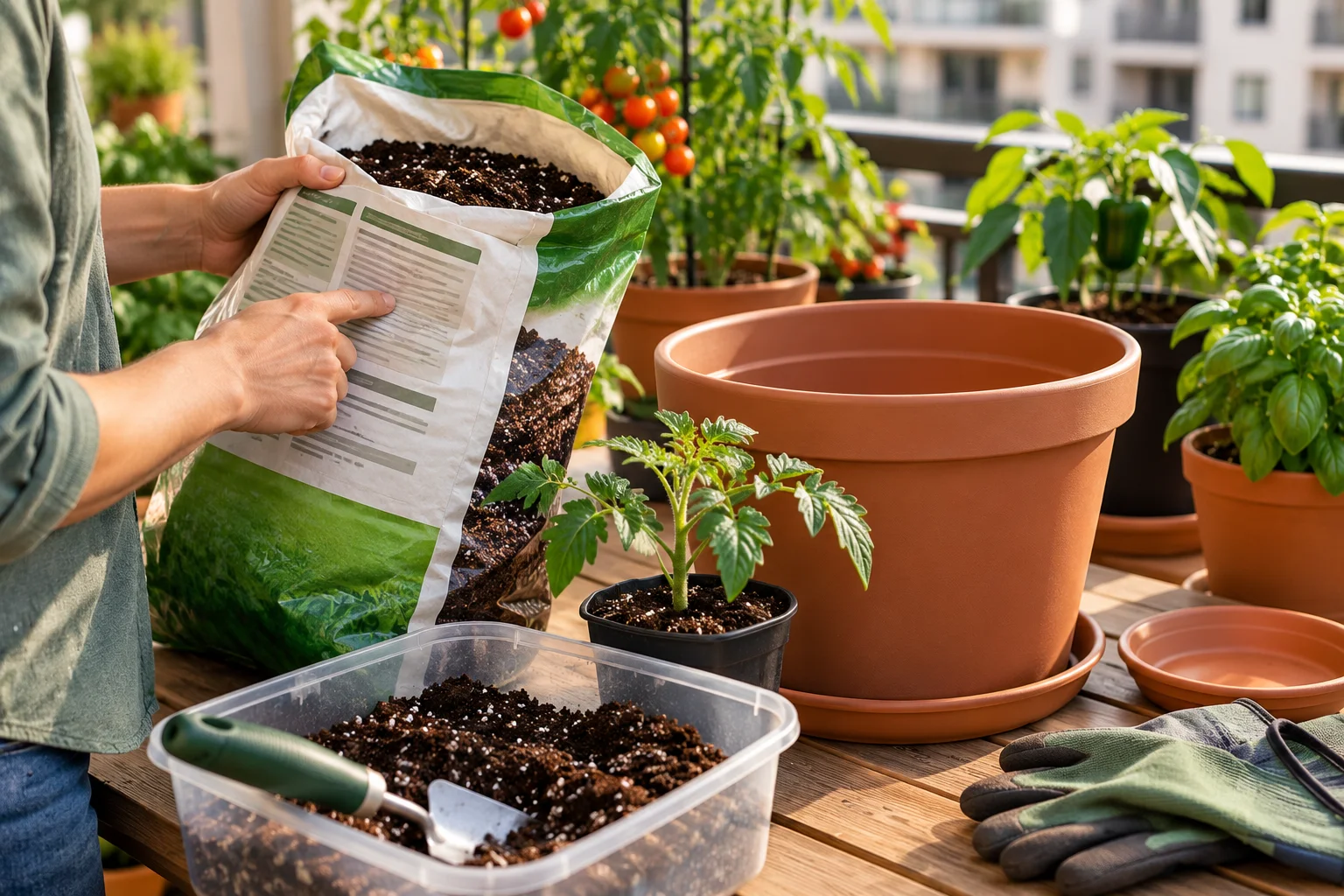
Check the potting-mix label before fertilizing container vegetables because many commercial mixes already contain fertilizer. Adding another fertilizer immediately could provide more nutrients than the plants need.
NC State Extension notes that many commercial potting mixes contain a small amount of fertilizer, but the nutrients supplied by the growing mix may not be sufficient for long-term plant growth. Check the specific product rather than assuming every potting mix contains the same amount or type of fertilizer.
2. Read the Fertilizer Label
The fertilizer label should determine how much fertilizer to apply to container vegetables. Fertilizers have different concentrations, formulations, and recommended application intervals, so one generic measurement cannot safely apply to every product.
University of Minnesota Extension recommends following fertilizer-label directions to avoid overfertilizing container plants. Overapplication can damage plants and send unnecessary nutrients into the environment.
A universal instruction such as “add one tablespoon per gallon” should therefore never replace the directions for the fertilizer actually being used.
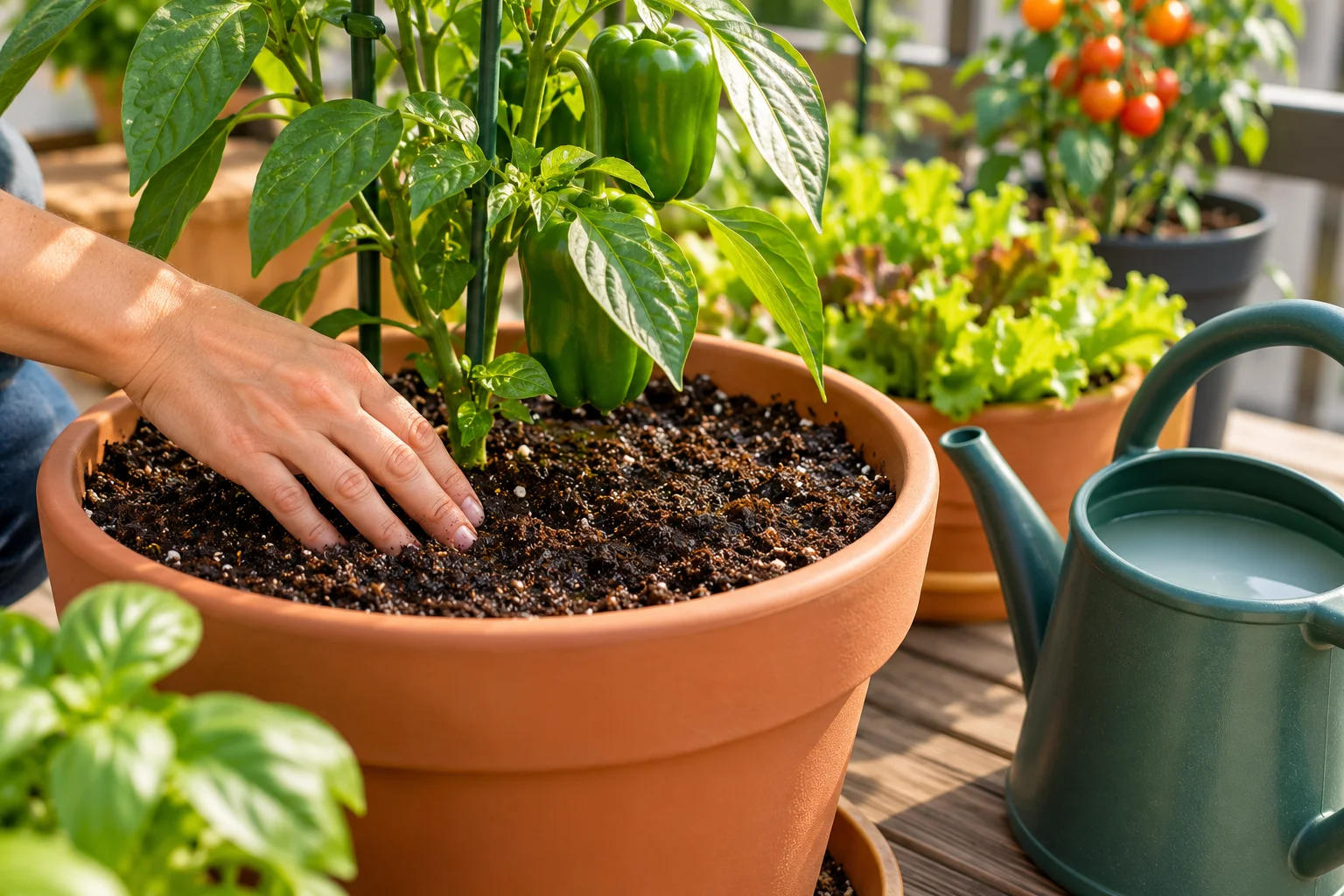
3. Make Sure the Potting Mix Is Moist
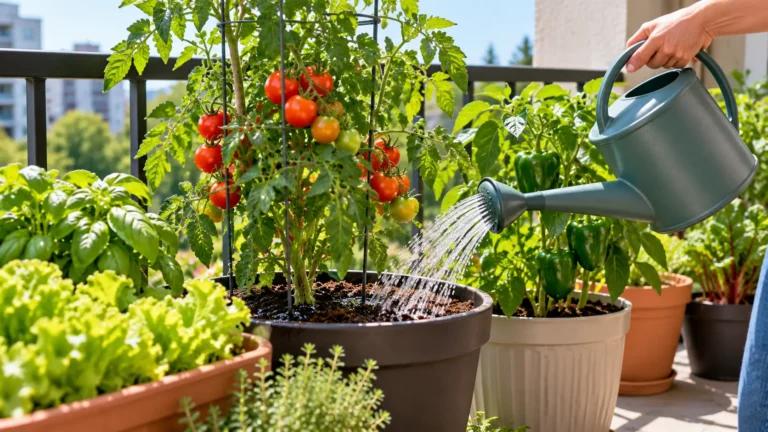
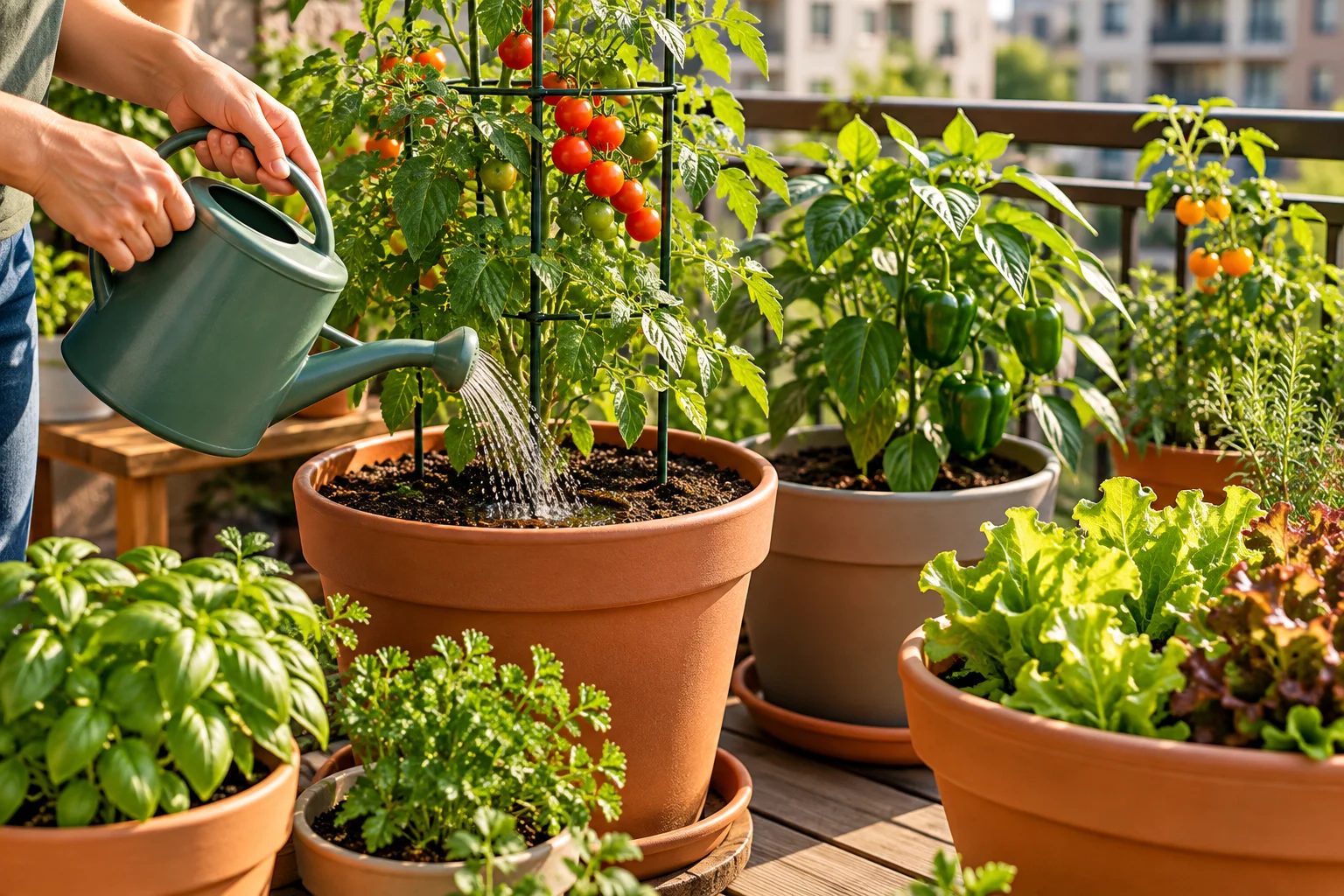
Apply liquid fertilizer to moist potting mix rather than completely dry growing medium. Illinois Extension recommends applying liquid fertilizer when the growing medium is moist because doing so helps reduce the potential for plant damage.
If a vegetable container is very dry, water it appropriately before applying the fertilizer solution. The guide to how often to water container vegetables explains how to check the growing mix instead of relying on a fixed watering schedule.
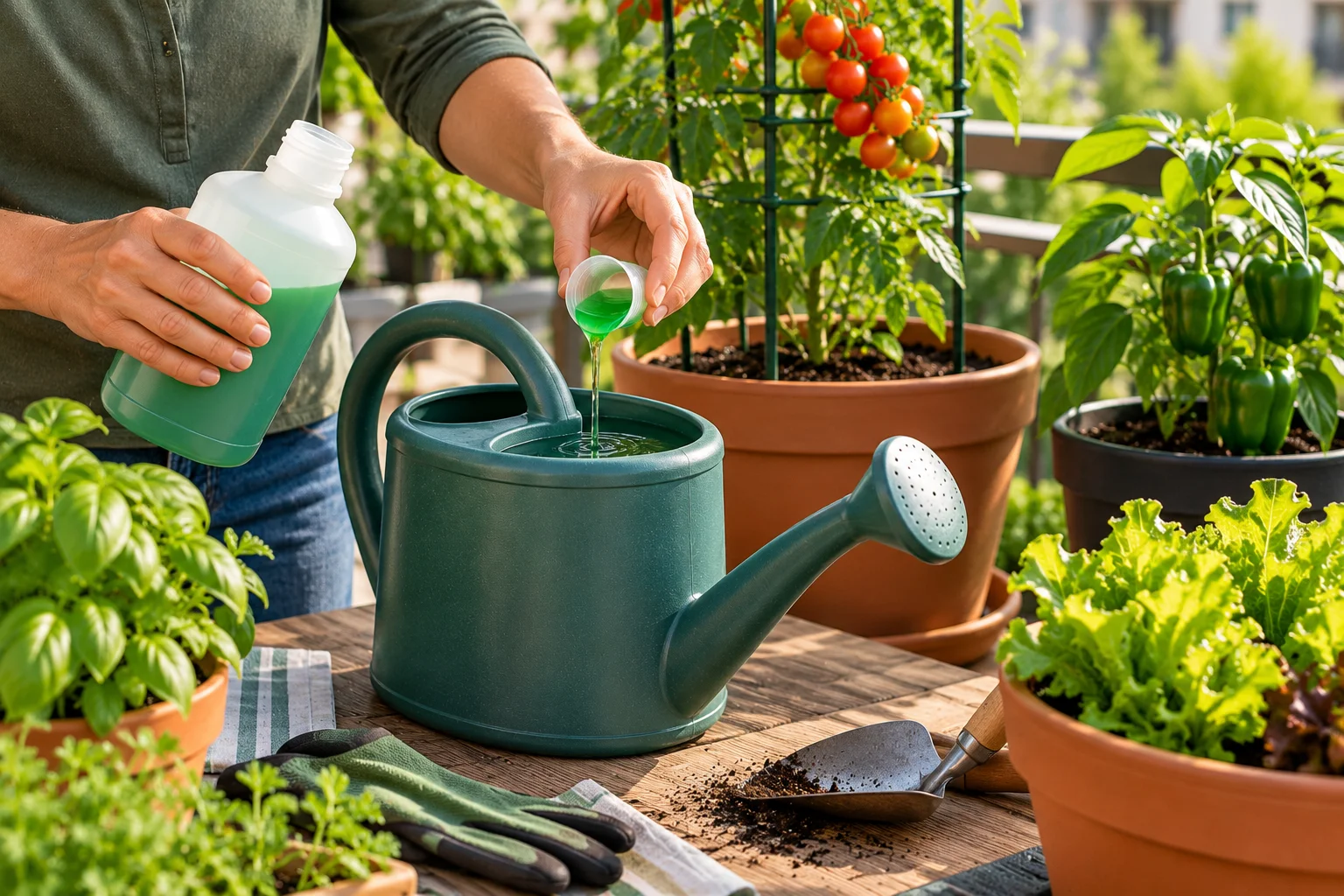
4. Measure or Dilute the Fertilizer Correctly
Measure and dilute fertilizer according to the product label instead of estimating the concentration. A stronger fertilizer solution is not automatically more effective and can increase the risk of root injury and soluble-salt buildup.
Water-soluble fertilizer should be mixed at the labeled concentration for the application method being used. If the label provides different rates or frequencies, use the directions appropriate for container-grown vegetables.
5. Apply Fertilizer to the Growing Mix
Apply conventional liquid fertilizer to the container’s growing mix so the nutrients reach the vegetable’s root zone. Distribute the correctly diluted fertilizer solution over the moist growing medium according to the product directions.
Foliar fertilizer can provide supplemental nutrients through leaves, but NC State Extension recommends using foliar feeding as a supplement rather than a replacement for a potting-mix fertility program.
6. Allow Excess Water to Drain
Vegetable containers need effective drainage when fertilizer and water are applied because soluble salts can accumulate in the root zone. Water should be able to leave through unobstructed drainage holes rather than keeping the growing medium continuously saturated.
NC State Extension recommends leaching container media with water when excessive fertilizer salts accumulate, which requires excess water to be able to leave the container.
The guide to using plant pots without drainage holes explains why drainage matters and what to consider when a container lacks a drainage opening.
7. Watch Plant Growth Before Fertilizing Again
Monitor container vegetables between fertilizer applications rather than adding fertilizer simply because a certain number of days have passed. Plant growth, fertilizer formulation, watering, and nutrients already present in the growing mix all influence when another application is appropriate.
Too much fertilizer can encourage excessive leafy growth instead of improving vegetable production. NC State Extension warns that overapplying fertilizer can increase vegetative growth at the expense of flowering and fruit production. The goal of fertilizing container vegetables is steady, productive growth rather than the fastest possible growth.
What Type of Fertilizer Is Best for Container Vegetables?
Water-soluble and slow- or controlled-release fertilizers can all work for container vegetables, and no single fertilizer type is best in every situation. Water-soluble products supply nutrients quickly and provide flexible application timing, while slow- and controlled-release fertilizers supply nutrients over a longer period.
Knowing how to fertilize container vegetables also means choosing a fertilizer that fits the potting mix, plant growth, and feeding schedule. The fertilizer label should determine the application rate and frequency.
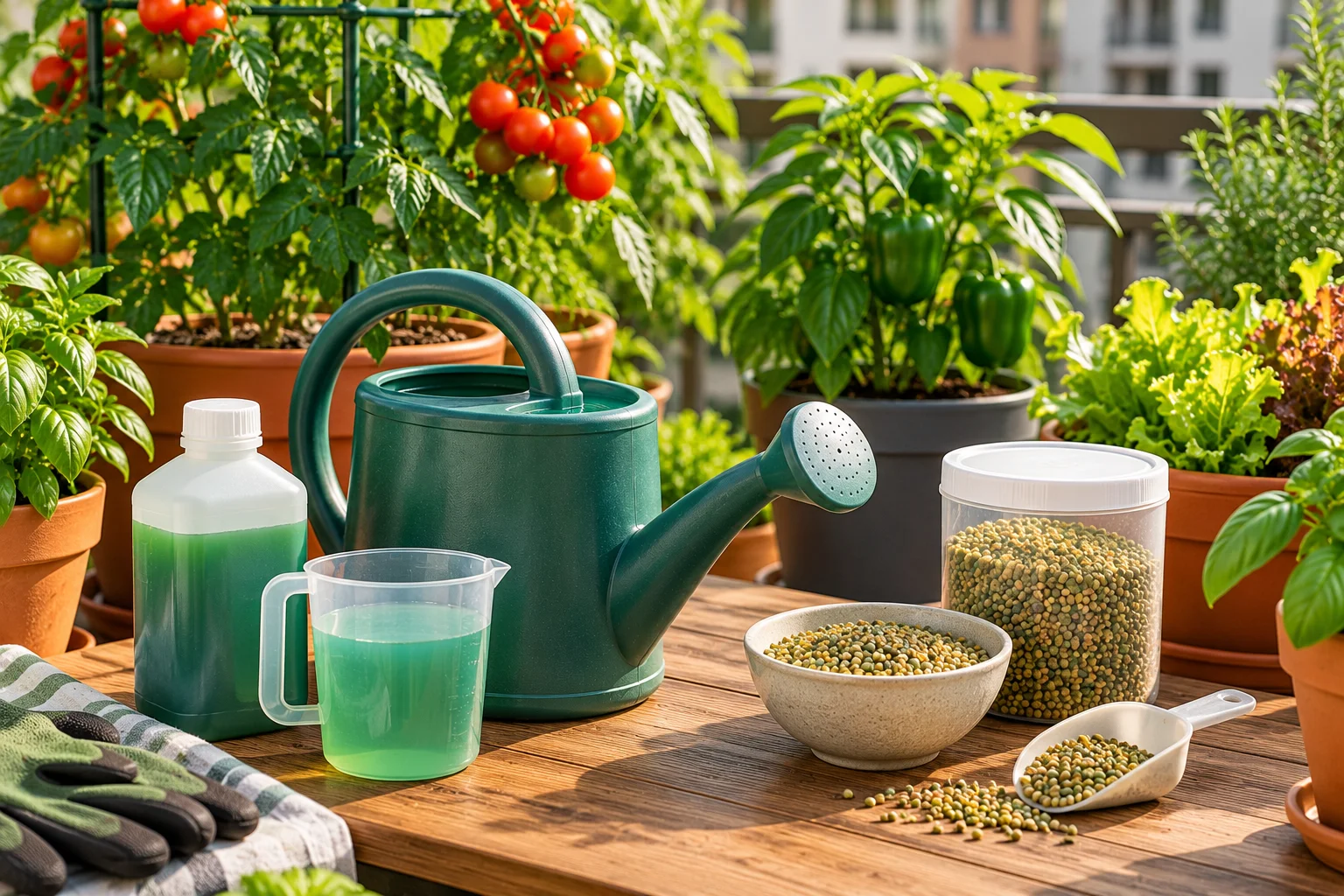
Water-Soluble Fertilizer
Water-soluble fertilizer can work well for container vegetables because nutrients become available quickly and the fertilizer can replace nutrients lost during frequent watering or periods of rapid growth. Water-soluble fertilizers are mixed with water and applied according to their label directions.
University of Minnesota Extension describes soluble fertilizer as a useful choice for container plants because rooting space is limited and nutrients are often lost through frequent watering.
Water-soluble fertilizer generally requires more frequent application than slow- or controlled-release fertilizer. The increased control over application timing comes with the need to measure and apply the product more regularly.
Slow- and Controlled-Release Fertilizer
Slow- and controlled-release fertilizers can reduce the need for frequent fertilizer applications by supplying nutrients over an extended period. Controlled-release products commonly use coatings that regulate how quickly soluble nutrients become available.
NC State Extension explains that temperature and growing-medium moisture can affect nutrient release from controlled-release fertilizers. Slow-release fertilizer may also release nutrients too slowly for some fast-growing crops, so vigorous vegetable plants sometimes need supplemental fertilizer.
Organic vs. Synthetic Fertilizer
Both organic and synthetic fertilizers can supply nutrients to container vegetables, so the better choice depends on the formulation, nutrient availability, application method, and gardener’s preferences. The word “organic” by itself does not determine whether a fertilizer will provide the appropriate nutrients at the appropriate rate.
Apartment gardeners may also want to consider odor and storage when choosing fertilizer. NC State Extension notes that fish emulsion has a strong odor and may attract animals, which can make some fertilizer products less convenient for balconies, patios, and other small living areas.
What N-P-K Ratio Should You Use for Container Vegetables?
Container vegetables do not require one universal N-P-K ratio. An all-purpose or appropriately labeled vegetable fertilizer that supplies the necessary nutrients is a practical starting point. University of Minnesota Extension recommends an all-purpose fertilizer as a starting option for container plants.
The three numbers on a fertilizer label represent the product’s percentage by weight of nitrogen, phosphate, and potash, commonly discussed in terms of nitrogen, phosphorus, and potassium:
- N — Nitrogen: supports vegetative growth and green foliage.
- P — Phosphorus: is involved in plant processes including energy transfer and root and reproductive development.
- K — Potassium: supports functions including water regulation and overall plant growth.
The N-P-K numbers should not be used by themselves to decide how much fertilizer a container vegetable needs. A product with larger numbers is not automatically better, and vegetable nutrient requirements vary by crop, plant development, growing medium, and growing conditions.
What If the Potting Mix Already Contains Fertilizer?
Potting mix that already contains fertilizer may delay the need for supplemental feeding, but the duration varies with the fertilizer formulation, plant growth, and watering. Check the potting-mix label instead of assuming every pre-fertilized mix supplies nutrients for the same number of weeks.
University of Minnesota Extension says regular fertilizer applications may begin about two to six weeks after planting, depending on the growing medium, watering schedule, and plant growth. In contrast, NC State Extension describes a controlled-release fertilizer program in which additional fertilizer may not be needed for eight to ten weeks.
The different Extension timelines reflect different growing media and fertilizer programs rather than a single correct waiting period. The specific potting-mix and fertilizer labels are the best starting points for deciding when supplemental fertilizer should begin.
Can You Fertilize Container Vegetables Every Time You Water?
Some fertilizer programs use a weaker fertilizer solution more frequently, but container vegetables should not automatically receive fertilizer every time they are watered. Fertilizer concentration and application frequency must be considered together.
Illinois Extension describes an option of using half-strength liquid fertilizer at every watering, with occasional plain water used to leach the container. NC State Extension describes another approach using liquid fertilizer weekly at half strength or every two weeks at full strength.
These Extension fertilizer schedules are examples rather than universal recipes for every container vegetable. A vegetable container may require frequent watering during hot weather, but frequent watering does not mean the plant should receive full-strength fertilizer every time it needs water.
Follow the fertilizer label and use plain water when appropriate for the fertilization program.
Can You Overfertilize Container Vegetables?
Yes, container vegetables can be damaged by too much fertilizer. Excess fertilizer can increase soluble salts around plant roots, contribute to nutrient runoff, encourage excessive vegetative growth, and damage roots. NC State Extension warns that fertilizer overapplication can damage roots through excess salt accumulation and promote too much vegetative growth.
Applying more fertilizer than the label recommends does not guarantee more vegetables. Excessive nutrients can create plant problems while also increasing fertilizer runoff and wasting fertilizer.
Signs of Excess Fertilizer and Salt Buildup
A white crust on the surface of container potting mix can indicate fertilizer-salt accumulation. NC State Extension identifies a white crust on top of the potting mix as a sign of salt accumulation.
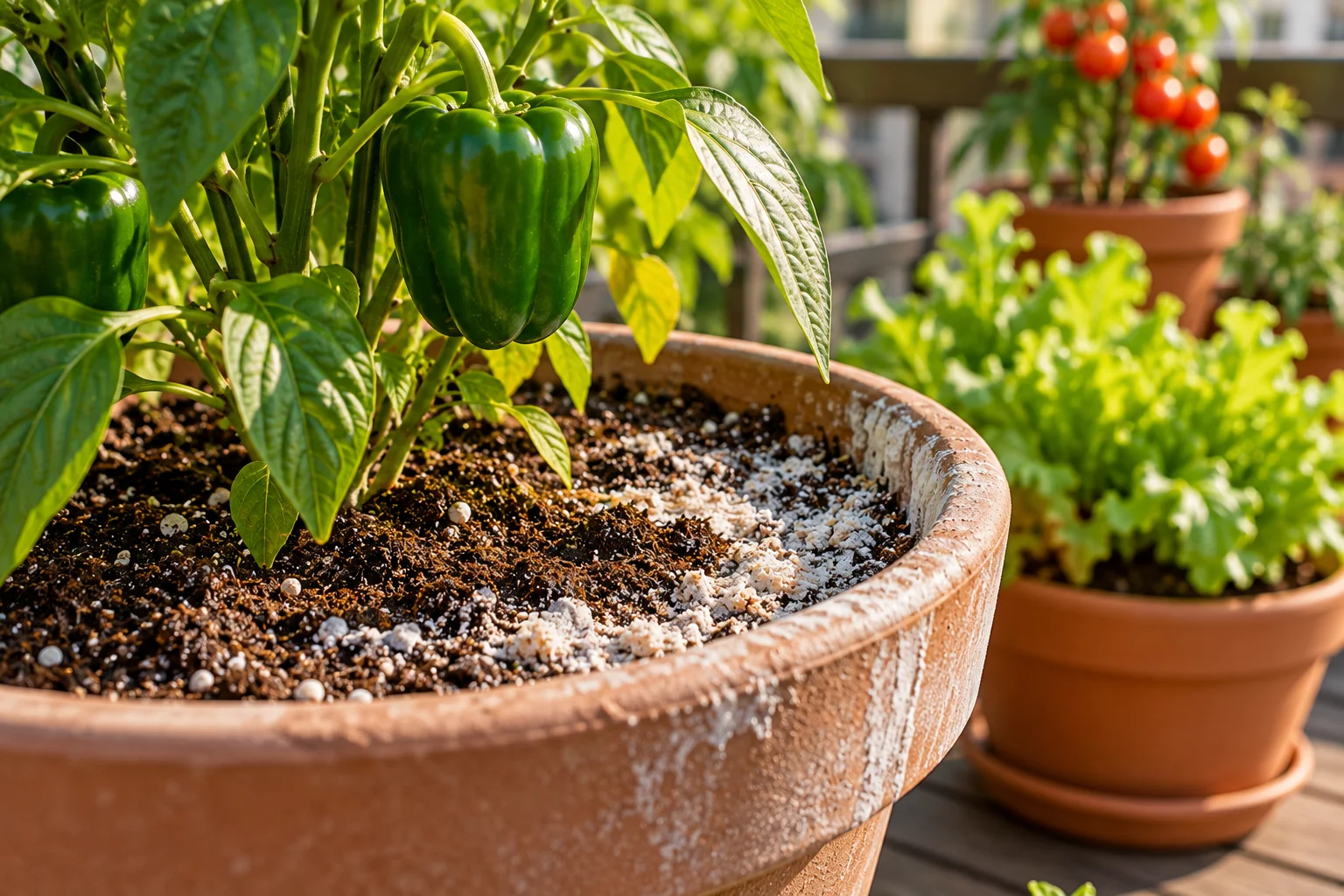
Yellow, brown, or damaged leaves alone do not prove that a container vegetable has been overfertilized—or that the plant needs more fertilizer. Watering problems, poor drainage, root stress, temperature, pests, disease, and nutrient problems can produce similar symptoms.
Consider the plant’s entire growing environment before increasing or reducing fertilizer solely because of leaf appearance.
What to Do If You Applied Too Much Fertilizer
If excessive fertilizer salts have accumulated in a vegetable container, leaching the growing mix with plain water can help carry excess soluble nutrients out through the drainage holes. NC State Extension recommends slowly running water through container media for several minutes when salt accumulation is observed.
Effective leaching requires functioning drainage. Do not leave the vegetable container sitting in the fertilizer-rich drainage water afterward.
If a major fertilizer application error occurs, stop additional fertilization while assessing the plant and check the fertilizer label for product-specific directions.
Frequently Asked Questions
How Often Should You Fertilize Container Vegetables?
How often you should fertilize container vegetables depends on the fertilizer, vegetable, growth stage, potting mix, and watering frequency. Illinois Extension says liquid fertilizer reapplied about every two weeks can provide adequate nutrition for many containers, while slow- or controlled-release products can provide nutrients for considerably longer. Follow the fertilizer label instead of applying one schedule to every vegetable container.
When Should You Start Fertilizing Vegetables in Containers?
When to start fertilizing vegetables in containers depends primarily on the nutrients already present in the growing medium and the plant’s development. University of Minnesota Extension recommends beginning regular fertilizer applications about two to six weeks after planting in many container situations, depending on the potting medium, watering schedule, and rate of plant growth.
Is Liquid or Slow-Release Fertilizer Better for Container Vegetables?
Neither liquid nor slow-release fertilizer is universally better for container vegetables. Water-soluble fertilizer supplies nutrients quickly and allows flexible applications, while slow- or controlled-release fertilizer supplies nutrients gradually and requires less frequent application. University of Minnesota Extension notes that large, fast-growing container plants may need more nutrients than slow-release fertilizer alone can provide.
Should You Fertilize Container Vegetables When the Soil Is Dry?
Liquid fertilizer should generally be applied to moist container growing mix rather than completely dry media. Illinois Extension recommends applying liquid fertilizer when the growing medium is moist to help avoid potential plant damage.
Bottom Line
The best way to fertilize vegetables in containers is to match the fertilizer program to the potting mix, fertilizer type, vegetable, growth stage, and watering conditions instead of following one rigid schedule. Check whether the potting mix already contains fertilizer, follow the fertilizer label, apply liquid fertilizer to moist growing mix, and maintain adequate drainage.
More fertilizer does not mean more vegetables. Container vegetables need enough nutrients to support healthy growth and production, but excessive fertilizer can contribute to salt buildup, root damage, unnecessary leafy growth, and nutrient runoff. For the complete growing process beyond fertilizing, the apartment vegetable gardening guide covers containers, light, watering, crop selection, and other fundamentals.