How Many Vegetables Can You Plant in One Container?
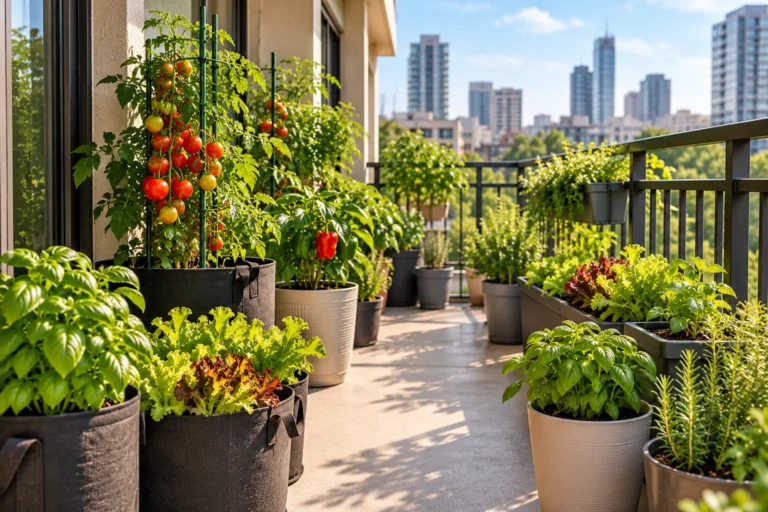
How many vegetable plants per container you can grow depends on the vegetable, the variety, the container’s usable growing space, and how much room each plant needs at maturity. Large vegetables such as tomatoes and eggplants often need their own containers, while smaller vegetables such as leaf lettuce and bush beans can grow several plants together. Carrots, radishes, beets, and spinach are better planned by final plant spacing rather than by choosing a fixed number of plants per pot.
The key is to plan for the mature plants, not the amount of empty space you see when seeds or small transplants first go into the container. University of Maryland Extension’s container vegetable guidance recommends matching container size to both the plant’s top growth and root system and considering container depth as well as total volume.
In This Guide
How Many Vegetable Plants Per Container?
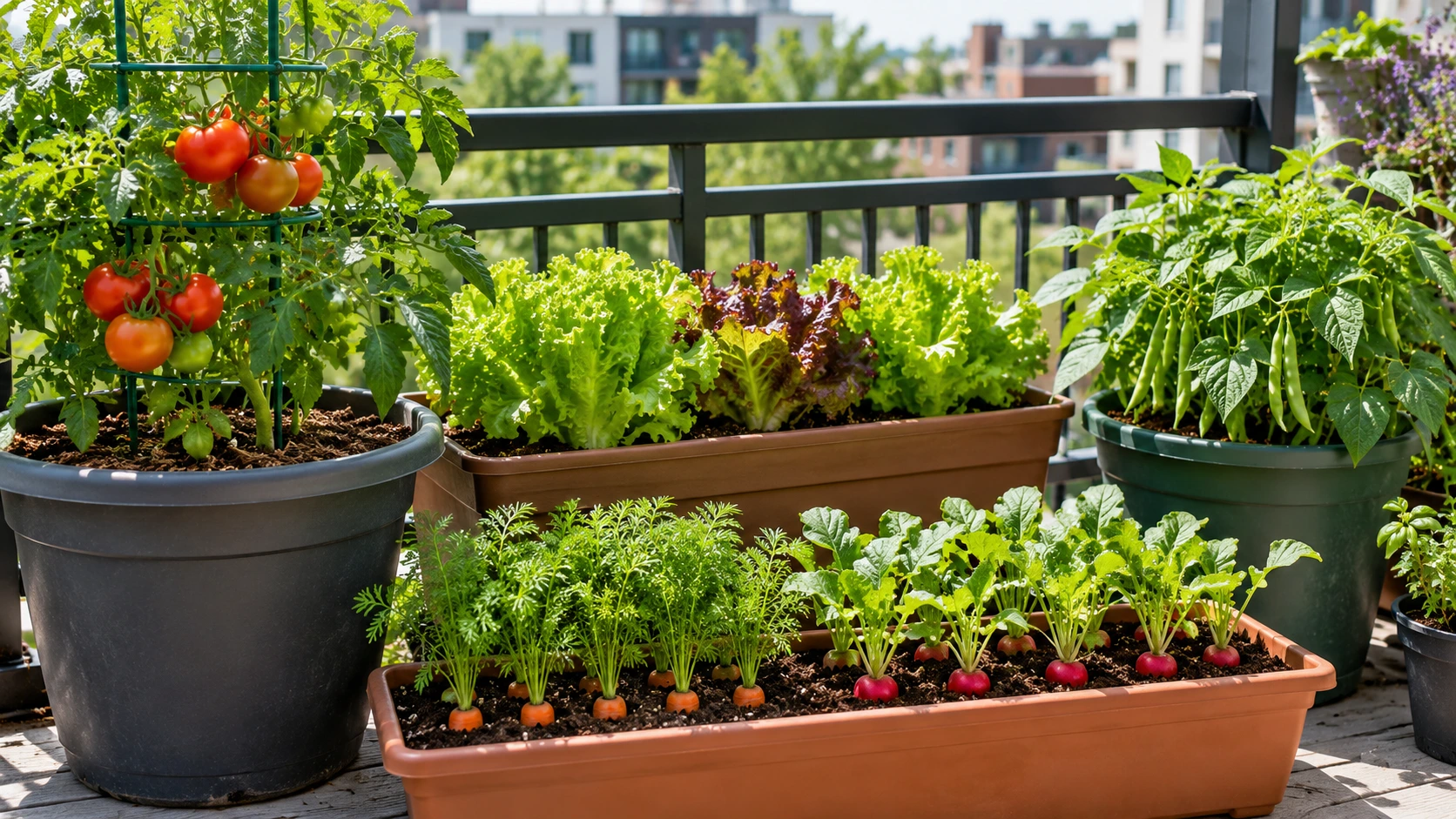
The number of vegetable plants per container ranges from one large plant to several smaller plants, depending on the crop and the space available. Tomatoes, peppers, and eggplants are easiest for beginners to plan as individual container plants. Leaf lettuce and bush beans can support multiple plants, while root crops such as carrots and radishes should usually be planned by final spacing.
Use this table as a practical starting point:
| Vegetable | How Many Plants per Container? | Container Starting Point | What to Know |
|---|---|---|---|
| Standard tomato | 1 plant | 5 gallons minimum | One mature plant is the simplest starting point. Larger containers can give indeterminate tomatoes more growing room. |
| Cherry tomato | 1 plant | 2 gallons minimum | Compact and dwarf varieties may have different requirements, so check the cultivar. |
| Pepper | 1 plant as a conservative starting point | 5 gallons minimum | Some Extension recommendations allow multiple peppers in particular container sizes, so variety matters. |
| Eggplant | 1 plant | 5 gallons minimum | Plan around one mature plant rather than filling early empty space with additional plants. |
| Cabbage | 1 plant | 5 gallons minimum | A mature cabbage needs room for both its root system and developing head. |
| Compact cucumber | Up to 2 plants when cultivar guidance supports it | 5 gallons minimum | Compact or bush cucumbers can use space differently from vigorous vining varieties. |
| Bush green beans | Several plants; 2–3 is an Extension example | 2 gallons minimum | Use the bean variety and available planting area to determine the final number. |
| Leaf lettuce | Several plants; 4–6 is an Extension example | ½ gallon minimum | A broad planting surface can be more useful than a deep, narrow container. |
| Swiss chard | 1 plant is a practical starting point | 2 gallons minimum | Mature chard can become much larger than a young seedling suggests. |
| Beets | Use final spacing | ½ gallon minimum | Thin seedlings to their recommended final spacing rather than choosing a fixed number per pot. |
| Carrots | Use final spacing | 2 gallons minimum | Final spacing and sufficient container depth both matter. |
| Radishes | Use final spacing | 1 pint minimum | The usable planting surface determines how many properly spaced radishes can grow. |
| Spinach | Use final spacing | Choose for the crop and planting area | Thin seedlings as needed instead of trying to reach a predetermined plant count. |
The container-size starting points above use current University of Maryland Extension minimum container recommendations. Plant-count examples should be treated as starting points rather than universal limits because cultivar, container dimensions, and mature plant size can change how much growing room a vegetable needs.
The most useful way to read the table is to separate container vegetables into three groups: large vegetables usually grown as individual plants, smaller vegetables that can share a container, and vegetables that are better planned by final spacing.
Why There Is No Single Plants-Per-Gallon Rule
There is no reliable plants-per-gallon rule for container vegetables because the same container volume can provide very different growing conditions depending on its dimensions and the vegetable being grown. A tomato, lettuce plant, and carrot do not use the same amount or shape of root and above-ground space.
Container volume is still useful. A 5-gallon container tells you roughly how much growing media is available, but it does not tell you by itself how many plants belong inside it.
University of Maryland Extension specifically recommends considering both container depth and total volume and matching the container to the plant’s root system and top growth.
Container Shape Can Change How Many Plants Fit
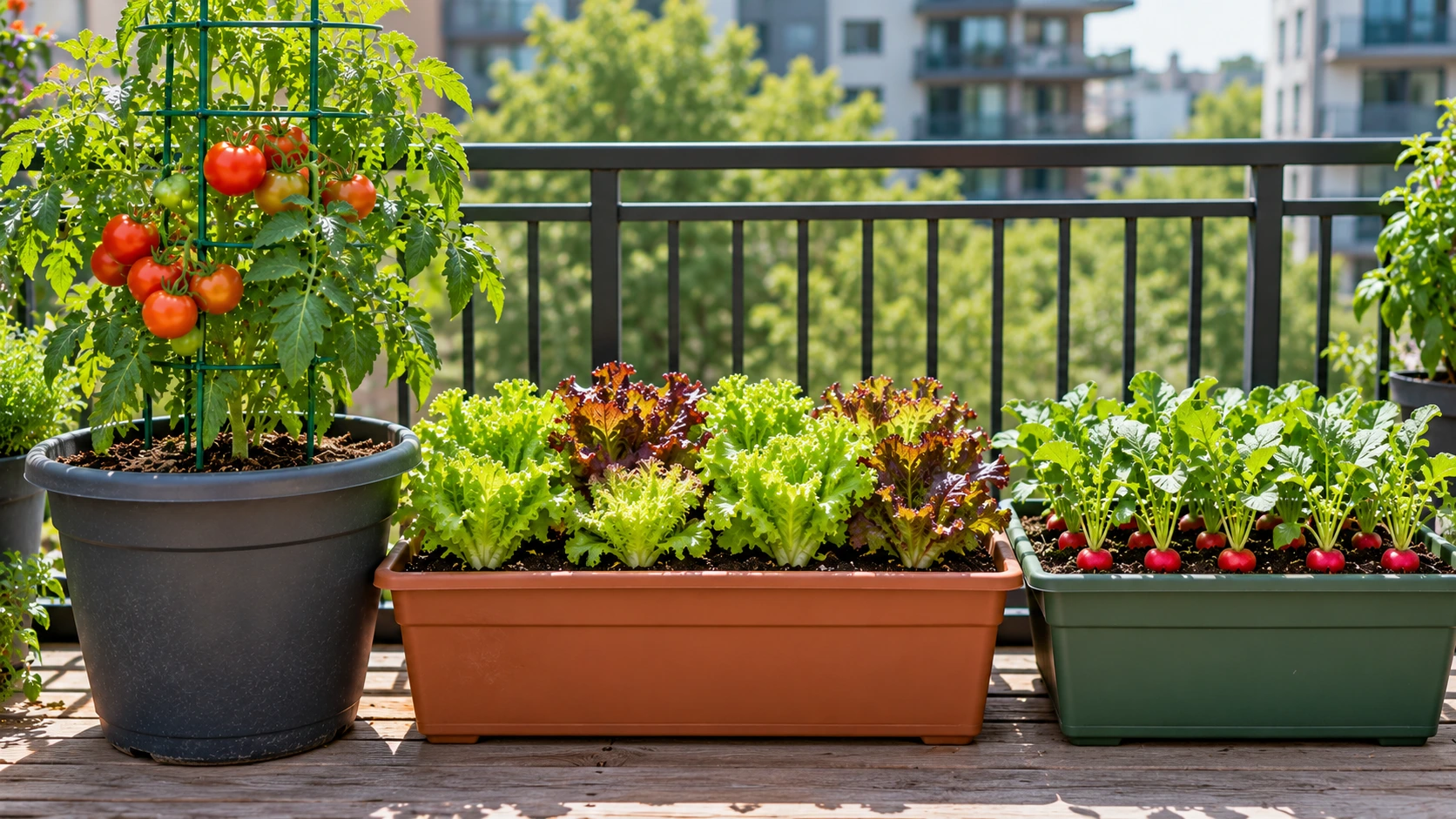
Container shape affects how vegetables can use the available growing space because two pots with similar volume can have very different widths and depths. A wide rectangular planter may provide useful planting surface for several lettuces or radishes, while a tall, narrow pot may offer less usable surface for planting several vegetables side by side.
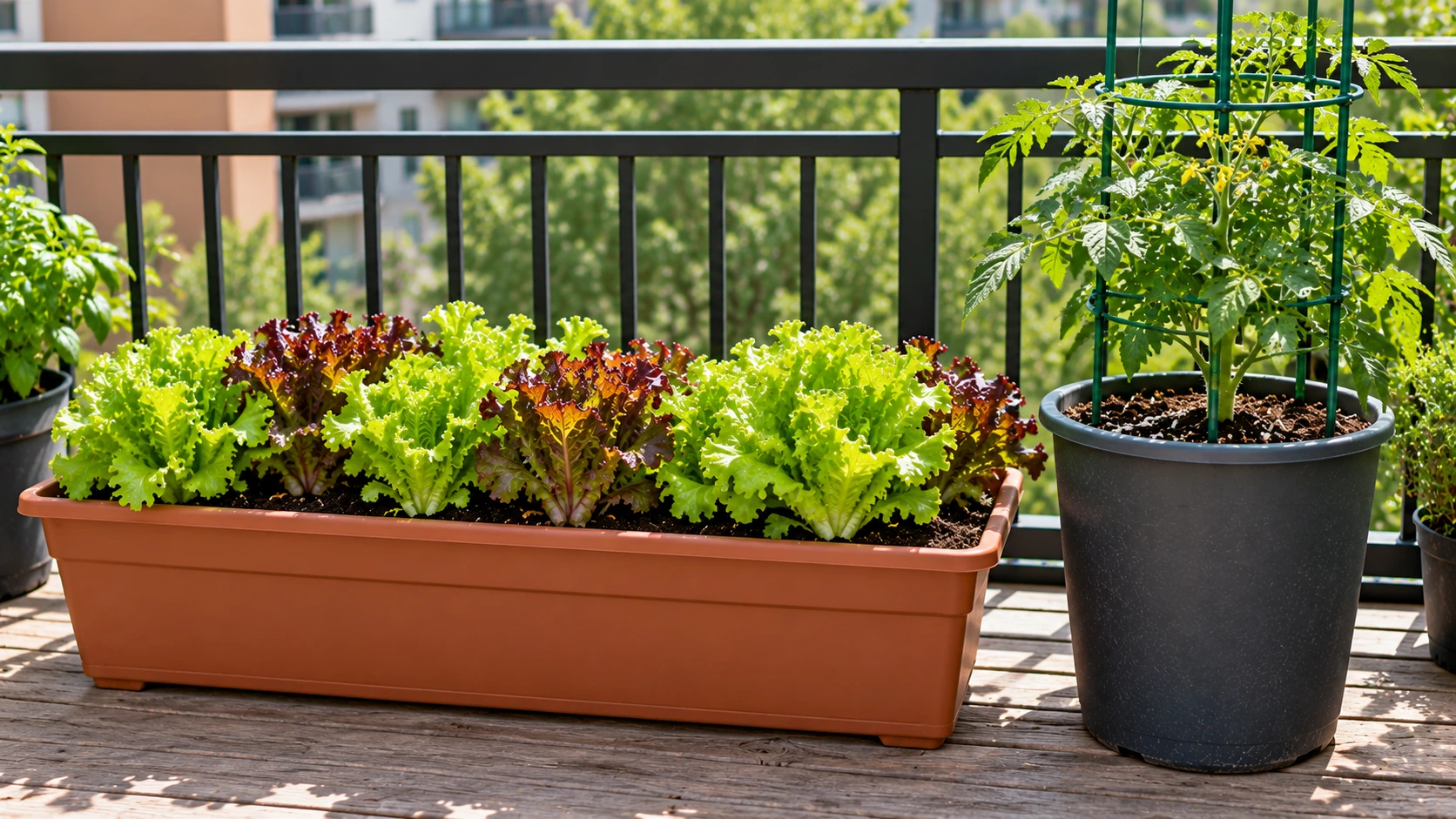
Leafy greens provide a good example. Maryland Extension’s Salad Box is only 3½ inches deep but measures 21 inches long by 15 inches wide, creating a broad, shallow growing area for salad greens.
Container gardeners should therefore look beyond gallons and ask whether the container provides the depth, surface area, and overall growing room needed by the vegetable.
Large Vegetables Usually Need More Space Per Plant
Large vegetables such as tomatoes, peppers, and eggplants usually need considerably more growing space per plant than lettuce, radishes, and other smaller crops. A young tomato transplant may occupy only a small portion of its pot in spring, but the mature plant needs room for a much larger root system and canopy.
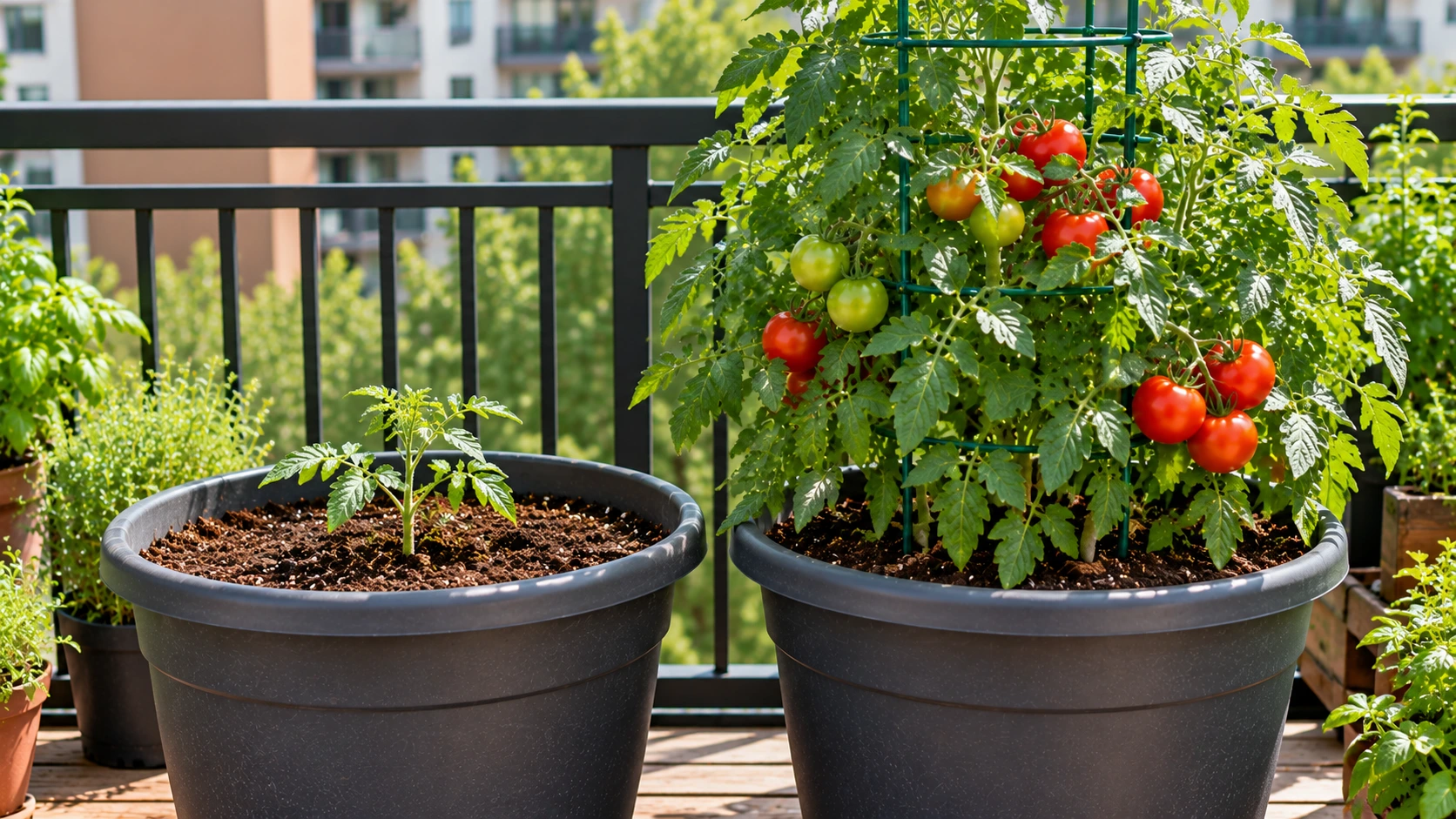
Current Maryland Extension container-size recommendations list minimum volumes of 5 gallons for standard tomatoes, peppers, and eggplants. Penn State Extension’s container vegetable gardening guide gives another useful way to judge size: at least a 20-inch-wide pot for one tomato and a 14-inch pot for peppers and eggplants.
Those recommendations show why both container volume and dimensions are worth considering.
How Many Tomato Plants Can You Put in One Container?
One tomato plant per appropriately sized container is a good starting point for most apartment and small-space gardeners. Maryland Extension currently lists a 5-gallon minimum for a standard tomato and 2 gallons for a cherry tomato.
A bigger tomato container does not automatically mean you should add another tomato plant. Maryland Extension notes that indeterminate tomatoes can grow in smaller containers but can grow larger and produce more fruit as container size increases.
Tomato variety also matters. A compact patio tomato does not have the same mature growth habit as a vigorous indeterminate tomato.
If you are choosing a container for tomatoes or other vegetables with substantial root systems, see how deep containers need to be for vegetables before deciding which pot to use.
How Many Pepper Plants Can You Put in One Container?
One pepper plant per adequately sized container is a conservative starting point for beginners, but pepper variety and container size can change the answer. Maryland Extension currently lists a 5-gallon minimum container volume for peppers, while other Extension recommendations allow multiple pepper plants in some container and cultivar combinations.
A beginner does not need to maximize the number of pepper plants in every pot. Giving one pepper enough root and above-ground growing space creates a simpler container to manage, especially when the mature size of the variety is uncertain.
How Many Eggplants Can You Put in One Container?
One eggplant per appropriately sized container is a practical starting point because eggplants develop substantial roots and above-ground growth. Maryland Extension currently lists a 5-gallon minimum for eggplant, while Penn State recommends a pot at least 14 inches wide.
An eggplant container should therefore be chosen for the mature plant rather than for how small the transplant looks when it is first planted.
Smaller Vegetables Can Share a Container
Several smaller vegetables can grow in the same container when the pot provides enough planting surface, root space, light, moisture, and room for the plants to mature. Leaf lettuce and bush beans are good examples because several plants can use the same growing area without requiring the space of several mature tomato plants.
The important distinction is that multiple plants does not mean unlimited plants. Maryland Extension warns that planting vegetables too densely can increase competition for light, moisture, nutrients, and root space.
How Many Lettuce Plants Can Grow in One Container?
Several leaf lettuce plants can grow together in one container, and Extension examples show why usable surface area is especially important for lettuce. A practical example is four to six leaf lettuce plants in a 1-gallon container, although the exact number depends on the variety, desired harvest size, and available planting surface.
Maryland Extension lists a ½-gallon minimum container volume for leaf lettuce and also grows salad greens in broad, shallow Salad Tables and Salad Boxes. Gardeners can thin the plants more heavily when they want individual lettuce plants to reach larger sizes.
Lettuce therefore demonstrates why the question is not always “How many gallons per plant?” A wide container can sometimes provide more useful planting space for leafy vegetables than a narrow pot with similar volume.
How Many Bush Bean Plants Can Grow in One Container?
Several bush bean plants can share one container when there is enough planting area, and two to three plants is a useful Extension example for a small container. Maryland Extension currently lists 2 gallons as its minimum container volume for bush beans.
Bush beans should be distinguished from pole beans when planning a container. Pole beans have a climbing growth habit and need vertical support, while bush beans remain more compact.
If a 5-gallon bucket is the container you already have, the guide to vegetables you can grow in a 5-gallon bucket covers which vegetables make sense for that specific container size.
Carrots, Radishes, Beets, and Spinach Should Be Planned by Spacing
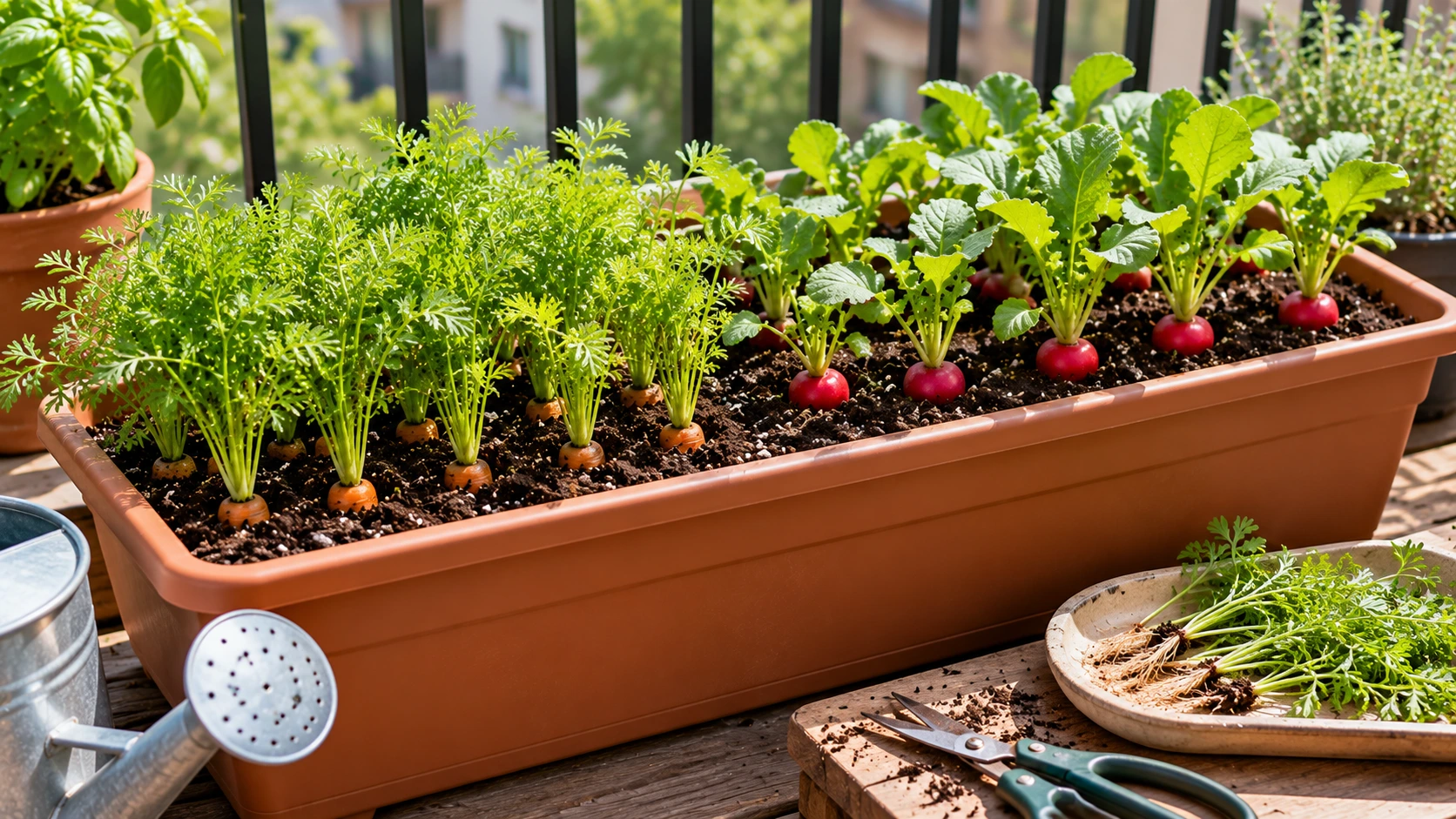
Carrots, radishes, beets, and spinach are better planned by final spacing than by assigning a fixed number of plants to every container. The number that fits depends heavily on the width and length of the usable planting surface.
For example, a long rectangular planter can accommodate more properly spaced radishes than a narrow round pot even when both containers provide sufficient root depth.
The better approach is to use the crop’s recommended final spacing, measure the usable planting area, and thin seedlings as necessary. Maryland Extension recommends sowing container vegetables at the recommended spacing and thinning extra seedlings after germination so the remaining plants have room to mature.
Seeds Sown in a Container Are Not the Final Plant Count
The number of seeds planted in a vegetable container does not have to equal the number of plants that remain until harvest. Direct-sown vegetables are often thinned after germination so the remaining seedlings have enough room to develop.
Carrots provide a simple example. Several carrot seeds may germinate close together, but leaving every seedling in place can create crowding as the roots develop.
The final number of carrots, radishes, beets, or spinach plants should therefore be based on final spacing, not the number of seeds that germinate.
Does a Bigger Container Mean You Can Plant More Vegetables?
A bigger container can sometimes support more vegetable plants, but additional container volume does not automatically mean another plant should be added. A larger container can instead give the existing plant more root space and access to water and nutrients.
Tomatoes demonstrate the difference particularly well. Maryland Extension notes that indeterminate tomatoes can grow larger and produce more fruit as container size increases. In that situation, the larger container can benefit one tomato plant rather than serving as a reason to plant a second tomato beside it.
Before adding another vegetable, determine whether the crop is normally managed as an individual plant, several plants, or by final spacing.
Compact Vegetable Varieties Can Change How Many Plants Fit
Compact, bush, dwarf, patio, and determinate vegetable varieties can require less growing space than full-size cultivars, so the variety can affect how many plants a container can support.
Maryland Extension specifically recommends looking for vegetables labeled bush, dwarf, or compact for container gardening and notes that these varieties can use smaller containers than their full-size counterparts.
Cucumbers are a good example. A compact bush cucumber bred for small-space gardening should not automatically be treated the same as a vigorous vining cucumber.
Always check the seed packet or plant label before applying a general plant-count recommendation to a particular variety.
Can You Plant Different Vegetables in the Same Container?
Different vegetables can grow in the same container when the pot is large enough and the crops have compatible light, moisture, root-space, and mature-spacing needs. The important question is whether all of the plants will still have adequate growing space after they mature.
A young tomato surrounded by several small leafy vegetables may look comfortably spaced immediately after planting. As the tomato develops a larger root system and canopy, however, the amount of available growing space changes dramatically.
Mixed containers should therefore be planned around mature plant size, not the empty spaces visible on planting day.
The same principle applies when arranging multiple pots. A good container vegetable garden layout accounts for sunlight, mature plant size, supports, watering access, drainage, and the space each container needs.
How Do You Know if a Vegetable Container Is Overcrowded?
A vegetable container is overcrowded when the plants do not have enough root space, light, moisture, nutrients, airflow, or above-ground growing room to develop normally. Crowding may not be obvious when seedlings are small, which is why mature spacing matters from the beginning.
Possible signs of an overcrowded container include:
- Plants heavily overlapping or shading one another
- Potting mix drying unusually quickly
- Plants becoming stunted as they mature
- Roots filling the available growing space
- Root vegetables lacking enough room to develop properly
- Dense foliage reducing air circulation
Maryland Extension warns that dense planting can cause leaves to compete for light while roots compete for moisture, nutrients, and growing space. The Extension also specifically recommends giving root crops enough room to mature.
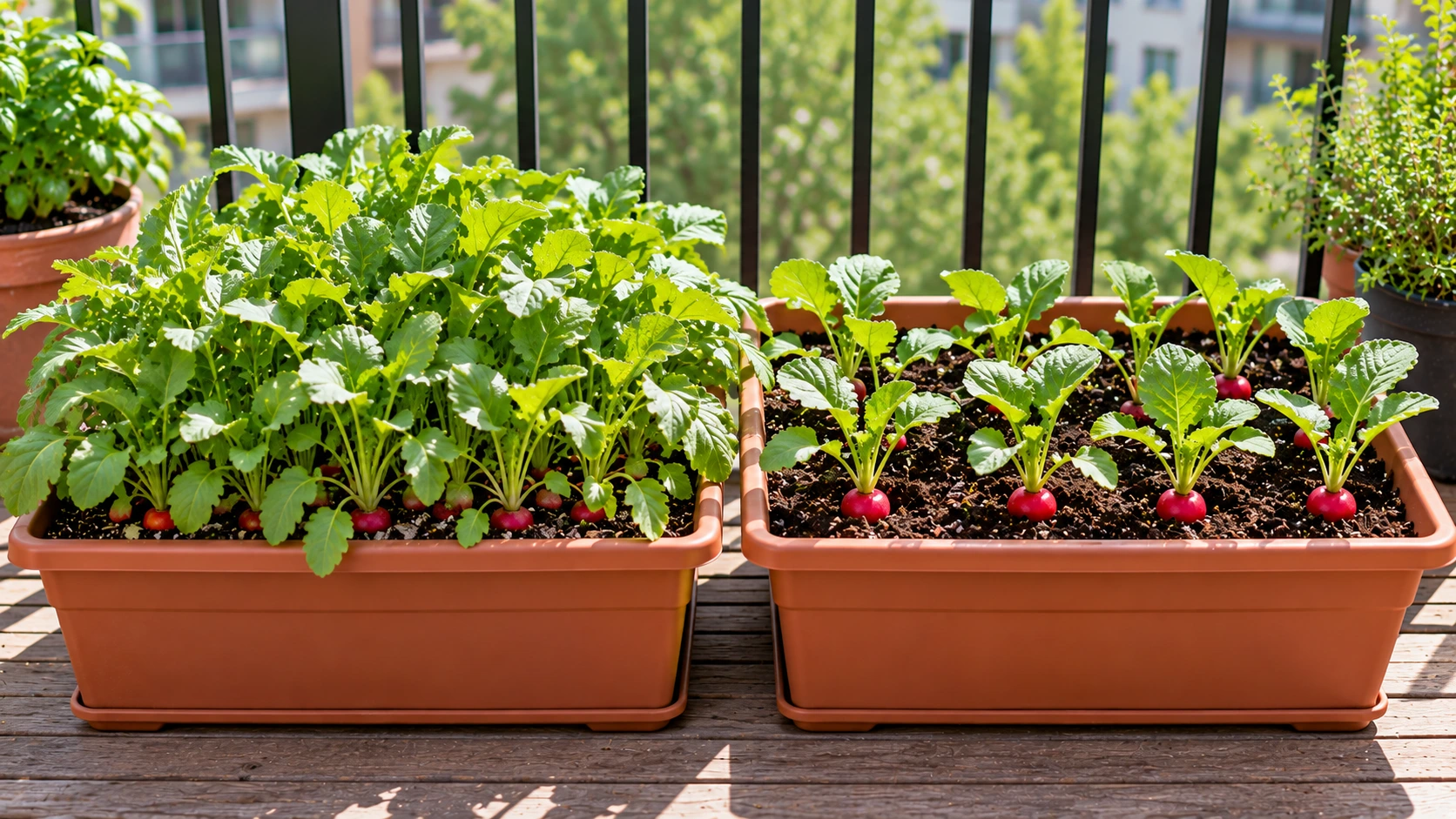
When you are unsure whether another plant will fit, planning for fewer mature plants is usually more practical than filling every open spot with another seedling.
More Vegetables From One Container Does Not Have to Mean More Plants at Once
Growing more vegetables from one container does not always require growing more plants at the same time. Succession planting can let the same container produce multiple plantings over the growing season without overcrowding any single crop.
A simple approach is to grow a crop, harvest it, and then replant the container with another suitable crop when growing conditions allow. Leafy greens and other relatively quick crops can be particularly useful for this approach.
Maryland Extension uses a similar strategy with Salad Tables and Salad Boxes, which can be replanted with leafy greens several times during the year.
For an apartment gardener with limited balcony or patio space, using the same container productively over time can be more useful than trying to grow the maximum number of plants at once.
How to Decide How Many Vegetables to Plant in Your Container
The best way to decide how many vegetables to plant in one container is to work from the mature crop requirements back to the container you have.
- Identify the vegetable and variety. A compact cucumber, patio tomato, or bush bean can have different space requirements from a larger-growing variety.
- Check the mature spacing and container recommendation. Use the seed packet, plant label, or reliable university Extension guidance for the specific crop.
- Measure the usable container space. Consider width, length, depth, and total volume rather than gallons alone.
- Decide whether the crop should be counted or spaced. Tomatoes are usually planned as individual container plants, while carrots and radishes are better planned by final spacing.
- Plan for mature plants. Do not add another vegetable simply because young seedlings leave visible empty space.
Gardeners who are still deciding which pots to use can start with the Apartment Container Gardening beginner’s guide for help with container size, drainage, potting mix, and other container-growing basics.
Frequently Asked Questions About Vegetables Per Container
How Many Vegetable Plants Should You Put in One Pot?
The number of vegetable plants you should put in one pot depends on the vegetable, variety, container dimensions, and mature spacing. A standard tomato is usually easiest to plan as one plant in an appropriately sized container, while smaller vegetables such as lettuce can support several plants.
Carrots, radishes, beets, and similar direct-sown crops are better planned by final spacing than by choosing one fixed number of plants for every pot.
Can You Plant Multiple Vegetables in the Same Container?
Multiple vegetables can grow in the same container when the pot provides enough growing space and the crops have compatible light, moisture, root-space, and mature-spacing requirements.
A mixed vegetable container should be planned according to how large the vegetables will become, not how much empty space surrounds the plants immediately after planting.
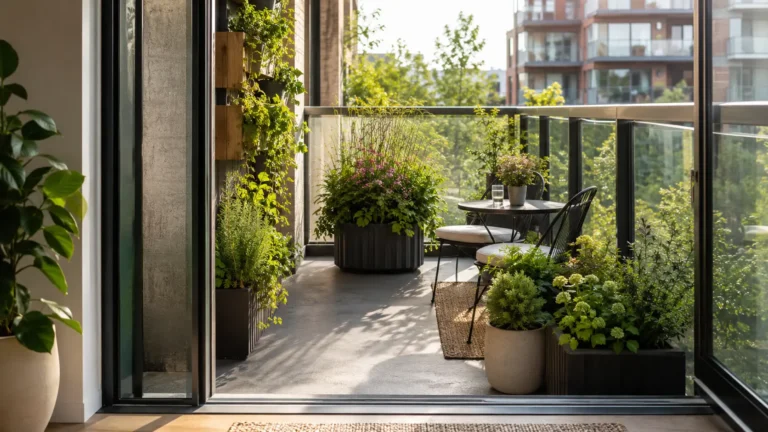
Apartment gardeners planning several edible crops outdoors can also use the Apartment Balcony Vegetable Garden guide to match vegetables and containers to the available balcony space.
How Far Apart Should Vegetables Be in a Container?
Vegetables in containers should be spaced according to the crop and variety rather than one universal container-spacing rule. Root crops and leafy vegetables may be planted relatively close together, while large fruiting vegetables need substantially more room.
The seed packet or crop-specific Extension recommendation is the best starting point for determining final spacing. Extra seedlings can then be thinned after germination to leave the appropriate growing room.
Can Vegetables Be Planted Closer Together in Containers?
Vegetables should not automatically be planted closer together simply because they are growing in a container. A container limits the root space, water, nutrients, and growing media available to all of the plants sharing it.
Maryland Extension recommends planting container vegetables at the recommended spacing for the crop and thinning extra seedlings as needed after germination.
Closer planting can be appropriate for certain crops, varieties, or harvesting methods, but it should be based on crop-specific guidance rather than the assumption that container vegetables need less space.
The Bottom Line
The right number of vegetables per container depends on the crop, variety, mature spacing, and the container’s usable growing space. Large vegetables such as tomatoes and eggplants are usually easiest to plan as individual plants, smaller vegetables such as leaf lettuce and bush beans can support several plants, and carrots, radishes, beets, and spinach are better planned by final spacing.
A successful container vegetable garden does not need the maximum possible number of plants in every pot. Give each vegetable enough room to mature, choose containers that match the crop’s root and above-ground growth, and use crop-specific spacing instead of relying on a universal plants-per-gallon formula.