Apartment Container Gardening: A Beginner’s Guide
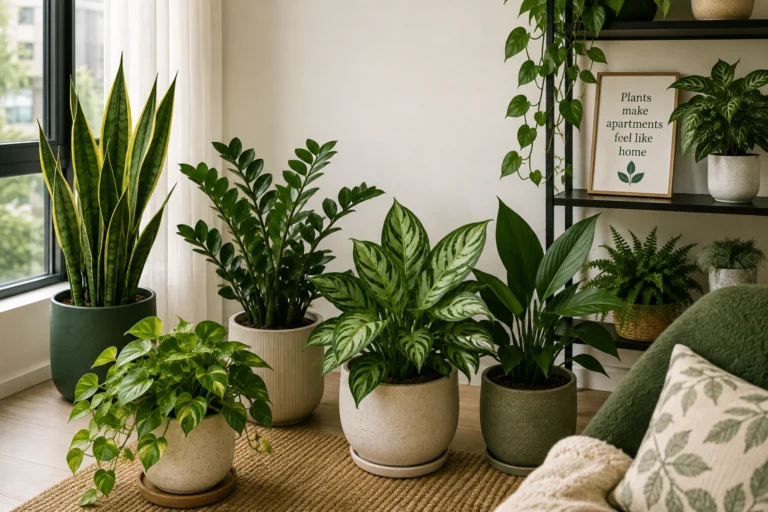
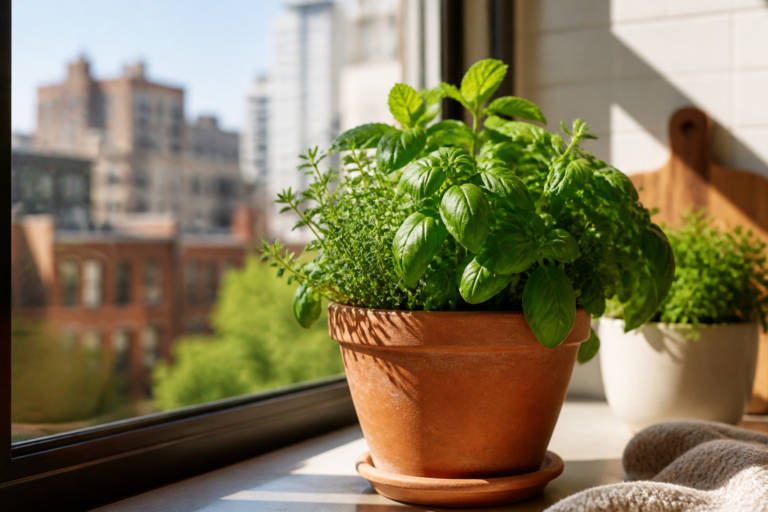
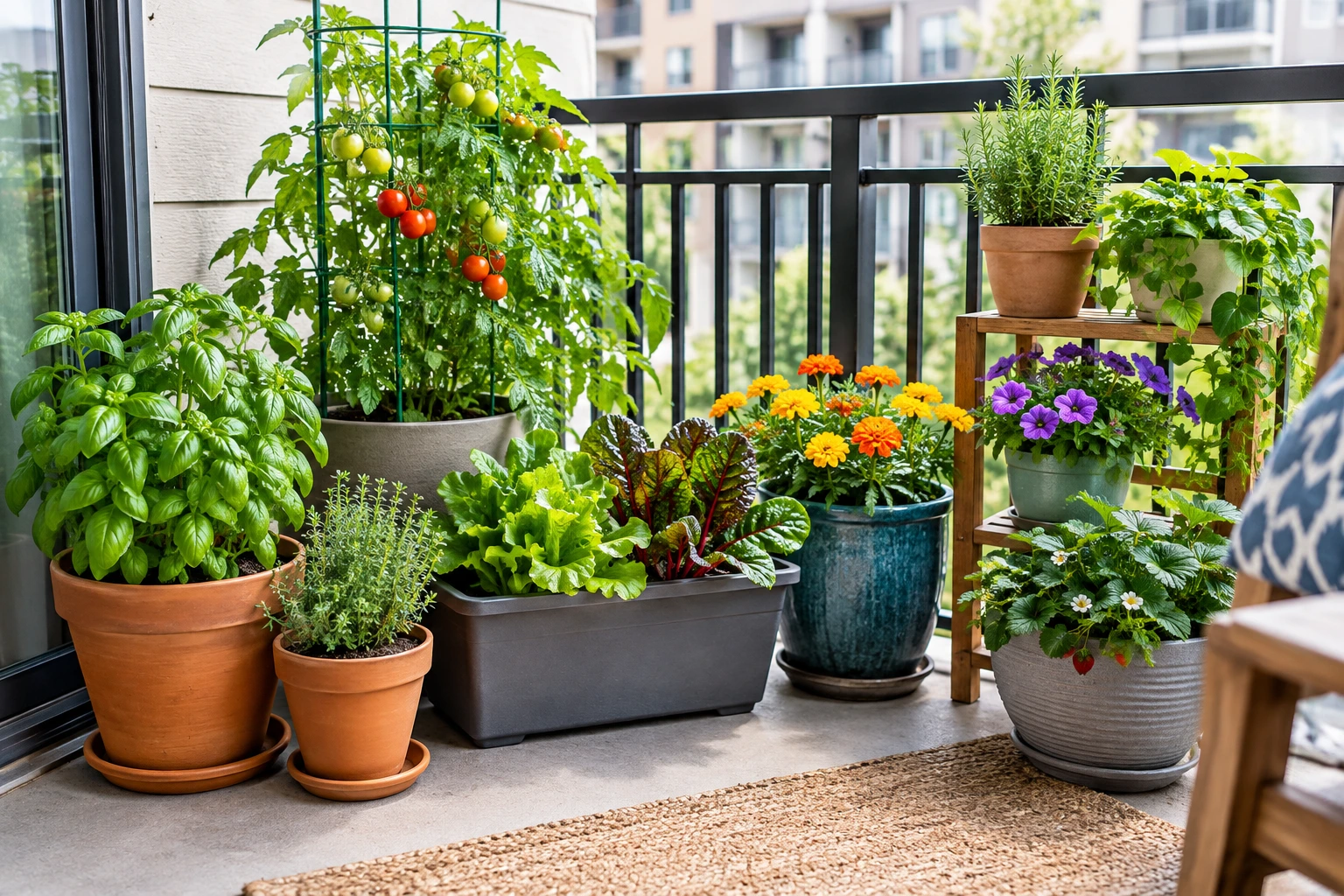
Apartment container gardening lets you grow plants without a backyard or traditional garden bed. A sunny balcony, small patio, windowsill, or bright corner can be enough to grow herbs, vegetables, flowers, or houseplants—as long as the plants match the conditions you actually have.
The pot is only one part of the equation. You also need enough room for the roots, a suitable potting mix, good drainage, and a watering routine that works in your apartment.
If you’re starting from scratch, our guide to gardening in an apartment covers the broader basics of evaluating your space, light, and growing options.
For a container garden, though, start with one question: Where is the pot going to sit?
In This Guide
Start With Your Apartment Growing Space
Containers are movable, but they can’t make a sun-loving plant happy in a dark corner. Before buying pots or plants, spend a little time looking at the space where you actually plan to grow.
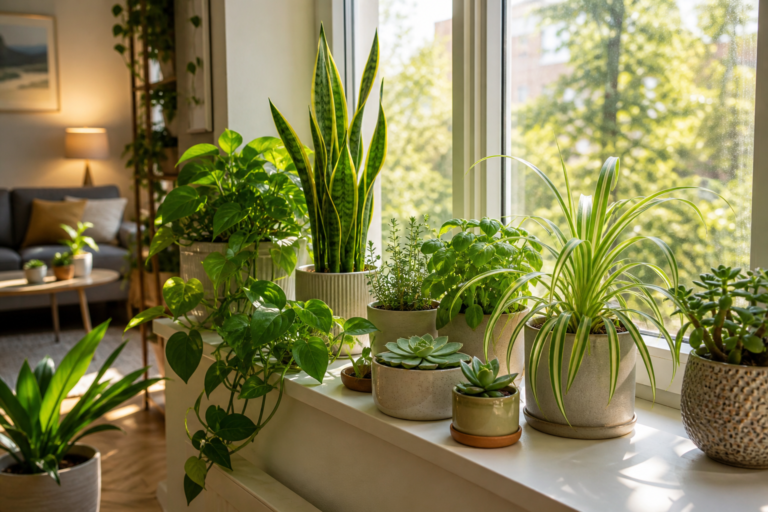
Indoor Containers
Indoors, start with usable light. A bright windowsill may be enough for some plants, while a darker room may need supplemental lighting.
Then look at the practical side of keeping a potted plant there. Can you reach it easily with a watering can? Is there enough room for the plant as it grows? Where will drainage water go?
That last question matters more in an apartment than many beginners expect. A pot that drains perfectly can still become a problem if every watering leaves a puddle on a wood floor or windowsill.
If most of your plants will be inside, our Indoor Apartment Gardening guide covers indoor growing in more detail. When natural light isn’t enough, our Best Grow Lights for Indoor Plants guide can help with supplemental lighting.
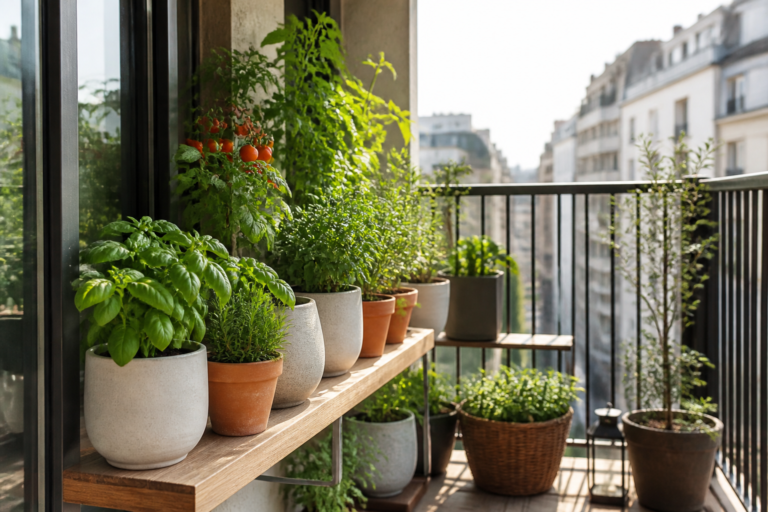
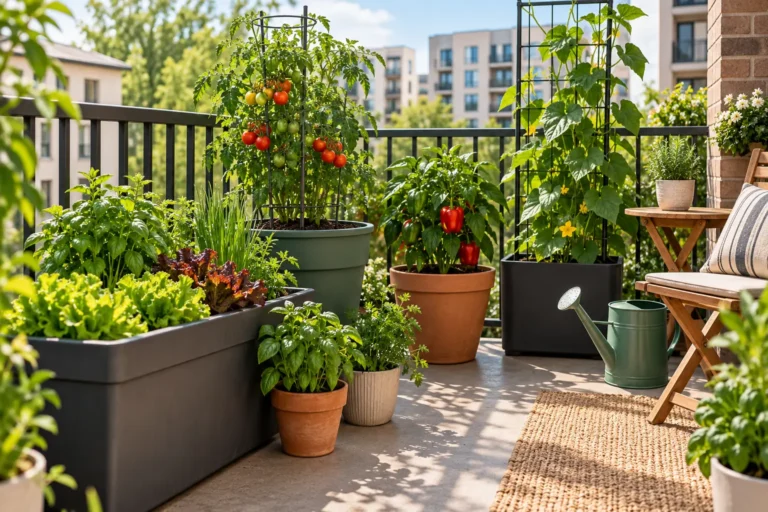
Balcony and Patio Containers
Balconies add two challenges indoor gardeners don’t deal with nearly as much: wind and heat.
A planter beside a hot wall on a west-facing balcony can dry much faster than the same planter on a protected, shaded patio. Upper-floor balconies may also be windier than conditions at ground level.
NC State Extension notes that containers can take advantage of small microclimates. Southern and western exposures tend to be warmer and sunnier, while northern and eastern exposures tend to be cooler and shadier.
Also pay attention to rain. A balcony may be outdoors but still receive surprisingly little rainfall if the floor or overhang above it acts like a roof.
For the broader process of setting up an outdoor apartment garden, see our Apartment Balcony Gardening guide.
Before You Buy a Pot
Take a quick look at the spot you have in mind:
- How much usable light reaches it?
- Is it exposed to strong wind or reflected heat?
- Where will water go when the pot drains?
- Can you reach it easily for watering?
- Is there enough room for the mature plant?
- Will you still be able to move the planter once it’s full of damp potting mix?
You don’t need a perfect location. You need to understand its limitations before deciding what belongs there.
Choose the Plant Before You Choose the Container
It’s easy to do this backward.
You see a planter that fits perfectly beside the balcony door, buy it, and then start looking for something to put in it. A better approach is to choose what you want to grow first.
A compact herb doesn’t need the same root space as a mature tomato plant. The plant’s eventual size and root system should help determine the depth and volume of the pot.
If you haven’t decided what to grow yet, our Best Plants for Apartment Gardening guide is a better place to start. If you’re mainly interested in growing food, see our Apartment Vegetable Gardening guide.
Once you’ve chosen the plant, you can choose a pot that actually suits it.
Choose the Right Container Size
One of the easiest mistakes to make in a small apartment is choosing the smallest pot that fits the available space.
Small pots certainly have their place, but they hold less potting mix. That gives roots less room and leaves less growing medium to hold moisture between waterings. On a sunny or windy balcony, a very small pot can turn watering into a constant chore.
If you’re growing outdoors, our guide to watering balcony plants explains how container size, sun, wind, heat, and pot material change how often plants may need water.
NC State Extension recommends considering both the depth and total volume of a container. Its guidance also notes that restricted root growth can reduce plant growth, while larger containers generally dry more slowly.
Going bigger has tradeoffs, too. Larger planters require more potting mix, occupy more floor space, and become heavier after watering.
So don’t look for one universal “best pot size.”
Choose a pot large enough for the plant’s root system and mature size without making the setup unnecessarily large for your apartment.
For one common container size, see our guide to vegetables you can grow in a 5-gallon bucket to compare which crops are practical for that amount of growing space.
Growing vegetables? Container depth matters just as much as overall pot size. Our guide to how deep containers need to be for vegetables breaks down practical depth ranges for different crops.
Which Container Material Is Best?
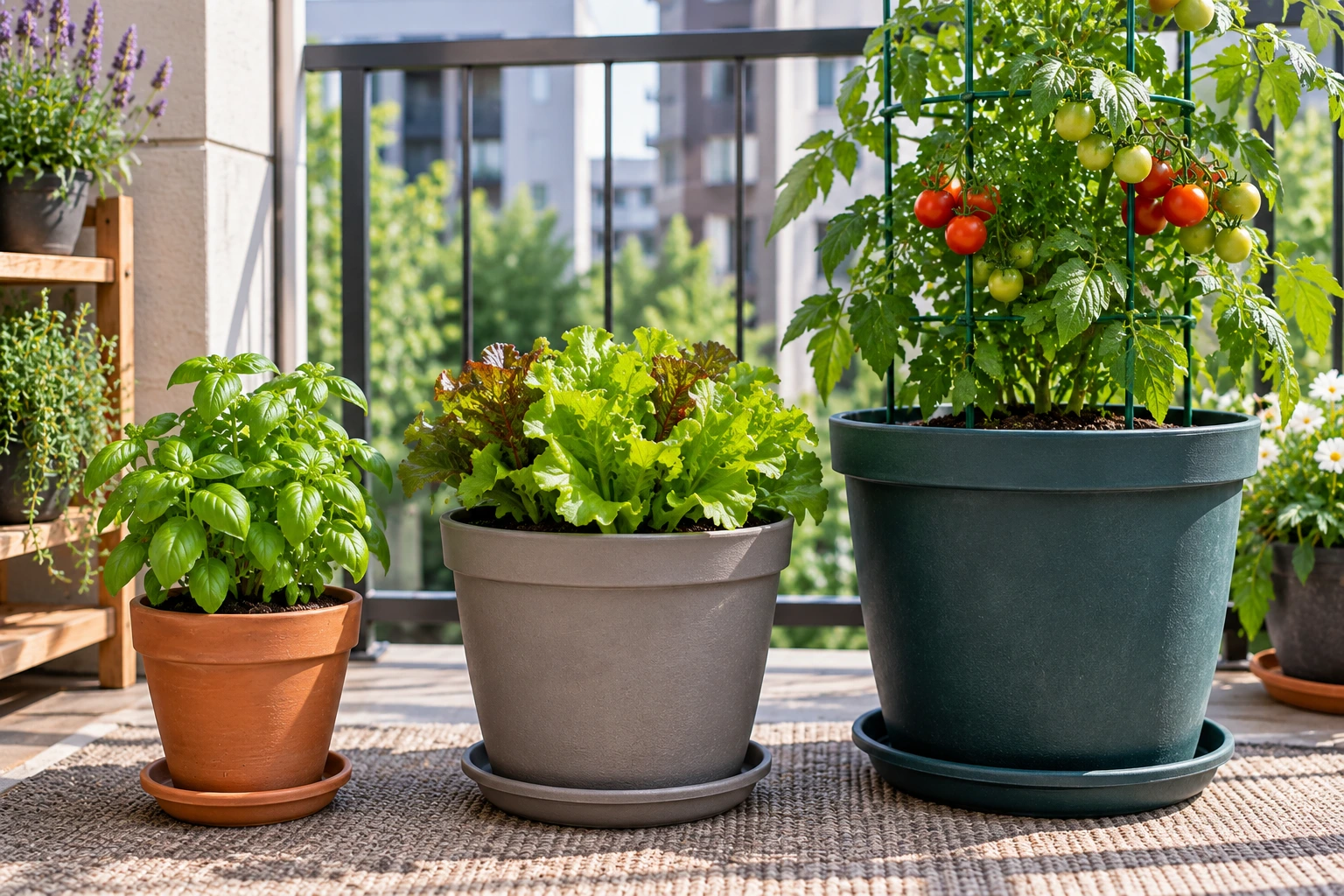
Material affects more than the way a planter looks. It can change how heavy the pot is, how quickly the growing medium dries, and how easy the plant is to move.
| Container material | Typical weight | Moisture loss | Apartment consideration |
|---|---|---|---|
| Plastic or resin | Lower | Lower | Lightweight and easier to move |
| Terra-cotta or unglazed clay | Moderate | Higher | Porous and may need more frequent watering |
| Glazed ceramic | Higher | Lower | Stable but can become quite heavy |
| Fabric grow bags | Lower | Higher | Lightweight, but runoff needs planning |
| Wood | Varies | Moderate | Useful for larger planters but can be bulky |
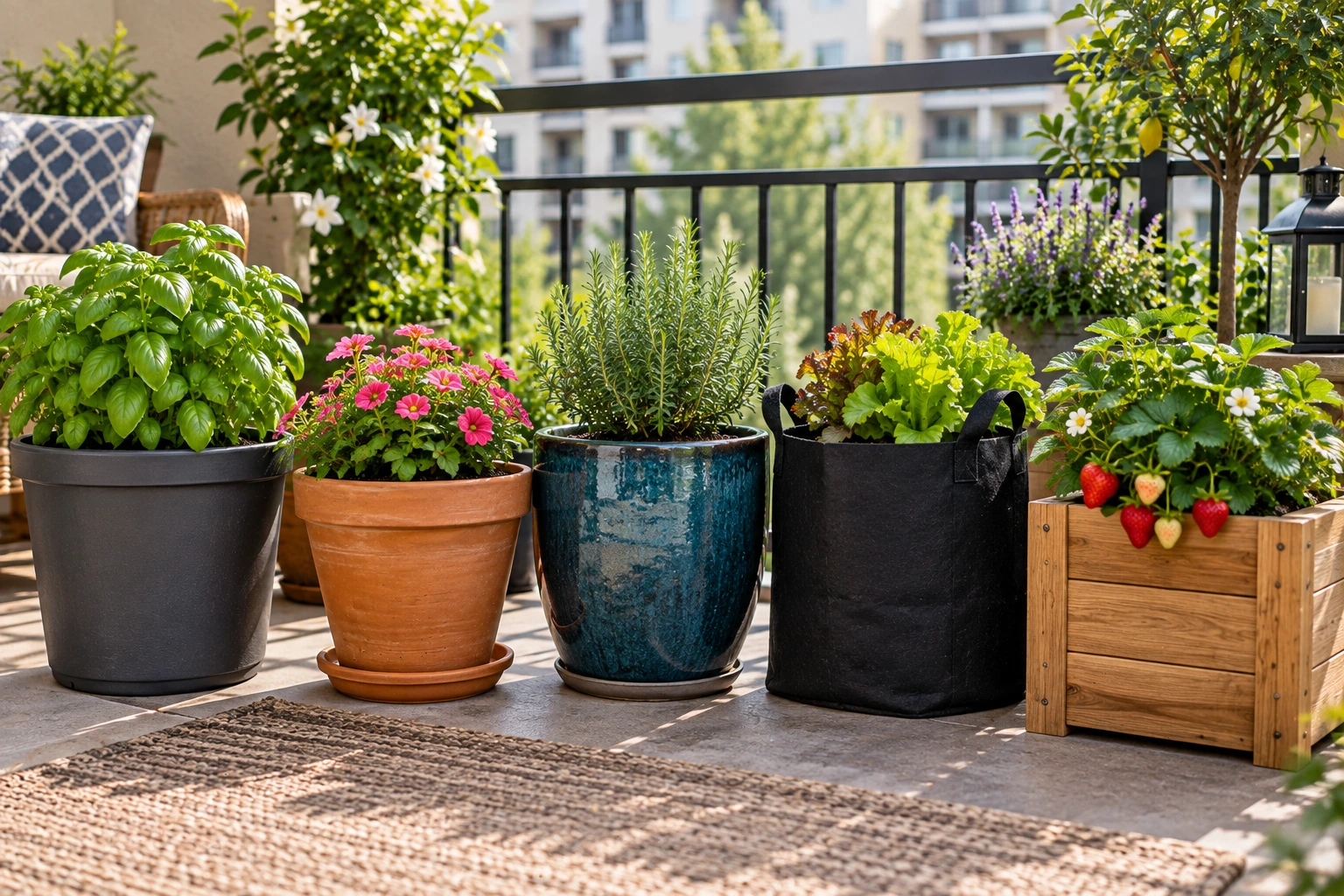
For an apartment gardener, weight deserves extra attention. A glazed ceramic planter that feels manageable at the store can be surprisingly difficult to move after it’s filled with damp potting mix and a mature plant.
On the other hand, an extremely lightweight pot may be easier to carry but less stable on an exposed balcony.
Think about where the planter will live and whether you expect to move it before choosing based on appearance alone.
Drainage Is More Important Than Most Beginners Realize
Roots need water, but they also need air.
When excess water can’t escape, it occupies pore spaces in the growing medium that would otherwise contain air. Poor drainage can leave roots waterlogged and contribute to root problems. University of Maryland Extension recommends adequate drainage holes or slits so excess water can escape.
For a conventional planter, start by checking the bottom for functional drainage holes. Don’t assume they’re there just because the container was sold as a flowerpot.
A decorative pot without holes can still work as an outer container. Keep the plant in a nursery pot that drains, then make sure water isn’t accumulating around the inner pot after watering.
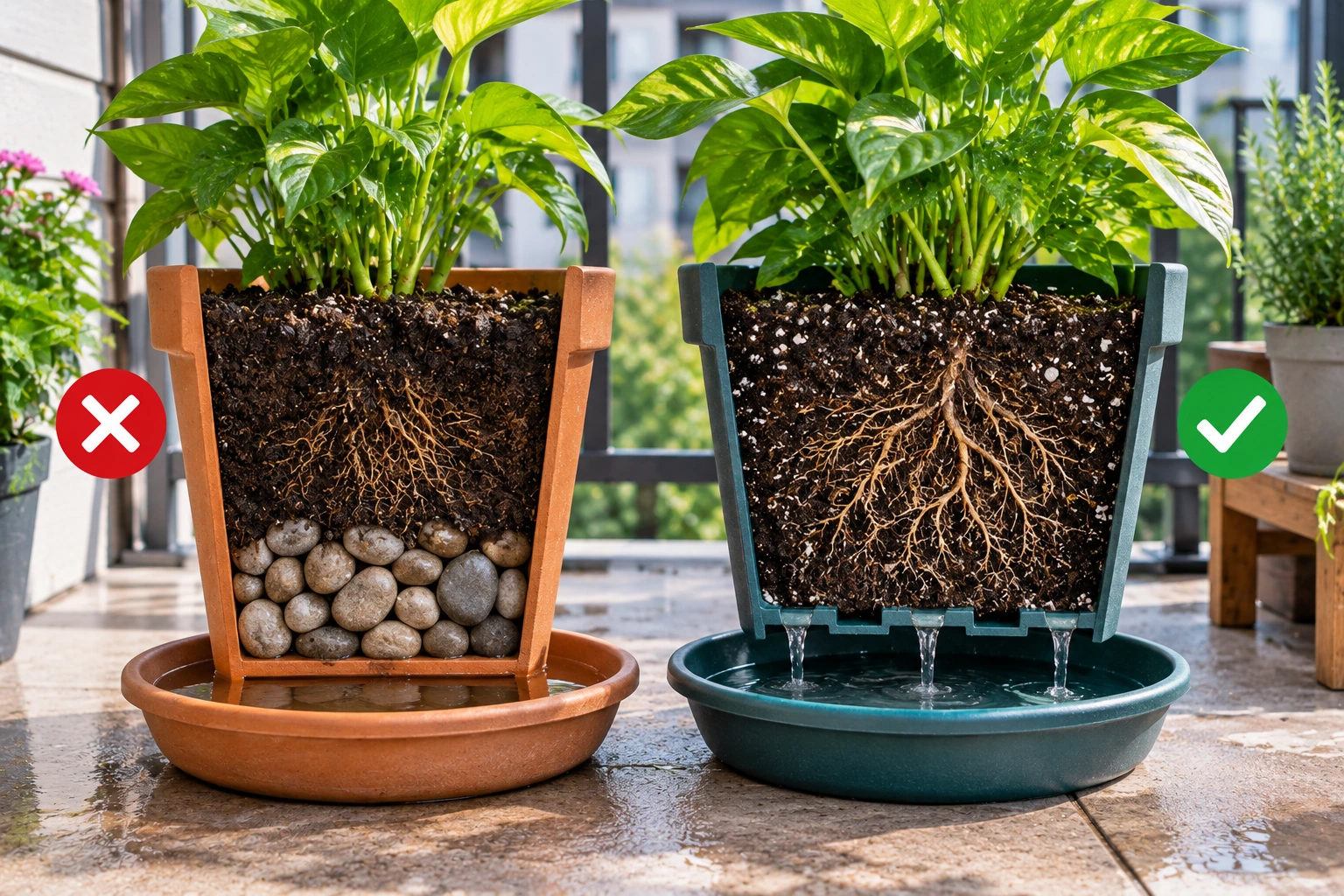
Don’t Put Rocks in the Bottom of Pots for Drainage
You may have heard that putting gravel, pebbles, or broken pottery beneath the potting mix helps excess water drain.
Skip it.
University of Maryland Extension advises against adding rocks, gravel, or broken pot shards to the bottom of a container. The layer doesn’t improve drainage, can worsen waterlogging, and takes up space that roots and growing medium could otherwise use.
If a drainage hole is large enough for potting mix to wash out, cover the opening with a small piece of porous material that lets water pass through.
The solution to poor drainage is functional drainage, not a layer of rocks.
Manage Drainage Without Damaging Your Apartment
Apartment gardeners have to solve two problems at once:
The plant needs drainage, but the apartment needs protection from that drainage.
Indoors, put a suitable saucer or waterproof barrier beneath pots that could damage floors, shelves, furniture, or windowsill’s.
A saucer catches water. It shouldn’t normally become a permanent puddle beneath the roots. Check it after watering and empty accumulated water when necessary.
Balcony gardeners have another person to think about: the neighbor downstairs.
University of Maryland Extension notes that drainage can stain wood and concrete surfaces and that saucers can be useful when gardening above another balcony. It also recommends emptying saucers regularly rather than allowing collected water to remain there.
This is an important distinction:
Controlling runoff doesn’t mean eliminating drainage.
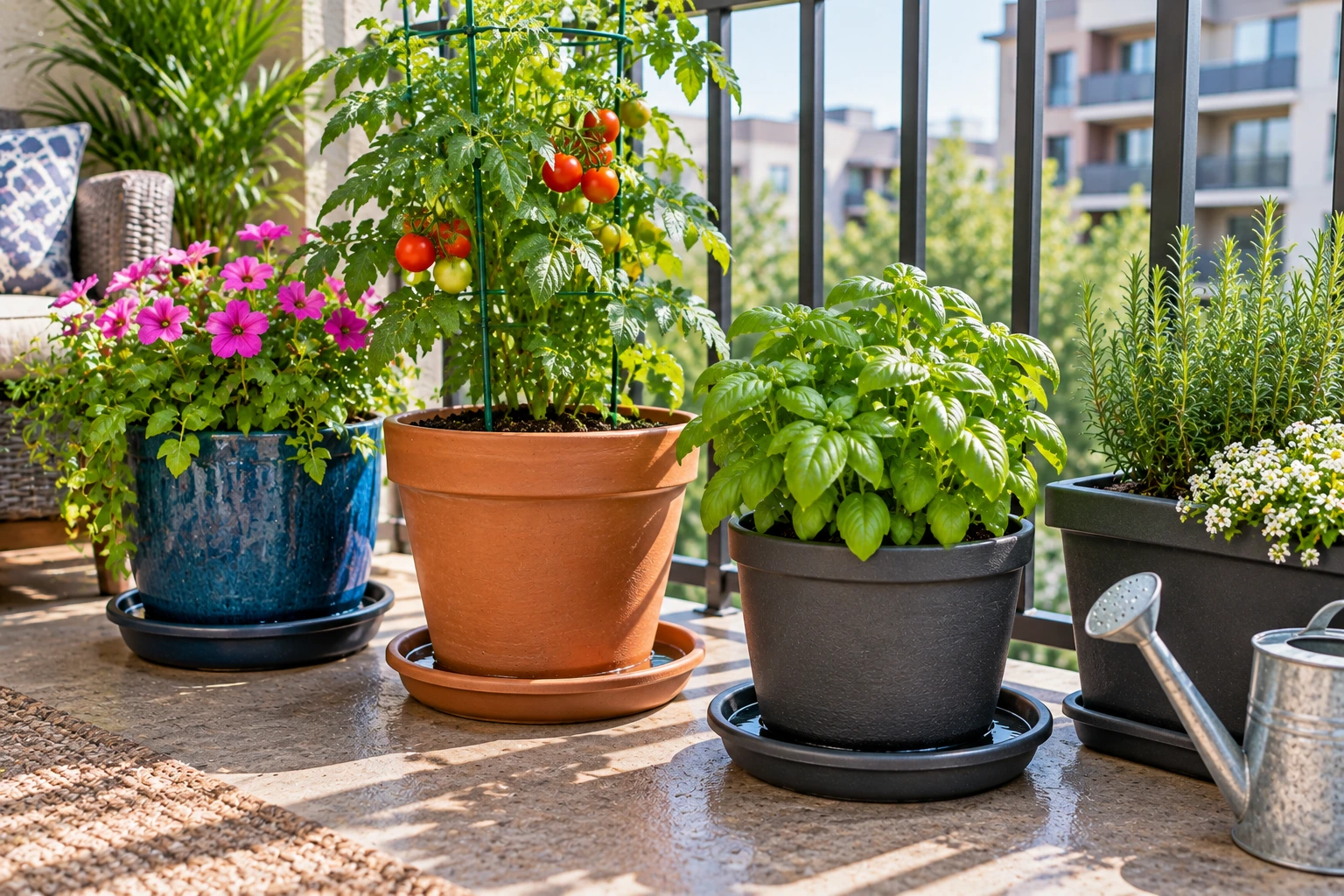
Your goal is to give excess water somewhere appropriate to go without leaving the root zone waterlogged.
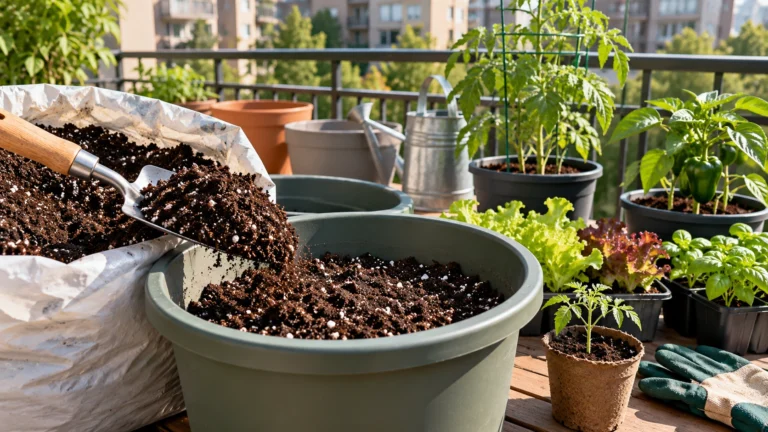
Use Potting Mix, Not Soil From the Ground
Digging up some soil outside may seem like an easy way to fill a planter, but soil behaves differently when it’s confined inside a pot.
Container roots depend on a relatively small amount of growing medium for water, air, nutrients, and physical support. Dense garden soil can restrict the movement of both air and water, especially in smaller pots.
University of Maryland Extension recommends lightweight soilless growing media for container gardens. Its guidance explains that garden soil is dense, may interfere with air and water movement, and can contain weed seeds, insects, or plant pathogens.
For most beginners, a quality commercial potting mix is the simplest choice.
Read the bag before adding anything else. Some mixes already contain fertilizer, lime, wetting agents, or other amendments.
Finished compost can also be useful in some container setups, but that doesn’t mean filling an entire pot with homemade compost. If you’d like to turn food scraps into usable material for your plants, our Apartment Composting guide explains the process in detail.
How to Plant an Apartment Container Step by Step
Once you have the plant, pot, and growing medium, the actual planting process is fairly simple.
1. Check the Drainage
Make sure the drainage holes are open.
If a large opening allows potting mix to wash through, cover it with a small piece of screen or another porous material that will hold the mix in place without blocking water. University of Maryland Extension recommends this approach for larger drainage holes.
2. Prepare the Potting Mix
Very dry potting mix can be difficult to wet evenly, particularly if it contains peat.
Moisten dry mix before filling the planter. You want it damp—not dripping wet.
3. Position the Plant
Set the plant at about the same depth it was growing in its original pot. Avoid burying the stem or crown deeper unless that particular plant benefits from being planted deeper.
If you’re transplanting an established plant, this is also a good time to look at the roots.
4. Fill Around the Roots
Add potting mix around the root ball without pressing it down hard.
You want the plant secure, but you don’t need to pack the mix tightly. Compaction reduces the pore space roots need for air and water.
5. Leave Room for Watering
Stop filling before you reach the rim.
Leaving some space at the top gives water a place to collect briefly and soak into the mix instead of immediately spilling over the sides.
6. Water Thoroughly
Water slowly enough to moisten the root ball and fresh potting mix. For a conventional draining pot, excess water should eventually begin to leave through the drainage holes.
University of Maryland Extension recommends moistening dry growing media before filling containers, keeping the media loose rather than packing it tightly, leaving room near the rim, and watering gently after planting.
How to Water Apartment Container Plants
Forget the idea that every potted plant should be watered every three days—or every Saturday morning.
The right timing depends on the plant and its environment.
A small terra-cotta pot sitting in afternoon sun may dry much faster than a large plastic planter in a protected location. Wind, light, temperature, humidity, container size and material, growing medium, plant type, and stage of growth can all affect watering needs.
Instead of watering only by the calendar, check the growing medium.
How deep you check depends on the plant and pot, but don’t judge moisture from the appearance of the surface alone. The top can look dry while the root zone below is still moist.
When water is needed, apply enough to moisten the root zone rather than giving the plant a tiny splash. NC State Extension recommends watering container plants thoroughly and allowing excess water to drain rather than keeping the potting mix continuously saturated.
Outdoor pots deserve extra attention during hot, sunny, or windy periods. Very small planters may need checking much more often.
If you’re planning a trip, our How to Water Plants While Away guide covers vacation-watering options. If you have several plants and want a more automated approach, see our Automatic Plant Watering System guide.
Feed Container Plants Without Overfertilizing
Container roots can’t travel beyond the pot to find more nutrients, and repeated watering can gradually carry nutrients out through drainage.
Before reaching for fertilizer, though, check the potting-mix bag. Some commercial mixes already contain fertilizer.
When additional feeding is appropriate, base it on the plant, the growing medium, and the fertilizer label rather than assuming more is better.
Overfertilizing can damage roots and contribute to salt buildup. A struggling plant also isn’t automatically a hungry plant; problems with light, water, drainage, or roots won’t be fixed by adding fertilizer.
Know When Your Plant Has Outgrown Its Container
A pot that worked perfectly when you brought a plant home may not still be the right size a year later.
Signs a Plant May Be Root-Bound
Watch for a combination of clues rather than relying on just one:
- roots growing through drainage holes;
- a dense mass of roots circling the inside of the pot;
- the pot drying much faster than it used to;
- frequent wilting despite appropriate watering;
- growth slowing during the plant’s active growing period.
NC State Extension identifies stunted growth, frequent wilting that improves after watering, and roots pushing out of the pot among signs that repotting may be necessary.
Moving to a Larger Container
If the roots are genuinely crowded, move the plant into a reasonably larger pot rather than jumping straight to the biggest container that will fit in the room.
The larger pot provides additional root space, while fresh potting mix can improve growing conditions as older organic media breaks down and loses pore space over time.
Repotting also gives you a chance to inspect the roots instead of guessing about what’s happening below the surface.
Consider Weight, Wind, and Apartment Rules
This is where container gardening in an apartment can be very different from putting a few pots on the ground beside a house.
Container Weight
Never judge a large planter by what it weighs empty.
Potting mix, the plant, and water all add weight. University of Maryland Extension gives a useful example: a 20-inch-diameter container filled with moist potting mix and plants can weigh about 100 pounds.
That doesn’t mean every 20-inch pot weighs 100 pounds. Materials and contents vary. It does show how quickly the weight can add up.
If you’re using several large balcony planters, check your lease, building rules, or property-management guidance. Don’t rely on a generic balcony weight limit found online; buildings differ.
Wind and Stability
A tall plant on an exposed balcony can behave like a sail.
A lightweight planter that is convenient to move may also tip more easily in strong wind. University of Maryland Extension similarly cautions that tall plants in small, lightweight containers can become top-heavy or blow over.
Think about the height of the plant, the width and weight of the pot, and where the container will sit. Anything that could fall from a balcony deserves particular care.
Lease and Building Rules
Check your property’s rules before installing railing planters, hanging containers, large balcony planters, or anything that attaches to the building.
Rules may also address drainage, walkways, or balcony use.
You don’t need to turn gardening into a legal research project. Just check before building a setup that may be difficult or expensive to change later.
10 Apartment Container Gardening Mistakes to Avoid
Most beginner problems come back to a handful of decisions:
- Buying the pot before evaluating the location — Light, wind, heat, and runoff should influence the setup.
- Choosing a pot that’s too small — Less growing medium means less room for roots and less moisture reserve.
- Using garden soil — Dense soil usually doesn’t provide the air-and-water balance roots need in a pot.
- Ignoring drainage — Excess water needs a way out.
- Adding gravel for drainage — It doesn’t provide the benefit many gardeners assume.
- Watering by the calendar — Check actual moisture conditions instead.
- Ignoring balcony heat and wind — Both can change how quickly a pot dries.
- Leaving pots sitting in drainage water — Catch runoff when necessary, then manage the collected water.
- Assuming more fertilizer means more growth — Excess fertilizer can create new problems.
- Ignoring crowded roots — Plants can eventually outgrow containers that once fit them well.
What Are the Downsides of Container Gardening?
Container gardening is practical, but it isn’t maintenance-free.
The main drawbacks are limited root space, faster moisture changes, ongoing nutrient management, and the weight and cost of larger planters. Plants may eventually need repotting, and apartment gardeners have to manage drainage without damaging floors or dripping water onto neighboring balconies.
Outdoor containers can also be less forgiving during hot or windy weather. NC State Extension notes that container gardening can require more frequent watering and fertilization than growing plants in the ground.
Those tradeoffs aren’t reasons to avoid containers. They simply mean a few pots still need regular attention.
Your First Apartment Container Garden
If this is your first container garden, start smaller than you think you need to.
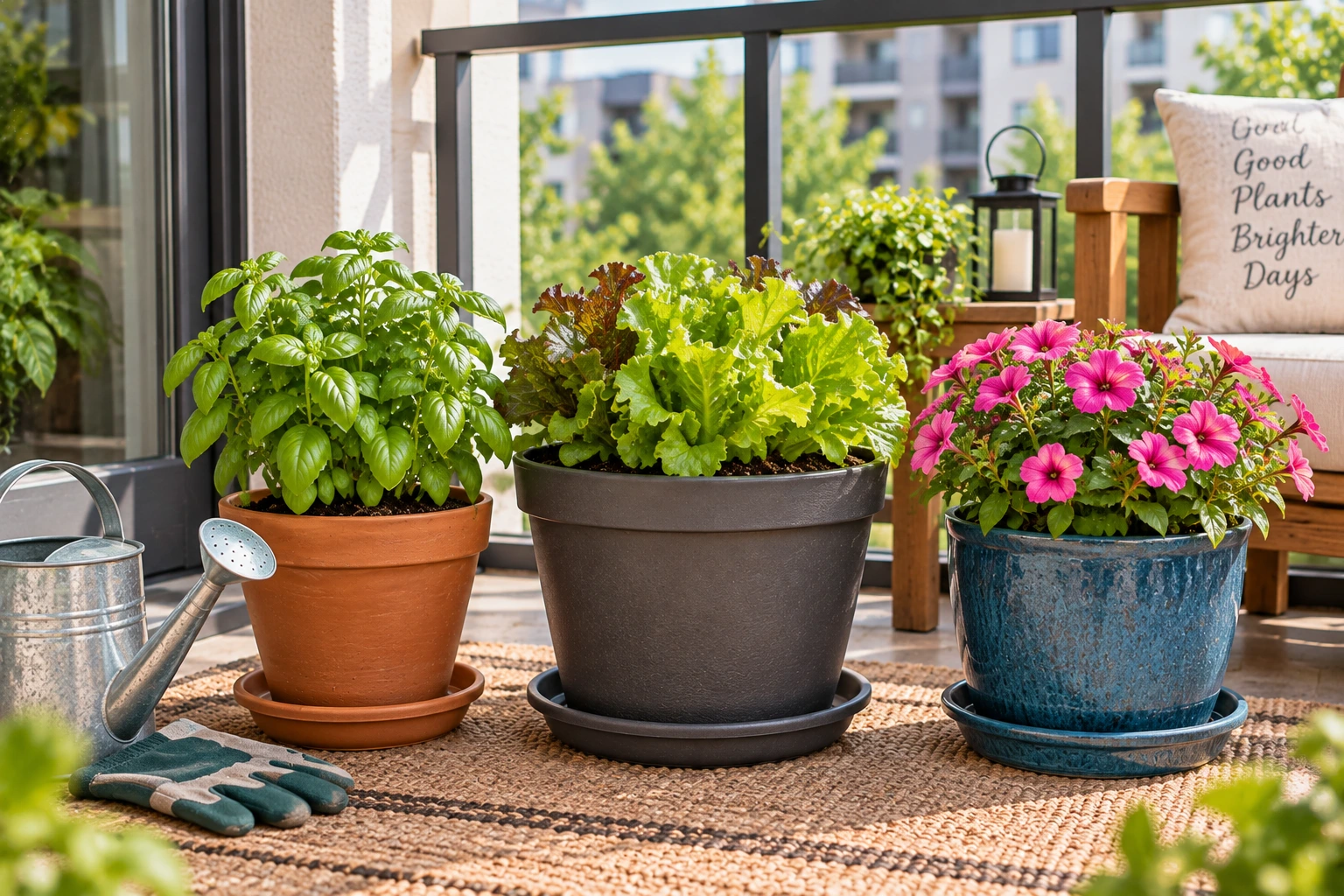
Pick two or three plants suited to the light you actually have. Give each one an appropriately sized pot with drainage and quality potting mix. Add saucers where runoff could cause problems, and put the plants somewhere you can reach easily with a watering can.
Then pay attention.
For the first few weeks, notice how quickly each pot dries. Watch how the plants respond to the available light. If they’re outside, see what happens on hot or windy days.
Those first few plants will teach you more about your apartment’s growing conditions than starting with 15 plants at once.
If you’re trying to keep startup costs low, our Very Small Garden Ideas on a Budget guide has additional ideas for making the most of limited growing space without buying unnecessary equipment.
Apartment Container Gardening FAQs
Can You Have a Container Garden in an Apartment?
Yes. You can grow in containers indoors, on a balcony, on a patio, or anywhere else you have suitable light and enough room to care for the plants safely.
What Size Containers Are Best for Apartment Gardening?
There isn’t one best size. Match the pot’s depth and volume to the mature plant and its root system while considering how much space and weight your apartment can accommodate.
Do Apartment Plant Containers Need Drainage Holes?
Conventional pots generally need functional drainage. If you use a decorative container without holes, keep the plant in a draining inner pot and make sure it isn’t left sitting in collected water.
Can You Use Garden Soil in Apartment Containers?
Garden soil generally isn’t a good choice by itself. A quality container mix is lighter and provides a better balance of drainage, moisture retention, and aeration.
What Is the Most Common Container Gardening Mistake?
Poor moisture management is one of the biggest sources of trouble. Both overwatering and letting the root zone become excessively dry can stress plants, which is why drainage, pot size, growing medium, and checking moisture all matter.
Final Thoughts
Apartment container gardening gets easier once you stop treating every pot the same way.
A small terra-cotta pot on a windy, sunny balcony will behave differently from a large plastic planter beside an indoor window. Once you understand those differences, decisions about watering, pot size, drainage, and placement become much easier.
Start with two or three plants, learn how those pots behave in your space, and expand from there.
You don’t need a backyard—or twenty containers—to start growing successfully.