Small Space Gardening: 20 Ways to Grow More in Less Space
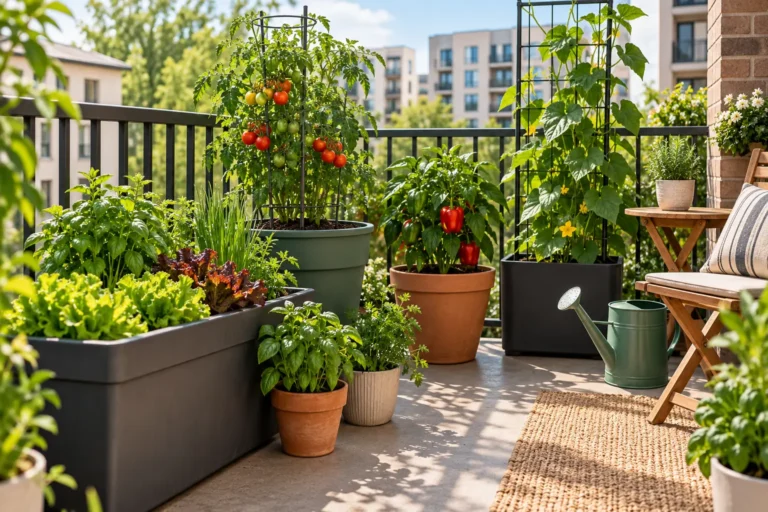
Small space gardening is less about fitting as many pots as possible into a tight area and more about making better use of the growing space you already have. A balcony, patio, bright window, shelf, or compact outdoor area can support a useful garden when you start thinking beyond floor space.
Vertical growing, compact plants, well-chosen containers, and multiple growing levels can help you use limited room more efficiently. Which techniques make sense depends on the light and physical space available.
If you’re completely new to apartment gardening, start with our broader beginner’s guide. If you’re ready to make a limited growing area work harder, the ideas below will help you decide where to begin.
In This Guide
What Is Small Space Gardening?
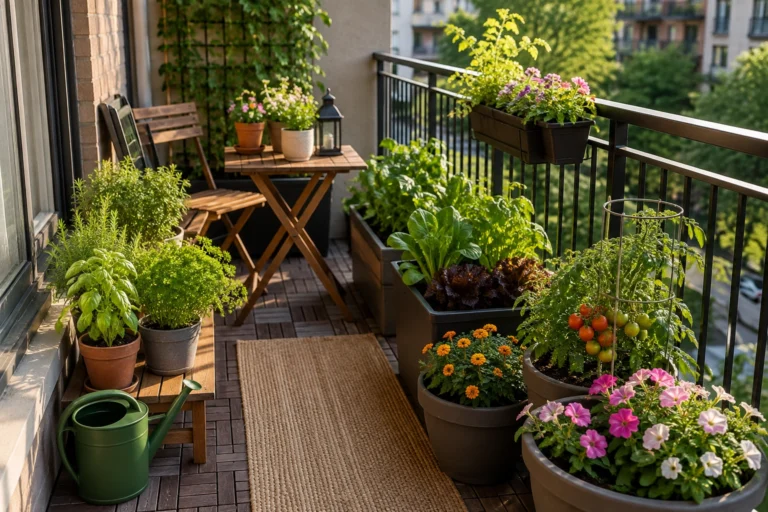
Small space gardening means growing plants within a limited area while using the available space efficiently. That might be a few containers on an apartment balcony, plants beside a sunny window, a narrow patio garden, or several growing levels on a shelf.
The important distinction is that a small garden isn’t measured only by square footage. A wall, railing, windowsill, shelf, or overhead location may provide additional growing space even when the floor is nearly full.
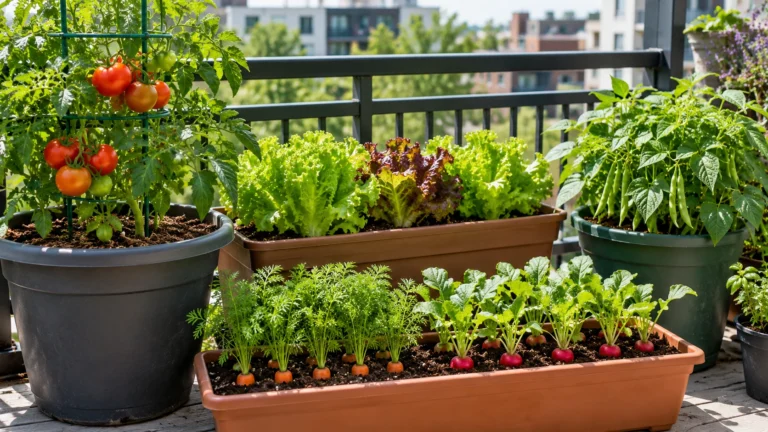
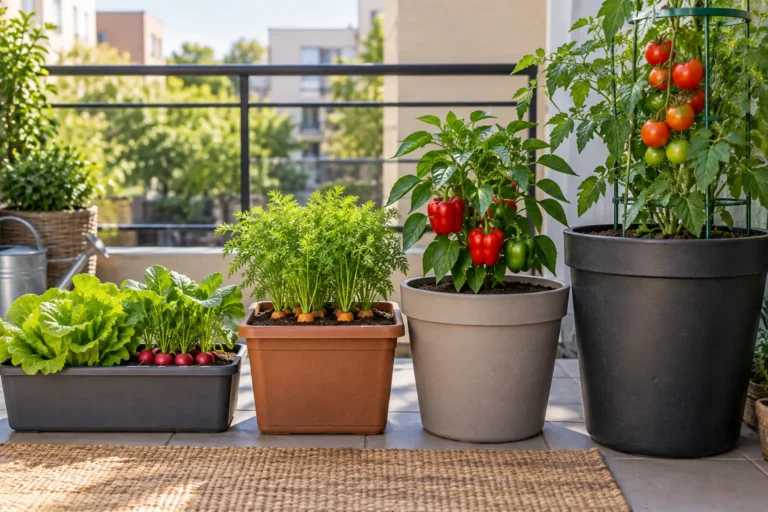
Containers are especially useful when there’s no traditional garden bed. The University of Maryland Extension’s container gardening guidance notes that the smaller scale and portability of containers can help fit plants into small spaces. Containers can also be used on balconies, decks, and other suitable surfaces.
The challenge is finding the parts of your space where plants can realistically grow and using those areas without creating an overcrowded garden.
Start With the Space You Actually Have
Before buying another container or plant stand, take a closer look at the area you want to use.
Find Your Usable Light
Start with light rather than available floor space.
A bright location and a dim corner may occupy the same amount of room, but they don’t offer the same growing conditions. Different plants have different light requirements, so the location needs to suit what you intend to grow.
Watch how sunlight moves through the space before deciding where additional plants should go. A location that looks promising in the morning may be shaded for much of the rest of the day.
Measure Floor Space and Vertical Space
Don’t measure only the floor.
Look at the width, depth, and height of the available area. Then consider walls, railings, windowsills, corners, shelves, and overhead locations that might support plants without taking up additional floor space.
A narrow area that holds only a few containers at ground level may accommodate more plants when some of the growing space moves upward.
Leave Room to Reach Your Plants
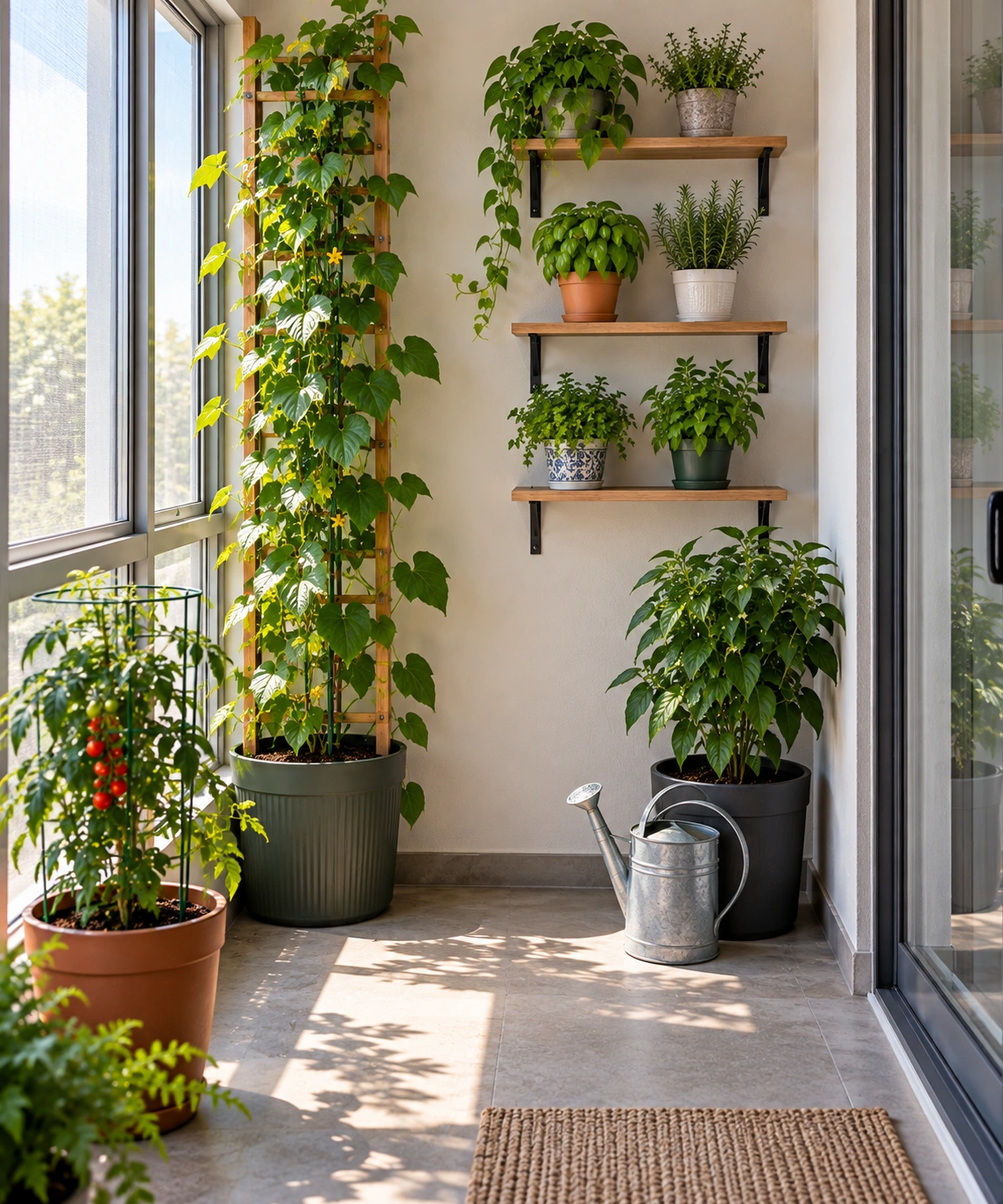
A garden isn’t using space efficiently if you have to move several containers every time you water one plant.
Leave enough access to water, inspect, prune, and harvest your plants. Plan around mature plant size rather than arranging everything according to how small the plants are when you first bring them home.
With those basics in place, you can choose the space-saving methods that fit your situation.
20 Small Space Gardening Ideas That Make Better Use of Limited Space
1. Grow Up Instead of Out
When horizontal room is limited, look for suitable ways to move some plant growth upward.
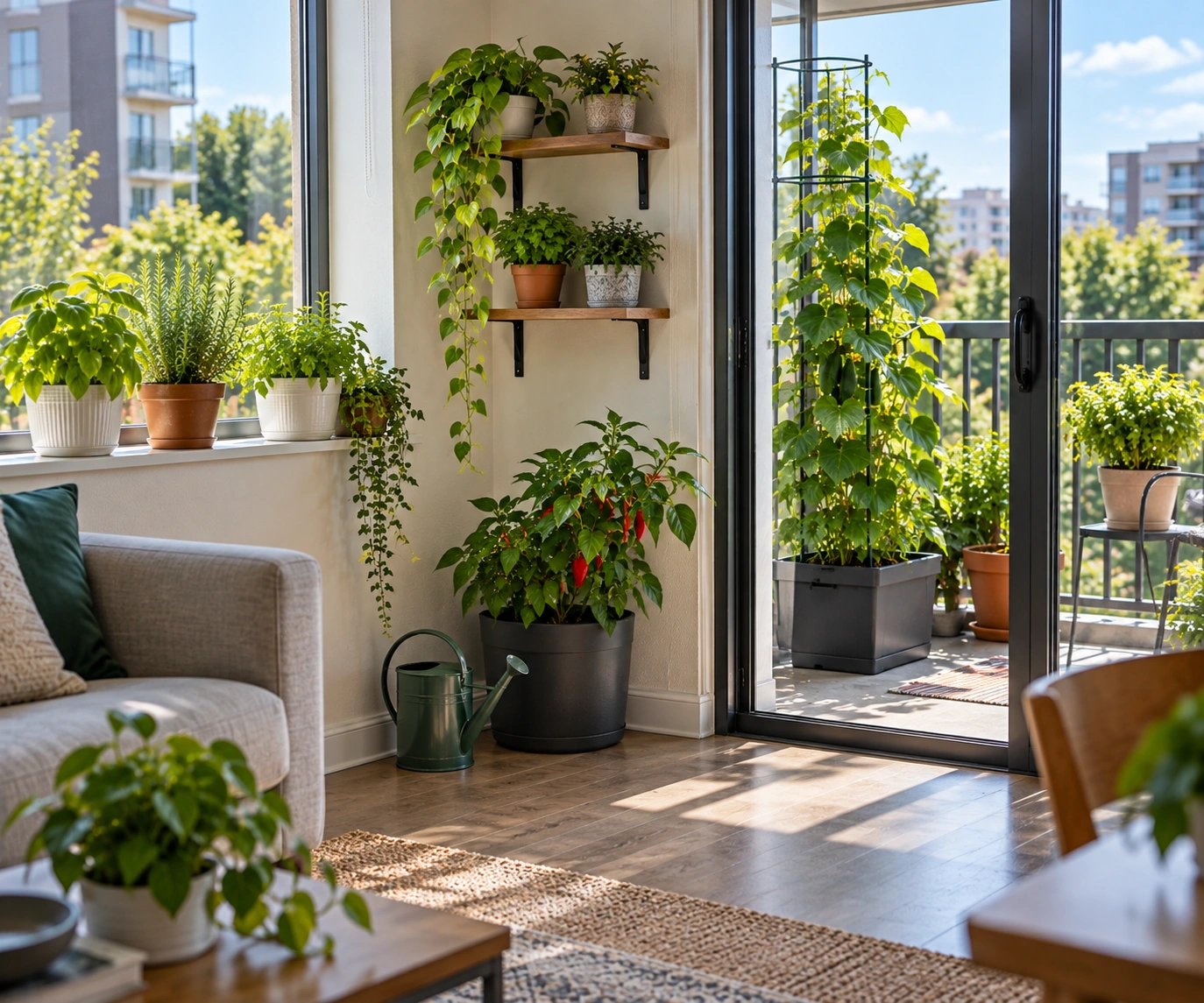
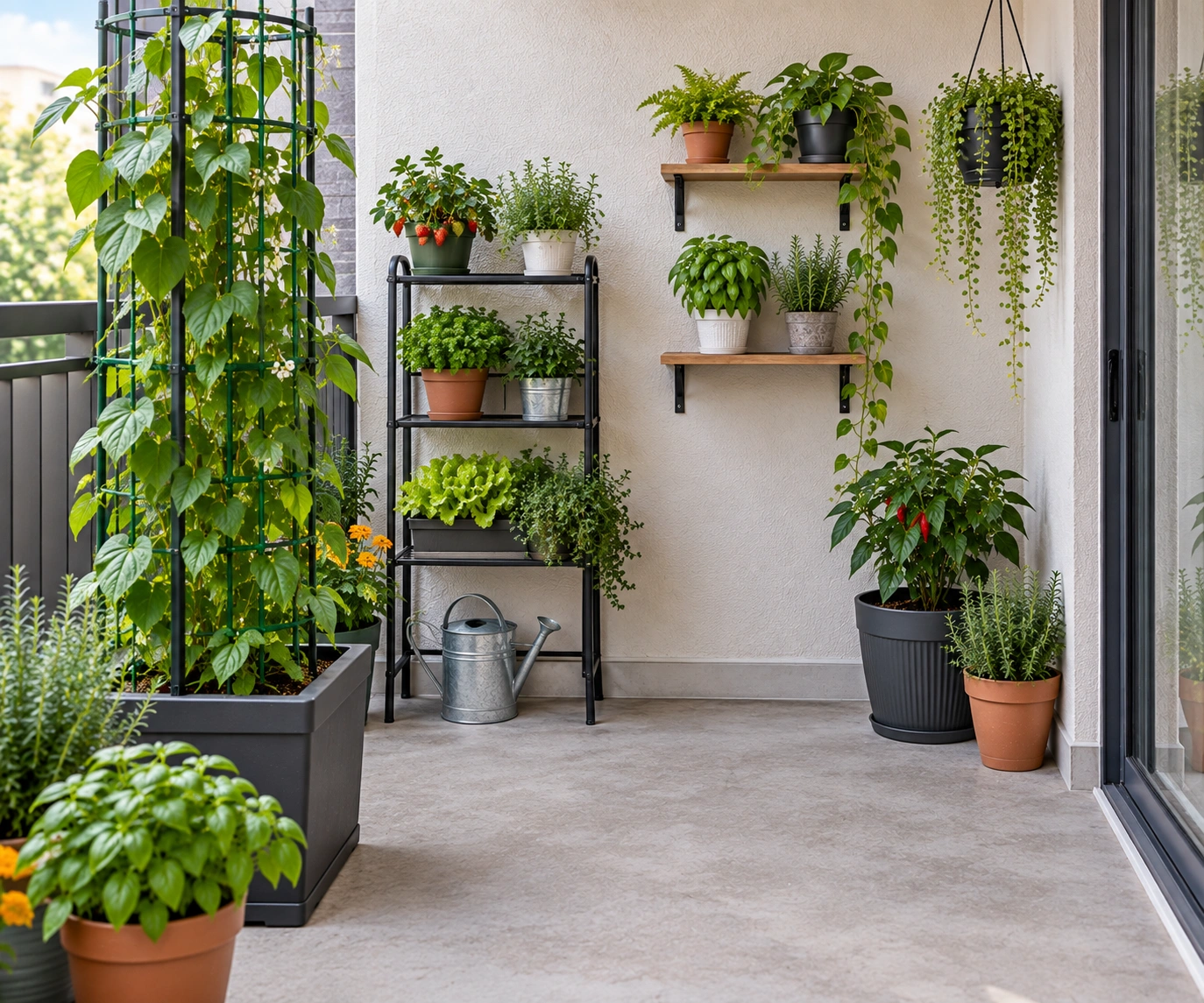
Vertical gardening may involve trellises, shelves, hanging containers, plant supports, or multiple growing levels. The right approach depends on the plants and the location.
Illinois Extension recommends vertical cropping as one technique for making maximum use of available garden space.
Vertical growing won’t make every large plant suitable for a tiny garden, but it can reduce the horizontal room needed by plants that naturally climb or respond well to support.
2. Train Climbing Plants on a Trellis
Vining plants can sometimes grow upward instead of spreading across a larger horizontal area.
Pole beans, peas, and some cucumbers are examples of plants that can grow on supports. Trellises need to be sturdy enough for the mature plants and any fruit they produce.
The University of Minnesota Extension’s guide to trellises and cages notes that many long-vined varieties can be grown successfully in small spaces when trained on appropriate trellises.
Install supports early when possible so plants can be trained as they grow rather than untangled later.
3. Add Tiered Plant Stands
A tiered plant stand creates several growing levels within roughly the same footprint.
Instead of lining several small pots across the floor, a multi-level stand lets some containers sit above others. This can work well for smaller plants when the location provides suitable light.
Arrange the tiers carefully. Larger plants on top can shade plants underneath, and every container should remain easy to reach for watering and routine care.
The stand also needs to support the weight of filled containers, not just empty pots.
4. Use Shelves for Smaller Plants
Shelves can turn a wall or narrow area into additional growing space.
A slim shelving unit near suitable light may hold several smaller containers while leaving more floor area open.
Allow enough vertical clearance for mature growth. A shelf that comfortably holds seedlings or young plants may become cramped as they get taller.
Keep watering in mind too. Plants on the back or upper shelves shouldn’t be so difficult to reach that routine care becomes a chore.
5. Use Hanging Containers
Hanging containers use overhead room that would otherwise remain empty.
They can work particularly well for suitable trailing or compact plants when floor space is limited. University of Maryland Extension includes hanging baskets among the locations where appropriate edible plants can be grown.
Consider the container’s filled weight, available light, drainage, and how easily you’ll be able to reach it.
A hanging basket isn’t saving useful space if watering it requires a major production every few days.
6. Use Railing Planters Where Allowed
Railing planters can create growing space without taking up as much balcony floor area.
If your lease, building rules, and railing setup allow them, choose containers designed to attach securely. Consider the filled weight, drainage, wind exposure, and anything located below.
University of Maryland Extension specifically cautions apartment gardeners to consider water draining onto a neighbor’s balcony or surfaces below.
For more on outdoor apartment growing conditions, see our apartment balcony gardening guide.
7. Choose Container Shapes That Fit the Available Space
Container shape can make a noticeable difference when every inch of floor or ledge space matters.
A rectangular container may fit neatly along a narrow edge where several round pots would leave unused gaps. A round or tapered container might fit another location better.
Choose the shape based on the available footprint, but don’t sacrifice the plant’s growing requirements just to make a container fit.
This technique is about using awkward dimensions more effectively. The next step is making sure the container itself is large enough for the plant.
8. Match Container Size to the Mature Plant
Smaller isn’t automatically better.
A tiny pot saves space initially, but that advantage disappears if the plant doesn’t have enough room for healthy root growth. An unnecessarily oversized container, on the other hand, may consume more limited space than the plant needs.
Think about the mature plant rather than the small transplant you’re starting with.
University of Maryland Extension recommends matching container size to plant size while considering both top growth and the root system. It also advises looking at container depth and total volume rather than squeezing large plants into undersized pots.
The efficient choice is an appropriately sized container, not simply the smallest one that fits.
9. Choose Compact, Dwarf, Bush, or Patio Varieties
Plant selection can save space before you arrange a single container.
When suitable varieties are available, plants with compact, dwarf, bush, or patio growth habits may fit a limited area better than much larger varieties.
University of Maryland Extension recommends looking for bush or dwarf vegetable varieties for container growing and notes that some tomatoes and cucumbers have been bred specifically for small-space gardening.
Compact doesn’t mean maintenance-free, though. These plants still need appropriate light, root space, water, and other growing conditions.
10. Make Use of Suitable Corners
Small spaces often contain awkward areas that aren’t wide enough for a traditional row of containers.
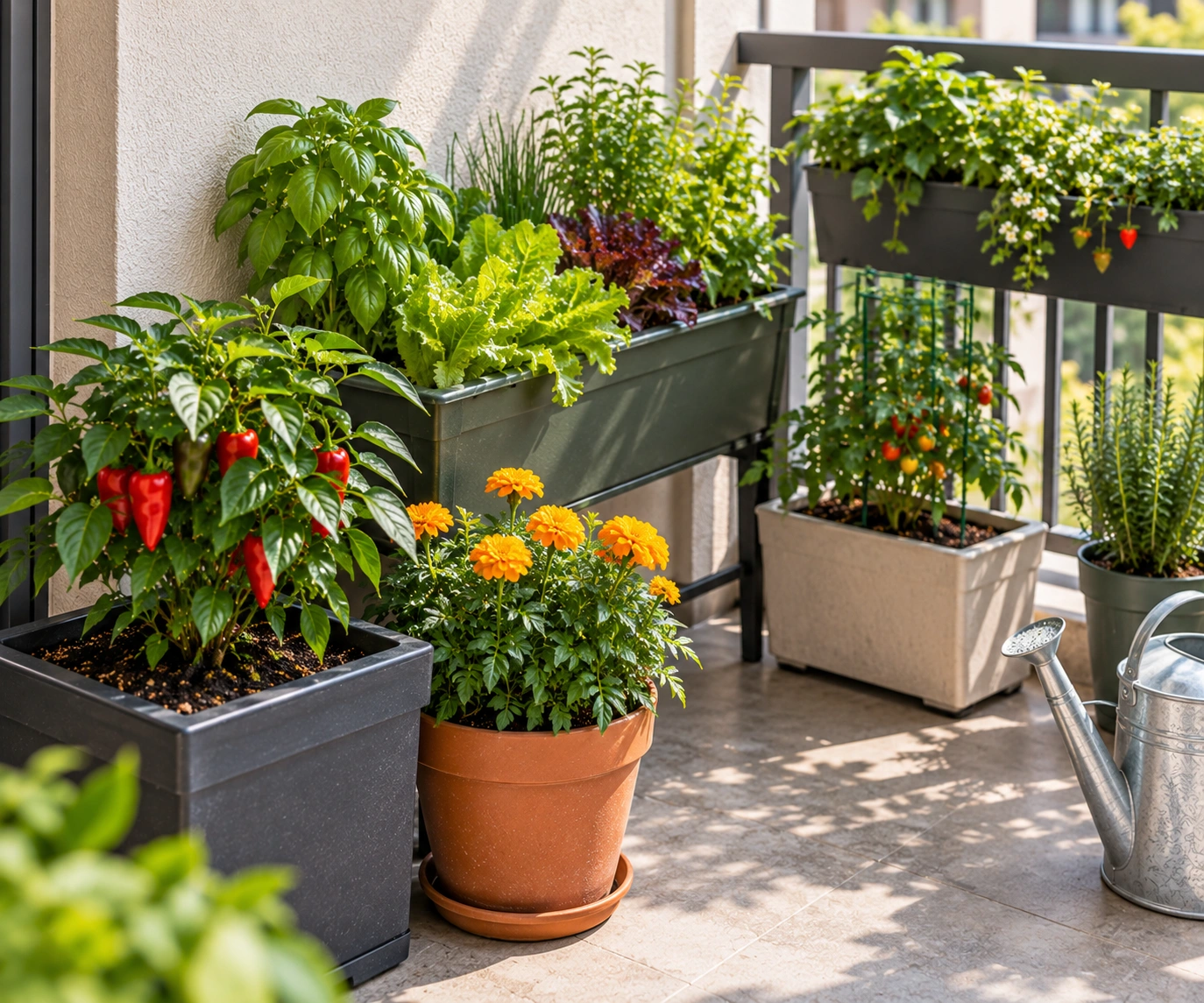
A narrow plant stand, appropriately sized container, or climbing support may make better use of a corner without taking over the main walking area.
Light remains the deciding factor.
A dark indoor corner or heavily shaded outdoor corner doesn’t become useful growing space simply because a container fits there. Use corners where the conditions match the plants you intend to grow.
11. Make Windowsill’s Work Harder
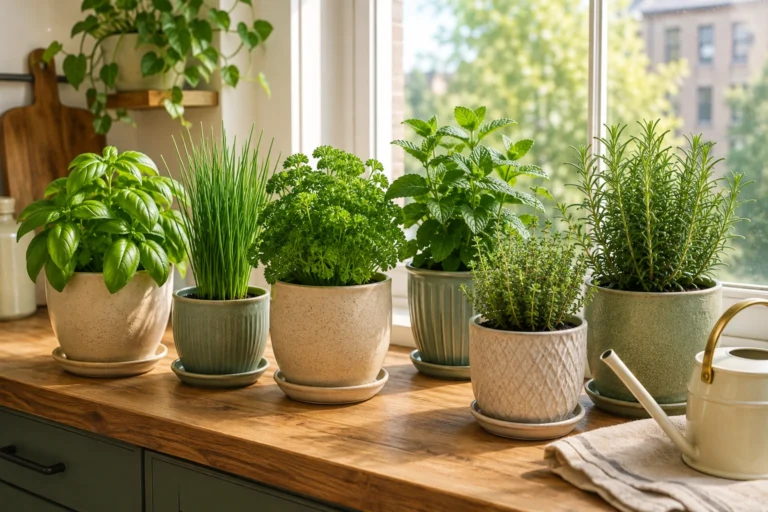
A suitable windowsill provides growing space without taking up floor area.
Check that the sill is wide and stable enough for the containers you plan to use. Consider drainage, mature plant size, and whether the location receives appropriate light.
Avoid packing the entire sill with pots if doing so makes the containers difficult to water or causes larger plants to shade smaller ones.
If natural light isn’t sufficient for what you want to grow, our guide to grow lights for indoor plants explains supplemental lighting in more detail.
12. Put Plants at Different Heights
Don’t think of your garden as one horizontal row.
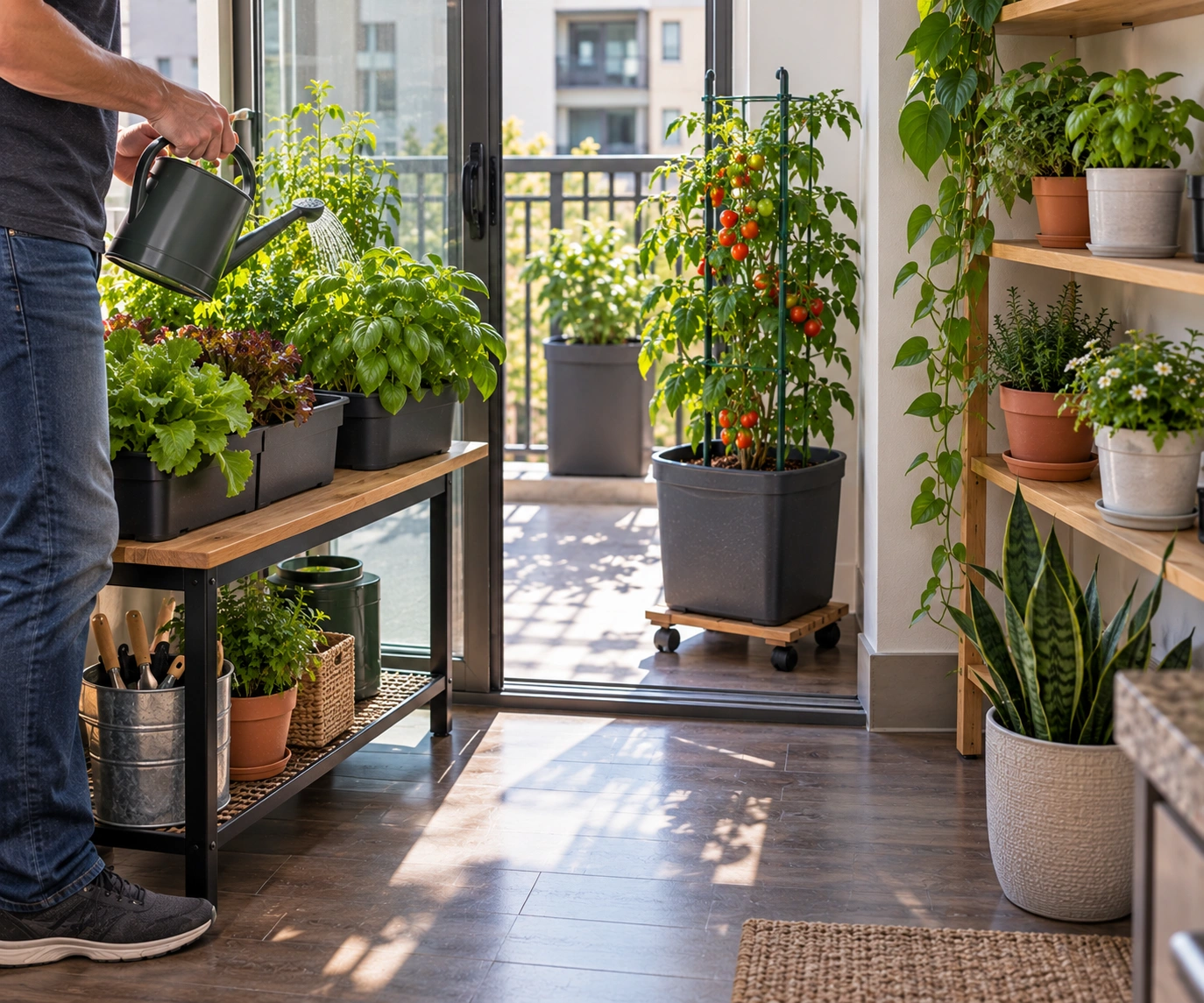
A larger container might sit on the floor, smaller plants on a stand, another group on a shelf, and a suitable hanging container above them.
This uses the three-dimensional space around you instead of making every plant compete for the same level.
The goal isn’t to stack plants randomly. Arrange different heights so plants still receive adequate light and you can reach each container for routine care.
13. Use Movable Containers
Movable containers give a small garden flexibility.
You may need to clear part of a walkway, reorganize the garden as plants mature, or reposition a container when seasonal conditions change.
Portability is one of the advantages University of Maryland Extension identifies for container gardening.
Plan for the filled weight, not the empty-pot weight. Soil, water, and a mature plant can turn a lightweight-looking container into something difficult to move. For larger pots, a sturdy plant caddy may make repositioning easier.
14. Combine Compatible Plants in One Container
One adequately sized container can sometimes support more than one type of plant.
Compatibility matters more than simply finding an empty patch of potting mix.
The NC State Extension Gardener Handbook recommends grouping plants with similar requirements for light, water, and nutrients. Mature size and growth habit matter as well.
Combining compatible plants can use a container efficiently. Overcrowding it is a different matter.
Give each plant enough room to develop rather than treating every open inch as a place that needs to be filled.
15. Use Supports to Control Sprawling Growth
Trellises aren’t the only supports that help conserve horizontal room.
Stakes, cages, and other appropriate supports can keep certain plants from sprawling into walkways or neighboring containers.
This is particularly useful for plants whose natural growth would otherwise spread across a larger area. Choose the support according to the mature plant rather than forcing every plant into an upright shape.
Install supports early enough that you don’t have to wrestle mature stems into position later.
16. Use Succession Planting for Edible Containers
You can make better use of limited space by thinking about time as well as square footage.
Succession planting allows one growing area to produce different crops at different points in the growing season instead of trying to fit everything into it simultaneously.
Illinois Extension describes succession planting as replacing one crop with another as seasonal growing conditions change.
For an edible container garden, that may be a better use of limited room than overcrowding several crops together at once.
If growing food is your main goal, our apartment vegetable gardening guide covers vegetable setup and care in greater detail.
17. Use Intercropping to Make Better Use of Growing Space
Intercropping is another way to use limited growing space more efficiently when the crops involved are compatible.
Illinois Extension describes intercropping as growing faster-growing vegetables among slower-growing vegetables.
That doesn’t mean every open patch of potting mix needs another plant. Consider mature size, spacing, root competition, light, and water requirements before combining crops.
Use the technique selectively rather than treating it as permission to overcrowd a container.
18. Keep High-Maintenance Plants Easy to Reach
Some plants need more attention than others.
Plants you harvest frequently, inspect often, prune regularly, or water more closely shouldn’t be hidden behind a row of large containers.
Place them where you can reach them without moving half the garden.
This may sound like a small organizational decision, but accessibility matters in a limited area. A garden that’s difficult to maintain isn’t using its space very efficiently.
19. Avoid Filling Every Available Inch
Small space gardening doesn’t mean eliminating every gap between plants.
Plants need enough room to reach their mature size. You also need access for watering, pruning, harvesting, and checking for problems.
Crowding can increase competition for resources and make routine maintenance more difficult. NC State Extension likewise emphasizes considering plant size and compatible growing requirements when combining plants in containers.
This is why adding another pot isn’t always an improvement.
A smaller number of well-placed plants can make better use of limited space than a crowded collection that’s difficult to water, inspect, or maintain.
20. Expand Only After You Know What Works
You don’t need to fill the entire space on the first weekend.
Start with the locations that offer the best combination of usable light, accessibility, and room for appropriate containers.
Then pay attention to what happens.
Notice which locations provide enough light, which containers are easy to maintain, which plants outgrow their positions, and which areas are harder to reach than expected.
Use those observations before adding more.
The most effective small space garden isn’t necessarily the one with the greatest number of plants. It’s the one that makes good use of the growing conditions and physical space available.
Which Small Space Gardening Method Fits Your Space?
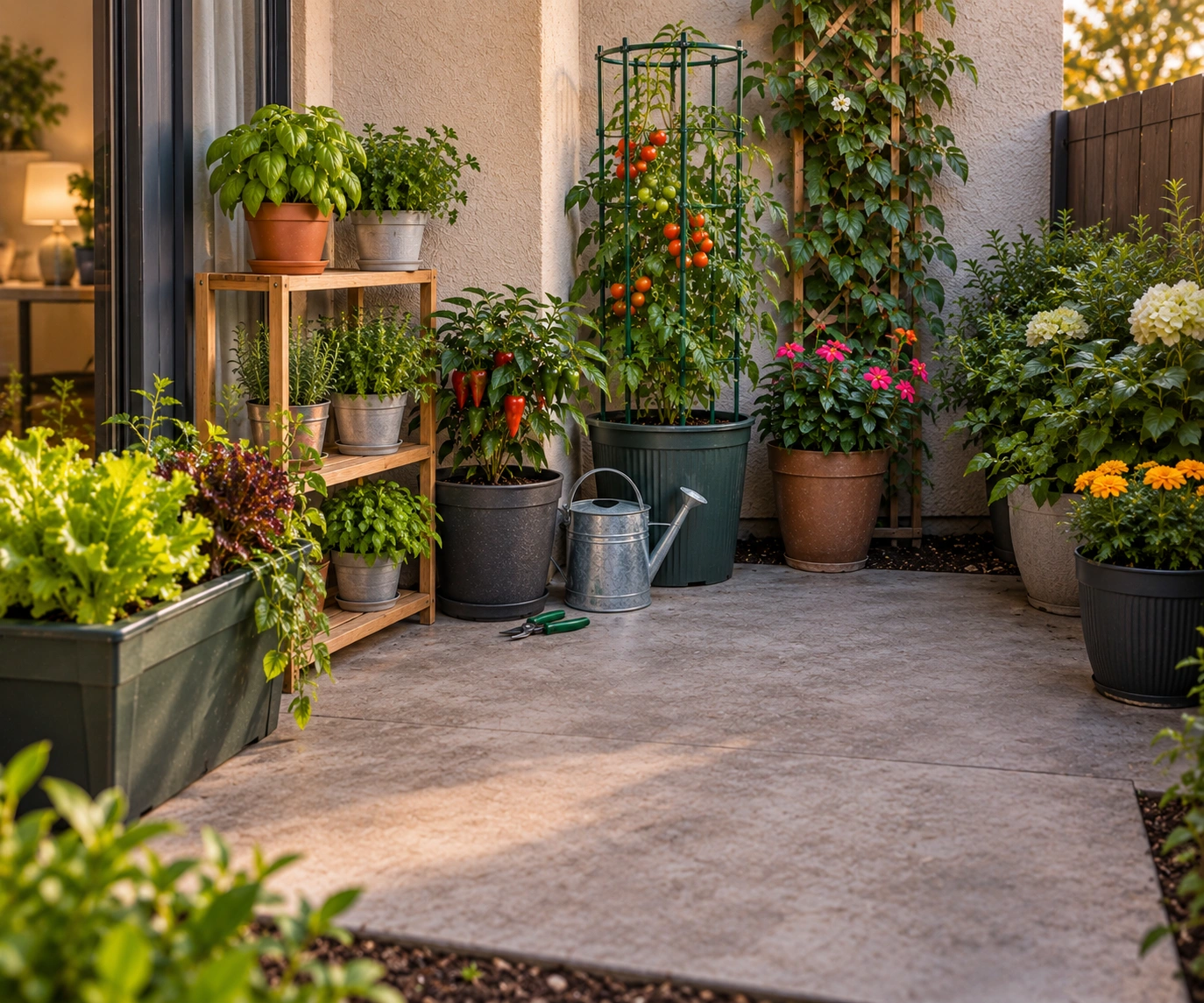
You don’t need all 20 techniques. Start with the ones that solve the actual limitation you’re dealing with.
| If your main limitation is... | Consider... |
|---|---|
| Very little floor space | Vertical growing, shelves, or hanging containers |
| A narrow balcony | Railing planters, fitted containers, or trellises |
| A small indoor growing area | Windowsills, shelves, or compact plants |
| An awkward corner | Narrow stands or appropriately sized containers |
| Sprawling plants | Trellises, stakes, or cages |
| Limited seasonal growing space | Succession planting |
| Limited container space | Combining compatible plants where appropriate |
| A layout that needs flexibility | Movable containers |
Start with one or two changes rather than redesigning the entire garden at once.
Common Small Space Gardening Mistakes
Choosing Containers That Are Too Small
Saving a few inches isn’t worthwhile if the container restricts the plant’s root system. Choose container size based on mature growth rather than the size of a young transplant.
Adding Plants Before Checking the Light
A shelf, corner, or wall is useful growing space only when the plants placed there receive suitable conditions. Check the light before deciding what belongs there.
Overcrowding Containers
Combining compatible plants and overcrowding them aren’t the same thing. Account for mature size rather than judging available room immediately after planting.
Blocking Access to Your Plants
Leave enough room to water, inspect, prune, and harvest without repeatedly moving other containers out of the way.
Building Upward Without Considering Stability
Vertical growing saves horizontal room, but shelves, trellises, plant stands, and hanging containers still need secure support. Consider filled container weight and outdoor wind exposure when applicable.
Small Space Gardening Indoors vs. Outdoors
The same space-saving technique can work differently indoors and outdoors.
Indoors, usable light is often a major limitation. Balconies and patios may offer stronger natural light while introducing wind, heat, drainage, and stability concerns.
Use the techniques in this guide only where the growing conditions suit the plants. For environment-specific guidance, see our apartment balcony gardening guide or patio gardening for apartments if that’s where you plan to grow.
Frequently Asked Questions About Small Space Gardening
What is the best way to start small space gardening?
Start by identifying your usable light and measuring the physical space available. Look beyond the floor to walls, windowsills, shelves, railings, and other suitable areas.
Begin with a manageable setup and expand after you see how the plants and containers work in the space.
Can you garden in a small space without a balcony?
Yes. Depending on the available light and what you want to grow, suitable windowsills, shelves, and indoor containers can provide growing options without a balcony.
Success still depends on choosing plants suited to the conditions available.
Is vertical gardening good for small spaces?
Vertical gardening can be especially useful for suitable climbing plants and other plants that respond well to support because it shifts some growth upward instead of outward.
Trellises, shelves, and other vertical arrangements can also make better use of limited horizontal room. Illinois Extension specifically identifies vertical cropping as a technique for maximizing available garden space.
Are containers good for small space gardening?
Yes. Containers are useful when in-ground gardening isn’t available and can fit plants into balconies, patios, decks, and other compact areas. Their portability can also make a limited garden more flexible.
The container still needs adequate drainage and enough room for the mature plant.
Make Your Growing Space Work Harder
Small space gardening works best when you focus on usable growing space rather than the number of pots you can fit into it. Start with your light, available room, and access, then use vertical growing, suitable containers, compact plants, and multiple levels where they make sense.
A trellis, shelf, movable container, or better-sized plant may solve the problem without making the garden feel crowded. Build around what works in your space, and expand only when you know the existing setup is easy to maintain.