What Vegetables Can You Grow in a 5-Gallon Bucket?
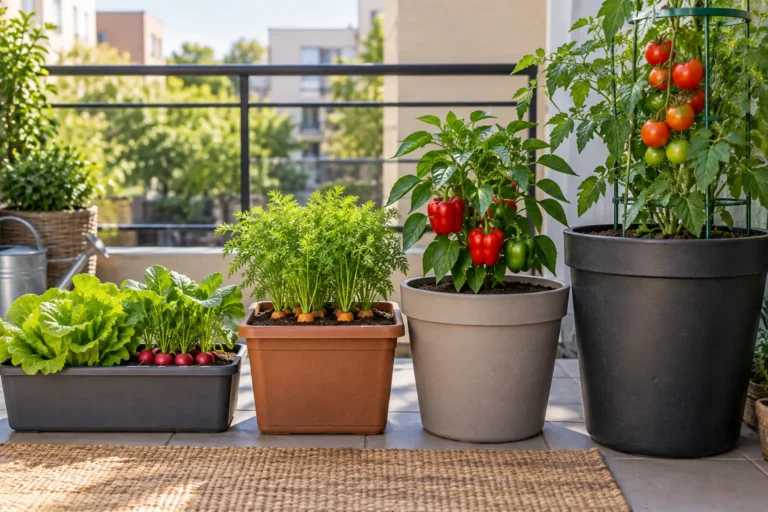
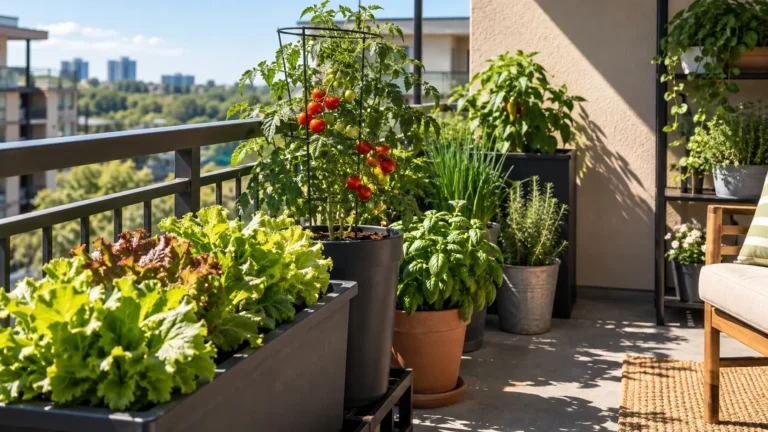
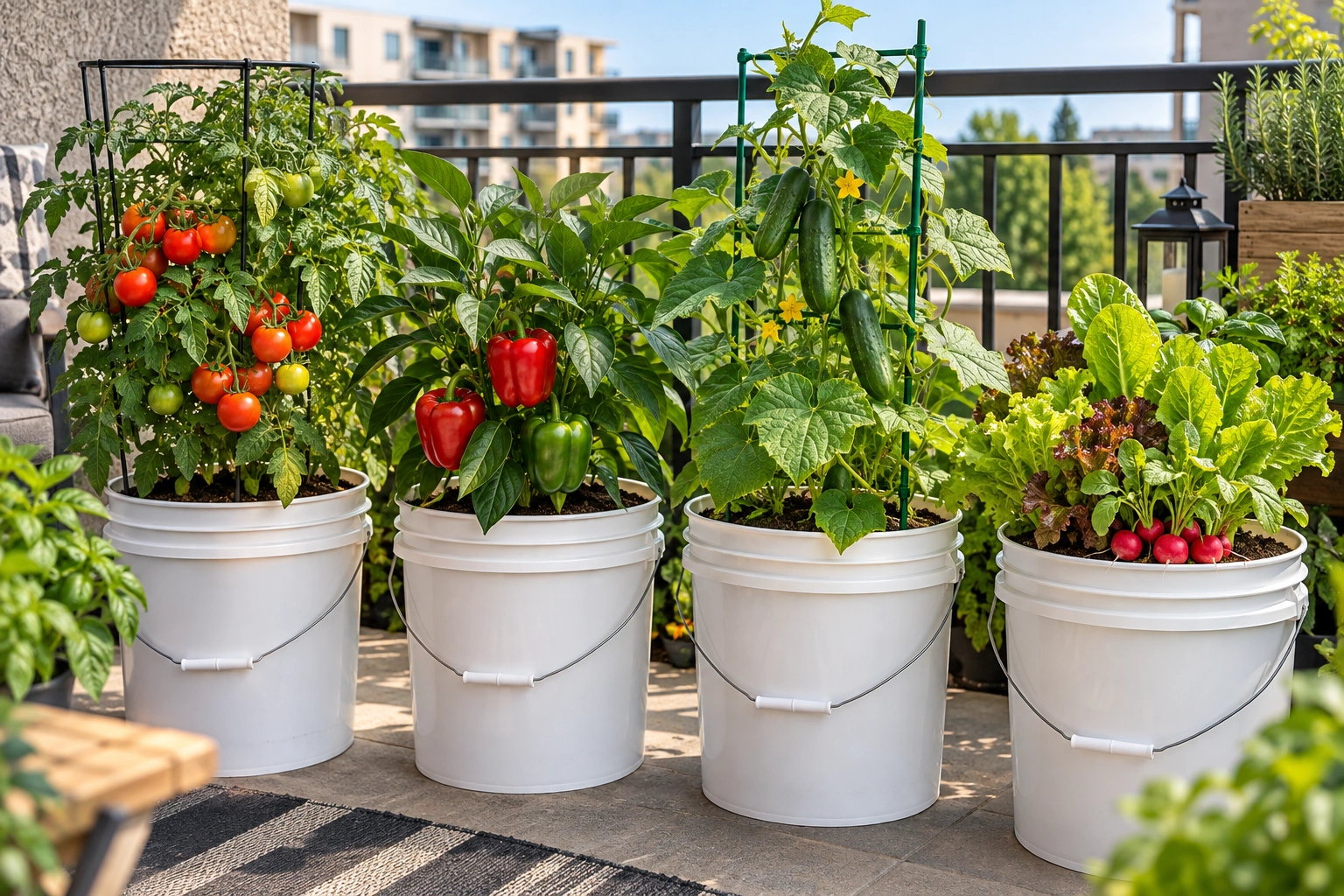
You can grow tomatoes, peppers, eggplant, cucumbers, bush beans, carrots, beets, lettuce, Swiss chard, radishes, green onions, and several other vegetables in a 5-gallon bucket.
The trick is knowing how much of that bucket each vegetable needs. A tomato or pepper may need the container to itself, while smaller crops such as lettuce, carrots, and radishes can be planted in greater numbers.
Five gallons is also not automatically the ideal size for every vegetable. Some large or vigorous plants perform better when given more root space.
If you’re choosing what to plant, start with the chart below.
Table of Contents
Vegetables You Can Grow in a 5-Gallon Bucket
A 5-gallon bucket meets or exceeds the minimum container volume listed by the University of Maryland Extension for many common vegetables, including standard tomatoes, peppers, eggplant, cucumbers, bush beans, carrots, beets, lettuce, radishes, and Swiss chard.
| Vegetable | Good Choice? | Plants per Bucket | What to Know |
|---|---|---|---|
| Tomato | Yes | 1 | Compact or determinate varieties are easier to manage |
| Pepper | Yes | 1 | Five gallons provides useful root space for one plant |
| Eggplant | Yes | 1 | Needs warm conditions and strong light |
| Cucumber | Yes | 1 compact plant | Choose a compact variety and provide support |
| Bush beans | Yes | Several | Follow the variety's recommended spacing |
| Carrots | Yes | Several | Match the bucket depth to the carrot variety |
| Beets | Yes | Several | Thin seedlings to their recommended spacing |
| Lettuce | Yes | Several | Makes efficient use of the bucket's surface area |
| Swiss chard | Yes | Several | Five gallons provides more than the minimum volume |
| Radishes | Yes | Several | Compact roots make them well suited to containers |
| Green onions | Yes | Several | Don't require the full depth of the bucket |
| Zucchini | Marginal | 1 | A larger container is the safer choice |
Best Fruiting Vegetables for 5-Gallon Buckets
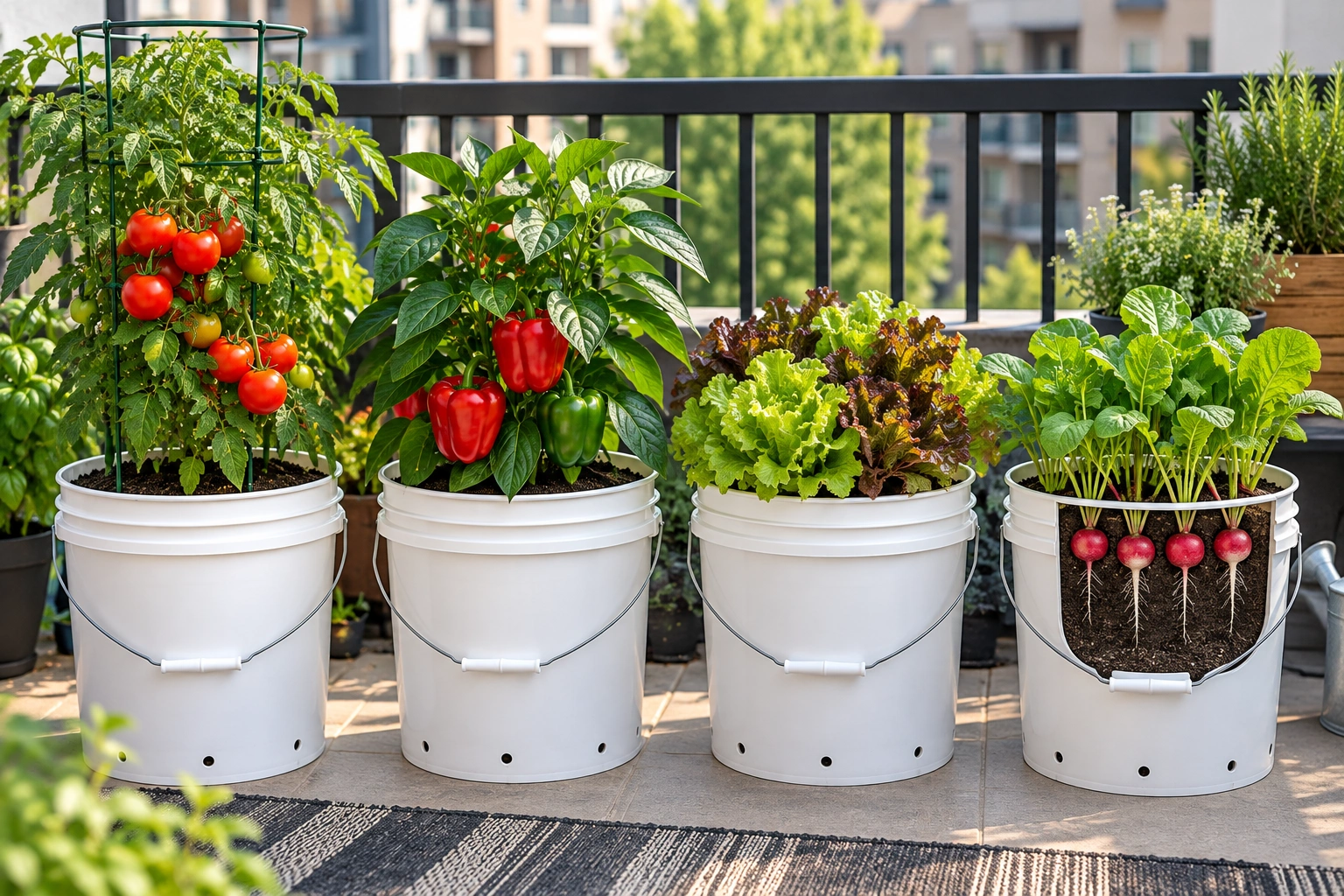
Tomatoes, peppers, eggplant, and compact cucumbers are some of the best ways to put the full volume of a 5-gallon bucket to use.
These plants develop larger root systems and top growth than lettuce or radishes, so don’t try to squeeze several large plants into the same bucket.
Variety matters, too.
Look for words such as bush, dwarf, patio, compact, or container when choosing seeds or transplants. Maryland Extension specifically recommends bush and dwarf varieties for small-space container gardening.
Cucumbers may also need a trellis, while tomatoes usually need a cage or stake. Install the support early rather than trying to force it into a bucket after the roots have filled the pot.
Root Vegetables That Grow Well in Buckets
Carrots, beets, and radishes are good candidates for bucket gardening because a 5-gallon container gives them more volume than their minimum requirements.
With root vegetables, however, depth matters just as much as gallons.
A short, round radish doesn’t need the same root depth as a long carrot. Even among carrots, the mature root length varies by variety.
Illinois Extension recommends thinning container-grown carrots and beets to roughly 2–3 inches apart and radishes to 1–2 inches apart, although the instructions for your particular variety should take priority.
If you’re unsure whether your container is deep enough, our guide to how deep containers need to be for vegetables breaks down depth and volume requirements for different crops.
Leafy Greens for 5-Gallon Buckets
A 5-gallon bucket is actually larger than many leafy vegetables need.
Lettuce, spinach, Swiss chard, and similar greens can grow in considerably smaller containers. That makes a bucket useful for growing several properly spaced plants instead of dedicating the entire container to one vegetable.
Illinois Extension, for example, lists leaf lettuce, spinach, and Swiss chard among vegetables suitable for one-gallon containers.
Leafy greens can also be a practical choice if your apartment growing area receives less direct sun. Maryland recommends roughly 3–5 hours of direct sun for cool-season crops such as lettuce and spinach, compared with 6–8 hours for warm-season crops such as tomatoes, peppers, eggplant, and squash.
How Many Vegetables Can You Grow in One 5-Gallon Bucket?
For large vegetables, one plant per bucket is a good starting point. For smaller crops, use the vegetable’s recommended spacing rather than assuming every plant needs its own bucket.
A simple way to think about it is:
- One plant: tomato, pepper, eggplant or compact cucumber
- Several plants: lettuce, carrots, radishes, beets, green onions and other compact crops
- Consider a larger container: zucchini and other vigorous summer squash
Don’t judge spacing by the size of a seedling. A small tomato transplant may look lonely in a 5-gallon bucket in spring, but its roots and stems will occupy considerably more space as the plant matures.
Overcrowding also makes several plants compete for the same limited supply of water and nutrients.
Can You Grow Tomatoes in a 5-Gallon Bucket?
Yes. One tomato plant can grow in a 5-gallon bucket.
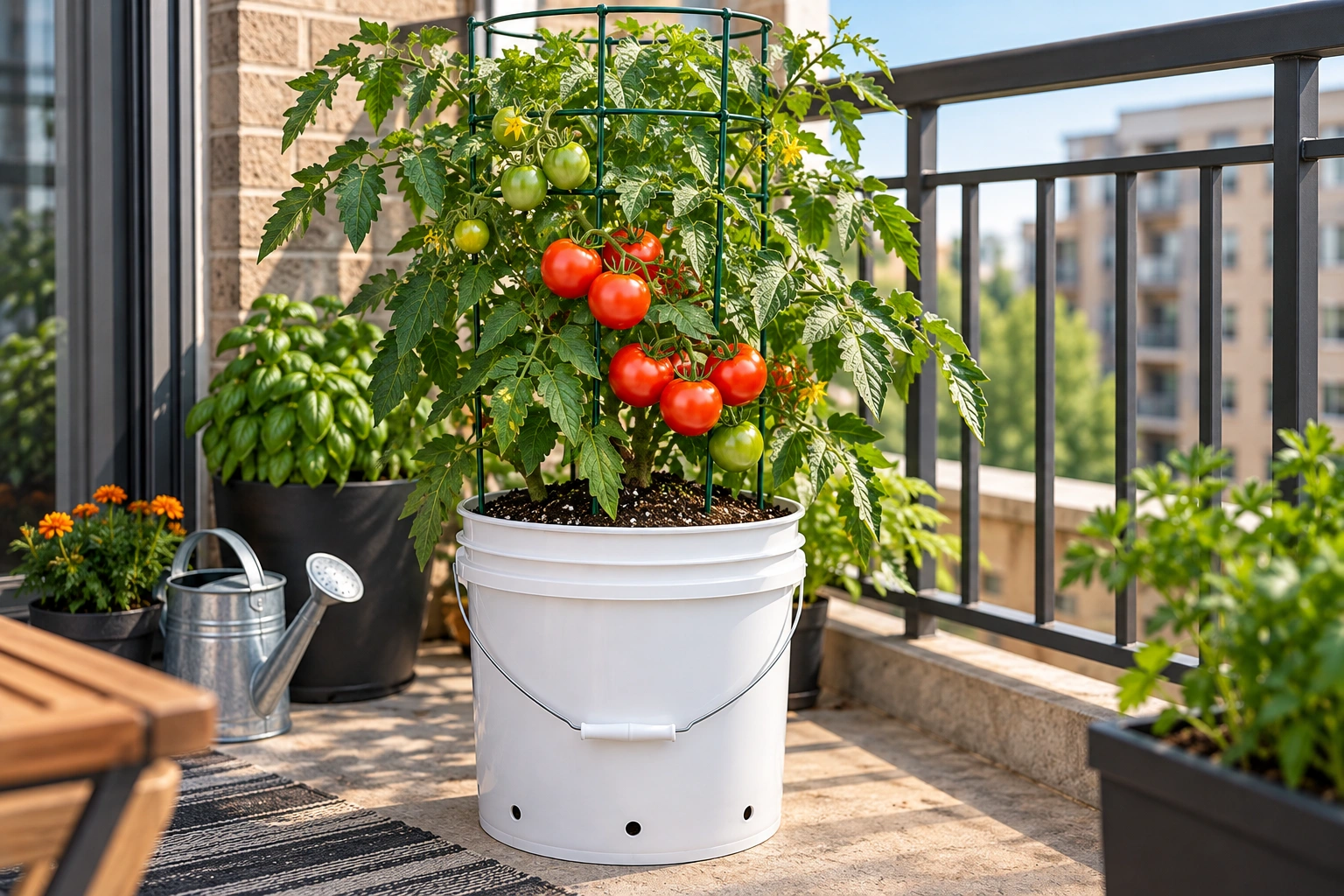
But not every tomato behaves the same way.
Compact and determinate tomatoes are generally easier to manage in a 5-gallon container. Indeterminate tomatoes continue growing throughout the season and can benefit from considerably more root space. University of Georgia Extension, for example, recommends five gallons for determinate tomatoes and 10 gallons for indeterminate tomatoes.
So while five gallons can work, bigger isn’t wasted space if you’re growing a large tomato variety.
Give the plant a cage or stake, and remember that a mature tomato in a container may need frequent watering during hot weather.
Can You Grow Zucchini in a 5-Gallon Bucket?
You can try, but zucchini would not be my first choice if five gallons is the largest container you have.
This is one area where horticultural recommendations vary.
Some Extension material has listed five gallons for a single summer squash plant, while Maryland’s current container guidance recommends a 10-gallon minimum for summer squash. Maryland also advises against restricting large plants in undersized containers because limited root growth can reduce plant performance.
For an apartment gardener, the practical takeaway is simple: give zucchini more room if you can.
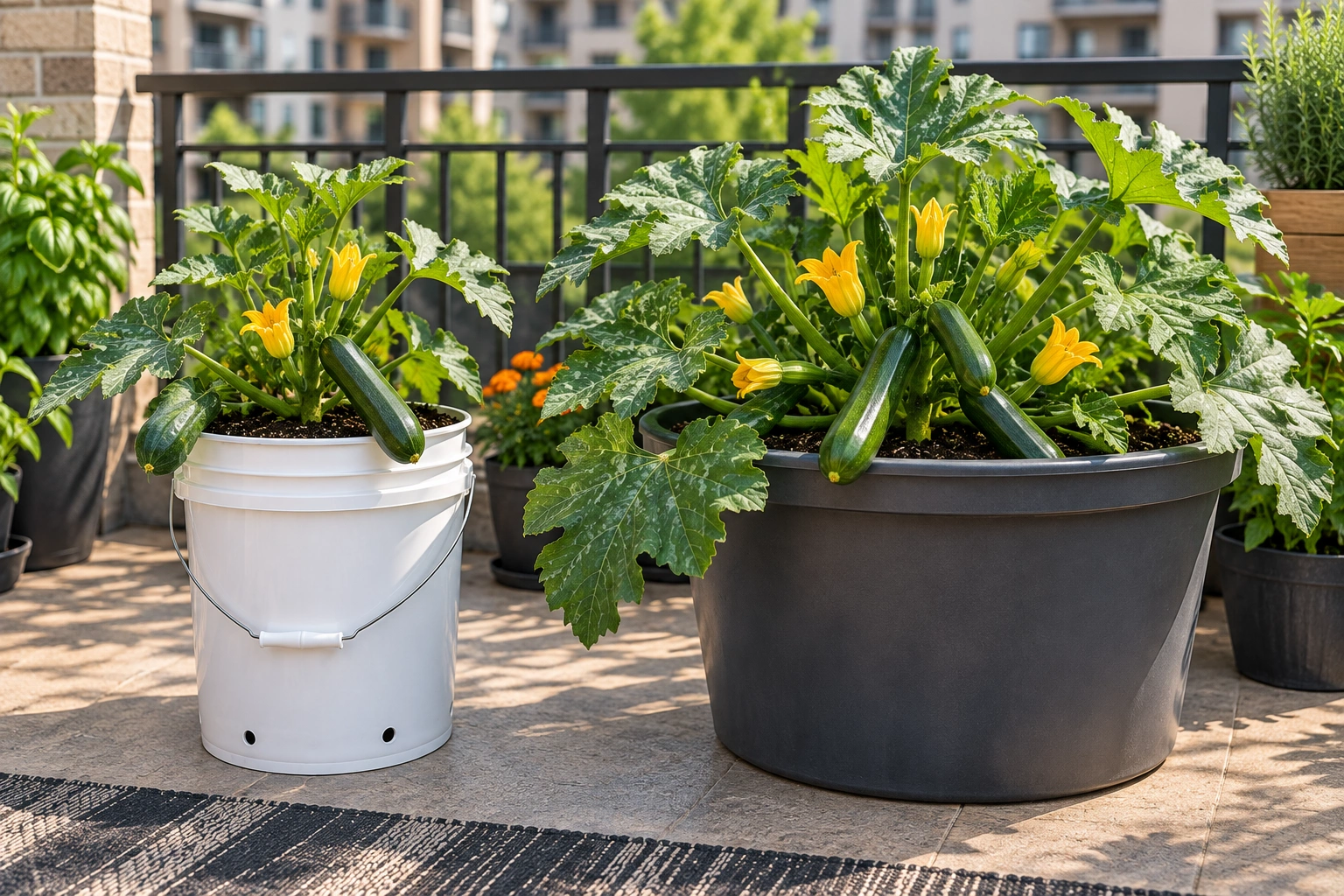
If space limits you to a 5-gallon bucket, look for a compact or bush variety intended for container growing and expect it to demand more space above the bucket than lettuce, peppers, or other compact crops.
If You Only Have One 5-Gallon Bucket
If you’re starting with just one bucket, I’d choose a pepper or compact tomato if your growing area receives plenty of direct sun.
Both make good use of the available root volume, and dedicating the bucket to one plant keeps spacing simple.
If you’d rather use the bucket for several smaller plants, lettuce, radishes, carrots, or Swiss chard are good alternatives. Leafy greens are particularly useful when you don’t have the strong direct sunlight that fruiting vegetables usually prefer.
The best choice isn’t necessarily the vegetable that produces the biggest plant. It’s the one that matches the light, space, and growing conditions you actually have.
How Much Potting Mix Does a 5-Gallon Bucket Need?
You don’t need to fill a bucket all the way to the rim.
Leave a little room at the top so water can collect briefly and soak into the potting mix instead of immediately spilling over the sides.
More importantly, don’t fill the bucket with ordinary garden soil.
Container roots need a growing medium that can hold useful moisture while still allowing air and excess water to move through the root zone. The University of Illinois Extension recommends using potting mix for container vegetables rather than treating a container like a miniature in-ground garden.
A lightweight potting mix also matters in an apartment setting because a watered 5-gallon bucket can become surprisingly heavy.
Are 5-Gallon Buckets Safe for Growing Vegetables?
Yes, but choose the bucket carefully.
For edible crops, a new food-grade bucket is the simplest option. If you’re reusing a bucket, you should know what it previously contained.
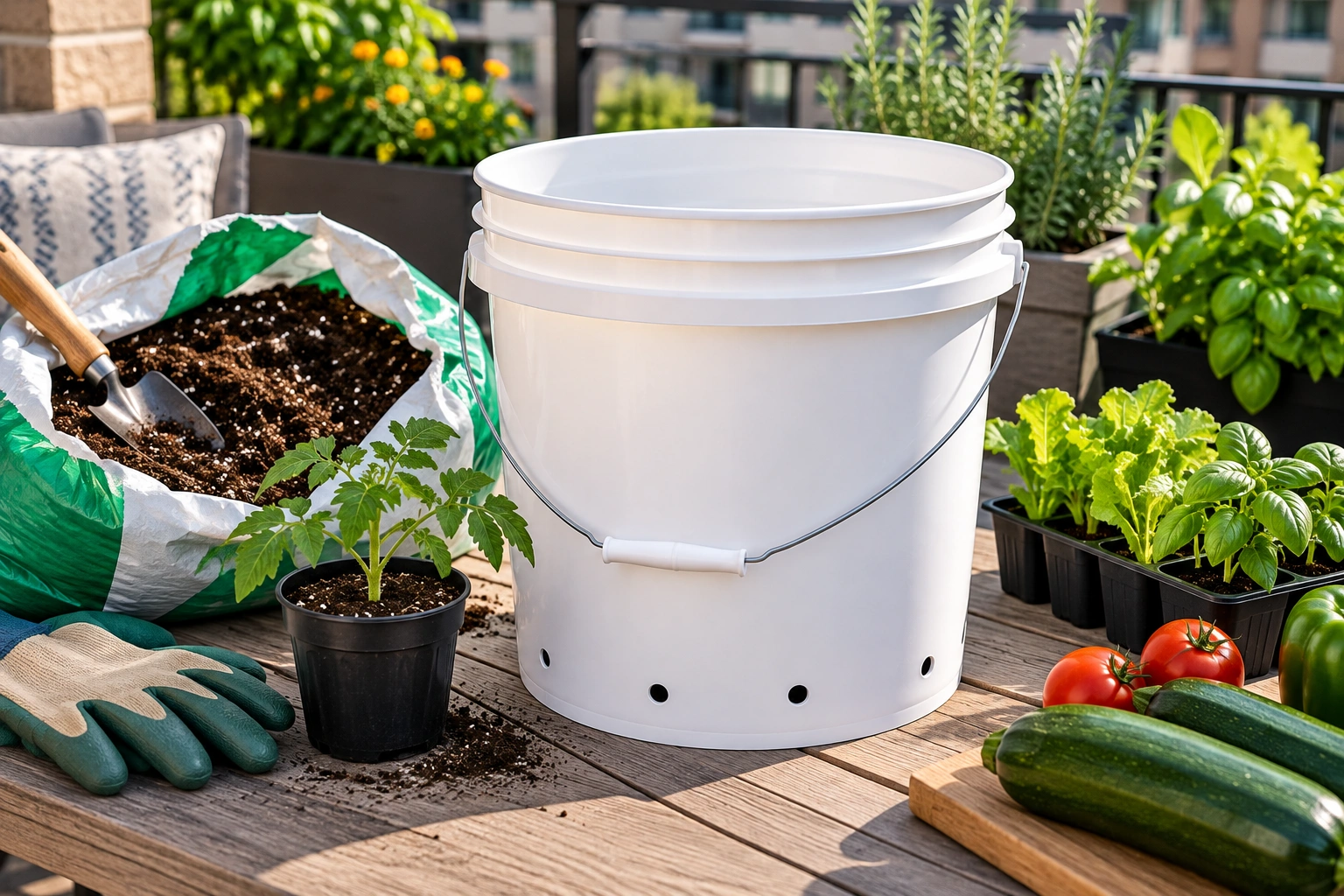
Maryland Extension’s current container-growing materials recommend food-grade 5-gallon buckets and warn against reusing containers that held products such as paint or detergent.
Don’t assume a bucket is safe simply because you’ve washed it.
If you don’t know its history, use another container for your vegetables.
Do 5-Gallon Buckets Need Drainage Holes?
Yes. A standard 5-gallon bucket needs drainage holes before you use it as a vegetable planter.
Without somewhere for excess water to escape, the growing medium can remain saturated and deprive roots of the air they need.
University Extension guidance consistently emphasizes drainage for container vegetables. New Hampshire Extension, for example, specifically recommends adding drainage holes when converting a 5-gallon plastic bucket into a tomato planter.
You also don’t need a layer of rocks or gravel in the bottom to “improve” drainage. What matters is providing drainage openings and using an appropriate container growing medium.
For more on setting up pots and other small-space containers correctly, see our apartment container gardening guide.
Is a 5-Gallon Bucket Deep Enough for Vegetables?
For many vegetables, yes—but depth and volume aren’t interchangeable.
A narrow, tall container and a wide, shallow container can hold the same number of gallons while giving roots very different growing spaces.
That’s why you should consider the mature root system as well as total container volume.
Maryland Extension recommends matching the container to both the plant’s root system and its above-ground growth rather than squeezing large vegetables into containers simply because the roots technically fit.
This distinction matters most with large vegetables and long root crops. Lettuce and radishes have very different needs from tomatoes and full-length carrots.
Can I Put Two Tomato Plants in One 5-Gallon Bucket?
I wouldn’t. Give each tomato its own bucket.
A 5-gallon bucket may provide enough growing volume for one tomato plant, but putting two plants into the same container cuts the root space available to each and increases competition for water and nutrients.
Both Maryland and New Hampshire Extension guidance treat larger container tomatoes as individual plants rather than pairs sharing a 5-gallon container.
If you have two tomato seedlings and two buckets, use one plant per bucket.
Can You Reuse a 5-Gallon Bucket for Vegetables?
Yes—if you know what was previously stored in it and the bucket is appropriate for growing food.
A food-grade bucket that previously held food is very different from an old bucket that held paint, detergent, adhesive, or another chemical product.
If the previous contents are unknown, don’t use it for edible crops. A new food-grade bucket removes the guesswork.
What Should You Plant First?
When choosing vegetables you can grow in a 5-gallon bucket, consider the plant’s mature size, root system, soil volume, drainage needs, and whether the variety has a compact growth habit.
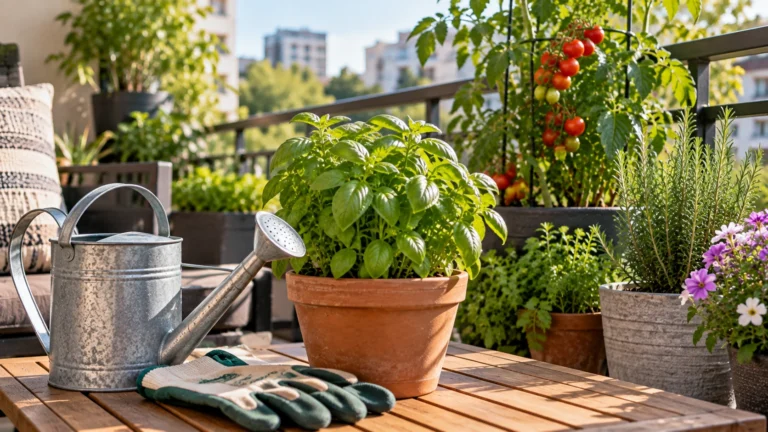
For a beginner with a sunny balcony or patio, a pepper or compact tomato is a straightforward way to turn one 5-gallon bucket into a vegetable garden.
If you want several plants in the same bucket, start with smaller crops such as lettuce, radishes, carrots, or beets and follow the spacing instructions for the variety you’re growing.
And don’t feel obligated to use a 5-gallon bucket for every crop. Sometimes a smaller container is enough; other times, especially with vigorous plants such as zucchini or large tomatoes, moving up in size makes more sense.
If you’re still deciding what to grow, our guide to the best vegetables to grow in an apartment covers 13 beginner-friendly choices and the growing conditions each one needs.