Patio Gardening for Apartments: A Beginner’s Guide
You do not need a yard to grow a useful garden outdoors. A small apartment patio can support flowers, herbs, vegetables, and other container plants if you start with the conditions you actually have instead of trying to copy a backyard setup.
For most renters, patio gardening is really a form of container gardening. The containers matter, but so do the surface underneath them, the amount of sun the patio receives, how easy it is to reach a water source, and where excess water will go after you irrigate.
Those details are easy to overlook when you are excited about choosing plants, but they often determine how manageable the garden feels once hot weather and regular watering begin.
In This Guide
Patio Gardening vs. Balcony Gardening
Patios and balconies can both support container gardens, but they do not always create the same growing conditions.
Apartment patios are often built with concrete, pavers, stone, or decking, so heat, drainage, and container placement can become especially important.
Elevated balconies may bring additional concerns such as stronger wind, railings, and structural limits. If that is the type of outdoor space you have, our apartment balcony gardening guide covers those issues in more detail.
Here, the focus stays on patio gardening: choosing containers, managing hard surfaces, watering, drainage, and keeping the garden practical to maintain.
Check Your Apartment Patio Before You Start
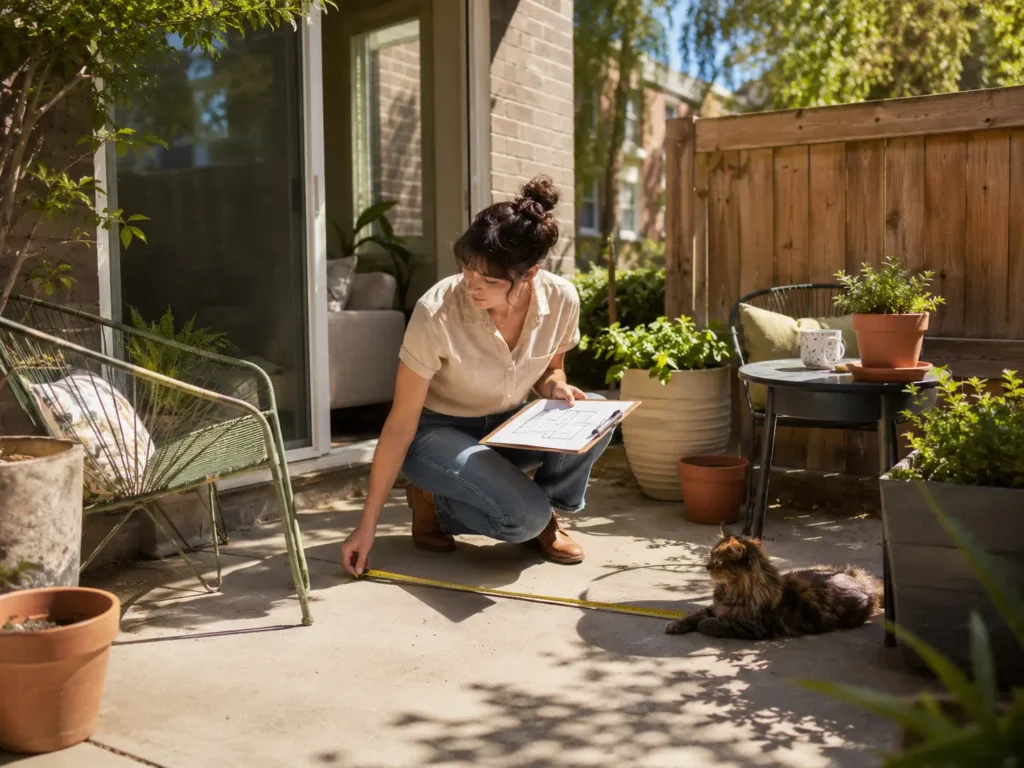
Before buying pots or plants, spend a little time looking at the patio as it is now.
Notice how much usable floor space you actually have. Watch where the sun falls during the day. Identify areas that stay shaded by the building and any spots that become noticeably hotter than the rest of the patio.
Concrete, stone, pavers, and decking can affect heat and drainage differently than an in-ground garden, especially when containers sit directly on the surface.
Water access matters too. If the nearest faucet is far away, that should influence how many containers you start with. A patio full of thirsty plants can become frustrating quickly if every watering requires several trips through the apartment.
If you rent or live in a managed property, check the rules before installing anything permanent. The Royal Horticultural Society recommends getting permission before attaching anything to a wall or fence.
You do not need to solve every detail before buying your first plant, but you should understand the basic limits of the space first.
Choose Containers That Fit Your Patio
Containers are the foundation of most apartment patio gardens, so a little planning here can save a lot of frustration later.
A pot that is too small may dry quickly or restrict the plant as it grows. A container that is much larger than necessary may take up valuable floor space and become difficult to move once it is filled.
If your patio is especially tight on room, our small space gardening guide covers more ways to use vertical space, compact containers, and other space-saving growing methods.
The best choice depends on the plant, the available space, and how much maintenance you want to manage.
Choose the Container Size for the Plant
Think about the mature plant, not just the young plant you are buying today.
Oklahoma State Extension advises choosing a container large enough to accommodate the root system of the fully grown plant. In a container, the roots only have the space you give them, so mature plant size matters more than the size of the plant at purchase.
Larger containers also tend to hold moisture longer than very small ones, but that does not mean bigger is always better.
The container still has to fit the patio.
If you only have a narrow strip of usable floor space, one oversized planter can become more of an obstacle than an advantage.
Understand Container Materials
Porous containers such as terracotta, unglazed ceramic, concrete, and fabric lose moisture through their sides more readily than plastic or glazed containers.
That can be useful for some plants, but it also means they may need closer attention during hot weather.
Plastic and glazed containers usually hold moisture longer and are often lighter when empty. Neither option is automatically better.
Choose the material based on the plant, your patio conditions, and how often you want to monitor moisture.
Think About Weight and Portability
An empty container can be misleading.
Once it is filled with potting mix, plants, and water, it may be much harder to move than it was at the garden center.
That matters for renters in particular. Colorado State Extension notes that container gardening is portable and well suited to rental situations.
Portability gives you flexibility. You can move plants if the light changes, rearrange the patio, or take the garden with you if you move.
Choose containers you can realistically manage once they are full, not just ones that are easy to carry home empty.
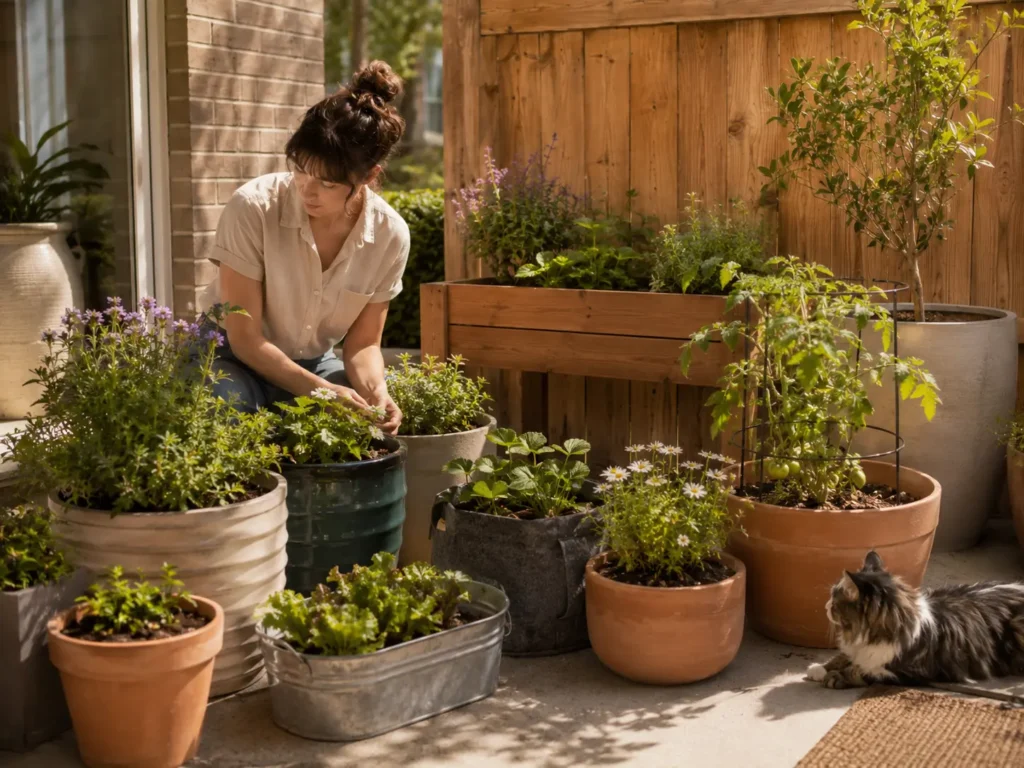
Use Potting Mix Instead of Garden Soil
If you are filling containers, resist the temptation to scoop ordinary soil from a yard or landscape bed.
Garden soil behaves differently once it is confined inside a pot. It can compact, hold too much water, and leave too little air around the roots.
NC State Extension recommends using a suitable container growing medium and advises gardeners to use a potting mix rather than ordinary garden soil.
A good commercial potting mix is designed to balance moisture retention with drainage and aeration.
You do not need an elaborate homemade recipe to get started. For a beginner patio garden, a quality mix labeled for containers is usually the simpler choice.
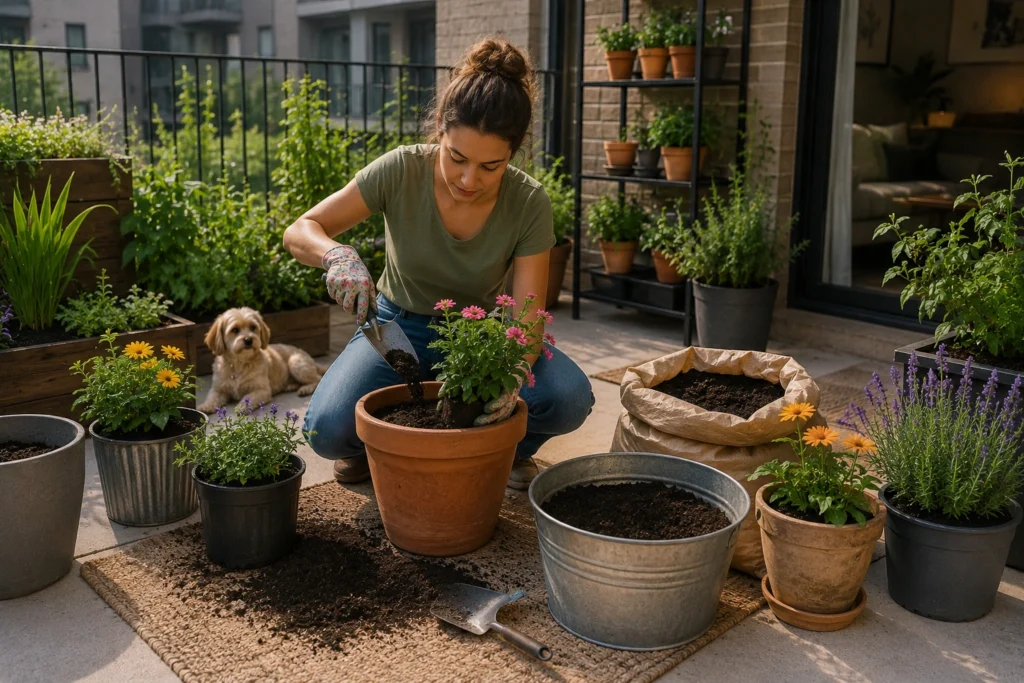
Choose What You Want to Grow
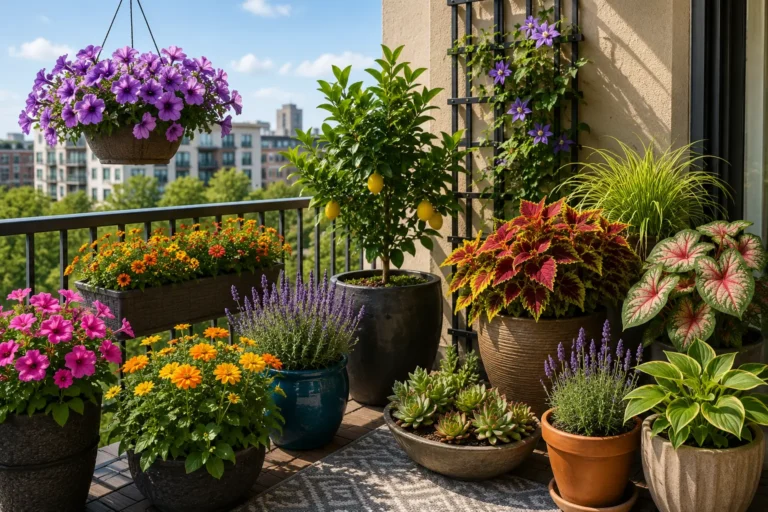
A patio garden can be decorative, edible, or a combination of both.
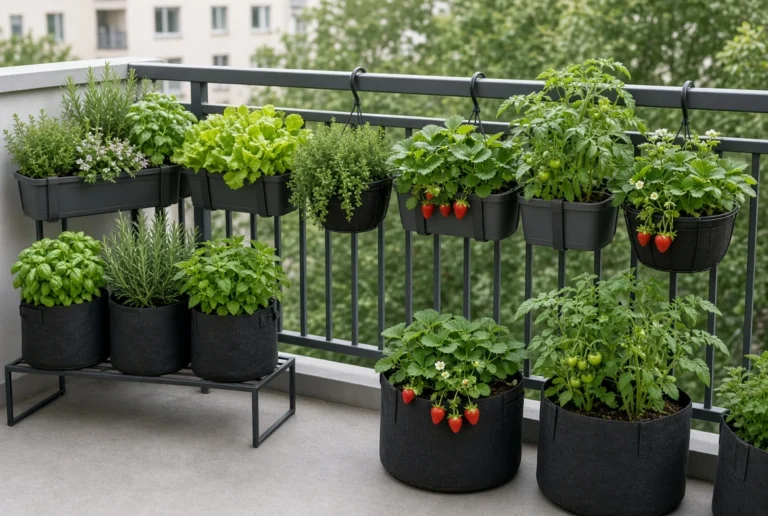
Container-friendly choices may include flowering annuals, foliage plants, herbs, leafy greens, compact vegetables, small shrubs, and selected fruiting plants that fit the available climate and space. If you are still deciding what to grow, our best plants for apartment gardening guide includes beginner-friendly choices for small spaces, containers, balconies, and indoor growing.
Start with what you will actually enjoy maintaining.
If you like cooking, a few herbs may be more useful than a large collection of ornamentals. If color is the priority, flowering containers may make more sense. If food growing is your main goal, individual crops have different light, container-size, and care requirements, so it is worth treating vegetable growing as its own next step.
The aim here is not to fit an entire backyard garden into pots. It is to choose plants that make sense for the patio you have.
Match Plants to the Patio’s Light
Before deciding where a container belongs, make sure the plant can handle the light in that location.
One side of an apartment patio may receive several hours of direct sun while another stays shaded by the building for most of the day.
Southern and western exposures are often warmer and sunnier, while northern and eastern exposures are usually cooler and more shaded. Nearby buildings, trees, overhangs, and walls can change that pattern considerably, so observe your actual patio.
If you are combining several plants in one container, they should also have compatible growing requirements. Oklahoma State advises that plants sharing a container should have similar light and water needs.
That sounds obvious, but mixed containers can become difficult to manage when one plant wants more moisture or less sun than the others.
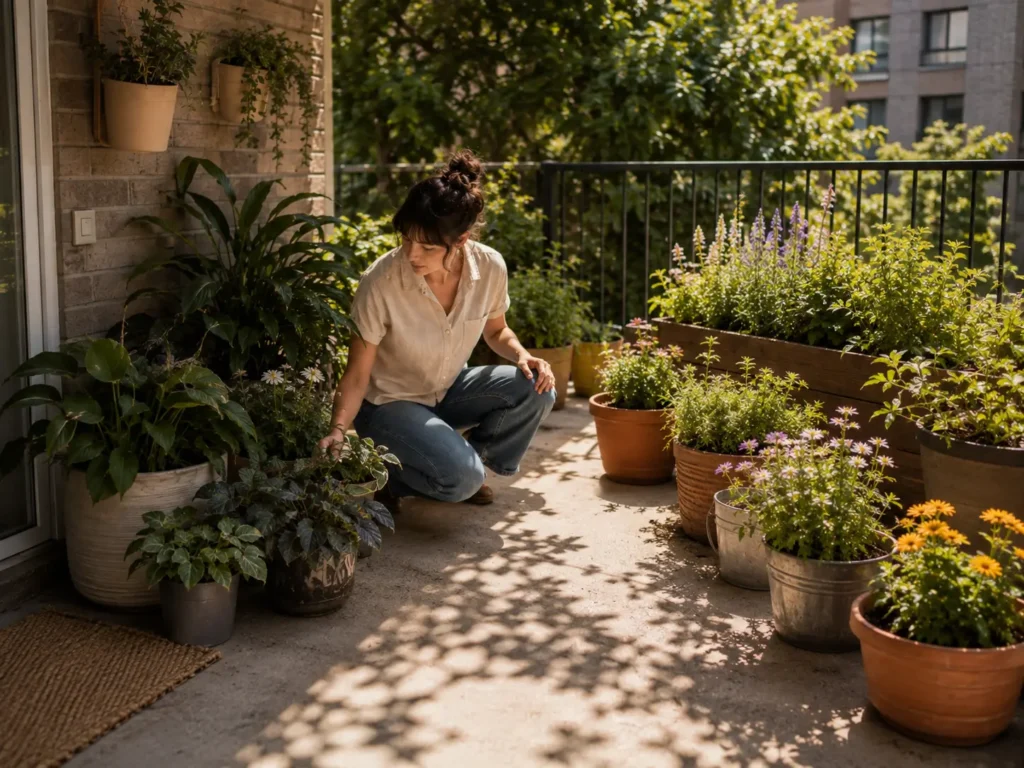
Watch for Heat From Concrete and Other Hard Surfaces
This is one practical difference between patio gardening and growing directly in the ground.
Hard surfaces can absorb and reflect heat.
University of Maryland Extension warns about heat sinks created by brick, concrete, and reflective surfaces around container gardens.
A pot sitting in full sun on hot concrete can be exposed to more heat than the air temperature alone might suggest.
Watch plants more closely during hot weather. If a container dries much faster than expected, the patio surface may be part of the reason.
A portable container can sometimes be moved to a slightly cooler location, especially during the hottest part of the season.
Do not assume every concrete patio is too hot for plants. Pay attention to the microclimate around the pot and adjust when necessary.
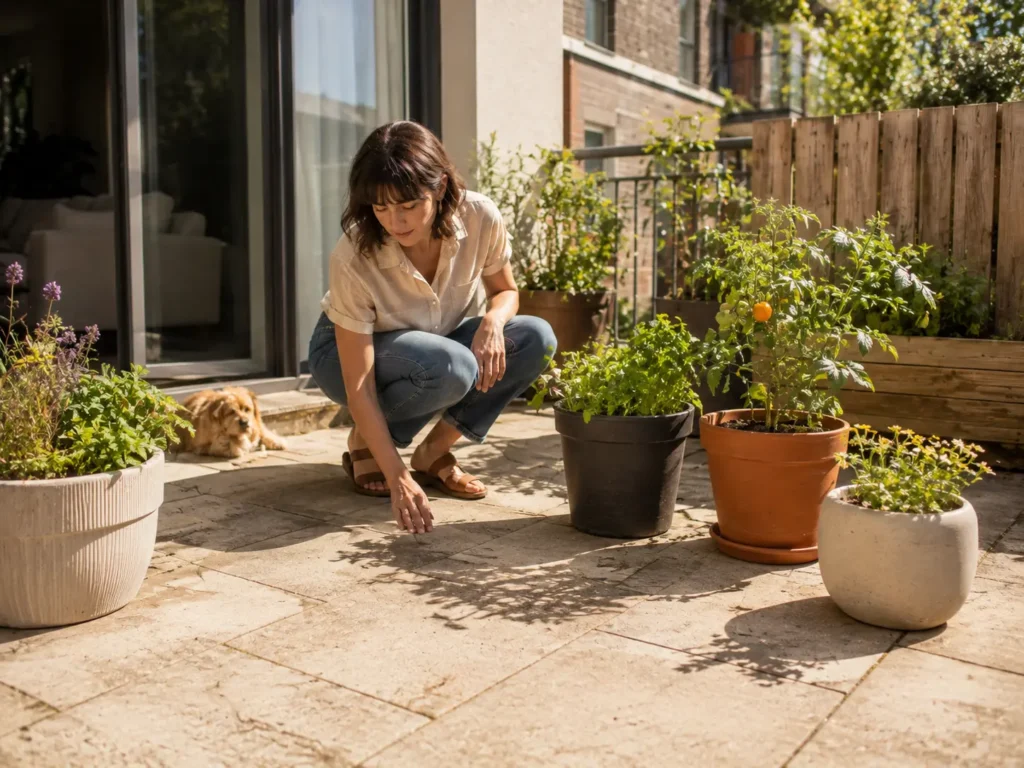
Make Watering Easy
Container plants depend on a limited volume of growing mix, so moisture can change quickly.
If you need to carry water through several rooms, you may not want 25 containers during your first season. A smaller garden that is easy to water is often more enjoyable than a larger one that feels like a chore.
Small pots, porous containers, hot weather, and strong sun may all increase how often you need to check moisture.
Avoid watering by a rigid calendar. Check the growing mix instead. A container that needs frequent watering during a hot spell may stay moist much longer when temperatures cool.
The easier the garden is to reach with water, the easier it will be to maintain consistently.
Control Drainage Without Damaging the Patio
Good drainage keeps excess water moving through the container instead of collecting around the roots.
It also matters for the surface underneath the pots.
Make Sure Containers Can Drain
Most patio plants need containers that allow excess water to drain freely.
Illinois Extension notes that few plants tolerate stagnant water around the roots for long periods.
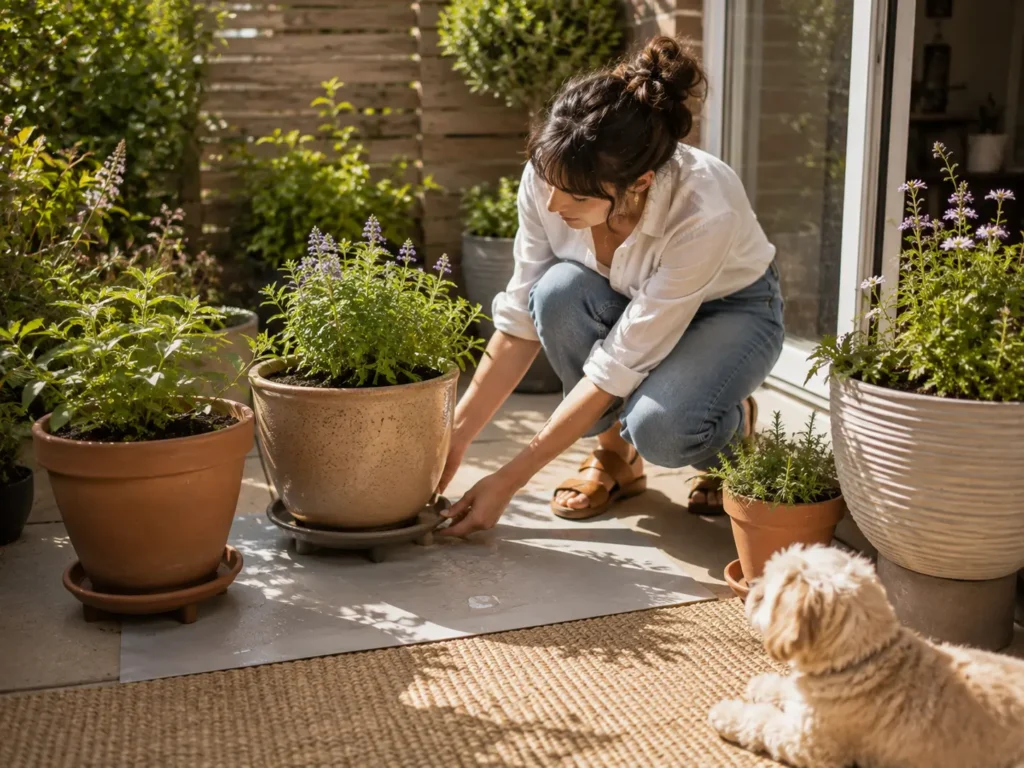
If a container sits flat on a paved surface, make sure its drainage openings are not being blocked. In some cases, raising the pot slightly with appropriate pot feet or supports can help keep the openings clear.
Skip Gravel in the Bottom of the Pot
A layer of gravel at the bottom of a container does not improve drainage.
This is one of those gardening tips that gets repeated because it sounds logical.
University extension guidance from Maryland, Illinois, and North Carolina warns against relying on gravel or rocks underneath the potting mix to improve drainage.
Good drainage comes from an appropriate container, open drainage holes, and suitable potting mix—not a layer of rocks underneath the soil.
Protect the Patio Surface
Drainage water does not disappear once it leaves the pot.
University of Maryland Extension notes that drainage water can stain concrete or wood decking, and containers themselves can sometimes leave marks on the surface.
Depending on the patio and the plant, pot feet, trays or saucers, self-watering containers, or another appropriate surface-protection method may help.
Just remember that a saucer should not become a permanent pool of water around the bottom of the pot.
The goal is to manage runoff without trapping excess moisture around the roots.
Use Vertical Space When It Actually Helps
A small patio does not always need more floor-level pots.
Sometimes the better use of space is upward. For more ways to make limited space work harder, these apartment gardening ideas for small spaces include additional approaches for arranging plants and growing in compact areas.
A freestanding trellis, compact shelf, or support for a climbing plant can add growing area without covering every inch of the patio floor.
But vertical gardening should solve a real problem.
Do not add a large shelving system simply because the patio is small. Think about whether it blocks light, makes watering harder, or crowds the rest of the space.
If you rent, check your property rules before attaching shelves, trellises, or supports to walls or fences. Freestanding options may be easier to reverse later.
Keep the Patio Garden Portable and Manageable
One advantage of container gardening is flexibility.
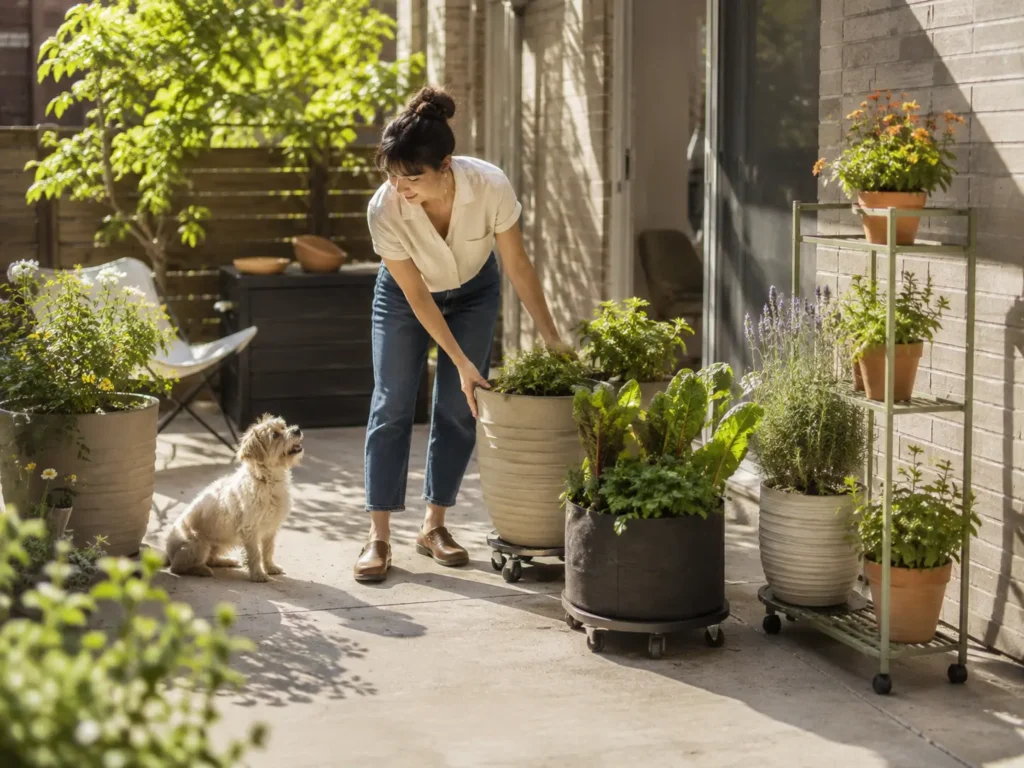
Pots can be rearranged as plants grow, moved when light conditions change, or taken with you if you move.
That does not mean every container needs wheels, but think ahead before filling a large pot that may need to move later. A wheeled plant caddy can be useful for selected heavy containers.
Just as important, keep the number of containers realistic.
If watering and routine care already feel like too much work, adding six more pots probably will not improve the garden.
Start with a number you can care for comfortably.
You can always add another pot later.
Common Patio Gardening Mistakes
Most patio gardening problems are easier to prevent before the containers are planted.
Buying Containers Before Checking Patio Conditions
A beautiful container is not useful if it does not fit the space or the plant.
Look at light, available room, water access, and surface conditions first.
Choosing Containers That Are Too Small
A small pot may look tidy at first but become difficult to manage as the plant grows.
Consider mature plant size and root space before choosing the container.
Filling Pots With Ordinary Garden Soil
Garden soil can compact in containers and interfere with drainage and aeration.
Use a potting mix made for container growing instead.
Using Containers Without Adequate Drainage
A decorative pot that traps excess water can create problems quickly.
Make sure excess water has a way out.
Adding Gravel to Improve Drainage
Gravel in the bottom of a pot does not solve poor drainage.
The container needs appropriate drainage and a suitable growing mix.
Ignoring Heat From the Patio Surface
Hot concrete, stone, or other hard surfaces can increase the heat around containers.
Watch plants more closely during hot weather and adjust placement if needed.
Starting With Too Many Small Pots
Small containers can dry quickly and require frequent attention.
A patio full of tiny pots may create more maintenance than expected.
Combining Plants With Different Needs
A plant that likes consistently moist soil may not be a good companion for one that prefers much drier conditions.
Combine plants with similar light and water requirements when they share the same container.
Patio Gardening Checklist
Before you finish setting up your apartment patio garden, check these basics:
- I reviewed my lease or property rules.
- I know which areas receive the most sun and shade.
- I identified areas where the patio surface becomes especially hot.
- My containers fit the mature size of the plants.
- My ordinary planters allow excess water to drain.
- I am using potting mix rather than garden soil.
- Plants sharing containers have similar light and water needs.
- I can reach water without making routine care difficult.
- Drainage will not create avoidable problems on the patio surface.
- The number of containers feels manageable.
- I have considered how heavy larger containers will become when filled.
- I checked permission requirements before adding permanent supports or attachments.
Frequently Asked Questions About Patio Gardening
Can You Grow a Garden on an Apartment Patio?
Yes. Containers make it possible to grow a wide range of plants on an apartment patio.
Start with the light available, containers with appropriate drainage, suitable potting mix, and a watering routine you can maintain.
What Type of Container Is Best for Patio Gardening?
There is no single best container.
It needs to be large enough for the plant, able to drain properly, and practical for your space. Material also affects moisture loss and weight, so the right choice depends on the plant and patio conditions.
Can I Use Garden Soil in Patio Containers?
Ordinary garden soil is generally not the best choice for containers because it can compact and interfere with drainage and aeration.
Use a potting mix intended for container plants instead.
How Often Should Patio Containers Be Watered?
There is no fixed schedule.
Check the growing mix and adjust for weather, plant needs, container size, material, and sun exposure.
Can I Grow Vegetables on an Apartment Patio?
Yes. Many vegetables can be grown in containers when they receive enough light and have adequate root space.
Leafy greens and compact vegetable varieties can work particularly well in small spaces, but crop-specific container size, light, and care requirements vary.
Final Thoughts on Patio Gardening
A successful apartment patio garden does not need dozens of containers.
What matters more is choosing pots that fit the plants, using the right growing mix, matching plants to the available light, and making watering and drainage easy to manage.
Hard patio surfaces add a few challenges, especially during hot weather, but they do not prevent you from growing a useful garden.
Start with a few containers you can care for well. It is much easier to add another pot later than to discover that your patio garden is already more work than you wanted.