15 Best Apartment Gardening Ideas for Small Spaces
You don’t need a backyard to grow herbs, vegetables, flowers, or houseplants. Some of the best apartment gardening ideas use spaces you already have—a sunny windowsill, balcony, shelf, countertop, or small corner near a window.
The key is choosing plants that match your available light and giving them the right container, drainage, and watering routine. Whether you want a few fresh herbs in the kitchen or a productive balcony garden, you can start small and expand as you learn what works in your apartment.
Below are 15 apartment gardening ideas for small spaces, including indoor gardens, balcony containers, vertical gardens, microgreens, hydroponics, herbs, vegetables, flowers, and renter-friendly options.
In This Guide
How to Choose the Right Apartment Garden Setup
A workable setup follows four steps: measure the space, observe the light, check building rules, and choose plants suited to those conditions. Record the width of a windowsill, shelf, balcony corner, or walkway clearance. Then check light at morning, midday, and afternoon rather than judging it from one glance.
If you’re just getting started, read our complete beginner’s guide to apartment gardening for help with containers, lighting, watering, and choosing the right plants.
- Bright light: many vegetables and fruiting plants need about or more hours of direct sun, or supplemental grow lights.
- Indirect light: filtered or reflected light suits many houseplants, leafy herbs, and foliage plants.
- Low light: plants can survive, but growth slows; low light does not mean no light.
South-facing windows usually provide the strongest natural sunlight. East-facing windows offer gentler morning light, while west-facing windows can be hot in the afternoon. North-facing windows often suit shade-tolerant houseplants but may need grow lights for herbs and vegetables.
Space-saving formats include a windowsill garden, narrow shelves, a freestanding vertical garden, hanging planters, window boxes where permitted, rolling carts, and compact containers. A beginner checklist should include pots and planters, containers with drainage holes, saucers or waterproof trays, organic potting mix, labels, pruning scissors, a moisture meter, and a small watering can.
For more ways to make the most of limited room, see our small space gardening guide for practical ideas to grow more without taking up more floor space.
Read the lease before installing anything outdoors. Ask the landlord or property manager for written approval for railing planters, hooks, window boxes, trellises, ceiling fixtures, or systems that change the exterior appearance. We recommend keeping that approval with your gardening records.
For plant-light basics, compare guidance from the University of Minnesota Extension before purchasing equipment. LED grow lights make weak-window gardening more practical, but the timer, distance, and coverage still matter.
15 Apartment Gardening Ideas to Try
The ideas below are numbered so you can choose one based on your goal rather than copying an entire garden layout. Each option identifies the best location, beginner-friendly plants, light needs, and a practical setup detail.
Some choices produce food quickly, such as microgreens and leafy greens. Others improve a room with houseplants or flowers, use vertical space, or make a balcony productive during the growing season. A 12-inch container may suit one patio pepper, while a shallow tray is enough for microgreens; mature size and root depth matter more than the size of the seed packet.
Start with a single purpose: fresh herbs, salad crops, flowers, decorative houseplants, or a seasonal balcony garden. Once those plants remain healthy for several weeks, expand gradually. This approach reduces watering mistakes, crowded airflow, and accidental damage to floors or railings.
Indoor Apartment Gardening Ideas for Windows and Shelves
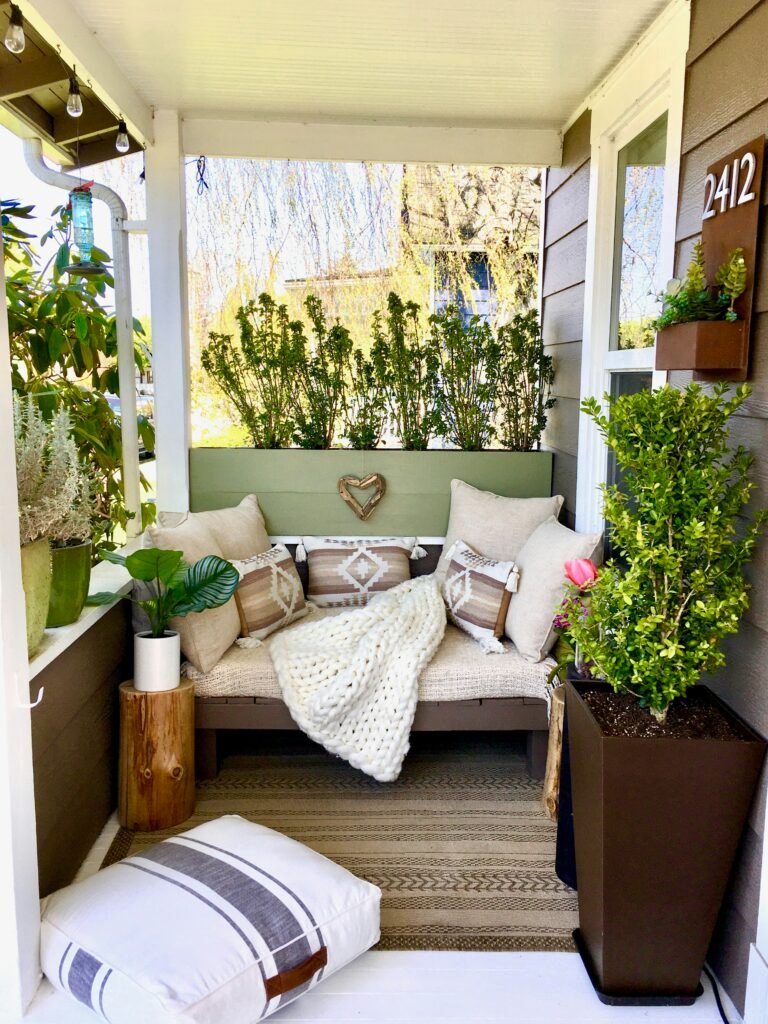
Indoor apartment gardening is the most flexible option because it avoids wind, balcony load limits, and many exterior installation rules. Natural sunlight remains the first resource to assess, but a narrow shelf and LED grow lights can compensate when a north-facing window or shaded room cannot provide enough intensity.
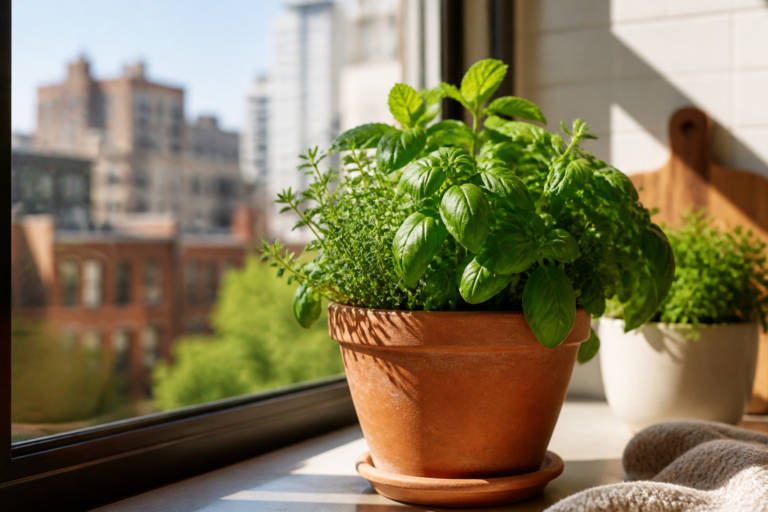
1. Windowsill herb garden
Place basil, chives, parsley, thyme, mint, or cilantro in small pots beside a bright window. Use a saucer under every container, rotate pots weekly for even growth, and keep mint in its own pot because its roots spread aggressively. Harvest lightly and often instead of removing more than one-third of a plant at once.
2. Grow-light shelf
A slim shelving unit fitted with LED grow lights can hold herbs, lettuce, seedlings, and compact houseplants.
For a compact option designed for a small shelf or plant setup, see our GooingTop Clip-On Grow Light review.GooingTop Clip-On Grow Light review.
Use a timer and maintain the manufacturer’s recommended distance; lights that are too far away produce weak, stretched growth, while lights too close can scorch leaves. Keep cords away from water.
3. Indoor vegetable garden
Leafy greens, radishes, scallions, dwarf peppers, and compact tomatoes can grow in containers. Lettuce generally needs less intense light than fruiting vegetables, so tomatoes and peppers often need a sunny south-facing window or supplemental grow lights. Choose dwarf varieties and allow airflow between pots.
4. Microgreens tray garden
Use shallow, clean trays for radish, pea, broccoli, sunflower, or mustard microgreens. They can be ready to harvest in roughly to days, depending on the crop and conditions. Bottom-water carefully, provide airflow, and remove covers after germination to reduce mold.
5. Compact houseplant collection
Group pothos, spider plants, peperomia, snake plants, and ZZ plants according to light needs, not according to a shared watering calendar. A snake plant may dry slowly in indirect light, while a small peperomia in a warm bright room may need attention sooner. Keep leaves away from cold glass and heating vents, which can stress foliage.
Low-light plants still require some light. Indirect light may be enough for foliage, but herbs and vegetables usually need brighter exposure. Check the top layer of potting mix before watering, empty saucers, and increase humidity only when ventilation remains good; persistently damp air and soil encourage mold.
For indoor gardens, light, drainage, and choosing plants suited to your conditions matter more than decorative equipment. The U.S. Environmental Protection Agency also emphasizes controlling indoor moisture, a useful consideration when many containers sit together.
Balcony Garden and Container Gardening Ideas
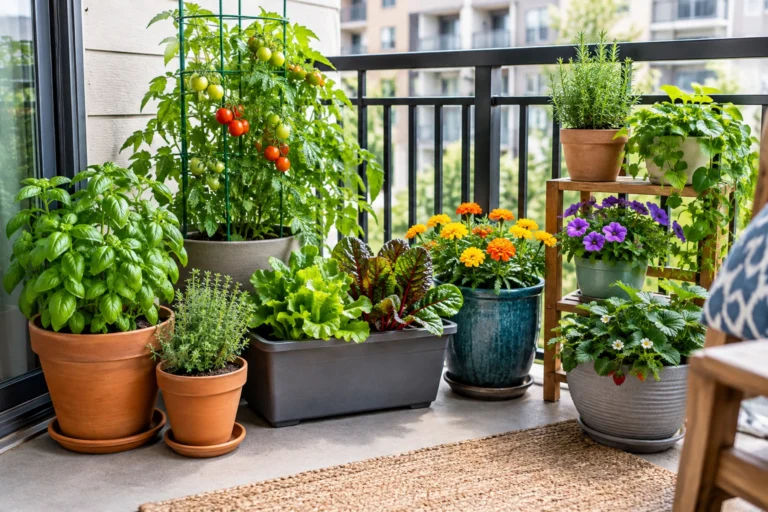
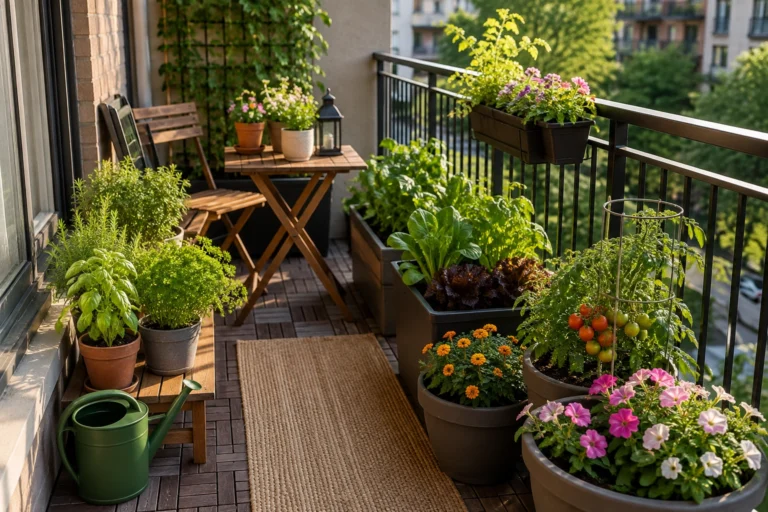
A balcony garden can produce herbs, greens, flowers, and compact vegetables, but safety comes before yield. Confirm the posted load limit with building management, account for wet soil and containers, distribute weight instead of concentrating it in one corner, and secure plants against wind. Never allow water to drip onto lower balconies or walkways.
If you want more ways to use a small outdoor space, these balcony garden ideas show additional container, layout, and space-saving options for apartment balconies.
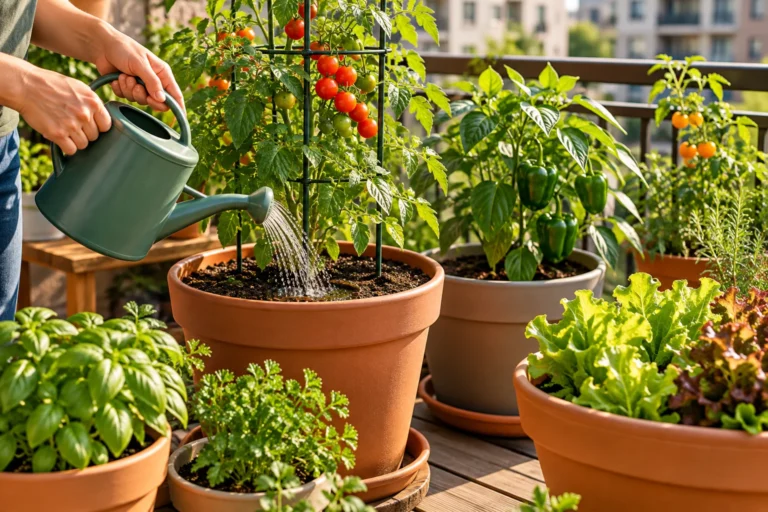
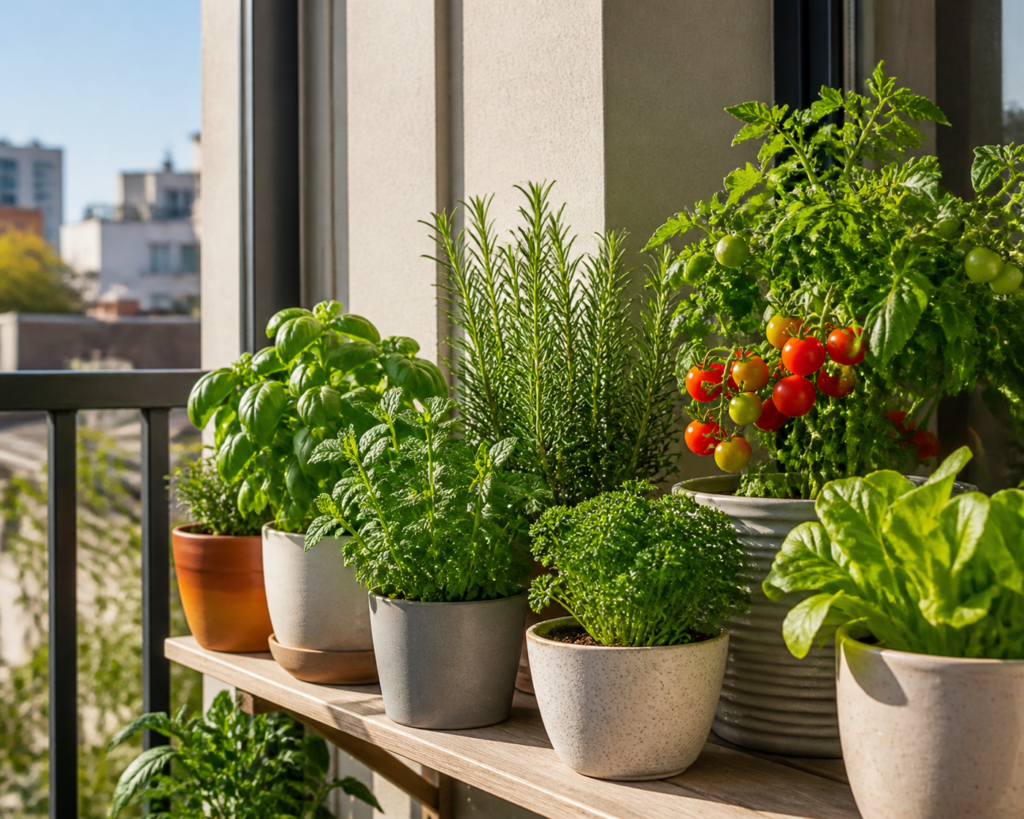
6. Balcony container garden
Combine stable pots of leafy greens, herbs, compact peppers, or patio tomatoes. Place heavier containers low and close to supported walls, not on a narrow edge or railing. Choose pots with drainage and use trays that won’t overflow during watering.
7. Railing planter garden
Use a window box or railing planter only when the lease, building manager, and local rules permit it. Choose locking brackets, place the unit inward where required, and inspect the attachment after strong wind. A planter that feels secure when dry may become unstable once saturated.
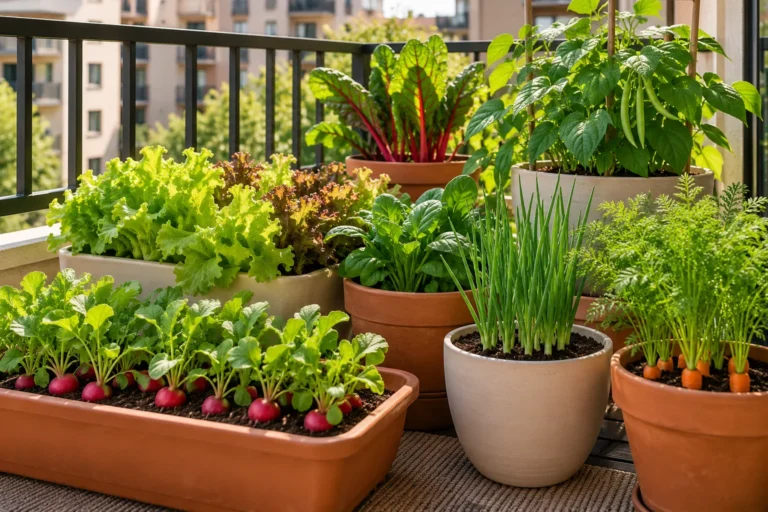
8. Compact vegetable garden
Bush beans, dwarf cucumbers, lettuce, spinach, carrots, radishes, patio tomatoes, and peppers suit containers when matched to root depth. Shallow-rooted greens need less depth than tomatoes or carrots. Follow the variety’s label rather than assuming every compact plant needs the same pot.
9. Balcony flower garden
Marigolds, petunias, nasturtiums, zinnias, and compact annuals add color. Deadhead spent flowers, select pollinator-friendly untreated plants, and protect dark containers from reflected heat near glass or pale walls. Wind-exposed balconies may need shorter, sturdier varieties.
10. Edible flower containers
Grow nasturtiums, calendula, violas, or borage in a dedicated food-safe container. Confirm the plant’s identity and never eat flowers treated with ornamental pesticides. Harvest only clean, correctly identified blooms and remove damaged material promptly.
Balcony planting schedules depend on local frost dates and climate zones. Check the USDA Plant Hardiness Zone Map and a nearby university extension service rather than relying on a national calendar. Cool crops such as spinach may tolerate early spring conditions, while basil, tomatoes, peppers, cucumbers, and marigolds generally prefer warmer weather.
Vertical, Hanging, and Space-Saving Apartment Gardening Ideas
Vertical systems increase growing area without increasing floor area, but they must remain stable and approved. A freestanding structure is usually more suitable for renters than a drilled wall system, especially in a lease-controlled apartment.
These approaches are part of small space gardening, where vertical growing, compact containers, shelves, and movable plant stands help you use limited room more efficiently.
11. Freestanding vertical garden
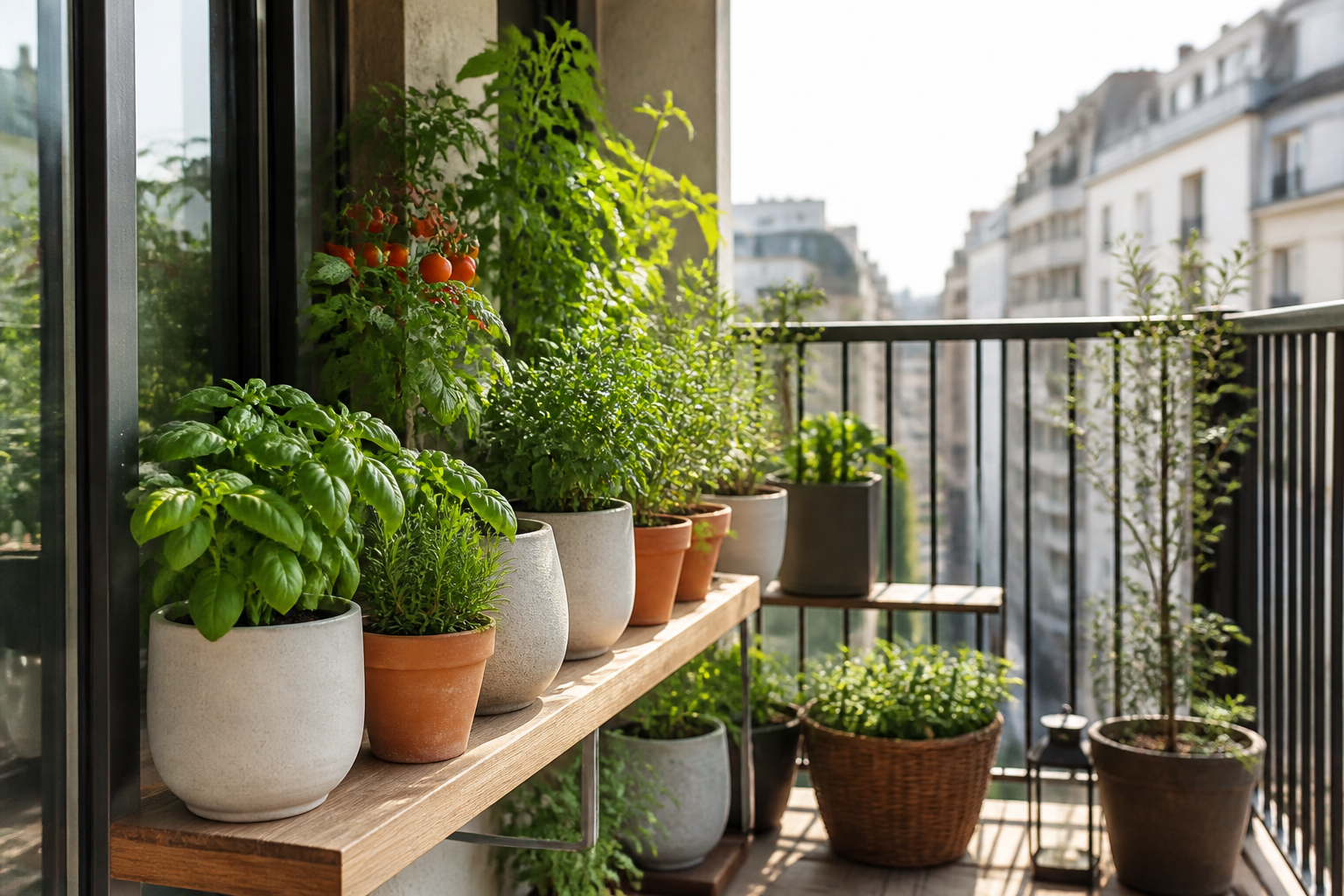
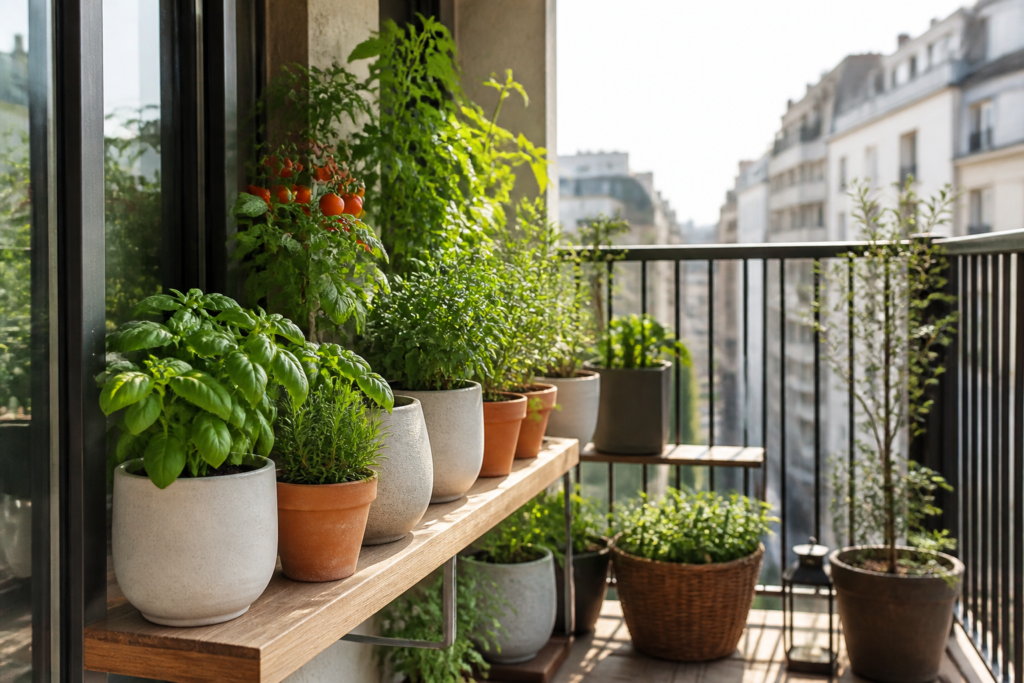
Use a lightweight ladder shelf, tiered stand, or freestanding planter for herbs, lettuce, trailing houseplants, and small flowers. Put heavier pots on lower tiers and leave enough clearance to water without splashing upper shelves. Rolling plant stands make seasonal light adjustments easier.
12. Vertical trellis for climbing plants
Train peas, compact beans, cucumbers, jasmine, or flowering vines on a freestanding vertical trellis. Climbing and vining plants need support, pruning, airflow, and a stable base; top growth can make a lightweight pot tip over. Confirm permission before attaching any support to a wall, railing, balcony, or exterior surface.
13. Hanging planter display
Spider plants, pothos, tradescantia, strawberries, and trailing flowers can occupy unused upper space. Use approved ceiling hardware or freestanding hangers, drip trays, and a safe height away from children and pets. Avoid placing hanging pots over beds, electronics, or heavily used walkways.
Renter-friendly alternatives include tension-free shelving, freestanding grids, over-the-door organizers designed for plants, and movable plant stands. Do not assume adhesive hooks can support wet soil; many fail when humidity, weight, or repeated watering weakens the adhesive.
Apply a quick safety test: tug the support gently, check for wobble, inspect brackets, keep water away from electrical outlets, and leave clear pathways around every planter. In our experience, a smaller stable display is more useful than a crowded vertical wall that is difficult to water and inspect.
Compact Systems for Herbs, Vegetables, and Fruit
Some apartment gardening ideas use technology to produce food where sunlight or floor space is limited. Choose the system according to your willingness to monitor it, not just its appearance.
14. Small hydroponic system
A countertop hydroponic unit can grow lettuce, basil, mint, and other compact herbs using water, nutrients, and built-in lighting. Check the water level several times each week, clean the reservoir on the manufacturer’s schedule, and follow nutrient directions precisely. More fertilizer is not a shortcut to faster growth.
15. Compact fruiting plants
Dwarf strawberries, patio tomatoes, chili peppers, and dwarf citrus may work where light, container size, and indoor temperature allow. Fruiting crops often need bright light, regular feeding, and pollination assistance indoors; gently shake tomato flowers or use a small brush when appropriate.
Hydroponics can save floor space and reduce loose soil, but it adds pumps, nutrients, cleaning, and water-level checks. Soil-based container gardening is simpler for many beginners and supports a wider range of plants, provided you use quality potting mix and containers with drainage.
Apartment vegetable gardening works best when you select crops by mature size, root depth, harvest time, and available light. For example, use a shallow tray for microgreens, a multi-tier shelf for several herb pots, and approximately a 12-inch pot for one patio pepper when the variety’s label supports that size. Container requirements vary, so treat those examples as starting points rather than fixed rules.
Key Takeaways for a Productive Apartment Garden
Start small, match crops to light, and treat safety as part of the design. A few well-placed containers can provide herbs, greens, flowers, or attractive houseplants without crowding your home.
- Measure first, observe natural sunlight for a full day, and choose plants for mature size and root depth.
- Use containers with drainage, waterproof saucers, suitable potting mix, and a watering routine based on soil moisture.
- Choose freestanding vertical systems and movable plant stands when you rent; obtain written approval before exterior or overhead installations.
- Check balcony load limits, wind exposure, runoff, pet safety, child safety, and local frost dates before expanding.
- Begin with two or three plants, keep weekly records, and add new apartment gardening ideas only after the first setup is stable.
Frequently Asked Questions
What are some ideas for indoor gardening in an apartment?
Try a windowsill herb garden, a microgreens tray, a grow-light shelf, an indoor vegetable container, or a compact houseplant collection. Basil, chives, lettuce, radishes, spider plants, peperomia, and ZZ plants are practical starting choices when their light and watering needs match the room.
How can I garden in my apartment?
Measure a bright window, shelf, or permitted balcony area, then select two or three plants suited to its light and mature size. Use pots with drainage, saucers, quality potting mix, and a simple moisture-based watering routine; add grow lights when natural sunlight is insufficient.
How do I make a renter-friendly garden?
Use freestanding shelves, rolling carts, movable plant stands, tension-free supports, and removable waterproof trays. Check your lease and obtain written approval before drilling, hanging anything from a ceiling, attaching a trellis, using a window box, or installing a railing planter.
Which apartment gardening ideas are best for beginners?
A windowsill herb garden, microgreens tray, compact houseplant collection, or small container of lettuce is usually easy to start and inspect. Begin with two or three plants, learn how quickly the potting mix dries, and expand only after you can maintain the first group consistently.