Best Balcony Plants: 25 Great Plants for Apartment Balconies
Choosing the best balcony plants starts with the conditions your balcony actually provides. Sunlight, wind exposure, container space, reflected heat, and local climate can make a plant that thrives on one apartment balcony struggle on another.
This guide focuses specifically on outdoor balcony plants. If you’re looking for a broader mix of indoor and outdoor choices, see our best plants for apartment gardening.
Before choosing plants, make sure you understand your balcony’s sunlight, wind, drainage, and container limitations. Our apartment balcony gardening guide covers those setup basics in detail.
Table of Contents
Before Choosing a Balcony Plant
Start with usable sunlight. For this guide, the full-sun section covers plants that generally perform best with about six or more hours of direct sun. The mixed-light section is for balconies that fall between obvious sun and shade, while the shade section focuses on plants suited to substantially less direct sunlight.
Next, consider exposure. Strong wind can dry containers quickly, damage delicate foliage, and make tall or top-heavy plants more difficult to manage. A plant that loves full sun isn’t automatically a good choice for an exposed, windy balcony.
Container size matters too. A Meyer lemon or dwarf flowering shrub requires much more root space—and creates much more weight—than Hens and Chicks or Moss Rose. Large containers filled with moist growing medium can become surprisingly heavy, so check your building’s rules and restrictions before adding substantial planters.
Finally, consider what happens when the growing season ends. Roots growing above ground in containers receive less protection from winter temperatures than roots planted in the ground. Some perennials may therefore need additional winter protection even when they’re normally hardy in your area.
With those conditions in mind, you can narrow the list to plants that actually fit your balcony.
Best Balcony Plants for Full Sun
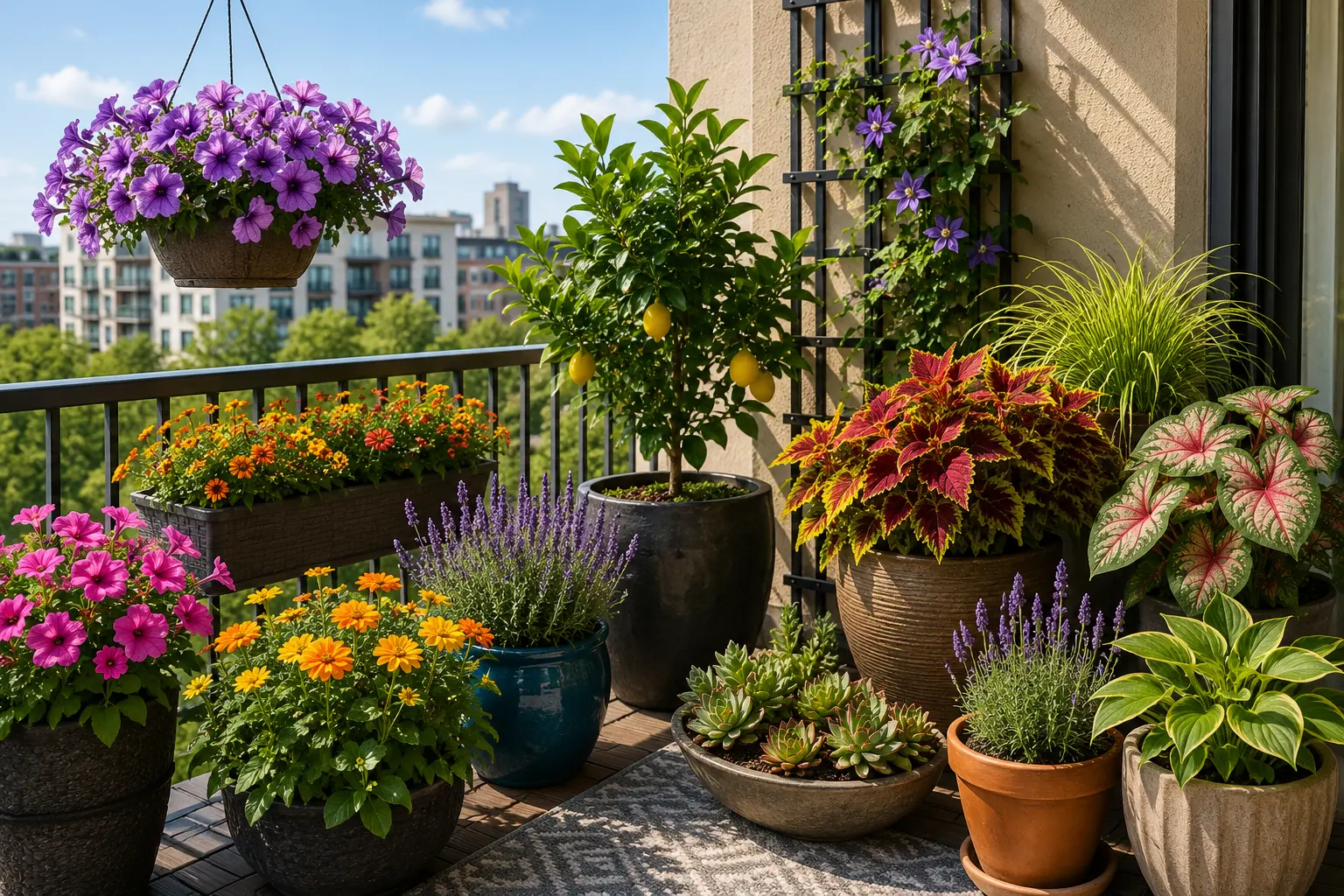
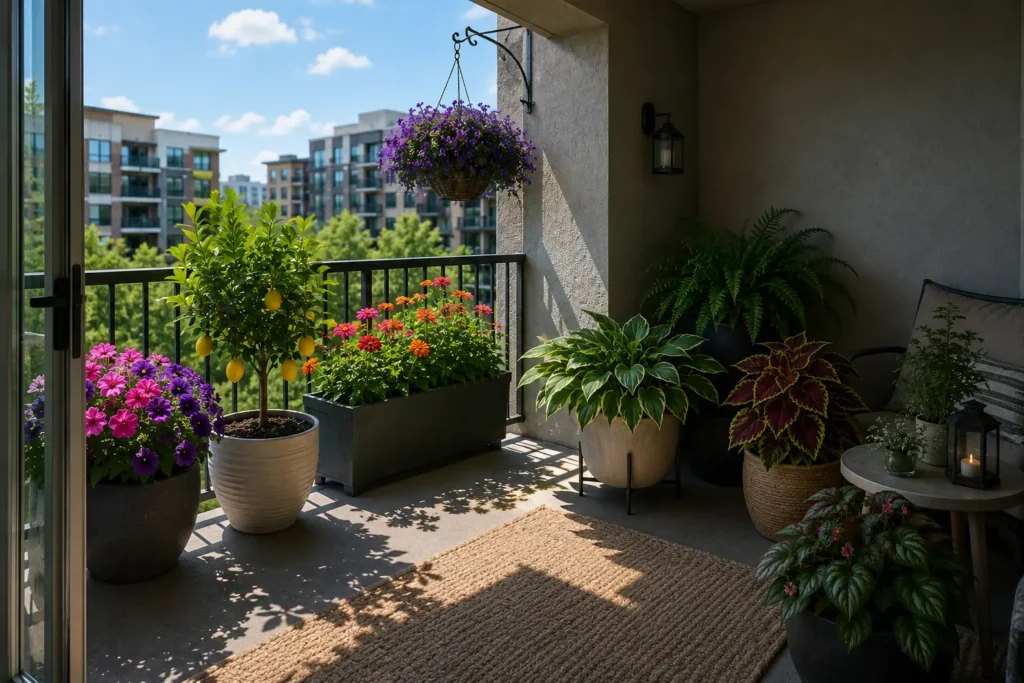
Sunny balconies provide the widest range of choices, from flowering annuals and perennials to succulents, climbers, shrubs, and even container citrus.
1. Petunia
Petunia species
Best for: Flower-filled containers and hanging baskets
Light: Full sun; generally 6+ hours
Size: Varies by cultivar and growth habit
Container: Excellent; containers and baskets
Water: Frequent; baskets can dry quickly
Season: Usually grown as an annual
Maintenance: Higher watering demand
Trailing petunias make particularly good use of hanging baskets and elevated planters, producing plenty of color without occupying much balcony floor space. Upright varieties are equally useful in traditional containers.
The tradeoff is water. Container-grown petunias, particularly those in hanging baskets, can need frequent attention during warm, dry weather.
For households with pets, there is another advantage: the ASPCA lists Petunia species as non-toxic to dogs, cats, and horses.
2. Calibrachoa
Calibrachoa × hybrida
Best for: Compact trailing flowers
Light: Sun to part sun; recommendations vary
Size: Compact and trailing
Container: Excellent; especially baskets
Water: Frequent in containers
Season: Commonly grown as an annual
Maintenance: Low deadheading needs, but regular feeding and watering
Often called million bells, calibrachoa is worth considering when you want the trailing effect of petunias in a smaller package. Its compact habit works especially well in hanging baskets where balcony floor space is limited.
One caution is that authoritative recommendations vary on its exact sun, heat, and moisture requirements. It’s better to watch how the plant responds to your particular exposure than to treat calibrachoa as universally drought tolerant.
3. Zonal or Ivy Geranium
Pelargonium × hortorum / Pelargonium peltatum
Best for: Flowering balconies with moderate to strong sun
Light: Can flower with about 4+ hours of direct sun
Size: About 1–2 feet
Container: Container-friendly
Water: Moderate
Season: Often grown as an annual outside warm climates
Maintenance: Low to moderate
Geranium earns its place because it can flower with less direct sun than most plants in this section. That makes it particularly useful for a balcony that receives several hours of good sunlight but doesn’t qualify as an all-day-sun location.
Pet owners should use caution. The ASPCA lists Pelargonium geraniums as toxic to dogs and cats.
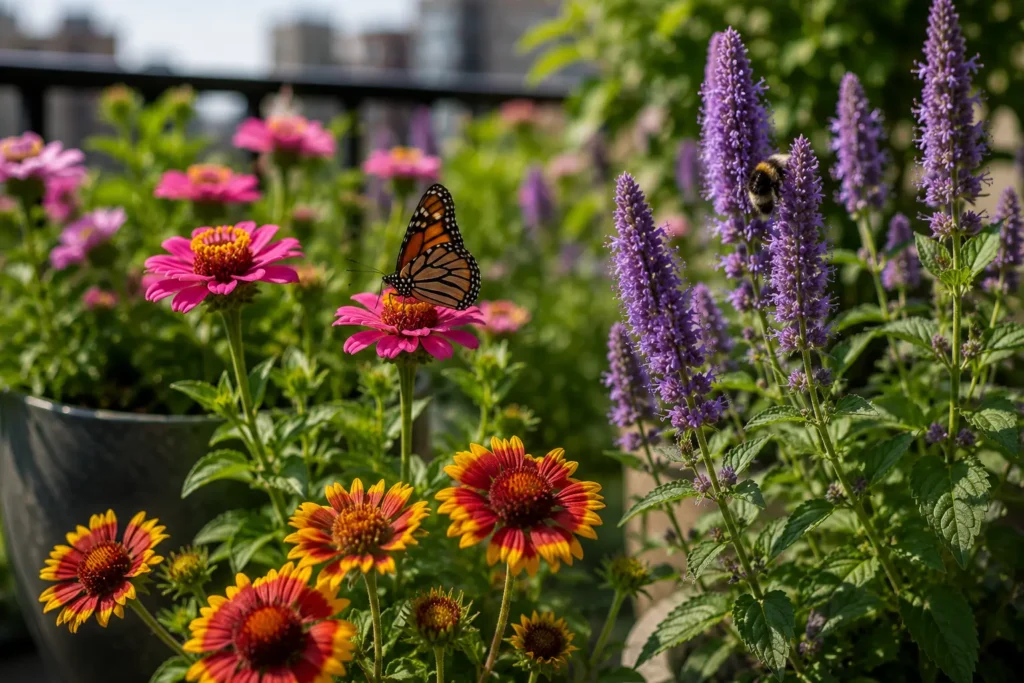
4. Zinnia
Zinnia elegans
Best for: Summer flowers and pollinator activity
Light: Full sun; about 6–8+ hours
Size: About 1–3 feet; choose compact cultivars
Container: Compact cultivars work well
Water: Water as the upper growing medium dries
Season: Annual
Maintenance: Low to moderate
Cultivar choice is the key to growing zinnias successfully on a balcony. Compact zinnia cultivars for containers give you the flowers without the height and footprint of larger garden types.
Zinnias are also one of the better-supported pollinator plants in our research, with documented visits from bees, butterflies, and hummingbirds.
5. Signet Marigold
Tagetes tenuifolia
Best for: Compact flowers on sunny balconies
Light: Full sun
Size: Compact
Container: Well suited to containers
Water: Moderate
Season: Annual
Maintenance: Low
Signet marigolds offer a compact alternative to larger marigold varieties, making them particularly useful when container space is limited.
Their manageable size is only part of the appeal. Our research also found authoritative support for pollinator value, giving signet marigolds a useful role when you want flowers without committing space to a much larger plant.
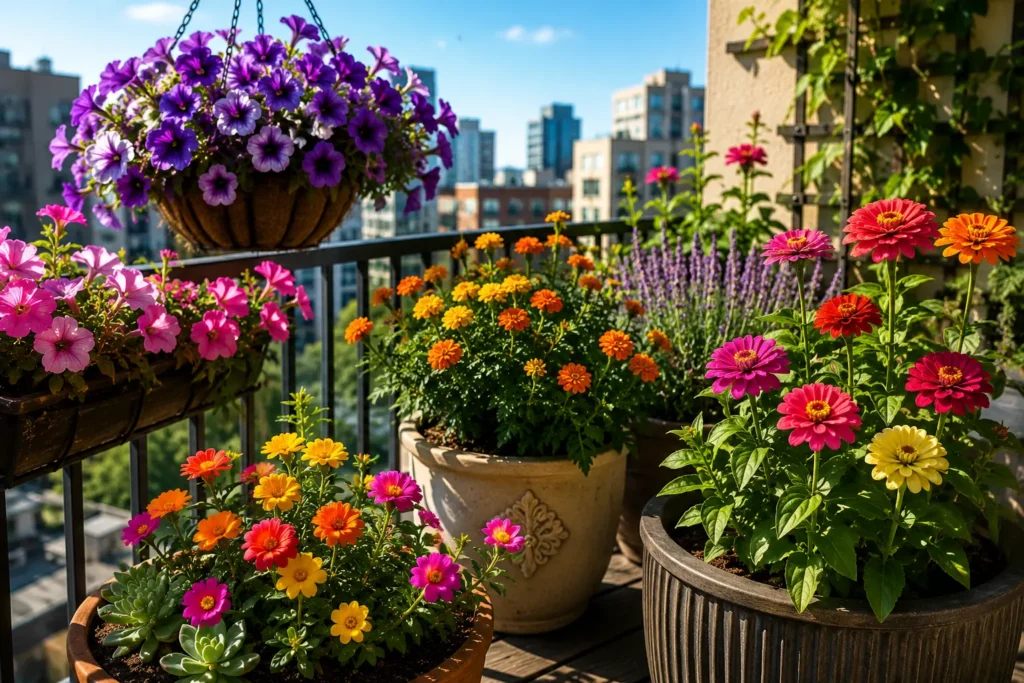
6. Moss Rose
Portulaca grandiflora
Best for: Hot, sunny balconies
Light: Full sun
Size: Low and spreading
Container: Excellent; containers and baskets
Water: Lower water demand once established
Season: Usually grown as an annual
Maintenance: Low
For a hot balcony where containers tend to dry quickly, Moss Rose is one of the strongest candidates in this list. Its low-growing habit also makes it practical where taller plants would occupy too much space.
Good drainage is important. Moss Rose is much better suited to comparatively dry conditions than constantly wet growing medium, and its flowers perform best with strong sunlight.
7. Dwarf Sunflower
Helianthus annuus, dwarf cultivars
Best for: Bold flowers without full-size sunflower height
Light: Full sun; about 6–8+ hours
Size: Choose cultivars under about 3 feet
Container: Roughly 5-gallon-container scale
Water: Moderate
Season: Annual
Maintenance: Low to moderate
Dwarf sunflowers provide much of the visual impact of traditional sunflowers without their extreme height. Choosing a genuinely compact cultivar is what makes them practical for balcony growing.
They’re still taller than many annuals on this list. The research also identified staking as a potential concern, so an exposed balcony may require more protection than a sheltered sunny one.
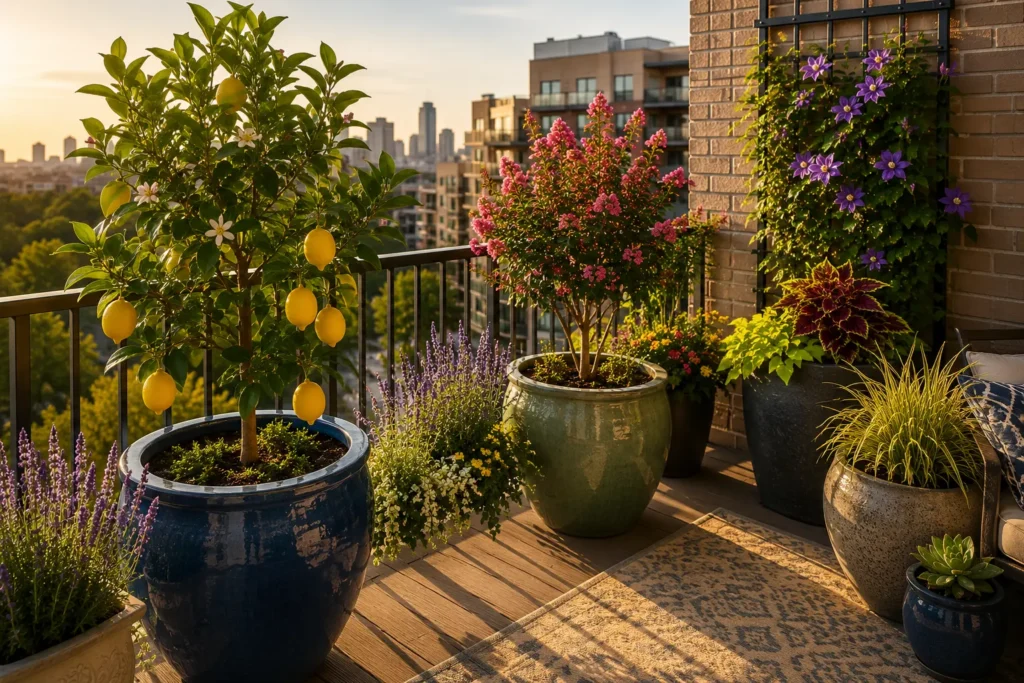
8. English Lavender
Lavandula angustifolia
Best for: Sunny balconies with excellent drainage
Light: Full sun
Size: About 1–2 feet
Container: About 12–16 inches in diameter
Water: Regular summer watering; much drier in winter
Season: Perennial where hardy; containers may need winter protection
Maintenance: Low to moderate
Lavender works best when strong sunlight is paired with excellent drainage. The Royal Horticultural Society recommends a container approximately 30–40 cm (12–16 inches) in diameter and advises adding coarse grit to improve drainage.
Don’t assume that drought tolerance in the ground means a container-grown lavender never needs water. Pots still require attention during summer, while excessive winter moisture can create a different problem.
9. Anise Hyssop
Agastache foeniculum
Best for: Pollinator-focused sunny balconies
Light: Full sun
Size: About 2–3 feet
Container: Container use is supported
Water: Drought tolerant once established; requires good drainage
Season: Perennial where hardy
Maintenance: Low
Pollinator value is the reason Anise Hyssop stands out from many other flowering choices. It attracts bees, butterflies, and other pollinators, with authoritative sources also documenting hummingbird activity.
Its 2–3-foot size means it needs more room than a compact annual, but its documented container suitability makes it a realistic choice when you can provide that space.
10. Blanket Flower
Gaillardia × grandiflora
Best for: Sunny containers and pollinator value
Light: Full sun
Size: Varies by cultivar
Container: Suitable for small spaces and containers
Water: Drought tolerant once established
Season: Short-lived perennial where hardy
Maintenance: Low to moderate
Blanket Flower provides a perennial alternative to seasonal balcony flowers and has documented value for butterflies, bees, and birds.
Maintenance guidance varies among authoritative sources. Some recommend more regular deadheading than others, so it’s more accurate to call this a low-to-moderate-maintenance plant than to promise a completely hands-off perennial.
11. Dwarf Crape Myrtle ‘Pocomoke’
Lagerstroemia ‘Pocomoke’
Best for: Flowering height and some screening
Light: Full sun
Size: Up to about 5 feet
Container: Container use is supported
Water: Moderate
Season: Perennial where hardy
Maintenance: Moderate
Unlike the annual flowers above, ‘Pocomoke’ provides shrub-like height while remaining far smaller than a standard crape myrtle. NC State Extension identifies it as appropriate for container and patio use.
Its size also creates the main limitation. A plant approaching five feet needs more container space than a typical annual, and the research supports placing it in a protected location rather than assuming it will tolerate severe balcony wind.
12. Bougainvillea
Bougainvillea spp.
Best for: Hot, sunny balconies in warm climates
Light: Full sun
Size: Naturally large; control with pruning and training
Container: Container growing is supported
Water: Relatively drought tolerant once established
Season: Tender outside warm climates
Maintenance: Moderate
Bougainvillea makes the most sense where intense sunlight and warm temperatures limit other flowering choices. Its heat, drought, and salt tolerance distinguish it from many conventional balcony flowers.
It isn’t naturally compact, however. Keeping one balcony-sized requires pruning and training, and its thorns make placement important around doors, seating areas, children, and pets.
13. Compact Clematis
Clematis spp., compact cultivars
Best for: Flowering vertical growth
Light: Sun to part shade, depending on type
Size: Varies by cultivar
Container: Use a substantial container
Water: Regular moisture during active growth
Season: Perennial; hardiness varies by cultivar
Maintenance: Moderate to higher
Compact clematis gives apartment gardeners a climbing option for temperate climates without requiring the same conditions as Bougainvillea.
Container size is especially important. RHS guidance supports using a substantial container for container-grown clematis, and pruning requirements vary by type.
Hardiness varies enough that you should check the specific cultivar before expecting container-grown clematis to remain outdoors year-round.
14. Sedum or Stonecrop
Sedum and Hylotelephium types
Best for: Sunny balconies with lower maintenance needs
Light: Full sun; some types tolerate light shade
Size: From a few inches to around 2 feet, depending on type
Container: Well suited to containers
Water: Allow the growing medium to dry between waterings
Season: Many are hardy perennials
Maintenance: Low
Sedum is one of the strongest choices on this list when you want a plant that doesn’t demand constant attention. Creeping stonecrops stay low, while upright types can provide more height.
Excellent drainage is more important than frequent watering. The researched types tolerate dry conditions and also have documented butterfly value.
15. Hens and Chicks
Sempervivum tectorum
Best for: Tiny sunny balconies
Light: Full sun; tolerates some light shade
Size: Compact rosettes
Container: Excellent with sharp drainage
Water: Low; avoid constantly wet soil
Season: Hardy perennial in many climates
Maintenance: Low
Hens and Chicks provide a lot of value in very little space. Their compact rosettes make them particularly useful for balconies where every inch matters, and they’re considerably more cold hardy than many succulents.
Pet households have another reason to consider them. The ASPCA identifies Sempervivum Hens and Chicks as non-toxic.
16. Meyer Lemon
Citrus × meyeri
Best for: Larger sunny balconies where fruit is a priority
Light: Full sun
Size: Small container tree
Container: Large; long-term growing requires substantial volume
Water: Moderate; don’t keep roots constantly wet
Season: Protect from freezing temperatures
Maintenance: Moderate
Meyer lemon is the space-intensive choice in our full-sun group. Unlike a small annual or succulent, container-grown citrus eventually requires a large planter that becomes considerably heavier once filled and watered.
For a balcony that can safely accommodate it, Meyer lemon offers both flowers and fruit. Cold protection is the major seasonal consideration, and a protected location is preferable to a severely exposed one.
Best Balcony Plants for Part Sun and Part Shade
Some balconies receive several hours of direct sun followed by shade, filtered light from surrounding buildings, or changing conditions throughout the day. These plants provide options between the obvious full-sun and shade choices.
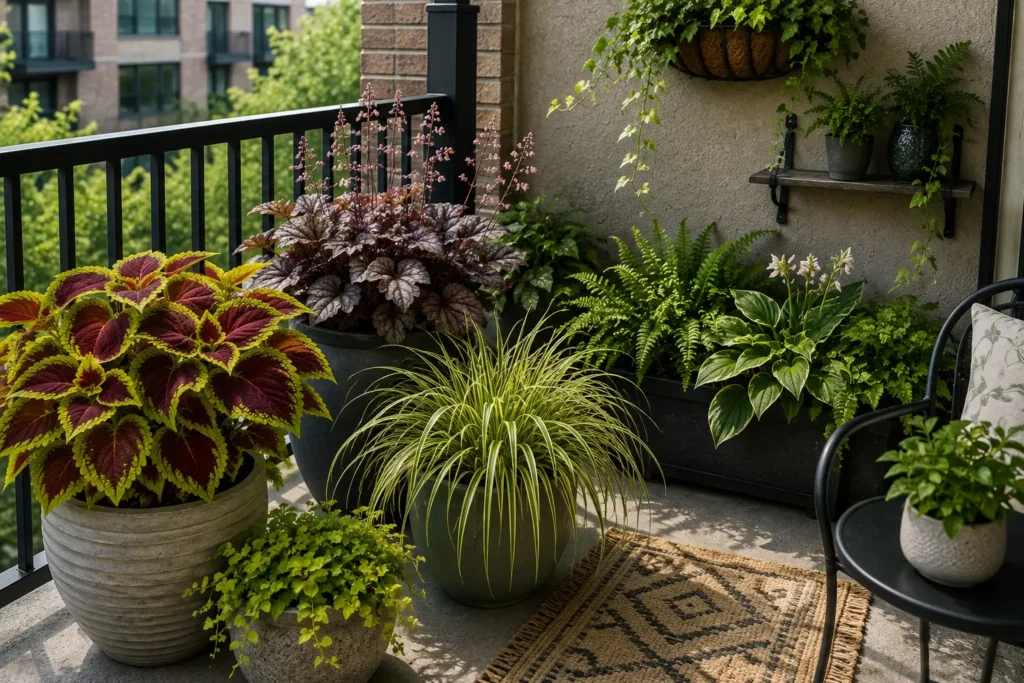
17. Coleus
Plectranthus scutellarioides
Best for: Colorful foliage in mixed light
Light: Part shade to shade; some cultivars tolerate more sun
Size: About 6–36 inches, depending on cultivar
Container: Containers, window boxes, and baskets
Water: Don’t allow the growing medium to dry completely
Season: Usually grown as an annual outdoors in colder climates
Maintenance: Low with occasional pinching
Coleus provides strong color without depending on flowers. The enormous range of foliage colors also makes it useful when you want visual interest in a location where many flowering annuals won’t perform well.
Sun tolerance varies by cultivar, so check the particular plant rather than assuming every coleus handles the same exposure.
Pet owners should use caution: the ASPCA identifies coleus as toxic to dogs and cats.
18. Coral Bells
Heuchera spp.
Best for: Colorful perennial foliage
Light: Part sun to part shade; cultivar tolerance varies
Size: About 8–36 inches depending on cultivar
Container: Container use is supported
Water: Consistent moisture
Season: Perennial where hardy; containers may need winter protection
Maintenance: Low
Coral Bells combine colorful foliage with flowers without requiring the intense sun preferred by many annuals.
Their flowers also have documented value for bees and hummingbirds. When grown as perennials in containers, winter exposure deserves additional attention because the roots don’t receive the same insulation they would in the ground.
19. Japanese Forest Grass
Hakonechloa macra
Best for: Texture and movement in part shade
Light: Part shade
Size: Roughly 12–20 inches
Container: Container use is supported
Water: Consistently moist but well drained
Season: Perennial where hardy; protect exposed containers in colder climates
Maintenance: Low
Japanese Forest Grass offers something very different from flowering balcony plants. Its arching foliage creates movement and texture without the size of a shrub.
Intense sun and dry conditions are poor matches. The foliage can burn in hot, sunny locations, while container-grown plants may also require winter protection in colder climates.
Best Balcony Plants for Shade
A shaded outdoor balcony isn’t the same environment as a low-light room indoors. Outdoor shade can still provide substantial ambient light along with temperature changes, wind, and humidity.
The following plants were selected for genuine outdoor shade or part-shade conditions rather than simply borrowing plants from an indoor houseplant list.
20. Impatiens
Impatiens walleriana
Best for: Flowers on shaded balconies
Light: Part to full shade
Size: About 6–30 inches
Container: Containers and hanging baskets
Water: Frequent; don’t allow containers to dry excessively
Season: Annual in most U.S. climates
Maintenance: Low aside from watering
Impatiens are among the most dependable choices when a balcony doesn’t receive enough direct sunlight for typical sun-loving annuals. They also flower without requiring routine deadheading.
The tradeoff is moisture. Containers and especially hanging baskets can dry quickly. Impatiens downy mildew is another consideration, so resistant selections may be preferable where the disease has been a problem.
21. Wax Begonia
Begonia Semperflorens Cultorum Group
Best for: Flowers in warm, partly shaded conditions
Light: Part shade; dappled shade is useful in intense heat
Size: About 6–12 inches
Container: Containers and window boxes
Water: Consistent moisture without waterlogging
Season: Usually grown as an annual outside warm climates
Maintenance: Not specifically rated in the sources reviewed
Wax Begonia combines a compact growth habit with documented tolerance of hot, humid summers, making it useful when a balcony is warm but doesn’t receive ideal full-sun conditions.
Pet households should be careful. The ASPCA lists begonias as toxic to dogs and cats.
22. Fuchsia
Fuchsia hybrids
Best for: Hanging baskets on cooler shaded balconies
Light: Part shade to full shade
Size: About 1–2 feet
Container: Excellent; upright types for pots and trailing types for baskets
Water: Prefers consistent moisture
Season: Tender outside very mild climates
Maintenance: Moderate
Fuchsia is particularly useful for a cooler, protected balcony where many sun-loving flowering plants would struggle. Trailing forms are especially suitable for containers and hanging baskets.
High summer temperatures are the major limitation. Flowering and foliage quality can decline in excessive heat. Its flowers also have documented value for hummingbirds.
23. Caladium
Caladium bicolor
Best for: Bold foliage in warm, sheltered shade
Light: Part shade or filtered sun; about 2–4 hours of direct sun can work well
Size: About 1–2.5 feet
Container: Containers and baskets
Water: Keep adequately moist during active growth; don’t allow it to dry completely
Season: Tender; tubers may require winter storage
Maintenance: Moderate
Caladium makes sense when two conditions line up: warmth and protection from strong wind. Its foliage provides dramatic color in locations where many flowering sun plants won’t perform well.
The large leaves are relatively fragile and can be damaged by wind or hail, making Caladium a poor choice for a severely exposed high-rise balcony.
It’s also toxic to dogs and cats.
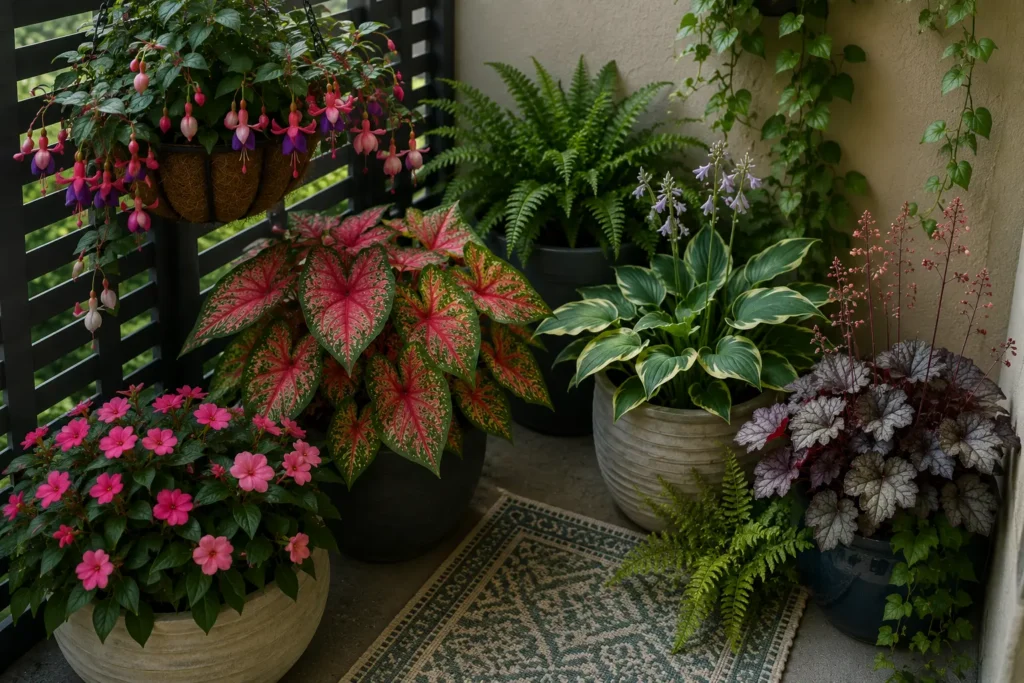
24. Dwarf Hosta
Hosta spp., compact cultivars
Best for: Compact plants in sheltered shade
Light: Part shade to full shade
Size: True dwarf types can remain roughly 0.25–1 foot
Container: Container growing and overwintering practices are documented
Water: Consistent moisture
Season: Perennial; container winter protection may be necessary
Maintenance: Low except for potential slug problems
Hostas aren’t limited to large garden beds. Choosing a genuinely dwarf cultivar gives shaded-balcony gardeners a perennial foliage option that occupies much less space than standard hostas.
Slugs can still be troublesome, and pet owners should know that the ASPCA lists hostas as toxic to dogs and cats.
25. Dwarf Chinese Astilbe
Astilbe chinensis var. pumila
Best for: Compact flowering color in shade
Light: Part shade to full shade
Size: About 9–12 inches
Container: Reasonable candidate based on compact size; specific container endorsement was not found in the sources reviewed
Water: Consistent moisture; don’t allow it to dry completely
Season: Perennial where hardy
Maintenance: Low
Dwarf Chinese Astilbe fills a useful gap in this list: it’s a genuinely compact flowering perennial for shaded conditions. At roughly a foot tall or less, it offers flowers without the size of many conventional shade perennials.
There is one important qualification. Our research supports the plant’s size, light, water, and maintenance characteristics, but we did not find a direct authoritative recommendation specifically endorsing this variety for containers. Its inclusion here is therefore based on its compact growth habit rather than a published container specification.
That distinction is worth making instead of presenting an inference as established fact.
Quick Comparison of the 25 Best Balcony Plants
| Plant | Light | Approx. size | Best reason to choose it | Main caution |
|---|---|---|---|---|
| Petunia | Full sun | Varies | Abundant flowers | Frequent watering |
| Calibrachoa | Sun/part sun | Compact/trailing | Hanging baskets | Water + feeding |
| Geranium | 4+ hrs sun | 1–2 ft | Handles less sun | Toxic to pets |
| Zinnia | Full sun | 1–3 ft | Flowers + pollinators | Choose compact cultivar |
| Signet Marigold | Full sun | Compact | Flowers + pollinators | Needs strong sun |
| Moss Rose | Full sun | Low/spreading | Heat + drought | Needs excellent drainage |
| Dwarf Sunflower | Full sun | Under ~3 ft | Bold flowers | Wind/staking |
| English Lavender | Full sun | 1–2 ft | Fragrance + compact perennial | Drainage/winter moisture |
| Anise Hyssop | Full sun | 2–3 ft | Strong pollinator value | Needs more space |
| Blanket Flower | Full sun | Varies | Pollinators + dry conditions | Deadheading may help |
| Dwarf Crape Myrtle | Full sun | Up to ~5 ft | Height/screening | Size + wind |
| Bougainvillea | Full sun | Pruned to size | Heat + flowering vine | Thorns/climate |
| Compact Clematis | Sun/part shade | Varies | Vertical flowers | Larger pot + pruning |
| Sedum | Full sun | Inches–2 ft | Lower maintenance | Avoid wet soil |
| Hens and Chicks | Full sun | Very compact | Tiny spaces | Requires drainage |
| Meyer Lemon | Full sun | Small tree | Fruit | Large/heavy container |
| Coleus | Mixed light | 6–36 in | Foliage color | Don't let it dry |
| Coral Bells | Part sun/shade | 8–36 in | Perennial foliage | Winter container exposure |
| Japanese Forest Grass | Part shade | 12–20 in | Texture | Sun/heat stress |
| Impatiens | Shade | 6–30 in | Shade flowers | Frequent water |
| Wax Begonia | Part shade | 6–12 in | Heat + flowers | Toxic to pets |
| Fuchsia | Shade | 1–2 ft | Hanging baskets | Summer heat |
| Caladium | Part shade | 1–2.5 ft | Bold foliage | Wind + toxicity |
| Dwarf Hosta | Shade | 0.25–1 ft | Compact perennial | Toxic to pets |
| Dwarf Chinese Astilbe | Shade | 9–12 in | Compact flowers | Container fit inferred |
Want to see a few balcony plant options in action? This video from PlantDo Home & Garden highlights begonias, chrysanthemums, pansies, petunias, and ferns as possibilities for apartment balconies and patios.
Balcony Plants to Avoid or Use With Caution
A plant appearing on another “best balcony plants” list doesn’t automatically make it appropriate for every apartment.
Lantana: Regional invasive concerns and toxicity make it inappropriate as a universal recommendation.
Black-eyed Susan Vine: Can behave invasively in warm regions and isn’t a universally suitable choice for intense balcony conditions.
Morning Glory: Regional invasive concerns and toxic seeds make it a poor blanket recommendation.
Dwarf Fountain Grass ‘Hameln’: Regional regulatory concerns mean this shouldn’t be recommended nationally without qualification.
Boston Fern: Frequently treated as an indoor houseplant in temperate climates and introduces unnecessary overlap with indoor low-light plant selection, so better-supported outdoor shade plants earned those positions instead.
Always check regional invasive-plant guidance before adding a plant that can spread beyond its container.
How to Choose From These 25 Balcony Plants
If you’re still deciding, start with what matters most:
- Hot, intense full sun: Moss Rose, Sedum, Hens and Chicks
- Pollinator priority: Zinnia, Anise Hyssop, Blanket Flower
- Limited or mixed sun: Geranium, Coleus, Coral Bells
- Shaded balcony: Impatiens, Fuchsia, Dwarf Hosta
- Lower maintenance: Sedum, Hens and Chicks, Moss Rose
- Height or screening: Dwarf Crape Myrtle, Bougainvillea, Compact Clematis
- Very small balcony: Hens and Chicks, Moss Rose, Calibrachoa
- Edible option: Meyer Lemon, if your balcony has enough sun, space, and capacity for a large container
Once you’ve chosen plants that match your conditions, explore these balcony garden ideas for ways to use them in a small apartment space.
Frequently Asked Questions About Balcony Plants
What are the easiest plants to grow on a balcony?
It depends on the balcony. For a sunny location with good drainage, Sedum, Hens and Chicks, and Moss Rose are among the stronger lower-maintenance choices in this list.
A plant that’s easy in full sun won’t necessarily be easy in shade, so light should always be your first filter.
What plants are best for a very sunny balcony?
Moss Rose, Sedum, Hens and Chicks, Zinnia, English Lavender, Blanket Flower, and Dwarf Sunflower are good places to start.
In warm climates, Bougainvillea is another option. Remember that intense reflected heat, wind, and container size can make two full-sun balconies behave very differently.
What plants grow well on a shaded apartment balcony?
Impatiens, Wax Begonia, Fuchsia, Caladium, Dwarf Hosta, and Dwarf Chinese Astilbe can all fit shaded or partly shaded outdoor conditions.
Their other requirements still matter. Fuchsia can struggle with excessive summer heat, for example, while Caladium’s foliage can be damaged by strong wind.
Can balcony plants survive winter outside?
Some can, but a plant’s normal hardiness range doesn’t guarantee that it will survive winter in an exposed container.
Roots in pots experience greater temperature fluctuations than roots protected by the ground. Cold-hardy plants such as Hens and Chicks may be much easier to overwinter outdoors than tender plants such as Bougainvillea or Meyer Lemon.
For perennial container plants, check both the plant’s hardiness and local recommendations for overwintering containers in your climate.
Choosing the Best Balcony Plants
Start with your balcony’s light, then eliminate plants that don’t fit its wind exposure, available container space, climate, or the amount of care you want to provide.
A hot, sunny balcony might be ideal for Moss Rose, Sedum, or Hens and Chicks, while a protected shady balcony opens the door to Impatiens, Fuchsia, Dwarf Hosta, or Dwarf Chinese Astilbe.
Choosing a plant that already fits your balcony’s conditions is much easier than trying to make the wrong plant adapt to the space.