Indoor Apartment Gardening: A Beginner’s Guide
Indoor Apartment Gardening: How to Grow Plants Inside Your Apartment
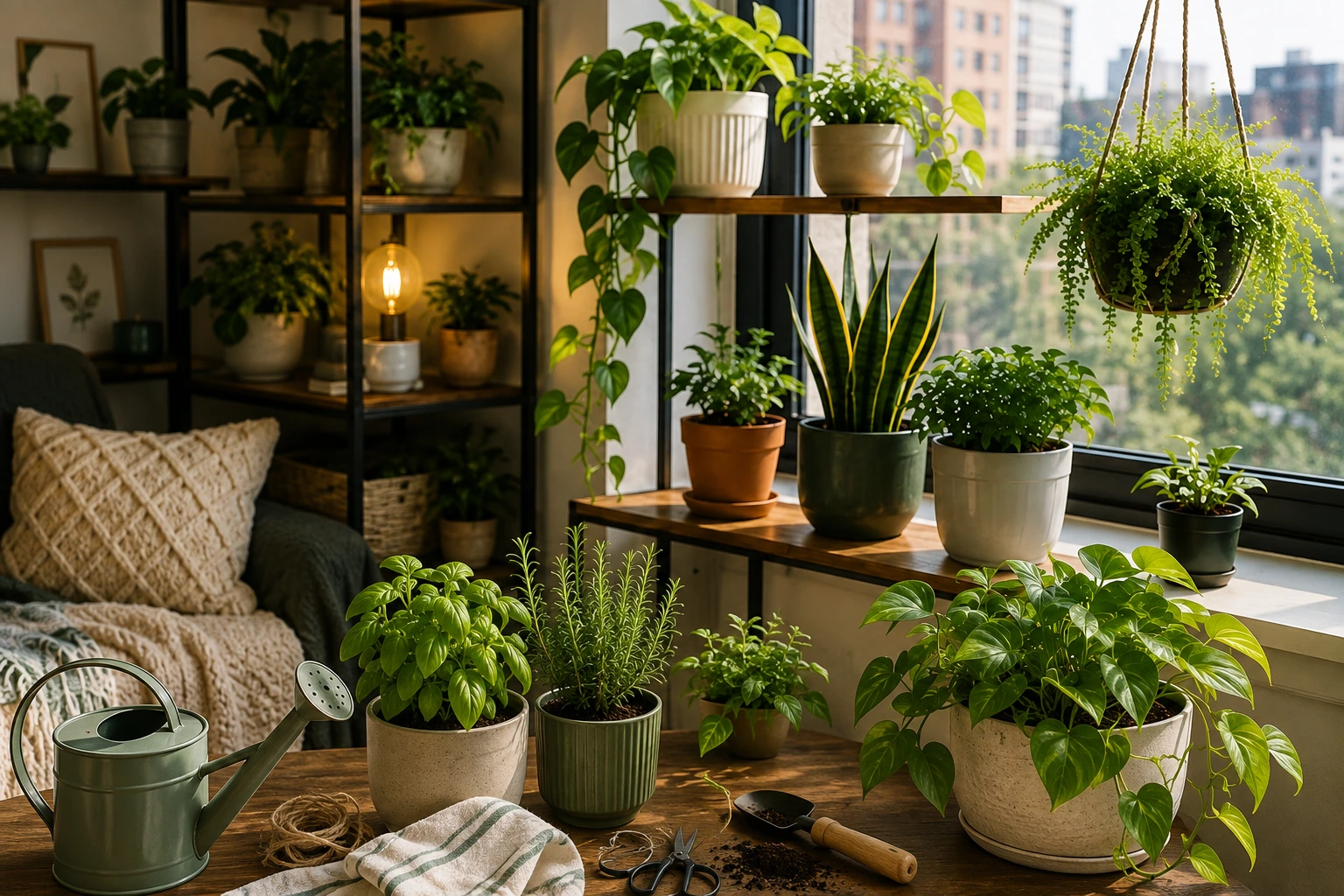
Indoor apartment gardening lets you grow plants even when you don’t have a balcony, patio, yard, or other outdoor growing space. A windowsill, shelf, kitchen counter, plant stand, or bright corner can become a useful growing area when you choose plants that match the conditions in your apartment.
In This Guide
The biggest mistake beginners make is starting with the plant instead of the space.
Before buying anything, look at the light available in your apartment, determine how much physical space you can dedicate to plants, and consider temperature, humidity, drainage, and how much maintenance you’re willing to provide.
Indoor gardening isn’t about filling every available surface with plants. A better approach is to start with a few plants suited to your apartment and expand after you understand how they respond.
University of Illinois Extension identifies light, temperature, humidity, and water as key factors affecting indoor plant success. Matching individual plant requirements to your indoor environment is therefore more important than simply choosing plants advertised as “easy.”
Start Your Indoor Garden With the Light You Actually Have
Light is one of the most important limitations in an indoor apartment garden.
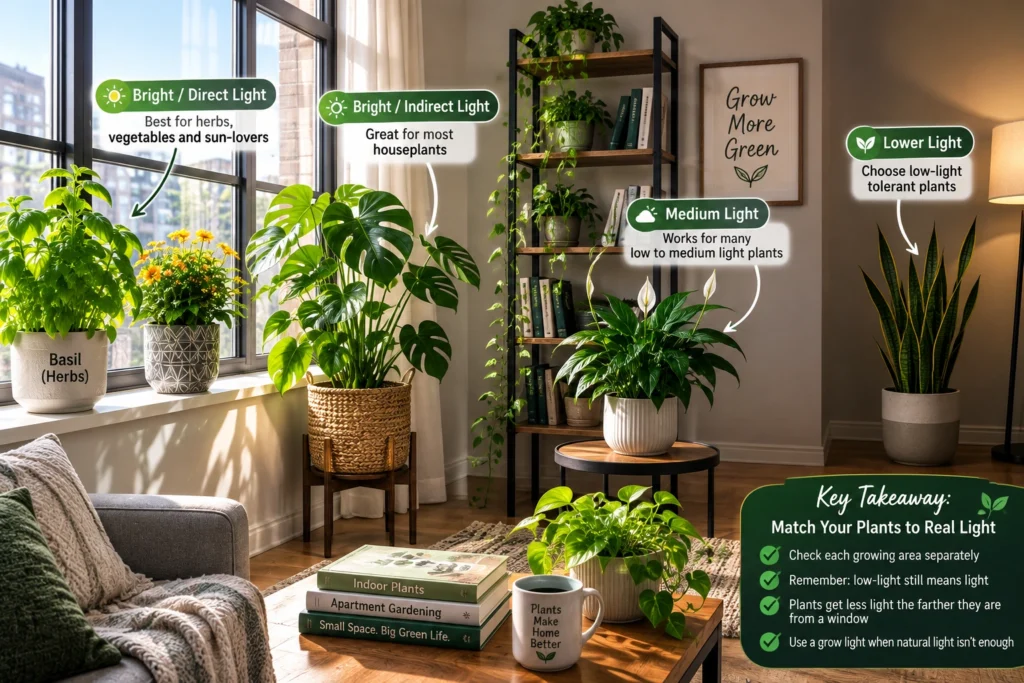
A room that appears bright to you isn’t necessarily providing enough usable light for every plant. Light intensity drops as you move farther from a window, and the amount of available daylight also changes with window direction, season, nearby buildings, trees, curtains, and overhangs.
University of Illinois Extension notes that light is essential for plant growth and can be one of the most limiting factors for houseplants. Some plants tolerate moderate or lower-light conditions, while others perform best with much brighter light.
Look at Each Growing Area Separately
Instead of deciding that your entire apartment is “bright” or “dark,” evaluate individual locations.
Look at your:
- windowsills
- shelves near windows
- kitchen counters
- plant stands
- desks
- bathroom windows
- floor space beside windows
Observe those areas at several times during the day.
Does direct sunlight actually reach the location? For approximately how long? Is the area bright but protected from direct sun? Does a neighboring building block much of the light?
These observations will help you choose plants more accurately.
Low Light Still Means Light
One lesson worth emphasizing is that low-light tolerant does not mean no-light tolerant.
A windowless bathroom, interior hallway, or dark corner generally isn’t an appropriate permanent growing location without supplemental lighting.
Signs that a plant may need more light can include stretched or spindly growth, poor coloration, or leaf loss, although these symptoms can have other causes as well. Seasonal reductions in indoor light can also affect plants that previously performed well.
What Can You Grow Inside an Apartment?
Indoor gardening isn’t limited to decorative houseplants.
Depending on your available light and setup, an apartment indoor garden can include:
Houseplants
Houseplants are usually the easiest place to begin because many species are adapted to indoor conditions and don’t require the strong light demanded by fruiting vegetables.
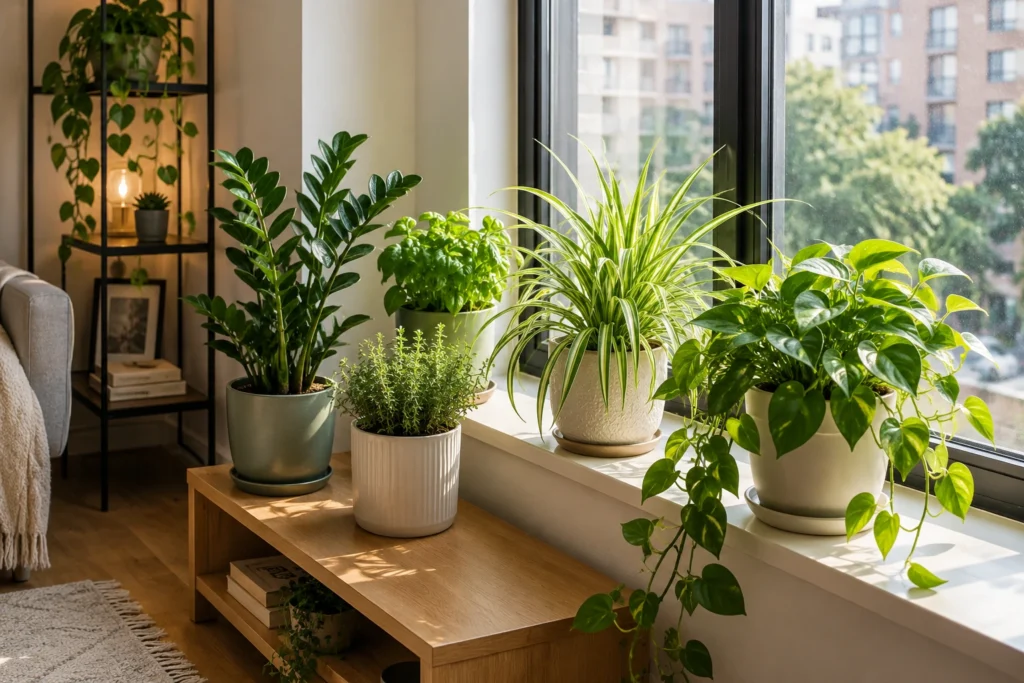
Pothos, snake plants, ZZ plants, spider plants, peperomia, and other foliage plants provide options for different indoor light condition options for different indoor light conditions.
Herbs
Basil, chives, parsley, mint, thyme, and other culinary herbs can be grown indoors when they receive enough light.
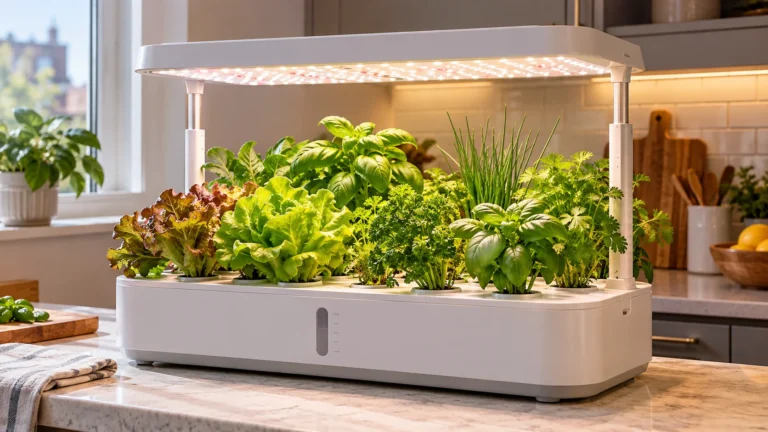
Herbs generally require brighter conditions than many foliage houseplants. A sunny window may be sufficient for some situations, while supplemental lighting can be useful when natural light is inadequate.
Penn State Extension recommends containers with drainage holes and a well-draining potting mix for indoor herbs. Individual herbs also differ in how much drying they tolerate between waterings.
Leafy Greens and Microgreens
Microgreens and some leafy greens can make good choices for people more interested in growing food than decorative plants.
Their relatively compact size makes them useful for small indoor spaces, although adequate light remains important.
Fruiting Vegetables
Tomatoes and peppers are possible indoors, but they’re considerably more demanding.
They require stronger light, larger containers, appropriate varieties, and more consistent attention than a pothos or tray of microgreens.
For most beginners, I recommend gaining experience with easier indoor plants before attempting fruiting crops.
How Much Space Do You Need for Indoor Apartment Gardening?
Very little.
One advantage of gardening inside an apartment is that you can design the garden around the space you already have rather than creating a separate gardening area.
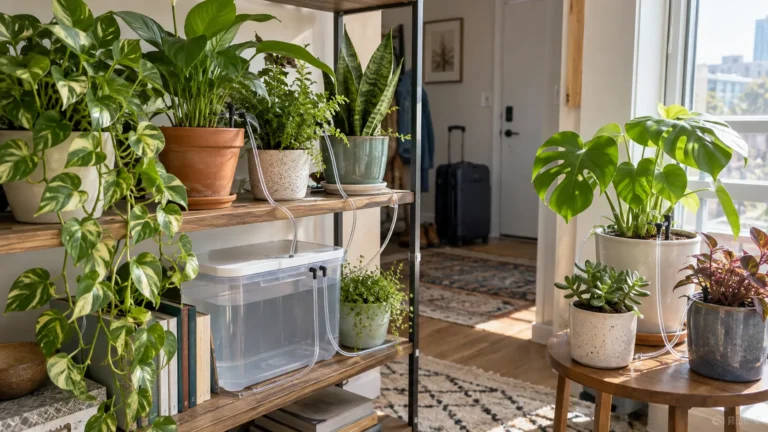
A single windowsill might support several small containers. A bright shelf can hold compact plants. A plant stand can use vertical space instead of valuable floor space.
Think Vertically
When floor space is limited, consider:
- tiered plant stands
- shelving
- windowsills
- hanging planters where safely permitted
- narrow plant racks
- wall-adjacent shelving
Don’t simply ask, “How many pots can I fit here?”
Consider how large each plant will eventually become.
A six-inch plant purchased today may eventually need considerably more room. Check mature height and width before buying, particularly for larger foliage plants.
If you’re still deciding where your garden should go, our guide to starting a garden in an apartment explains how to evaluate your available growing space before buying plants.
Choose Containers for Indoor Growing
Containers affect much more than appearance.
They influence drainage, root space, moisture retention, weight, and how easily you can care for the plant.
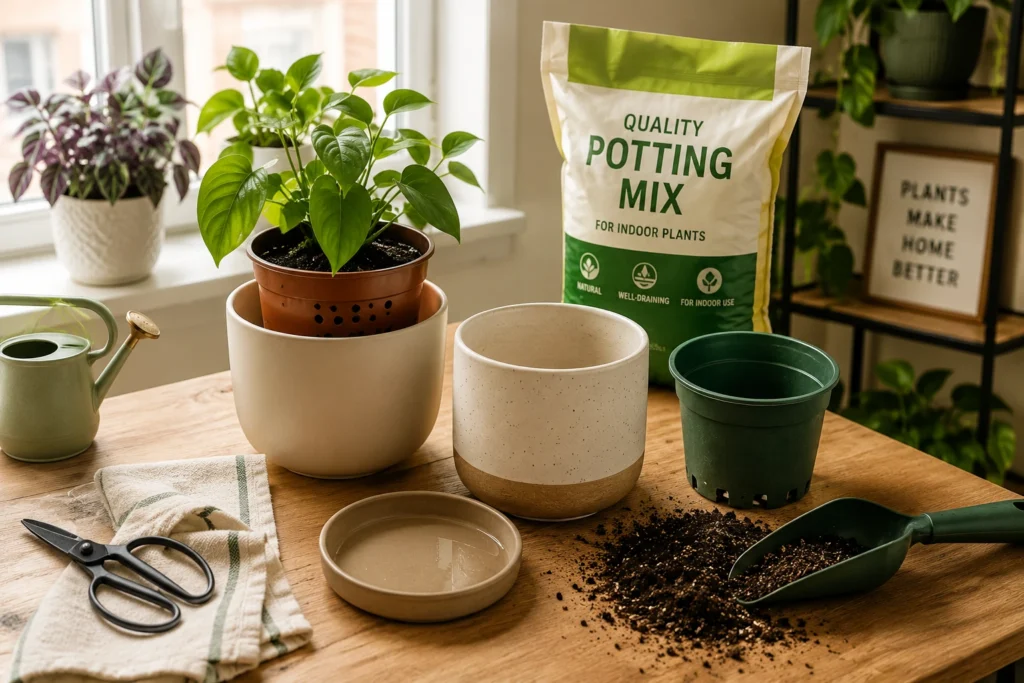
For most beginners, a container with a drainage hole is the safest choice.
When watering from the top, excess water should be able to leave the container. Illinois Extension recommends watering thoroughly and allowing excess water to drain, then emptying the saucer rather than allowing the pot to remain sitting in water.
Decorative Pots Need a Plan
Many attractive decorative containers don’t have drainage holes.
One solution is to keep the plant in a nursery pot with drainage holes and place that pot inside the decorative container.
Remove it when watering, allow excess water to drain, and then return it to the decorative pot.
Also remember that container material affects drying. Porous clay containers, for example, can lose moisture faster than plastic containers.
Use Potting Mix Instead of Garden Soil
Indoor container plants need a growing medium appropriate for container use.
Avoid digging soil from outdoors and putting it directly into indoor pots. Container growing requires a medium that provides an appropriate balance of moisture retention, drainage, and air around the roots.
Choose a potting mix intended for the type of plant you’re growing.
Succulents, herbs, tropical foliage plants, seedlings, and edible crops don’t necessarily need identical growing media, so check the requirements of the individual plant.
This is another reason starting with only a few plants makes indoor gardening easier: you don’t have to manage several completely different growing requirements immediately.
How to Water an Indoor Apartment Garden
Watering is where many new indoor gardeners get into trouble.
The problem often begins with the idea that plants should be watered according to a fixed schedule.
They shouldn’t.
How quickly a container dries depends on the plant, pot size, pot material, growing medium, temperature, humidity, light, season, and other conditions. Illinois Extension specifically recommends checking the growing medium rather than relying on a calendar.
Check Before You Water
Get into the habit of checking your plants regularly without automatically watering them.
For many houseplants, you can check the growing medium with your finger to determine whether it has dried enough for that particular plant.
Then water according to the plant’s needs.
Succulents may need considerably more drying between waterings than leafy plants. Herbs can also differ from one another.
Don’t Let Pots Sit in Water
If you water a plant thoroughly and water collects in its saucer or decorative container, remove the excess.
Constantly saturated growing media can deprive roots of adequate oxygen and contribute to root problems.
This small habit can prevent one of the most common indoor gardening mistakes.
Temperature and Humidity Matter Too
Light and water receive most of the attention, but your apartment’s temperature and humidity also affect plants.
Heating vents, air-conditioning vents, cold windows, radiators, and drafts can create small microclimates inside a room.
Illinois Extension recommends avoiding extreme temperature changes around houseplants, including hot or cold air from heating and cooling systems and very cold window panes.
Indoor Air Can Become Dry
Winter heating can make indoor air particularly dry.
Some plants tolerate this better than others.
Grouping plants can modestly increase humidity immediately around them, and a humidifier can be useful for plants requiring higher humidity. Illinois Extension also cautions that misting isn’t necessarily an effective long-term solution because its effect on humidity is short-lived.
You don’t need to turn your apartment into a greenhouse. Choose plants compatible with your normal indoor conditions whenever possible.
When Do You Need a Grow Light?
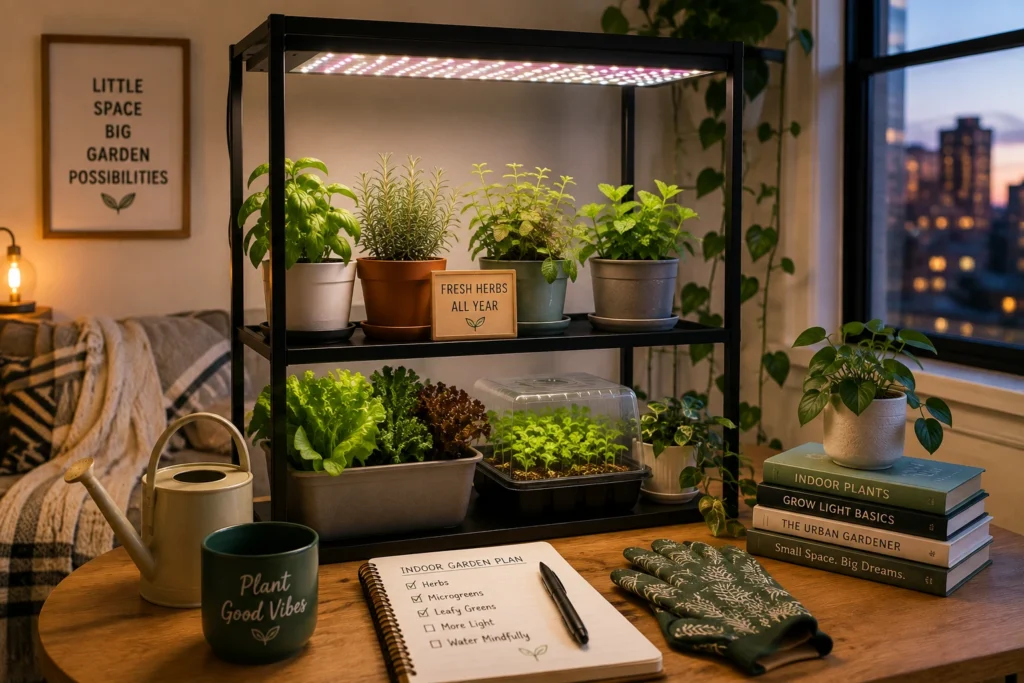
A grow light becomes useful when your available natural light isn’t adequate for the plants you want to grow.
This is particularly relevant when:
- your apartment has very few windows
- nearby buildings block substantial daylight
- you want to grow herbs or edible plants away from a bright window
- seasonal daylight becomes insufficient
- your only available growing space is far from a window
Don’t use a grow light as an excuse to ignore a plant’s requirements. Different plants have different light needs, and supplemental lighting should be matched to what you’re growing.
For beginners, the simplest strategy is still to use natural light first when suitable and supplement it when necessary.
If you only need supplemental light for one or a few small plants, our GooingTop Clip-On Grow Light reviewGooingTop Clip-On Grow Light review looks at one compact option with a clip-on mount, timer, and adjustable brightness.
How to Arrange Plants in a Small Apartment
An indoor garden should work with your living space, not make the apartment harder to use.
Start with one growing zone.
For example, you might create a small grouping near your brightest window rather than scattering individual plants throughout every room.
This makes it easier to monitor light, watering, and plant health.
Leave Room for Airflow and Growth
Don’t pack containers tightly together just because they fit.
Leaves need room to grow, and overcrowding can make it more difficult to inspect plants, water them properly, and notice pests.
Also protect furniture and floors from drainage water.
Use appropriate saucers or waterproof surfaces underneath containers, particularly on wood furniture, shelves, and windowsills.
Indoor Gardening With Pets or Children
Plant selection becomes especially important when pets or young children share the apartment.
Some popular houseplants can cause problems when chewed or ingested.
Don’t assume that a plant is safe because it’s commonly sold as a houseplant. Verify individual species with a reliable plant-toxicity resource before purchasing.
If you’re growing edible plants, keep gardening supplies, fertilizers, pest-control products, and tools appropriately stored as well.
Common Indoor Apartment Gardening Mistakes
Most beginner problems can be traced to a few basic mismatches.
Choosing a Plant Before Checking the Light
A beautiful plant won’t perform well simply because you found space for it.
Evaluate the location first and choose the plant second.
Watering Every Plant on the Same Day
Different plants and containers dry at different rates.
Check them individually.
Buying Too Many Plants at Once
Ten plants with different requirements can become overwhelming quickly.
Start with two or three compatible plants and learn how your apartment affects them.
Assuming Low Light Means Darkness
Shade-tolerant plants still need usable light.
Use supplemental lighting when natural light isn’t sufficient.
Ignoring Mature Plant Size
Small nursery plants grow.
Check mature dimensions so your indoor garden doesn’t eventually overwhelm the available space.
Forgetting Seasonal Changes
The location that worked beautifully in summer may receive much less light during winter.
Indoor gardeners should expect to adjust plant placement and watering as conditions change.
A Simple Indoor Garden Setup for Beginners
You don’t need an elaborate setup to begin.
A practical first indoor garden might consist of:
One foliage plant suited to the light near your window.
One useful edible plant, such as chives or microgreens, if your light is appropriate.
Containers with drainage and saucers to protect indoor surfaces.
Appropriate potting mix for each plant.
And most importantly, one location you can observe easily.
That is enough.
You can add shelves, grow lights, propagation equipment, additional plants, and more specialized supplies later if you discover you enjoy indoor gardening.
Need plant ideas before you begin? See our 25 easy plants for apartment gardening for options organized around apartment growing conditions.
Your Indoor Apartment Gardening Checklist
Before buying your first plants:
- Identify the brightest usable areas in your apartment.
- Observe whether they receive direct or indirect light.
- Measure the available shelf, windowsill, or floor space.
- Decide whether you want houseplants, herbs, edible crops, or a combination.
- Choose plants appropriate for those conditions.
- Use containers with adequate drainage.
- Select an appropriate potting mix.
- Protect furniture and floors from drainage water.
- Check moisture before watering instead of following a rigid calendar.
- Start small and expand after you understand your apartment’s growing conditions.
Indoor gardening becomes much easier once you stop trying to make the apartment fit the plant and instead choose plants that fit the apartment.
Final Thoughts
Successful indoor apartment gardening doesn’t require a huge plant collection, expensive equipment, or a perfectly sunny home.
It starts with understanding your conditions.
Evaluate your available light. Use the space efficiently. Choose containers that drain properly. Learn how quickly your plants use water. Pay attention to seasonal changes, temperature, and humidity.
Most importantly, start small.
Two healthy plants that fit your apartment are a much better beginning than ten plants with completely different needs.
Once you’ve learned what works in your home, you can gradually expand your indoor garden with greater confidence.