Apartment Composting: How to Compost in a Small Space
Apartment composting can work even when you do not have a backyard, garden bed, or outdoor compost pile. The key is choosing a method that fits your space, the food scraps you produce, and what you plan to do with the material afterward.
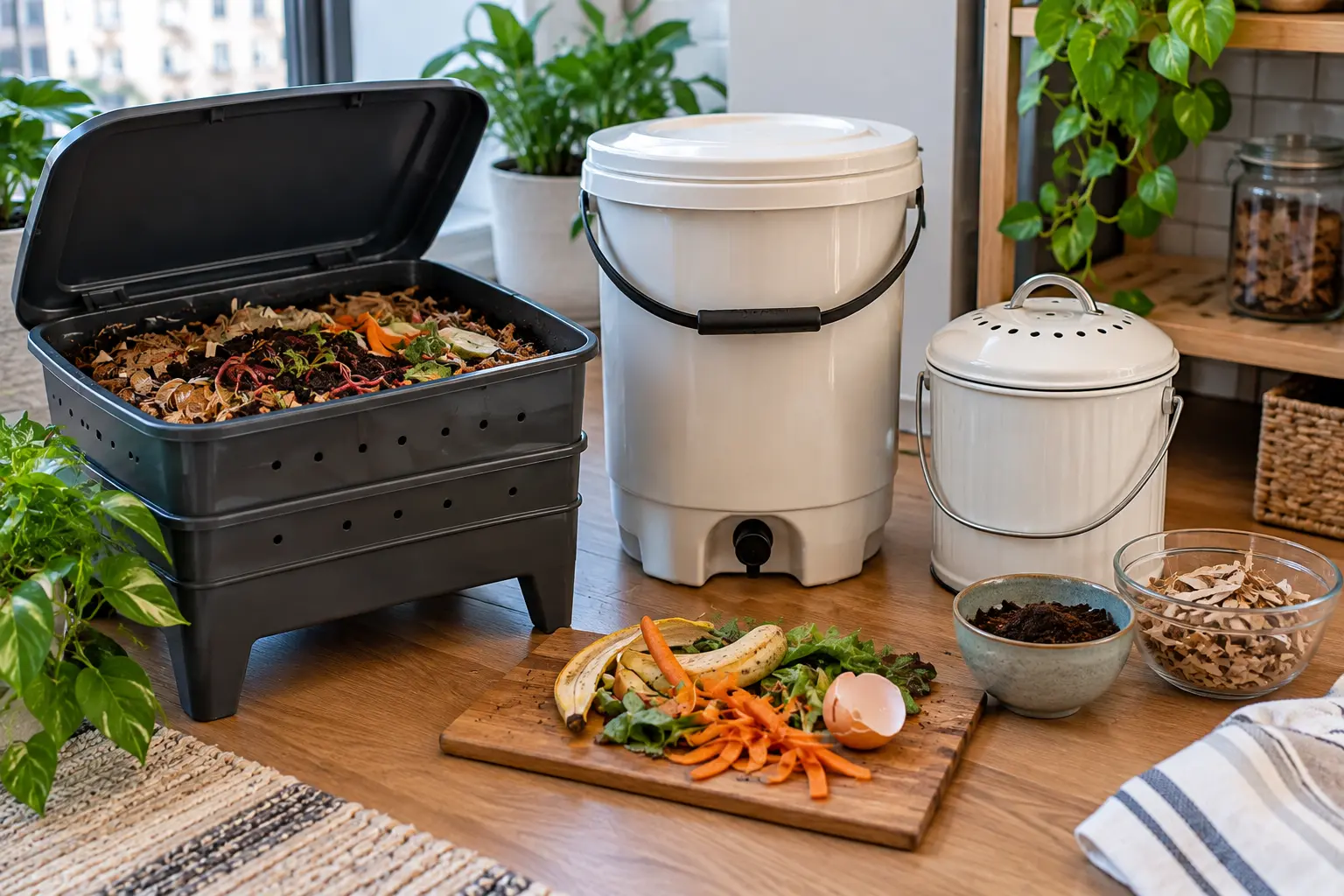
For some apartment residents, composting means using worms to turn kitchen scraps into usable compost indoors. Others may prefer a sealed bokashi system, collect scraps for a community or municipal program, or use an electric food recycler to reduce the amount of food waste they need to store.
Before buying a bin, decide what you want to accomplish and where the material will go afterward. Do you want finished compost for your plants, or do you mainly want to keep food scraps out of the trash?
That answer will help determine which apartment composting method makes the most sense.
If you’re still building your growing setup, our complete beginner’s guide to apartment gardening covers the basics of containers, light, plant selection, and small-space growing.
In This Guide
Can You Compost in an Apartment?
Yes. You do not need a backyard to compost or divert food scraps from the trash.
The U.S. Environmental Protection Agency includes vermicomposting with worms as a home-composting option and recommends checking for community or municipal composting programs when composting at home is not practical.
The best method depends on your available space, how much maintenance you want to handle, and whether you want to create finished compost yourself.
| Your situation | Method to consider |
|---|---|
| Want to make usable compost indoors | Worm bin / vermicomposting |
| Want a compact sealed system | Bokashi |
| Want the least maintenance | Curbside or community drop-off |
| Want to reduce and store food scraps more compactly | Electric food recycler / preprocessor |
| Have a permitted balcony and suitable space | Small enclosed outdoor compost system |
It is:
“What will happen to the food scraps or finished material afterward?”
Answer that first.
Choose Your Apartment Composting Method
Apartment composting is not one specific technique. Several methods can work in small spaces, but they solve different problems.
Worm Composting or Vermicomposting
Vermicomposting uses composting worms and microorganisms to break down food scraps and bedding material.
It is one of the most practical choices for someone who wants to create usable compost inside an apartment.
Oregon State University Extension explains that composting with worms can be done inexpensively and in a relatively small space without the heat required for a traditional outdoor compost pile.
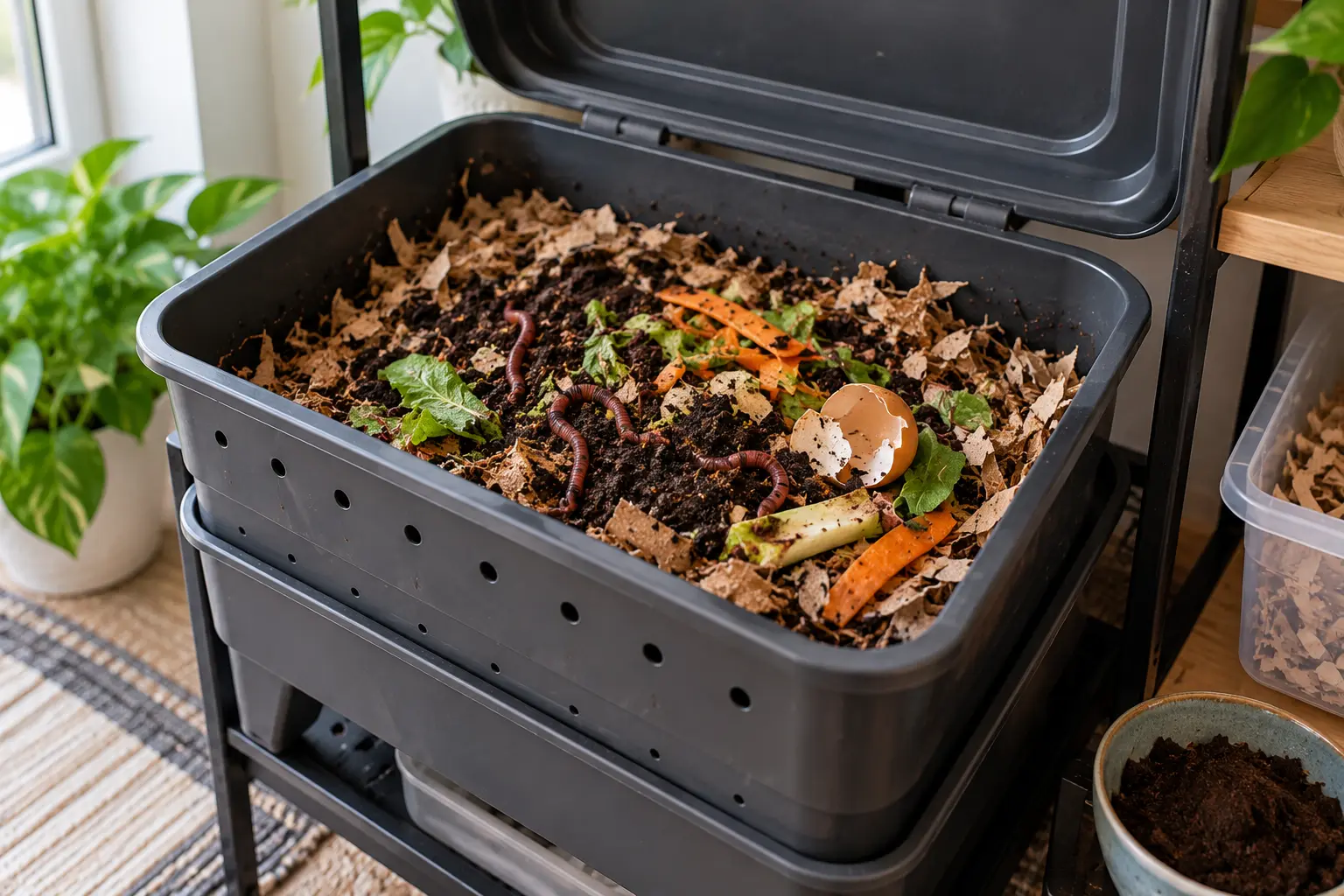
A typical worm bin contains:
- composting worms such as red wigglers
- moist bedding
- appropriate kitchen scraps
- ventilation
- a container that remains dark and protected
Over time, the worms and microorganisms convert the material into vermicompost, often called worm castings.
Worm bins require some attention, but the setup does not have to be complicated. The main challenge is feeding the system at a rate the worms can handle.
Bokashi
Bokashi is a compact option that uses a sealed container and inoculated material, often called bokashi bran, to ferment food scraps.
Oregon State University Extension describes bokashi composting as a fermentation-based approach rather than the same aerobic decomposition process used in a conventional compost pile.
That distinction matters.
The material removed from a bokashi bucket is not finished compost.
The fermented scraps still need another step before they become stable material suitable for most gardening uses. That might mean adding them to soil, another composting system, or another appropriate finishing process.
For someone living in an apartment, bokashi is most practical when there is already a plan for using or finishing the fermented material.
Food-Scrap Collection for Curbside or Drop-Off
For many apartment residents, collecting food scraps for a larger composting program may be the simplest option.
Instead of managing decomposition inside your home, you collect scraps and periodically move them to:
- a building compost collection area
- municipal curbside collection
- a community drop-off location
- a community garden
- a local food-scrap collection service
The EPA recommends checking for local composting programs when home composting is not practical.
Some cities also provide guidance specifically for multifamily housing. Austin’s apartment and condominium composting guidance recommends keeping collection containers closed and clean and suggests refrigerating or freezing scraps if odors or pests become a problem.
Always check your local program’s accepted-material list. Commercial composting facilities may accept materials that should not go into a small worm bin or apartment compost system.
Electric Food Recyclers
Electric countertop appliances are sometimes marketed as electric composters, but a more accurate term is often food recycler or food-scrap preprocessor.
These machines can reduce the moisture and volume of food scraps, which may make them easier to store or transport.
However, they do not necessarily produce finished compost.
The EPA’s guidance on approaches to composting distinguishes biological composting from preprocessing technologies that grind or dehydrate food scraps.
Before buying one, understand what the machine actually produces and whether that material needs further composting.
Small Balcony Composting
A compact enclosed compost system may work on some apartment balconies, but it depends heavily on the building and the space.
Consider:
- lease or building rules
- available floor space
- temperature
- wind
- pest control
- drainage
- access to suitable compostable materials
Do not assume that having a balcony automatically makes traditional composting practical.
If your balcony also serves as your primary growing area, our apartment balcony gardening guide covers space, drainage, wind, container placement, and other balcony-specific concerns.
Compare Apartment Composting Methods
Each method solves a different problem. This comparison can help you understand the trade-offs before committing to one.
| Method | Space needed | Maintenance | Produces finished compost at home? | Main limitation |
|---|---|---|---|---|
| Worm bin | Low | Moderate | Yes | Requires worm care and appropriate feeding |
| Bokashi | Low | Low–moderate | Not by itself | Fermented material needs another finishing step |
| Curbside/drop-off | Very low | Low | No | Requires a local collection option |
| Electric food recycler | Counter space | Low–moderate | Usually not by itself | Cost and processed output still needs a use |
| Balcony compost bin | Moderate | Moderate | Potentially | Space, rules, climate, and pests |
If your main goal is simply to keep food scraps out of the trash, a local collection or drop-off program may require much less maintenance.
What Can You Compost in an Apartment?
There is no universal apartment-composting list.
A worm bin, bokashi bucket, balcony compost system, and commercial composting program may accept different materials.
Always follow the rules for the method you are actually using.
Common Food Scraps That Work in Many Systems
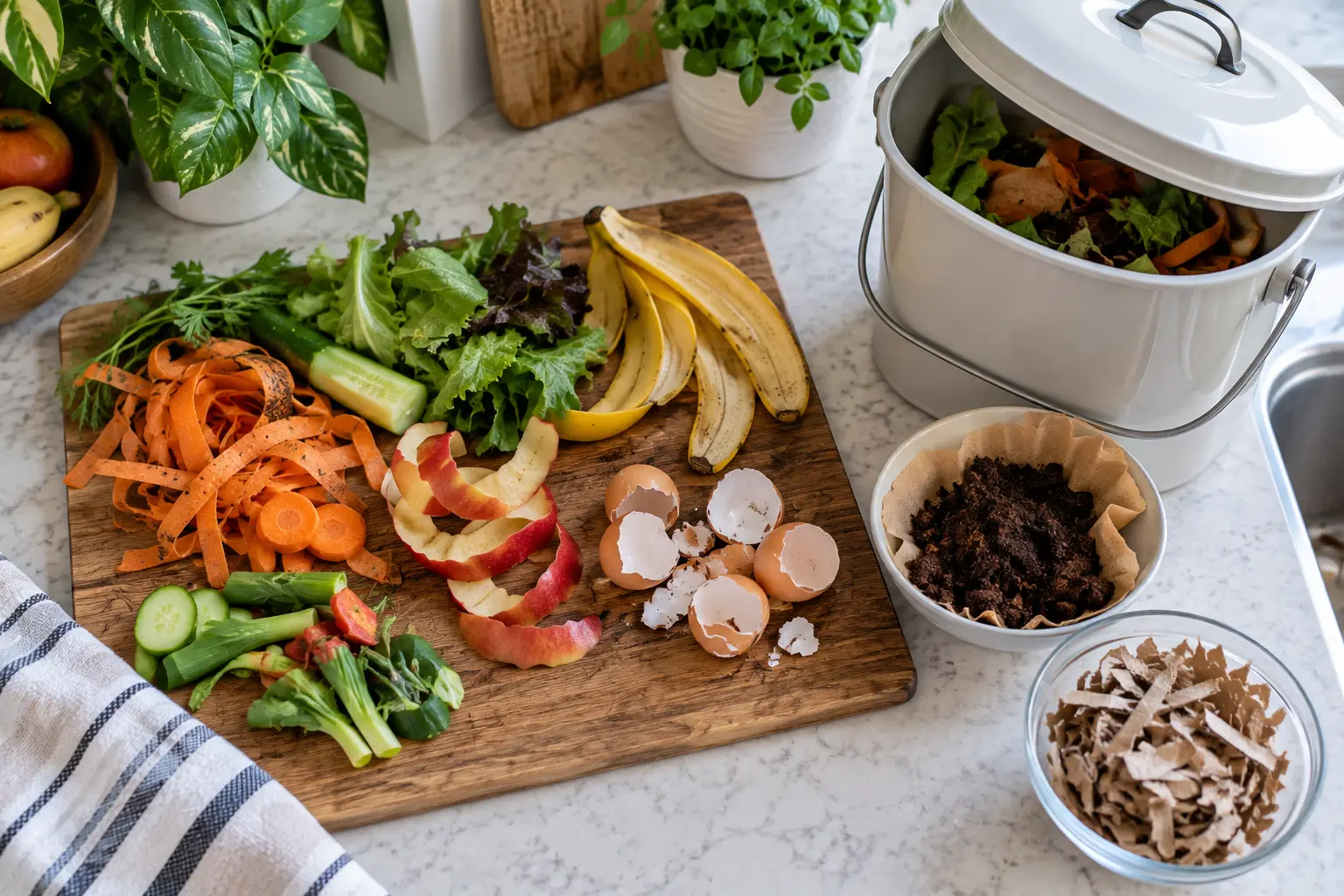
The EPA’s home composting guidance includes several common household materials that can be suitable for home composting, including:
- fruit scraps
- vegetable scraps
- coffee grounds
- paper coffee filters
- crushed eggshells
- plain non-glossy paper
- cardboard
These materials are easy to generate in small quantities and can fit well into many apartment composting setups.
Materials That Need More Caution
Some materials may be compostable but can cause problems when added in large amounts or to the wrong type of system.
For a worm bin, avoid adding large amounts at once of materials such as:
- citrus
- onions
- garlic
- bread
- pasta
- very wet scraps
- large quantities of one ingredient
Oregon State Extension recommends adding food gradually to a worm bin and monitoring how quickly the worms process it before continuing to feed the system.
The goal is not to see how much food you can fit into the container. It is to maintain a stable system.
What Should You Not Put in an Apartment Compost Bin?
For a small worm bin or conventional aerobic apartment composting setup, several materials can create odors, attract pests, or cause other problems.
Generally avoid:
- meat
- fish
- bones
- dairy products
- grease and cooking oils
- pet waste
- cat litter
- diseased plant material
- treated or painted wood
- glossy or coated paper
- produce stickers
The EPA recommends keeping materials such as meat, fish, dairy products, fats, and pet waste out of ordinary home compost systems.
That does not mean these materials can never be composted.
Bokashi systems and municipal or commercial composting programs may accept materials that would be unsuitable for a worm bin.
For example, some large-scale compost programs accept meat, dairy, bones, and food-soiled paper because those materials are processed under different conditions.
Follow the requirements for the specific system or program you use.
How to Prevent Smells and Fruit Flies
One of the biggest concerns about composting in an apartment is odor.
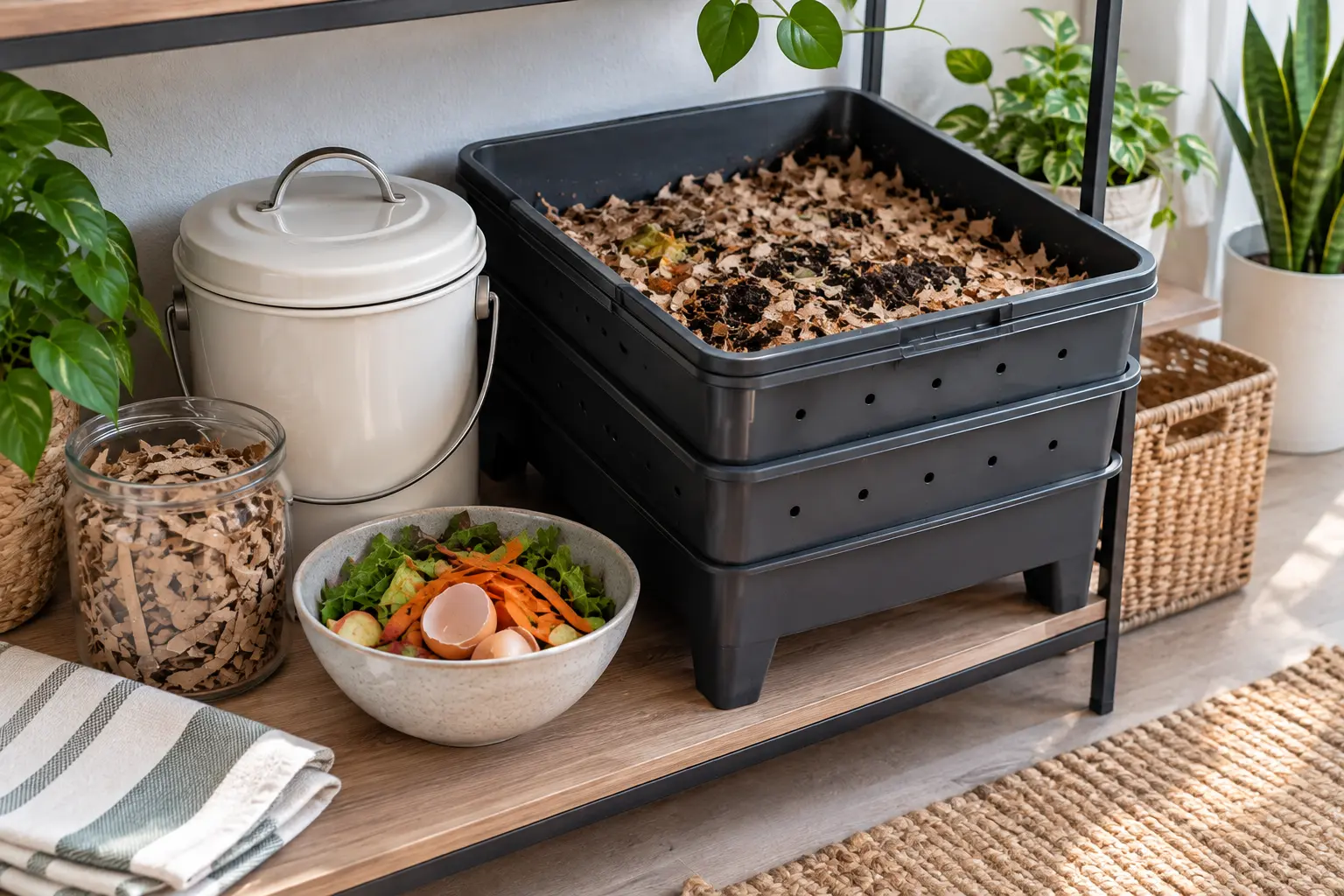
A healthy worm bin should smell earthy rather than like rotting food. Strong or persistent odors usually indicate that something is out of balance.
Do Not Overload the System
This is especially important with worm bins.
If food is accumulating faster than the worms can process it, stop feeding temporarily.
Oregon State Extension recommends paying attention to how much food remains before adding more.
Too much uneaten food can contribute to:
- odors
- fruit flies
- excess moisture
- poor worm-bin conditions
Cover Fresh Food Scraps
In a worm bin, bury fresh scraps beneath the bedding instead of leaving them exposed on the surface.
This can make the food less accessible to fruit flies and other pests.
The EPA also recommends covering food scraps in home compost systems to help discourage pest problems.
Keep Collection Containers Closed and Clean
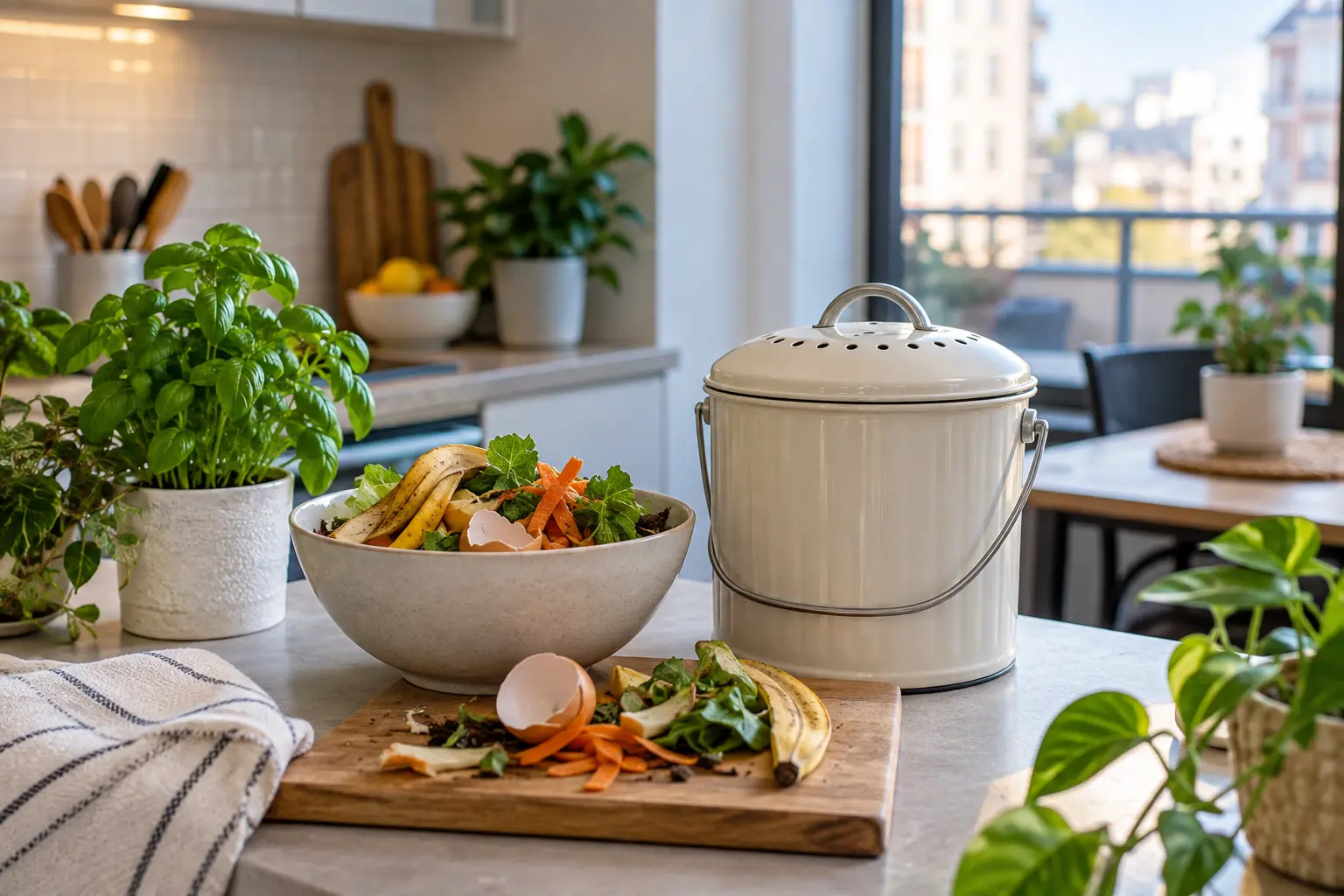
If you are collecting scraps for curbside or drop-off composting, use a container with a secure lid and wash it regularly.
Austin’s multifamily composting guidance recommends keeping the kitchen collector closed and clean.
It also suggests refrigerating or freezing scraps when odors or insects become a concern.
Freezing can be particularly useful when several days pass between collection or drop-off.
Fix Excess Moisture
Composting systems need moisture, but they should not remain waterlogged.
Too much moisture can reduce airflow and contribute to unpleasant odors.
The EPA notes in its home compost troubleshooting guidance that unpleasant odors can indicate excess moisture or inadequate aeration.
For worm bins, add dry bedding when conditions become too wet and avoid adding large amounts of liquid-heavy scraps at once.
Where Should You Keep an Apartment Compost System?
The best location depends on the method.
A food-scrap collection pail may work well in a kitchen or freezer, while a worm bin needs a location with suitable temperatures, airflow, and easy access for feeding and maintenance.
Possible locations can include:
- kitchen
- pantry
- utility area
- accessible indoor storage area
- garage
- protected balcony or patio where permitted
Consider:
- temperature
- ventilation
- access
- moisture
- potential leaks
- pets
- children
- pests
- building rules
A worm bin should not be exposed to extreme heat or cold.
Likewise, a food-scrap collection container does not need to remain on a countertop if refrigeration or freezer storage works better for your space.
How to Start a Worm Bin in an Apartment
You do not need an elaborate setup to begin vermicomposting.
Choose a Ventilated Bin
Use a container that provides room for bedding, worms, food, and airflow.
The interior should stay dark because composting worms prefer dark conditions.
Add Moist Bedding
Shredded plain cardboard or paper can be used as bedding.
Moisten the material so it feels damp but not saturated.
Standing water is not the goal.
Use Composting Worms
Do not simply collect random earthworms from outside.
The EPA identifies red wigglers as commonly used composting worms for vermicomposting.
These worms are adapted to living in decomposing organic material near the surface rather than deep in garden soil.
Add Food Gradually
Begin with small quantities.
Appropriate fruit and vegetable scraps, coffee grounds, and similar materials can be buried beneath the bedding.
Watch how quickly the food disappears before adding more.
A stable worm bin is more useful than an overloaded one.
Harvest the Castings
Over time, the bedding and food scraps become dark, crumbly vermicompost.
Once enough material has been processed, separate the finished castings from the worms and remaining bedding so the compost can be used and the bin can continue operating.
Oregon State Extension’s vermicomposting guidance provides additional information on maintaining and harvesting a worm bin.
What About Bokashi in an Apartment?
Bokashi can appeal to apartment residents because the system is compact and sealed.
Food scraps are layered with inoculated bokashi material and allowed to ferment.
Oregon State University Extension’s information on bokashi composting helps illustrate how this process differs from conventional aerobic composting.
The fermented scraps need another step before they become stable compost.
Before choosing bokashi, make sure you have a practical way to use or finish that material.
Possible options may include:
- another compost system
- an appropriate soil-based finishing method
- a community compost site that accepts bokashi material
For someone with no access to soil or another composting option, this extra step can make bokashi less convenient than it first appears.
Do Electric Kitchen Composters Actually Make Compost?
Not necessarily.
Some countertop appliances marketed as electric composters use heat, grinding, and dehydration to reduce food scraps.
That can:
- reduce food-scrap volume
- remove moisture
- make storage easier
- make scraps easier to transport
But processed food scraps are not automatically mature compost.
The EPA explains that residential food-scrap preprocessing technologies are different from composting.
That distinction matters because finished compost is a stable organic material created through biological decomposition.
If you are considering an electric food recycler, ask:
- What exactly comes out of the machine?
- Does the material require further composting?
- How will I use or dispose of the output?
- Am I buying it to make compost or mainly to reduce food-waste volume?
Those questions can prevent an expensive appliance from solving the wrong problem.
What to Do With Finished Compost When You Live in an Apartment
Producing compost is only helpful if you have somewhere to use it.
Apartment gardeners still have several practical options.
Use It Around Container Plants
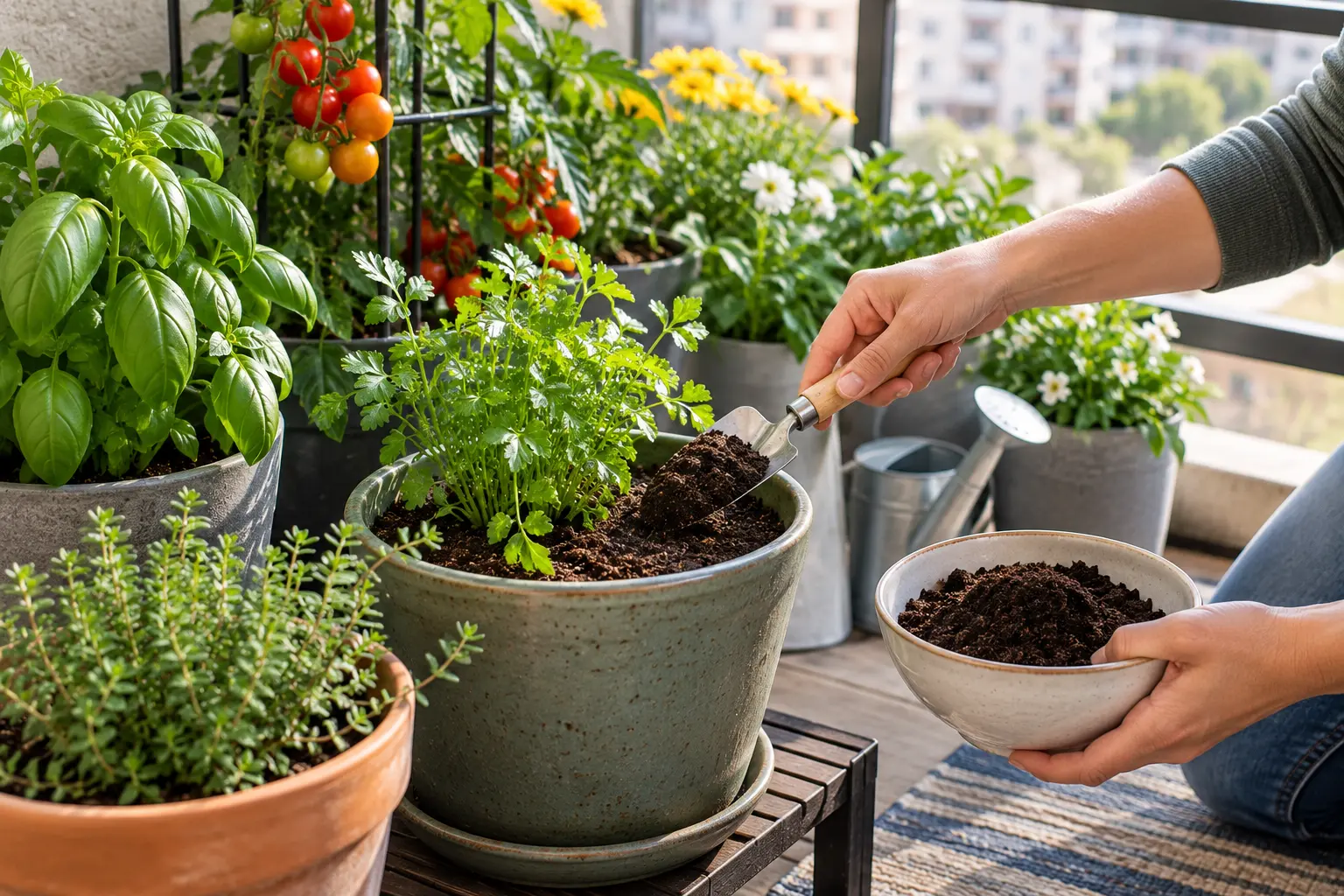
Finished compost or worm castings can be used in modest amounts with suitable container plants.
If you grow vegetables in containers, our apartment vegetable gardening guide covers the broader needs of container vegetables, including growing media, drainage, watering, and nutrients.
Do not fill a container entirely with compost.
Container plants still need a suitable growing medium that balances drainage, moisture retention, and aeration. If you’re setting up pots for the first time, our apartment container gardening guide explains how to choose containers, manage drainage, select potting mix, and water container plants.
Use It as a Light Top Dressing
A small amount of mature compost or worm castings can be placed around appropriate established container plants.
Avoid burying stems or adding a thick layer to a small pot.
If you’re deciding what to grow in those containers, see our guide to the best plants for apartment gardening for beginner-friendly options.
Share It
If you produce more finished compost than your own plants need, consider sharing it with:
- friends
- relatives
- neighbors
- community gardens
- school gardens
If you are new to growing plants in a limited space, our apartment gardening guide covers the broader basics of containers, light, plant selection, and growing locations.
Use a Community Garden
Some community gardens may accept finished compost or allow members to use it in shared growing areas.
Contact the garden first rather than assuming outside compost will be accepted.
Common Apartment Composting Mistakes
Apartment composting usually becomes frustrating when the method does not match the resident’s space, habits, or expectations.
Choosing a Method Before Deciding What to Do With the Output
This is one of the most apartment-specific mistakes.
A bokashi bucket may ferment scraps successfully, but you still need somewhere to finish the material.
A worm bin may produce useful castings, but you need plants or another place to use them.
Think about that before choosing the system.
Adding Too Much Food at Once
A worm bin can process only so much food at a time.
Adding scraps faster than the worms can handle them can contribute to odors, excess moisture, and pests.
Start slowly and increase feeding only as the system becomes established.
Treating Every Composting Method the Same
A worm bin, bokashi bucket, municipal compost program, balcony system, and electric food recycler do not process the same materials in the same way.
Use the rules for your actual method.
Letting the Bin Get Too Wet
Excess moisture can reduce airflow and create odor problems.
In a worm bin, add dry bedding when necessary and avoid continually adding very wet material.
Ignoring Odor or Pest Problems
A strong smell or sudden fruit-fly problem is a signal to investigate.
Check:
- how much food is being added
- whether scraps are exposed
- moisture levels
- airflow
- the condition of the lid or bin
Do not continue adding food until you understand what is causing the problem.
Assuming an Electric Food Recycler Produces Finished Compost
Processed food scraps and mature compost are not necessarily the same material.
Understand what the appliance produces and what the manufacturer expects you to do with the output before deciding how it fits into your gardening plans.
Frequently Asked Questions About Apartment Composting
What Is the Easiest Way to Compost in an Apartment?
If curbside or community composting is available, collecting scraps for that program may be the easiest option because you do not need to manage the decomposition process yourself.
If you want to produce usable compost indoors, a properly maintained worm bin is one practical option.
Does Apartment Composting Smell?
A properly managed system should not have a strong rotten smell.
Persistent odor may indicate:
- too much food
- too much moisture
- poor airflow
- exposed scraps
- unsuitable materials
Correct the underlying condition rather than trying to mask the odor.
Can Banana Peels Go in Apartment Compost?
Banana peels can go into many composting systems.
For a worm bin, cutting large pieces into smaller portions can make them easier to manage.
Avoid adding excessive amounts of one food at once.
Can Coffee Grounds Go in Apartment Compost?
Coffee grounds can be used in many composting systems, including worm bins.
Plain paper coffee filters may also be compostable.
As with other materials, moderation and variety are preferable to continually adding large amounts of one ingredient.
What Should You Do With Compost If You Don’t Have a Garden?
Apartment residents can use mature compost or worm castings around suitable container plants, share excess material with friends or neighbors, or check whether a community garden can use it.
You do not need a traditional backyard garden to make use of a small amount of finished compost.
Start With the Destination, Then Choose the Bin
Before buying composting equipment, answer five questions:
- Do I want to make finished compost, or mainly keep food scraps out of the trash?
- What types of scraps do I produce most often?
- Where can I realistically keep the system?
- How will I use or dispose of the material it produces?
- How much maintenance am I willing to take on?
If you want usable compost indoors, a properly managed worm bin is one practical place to start.
If your goal is mainly to divert food scraps and a local collection program is available, collecting scraps may require less space and maintenance.
Bokashi and electric food recyclers can also fit apartment living, but understand what each process produces and what you’ll do with that material afterward.
The right apartment composting method is the one that fits your space, the scraps you generate, and the amount of maintenance you realistically want to manage.