Can You Use Plant Pots Without Drainage Holes?
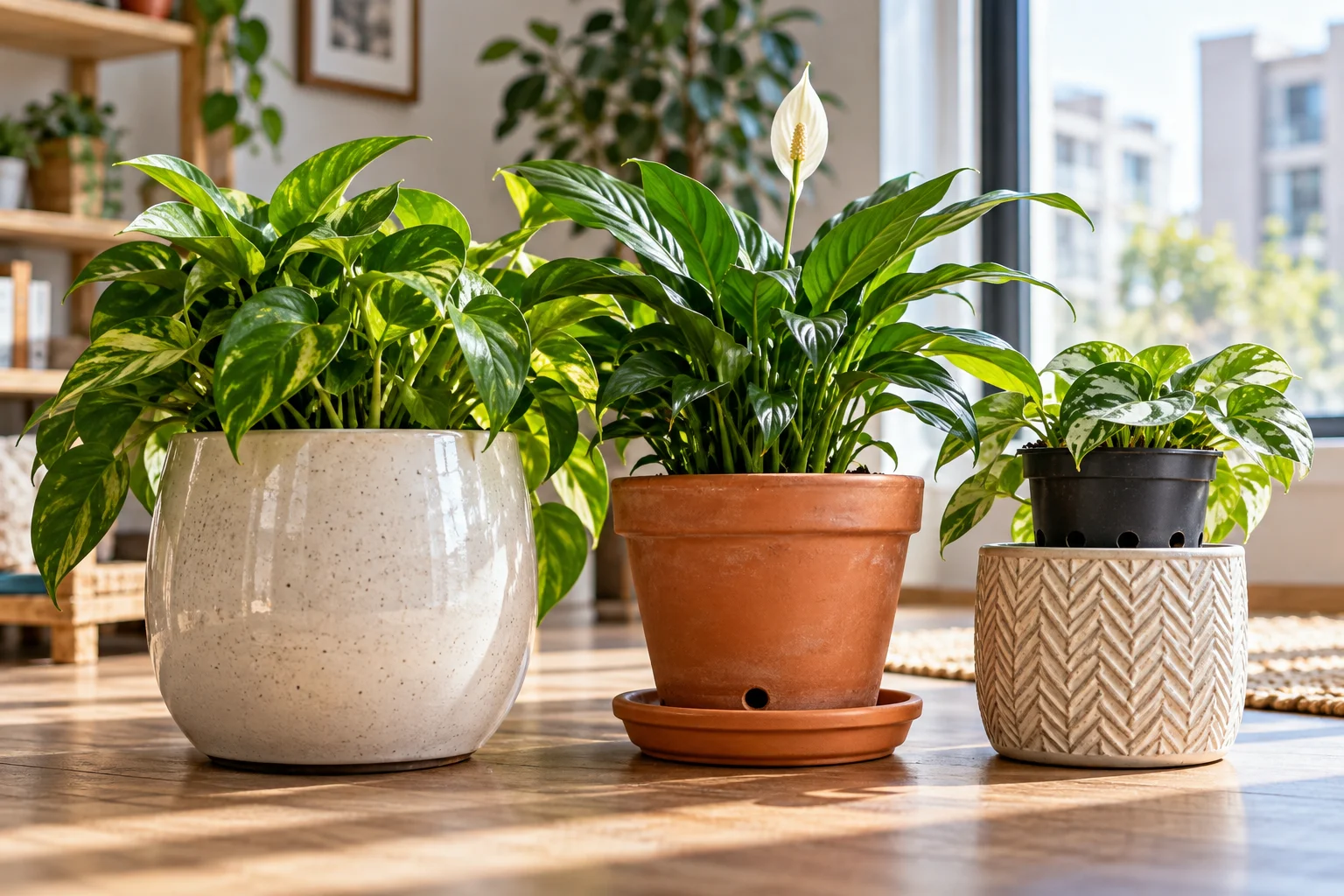
Yes, you can use plant pots without drainage holes, but for most houseplants, planting directly into a pot without an outlet for excess water makes watering less forgiving. A simple alternative is to keep the plant in a nursery or liner pot with drainage holes and place that container inside the decorative pot as a cachepot. Drainage allows excess water to escape and helps maintain air in the root zone. For apartment gardeners, though, drainage creates another practical question: how do you give plants the drainage they need without damaging floors, furniture, windowsills, or a neighbor’s balcony below? This guide explains how to use pots without drainage holes, why adding gravel isn’t a substitute for drainage, and how to manage runoff safely in a small apartment.
In This Guide
Why Do Plant Pots Need Drainage Holes?
Drainage holes do more than let water drip from the bottom of a planter. A container’s growing medium contains pore spaces that hold both water and air. When you water a plant, water moves into those spaces and pushes out some of the air. As excess water drains away, air can move back into the root zone. Plant roots need oxygen for normal respiration and healthy root function. According to the University of Maryland Extension’s guidance on growing media for containers, if excess water cannot drain away, fresh air cannot adequately return to those pore spaces. Drainage can also help flush excess fertilizer salts from a container. That doesn’t mean a drainage hole alone guarantees a healthy plant. Your growing medium, watering habits, container size, and the needs of the plant all matter. If you’re still choosing pots or setting up your first container garden, our apartment container gardening guide covers the broader process. INTERNAL LINK #1 → Apartment Container Gardening: A Beginner’s Guide Anchor: “apartment container gardening guide” Placement: Final paragraph of this section. Verified URL: /apartment-container-gardening/ Apartment Garden Guide
What Happens If a Planter Has No Drainage Holes?
The main problem with a pot that has no drainage outlet is simple: excess water has nowhere to go. If you repeatedly add more water than the plant uses, excess moisture can remain in the container because it has no drainage outlet.
Roots Can Stay Wet for Too Long
The problem isn’t simply that roots are “getting too much water.” Prolonged saturation reduces the air available in the root zone. The Iowa State University Extension’s houseplant care guidance recommends drainage holes for houseplant containers and warns that without drainage, growing media can stay wet and roots can rot and die.
Watering Mistakes Are Harder to Correct
A pot with adequate drainage gives excess water an exit. A pot without drainage doesn’t. That makes direct planting in a pot without drainage less forgiving, especially for someone still learning when a plant needs water. Fortunately, you don’t have to give up an attractive planter just because it doesn’t have a hole in the bottom.
How to Use Plant Pots Without Drainage Holes
For most apartment gardeners, the two most practical options are using the container as a cachepot or adding drainage holes when the pot can safely be modified.
Use the Pot as a Cachepot
This is one of the simplest ways to use a decorative planter without drainage holes. A cachepot is an outer decorative container that holds the functional pot in which the plant is actually growing. Here’s how to set it up:
- Keep the plant in a nursery or liner pot with drainage holes.
- Place the inner pot inside a slightly larger decorative container.
- Remove the inner pot when it’s time to water, when practical.
- Water the plant and allow excess water to drain.
- Check the decorative outer pot for accumulated water.
- Return the plant after the inner pot has finished draining.
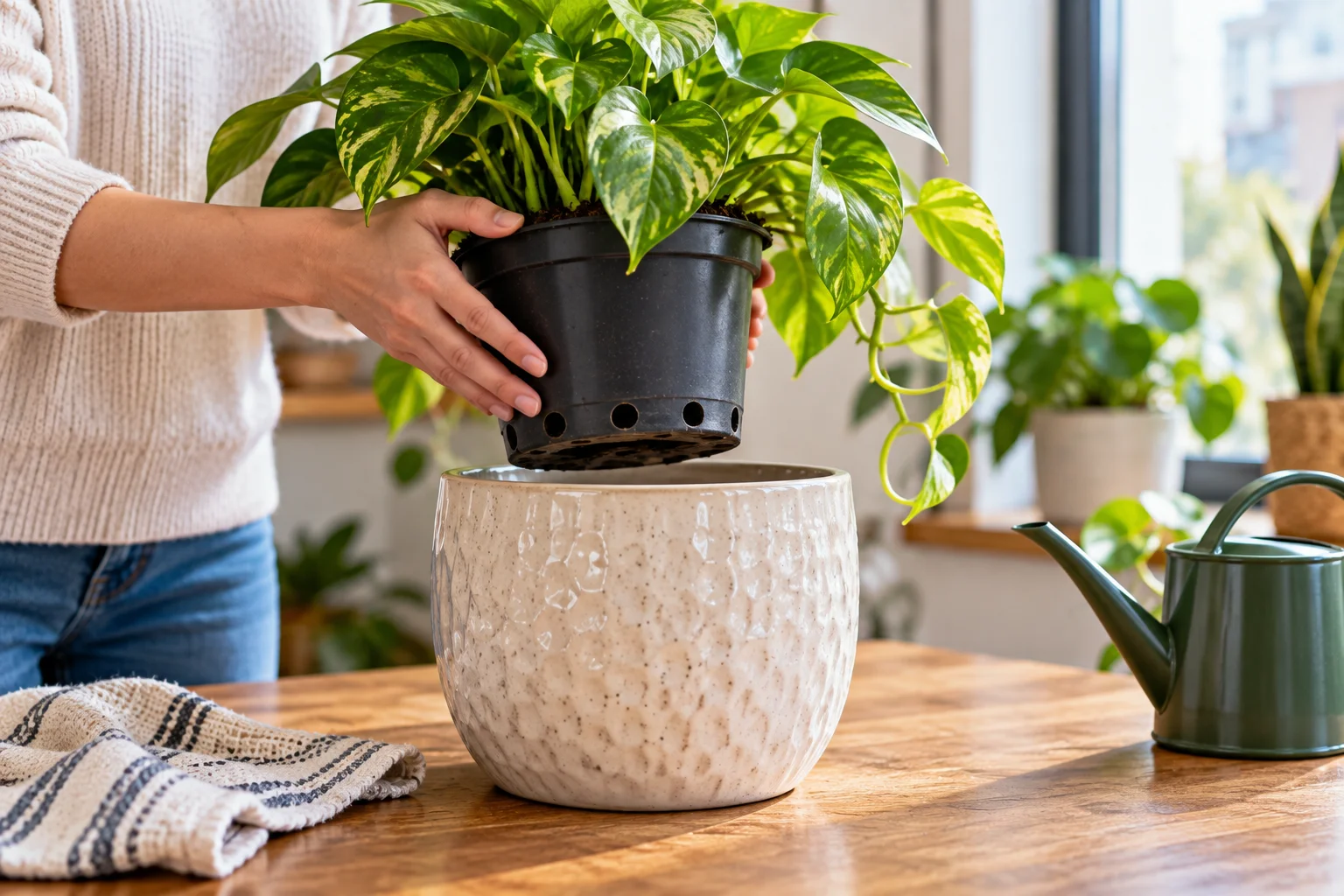 The Illinois Extension’s container drainage guidance describes this technique as double potting and specifically recommends it as a way to use an attractive decorative container without a drainage hole. Don’t leave the inner container standing in accumulated water. If water collects in the outer pot, remove the inner pot and empty the water before replacing it.
Apartment Garden Guide Tip: Before buying a decorative planter, make sure your plant’s nursery pot fits comfortably inside it. Leave enough room to lift the inner pot out without pulling on the plant itself.
Add Drainage Holes When Appropriate
Another option is to add drainage holes and use the decorative container as the plant’s actual growing pot. Whether that’s practical depends on the material. Some containers can be modified relatively easily, while ceramic, clay, glass, or specialty planters may require appropriate tools and more care. The University of Maryland Extension’s container gardening guidance notes that additional drainage holes can be added depending on the container material. If you don’t want to alter the planter—or risk damaging it—the cachepot method is a straightforward alternative.
What If You Want to Plant Directly Without Drainage?
You may find advice suggesting that you can plant directly in a pot without drainage holes as long as you water carefully. For typical houseplants, that’s not the approach we’d recommend for a beginner. Without an outlet, excess water can’t drain freely, leaving less room for watering mistakes. Iowa State’s houseplant guidance instead recommends containers with drainage holes or a double-pot system when the decorative container doesn’t have one.
What about self-watering planters? A purpose-built self-watering planter isn’t the same as an ordinary decorative pot without drainage. Some designs use a separate water reservoir, a perforated separator or wicking system, and an overflow opening to manage the water supply. Check how the specific planter handles excess water rather than judging it only by whether there’s a traditional drainage hole on the bottom. University of Maryland Extension shows this type of reservoir-and-overflow design in its container gardening guidance.
Don’t Add Gravel to the Bottom for Drainage
One of the most persistent pieces of container-gardening advice is:
“Just put rocks or gravel in the bottom.”
A layer of gravel underneath the growing medium does not replace a drainage hole. 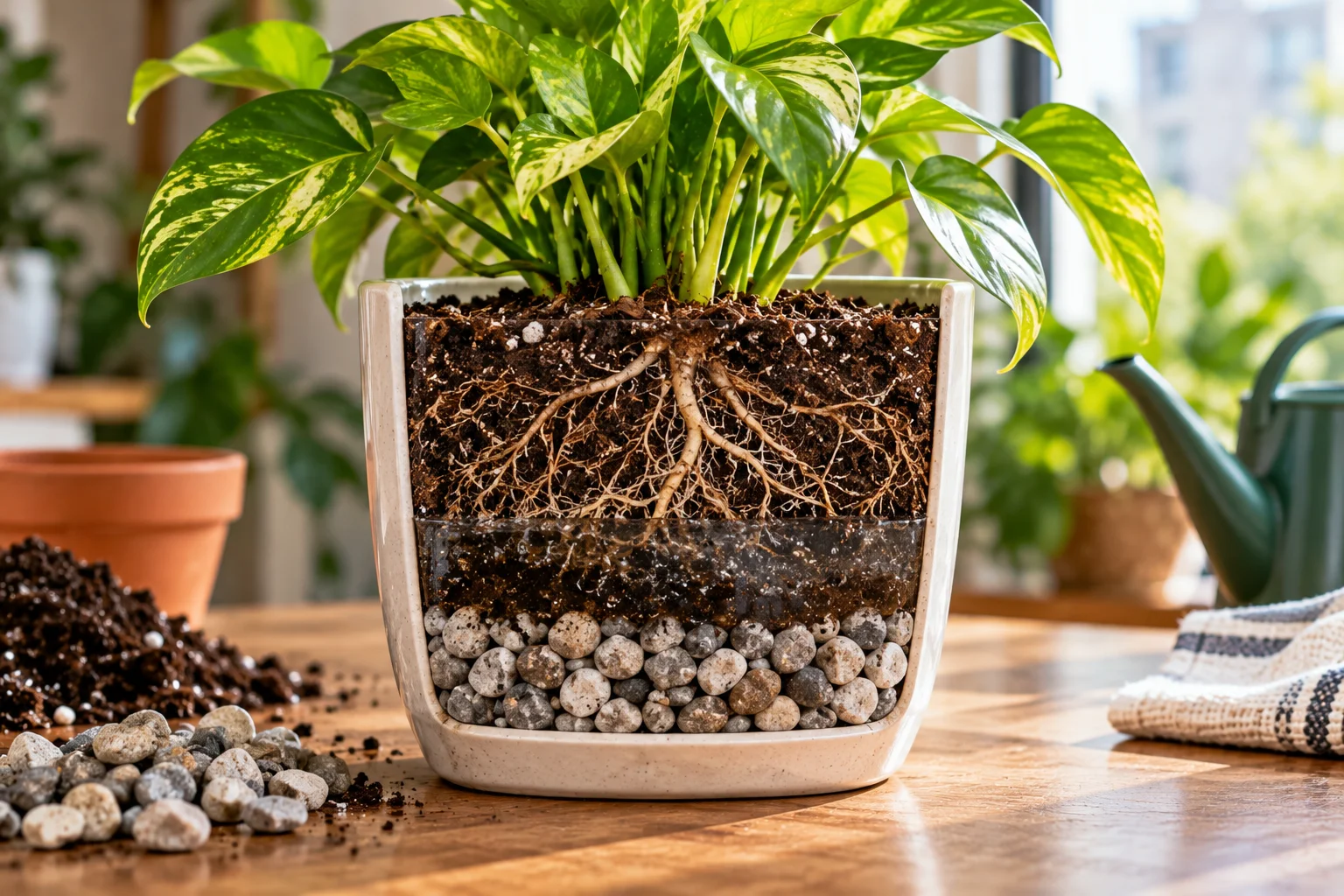 Illinois Extension explains that putting gravel beneath the growing medium doesn’t improve container drainage. Instead, water can remain in the growing medium above the gravel layer. The University of Maryland Extension’s guidance on container drainage similarly advises against adding rocks, gravel, or broken pot shards to the bottom of a container to improve drainage. Those materials take up space needed for root growth and can worsen drainage. There is an important distinction here. Illinois Extension discusses gravel in the bottom of a separate outer decorative container in some double-pot arrangements. That’s different from placing gravel beneath the growing medium inside the pot where the plant’s roots are growing. Bottom line: gravel beneath the potting mix doesn’t replace a drainage hole.
How to Plant in Ceramic Pots Without Drainage Holes
If you have a decorative ceramic pot without drainage holes, the cachepot method works especially well. 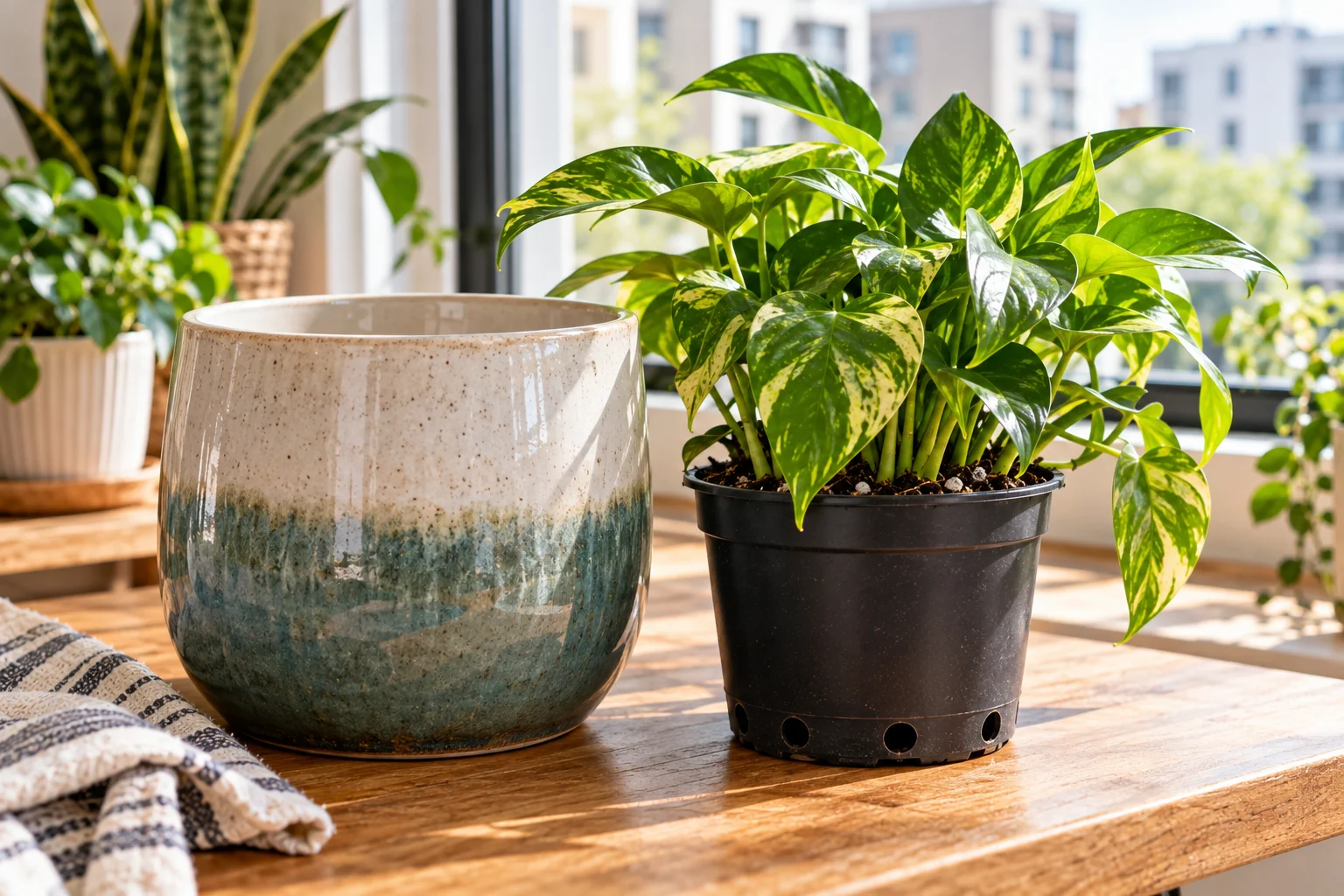 Choose a nursery or liner pot that has drainage holes and fits comfortably inside the ceramic container. You should be able to lift the inner pot out without disturbing the plant. When the plant needs water:
- Lift out the inner pot.
- Water the plant where excess water can drain safely.
- Allow the container to finish draining.
- Check the ceramic pot for accumulated water and empty it if necessary.
- Return the plant to the decorative pot.
This gives you the appearance of a ceramic planter while keeping the plant in a container designed to drain. Iowa State Extension recommends this double-pot approach when you want to use a decorative container that doesn’t have a drainage hole.
What Plants Can Grow in Pots Without Drainage Holes?
Plants differ in how much moisture they tolerate, but choosing a moisture-tolerant plant doesn’t solve the underlying drainage problem in an ordinary pot without an outlet. That’s why we don’t recommend choosing a houseplant simply because an online list says it “doesn’t need drainage.” For typical apartment houseplants, a better approach is to choose a plant based on your home’s light, available space, temperature, and other growing conditions, then give that plant an appropriate container. If plant selection is your main concern, see our guide to the best plants for apartment gardening.
How Many Drainage Holes Should a Pot Have?
There isn’t one universal number of drainage holes that’s right for every pot. What matters is that the container provides enough unobstructed drainage for excess water to escape after watering. University of Maryland Extension recommends adequate holes or slits for container drainage and notes that additional drainage holes may be added depending on the container material. Be cautious with rules that claim every pot needs an exact number of holes. For vegetable containers, drainage isn’t the only consideration. Different crops also need enough room for their root systems, which we cover in how deep containers need to be for vegetables.
Do Indoor Plant Pots Need Drainage Holes?
For typical houseplants, using a growing container with drainage holes is the more reliable setup. Iowa State Extension recommends drainage holes for houseplant containers. If you want to use a decorative indoor planter without one, it recommends placing a smaller pot with drainage inside the decorative container. Yard and Garden Indoors, however, there’s an additional consideration: the water leaving the pot needs somewhere safe to go. That’s where saucers, drip trays, and cachepots become especially useful.
How to Manage Plant Drainage Without Damaging Your Apartment
Good drainage shouldn’t mean water stains on a windowsill or a puddle on your apartment floor. 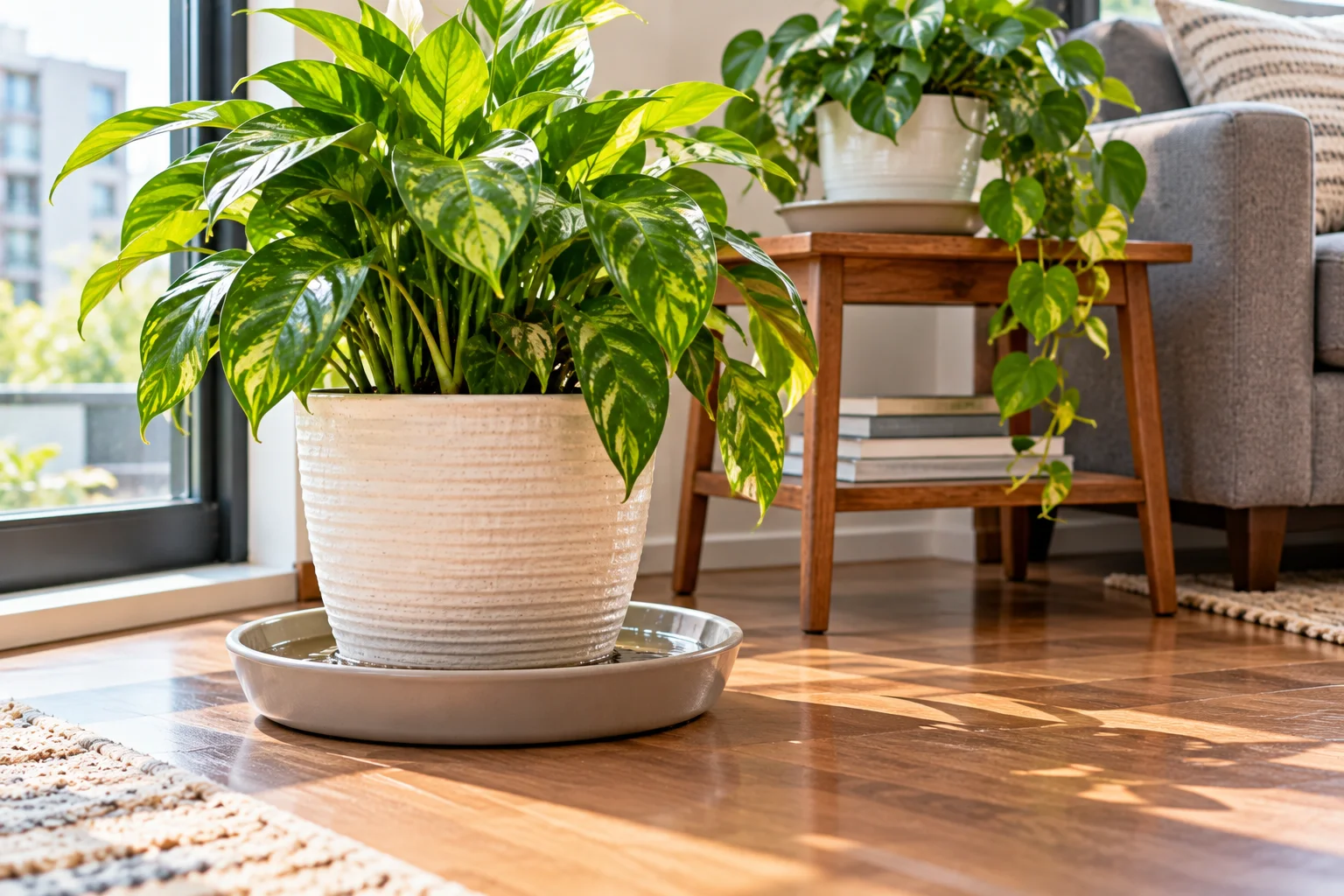
Use a Saucer or Drip Tray
A detachable saucer or drip tray underneath a draining container can collect water before it reaches the surface below. Choose one that’s large enough to catch the expected drainage without overflowing.
Don’t Leave Pots Sitting in Water
A saucer catches drainage, but it still needs to be managed. If water remains in the saucer, the bottom of the growing container may remain in contact with it. Check after watering and empty accumulated water rather than treating the saucer as permanent water storage. Illinois Extension recommends detachable saucers and advises emptying excess water so the growing medium has an opportunity to dry appropriately.
Protect Water-Sensitive Surfaces
Pay particular attention to:
- wood furniture,
- hardwood or laminate flooring,
- painted windowsills,
- shelving, and
- other surfaces that can be affected by repeated moisture.
Don’t assume that putting a saucer under the plant means you never have to look underneath it again. Check periodically for spills, overflow, trapped moisture, or discoloration.
Manage Balcony Runoff
Drainage also matters outdoors—especially when another apartment or balcony is below yours. 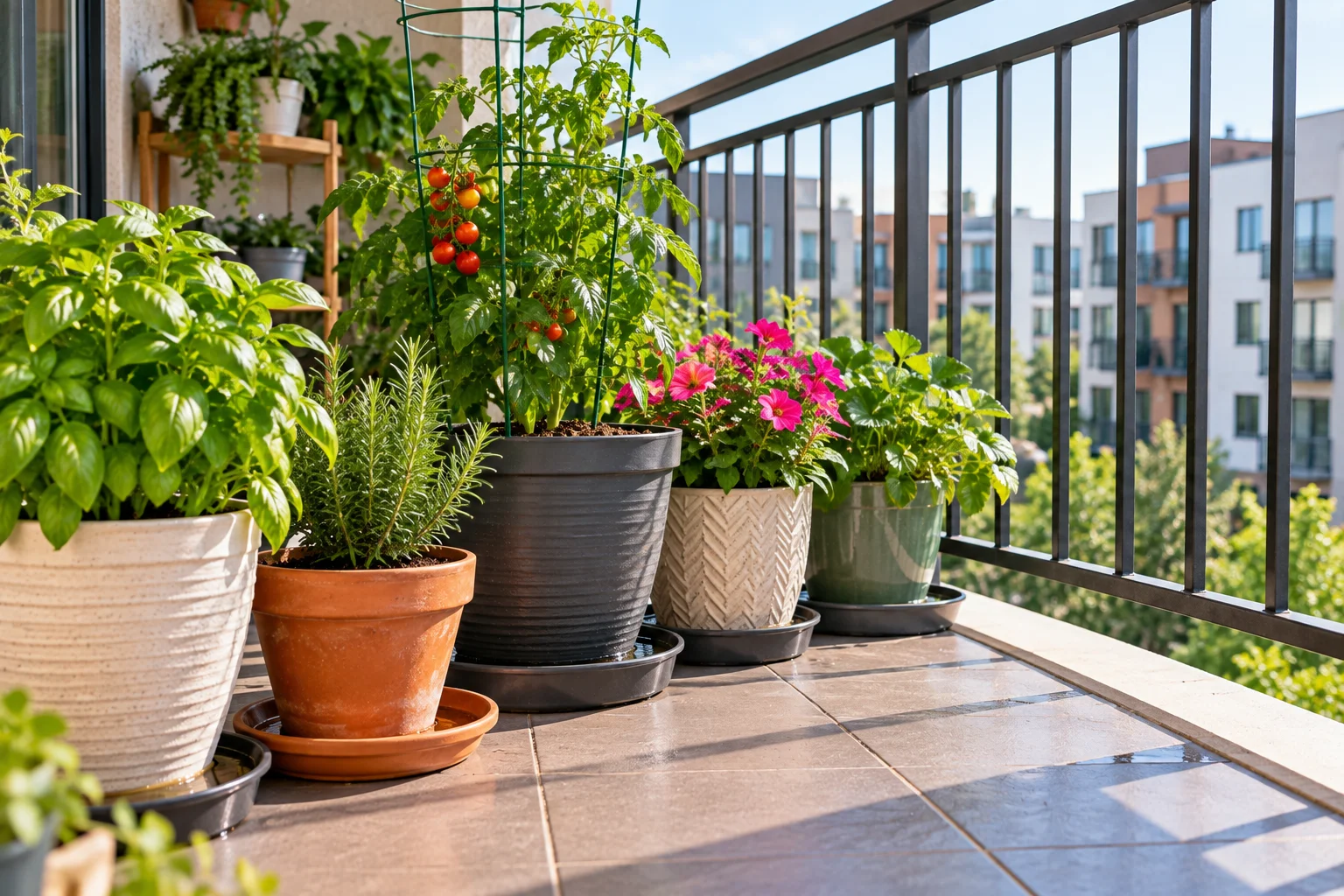 The University of Maryland Extension’s container gardening guidance for balconies and small spaces notes that containers and their drainage water can mark or stain concrete and wood decking. It also specifically points to saucers as useful when gardening above a neighbor’s balcony. Empty standing water regularly and consider where runoff will go before allowing balcony containers to drain freely. If you’re growing outdoors, our guide to how often to water balcony plants explains how sun, heat, wind, container size, and other conditions affect how quickly balcony containers dry out.
Pots With Drainage Holes vs. Pots Without Drainage Holes
Here’s the practical difference:
| Question | Pot With Drainage Holes | Pot Without Drainage Holes |
|---|---|---|
| Can excess water escape? | Yes | Not from a pot without an outlet |
| Suitable as the main growing pot? | Generally, yes | Less forgiving for typical houseplants |
| Useful as a decorative cachepot? | Usually unnecessary | Yes |
| Can gravel replace drainage? | No | No |
| Does collected water need attention? | Often, if using a saucer | Yes, when used as a cachepot |
A Simple Setup for Most Apartment Gardeners
For many apartment houseplants, the setup can be as simple as: Plant → draining nursery or liner pot → decorative cachepot When it’s time to water: Remove → water → drain → empty collected water → replace That arrangement combines the drainage provided by a functional growing container with the appearance of a decorative planter. It’s also convenient indoors because a movable plant can be watered somewhere appropriate instead of allowing large amounts of drainage water to collect where the plant normally sits. Large balcony containers may require a different approach because moving them every time you water may be impractical. In those cases, think about drainage holes, saucers when appropriate, unobstructed drainage, runoff, container weight, and any applicable building rules. For more help choosing and setting up containers, see our apartment container gardening guide.
Frequently Asked Questions
Can Plants Survive in Pots Without Drainage Holes?
Some plants and specialized growing systems can tolerate conditions that differ from conventional container growing. For typical houseplants, however, a draining growing container is the more reliable setup. If your decorative pot doesn’t have a drainage hole, placing a smaller draining pot inside it allows you to use the decorative container without planting directly into it.
Should I Put Rocks in the Bottom of a Planter Without Drainage Holes?
No—not as a substitute for drainage. Adding rocks or gravel beneath the growing medium doesn’t create an outlet for excess water. Illinois Extension specifically identifies the gravel layer beneath potting media as a drainage myth, while University of Maryland Extension advises that gravel can take up root space and worsen drainage.
Can I Use a Decorative Pot Without Drainage Holes?
Yes. One of the simplest options is to use the decorative planter as a cachepot. Place a slightly smaller container with drainage holes inside it. After watering, allow the inner pot to drain and empty any water that collects in the outer container so the plant isn’t left standing in water.
Final Thoughts
Plant pots without drainage holes don’t have to go unused. For most apartment houseplants, a simple solution is to keep the plant in a draining inner container and use the no-hole planter as a decorative cachepot. That gives excess water somewhere to escape while making it easier to protect floors, furniture, and other apartment surfaces. And if you’re tempted to solve a no-drainage pot with a layer of gravel, skip it—gravel beneath the potting mix isn’t a substitute for drainage. If you’re building your first small-space garden, our Apartment Gardening: The Complete Beginner’s Guide brings together containers, light, plant selection, watering, and the other fundamentals of growing successfully in an apartment.