How to Start an Indoor Garden: A Beginner’s Guide
Starting an indoor garden is easier than it may seem. You don’t need a greenhouse, expensive equipment, or a room filled with plants. A bright windowsill, a few containers, and the right plants can be enough to get started.
The key to successful indoor gardening is matching your plants to the conditions you already have. Light, space, containers, drainage, and watering matter more than buying a complicated indoor garden system.
If you’re completely new to growing plants, start small. A few healthy plants that you understand are much easier to manage than a dozen plants with different needs.
This beginner’s guide walks you through the process step by step.
If you want a broader overview of growing plants inside a small home, our indoor apartment gardening guide covers plant choices, growing conditions, and the different ways you can garden indoors.
In This Guide
How to Start an Indoor Garden Step by Step
You don’t need much.
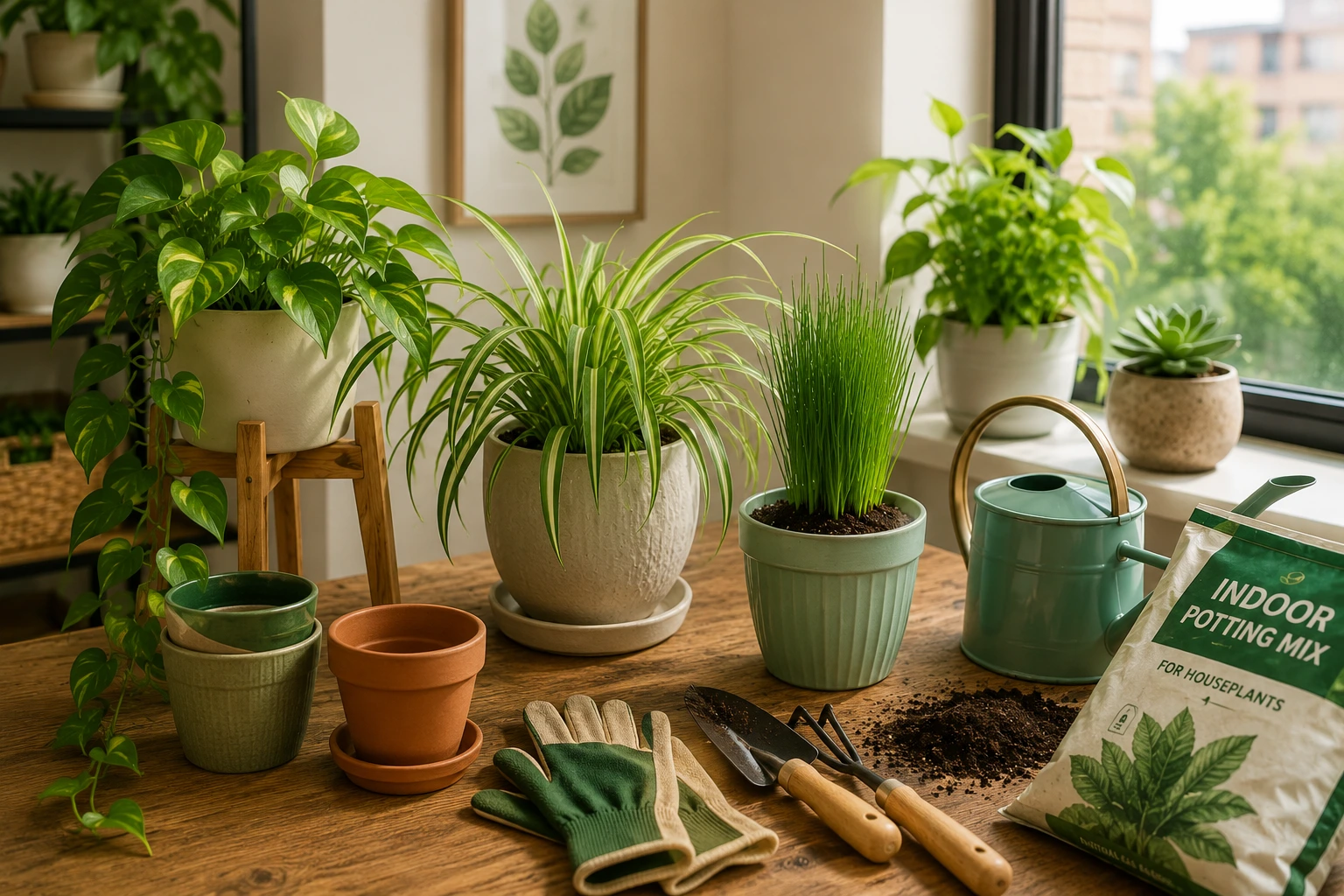
For a basic indoor garden, you’ll typically need:
- An area that receives suitable light
- Containers with drainage holes
- Indoor potting mix
- A few plants or herbs
- A watering can or similar container
- Saucers or trays for catching drainage water
A grow light can also be useful when natural light is limited, but don’t assume you need one before evaluating your space.
The goal isn’t to buy everything first. Start by understanding where you’re going to grow your plants.
1. Decide What You Want to Grow Indoors
Before choosing containers or buying supplies, decide what kind of indoor garden you want.
Are you interested in houseplants? Fresh herbs? Leafy greens? Or simply a few easy plants near a window?
For your first indoor garden, choose one main goal.
For example, you might start with:
- A few beginner-friendly houseplants
- Three culinary herbs on a sunny windowsill
- A small shelf of leafy greens under a grow light
Trying to grow houseplants, herbs, vegetables, microgreens, and seedlings all at once creates unnecessary complexity.
Start with one type of garden and expand after you understand how plants respond to your apartment.
If you’re still deciding what to grow, our guide to the best plants for apartment gardening can help you narrow down your options.
2. Pick One Indoor Growing Area
Next, choose where the garden will go.
Look around your apartment for places such as:
- Windowsills
- Tables near windows
- Kitchen counters
- Plant stands
- Shelves
- Unused corners with supplemental lighting
Don’t choose a location simply because it looks good.
Plants need an environment that supports their growth.
Pay attention to nearby heating vents, air conditioners, cold drafts, pets, and areas where containers could easily be knocked over.
A small dedicated growing area also makes plant care easier. Instead of having plants scattered throughout your apartment, you can check several plants at the same time.
Need inspiration for making the most of a windowsill, shelf, corner, or other limited area? Explore these apartment gardening ideas for small spaces for more practical ways to use the room you already have.
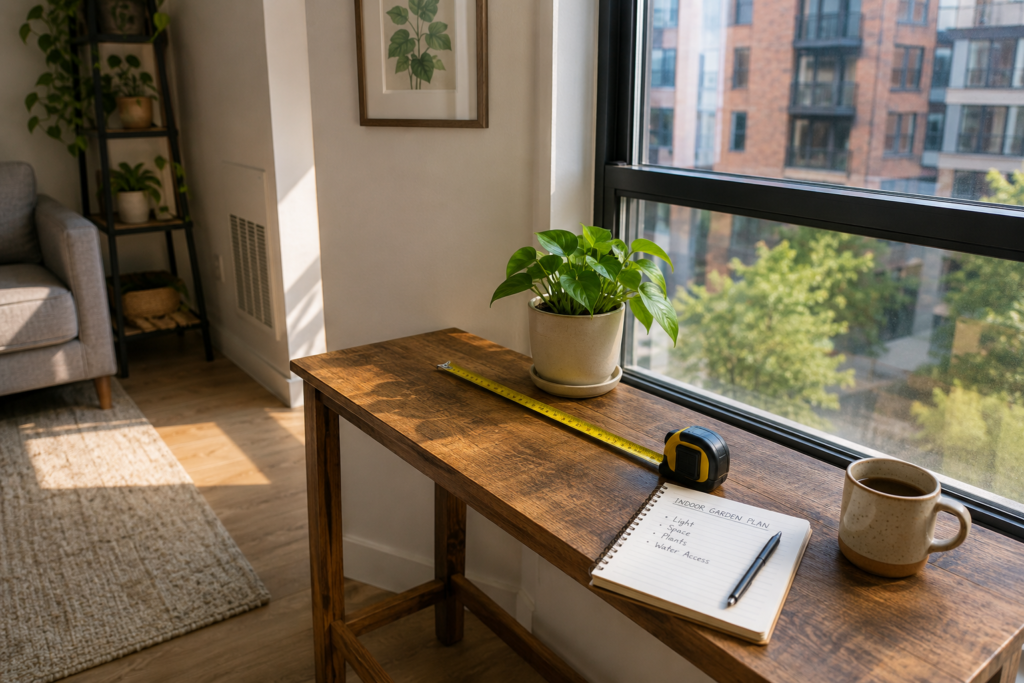
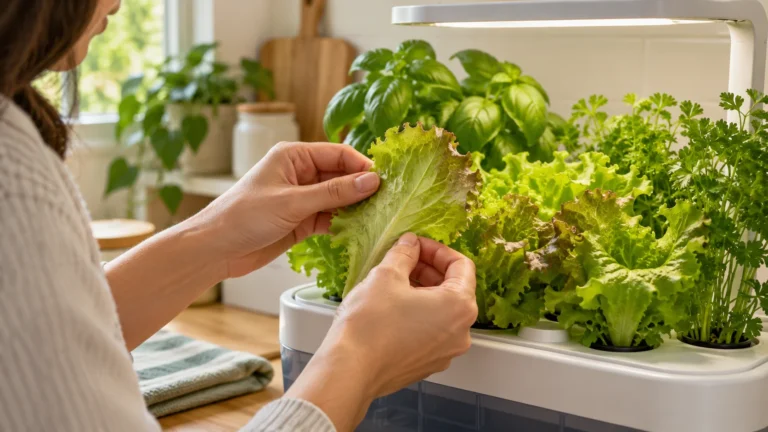
The image we created with the window, plant, tape measure, and planning notebook works particularly well here because it visually demonstrates the decision the section is discussing.
Google recommends placing images near relevant text and using descriptive filenames and useful contextual alt text rather than stuffing keywords into the alt attribute.
3. Check How Much Light Your Apartment Gets
Light is one of the most important parts of indoor growing.
Before buying plants, observe your intended growing area throughout the day.
Ask yourself:
- Does direct sunlight actually reach this spot?
- How many hours does the area stay bright?
- Is the light different in the morning and afternoon?
- Is another building, balcony, tree, or overhang blocking the window?
Don’t assume that simply being near a window means a plant receives enough usable light.
The amount of light also changes throughout the year, so a windowsill that performs well during summer may receive much less light during winter.
This is why it’s better to evaluate your actual conditions before choosing plants.
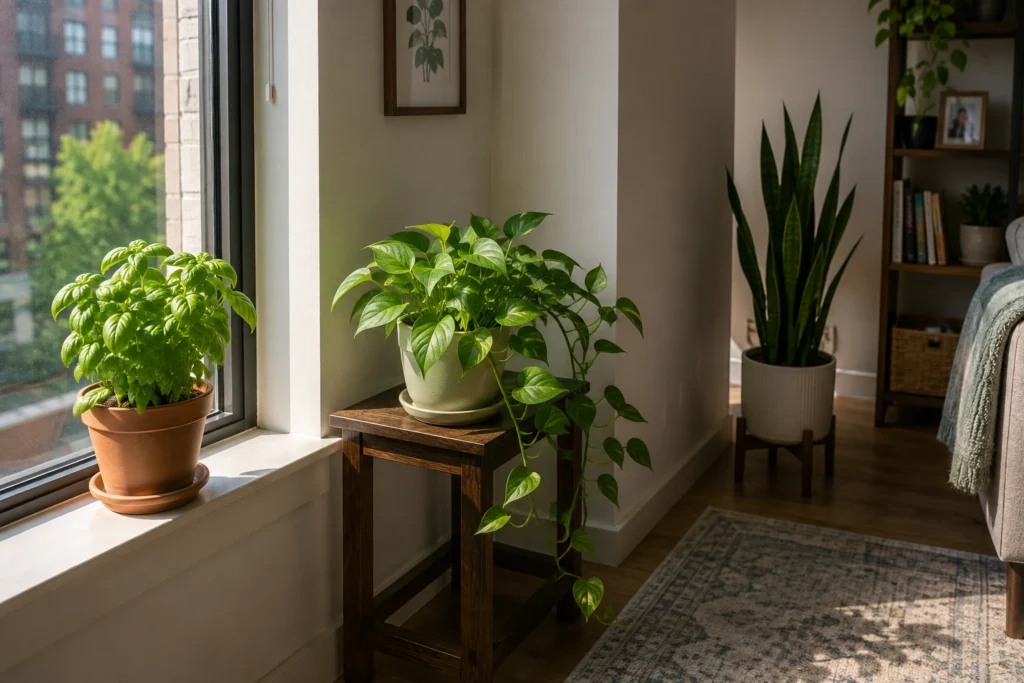
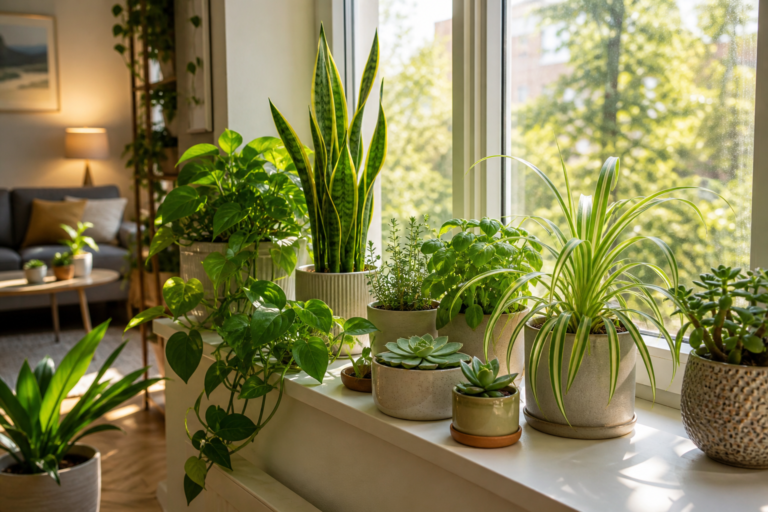
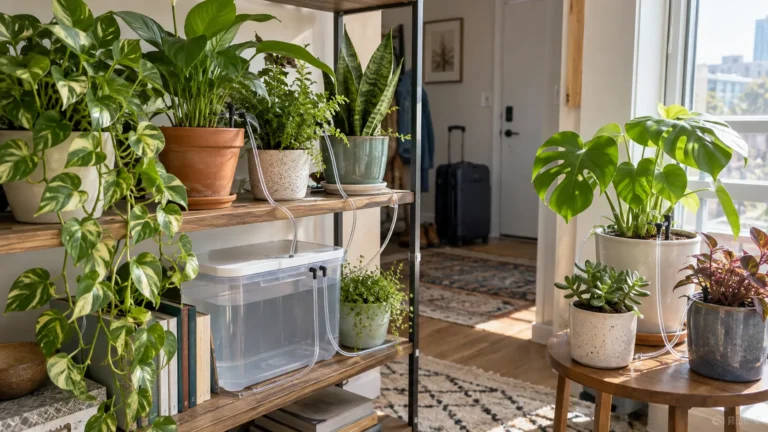
The image we created is especially appropriate here because the plants are positioned at different distances from the window, visually reinforcing the concept.
If your apartment doesn’t receive enough natural light for the plants you want to grow, our guide to grow lights for indoor plants will explain how to add supplemental lighting.
Important: Low light doesn’t mean no light. Plants still need usable light for photosynthesis.
4. Choose Beginner-Friendly Indoor Plants
Once you understand your available light, you can choose plants that match it.
This order matters.
A common beginner mistake is buying an attractive plant first and then trying to find somewhere in the apartment where it might survive.
Reverse that process:
Space → light → plant.
Some houseplants tolerate lower indoor light levels better than others, while many herbs and edible plants generally perform better with brighter conditions.
For beginners interested mainly in houseplants, commonly grown indoor options include pothos, spider plants, snake plants, and other plants appropriate for your particular conditions.
If you want edible plants, herbs can make an appealing small-space garden, but different herbs have different requirements. For example, University of Minnesota Extension notes that chives can be grown indoors in a bright, sunny location and recommends containers with drainage holes and well-drained potting mix.
We’ll cover edible indoor growing in much greater detail in our indoor herb garden guide.
Start with fewer plants than you think you need
Three plants are enough for your first indoor garden.
Starting small allows you to learn how quickly the soil dries, how plants react to your apartment’s light, and how frequently each plant needs attention.
Once those plants are doing well, add more.
5. Choose Containers With Drainage
The decorative container might get your attention, but drainage should be one of the first things you check.
Look underneath the pot.
Does it have a drainage hole?
Drainage allows excess water to escape instead of remaining around the roots.
University Extension guidance for indoor herbs similarly recommends containers with drainage holes and potting mixes that allow water to drain properly.
You can place a saucer underneath the container to help protect window sills, shelves, and furniture.
Another option is keeping the plant in a nursery pot with drainage holes and placing that inside a decorative outer container. Just don’t allow the inner pot to remain sitting in collected water.
Don’t start with oversized pots
Bigger isn’t automatically better.
An unnecessarily large container holds a larger volume of wet potting mix around a small root system.
When repotting established houseplants, University of Minnesota Extension recommends moving up only one pot size when repotting is actually needed, noting that excessive extra soil can retain too much water.
For beginners, appropriately sized containers make moisture management easier.
6. Protect Your Apartment From Water Damage
Indoor gardening introduces one problem that outdoor gardeners don’t worry about quite as much:
Your floor is underneath the garden.
Water draining from a pot can damage furniture, windowsills, wood floors, and other surfaces.
Use:
- Plant saucers
- Drip trays
- Waterproof mats where appropriate
Check the saucer after watering rather than allowing the container to sit in excess water for long periods.
This small habit can prevent a lot of frustration.
It’s especially important when your garden sits on shelving or furniture.
7. Use Potting Mix Instead of Outdoor Garden Soil
Container gardening changes how water and air move around plant roots.
For indoor containers, use a potting mix intended for container or houseplant growing rather than digging up ordinary soil from outside.
A suitable potting mix is designed to provide a better balance of moisture, drainage, and air around roots in a container.
The exact mix depends on what you’re growing, so there isn’t one perfect mixture for every indoor plant.
For your first garden, don’t make this complicated.
Choose an appropriate packaged potting mix for the type of plant you’re growing and follow the plant’s requirements.
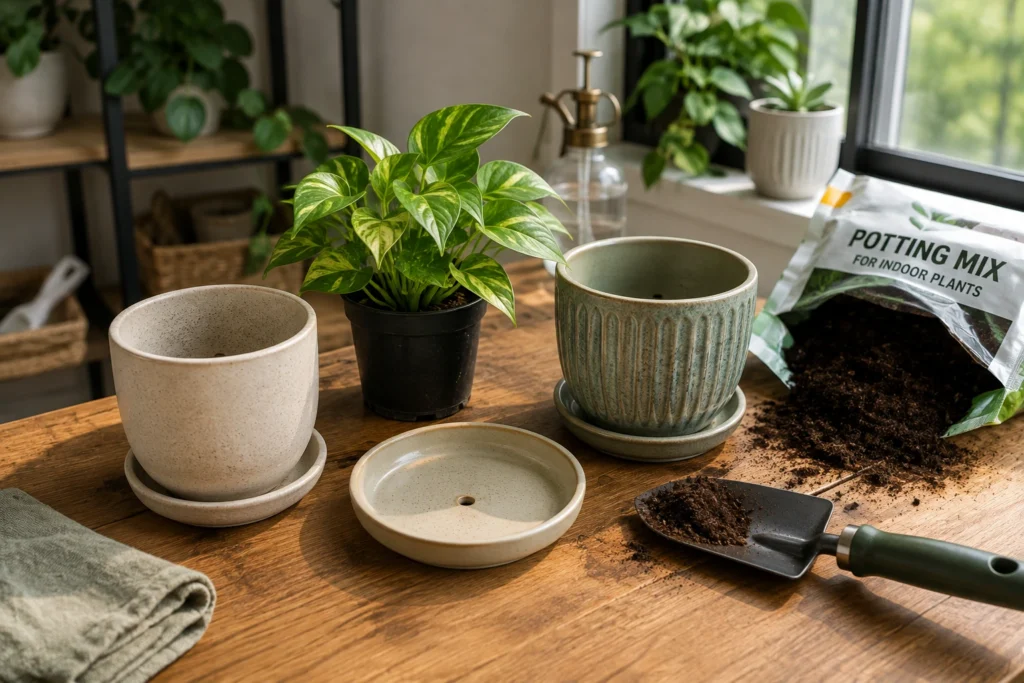
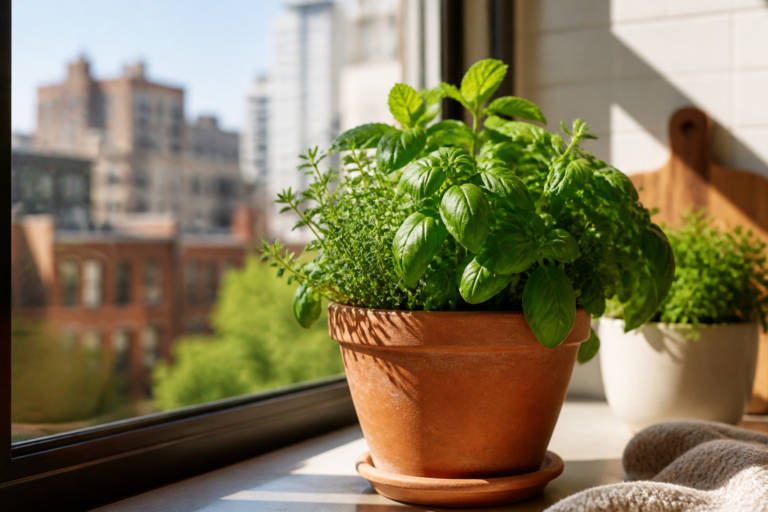
Our third image belongs here because it shows the actual items being discussed: containers, drainage, potting mix, a plant, and a small gardening tool.
8. Learn How to Water Indoor Plants
Watering is where many beginners run into trouble.
One reason is that people often try to create a universal schedule:
“I’ll water every Saturday.”
Plants don’t necessarily work that way.
How quickly potting mix dries depends on several factors, including:
- Plant type
- Container size
- Potting mix
- Temperature
- Light
- Humidity
- Season
Instead of automatically watering because a certain day has arrived, check the plant and potting mix first.
For many plants, you can feel the upper portion of the potting mix with your finger to help determine whether it is still moist. But don’t turn this into another universal rule—different plants have different moisture requirements.
Learn the needs of the specific plants you’re growing.
Water thoroughly when the plant needs it
When watering, apply enough water to moisten the root zone and allow excess water to escape through the drainage hole.
Then empty excess water from the saucer when necessary.
One of the most useful skills you’ll develop as an indoor gardener is recognizing the difference between a plant that needs water and one that doesn’t.
9. Pay Attention to Temperature and Airflow
Indoor temperatures may feel comfortable to you while still creating challenging conditions for plants.
Watch for extreme conditions around:
- Heating vents
- Air-conditioning vents
- Drafty doors
- Very cold windows
- Hot windows receiving intense sunlight
A plant sitting directly above a heating vent can experience very different conditions from another plant only several feet away.
Indoor humidity can also change seasonally, particularly when heating or air conditioning is running.
Penn State Extension notes that centrally heated homes can become especially dry for indoor plants during winter.
You don’t need to obsess over creating perfect conditions. Just avoid obvious extremes and pay attention to how your plants respond.
10. Don’t Fertilize More Because You Want Faster Growth
Beginners sometimes assume more fertilizer means faster or healthier growth.
It doesn’t work that way.
Fertilizer isn’t a substitute for adequate light, appropriate watering, or healthy roots.
Different plants also have different fertilizer requirements, and their needs may change throughout the year.
Follow the directions for your particular plant and fertilizer rather than adding extra.
If a plant is struggling, first investigate light, watering, drainage, pests, and other growing conditions instead of immediately reaching for fertilizer.
11. Check Your Plants Regularly
You don’t need to spend hours caring for an indoor garden.
A quick inspection several times per week can tell you a lot.
Look at the leaves.
Touch the potting mix when appropriate.
Look underneath leaves occasionally.
Notice whether new growth looks healthy.
Check for insects, discoloration, wilting, damaged leaves, or unexpected changes.
The advantage of checking regularly is that you can notice small problems before they become larger ones.
Indoor gardening becomes much easier once you learn what your plants normally look like.
12. Expand Your Indoor Garden Slowly
Once your first few plants are growing successfully, you can begin expanding.
Maybe that means adding another shelf.
Maybe you’d like fresh herbs in the kitchen.
Or perhaps you’ve discovered that your apartment doesn’t receive enough natural light and you want to experiment with grow lights.
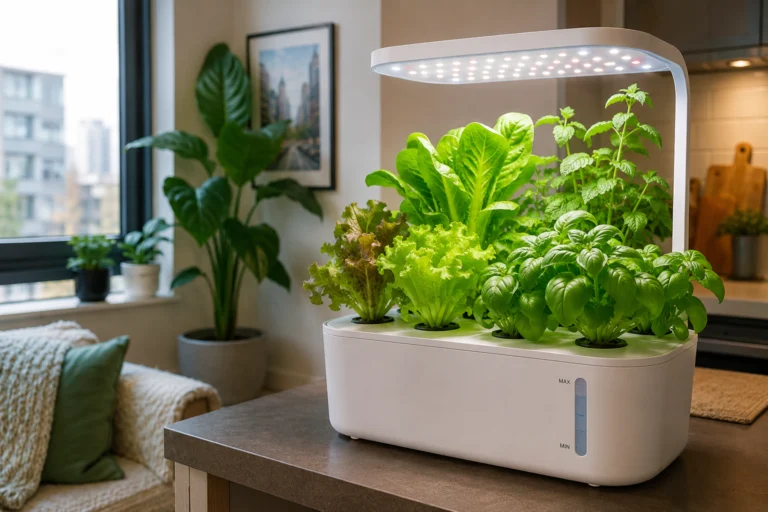
Eventually, you might even explore an indoor hydroponic garden.
But none of that needs to happen on day one.
One of the easiest ways to make indoor gardening frustrating is to buy too much equipment and too many plants before learning the basics.
Build your garden gradually.
Your First Indoor Garden: A Simple Setup
If you’re ready to start, here’s the process from beginning to end.
- Decide what you want to grow.
- Choose one growing area.
- Observe the light throughout the day.
- Select plants suited to those conditions.
- Start with two or three plants.
- Choose appropriately sized containers with drainage holes.
- Add saucers or trays to protect surfaces.
- Use an appropriate indoor potting mix.
- Learn the watering needs of each plant.
- Check your plants regularly.
- Adjust your routine based on how the plants respond.
- Add more plants only after the first group is growing successfully.
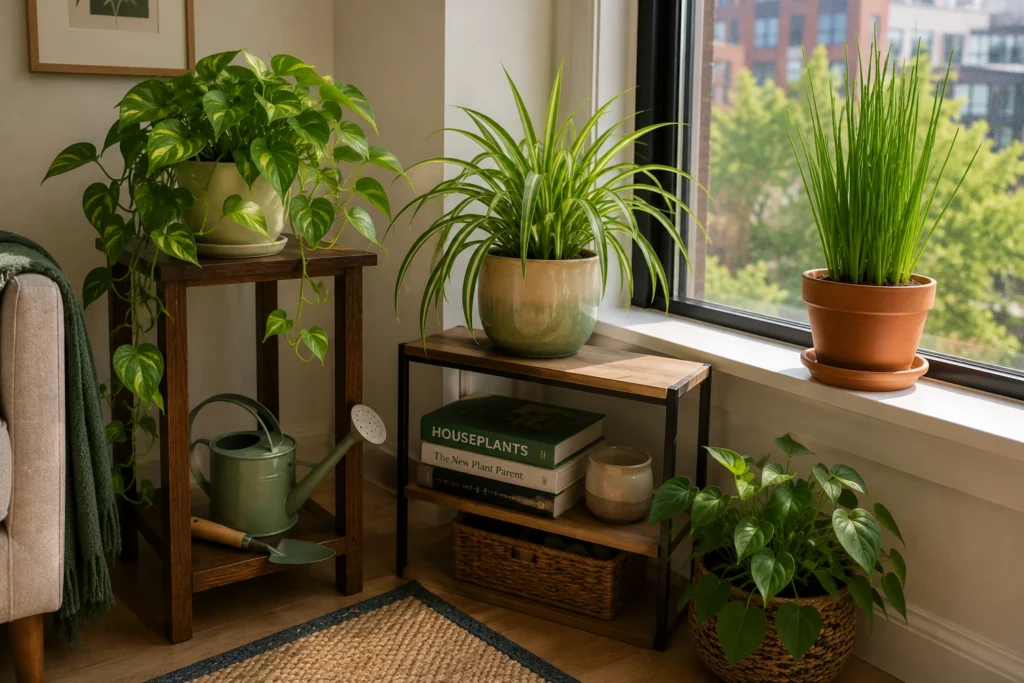
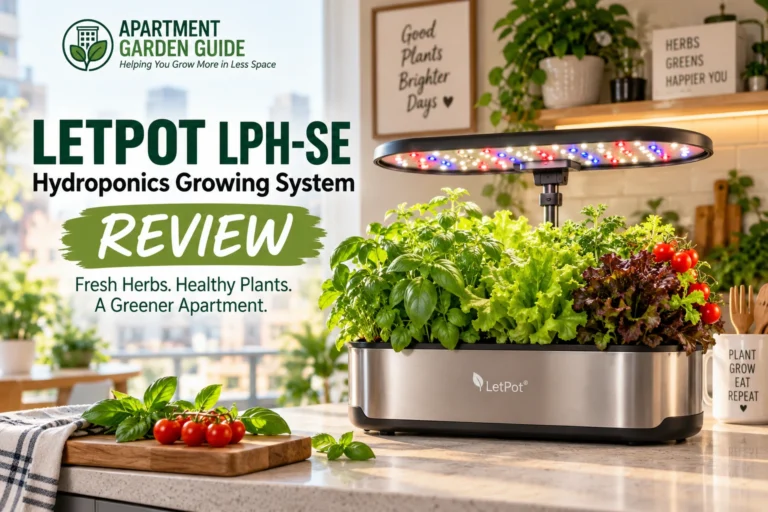
Our fourth image works well here because it shows what the reader is working toward: a small, attractive, manageable indoor garden rather than an unrealistic room overflowing with plants.
Common Indoor Gardening Mistakes Beginners Should Avoid
You don’t have to get everything right the first time.
However, several common mistakes are worth watching for.
Buying plants before checking your light
This is probably the biggest mistake to avoid.
Choose plants for the conditions you actually have, not the conditions you wish you had.
Watering every plant on the same schedule
Different plants and containers dry at different rates.
Check before watering.
Using containers without drainage
Decorative pots are attractive, but you still need a way to manage excess water.
Starting with too many plants
A smaller collection makes it easier to recognize what is and isn’t working.
Moving struggling plants constantly
If a plant doesn’t look perfect, resist making several changes at once.
Changing the location, watering, fertilizer, container, and potting mix simultaneously makes it difficult to determine what actually helped—or hurt—the plant.
Make thoughtful changes and observe the results.
Expecting instant results
Gardening teaches patience.
Some plants grow quickly. Others change slowly.
Give yourself time to learn your apartment’s growing conditions.
If you’re still learning the overall fundamentals beyond indoor growing, our complete beginner’s guide to apartment gardening covers containers, plant selection, watering, lighting, balconies, and other small-space gardening basics.
Do You Need a Grow Light for an Indoor Garden?
Not necessarily.
If your plants receive adequate natural light from your windows, supplemental lighting may not be necessary.
But apartments vary dramatically.
Some have large, unobstructed windows. Others face neighboring buildings or receive very little direct sunlight.
If your available natural light doesn’t meet the needs of the plants you want to grow, a grow light can expand your options.
Don’t buy one simply because you’ve started an indoor garden.
First determine what you’re growing and what light you already have. Then decide whether supplemental lighting solves an actual problem.
Our dedicated grow lights for indoor plants guide will cover this topic in detail.
Can You Grow Food Indoors?
Yes, but expectations matter.
Herbs and certain leafy greens are much more practical indoor projects for many beginners than large fruiting crops.
The amount of available light is particularly important when growing edible plants indoors.
Instead of trying to turn your apartment into a full vegetable garden immediately, start with something manageable.
An indoor herb garden, for example, can fit on a windowsill or small growing station when the herbs’ light and growing requirements can be met.
That gives you experience with edible indoor gardening before moving into more demanding crops or hydroponic systems.
Frequently Asked Questions About Indoor Gardening
What is the easiest indoor garden for a beginner?
A small collection of two or three plants matched to your available light is one of the easiest ways to begin. Keeping the garden small lets you learn watering, light, drainage, and plant care without becoming overwhelmed.
Can I start an indoor garden without a sunny window?
Possibly. Some plants tolerate lower light levels than others, while plants requiring stronger light may need supplemental grow lighting. A completely dark area isn’t suitable simply because a plant is described as “low light.”
How many plants should a beginner start with?
Two or three is plenty. There isn’t a required number. Starting small simply makes it easier to learn how each plant responds to your home’s conditions.
Do indoor plants need drainage holes?
Using containers with drainage holes is a beginner-friendly way to allow excess water to escape. Extension guidance for indoor container-grown herbs also recommends pots with drainage holes.
Can I use regular dirt for indoor plants?
For container growing, use an appropriate potting mix rather than ordinary outdoor garden soil. Potting mixes are better suited to managing drainage and air around roots inside containers.
Do I need an indoor garden system?
No. A beginner indoor garden can be as simple as several appropriately chosen plants growing in containers near a suitable window. Indoor garden systems and hydroponics are options, not requirements.
Start Small and Learn From Your Plants
You don’t need a perfect setup to start indoor gardening.
You need a suitable space, enough usable light for the plants you’ve chosen, containers that allow you to manage drainage, appropriate potting mix, and a willingness to observe your plants.
Start with two or three plants.
Learn how quickly their potting mix dries. Notice how they respond to the light in your apartment. Pay attention to new growth.
Then expand.
That approach is less expensive, easier to maintain, and much more useful for a beginner than trying to build an elaborate indoor garden all at once.
Once you’ve mastered the basics, you can move into more specialized projects such as low-light indoor plants for apartments, grow lights for indoor plants, an indoor herb garden, or an indoor hydroponic garden.
Indoor gardening doesn’t have to begin with a room full of plants.
It can begin with one window and one plant.