How Do I Clean My Hydroponic System?
Learning how to clean a hydroponic system properly starts with shutting the system down safely, emptying the reservoir, removing plant debris, washing the parts that can safely get wet, cleaning the pump and tubing, and sanitizing appropriate components between growing cycles.
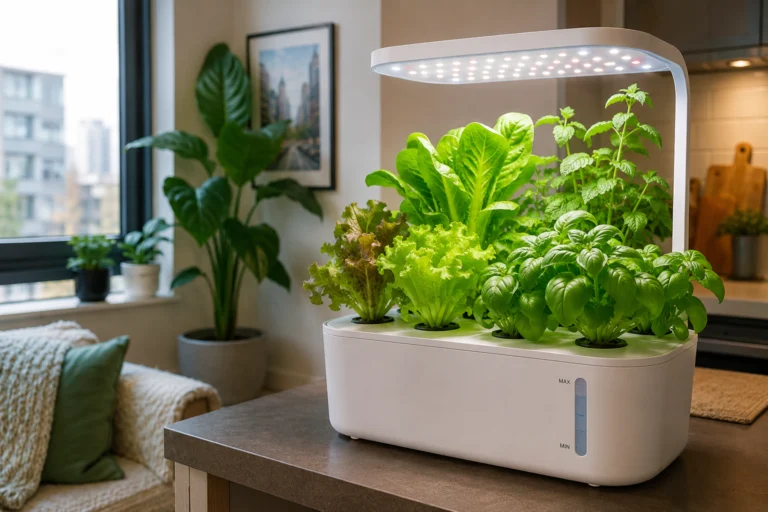
For apartment gardeners, cleaning also requires a little planning. A countertop or small indoor hydroponic garden may sit near cabinets, flooring, furniture, electrical outlets, or food-preparation areas, so it helps to decide where dirty water, wet components, and clean parts will go before taking the system apart.
If you are new to growing without soil, our beginner’s guide to indoor hydroponic gardening explains how indoor systems work and what apartment gardeners should consider before getting started.
In This Guide
Hydroponic System Cleaning at a Glance
A full hydroponic system cleaning is easiest to manage when you work in a set order instead of taking everything apart at once.
| Step | What to Do |
|---|---|
| 1 | Prepare a suitable cleaning area |
| 2 | Shut down the system safely |
| 3 | Remove plants and removable parts as appropriate |
| 4 | Empty the reservoir and remove plant debris |
| 5 | Wash the reservoir and washable parts |
| 6 | Clean the pump and tubing as directed |
| 7 | Sanitize appropriate components between growing cycles |
| 8 | Finish the sanitizing process and inspect the components |
| 9 | Reassemble, refill, and check the system |
The exact procedure varies by system. A compact countertop garden, deep-water-culture container, hydroponic tower, and NFT system do not necessarily have the same removable or washable components, so the system manual should take priority when its instructions differ from general cleaning guidance.
How Often Should You Clean a Hydroponic System?
A hydroponic system should be thoroughly cleaned between growing cycles, while the appropriate routine-cleaning schedule during an active crop depends on the system design, nutrient-solution changes, visible buildup, and manufacturer instructions.
The University of Minnesota Extension’s small-scale hydroponics guide recommends cleaning reservoirs, trays, and pumps between growing cycles or crops in its NFT guidance. The Virginia Cooperative Extension hydroponics guidance also recommends cleaning and sanitizing hydroponic growing channels and containers between crop rotations.
Routine cleaning during an active crop does not necessarily require completely dismantling the system. The University of Minnesota Extension guidance recommends cleaning NFT tanks and pumps between nutrient-solution changes, removing dead or diseased plant material promptly, and wiping tray surfaces when plants prevent the trays from being removed.
There is no need to impose a universal schedule such as “deep clean every two weeks” on every home hydroponic garden. The University of Vermont Extension’s produce-safety guidance for hydroponic and aquaponic operations recommends establishing a cleaning and sanitizing schedule tailored to the operation.
Signs Your Hydroponic System Needs Cleaning
Visible algae, accumulated roots or plant debris, residue on reservoir surfaces, clogged tubing, and buildup around a pump intake are signs that a hydroponic system needs attention.
The University of Minnesota Extension’s small-scale hydroponics guidance identifies plant debris, algae, precipitated nutrients, and hard-water mineral buildup as possible causes of clogged tubing or pumps. Excessive algae can also plug pump intake areas.
Reduced water movement is therefore a good reason to inspect a hydroponic system, but reduced flow does not prove that dirt or algae is responsible. Check accessible lines and pump areas for obstructions and follow the system manufacturer’s troubleshooting instructions if normal water movement does not return.
What You Need to Clean a Hydroponic System
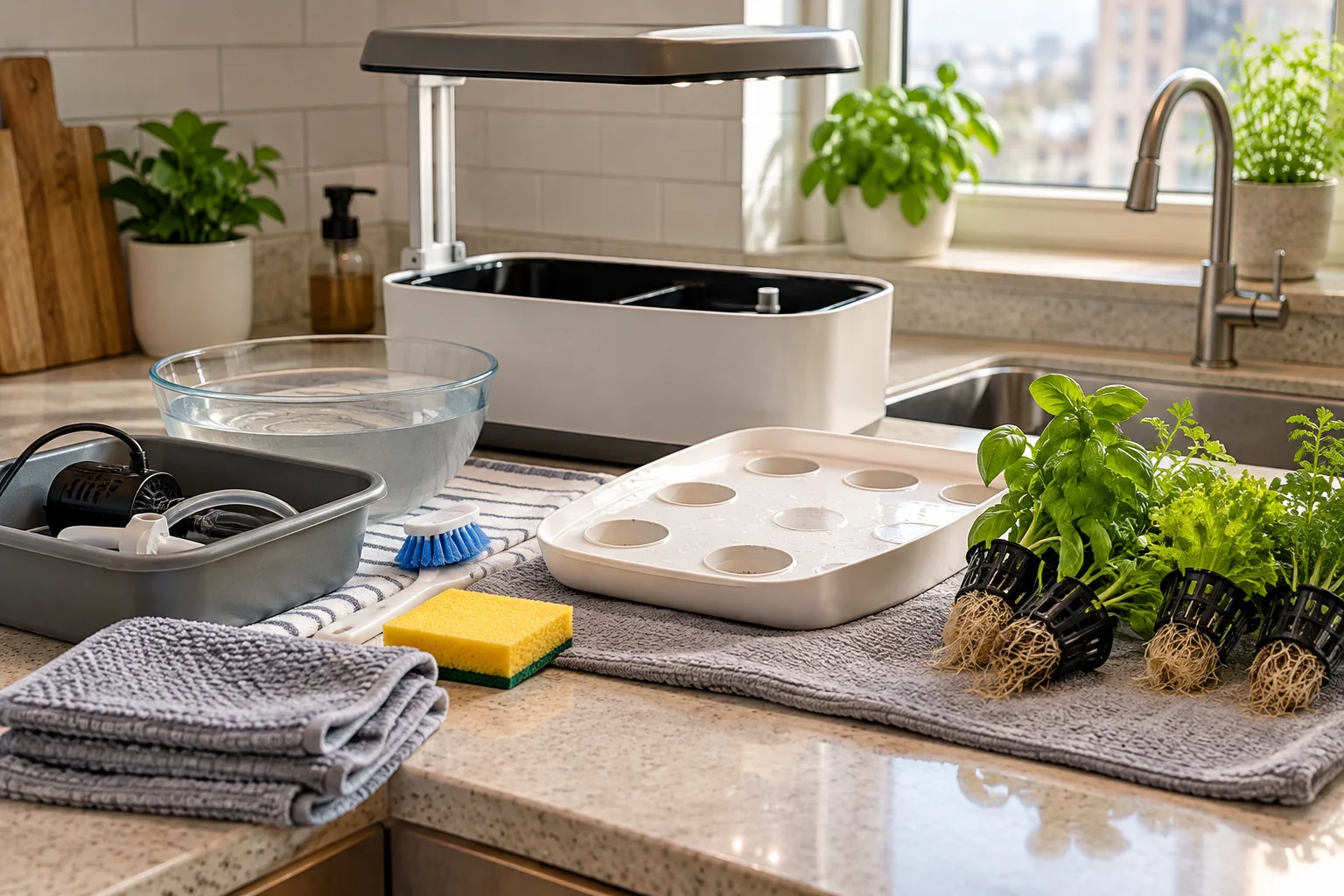
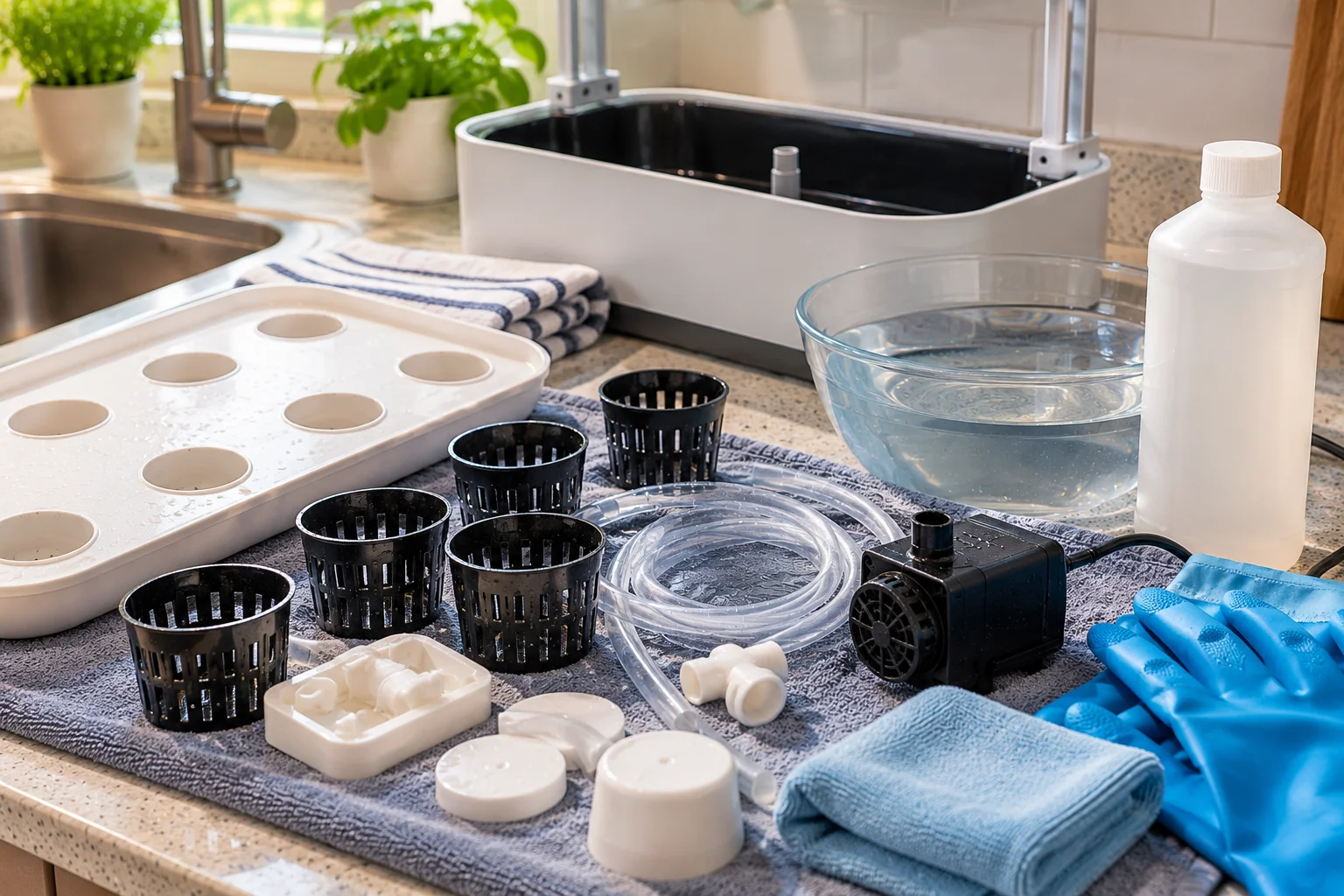
Basic hydroponic cleaning supplies may include warm water, dish soap or another cleaner allowed by the system manufacturer, a clean brush or sponge, towels, and a suitable place for washable components. Sanitizing requires a separate product that is appropriate for the intended surfaces and application.
The University of Minnesota Extension hydroponics cleaning guidance uses dish soap, warm water, and physical scrubbing in its NFT cleaning procedure before sanitizing. The same guidance describes specific sanitation procedures using diluted bleach or hydrogen-peroxide-based sanitizers.
For a small apartment system, also have towels or another washable barrier ready before opening or moving the reservoir. A tray or other protected surface can provide somewhere for dripping parts to sit while the system is being cleaned.
Check the hydroponic system manual before choosing a cleaner or sanitizer. Integrated countertop systems may contain pumps, lights, controls, wiring, sensors, seals, and other components that cannot all be washed or submerged in the same way.
Cleaning vs. Sanitizing a Hydroponic System
Cleaning and sanitizing a hydroponic system are different steps. Cleaning physically removes algae, plant debris, residue, biofilm, and other material, while sanitizing uses an appropriate product or process on an already-clean surface to reduce microbial contamination.
The University of Vermont Extension hydroponic produce-safety guidance recommends effectively cleaning surfaces before sanitizing them. The University of Minnesota Extension guidance similarly instructs growers to remove debris, wash system surfaces, and rinse away soap and material before proceeding to sanitation.
The difference between cleaning and sanitizing matters because sanitizer is not a replacement for scrubbing away debris and buildup. A visibly dirty reservoir should be cleaned before a sanitizer is applied.
The word sterilize should not be used as a substitute for cleaning or sanitizing in this guide. Home hydroponic gardeners generally need to follow the cleaning and sanitation procedures specified for their equipment and sanitizer rather than trying to make the system literally sterile.
How to Clean a Hydroponic System Step by Step
To clean a hydroponic system, remove debris first, wash the appropriate components, sanitize clean surfaces when needed, and then finish the sanitation process according to the product label before reassembling the garden.
The following nine-step process works as a general framework for small home systems. Your system manual should take priority for components that require special handling.
Step 1: Prepare a Cleaning Area in Your Apartment
Prepare the cleaning area before draining the hydroponic system so dirty water and wet components have somewhere to go.
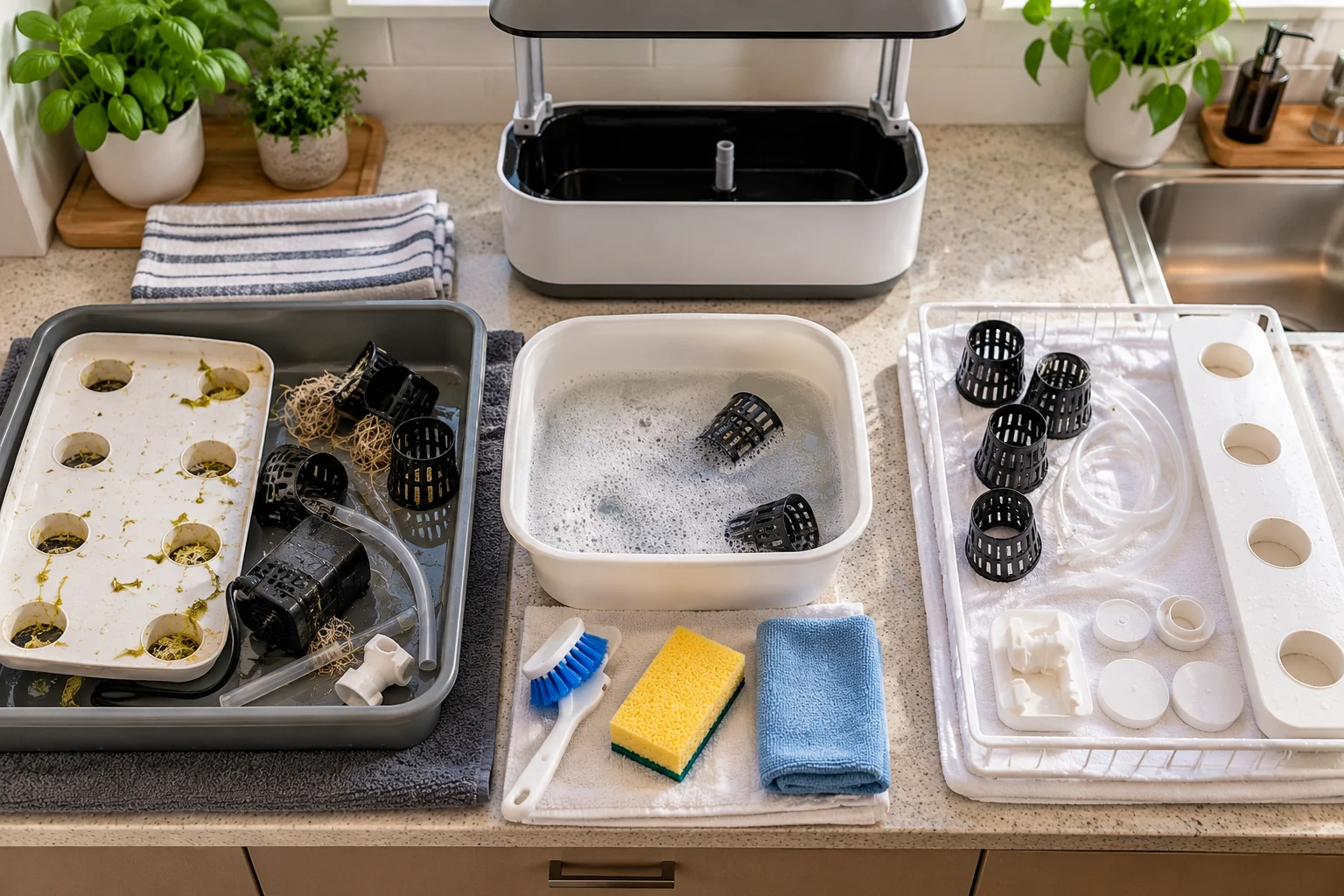
For a compact system, choose a suitable area with enough room to separate dirty components from cleaned ones. Keep towels nearby and provide a tray, drying rack, or other washable surface for parts that may continue dripping after removal.
An apartment cleaning area should also protect surrounding belongings. Move food, dishes, electronics, and other items that could be splashed before opening the reservoir or carrying wet components through the room.
Planning the workspace first makes the remaining steps considerably easier, especially when there is no garage, outdoor hose, or dedicated utility sink available.
Step 2: Shut Down the System and Check the Manufacturer’s Instructions
Turn off or disconnect powered hydroponic equipment as directed by the manufacturer before disassembling the garden or cleaning around electrical components.
A countertop hydroponic garden may combine water with a pump, grow light, timer, control panel, sensors, or other electronics. Equipment designed to operate near water is not automatically safe to submerge or spray.
Check the system manual before removing or washing a pump, light assembly, controller, or other powered component. Components that are not approved for wet cleaning should be handled using the manufacturer’s recommended method.
Cleaning procedures can also vary considerably among countertop hydroponic systems because the reservoir, pump, grow deck, lighting, and other components may be integrated differently.
Step 3: Remove Plants and Removable Parts as Appropriate
Remove plants and removable parts as appropriate for the type of cleaning being performed.
A full cleaning between crops provides access to reservoirs, trays, net pots, tubing, and other surfaces that may be difficult to reach while plants are growing. The University of Minnesota Extension small-scale hydroponics guide recommends cleaning and sanitizing containers and associated parts between plantings to remove accumulated organic material and biofilm.
Herbs are especially common in compact countertop systems, and our guide to growing herbs indoors covers the broader light, watering, container, and growing needs of an apartment herb garden.
A system containing actively growing plants requires a different approach. The same Extension guidance recommends promptly removing dead or diseased plant material and wiping tray surfaces with a damp cloth during an NFT growing cycle rather than removing trays that contain plants.
Do not automatically dismantle a countertop hydroponic garden simply because a component looks removable. Use the system manual to determine which parts are intended to come apart for cleaning.
Step 4: Empty the Reservoir and Remove Plant Debris
Empty the reservoir and remove loose roots, dead leaves, algae, and other accessible plant debris before washing the hydroponic system.
Removing loose organic material first makes it easier to clean the reservoir and other water-contact surfaces. Check accessible corners, pump intakes, tubing connections, and other places where roots or debris tend to collect.
Used nutrient solution also needs to be handled deliberately. Follow the nutrient manufacturer’s directions and applicable local disposal requirements rather than assuming every nutrient solution can be discarded in the same way.
For an apartment garden, do not allow used nutrient solution to drain from a balcony onto neighboring property.
Step 5: Wash the Reservoir and Removable Parts
Wash the reservoir and washable hydroponic parts to physically remove algae, residue, plant debris, and biofilm before sanitizing.
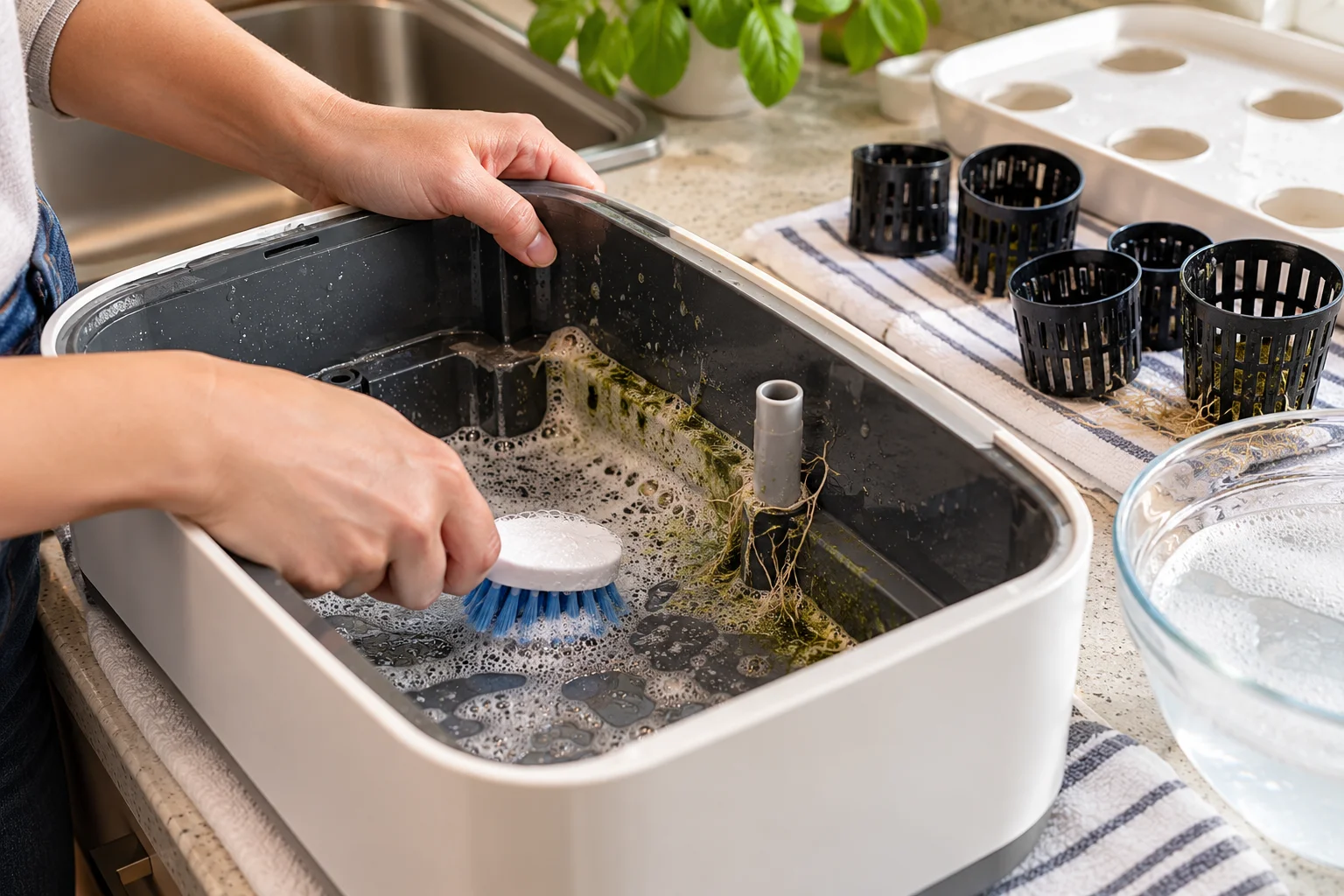
The University of Minnesota Extension’s hydroponic cleaning procedure recommends spraying away plant debris and then using dish soap and warm water to scrub NFT system surfaces and components. The washed components are rinsed well before sanitation.
Pay attention to corners, seams, openings, and other areas where buildup can remain after a quick rinse. Reusable net pots and other water-contact components should also be cleaned between plantings when they are designed for reuse.
Only wash components that can safely get wet. Pumps, controllers, lights, sensors, and integrated electrical parts may require different cleaning methods.
Step 6: Clean the Pump and Tubing as Directed
Clean accessible pumps and tubing according to the system instructions because roots, algae, plant debris, mineral deposits, and precipitated nutrients can interfere with water movement.
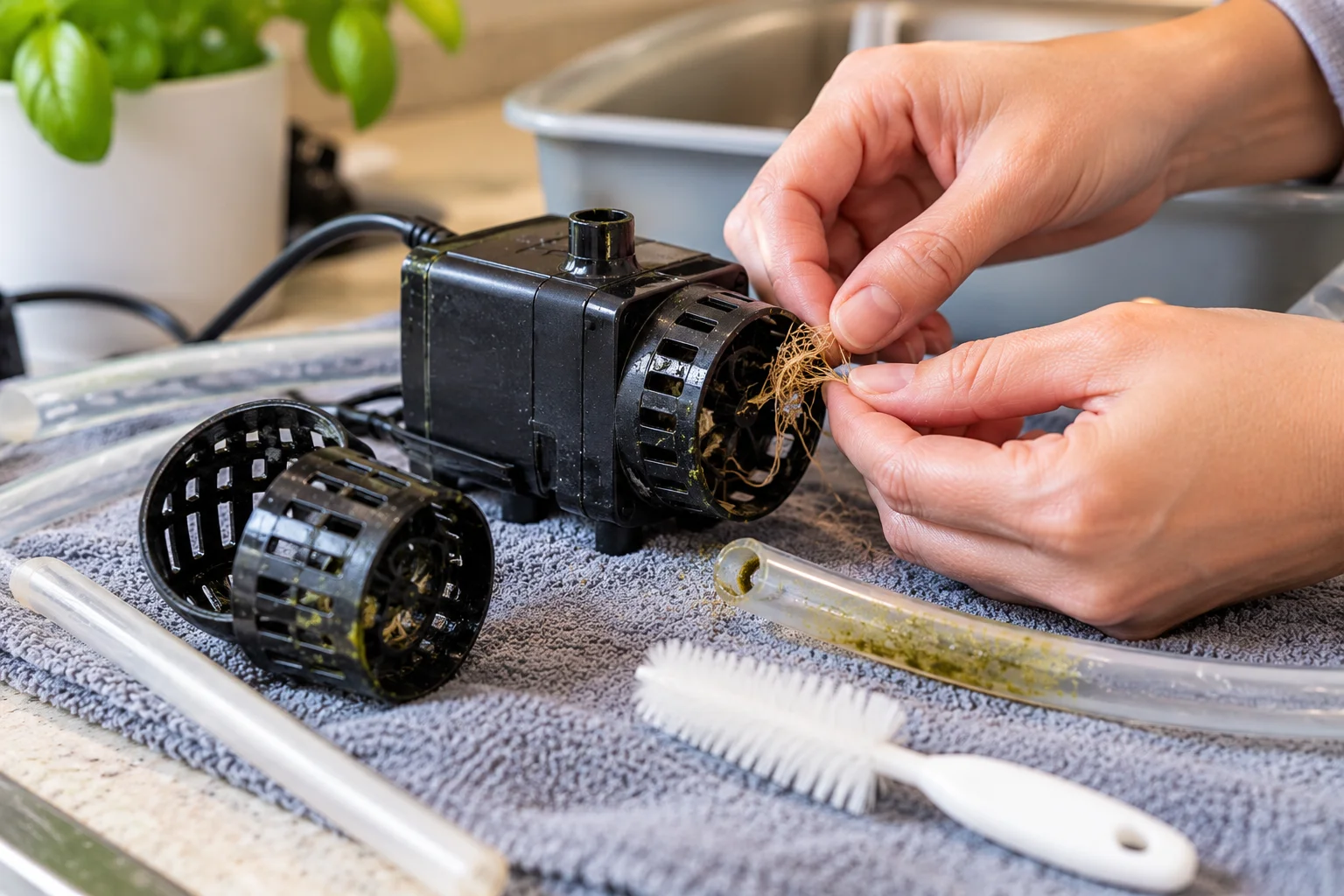
The University of Minnesota Extension hydroponics guide recommends removing accumulated plant debris or algae from NFT pump equipment, scrubbing appropriate exterior pump surfaces with dish soap and a brush, and rinsing away the soap. The guidance also identifies algae, plant debris, nutrient precipitation, and hard-water minerals as possible causes of clogged tubing or pump areas.
Inspect tubing for visible buildup or obstructions while the system is apart. Small lines can become clogged even when the reservoir itself appears relatively clean.
Do not force open or disassemble a pump unless the manufacturer provides instructions for doing so. Some compact hydroponic pumps are designed differently from pumps used in larger NFT systems.
Step 7: Sanitize Appropriate Components Between Growing Cycles
Sanitize appropriate water-contact and growing components after cleaning between growing cycles, using a product and procedure suitable for the system.
University of Minnesota Extension recommends cleaning and sanitizing hydroponic containers and associated parts between plantings. The Virginia Cooperative Extension hydroponics guidance similarly recommends cleaning and sanitizing growing channels and containers between crop rotations and using sanitizers labeled for their intended application at labeled rates.
Sanitizing should happen after visible debris, soap, and residue have been removed. Follow the sanitizer label for dilution or dose, contact time, personal protective equipment, and any required rinsing, flushing, or drying procedure.
Bleach is used in some Extension hydroponic sanitation procedures, but a bleach recipe should not automatically be applied to every countertop garden. Concentration, contact time, material compatibility, crop status, and the required finishing procedure can differ by application.
Never mix bleach with ammonia, acids such as vinegar, hydrogen peroxide, or other cleaning products. Follow the sanitizer label instead of combining household chemicals.
Can You Use Hydrogen Peroxide to Clean a Hydroponic System?
Hydrogen-peroxide-based sanitizers can be used for some hydroponic sanitation applications, but there is no single hydrogen peroxide recipe that should automatically be used in every home hydroponic garden.
The University of Minnesota Extension small-scale hydroponics guide lists hydrogen-peroxide-based sanitizers as one option for sanitizing an NFT reservoir and lines after cleaning. Its guidance specifies that the product label should indicate suitability for food-contact surfaces and instructs growers to follow the label for dosing, personal protective equipment, contact time, and flushing requirements.
Hydrogen peroxide should therefore be treated as a sanitizer option for appropriate applications, not as a universal homemade cleaning solution. Check both the sanitizer label and hydroponic-system instructions before using a peroxide-based product.
Step 8: Finish the Sanitizing Process and Inspect the Components
Finish the sanitizing process exactly as directed by the sanitizer label because some procedures require rinsing or flushing while others require sanitized surfaces to air-dry without rinsing.
The University of Minnesota Extension sanitation guidance for hydroponic systems describes a general between-planting chlorine sanitation process in which surfaces are allowed to air-dry without rinsing. The same resource gives a specific NFT bleach procedure that requires a rinse cycle after treatment. Hydrogen-peroxide-based sanitizers are handled according to their individual labels, including any flushing instructions.
Soap and detergent used during the cleaning stage should be thoroughly rinsed away before sanitizing. What happens after sanitation depends on the sanitizer and procedure.
Inspect reservoir surfaces, tubing, pump intakes, net pots, trays, and other reusable parts before reassembly. Look for remaining buildup, obstructions, cracks, excessive wear, or components that may need replacement.
Step 9: Reassemble and Restart the Hydroponic System
Reassemble the hydroponic system according to the manufacturer’s instructions and check that the system operates normally before returning it to regular use.
Reinstall cleaned components in their correct positions and reconnect tubing, pumps, grow decks, or other removable parts as required.
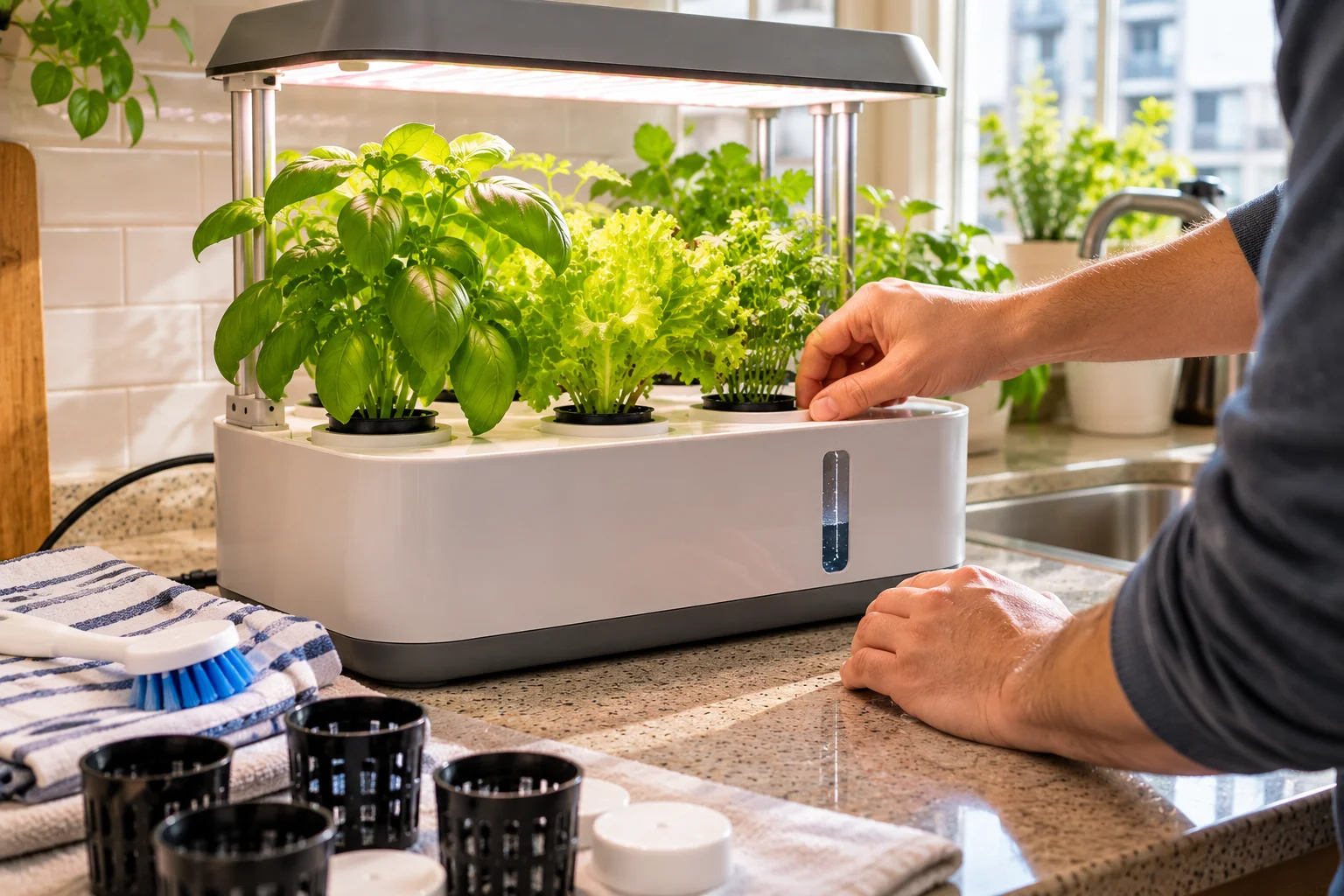
Refill the reservoir according to the system and nutrient instructions. Once the system is running, check for leaks and confirm that pumps, tubing, and other water-moving components are operating normally.
Nutrient concentrations, pH targets, and other growing adjustments are separate from the cleaning process. Our indoor hydroponic garden guide covers the broader basics of maintaining an indoor hydroponic garden without expanding this cleaning guide into general hydroponic management.
How to Clean Algae From a Hydroponic System
To clean algae from a hydroponic system, physically remove accessible algae, wash affected surfaces, sanitize appropriate components between crops, and reduce unnecessary light reaching the nutrient solution to help limit regrowth.
Algae can become more than a cosmetic problem. The University of Minnesota Extension hydroponics guide explains that excessive algae can contribute to clogged tubing and pump intakes and interfere with water movement through a hydroponic system.
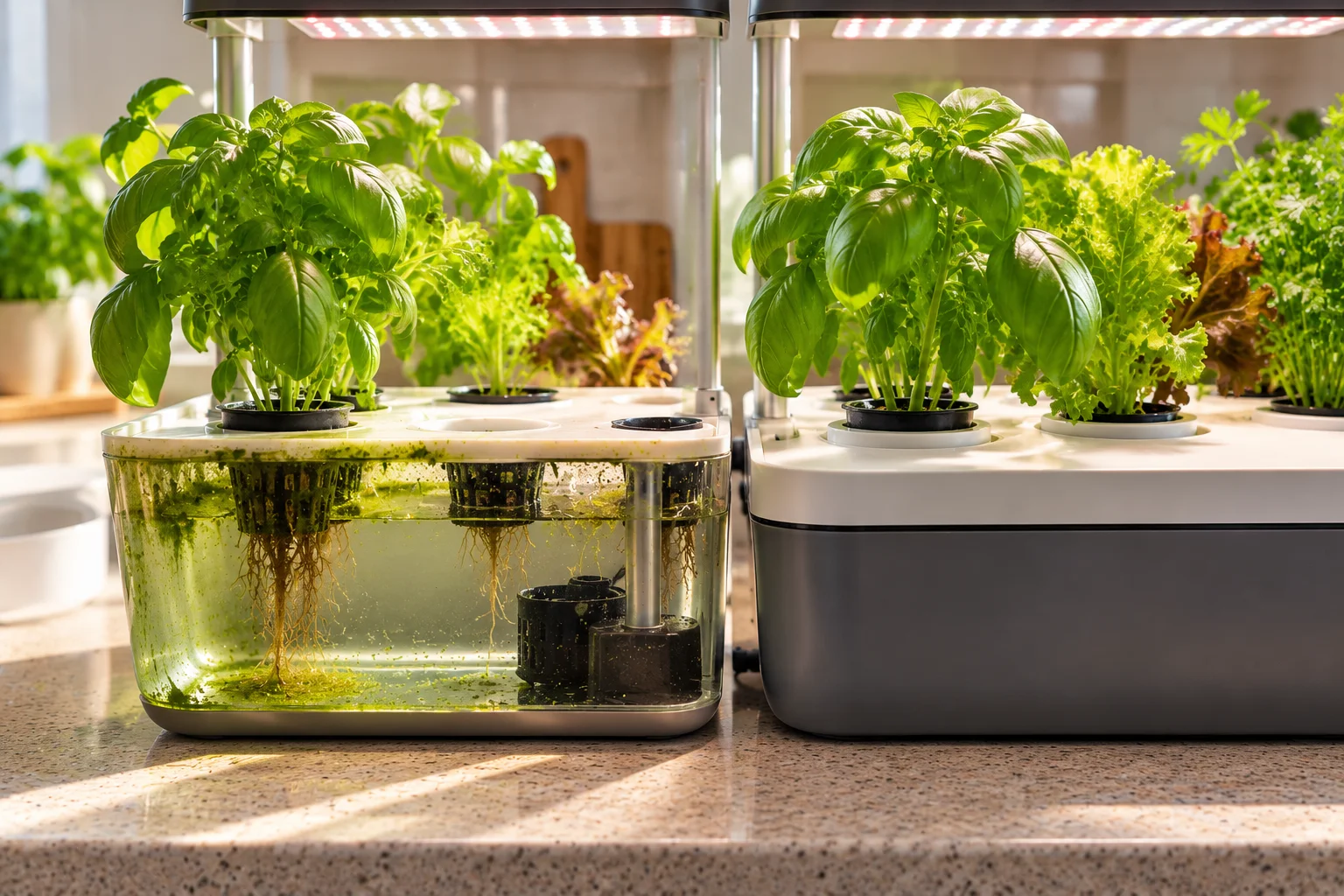
University of Minnesota Extension also recommends reducing light penetration into hydroponic growing areas and reservoirs and thoroughly cleaning growing areas with warm soapy water followed by appropriate sanitation between growing cycles.
The Oklahoma State University Extension guide to algae control recommends covering hydroponic tanks to restrict light from reaching the nutrient solution and sanitizing algae-contaminated surfaces between crops.
For a countertop garden, make sure reservoir covers, grow decks, net pots, and other original components are installed as intended. Avoid modifications that could interfere with ventilation, electrical equipment, plant growth, or the manufacturer’s design.
What Kills Algae in a Hydroponic System?
Existing algae can be physically removed during cleaning, and affected surfaces can be sanitized with an appropriate labeled product. Preventing unnecessary light from reaching the nutrient solution can also help reduce algae regrowth.
The University of Minnesota Extension and Oklahoma State University Extension guidance both support reducing light exposure to nutrient solution as an algae-management strategy. Their guidance also supports cleaning and sanitation of affected hydroponic surfaces rather than relying only on a chemical treatment.
Do not respond to visible algae by adding an arbitrary amount of bleach, hydrogen peroxide, or another sanitizer to a hydroponic system containing plants. Sanitizer use depends on the product label, application, crop status, system materials, and manufacturer instructions.
How to Keep a Hydroponic System Cleaner Between Deep Cleanings
Keeping light away from the nutrient solution, removing dead plant material promptly, and checking water-moving components regularly can reduce algae and debris buildup between full system cleanings.
These habits do not replace between-crop cleaning and sanitation. They simply make it easier to catch problems before buildup becomes severe.
Keep Unnecessary Light Out of the Nutrient Solution
Keeping unnecessary light from reaching the nutrient solution helps reduce algae growth.
The University of Minnesota Extension small-scale hydroponics guide recommends opaque materials and a reservoir lid to reduce light penetration in NFT systems. The Oklahoma State University Extension algae-control guide similarly recommends covering hydroponic tanks to prevent light from reaching the nutrient solution.
Use the covers and other light-blocking components provided with a consumer hydroponic garden as intended. Empty planting openings may also need the manufacturer’s supplied covers or another manufacturer-approved solution.
Remove Dead Plant Material Promptly
Removing dead or diseased plant material promptly helps keep organic debris from accumulating around a hydroponic growing area.
University of Minnesota Extension recommends good sanitation during active growth, including keeping the growing area clean and quickly removing plant debris or diseased plants.
Check around grow baskets, trays, reservoir openings, and other accessible surfaces when tending the plants. Removing a fallen leaf when you notice it is easier than dealing with decomposed plant material later.
Check Pumps, Tubing, and Water Flow
Regularly checking pumps, tubing, drain lines, and other water-moving components can reveal developing obstructions before they become larger problems.
The University of Minnesota Extension hydroponics guidance recommends checking NFT plumbing regularly and identifies algae, plant debris, precipitated nutrients, and hard-water minerals as possible sources of clogs.
For a small countertop system, the practical check may be as simple as noticing whether water is circulating normally and inspecting accessible pump and tubing areas during routine maintenance.
How to Clean a Hydroponic System in a Small Apartment
Cleaning a hydroponic system in a small apartment is easier when you create separate places for dirty components, washing, and clean or draining components before starting.
Protect nearby surfaces. Put towels or another washable barrier around the work area before opening the reservoir or moving wet components. A removed pump, tube, grow basket, or plant root can continue dripping after it leaves the system.
Keep cleaning water away from powered equipment. Follow the manufacturer’s shutdown and cleaning instructions, and do not soak, spray, or submerge electrical components unless they are specifically designed for that treatment.
Separate dirty and cleaned parts. Give cleaned components a protected place to drain or dry so they are not returned to the same dirty surface that held them before washing. The University of Vermont Extension hydroponic produce-safety guidance also emphasizes preventing cleaned and sanitized surfaces from being recontaminated.
Work in manageable stages. A small countertop garden may contain many individual pieces even though the complete unit occupies little space. Keeping one work area organized is usually easier than spreading wet components throughout the kitchen or bathroom.
Apartment gardeners do not need a commercial grow room or outdoor wash area to follow sound cleaning principles. The goal is to control water, keep clean and dirty components separated, protect household surfaces, and follow the cleaning requirements for the particular system.
If hydroponics is only one part of your indoor growing setup, our indoor apartment gardening guide covers other ways to grow plants successfully when outdoor space is limited.
Common Hydroponic Cleaning Mistakes
Several common hydroponic cleaning mistakes can make the process less effective or create unnecessary problems.
Sanitizing before cleaning is a mistake. Algae, plant debris, biofilm, residue, and other material should be physically removed before an appropriate sanitizer is applied. The University of Vermont Extension hydroponic sanitation guidance specifically recommends effectively cleaning surfaces before sanitizing them.
Using the same cleaning method on every component can damage equipment. A washable reservoir, net pot, pump, grow light, and electronic controller may each require different handling.
Improvising chemical mixtures can be dangerous. Follow sanitizer labels and never combine bleach with ammonia, acids such as vinegar, hydrogen peroxide, or other household cleaning products.
Ignoring pumps and tubing can leave buildup inside the system. The University of Minnesota Extension hydroponics guide identifies plant debris, algae, mineral buildup, and precipitated nutrients as materials that can obstruct hydroponic water-moving components.
Frequently Asked Questions
Can I Clean a Hydroponic System While Plants Are Still Growing?
A hydroponic system can receive routine cleaning while plants are growing, but a full between-crop cleaning provides better access to reservoirs, trays, pumps, tubing, and other components.
The University of Minnesota Extension small-scale hydroponics guide distinguishes between cleaning during an active NFT crop and cleaning between growing cycles. During active growth, its guidance recommends cleaning tanks and pumps between nutrient-solution changes, wiping tray surfaces when necessary, and promptly removing dead or diseased plant material. More thorough cleaning and sanitation are performed between crops.
Consumer countertop gardens vary, so check the system manual before removing plant decks, pumps, tubing, or rooted plants during an active growing cycle.
Do I Need to Sanitize My Hydroponic System Every Time I Clean It?
Routine cleaning during an active crop does not necessarily require the same sanitation process used between growing cycles.
University of Minnesota Extension recommends cleaning and sanitizing hydroponic containers and associated components between plantings, while its during-crop NFT maintenance instructions use a different cleaning procedure. The Virginia Cooperative Extension hydroponics guidance likewise recommends cleaning and sanitizing growing channels and containers between crop rotations.
For a home countertop garden, the appropriate sanitation schedule also depends on the system design, crop cycle, sanitizer label, and manufacturer’s maintenance instructions.
The Bottom Line
Cleaning a hydroponic system involves removing plant debris, washing the parts that can safely get wet, cleaning accessible pumps and tubing, sanitizing appropriate components between growing cycles, and completing the sanitation process according to the sanitizer label before reassembling the garden.
For apartment gardeners, a little preparation makes the same process much easier. Decide where dirty water will go, protect nearby surfaces, keep cleaning water away from electrical equipment, and give washed components a clean place to drain or dry.
Regular hydroponic cleaning will not prevent every growing problem, but it removes algae, plant debris, biofilm, mineral deposits, and other buildup that can accumulate in reservoirs and water-moving components. The University of Minnesota Extension small-scale hydroponics guidance supports cleaning and sanitizing hydroponic equipment between growing cycles as part of good system management.