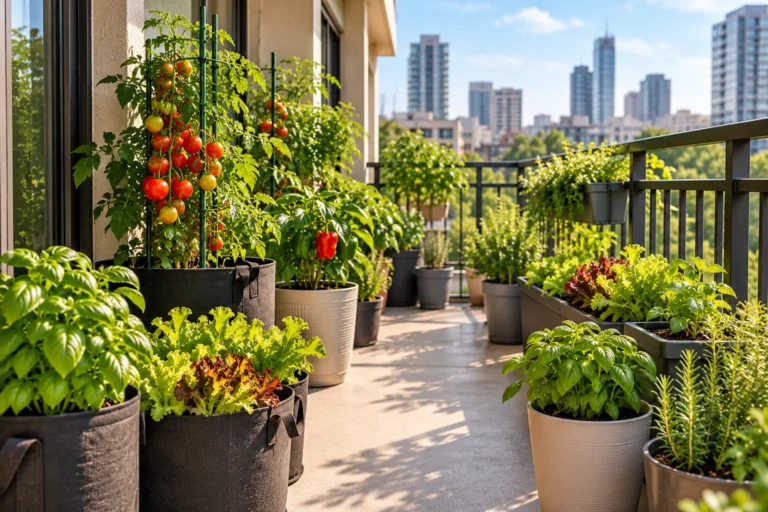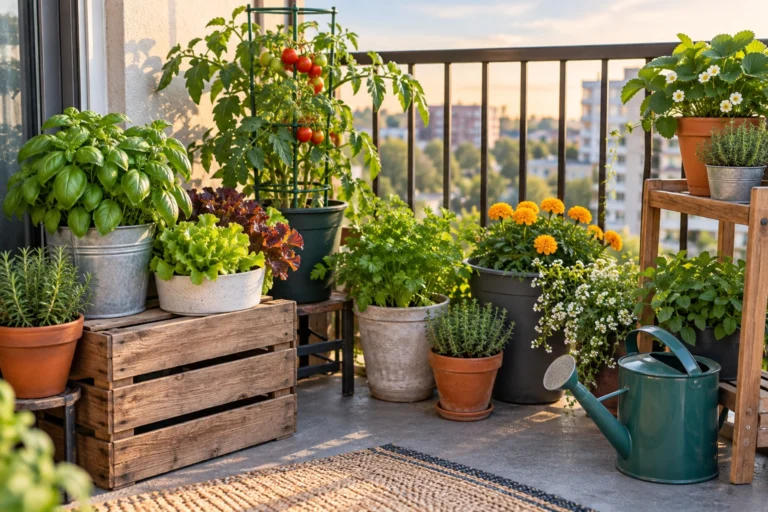
Best Vegetables for Small Containers: 10 Good Choices
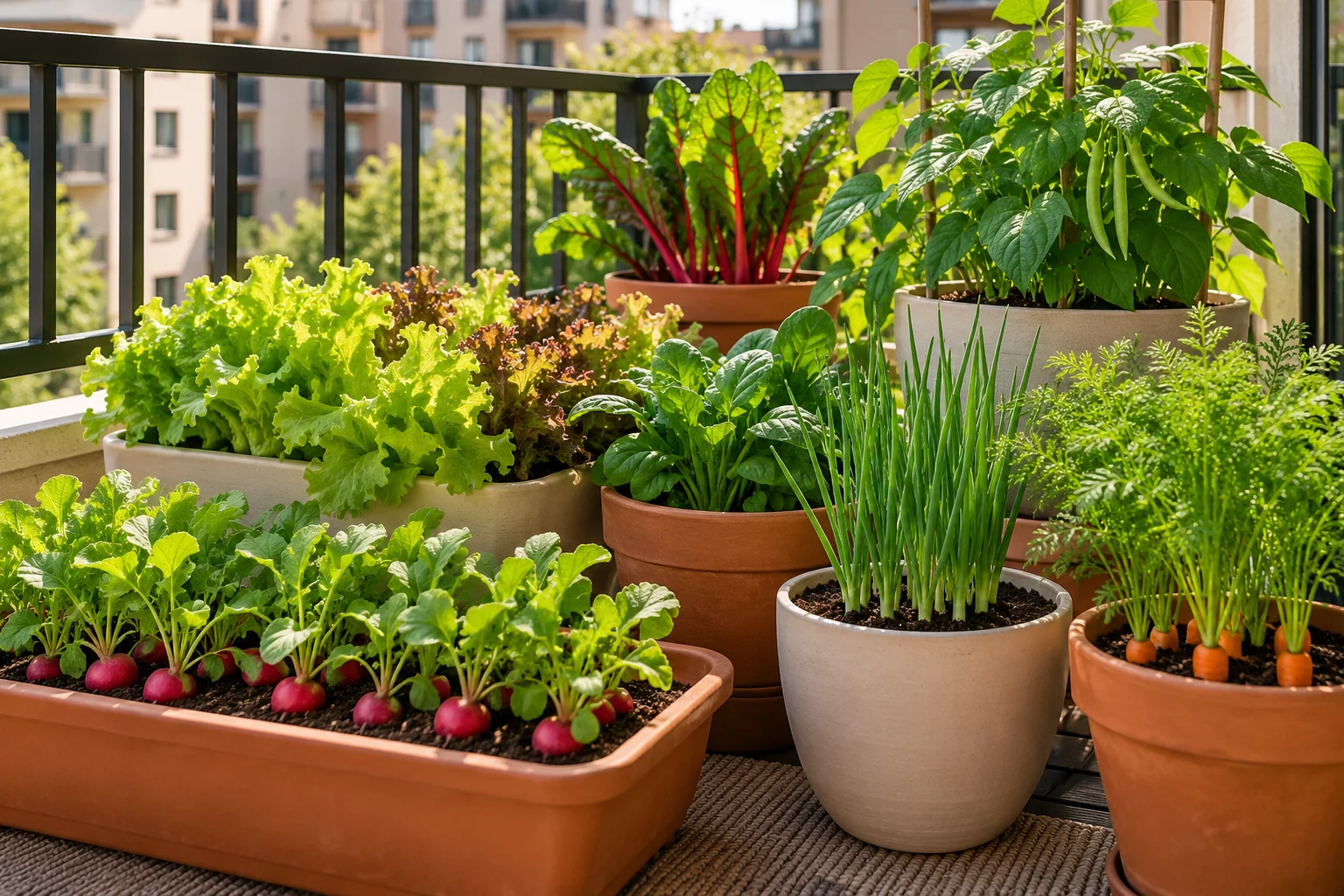
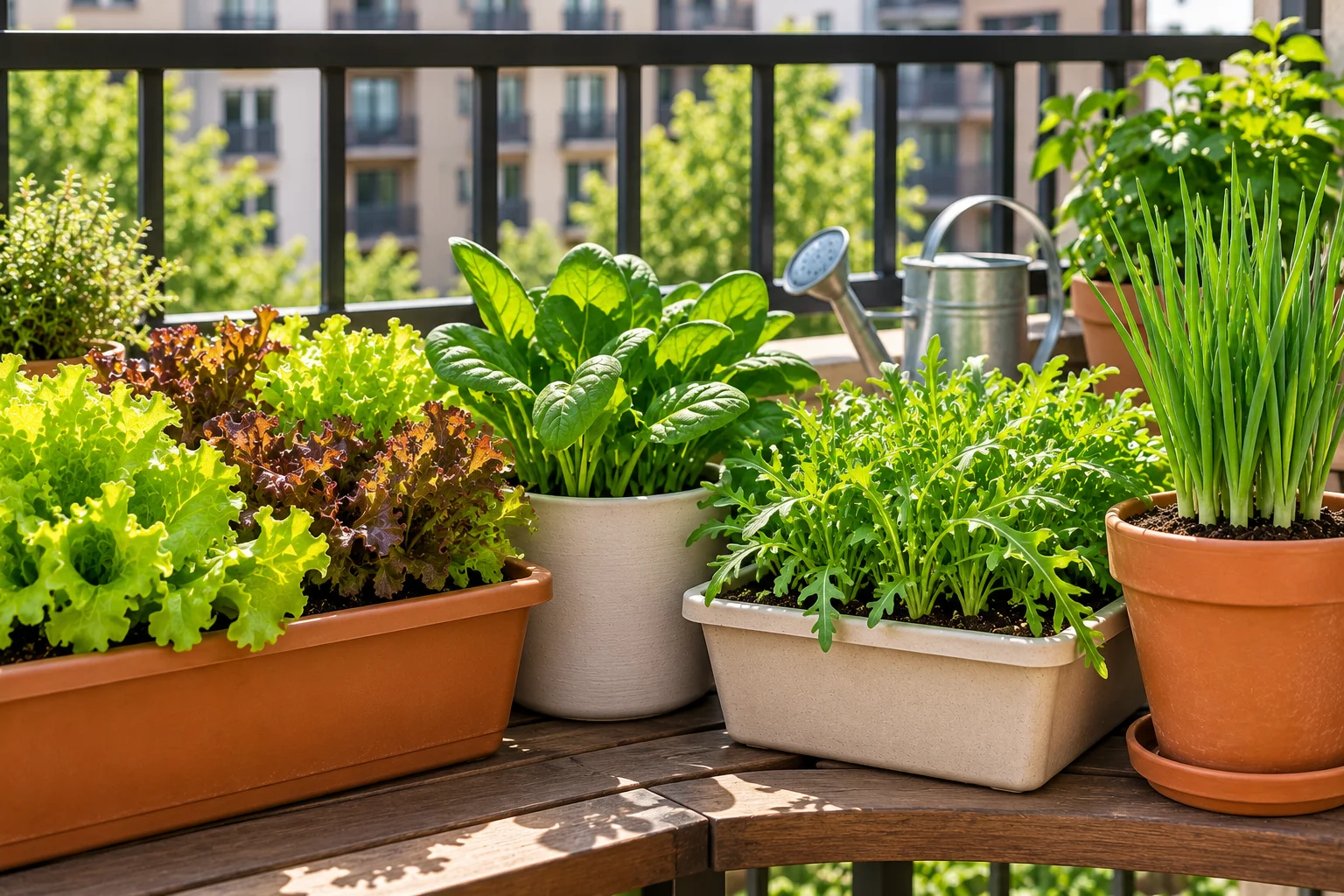
The best vegetables for small containers include radishes, leaf lettuce, spinach, arugula, scallions, beets, short-root carrots, Swiss chard, turnips, and bush beans. These vegetables can make better use of limited growing space than large fruiting crops that need more root volume.
A vegetable can grow well in a container without being a good choice for a small container. Small pots still need enough depth and growing-medium volume for healthy roots, so the goal is to choose the smallest practical container for each crop—not simply the smallest pot that fits your balcony, patio, or windowsill.
In This Guide
Quick Answer: Best Vegetables for Small Containers
The best vegetables for very limited container space are generally leafy greens, compact root vegetables, scallions, and other crops that do not need the root volume of large fruiting plants.
Container-size recommendations vary among Extension programs, vegetable varieties, and growing conditions. The figures below are examples from NC State Extension’s container-growing recommendations rather than universal minimums.
| Vegetable | Example Extension Guidance | Why It Works |
|---|---|---|
| Radishes | 2 qt; 4–6 in. deep | Compact root crop with modest space requirements |
| Leaf lettuce | 2 qt; 6–8 in. deep | Makes good use of relatively shallow growing space |
| Spinach | 1 gal; 4–6 in. deep | Compact leafy growth |
| Arugula | Suitable for shallow salad-style containers | Compact leafy crop |
| Scallions | 2 qt; about 6 in. deep | Narrow, upright growth |
| Beets | 2 qt; about 8 in. deep | Compact root crop |
| Short carrots | 2 qt; about 10 in. deep | Short varieties fit limited space better than long carrots |
| Swiss chard | 2 qt; about 8 in. deep | Compact footprint with repeat leaf harvests |
| Turnips | Small-pot crop with adequate root depth | Compact root crop |
| Bush beans | About 2 gal; 8–10 in. deep | Bush habit avoids long vines |
University of Maryland Extension’s container vegetable guidance provides another useful reference and shows why container recommendations should not be treated as universal. Maryland lists minimum volumes of 1 pint for radishes, ½ gallon for leaf lettuce and beets, and 2 gallons for bush beans.
What Makes a Vegetable Good for a Small Container?
The best vegetables for small containers have roots and mature top growth that can fit limited growing-medium volume without being severely restricted. Compact leafy vegetables, small root crops, upright scallions, and bush-type vegetables generally fit small containers better than large or sprawling plants.
Container size should match the vegetable’s mature growth. NC State Extension explains that restricting plant roots can decrease root and shoot growth, while University of Maryland Extension recommends considering both container depth and total volume rather than squeezing large plants into undersized pots.
A small container also does not have to be narrow. Leafy greens and radishes can make efficient use of a broad, relatively shallow growing area, while carrots require more vertical root depth. Our guide to how deep containers need to be for vegetables explains crop-by-crop depth requirements in more detail.
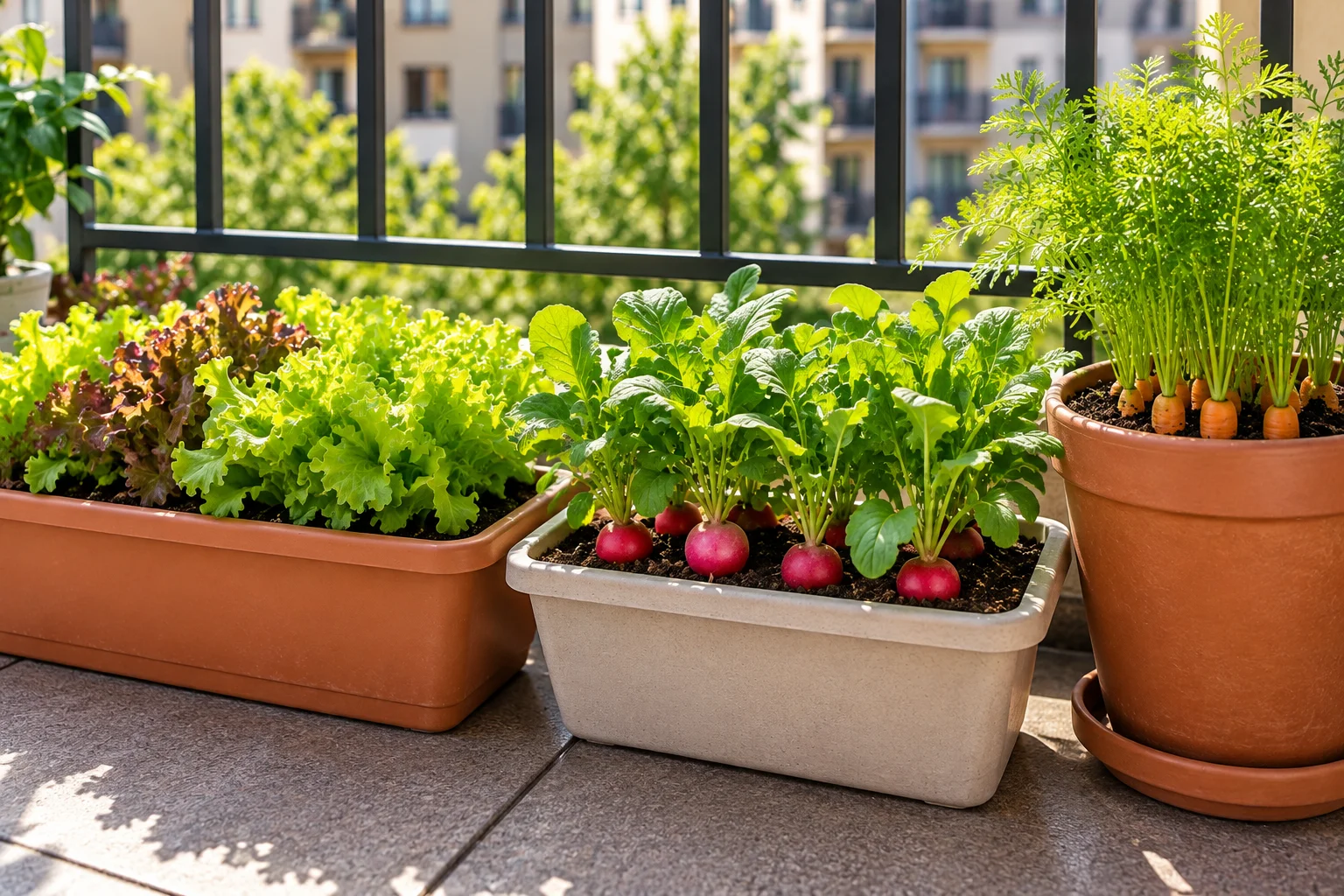
Compact varieties can help when growing space is limited. University of Maryland Extension recommends looking for bush, dwarf, or compact vegetable varieties because these varieties can often use smaller containers than their full-size counterparts.
10 Best Vegetables for Small Containers
Radishes
Radishes are one of the strongest vegetables for very small containers because they require relatively little root volume compared with many vegetable crops. The NC State Extension vegetable container-size chart lists radishes at a 2-quart container with 4 to 6 inches of minimum depth, while Maryland’s guidance lists a smaller minimum volume of 1 pint.
A broad container can hold several radishes when the plants receive adequate final spacing. Radishes also need less vertical growing space than longer root crops such as carrots, making them particularly useful when container depth is limited.
Leaf Lettuce
Leaf lettuce works especially well in small containers because it can use relatively shallow growing space without needing room for a large fruiting plant. NC State lists lettuce at a 2-quart container with 6 to 8 inches of minimum depth, while University of Maryland Extension lists ½ gallon as the minimum container volume for leaf lettuce.
Wide, shallow growing areas can be especially useful for lettuce and other salad greens. The University of Maryland Salad Table and Salad Box system demonstrates how salad greens can be grown in shallow containers with a relatively large surface area.
Spinach
Spinach is a good small-container vegetable because the plant stays compact and can grow with less potting-mix depth than many fruiting vegetables. The NC State Extension container chart lists spinach at a 1-gallon container with 4 to 6 inches of minimum depth.
Spinach also makes efficient use of limited growing space because gardeners harvest the leaves rather than supporting a large fruiting plant. That makes spinach particularly useful in a small collection of balcony or patio containers.
Arugula
Arugula works well in small containers because it is a compact leafy vegetable that can grow in shallow salad-style growing systems. University of Maryland Extension includes arugula among the crops suitable for Salad Tables and Salad Boxes, along with lettuce, spinach, radishes, Swiss chard, and other compact crops.
A precise universal gallon minimum for arugula is not established by the Extension guidance used for this article. Choose a container with adequate growing-medium depth and follow the seed packet or cultivar guidance for final spacing instead of relying on an arbitrary pot-size rule.
Scallions
Scallions are especially well suited to small containers because their narrow, upright growth uses relatively little horizontal space. NC State Extension recommends about 6 inches of minimum container depth for scallions and lists a 2-quart minimum container size.
Scallions also avoid the broad canopy, staking, and support requirements associated with many fruiting vegetables. Several scallions can therefore use a small growing area efficiently when they receive adequate final spacing.
Beets
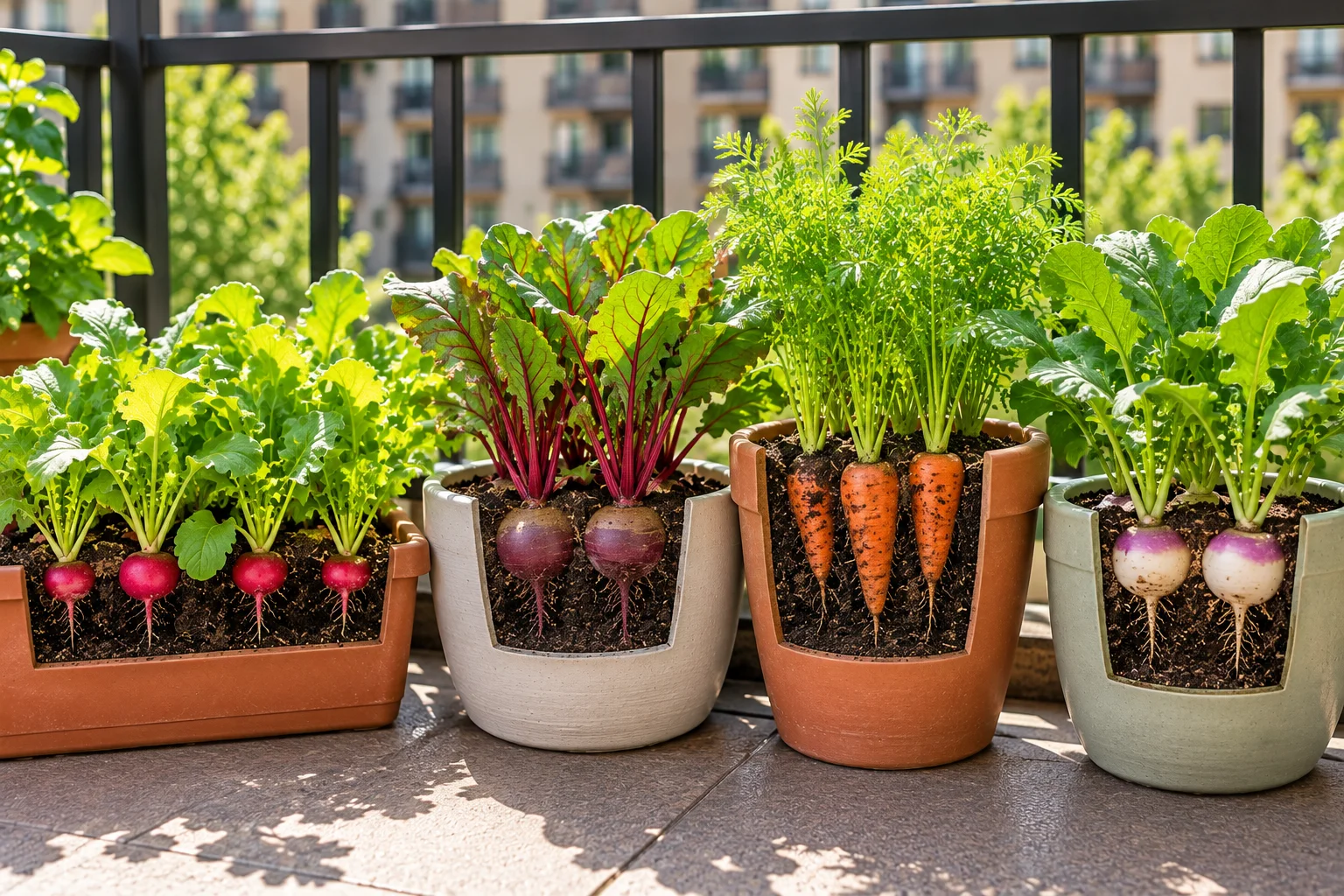
Beets can grow in relatively small containers when the pot provides enough depth and spacing for the roots to develop. NC State lists beets at a 2-quart container with about 8 inches of minimum depth, while University of Maryland Extension lists a ½-gallon minimum container volume for beets.
Beets provide another advantage in a small edible garden because both the roots and leafy tops are edible. Give the plants their final spacing instead of leaving every closely packed seedling in place.
Short or Compact Carrots
Short-root carrot varieties are better suited to small containers than long carrots because the container must still accommodate the mature root. The NC State Extension container recommendations list carrots at a relatively small 2-quart container but recommend about 10 inches of minimum depth.
Carrots demonstrate why container depth and total volume should be considered separately. A carrot’s top growth may occupy little horizontal space, but a shallow pot can still be unsuitable if the mature root needs more vertical room.
Swiss Chard
Swiss chard can make good use of limited container space because gardeners can harvest outer leaves while allowing the plant to continue growing. NC State lists Swiss chard at a 2-quart container with about 8 inches of minimum depth, while University of Maryland Extension lists a 2-gallon minimum container volume for Swiss chard.
The difference between those recommendations is another reason to treat container-size figures as practical starting points rather than universal rules. Repeat harvesting can make Swiss chard particularly useful where there is room for only a few vegetable containers.
Turnips
Turnips can work well in small containers when the pot provides enough room for the developing roots. Turnips have a compact growth habit compared with many large fruiting vegetables, making them a useful root-crop option for limited spaces.
Container depth still matters because the edible root develops below the growing-medium surface. Give turnips adequate final spacing rather than judging container capacity by how many small seedlings initially fit in the pot.
Bush Beans
Bush beans are better suited to moderately small containers than truly tiny pots. Both NC State Extension and University of Maryland Extension list approximately 2 gallons as a minimum container size for beans or bush beans, while NC State recommends 8 to 10 inches of minimum depth.
Bush beans need more root volume than radishes, lettuce, scallions, and several other vegetables on this list. Their advantage is growth habit: bush types stay more compact than long climbing vines and can be easier to fit into a limited-space container garden.
Which Vegetables Grow in the Smallest Containers?
Radishes, leaf lettuce, spinach, scallions, and beets are among the strongest choices when container size is especially limited. The NC State Extension container-size recommendations give these vegetables relatively modest container requirements compared with crops such as tomatoes and other larger plants.
Container depth can still be the limiting factor. A small-volume container may work for a shallow-rooted crop while being too short for a vegetable with a deeper root system.
Are Small Containers Always Better for Small-Space Gardening?
Small containers save room, but larger containers are often easier to manage because they provide more root space and dry out more slowly. NC State Extension notes that larger containers do not dry out as quickly and require less frequent watering. University of Maryland Extension also identifies container size as one factor affecting how quickly potting mix dries.
The best approach is to choose the smallest practical container that comfortably meets the vegetable’s mature requirements—not the smallest pot the vegetable can possibly survive in.
Container size is also one factor that changes how often to water container vegetables, along with heat, sunlight, wind, plant size, and potting mix.
Vegetables That Usually Need Larger Containers
Standard tomatoes, peppers, eggplant, cucumbers, squash, and other large fruiting vegetables generally need more growing space than the strongest small-container choices. A vegetable can be well suited to container gardening without being well suited to a small container.
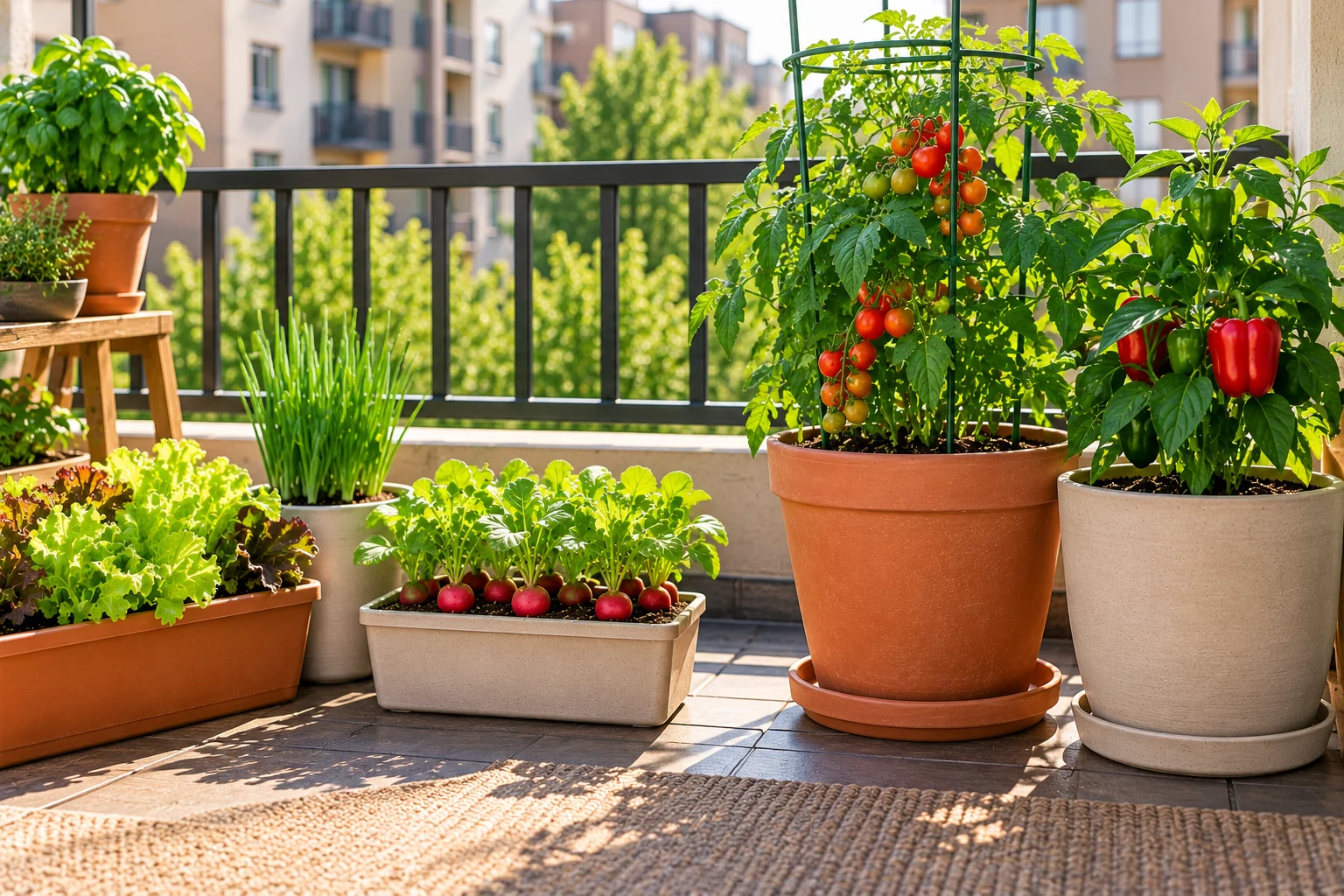
The University of Maryland Extension minimum container-size table lists 5 gallons for standard tomatoes, peppers, eggplant, and cucumbers and 10 gallons for summer squash. Those volumes are substantially larger than Maryland’s recommendations for radishes, leaf lettuce, and beets.
Extension recommendations are not identical. The NC State Extension vegetable container chart, for example, lists 2 gallons for peppers and squash. Differences between Extension recommendations reinforce why container-size figures should be treated as practical guidance rather than universal measurements.
Can You Grow Tomatoes in Small Containers?
Some compact cherry, dwarf, and bush tomatoes can grow in smaller containers than full-size tomatoes, but tomatoes generally need more root space than leafy greens and small root vegetables. University of Maryland Extension notes that bush, dwarf, and compact varieties can be grown in smaller containers than their full-size counterparts.
More root space can still improve tomato growth and production. University of Maryland Extension notes that indeterminate tomatoes can be grown in smaller containers but can grow larger and produce more fruit as container size increases.
For gardeners whose main limitation is very small pots, radishes, lettuce, spinach, scallions, and similar compact crops are usually more natural starting points than standard tomato plants.
How to Choose a Container for Small Vegetables
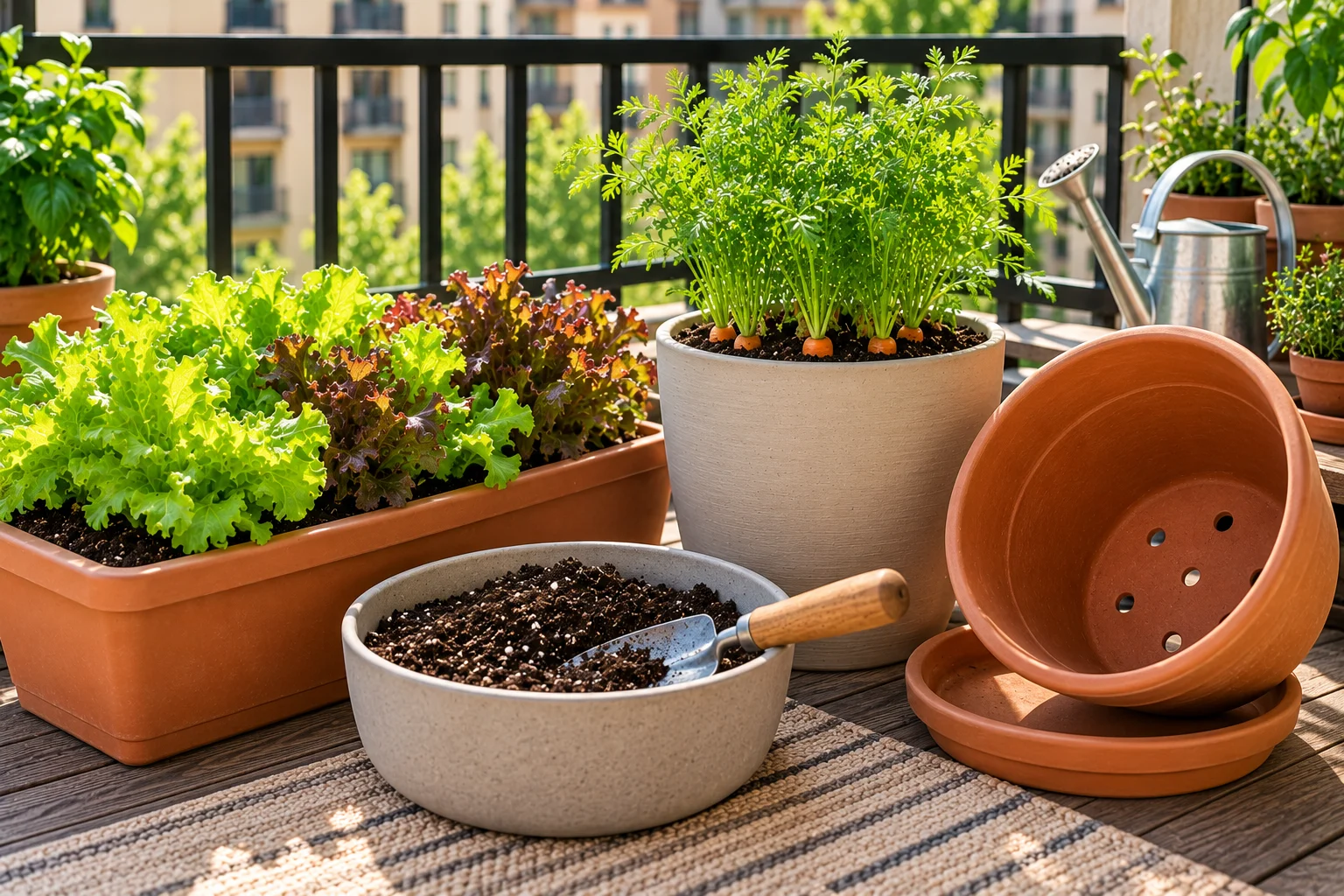
A container for vegetables needs enough depth, growing-medium volume, and drainage for the mature crop. The fact that a young seedling fits inside a pot does not mean the container will still be adequate when the vegetable matures.
Match the Container to the Mature Vegetable
Choose a vegetable container based on the mature plant rather than the size of the seedling at planting time. NC State Extension explains how restricted root growth can reduce plant growth, flowering, and fruiting, making mature plant size an important consideration before planting.
Our apartment container gardening guide covers the broader process of choosing container sizes, materials, and setups for limited spaces.
Consider Both Depth and Volume
Container depth and total volume serve different purposes, so both measurements matter when choosing a pot. NC State recommends considering both measurements and notes that shallow-rooted vegetables such as lettuce, radishes, and scallions can use less potting-mix depth than carrots.
Container roots also depend completely on the growing medium inside the pot. A suitable potting mix for container vegetables should balance moisture retention with drainage and root-zone aeration.
Make Sure the Container Drains
Vegetable containers need a reliable way for excess water to leave the root zone. University of Maryland Extension recommends adequate drainage holes or slits in vegetable containers and explains that adding rocks, gravel, or broken pot pieces to the bottom does not improve drainage.
Gardeners considering plant pots without drainage holes should understand the alternatives before planting vegetables directly into a sealed pot.
How Many Vegetables Can You Grow in One Small Container?
The number of vegetables that can grow in one small container depends on the crop’s mature spacing, root requirements, and the usable growing area of the pot. A container that holds several radishes or scallions may have enough room for only one larger vegetable.
Seedling size is a poor guide to final container capacity because young plants have not reached their mature spread or root size. University of Maryland Extension warns that overcrowded vegetables compete for light, moisture, nutrients, and growing space.
Use final spacing when deciding how many vegetables you can plant in one container.
FAQs About Vegetables for Small Containers
What vegetables can grow in a 6-inch-deep container?
Radishes, spinach, and scallions are among the vegetables that can use approximately 6 inches of growing-medium depth. The NC State Extension container-depth chart lists 4 to 6 inches for radishes and spinach and 6 inches for scallions, while lettuce is listed at 6 to 8 inches.
A 6-inch-deep pot is not appropriate for every compact vegetable. Carrots, for example, need greater root depth even though their top growth does not occupy much horizontal space.
What vegetables grow well in 1-gallon pots?
Spinach and several other compact vegetables can grow in containers around 1 gallon or smaller according to some Extension recommendations. NC State lists spinach at 1 gallon and radishes, lettuce, scallions, beets, carrots, and Swiss chard at 2 quarts.
The vegetable’s depth requirement still matters. A 1-gallon container can have different dimensions, so volume alone does not determine whether a pot is appropriate.
Do vegetables grow better in deep or wide containers?
Vegetables do not universally grow better in deep or wide containers because container shape should match the crop’s root system and mature growth. NC State Extension’s container guidance shows that carrots require more vertical root depth than shallow-rooted vegetables such as lettuce, radishes, and scallions.
Total growing-medium volume matters along with shape, especially as plants mature.
What Are Easy Vegetables to Grow in Small Containers?
Radishes and leaf lettuce are two beginner-friendly vegetables for small containers because both have modest container requirements and do not need stakes or trellises. Spinach and scallions are also strong options when available container space is limited.
The easiest vegetable still depends on the sunlight, season, temperature, and growing conditions where the container will be placed.
Bottom Line
The best vegetables for small containers are crops whose mature roots and top growth can make productive use of limited growing-medium volume. Radishes, leaf lettuce, spinach, arugula, scallions, beets, short-root carrots, Swiss chard, turnips, and bush beans are all useful options, although their container requirements are not identical.
Choose the smallest practical container that still provides enough root space for the vegetable rather than choosing the smallest pot that fits the available space. Once the vegetables and pots are selected, a container vegetable garden layout can help arrange the containers around sunlight, mature plant size, watering access, and available room.
For the broader process of growing vegetables in a limited space, the apartment vegetable gardening guide covers crop selection, containers, sunlight, watering, feeding, support, and ongoing care.