How to Water Plants While Away: A Vacation Watering Guide
Leaving town does not automatically mean every plant needs a complicated watering system. Some established houseplants may be fine for a short trip with normal care before you leave, while a small container on a hot apartment balcony may dry out much faster.
The best way to water plants while away is to start with how each plant normally uses water. Plant type, container size, potting mix, light, temperature, humidity, and whether the plant is indoors or outside all affect how quickly moisture is lost.
Before choosing a vacation-watering method, look at the plant’s usual watering needs and match the solution to the length of your trip.
In This Guide
Before You Leave, Figure Out How Quickly Your Plants Use Water
Vacation watering starts before you pack your bags.
A plant that normally needs attention every few days requires a different plan from one that routinely goes much longer between waterings. Instead of giving every container extra water just because you are leaving, check the plant and growing medium first.
Check the Potting Mix Before Watering
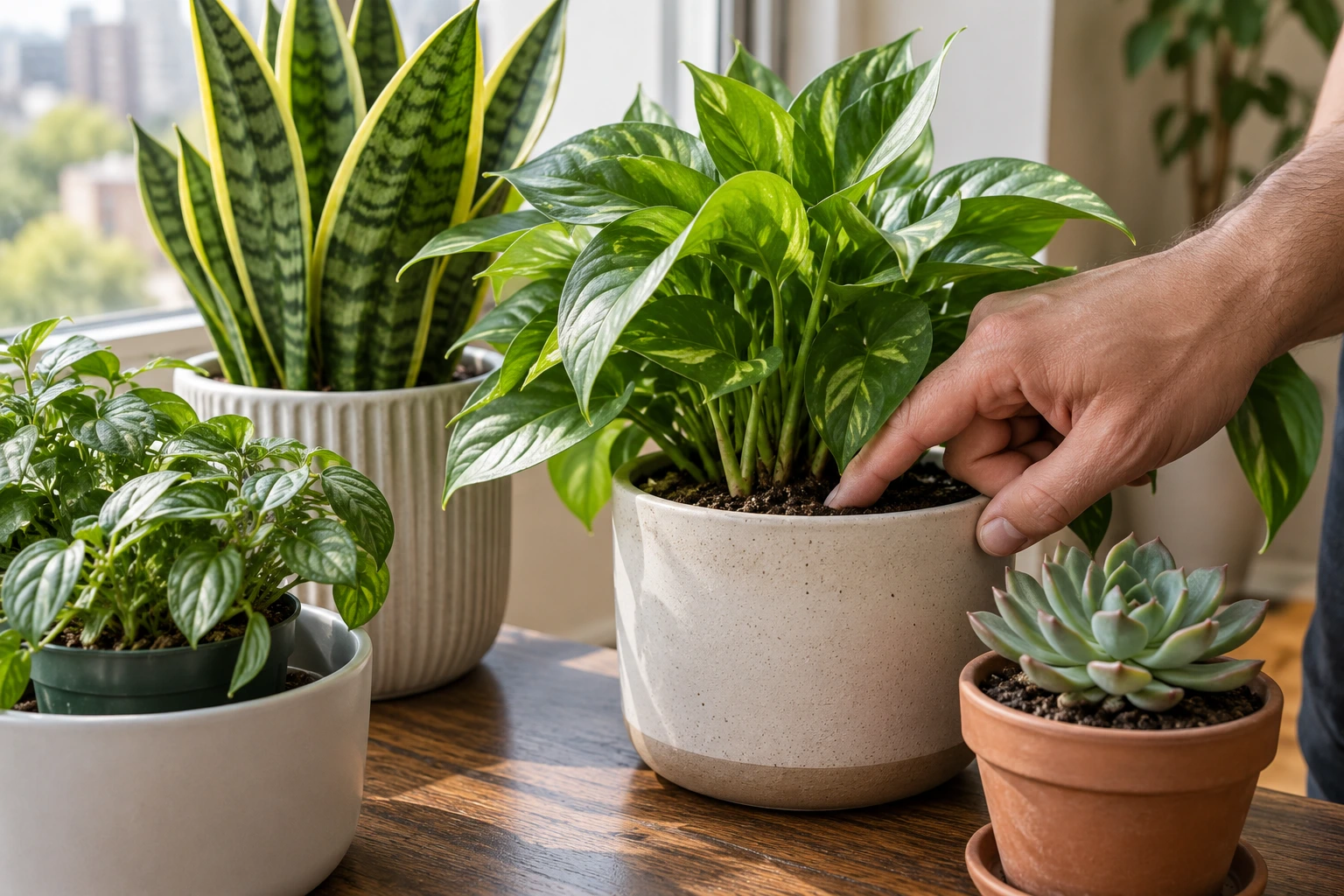
Check the potting mix itself rather than relying only on the calendar. For many houseplants, feeling the mix below the surface can help you judge whether watering is actually needed.
The University of Maryland Extension recommends watering indoor plants according to their needs rather than following a rigid schedule.
If the plant needs water, thoroughly moisten the growing medium and allow excess water to drain before returning the pot to its usual location.
Consider Container Size and Material
Two plants with similar water needs can dry at very different rates when they are growing in different containers.
Smaller pots hold less growing medium and may dry more quickly. Unglazed terracotta also allows moisture to evaporate through the container walls, while glazed ceramic and plastic containers lose less moisture through the pot itself.
Virginia Cooperative Extension explains these differences in its guide to watering container houseplants.
Before leaving, pay closer attention to plants growing in:
- Small containers
- Unglazed terracotta pots
- Warm, sunny locations
- Containers holding large or thirsty plants
Those plants may need a more dependable vacation-watering plan.
Consider Light, Temperature, and Humidity
Growing conditions also affect how quickly a container dries.
A plant near a warm, sunny window may lose moisture more quickly than the same plant farther from direct sun. Temperature, humidity, and light all influence plant water use.
If you are still learning how these conditions affect your plants, our indoor apartment gardening guide explains the basics.
Plan around the conditions your plants actually experience rather than only counting the number of days you will be gone.
How Long Will You Be Away?
The longer you are gone, the more important reliability becomes.
These time ranges are planning categories, not guarantees. They do not predict exactly how long a particular plant can safely go without attention.
| Time Away | What to Consider |
|---|---|
| 1–3 days | Some established plants may need only normal care before you leave |
| Several days to about a week | Check normal water use and consider simple moisture-conserving or reservoir methods where appropriate |
| 1–2 weeks | A tested self-watering, wicking, or caretaker arrangement may become more useful |
| Several weeks or longer | Reliable automated watering or human monitoring becomes increasingly important |
A succulent in a large container may handle a short trip very differently from basil growing in a small sunny pot.
Which Vacation Watering Method Fits Your Situation?
Before choosing a method, use this quick guide as a starting point.
| Situation | Good Place to Start |
|---|---|
| Short trip and plant normally dries slowly | Normal pre-trip care may be enough |
| One or two moisture-loving houseplants | Self-watering container or wick system |
| Several potted plants | Tested reservoir or automatic system |
| Hot balcony or patio containers | More reliable watering or a caretaker |
| Drought-tolerant plants | Avoid unnecessary continuous moisture |
| Several-week trip | Automatic watering or human monitoring |
Ways to Water Plants While Away
Once you understand your plants’ normal water needs, choose the method that best fits the trip.
1. Water Thoroughly Before You Leave — If the Plant Needs It
For many plants, the first step is simply watering correctly before departure.
If the growing medium is ready for water, moisten it thoroughly so the entire root zone is hydrated, then allow excess water to drain.
Do not repeatedly soak a plant simply because you are leaving town. More water is not always safer, especially for plants that prefer the growing medium to dry somewhat between waterings.
For ordinary pots, empty standing water from drainage saucers rather than leaving the container sitting in water. Maryland Extension specifically advises allowing excess water to drain and not leaving houseplants standing in drainage water.
2. Temporarily Move Suitable Houseplants Away From Hot Direct Sun
A warm window with strong direct sunlight can increase water loss.
UF/IFAS recommends moving suitable houseplants away from warm windows and intense direct sunlight while you are away.
That does not mean putting every plant in a dark room. Keep it in a location that still provides appropriate light while reducing excessive heat where practical.
After you return, move light-loving plants back to their usual growing location.
3. Group Compatible Houseplants Together
Grouping houseplants can create a slightly more humid microclimate around their leaves.
Virginia Cooperative Extension notes that grouping plants can help increase local humidity and reduce moisture loss through transpiration.
Group plants with similar light and moisture needs rather than moving everything into the same location.
This can help slow moisture loss, but it does not replace watering.
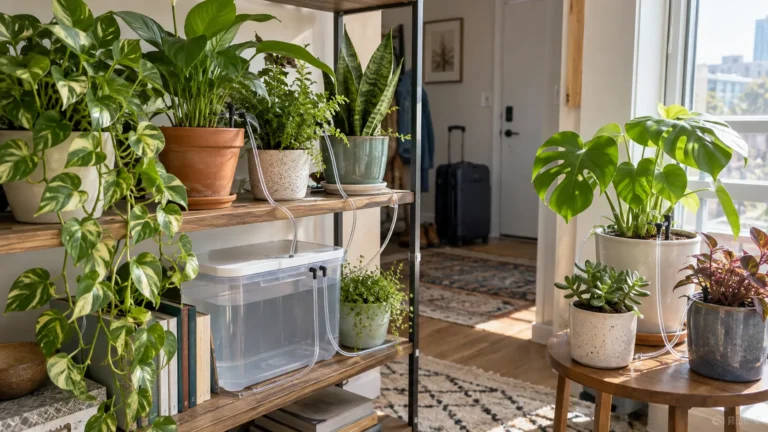
4. Use a Self-Watering Container
Self-watering containers usually have a reservoir below the growing medium. Water is drawn upward into the root zone as the plant uses moisture.
Virginia Cooperative Extension notes that self-watering containers can work well for many houseplants and can be useful for people who travel.
They are not a good match for every plant.
Plants that prefer drier root conditions may struggle if the growing medium stays continuously moist. Before moving a plant into this type of container, make sure the moisture pattern fits the plant’s normal needs.
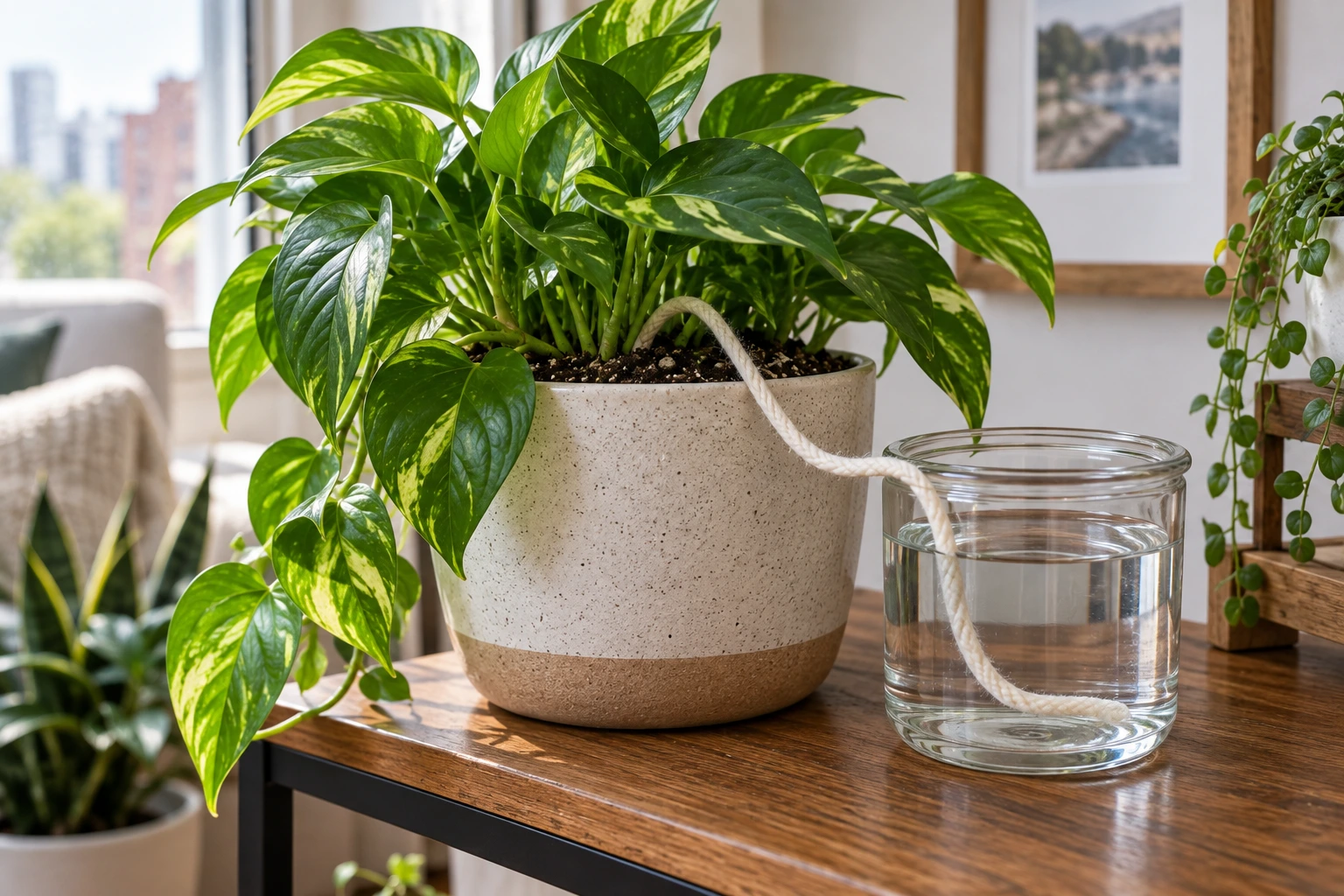
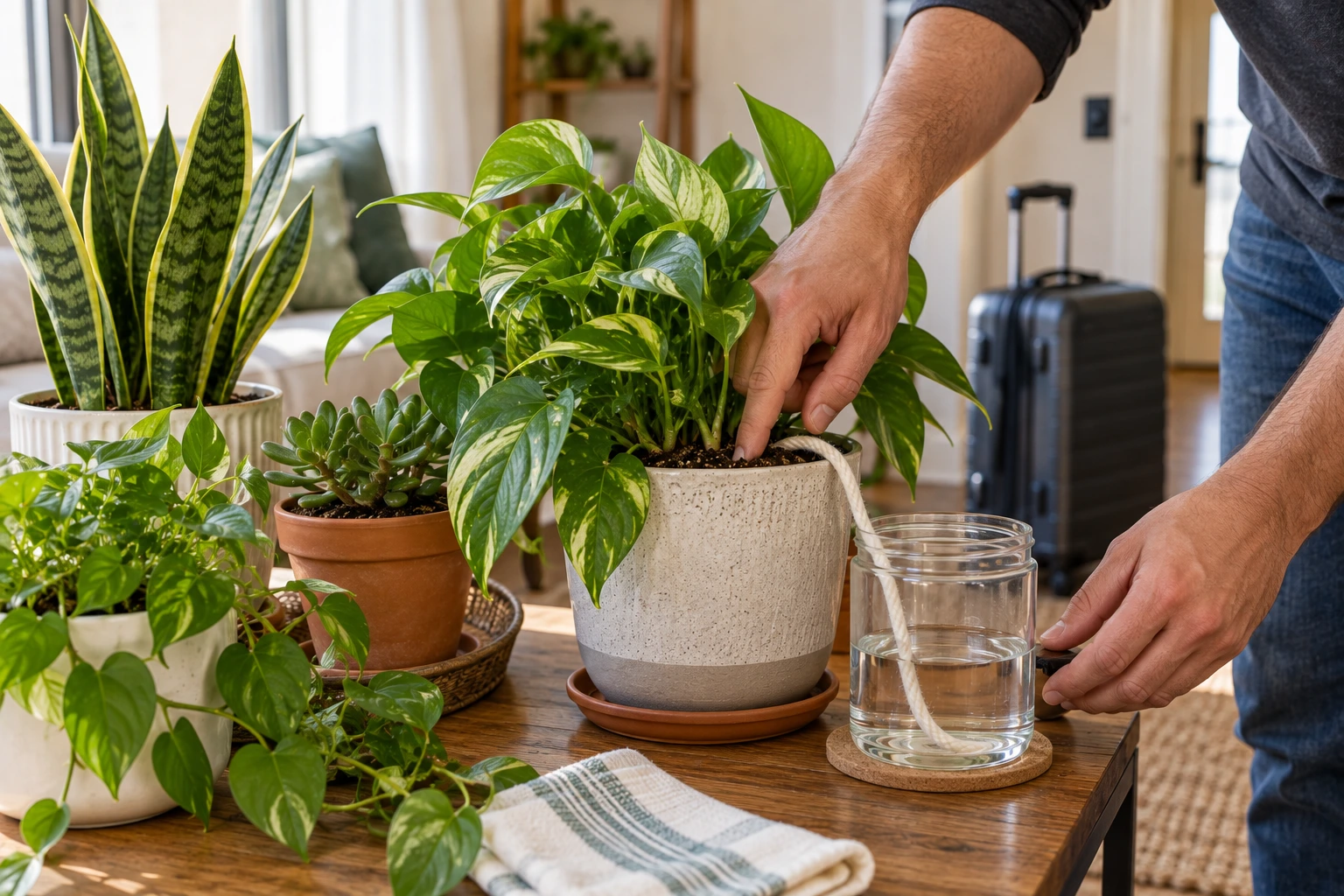
5. Set Up a Wick-and-Reservoir System
A wick system uses absorbent material to move water from a separate reservoir into the potting mix.
One end of the wick sits in the water source while the other remains in contact with the growing medium. UF/IFAS includes self-watering wicks among its vacation-care options for houseplants.
The important part is testing the setup ahead of time.
Watch the plant for several days before leaving. Make sure the wick stays in place and that the potting mix does not become excessively wet.
6. Use a Slow-Release Watering Device
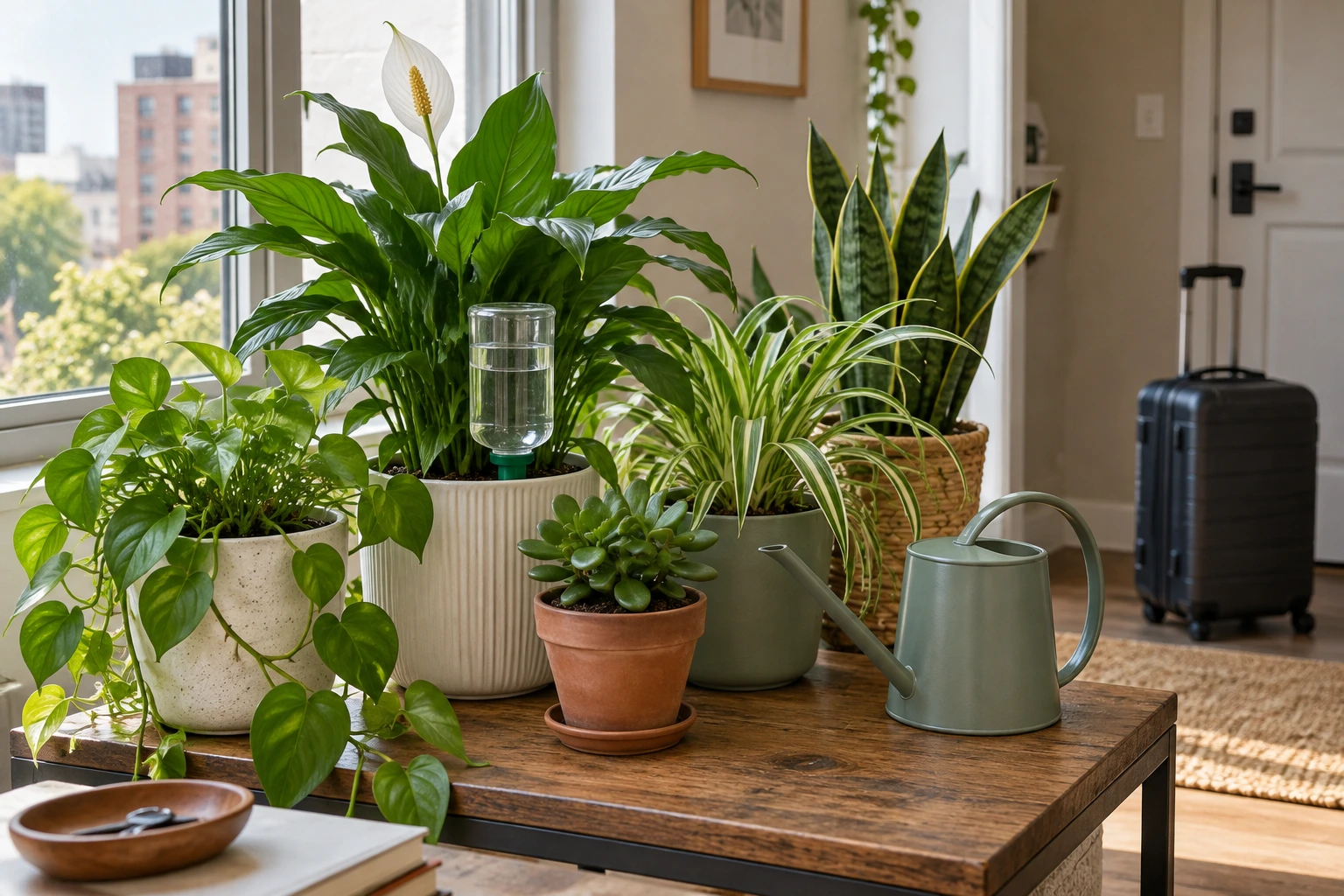
Watering globes, inverted bottle reservoirs, and similar gravity-fed devices can slowly supply water to a container.
Their performance can vary depending on:
- Potting mix
- Container size
- Existing moisture
- Plant water use
- Reservoir size
- Temperature
- Light exposure
Avoid assuming that a watering globe will last a specific number of days simply because a package or online description gives a time estimate.
Test the device in the actual pot before your trip and watch how quickly the reservoir empties and how wet the growing medium becomes.
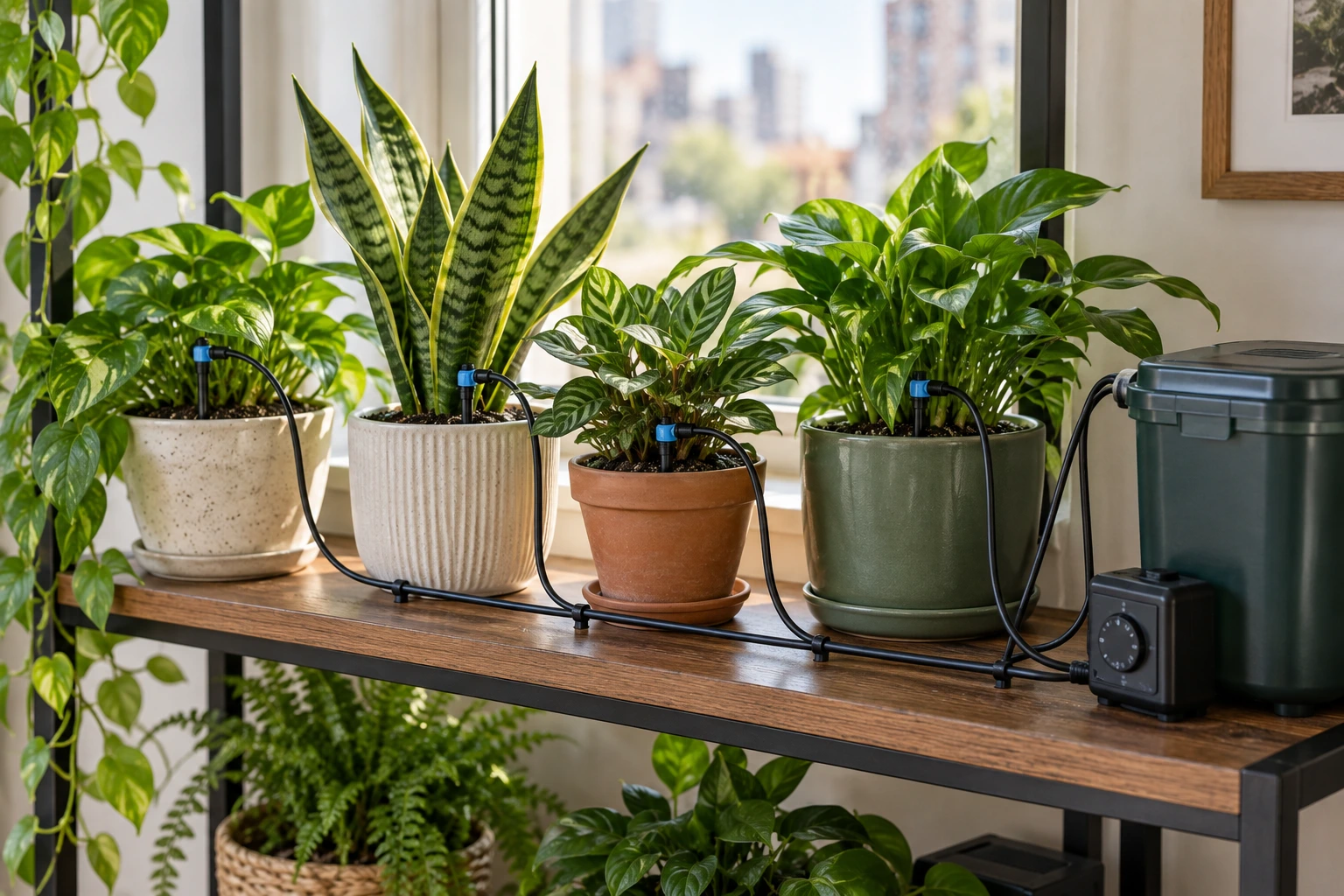
7. Use an Automatic Watering System When More Reliability Is Needed
For multiple plants or longer absences, an automatic watering system may be more practical than maintaining several individual bottles or reservoirs.
These systems may use pumps, timers, tubing, or drip emitters to deliver water to one or more containers.
For a closer look at the different options, our automatic plant watering system guide compares self-watering pots, drip systems, timers, smart watering systems, and other setups for indoor plants.
One system can serve several plants, which is convenient for larger collections. The tradeoff is additional equipment that must be set up and tested correctly.
Before leaving, verify that:
- The timer works
- Tubing stays connected
- Emitters are delivering water properly
- The reservoir contains enough water
- There are no leaks
For longer trips or larger plant collections, an automatic system can be a practical option when a simple wick or reservoir is not enough. Whatever setup you choose, test it before leaving and make sure it can supply enough water for the expected length of your trip.
8. Ask Someone to Check Your Plants
Sometimes the most reliable solution is another person.
For longer trips, a friend, neighbor, family member, or plant sitter can check soil moisture, refill a reservoir, and notice problems that an automatic device may miss.
Rather than leaving instructions such as:
Water everything every Tuesday.
give simple plant-specific directions.
For example:
- Check this plant and water only if the potting mix has dried to its normal level.
- Keep this succulent dry unless it clearly needs water.
- Refill this reservoir if it gets low.
- Check these balcony containers more often during hot weather.
A person can also catch a tipped container, clogged tube, leak, unusual heat, or a plant that is struggling.
What About Succulents and Other Drought-Tolerant Plants?
Succulents, cacti, and other drought-tolerant plants often handle drying better than moisture-loving houseplants. They can also be more vulnerable to problems when their root zones remain continuously wet.
Virginia Cooperative Extension notes that self-watering systems are not appropriate for plants that prefer drier conditions.
If a plant normally goes a long time between waterings, adding a continuously moist reservoir simply because you are traveling may create more risk than benefit.
How to Water Balcony and Patio Plants While Away
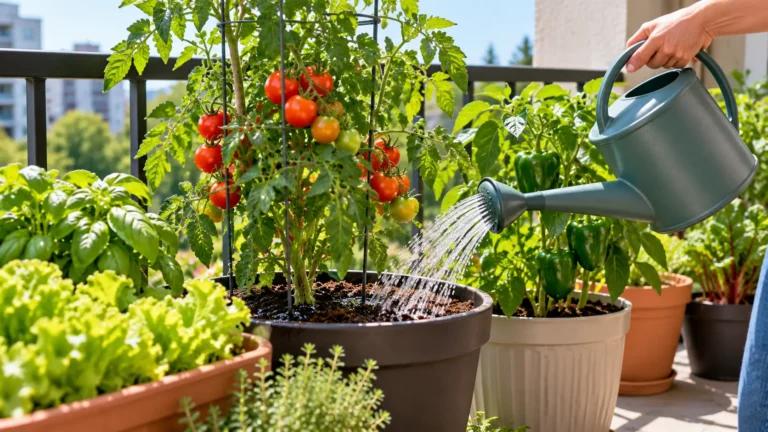
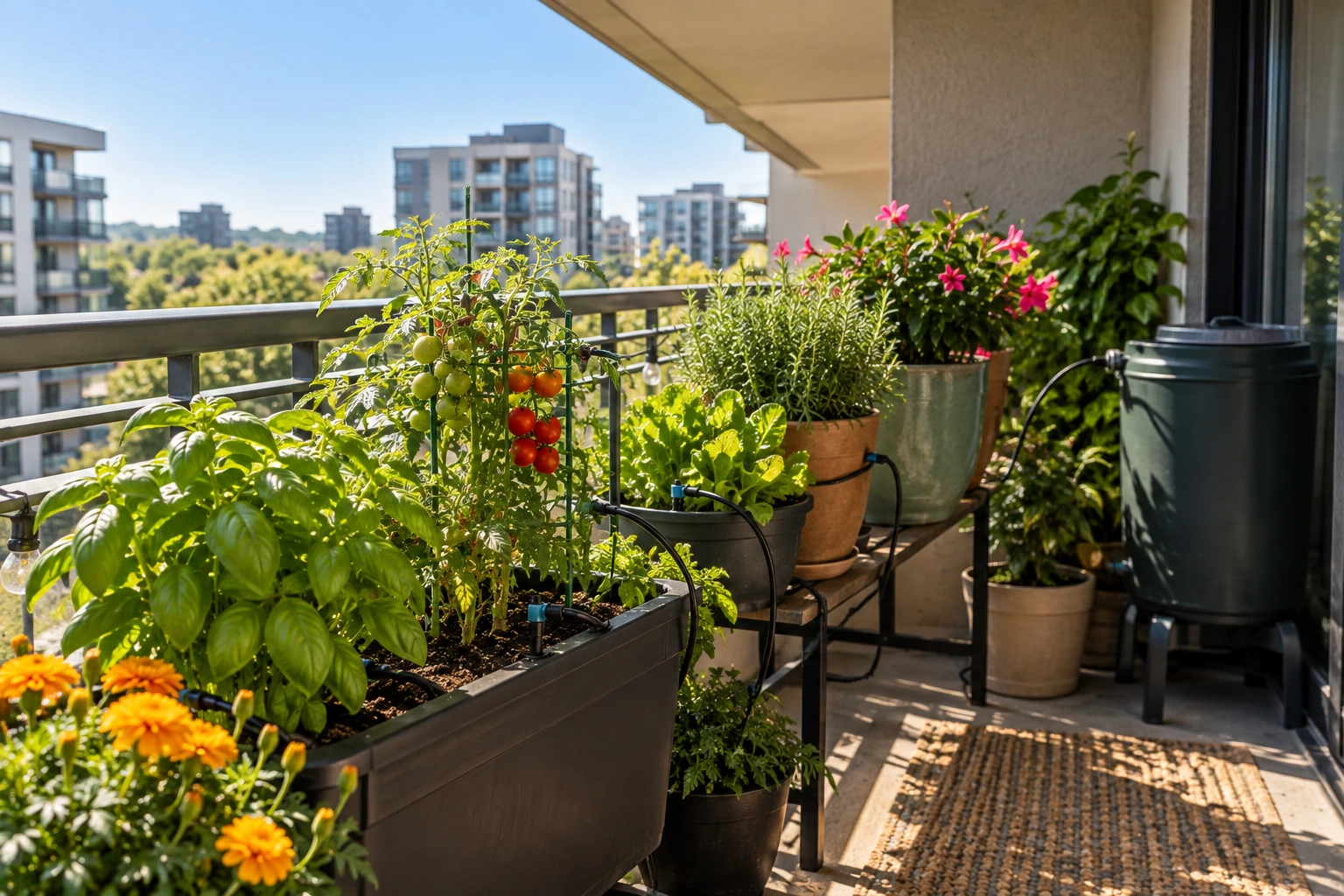
Outdoor apartment plants deserve separate attention because containers exposed to sun, heat, and wind can lose moisture quickly.
A small balcony pot may need a very different plan from a large houseplant growing indoors.
Check the Forecast and Exposure
Before leaving, look at:
- Expected temperatures
- Full sun versus partial shade
- Wind exposure
- Container size
- Plant size
- Pot material
If the forecast calls for unusually hot conditions, plants that normally manage well may dry more quickly than expected.
Our apartment balcony gardening guide explains more about managing balcony conditions.
Do Not Assume Rain Will Reach the Container
Rain in the forecast does not guarantee that your containers will receive useful water.
A roof overhang, covered balcony, wall, or neighboring structure may block most rainfall from reaching the pots.
Check the actual location of the containers rather than depending on rain alone.
Consider More Reliable Watering for Thirsty Outdoor Containers
Vegetables and other actively growing container plants can use substantial amounts of water during warm weather, particularly when they are growing in smaller pots.
If you are growing edible plants, our apartment vegetable gardening guide covers their broader growing requirements.
For longer trips, a tested drip setup or a trusted caretaker may be more dependable than a small watering globe.
Vacation Watering Methods to Use With Caution
Some popular vacation-watering ideas can work under the right conditions, but that does not make them appropriate for every plant.
Leaving Pots Standing in Water
Leaving ordinary pots sitting in water for an extended period can keep the root zone wetter than the plant can tolerate.
Maryland Extension advises emptying excess water from saucers and says houseplants should not remain sitting in water.
Bottom watering can be useful as a watering technique. That is different from leaving a pot submerged while you are away.
Assuming a Watering Globe Will Last a Certain Number of Days
How long a globe or reservoir lasts depends on the plant, container, potting mix, environment, and device.
A globe that releases water slowly in one pot may empty much faster in another.
Treat time estimates as rough guidance until you test the device yourself.
Misting Instead of Watering
Misting leaves is not a substitute for supplying water to the root zone.
Virginia Cooperative Extension specifically notes that misting does not replace regular watering.
If the root zone needs moisture, spraying the leaves will not solve the problem.
Trying an Untested System the Day You Leave
Whether you use a wick, globe, bottle, reservoir, pump, or timer, set it up before your trip.
Give yourself enough time to answer a few basic questions:
- Does water move at the expected rate?
- Is the reservoir emptying too quickly?
- Is the growing medium staying too wet?
- Is anything leaking?
- Is the timer operating correctly?
A simple system that you have already tested is more useful than a complicated one installed just before departure.
What to Do When You Get Home
Do not automatically water every plant as soon as you walk through the door.
Inspect the plants first.
Check the Plant and Potting Mix First
Some plants may be dry and ready for water. Others may still have plenty of moisture because the vacation-watering method worked well.
Look for changes such as:
- Wilting
- Yellowing leaves
- Unusual leaf drop
- Dry or shrinking potting mix
- Very wet growing medium
- Standing water
- Stress on new growth
Then water according to the plant’s actual condition.
Inspect Any Watering Equipment
Check anything you relied on while you were gone.
Look for:
- Empty reservoirs
- Clogged tubing
- Leaks
- Algae buildup
- Wicks that moved out of position
- Timers that stopped working
Virginia Cooperative Extension recommends checking self-watering reservoirs regularly and cleaning them periodically.
If you travel often, use what you learned from this trip to make the setup more reliable next time.
Frequently Asked Questions About Watering Plants While Away
Can Houseplants Go Two Weeks Without Water?
Some can, but others cannot.
Plant species, pot size, growing medium, light, temperature, humidity, and normal water use all affect how long a houseplant can comfortably go between waterings.
A drought-tolerant plant in a large container may behave very differently from a moisture-loving plant growing in a small pot.
For a two-week absence, evaluate the plant rather than assuming all houseplants can handle the same amount of time without water.
How Can I Water Plants While Away for a Month?
For an absence of several weeks, reliability becomes much more important.
A tested automatic system or a trusted person who can check the plants is usually more appropriate than assuming a small reservoir or watering globe will continue working unattended for an entire month.
Long trips also give more time for weather changes, equipment problems, and unexpectedly high water use.
Should I Water My Plants Extra Before Vacation?
Do not repeatedly saturate a plant merely because you are leaving.
If the plant is ready for water, thoroughly hydrate the growing medium and allow excess water to drain.
If the potting mix is already adequately moist, adding unnecessary water can leave the roots wetter than the plant prefers.
Do Watering Globes Work While You Are Away?
Watering globes can supply water to some container plants, but their performance depends on the device, potting mix, container, plant, and growing conditions.
Test the globe in the actual pot before relying on it during a trip.
Choose the Watering Method Before You Pack
A good vacation-watering plan starts with the plant rather than the calendar.
For a short trip, some plants may need little more than normal care before you leave. As the absence gets longer—or the plants become thirstier—self-watering methods, tested reservoirs, automatic systems, or help from another person become more useful.
Understand how quickly your plants normally use water, choose the simplest reliable method that fits those needs, and test unfamiliar equipment before you leave.
That gives your plants a better chance of being healthy when you return without giving them more water than they actually need.