Apartment Balcony Weight Limit: How Much Can Your Balcony Hold for Plants?
Most residential apartment balconies are designed to hold a live load of 40 to 60 pounds per square foot. Staying well below that number with plant containers keeps the structure safe and protects your security deposit.
Typical Apartment Balcony Weight Limits
Residential apartment balconies in the United States commonly carry a design live load of 40 to 60 pounds per square foot. Newer buildings often use the higher 60 psf figure, while older or wood-frame structures may sit closer to 40 psf. Under the International Building Code, balconies are frequently required to support 1.5 times the live load of the area they serve, which usually results in a 60 psf design load for residential use.
These design numbers represent the maximum uniformly distributed load the structure was engineered to carry. For everyday container gardening, a safer working target is 15 to 25 pounds per square foot of actual plant and furniture weight. This lower target leaves margin for people standing on the balcony and for temporary loads such as rain or snow.
Building management or the lease agreement sometimes lists specific weight restrictions. Checking those rules before adding heavy planters prevents problems later.
Why Wet Soil Creates the Biggest Weight Problem
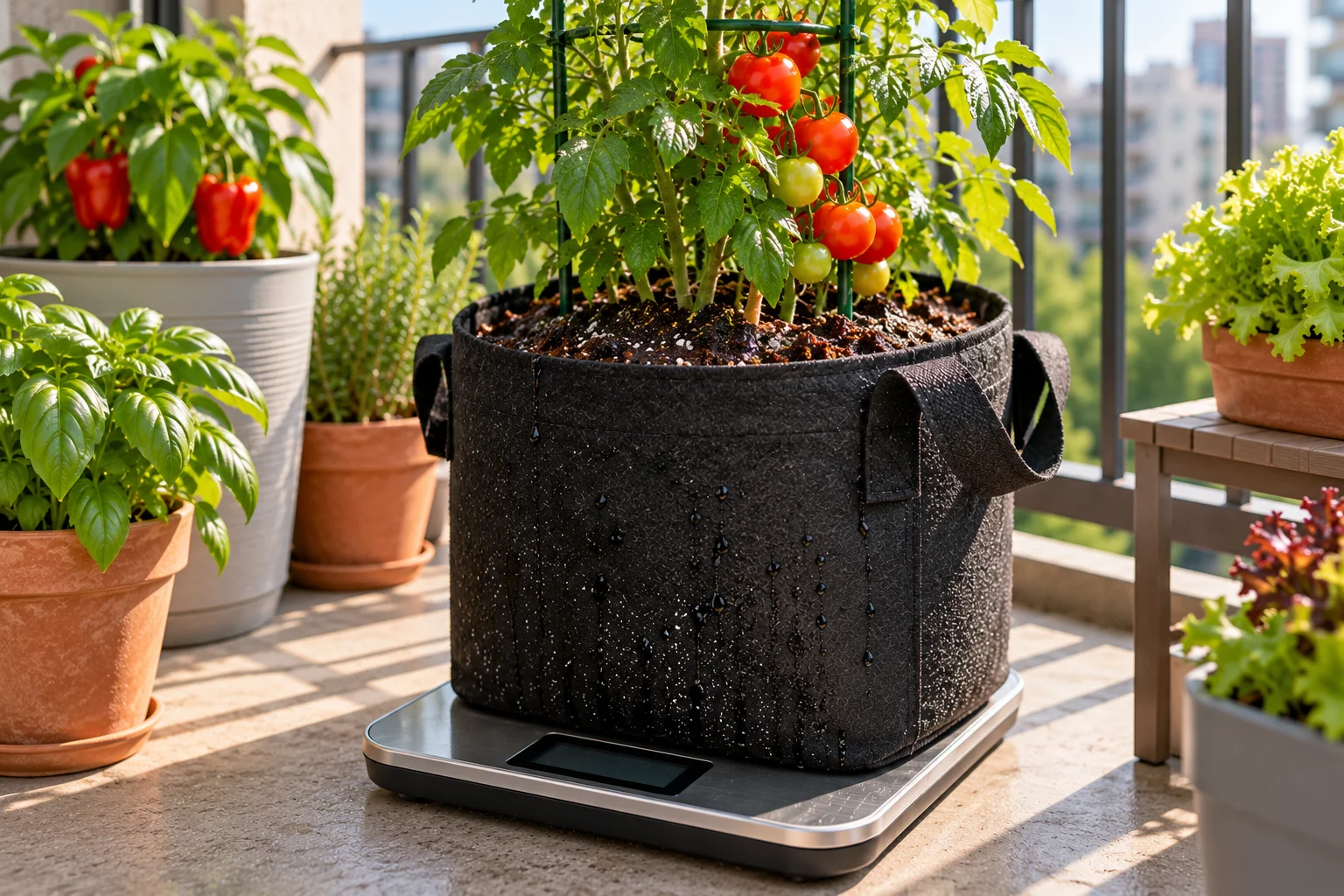
Wet potting mix weighs far more than dry mix because water itself weighs about 8.3 pounds per gallon. A container that feels manageable when dry can nearly double in weight after a thorough watering.
Approximate saturated weights for common containers (soil + water + plant + container) are:
| Container Size | Approximate Wet Weight |
|---|---|
| 1-gallon pot | 8–12 lbs |
| 3-gallon pot | 20–30 lbs |
| 5-gallon pot or bucket | 40–55 lbs |
| 10-gallon pot or grow bag | 70–100+ lbs |
| 15–20 gallon container | 120–200+ lbs |
A single large ceramic or terracotta pot filled with wet soil can exceed 100–150 pounds in a small footprint. That concentrated load stresses the balcony structure more than the same total weight spread across several lighter containers.
How to Calculate a Safe Plant Weight Budget
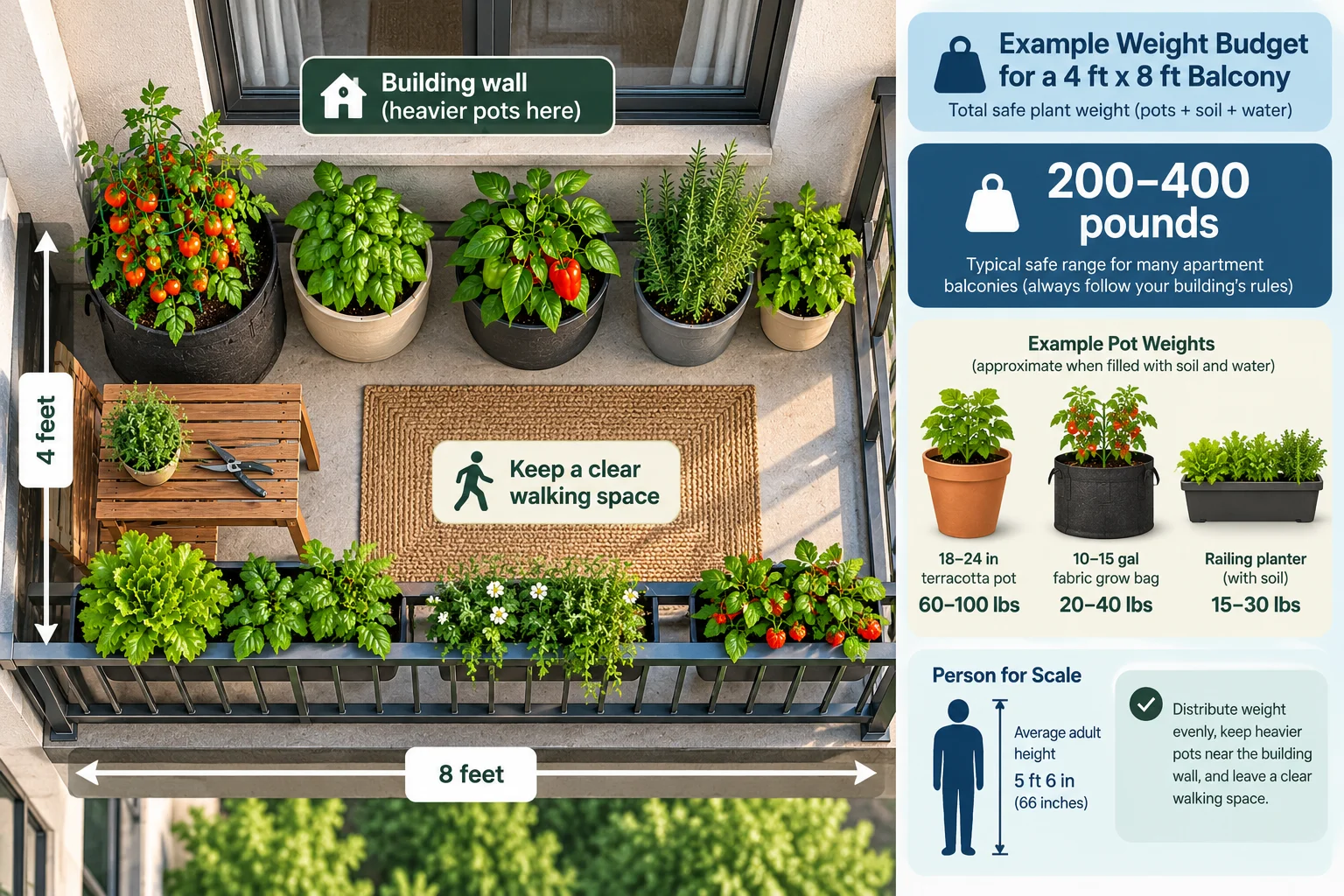
Calculating a safe plant weight budget starts with three simple steps. Measure the usable floor area of the balcony in square feet. Multiply that area by a conservative target of 15 to 20 pounds per square foot. Subtract the weight of any furniture already on the balcony. The remaining number is the total weight available for pots, soil, and plants.
Example: A balcony measuring 4 feet by 8 feet has 32 square feet of floor area. Using a target of 18 pounds per square foot produces a total safe plant budget of 576 pounds. After subtracting roughly 80–100 pounds for a small table and two chairs, approximately 450–500 pounds remain for containers.
Practical Ways to Stay Within the Apartment Balcony Weight Limit
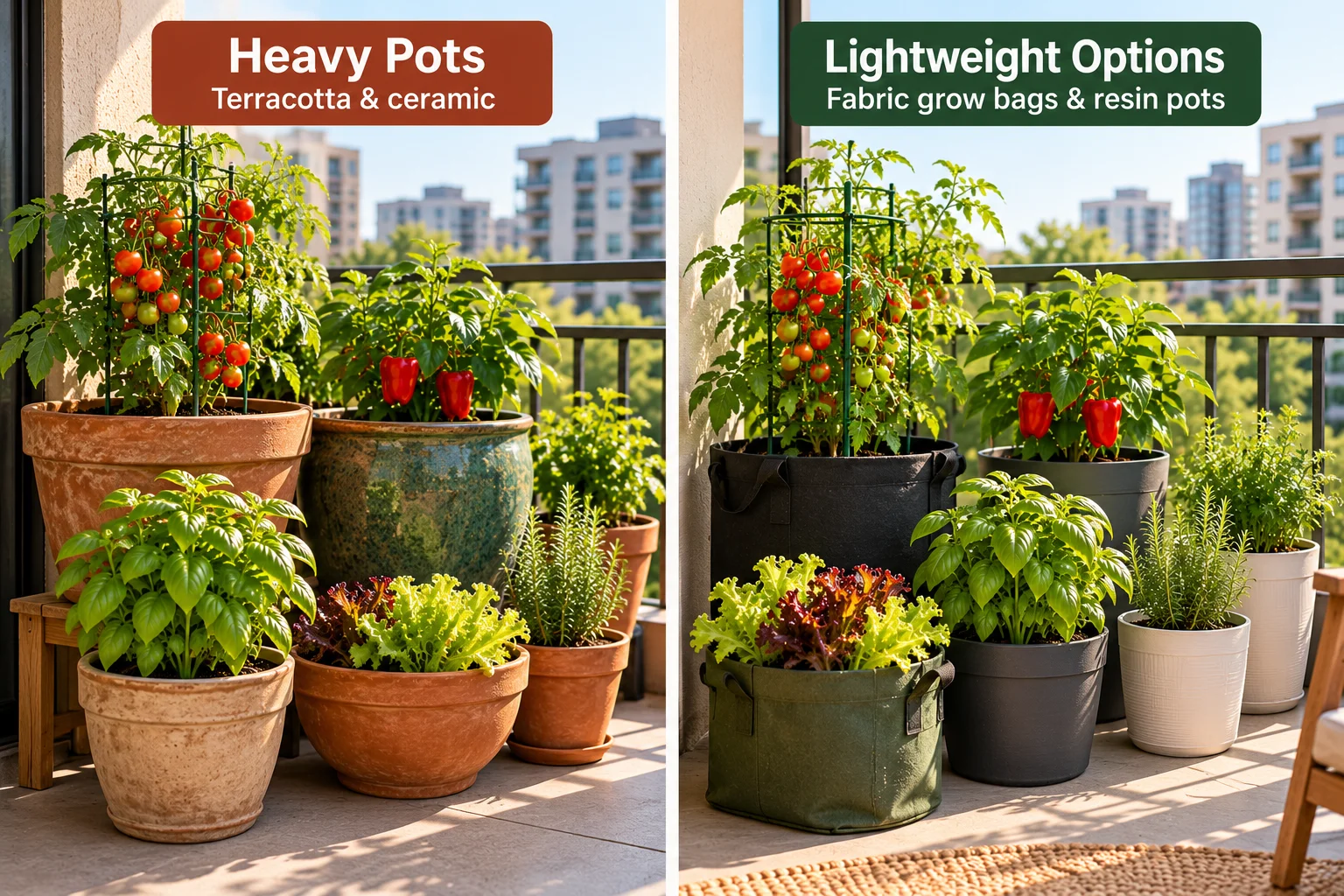
Lightweight containers reduce total load more effectively than any other single choice. Fabric grow bags and thick resin or plastic pots weigh significantly less when wet than terracotta, ceramic, or concrete planters of the same size. More options appear in the apartment container gardening guide.
Quality potting mix that contains perlite, coco coir, or bark holds water while remaining lighter than dense garden soil or topsoil. Using only potting mix for container vegetables, never garden soil, keeps container weights lower.
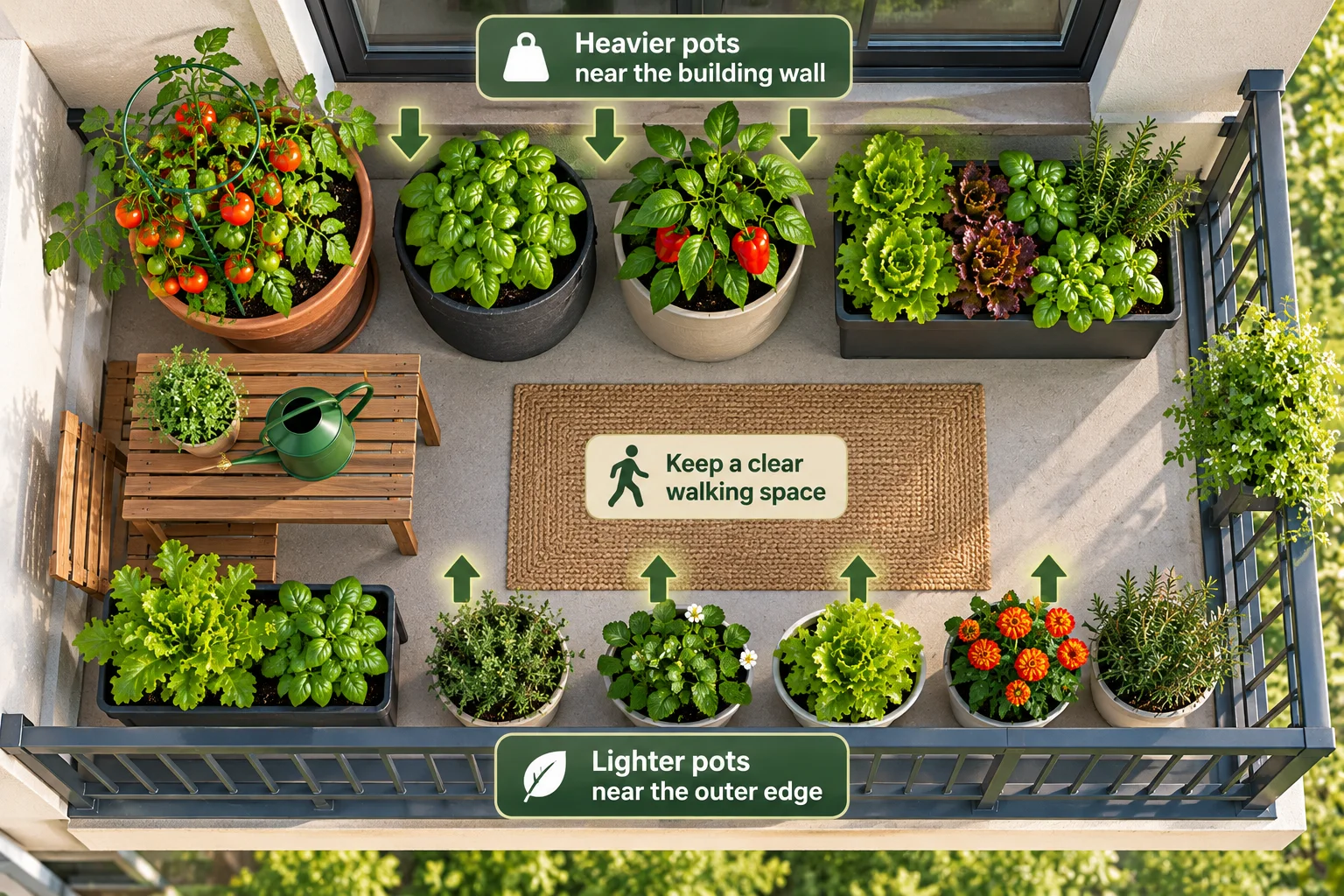
Spreading containers evenly across the floor prevents concentrated loads. Placing the heaviest pots closer to the building wall takes advantage of the strongest structural support. Keeping the outer edge of a cantilevered balcony lighter further reduces stress.
Vertical and railing planters move weight off the floor entirely. Confirming that the railing is solid and that the lease allows such planters is essential before installing them.
Multiple smaller containers create a more uniform load than one or two very large pots. Several 5-gallon containers spaced apart are safer than a single 20-gallon planter holding the same volume of soil. Details on spacing appear in the vegetable plants per container guide and the post on vegetables in 5-gallon buckets.
People add concentrated weight. Two adults standing in one area can easily contribute 300–400 pounds. Leaving clear walking paths and avoiding clusters of heavy pots in high-traffic zones keeps the balcony safer. Wind can also tip top-heavy containers, so the methods in protect balcony plants from wind remain useful.
Quick Safety Checklist for Apartment Balcony Gardens
- Confirm any building rules about balcony gardening or weight limits before starting.
- Choose fabric grow bags or resin pots instead of heavy ceramic or terracotta.
- Use only lightweight potting mix, never garden soil.
- Calculate a conservative total plant budget and stay under it.
- Distribute weight evenly and keep the heaviest pots near the building wall.
- Add saucers or trays under every pot to control drainage.
- Recheck total weight after heavy rain or once plants reach full size.
- Start with fewer containers than the maximum budget allows.
Frequently Asked Questions
How much does a 5-gallon pot of wet soil weigh?
A typical 5-gallon pot filled with wet potting mix, plant, and container weighs between 40 and 55 pounds.
Are fabric grow bags lighter than rigid pots?
Fabric grow bags are usually significantly lighter when saturated than rigid pots of the same volume filled with the same mix. They also dry faster.
What weight limit should be used on an older or wood-frame balcony?
Older or wood-frame balconies are safest when treated as having a 40 psf design load. A personal working target of 12 to 15 pounds per square foot for plants provides extra margin.
Can a small greenhouse or heavy furniture sit on an apartment balcony?
A small greenhouse or heavy furniture can only be added after the remaining weight budget is carefully calculated. Many renters discover that a table and chairs already consume a large portion of the safe capacity. Lighter alternatives appear in the apartment balcony greenhouse guide.
Final Thoughts
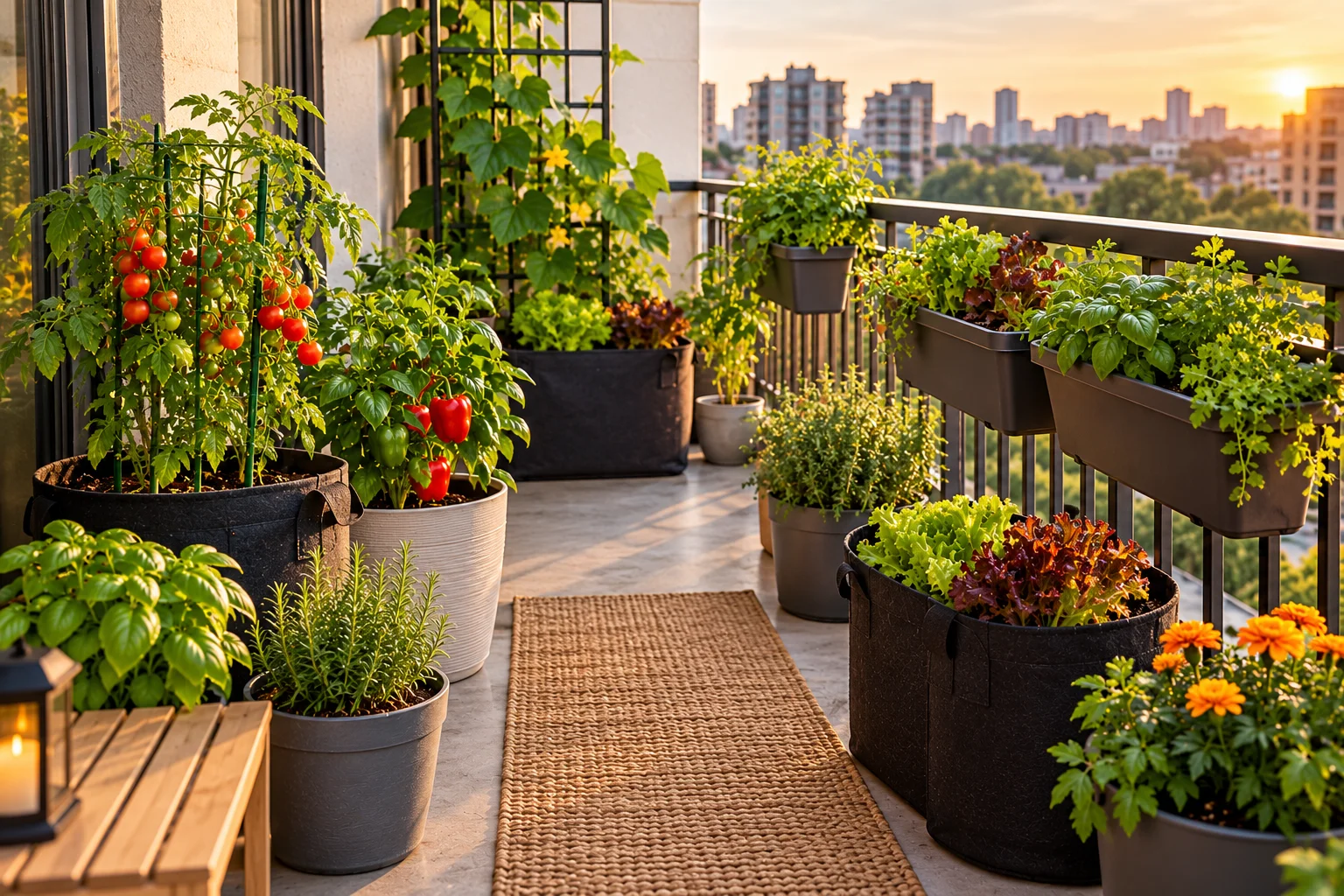
Most apartment balconies can support a productive vegetable and herb garden when the apartment balcony weight limit is respected. Choosing lightweight containers, using proper potting mix, spreading the load, and leaving margin for people keeps both the structure and the security deposit safe.
Starting with a realistic weight budget and the lightest practical containers allows tomatoes, peppers, greens, and herbs to grow successfully for years. Recommended crops for limited space and weight budgets appear in the best vegetables for small containers guide and the apartment balcony vegetable garden post.