Best Plants for Apartment Gardening: 25 Easy Plants for Beginners
Choose Apartment Plants That Fit Your Space
The best plants for apartment gardening are plants that match the light, space, and growing conditions you actually have. A snake plant may work well in an apartment with moderate indirect light, while basil, peppers, and tomatoes generally need a much brighter location.
In This Guide
That’s why choosing apartment plants should start with your space—not with a list of plants labeled “easy.” Consider how much usable light you receive, where the container will sit, how much room the mature plant needs, and whether you’re growing indoors, on a windowsill, or on a balcony.
This guide covers 25 beginner-friendly options, including low-maintenance houseplants, herbs, leafy greens, succulents, and compact edible crops. You’ll also learn how to match them to your apartment conditions before you buy.
How to match apartment plants to light, space, and location
If you’re just getting started, our apartment gardening for beginners guide covers the basic setup, containers, light, and other fundamentals.
Choosing the best plants for apartment conditions takes three quick steps. First, identify the brightest usable spot. Second, measure the floor, shelf, windowsill, or balcony space. Third, decide whether you want foliage, herbs, salad greens, flowers, or fruit. This prevents a common mismatch, such as placing basil in a shaded kitchen or a tomato in a tiny decorative pot.
Bright indirect light usually means strong daylight reaches the room but the leaves aren’t exposed to prolonged harsh sun. Direct light means sunlight falls on the plant for part of the day. Low light means limited usable daylight, not a room with no windows. A south-facing balcony may receive several hours of strong sun, while a plant several feet from a north-facing window may receive much less.
Before buying, record these details:
- How many hours of direct sun reach the location?
- How far will the plant sit from the window?
- What container width and height can fit?
- Is there a drainage tray or a sink nearby?
- How often can you realistically check moisture?
- Will indoor temperatures remain comfortable, or will the plant face drafts, radiators, or air-conditioning?
Also check pets, children, balcony wind, railing weight limits, water runoff, and lease restrictions on hanging planters. The University of Minnesota Extension and RHS houseplant guidance both support conservative placement and watering decisions. These checks make the best plants for apartment spaces much easier to narrow down.
Best plants for apartment rooms with low or moderate light
Not every apartment has large, sunny windows. Fortunately, several houseplants can tolerate lower indoor light levels and still perform well when their basic needs are met.
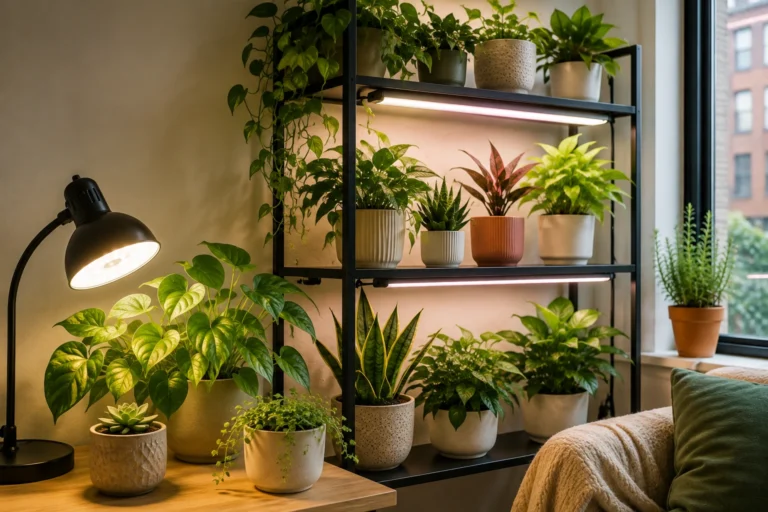
Keep in mind that low light does not mean no light. Even shade-tolerant plants need usable light for photosynthesis. Apartments with very little natural light may require a suitable grow light.
Snake Plant
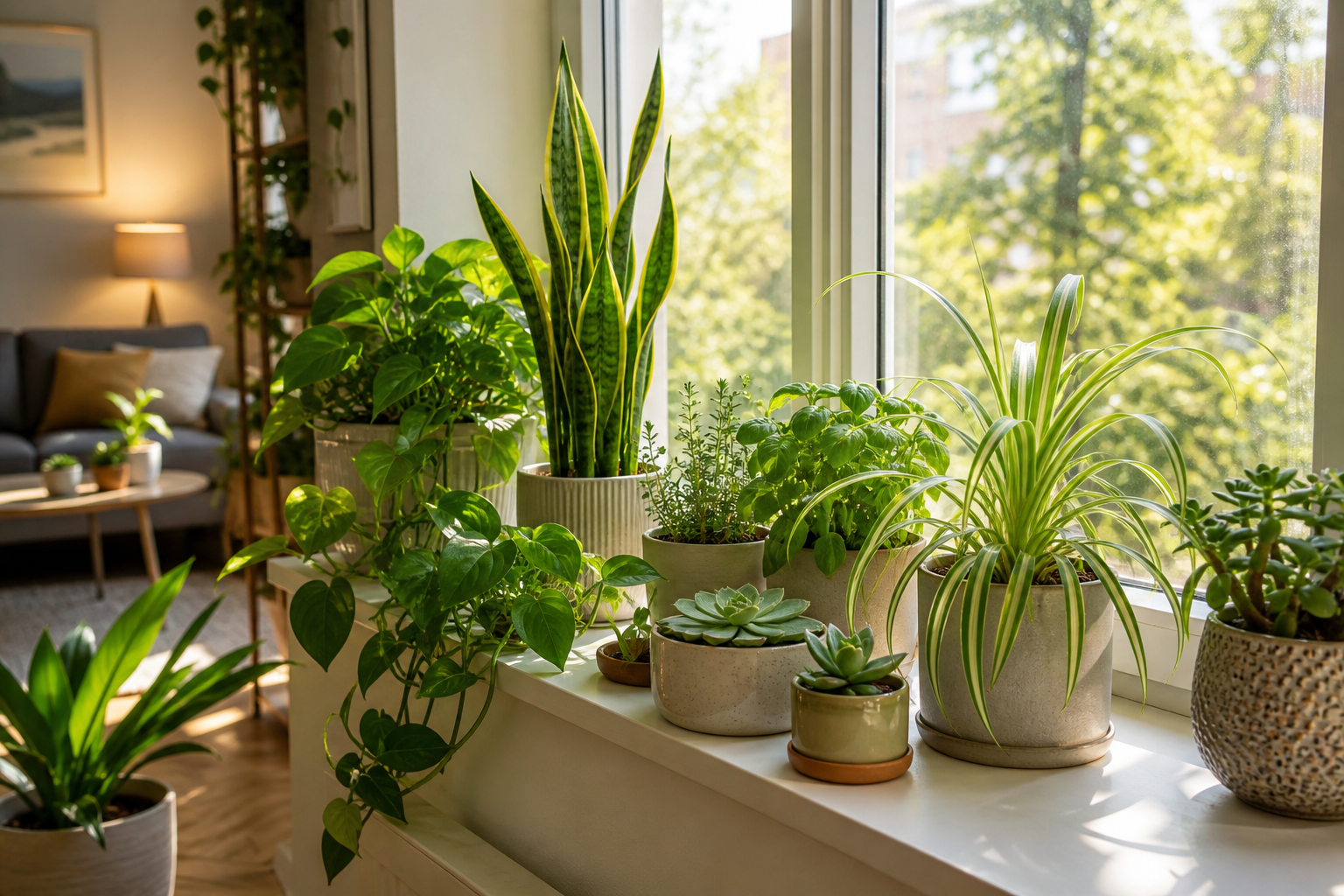
Snake plant is one of the easiest choices for apartment beginners because it tolerates a wide range of indoor conditions. It can handle lower light, although it generally grows better with brighter indirect light.
Allow the potting mix to dry between waterings rather than keeping it constantly moist. Its upright growth also makes snake plant useful when floor or shelf space is limited.
Best for: Beginners, small apartments, bedrooms, and low-to-medium indirect light.
ZZ Plant
ZZ plant is another low-maintenance option for apartments with limited natural light. Its thick stems and underground rhizomes store moisture, which means it generally handles occasional missed waterings better than plants that require consistently moist soil.
Avoid overwatering and provide a container with adequate drainage.
Best for: Low-maintenance indoor gardening and apartments with indirect light.
Pothos
Pothos works especially well when you want a trailing plant for a shelf, bookcase, or hanging container. It tolerates lower light but usually produces stronger growth in bright, indirect light.
Because the vines can become long, occasional pruning helps keep the plant manageable in a small apartment.
Best for: Shelves, hanging planters, and beginners who want a fast-growing foliage plant.
Spider Plant
Spider plants are adaptable indoor plants that prefer medium to bright indirect light. Their arching foliage works well on shelves, plant stands, or in hanging containers.
They also produce small plantlets as they mature, which can be propagated into additional plants.
Best for: Hanging containers, shelves, and bright indoor spaces without intense direct sun.
Peace Lily
Peace lilies can tolerate lower indoor light, but brighter indirect light generally supports stronger growth and flowering. They prefer more consistent moisture than snake plants or ZZ plants, so they may require closer attention.
Avoid allowing the container to remain waterlogged.
Best for: Apartments with low-to-medium indirect light where the gardener doesn’t mind monitoring moisture more regularly.
Important: If pets are present, verify a plant’s toxicity before bringing it into your home. The ASPCA’s toxic and non-toxic plant database is a useful resource for checking individual plants.
Chinese evergreen performance varies by cultivar, especially in leaf coloration and light tolerance. The Missouri Botanical Garden plant database is useful for checking cultivar-specific information. Peace lilies may droop when thirsty, but constantly saturated soil can still damage roots. Spider plants generally show stronger striping in better indirect light. For many homes, these are among the best plants for apartment beginners, provided “low light” still includes daylight.
Best Plants for Sunny Apartment Windows and Balconies
A bright windowsill or sunny balcony gives you considerably more options. Succulents, herbs, and even compact food crops can work in these locations.
However, sunlight through glass can create significant heat, while balconies introduce wind and faster moisture loss. Introduce plants to strong sunlight gradually rather than moving them suddenly from a dim indoor location into full sun.
Aloe Vera
Aloe vera prefers bright light and works well near a sunny apartment window. Because it’s thick leaves store water, it does not need the consistently moist conditions required by many leafy plants.
Use a well-draining potting mix and a container with drainage holes.
Best for: Sunny windows and gardeners who prefer lower-maintenance plants.
Jade Plant
Jade plants are compact succulents that prefer plenty of bright light. Their relatively slow growth makes them useful where space is limited.
Overwatering is one of the bigger concerns, so allow the growing medium to dry appropriately between waterings.
Best for: Bright windowsills and small indoor spaces.
Haworthia
Haworthia is particularly useful for apartments because many varieties remain relatively small. It prefers bright indirect light and can fit on windowsills, desks, and narrow shelves where larger plants would eventually become inconvenient.
Best for: Very small spaces, shelves, and bright indirect light.
Echeveria
Echeveria needs considerably more light than typical low-light houseplants. A bright window can work, although insufficient light may cause stretched or weak growth.
Use fast-draining soil and avoid keeping the roots continuously wet.
Best for: Bright, sunny windows with limited space.
Peperomia
Peperomia varieties are popular small-space plants because many remain compact and perform well in bright indirect light. Their modest size makes them easier to place on apartment shelves and windowsills.
Best for: Small apartments, shelves, desks, and bright indirect light.
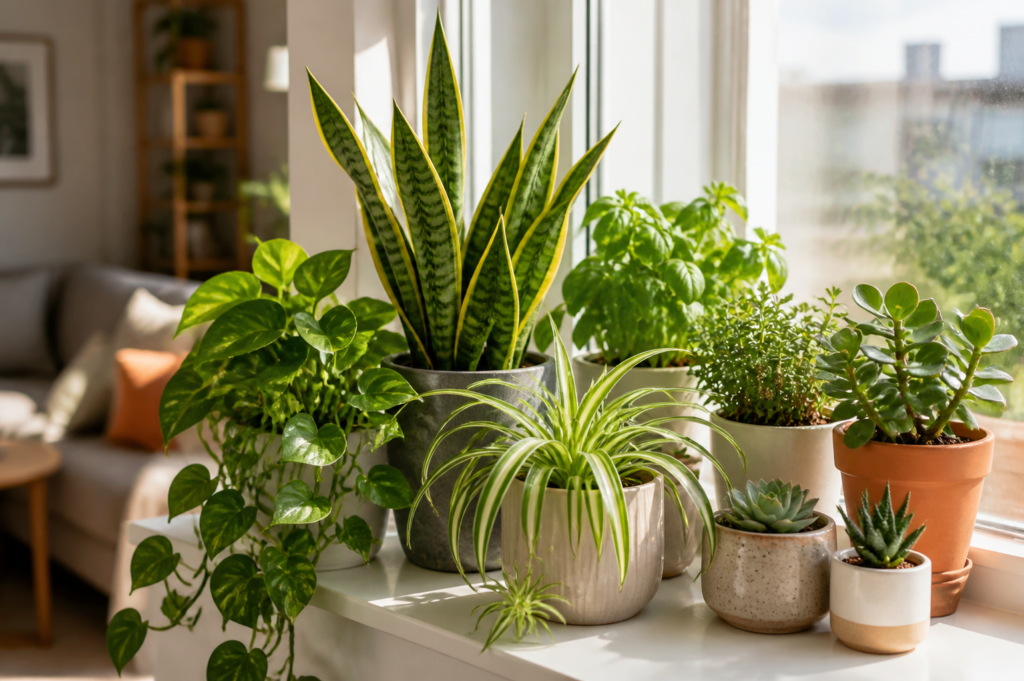
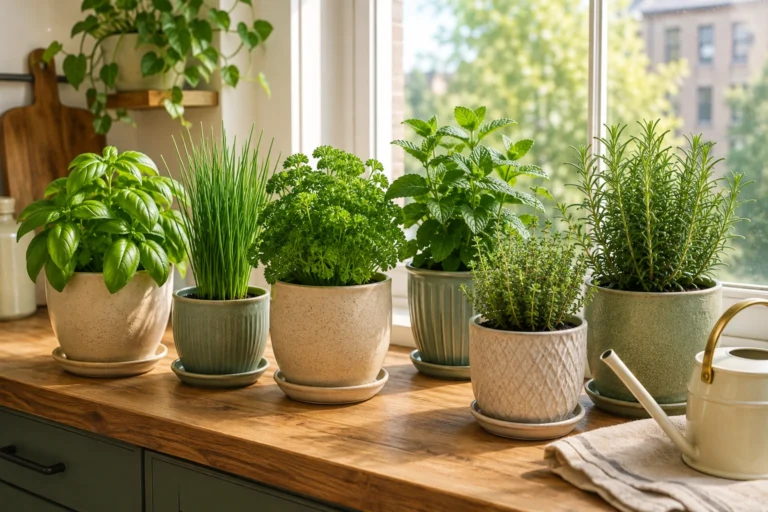
Best Herbs to Grow in an Apartment
Growing herbs is an easy way to make an apartment garden useful as well as decorative. The biggest limitation is usually light. Most culinary herbs perform better with substantial usable light than typical low-light foliage plants.
For a beginner, it is better to start with one or two herbs that match your available light rather than buying an entire windowsill herb garden at once.
Basil
Basil prefers bright conditions and can work well on a sunny windowsill or balcony. Keep an eye on moisture because smaller containers can dry quickly, particularly in warm locations.
Regular harvesting can encourage bushier growth and keeps fresh leaves available for cooking.
Difficulty: Moderate
Good starting container: Approximately 6–8 inches
Best location: Bright window or balcony
Mint
Mint is vigorous and relatively forgiving, making it a good edible plant for beginners. Growing it in its own container also prevents its spreading roots from competing with other herbs.
Difficulty: Easy
Good starting container: Approximately 8–12 inches
Best location: Bright indoor location or balcony
Chives
Chives take up relatively little space and can provide repeated harvests. Their upright growth makes them useful for narrow windowsills and compact container gardens.
Difficulty: Easy
Good starting container: Approximately 6 inches
Best location: Bright window or balcony
Parsley
Parsley can be grown in containers but benefits from adequate depth for root development. Give it bright light and monitor soil moisture rather than allowing the container to remain constantly saturated.
Difficulty: Moderate
Good starting container: Approximately 8 inches deep
Best location: Bright window or balcony
Thyme
Thyme prefers bright conditions and good drainage. Once established, it generally prefers somewhat drier conditions than herbs that need consistently moist soil.
Difficulty: Easy to moderate
Good starting container: Approximately 6–8 inches
Best location: Sunny window
Rosemary
Rosemary is an attractive apartment herb but can be less forgiving than mint or chives. It prefers strong light, good airflow, and well-draining soil.
For that reason, I would not make rosemary the first herb for someone with a dim apartment.
Difficulty: Moderate
Good starting container: Approximately 10–12 inches
Best location: Sunny window or balcony
Thyme and rosemary dislike constantly damp soil. Rosemary is especially demanding in a dim, stagnant room, so a sunny balcony or very bright window is preferable. If you plan to keep perennial herbs outdoors year-round, check the USDA Plant Hardiness Zone Map and local frost dates. Mint, chives, and parsley are practical choices for apartment cooks who want useful harvests without starting with a fruiting crop.
Easy Edible Plants for Apartment Gardening
You don’t need a backyard to grow something you can eat. Several leafy crops work in relatively shallow containers and are much more approachable for beginners than large fruiting plants.
If this is your first edible apartment garden, start with microgreens, green onions, chives, or lettuce before moving to more demanding crops such as tomatoes and peppers.
Microgreens
Microgreens are one of the easiest ways to begin growing food indoors. They require very little growing space and can be produced in shallow trays near a sufficiently bright window or under a suitable grow light.
They also grow quickly, which gives beginners an opportunity to learn basic watering and lighting without waiting months for a harvest.
Best for: Indoor gardening and extremely limited space.
Lettuce
Leaf lettuce works well in containers because it doesn’t require the deep growing space of many fruiting vegetables. A container around 6–8 inches deep can provide a useful starting point, depending on the variety.
Lettuce generally prefers cooler conditions and consistent moisture.
Best for: Bright windows and protected balconies.
Arugula
Arugula is another compact leafy green that can work well in an apartment garden. It grows relatively quickly and can be harvested while the leaves are young.
Best for: Bright windows, balconies, and beginner edible gardens.
Green Onions
Green onions have a narrow footprint, making them particularly useful when windowsill or balcony space is limited.
They can be grown in relatively small containers, and the green tops can be harvested as needed.
Best for: Narrow planters and small windowsill.
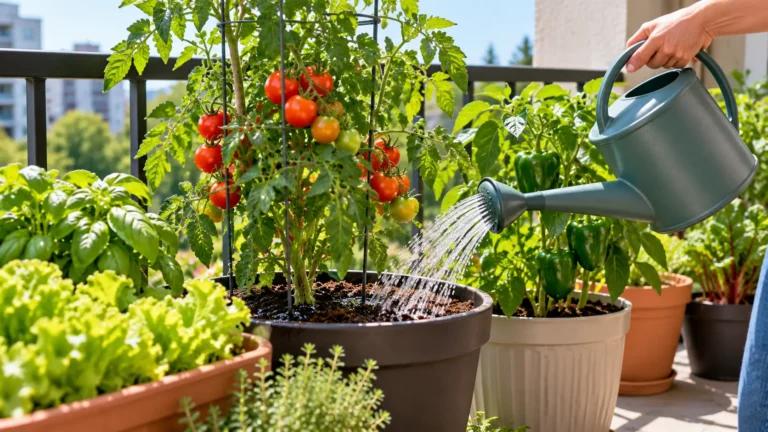
Can You Grow Tomatoes and Peppers in an Apartment?
Yes—but tomatoes and peppers are a step up from microgreens, herbs, and leafy greens.
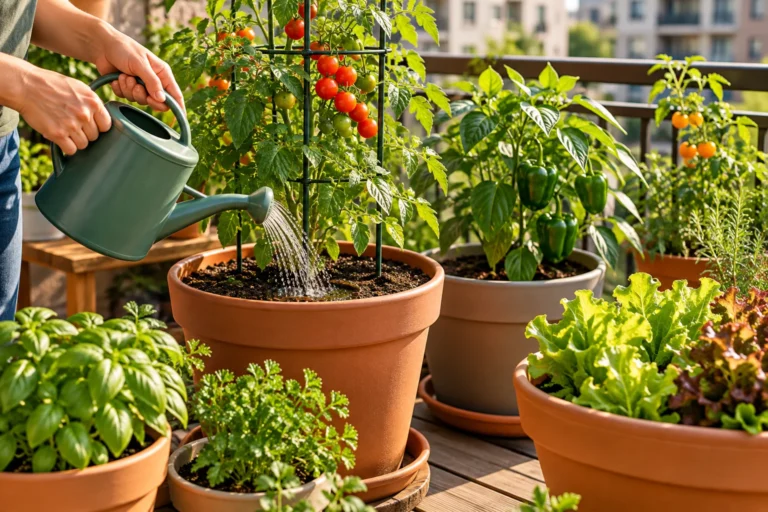
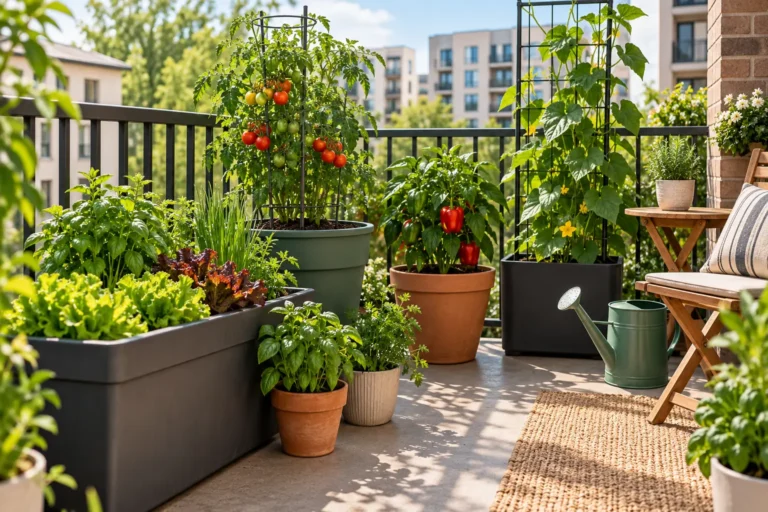
Both crops require substantially more light, container space, water, and ongoing attention. They are usually better suited to a sunny balcony or an exceptionally bright growing area than a typical indoor windowsill.
Compact Cherry Tomatoes
Choose compact, dwarf, or determinate varieties intended for containers. A container of approximately 5 gallons or more is a reasonable starting point for many compact tomatoes, although requirements vary by cultivar.
Tomatoes also need support, consistent watering, adequate nutrition, and strong direct light.
Difficulty: Higher
Best location: Sunny balcony
Compact Peppers
Compact pepper varieties can work in containers when they receive enough direct light. Depending on the cultivar, a container around 3–5 gallons can provide a starting range.
Like tomatoes, peppers require more consistent attention than most foliage plants or herbs.
Difficulty: Moderate
Best location: Very sunny window or balcony
For a first apartment garden, I would start with easier edible plants and add tomatoes or peppers after you understand how quickly containers dry in your particular growing space.
Best Plants for Apartments With Low or Moderate Light
If your apartment doesn’t receive hours of direct sunlight, start with foliage plants that tolerate indirect light. These plants still need usable daylight, but they’re generally more forgiving than herbs, vegetables, and flowering crops.
| Group | Plant | Indirect Light | Starting container | Care | Best location |
|---|---|---|---|---|---|
| Low-light foliage | Snake plant | Low to Moderate-medium indirect | 4-8 in | Very low | Indoor |
| Low-light foliage | ZZ plant | Low-medium indirect | 6-10 in | Low | Indoor |
| Low-light foliage | Pothos | Low-bright indirect | 6-10 in | Easy | Indoor |
| Low-light foliage | Heartleaf philodendron | Low-bright indirect | Hanging pot | Easy | Indoor |
| Low-light foliage | Cast iron plant | Low-medium indirect | 8-12 in | Easy, slow | Indoor |
| Low-light foliage | Chinese evergreen | Low-medium indirect | 6-10 in | Moderate | Indoor |
| Low-light foliage | Peace lily | Low-medium indirect | 6-10 in | Moderate | Indoor |
| Low-light foliage | Spider plant | Medium indirect | 6-8 in | Easy | Indoor/sheltered balcony |
| Sunny or balcony | Jade plant | Bright/direct | 6-10 in | Low | Sunny window |
| Sunny or balcony | Aloe vera | Bright/direct | 6-10 in | Low | Sunny window |
| Sunny or balcony | Haworthia | Bright indirect | 3-6 in | Low | Indoor/sheltered balcony |
| Sunny or balcony | Echeveria | Bright/direct | 3-6 in | Moderate | Sunny window |
| Sunny or balcony | Peperomia | Bright indirect | 4-8 in | Easy-moderate | Indoor |
| Sunny or balcony | Compact cherry tomato | Strong direct | 5 gal+ | High | Balcony |
| Sunny or balcony | Compact pepper | Strong direct | 3-5 gal | Moderate | Balcony/window |
| Herb | Basil | Bright/direct | 6-8 in | Moderate | Window/balcony |
| Herb | Mint | Bright indirect-direct | 8-12 in | Easy | Indoor/balcony |
| Herb | Chives | Bright | 6 in | Easy | Window/balcony |
| Herb | Parsley | Bright indirect | 8 in deep | Moderate | Window/balcony |
| Herb | Thyme | Bright/direct | 6-8 in | Low-moderate | Sunny window |
| Herb | Rosemary | Bright/direct | 10-12 in | Moderate | Sunny window/balcony |
| Edible green | Lettuce | Bright indirect/sun | 6-8 in deep | Easy | Window/balcony |
| Edible green | Microgreens | Bright window/light | 1-2 in tray | Easy, fast | Indoor |
| Edible green | Arugula | Bright/direct | 6 in deep | Easy | Window/balcony |
| Edible green | Green onions | Bright | 6 in deep | Easy | Window/balcony |
How to Use This Apartment Plant Comparison
The container sizes above are starting ranges rather than fixed requirements. The right container depends on the plant’s mature size, root system, cultivar, drainage needs, and growing conditions.
If you’re completely new to apartment gardening, don’t try to grow all 25 plants. Start with two or three plants that share similar light requirements.
For example, an apartment with moderate indirect light might start with a snake plant and pothos. A bright kitchen window could support chives or mint, while a sunny balcony opens the door to herbs and compact edible crops.
The easiest starting choices in this guide are snake plant, ZZ plant, pothos, spider plant, mint, chives, microgreens, and green onions. Tomatoes and peppers are better treated as a second step because fruiting crops generally require stronger light, larger containers, and more consistent care.
How to Choose the Best Plants for Your Apartment
Start with your available light. Next, eliminate plants that will outgrow your available space. Finally, choose an option that fits the amount of care you’re comfortable providing. That process is more reliable than choosing by appearance. The best plants for apartment conditions will fit the actual microclimate created by your window, radiator, balcony wall, and daily routine.
For a complete setup process beyond plant selection, see our Gardening in an Apartment step-by-step guide.
- Low-light apartment: Choose snake plant, ZZ plant, pothos, cast iron plant, Chinese evergreen, or heartleaf philodendron. Move them toward usable daylight; don’t depend on a dark room.
- Sunny windowsill: Consider aloe vera, jade, haworthia, echeveria, basil, thyme, rosemary, lettuce, arugula, or compact peppers. Watch for heat buildup behind glass.
- Exposed balcony: Try compact cherry tomatoes, compact peppers, herbs, lettuce, kale, or arugula after checking wind, drainage runoff, weight limits, and frost conditions.
- Edible gardening: Start with microgreens, green onions, chives, mint, or lettuce before tomatoes and peppers. Fruiting crops need stronger light, larger containers, feeding, and steadier care.
- Limited shelf space: Select haworthia, peperomia, microgreens, chives, or green onions. Check mature width, not just the plant’s current nursery size.
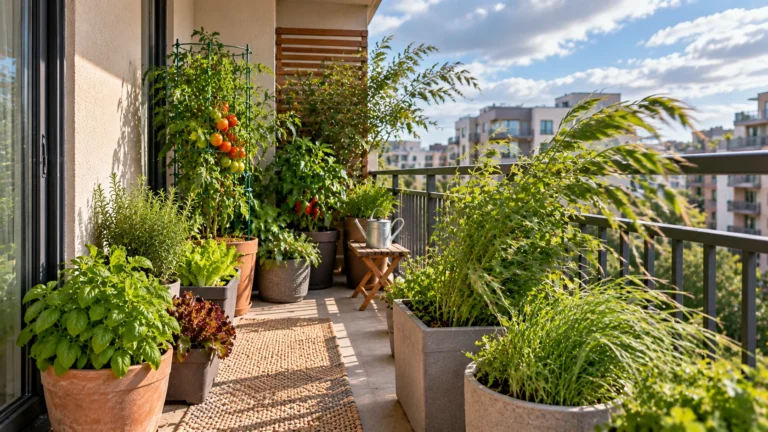
- Sunny balcony: Consider compact tomatoes, peppers, basil, rosemary, jade, aloe, or other plants suited to strong light. Account for wind, heat, drainage, and building restrictions before placing containers outdoors.
If you have pets, check each plant’s toxicity before bringing it home. The ASPCA’s toxic and non-toxic plant database is a useful starting point. A first-time gardener wanting the simplest options can start with one snake plant or pothos plus microgreens or chives. Limiting your first purchase to plants with similar light needs can also make watering and troubleshooting easier.
Apartment plant care: drainage, watering, and seasonal changes
Good care starts with a container that has drainage, a potting mix suited to the plant, and moisture checks rather than a fixed calendar. A small pot may dry quickly, while a large container can remain wet for many days. Indoor heating and air-conditioning also change evaporation, so a watering schedule that worked in January may be wrong in July.
Use this practical check:
- Inspect the top portion of the mix with a finger or moisture tool.
- Consider the plant’s light, temperature, pot size, and recent weather.
- Water thoroughly when the plant and mix indicate it is appropriate.
- Allow excess water to drain, then empty the saucer rather than leaving roots submerged.
Low-light plants generally use water more slowly. Herbs, leafy greens, tomatoes, and peppers in bright, warm locations may need closer monitoring, especially in small balcony containers. Succulents need a different rhythm from lettuce: the former prefer drying between waterings, while the latter may wilt when consistently dry.
Don’t move a plant abruptly from a dim store or room into strong sun. Acclimate it over several days and watch for leaf scorch, wilting, stretching, yellowing, or persistently wet soil. The Penn State Extension houseplant resources provide evidence-based guidance on watering, light, and common indoor problems. Keep placement flexible because seasonal daylight can change significantly throughout the year.
Check new plants regularly during the first few weeks so you can learn how quickly their potting mix dries in your particular space. Adjust watering based on the plant, container size, light, temperature, and moisture level rather than following a universal calendar.
Common Apartment Plant Mistakes to Avoid
Rotating a plant into a dark room for a few days doesn’t replace usable light, and low-light tolerance means the plant can cope with less light than many species—not that it can grow in darkness.
Buying a large plant for a small corner also causes trouble. The container may outgrow the available footprint, leaves may block airflow, and watering becomes harder to judge when the pot is wedged behind furniture. Measure mature width as well as current height before purchasing.
Five avoidable mistakes and fixes include:
- Herbs in a dim room: Move them to the brightest window or add supplemental light.
- Succulents in wet soil: Use a gritty, fast-draining mix and wait for substantial drying.
- Decorative pot without drainage: Use a nursery pot with holes inside the cover pot.
- Ignoring mature width: Check the plant tag and allow room for pruning and airflow.
- Balcony plants outside too early: Check local frost conditions before moving them outdoors.
Elongated weak growth can indicate inadequate light; faded foliage may reflect reduced light or cultivar change; scorched leaves suggest excessive sun or abrupt exposure. Persistently wet soil, repeated wilting, and no new growth over an extended period also indicate a mismatch. Start with two plants in the same light zone rather than plants with very different needs.
Keeping a simple care log for the first month can make troubleshooting easier. Record the plant name, location, watering dates, and any visible changes in growth or leaf condition.
How to Get Started
Start by assessing your available growing space. Measure the brightest area, identify whether it receives low, indirect, or direct light, note the available container space, and decide whether you want foliage, food, or both. Then choose one foliage plant plus one edible plant if that combination fits your conditions.
- Measure the windowsill, shelf, floor area, or balcony corner.
- Observe direct sun at different times of day rather than judging from one visit.
- Read the plant tag for mature height, width, light needs, and container guidance.
- Buy containers with drainage and a suitable potting mix.
- Quarantine new plants briefly when possible and inspect for pests.
- Monitor light and moisture closely during the first to weeks.
A low-risk starter combination is a pothos or snake plant for foliage and chives, microgreens, or green onions for food. Adjust that plan if pets are present or usable light is extremely limited. The best plants for apartment gardening are suited to the actual room or balcony, not simply the plants advertised as easiest.
The simplest approach is to match light first, space second, and maintenance level third. Reassess placement as seasons change, replace plants that consistently fail in unsuitable conditions, and expand gradually rather than filling the apartment at once. The right first plant is not the most fashionable one; it’s the one your home can support consistently.
Based on our research, that order gives beginners the clearest path to healthy apartment plants. Start small, observe carefully, and let successful care—not impulse purchases—decide what comes next.
Key Takeaways
- Match plants to your available light before considering appearance or popularity.
- Check mature plant size, container requirements, drainage, and available growing space before buying.
- Snake plants, ZZ plants, pothos, spider plants, chives, mint, microgreens, and green onions are practical beginner choices under suitable conditions.
- Tomatoes, peppers, basil, and rosemary generally require stronger light and more consistent care.
- Low-light tolerant plants still need usable light; a windowless room usually requires appropriate supplemental lighting.
- Start with a few plants and expand after learning how light, temperature, and moisture behave in your apartment.
Frequently Asked Questions
What are the best plants for apartment beginners?
Snake plant, ZZ plant, pothos, spider plant, chives, mint, microgreens, and green onions are practical starting choices. Your usable light, container space, watering habits, and whether you have pets should determine the final selection.
Can low-light apartment plants grow in a room with no windows?
Not reliably without an appropriate grow light. Low-light plants tolerate reduced daylight, but they still need usable light for photosynthesis and healthy growth.
What is the easiest edible plant to grow in an apartment?
Microgreens are among the quickest options because they fit a 1- to 2-inch-deep tray and can grow indoors under a bright window or grow light. Chives, green onions, mint, and lettuce are also beginner-friendly when placed in adequate light.
Which apartment plants are suitable for a sunny windowsill?
Aloe vera, jade, haworthia, echeveria, peperomia, basil, thyme, rosemary, lettuce, arugula, and compact peppers can suit sunny windows. Acclimate plants gradually and watch for heat buildup or leaf scorch behind glass.
Can you grow tomatoes on an apartment balcony?
Yes. If your balcony receives strong direct light, compact or determinate tomatoes can grow successfully in containers. A container around 5 gallons or larger is a common starting point for many compact tomatoes, although the appropriate size depends on the cultivar. Provide support, good drainage, and consistent watering, and account for balcony wind and heat.
How often should apartment plants be watered?
There is no dependable calendar because pot size, light, temperature, plant type, and season all affect drying. Check the potting mix, water thoroughly when appropriate, and empty standing water from the saucer.
Are apartment plants safe for pets?
Not automatically. If you have cats or dogs, check each plant using a reliable source such as the ASPCA’s toxic and non-toxic plant database before bringing it home. If young children may handle or ingest plants, keep potentially harmful plants out of reach and verify safety information separately.