Best Lightweight Containers for Apartment Balcony Gardens
Best lightweight containers for apartment balcony gardens make the biggest difference. They keep the total weight down, are easier to move around, and still give plants the growing conditions they need.
In This Guide
Why Lightweight Containers Matter on Apartment Balconies
Lightweight containers cut a surprising amount of weight from an apartment balcony. Wet soil is heavy on its own, and classic terracotta or ceramic pots only add to the problem. Fabric grow bags, solid resin pots, and good plastic containers weigh far less once they’re filled, which helps you stay within safe limits.
A filled pot can get heavy fast. That’s why plastic, composite, and resin options work so well on balconies — they give you the volume plants need without the extra bulk of traditional materials.
Best Lightweight Containers for Apartment Balcony Gardens Compared
Fabric Grow Bags
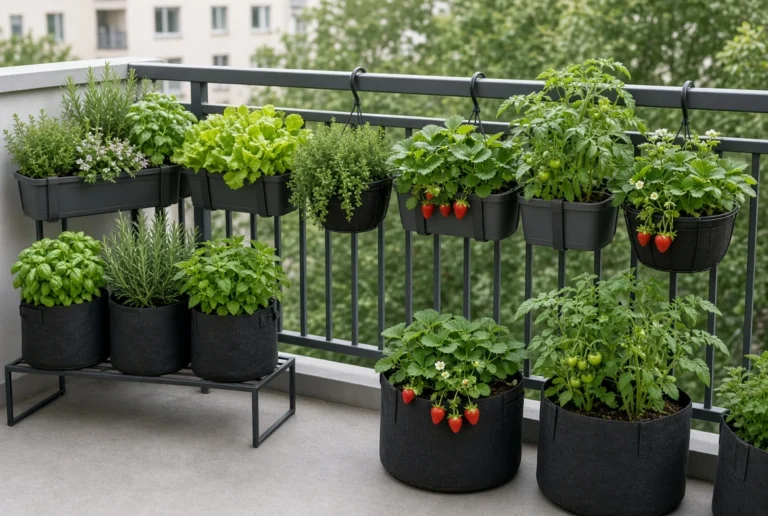
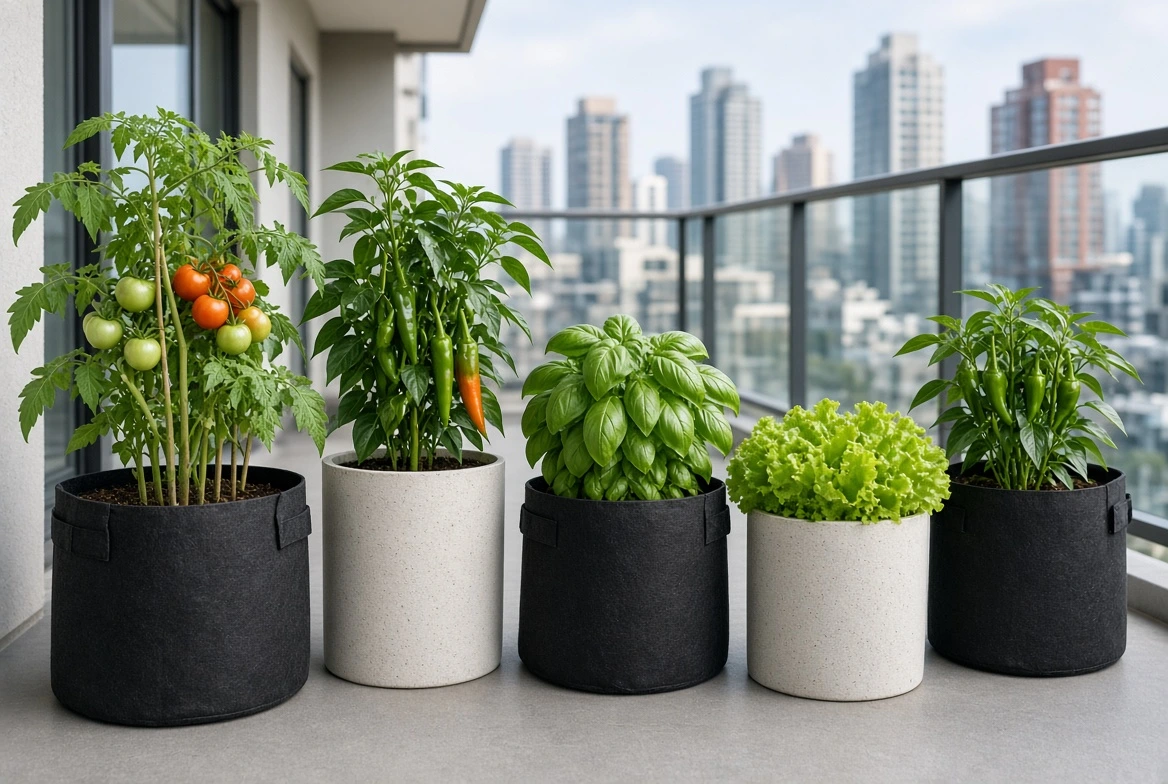
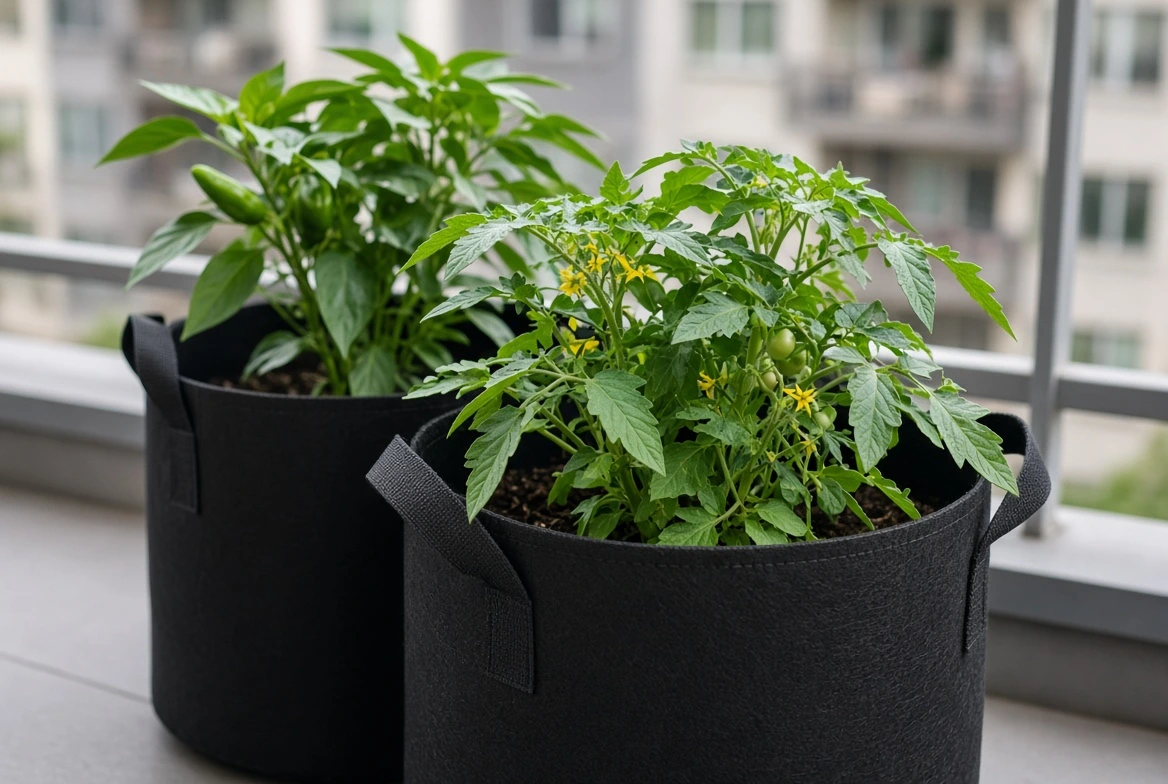
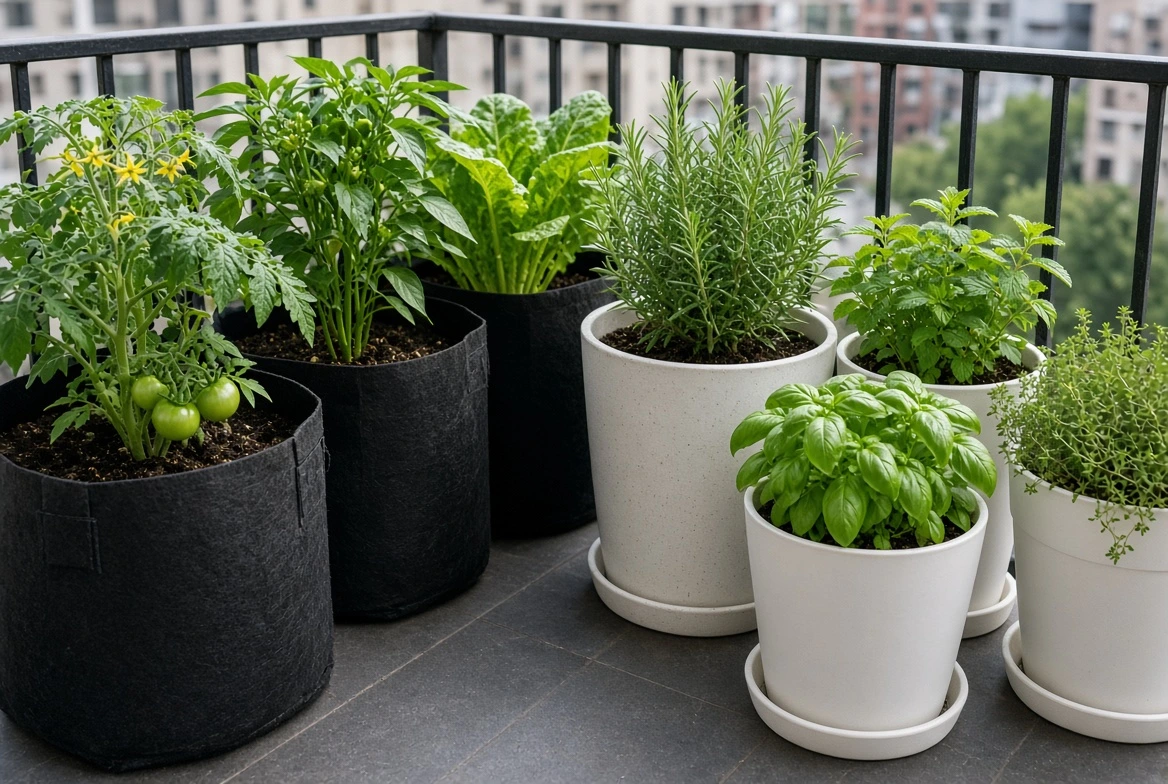
Fabric grow bags are usually the lightest option you can buy. They weigh almost nothing when empty and stay relatively light even after watering because extra water drains right through. The fabric also lets roots breathe, which leads to stronger plants. Most people do well with 5- to 10-gallon bags for tomatoes, peppers, and bigger herbs.
The VIVOSUN 5-Pack 5 Gallon Plant Grow Bags are made from 300G thickened fabric, have strong reinforced handles, and drain extremely well. They’re built to last multiple seasons and stay easy to move even when full of soil.
Resin and Plastic Pots
Resin and thick plastic pots sit in a nice middle ground. They look more like regular pots, hold their shape, and still weigh a lot less than terracotta. Many are UV-resistant so they don’t turn brittle in the sun. Look for ones with real drainage holes and a matching saucer to protect your balcony floor.
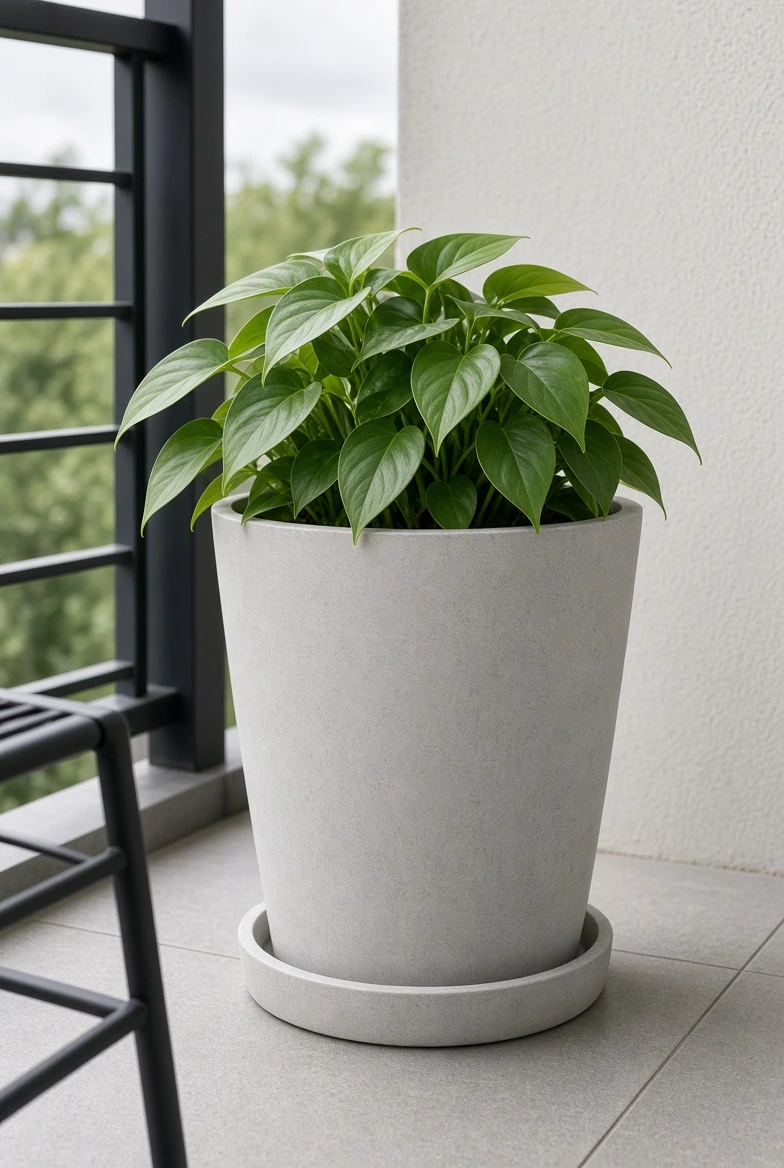
The Stone-Look Large 10 Inch Resin Planter is a good example. It’s made from weather-resistant resin, comes with a saucer, and has pre-drilled drainage holes. You get a clean, modern look without the heavy weight of ceramic or stone.
Other Lightweight Options
Multi-size plastic sets are perfect for herbs and smaller plants. They’re cheap, very light, and usually come with saucers. Just skip the super-thin plastic that cracks after a season or two in the sun.
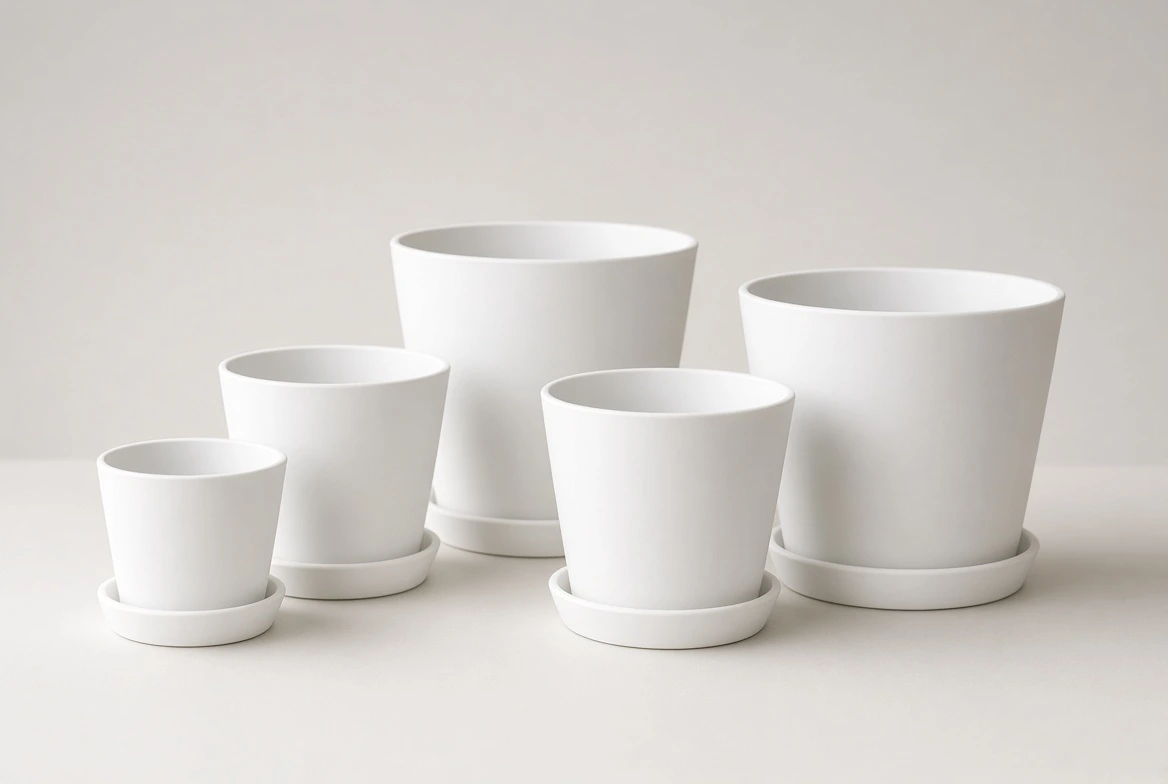
The Utopia Home 5-Pack Multi-Size Plant Pots give you five different sizes, matching saucers, and drainage holes. They’re ideal for herbs, lettuce, and compact plants when you want to keep the total weight as low as possible.
Weight Comparison of Common Containers
| Container Type | Approx. Wet Weight (5 gal) | Drainage | Appearance | Best For | Durability |
|---|---|---|---|---|---|
| Fabric Grow Bags | 35–45 lbs | Excellent | Utilitarian | Tomatoes, peppers, vegetables | High |
| Resin / Plastic Pots | 40–55 lbs | Good | Traditional | Mixed plants, aesthetics | High |
| Ceramic / Terracotta | 60–80+ lbs | Good | Classic | Avoid on weight-limited balconies | Medium |
A 5-gallon fabric grow bag filled with moist potting mix usually lands between 35 and 45 pounds. The same amount of soil in a thick resin pot often weighs 40–55 pounds. A ceramic or terracotta pot of that size can easily push past 60–80 pounds once it’s wet. Those differences add up fast when you have several containers on one balcony.
Key Features to Look For in Lightweight Containers
Good drainage is non-negotiable. Fabric bags drain through the material itself. Plastic and resin pots need multiple holes in the bottom plus a saucer. The University of Maryland Extension points out that proper drainage stops waterlogging and keeps roots healthy.
UV resistance matters on a sunny balcony. Pots labeled UV-stable last much longer before they start to crack or fade.
Handles or reinforced rims make life easier. Bags with strong handles and pots with good grip points are far less frustrating when you need to move things around.
Match the container size to the plant. Most vegetables want at least 5 gallons. Herbs and leafy greens do fine in 1- to 3-gallon pots. Using the right size keeps weight under control and gives plants the room they need. You’ll find more details in the vegetable plants per container guide and the vegetables in 5-gallon buckets post.
Recommended Lightweight Containers by Use
Best overall for most balconies: VIVOSUN 5-Gallon Fabric Grow Bags
Best traditional look: Stone-Look 10 Inch Resin Planter
Best for herbs and greens: Utopia Home Multi-Size Plastic Pot Set
Best for frequent movers: Fabric grow bags that fold flat when not in use
How to Use Lightweight Containers Successfully
A good lightweight potting mix makes a real difference. Mixes with perlite or coco coir stay lighter when wet and drain better than regular garden soil. You can find specific recommendations in the potting mix for container vegetables article.
Where you place the containers matters. Heavier pots should sit closer to the building wall. Lighter ones can go toward the outer edge. This simple habit supports the advice in the apartment balcony weight limit guide.
Lightweight containers, especially fabric bags, dry out faster than heavy ceramic ones. Check the soil more often during hot spells so plants don’t get stressed.
Frequently Asked Questions
Are fabric grow bags better than plastic pots for balconies?
Fabric grow bags are usually better when weight is a concern. They stay lighter when wet and give roots more air. Plastic and resin pots still work well if you prefer a more traditional look.
How much do lightweight containers weigh when full?
A 5-gallon fabric grow bag with moist potting mix typically weighs 35–45 pounds. A similar resin or thick plastic pot lands around 40–55 pounds. Ceramic or terracotta pots of the same size often go over 60–80 pounds once wet.
Do resin pots last as long as ceramic pots?
Good UV-resistant resin pots can last several seasons on a balcony and often hold up better than thin plastic. Ceramic is tougher against bumps and scratches but much heavier and more likely to crack in freezing weather.
Can regular plastic pots be used on an apartment balcony?
Yes, as long as they have proper drainage holes and are thick enough to handle sun exposure. Thin, cheap plastic tends to get brittle after a season or two and isn’t ideal for long-term use.
What size container is best for tomatoes on a balcony?
Most tomato plants do best in at least 5 gallons of soil. Patio or determinate types grow well in 5-gallon fabric bags or resin pots. Larger indeterminate tomatoes prefer 10 gallons or more when your weight budget allows it.
Do lightweight containers need saucers?
Saucers are a good idea on apartment balconies. They catch water and soil so you don’t stain the floor. Both fabric bags and plastic pots work better with the right-sized saucer underneath.
Final Thoughts
The best lightweight containers for apartment balcony gardens keep the weight down without sacrificing drainage or plant health. Fabric grow bags currently give the biggest weight savings, while quality resin pots offer a more classic look. Picking the right containers protects your balcony and makes day-to-day gardening easier.
Most people do well starting with a few VIVOSUN 5-gallon fabric grow bags or a mix of lightweight resin and plastic pots. Once you see what works in your space, you can expand from there.