Do Indoor Hydroponic Gardens Attract Bugs?
Do indoor hydroponic gardens attract bugs? Yes, indoor hydroponic gardens can attract bugs, even though they don’t use soil. Aphids, spider mites, thrips, whiteflies, and fungus gnats are among the pests that can appear around indoor growing systems. Growing plants in water instead of soil doesn’t make them immune to insects.
For apartment gardeners, finding a few bugs around a countertop hydroponic garden doesn’t necessarily mean something is wrong with the system. Pests can arrive on new plants, spread from nearby houseplants, or establish themselves when growing conditions are favorable.
The good news is that most pest problems are easier to manage when they’re caught early. A few minutes spent checking leaves, watching for unusual damage, and keeping the growing area clean can make a real difference.
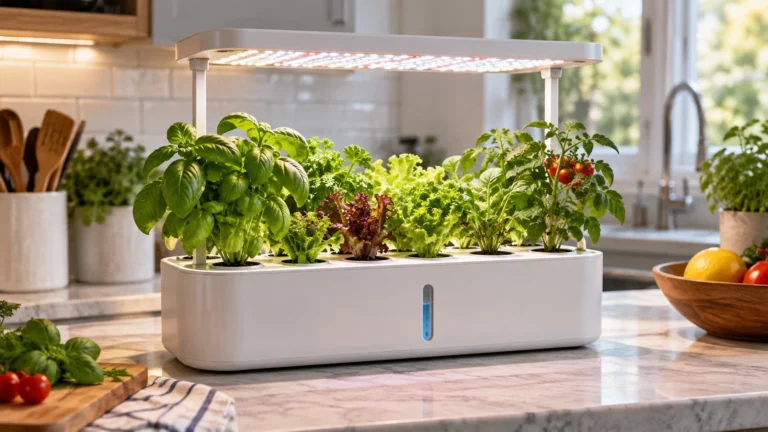
If you’re just getting started, our indoor hydroponic garden guide explains how countertop systems work and what to expect when growing herbs and vegetables in an apartment.
In This Guide
How Do Bugs Get Into an Indoor Hydroponic Garden?
Bugs can enter an indoor hydroponic garden on new plants, spread from nearby infested plants, or reach the growing area from elsewhere in the home. A hydroponic system doesn’t need soil for a pest problem to develop.
A countertop garden may seem protected because it’s indoors, but the plants are still living hosts for insects and mites. Understanding how pests arrive is the first step toward keeping them under control.
New Plants Can Bring Pests Indoors
New plants can introduce insects and mites into an otherwise healthy indoor hydroponic garden. Some pests are so small that a plant can look perfectly healthy while carrying insects or eggs.
According to Colorado State University Extension’s guidance on managing houseplant pests, many indoor pest problems begin when infested plants are brought into the home.
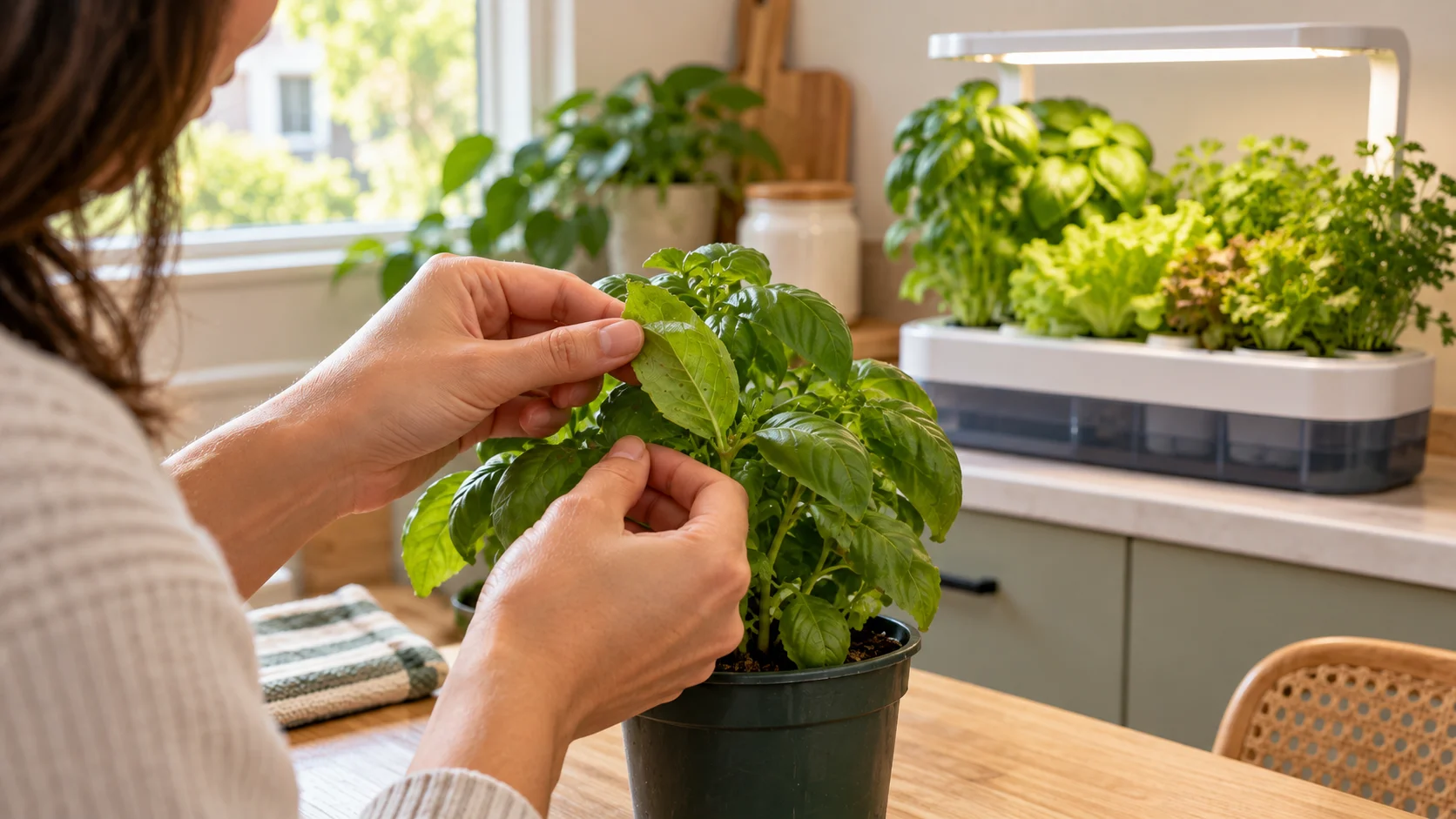
Before placing a new herb plant or seedling near your hydroponic garden, check:
Leaf undersides: Look for tiny insects, eggs, or webbing.
New growth: Inspect tender leaves and stems for clusters of pests.
Flowers and buds: Check protected areas where insects may hide.
Growing media: Watch for small flies or signs of insect activity.
Containers: Examine rims, drainage openings, and other crevices.
A quick inspection won’t guarantee that a plant is pest-free, but it can help you avoid introducing an obvious infestation.
Growing Conditions Can Favor Different Pests
Certain growing conditions can make an indoor garden more favorable to particular pests. However, no single adjustment will prevent every insect or mite problem.
Fungus gnats are associated with moist growing media, especially when fungi, algae, and decaying organic material are present. The Colorado State University Extension guide to fungus gnats explains how these insects develop in suitable damp growing media.
Spider mites are different. Hot, dry indoor conditions can favor spider-mite problems, particularly when plants are already stressed.
For apartment gardeners, the important distinction is that not every bug is attracted to the same conditions. A pest problem around hydroponic lettuce may require a different response from small flies appearing around moist growing media.
Common Pests in Indoor Hydroponic Gardens
Aphids, spider mites, thrips, whiteflies, and fungus gnats are among the pests worth checking for in an indoor hydroponic garden. Each pest leaves different clues, making identification an important part of deciding what to do next.
The following table summarizes common warning signs.
| Pest | What You May Notice | Where to Look |
|---|---|---|
| Aphids | Small insects clustered together, distorted growth, or sticky residue | Tender shoots, stems, and leaf undersides |
| Spider mites | Tiny pale spots on leaves, discoloration, or fine webbing | Leaf undersides and between leaves |
| Thrips | Tiny slender insects, silvery patches, or damaged growth | Leaves, flowers, and new shoots |
| Whiteflies | Small white insects that fly when leaves are disturbed | Primarily leaf undersides |
| Fungus gnats | Small dark flies hovering around moist growing media | Growing media and nearby monitoring cards |
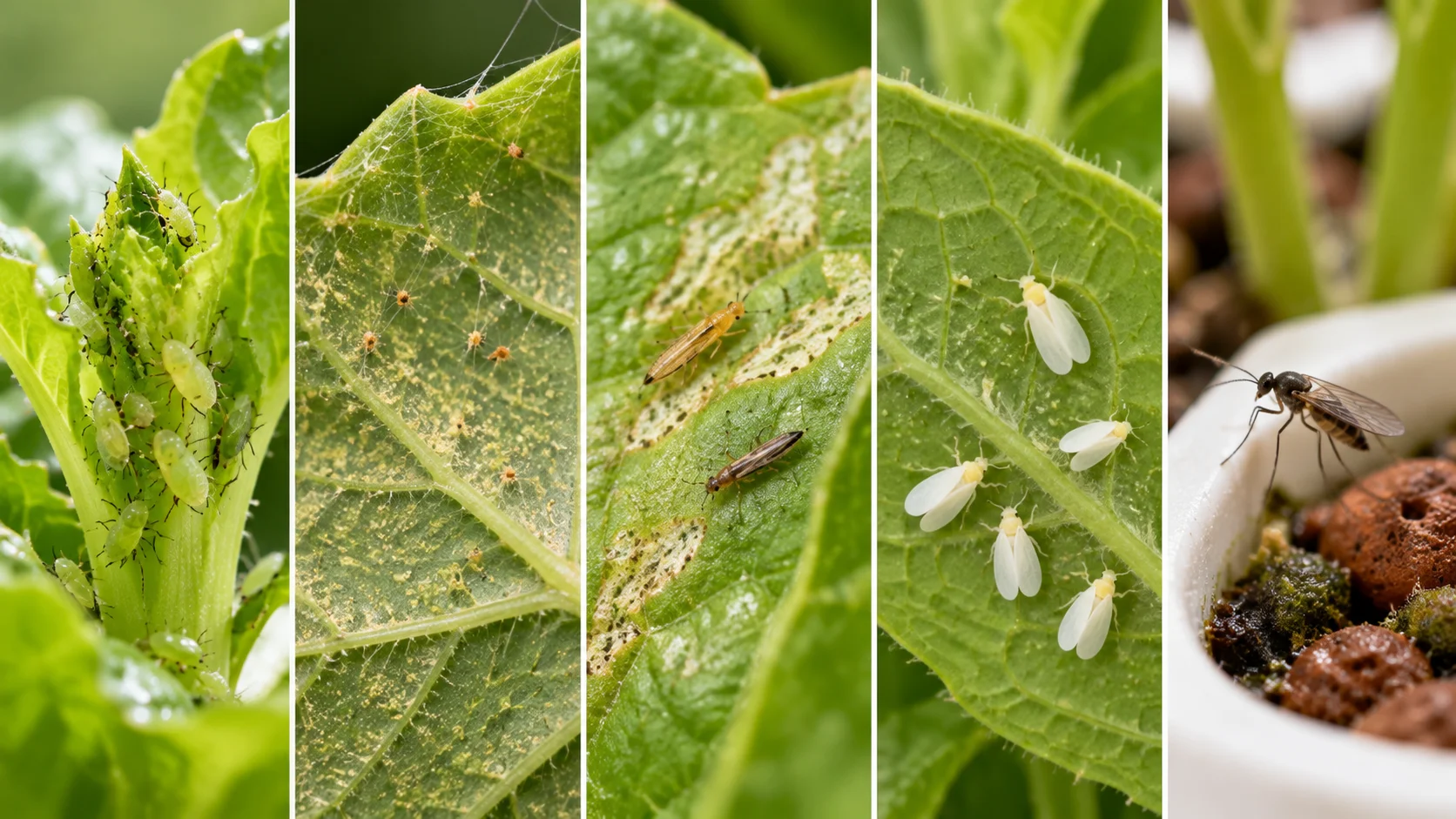
Plant symptoms alone don’t always identify the cause. Nutrient problems, lighting issues, and other growing conditions can also damage leaves. Whenever possible, look for the pest itself before deciding that insects are responsible.
Aphids
Aphids are small, soft-bodied insects that commonly gather around tender new growth, stems, and leaf undersides. They feed on plant sap and can cause distorted leaves or weakened growth when populations become large.
One clue is a shiny, sticky substance called honeydew. Aphids excrete honeydew while feeding, and it can collect on leaves or nearby surfaces.
Aphids are particularly worth checking for when harvesting hydroponic herbs and leafy greens. Look closely at young shoots and the undersides of leaves rather than inspecting only the most visible foliage.
Spider Mites
Spider mites are tiny plant-feeding mites that can cause pale stippling, discoloration, and eventually fine webbing on leaves. Heavy infestations can weaken plants and cause damaged foliage to decline.
Spider mites are difficult to see without close inspection. The first noticeable sign may be a pattern of tiny pale spots rather than visible mites.
Check the undersides of leaves, especially when foliage develops unexplained stippling or fine webbing. A small hand lens can help reveal mites that are difficult to see with the naked eye.
Thrips
Thrips are tiny, slender insects that can damage leaves, flowers, and tender growth. Feeding may leave irregular silvery patches, streaks, or distorted plant tissue.
Thrips can be especially frustrating because the insects are small and may move quickly when disturbed.
Inspect damaged leaves closely, including their undersides. Yellow or blue sticky cards can help reveal flying adults, but they won’t replace checking the plants themselves.
Whiteflies
Whiteflies are tiny white insects that commonly gather on leaf undersides. Adults may flutter into the air when an infested plant is moved or disturbed.
Whiteflies feed on plant sap and can produce sticky honeydew. Larger infestations may contribute to yellowing or weakened foliage.
If small white insects fly up when you handle hydroponic lettuce or herbs, gently turn over nearby leaves and inspect them for additional insects.
Fungus Gnats
Fungus gnats are small dark flies associated with moist growing media. The adults are usually more of a nuisance than a serious threat to established indoor plants, although larvae can sometimes damage vulnerable roots.
Fungus gnat larvae primarily feed on fungi and decaying organic material in suitable damp growing media. The University of Maryland Extension guide to fungus gnats explains why these insects are commonly associated with moist indoor plant-growing conditions.
Fungus gnats deserve special consideration in hydroponics because not every system uses the same growing medium.
Some countertop gardens use sponges or other soilless plugs, while other systems use clay pebbles or different materials. The presence of water alone doesn’t establish that fungus gnats are breeding inside a reservoir.
If small flies repeatedly appear around your hydroponic garden, inspect the growing media and nearby plants before assuming the reservoir is the source.
How to Check a Hydroponic Garden for Bugs
The best way to check a hydroponic garden for bugs is to inspect the plants regularly, paying particular attention to leaf undersides, tender growth, stems, growing media, and unusual plant damage.
Pest inspection doesn’t have to be a separate gardening chore. A quick check while harvesting basil, trimming lettuce, or refilling the reservoir can help you notice problems before they become more difficult to manage.
Check Leaf Undersides
Leaf undersides are one of the most important places to inspect because aphids, spider mites, whiteflies, and other pests may feed or shelter there.
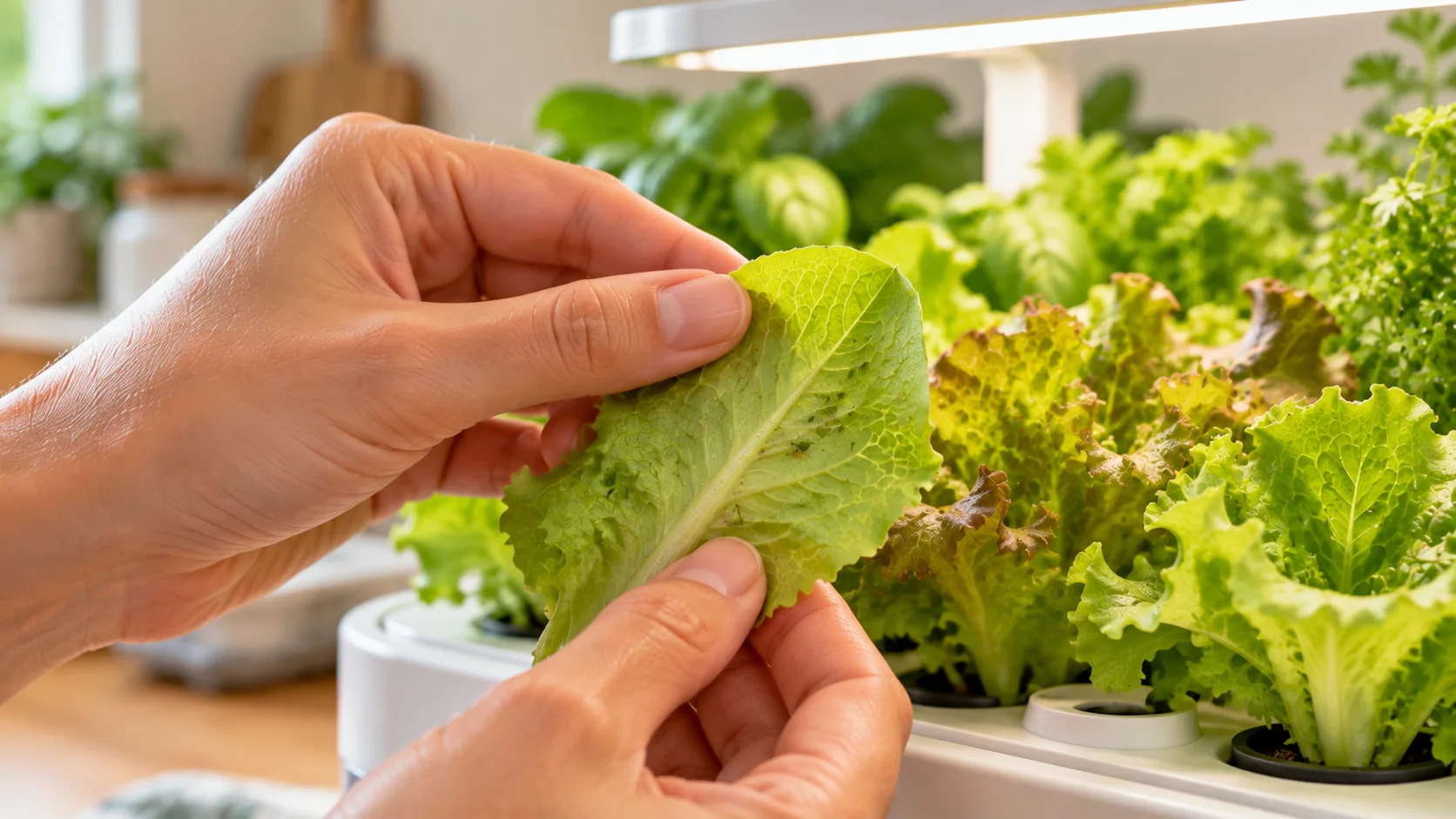
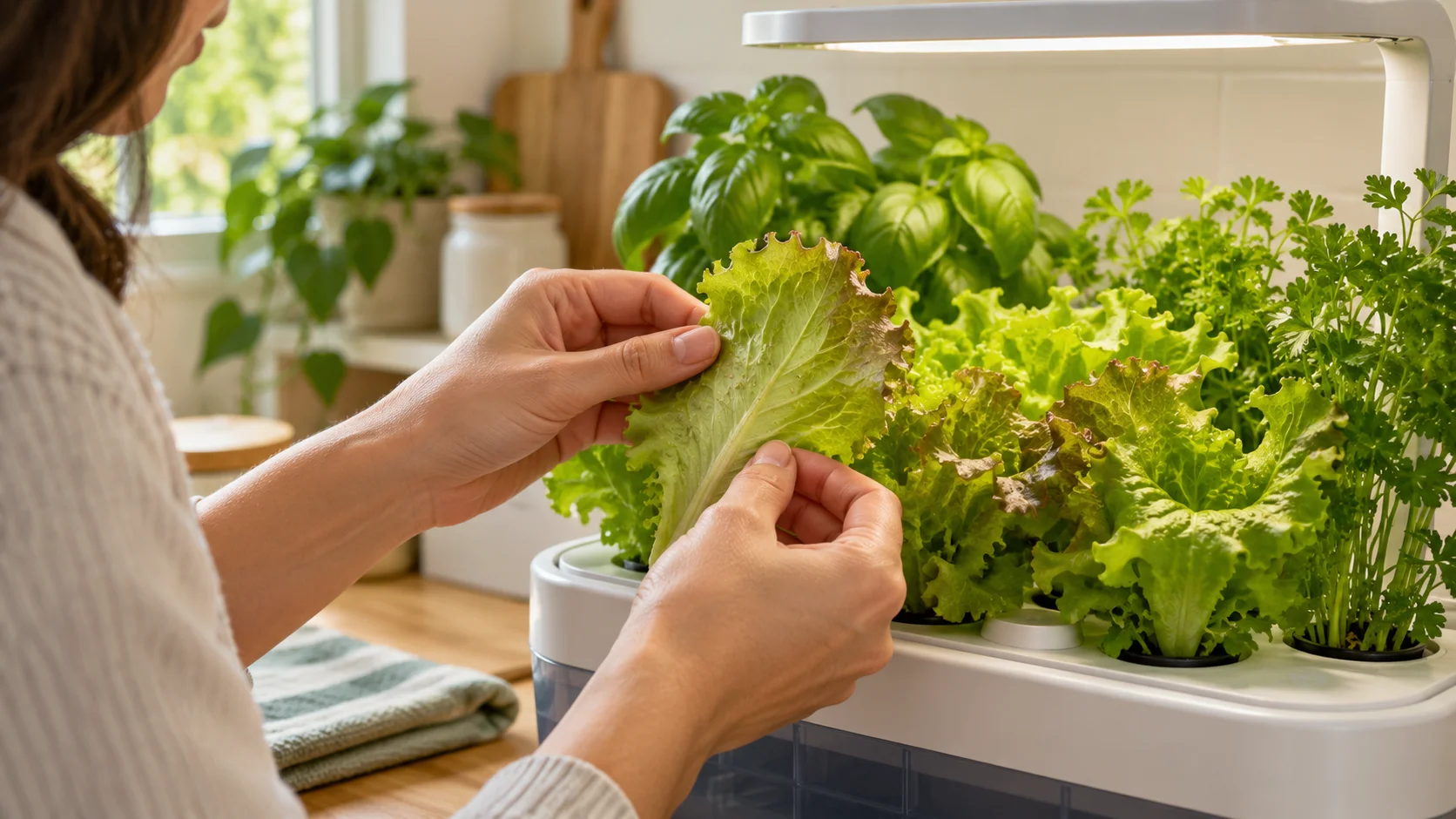
Gently lift several leaves and examine their undersides, especially near the veins. Look for tiny moving insects, eggs, webbing, sticky residue, or unusual discoloration.
A plant can appear healthy from above while pests are already active underneath its leaves.
Check New Growth and Stems
Tender new growth and stems can reveal pest problems before older leaves show obvious damage.
Inspect newly developing leaves, shoots, buds, and areas where leaves meet stems. Watch for clusters of small insects, curling leaves, distorted growth, or unusual spots.
Young basil shoots and lettuce growth are convenient places to check during normal harvesting and pruning.
Look for Webbing, Stippling, and Other Plant Damage
Unusual leaf damage can provide clues about pests even when the insects themselves are difficult to find.
Fine webbing and pale stippling can suggest spider mites. Silvery patches may indicate thrips. Sticky honeydew can point toward sap-feeding insects such as aphids or whiteflies.
These symptoms are clues, not proof. Examine the affected leaves carefully before selecting a pest treatment.
Check Growing Media and the Area Around the System
Growing media and the surrounding countertop should be inspected when small flies repeatedly appear around a hydroponic garden.
Look for dead leaves, decaying plant material, algae, and other debris that may accumulate around plant openings or the grow deck.
Small flying insects may also originate from nearby houseplants rather than the hydroponic system itself. Checking the surrounding growing area can help you locate the actual problem.
Use Sticky Cards for Monitoring
Sticky cards can help detect flying pests around an indoor hydroponic garden, but they won’t catch every insect or reveal every infestation.
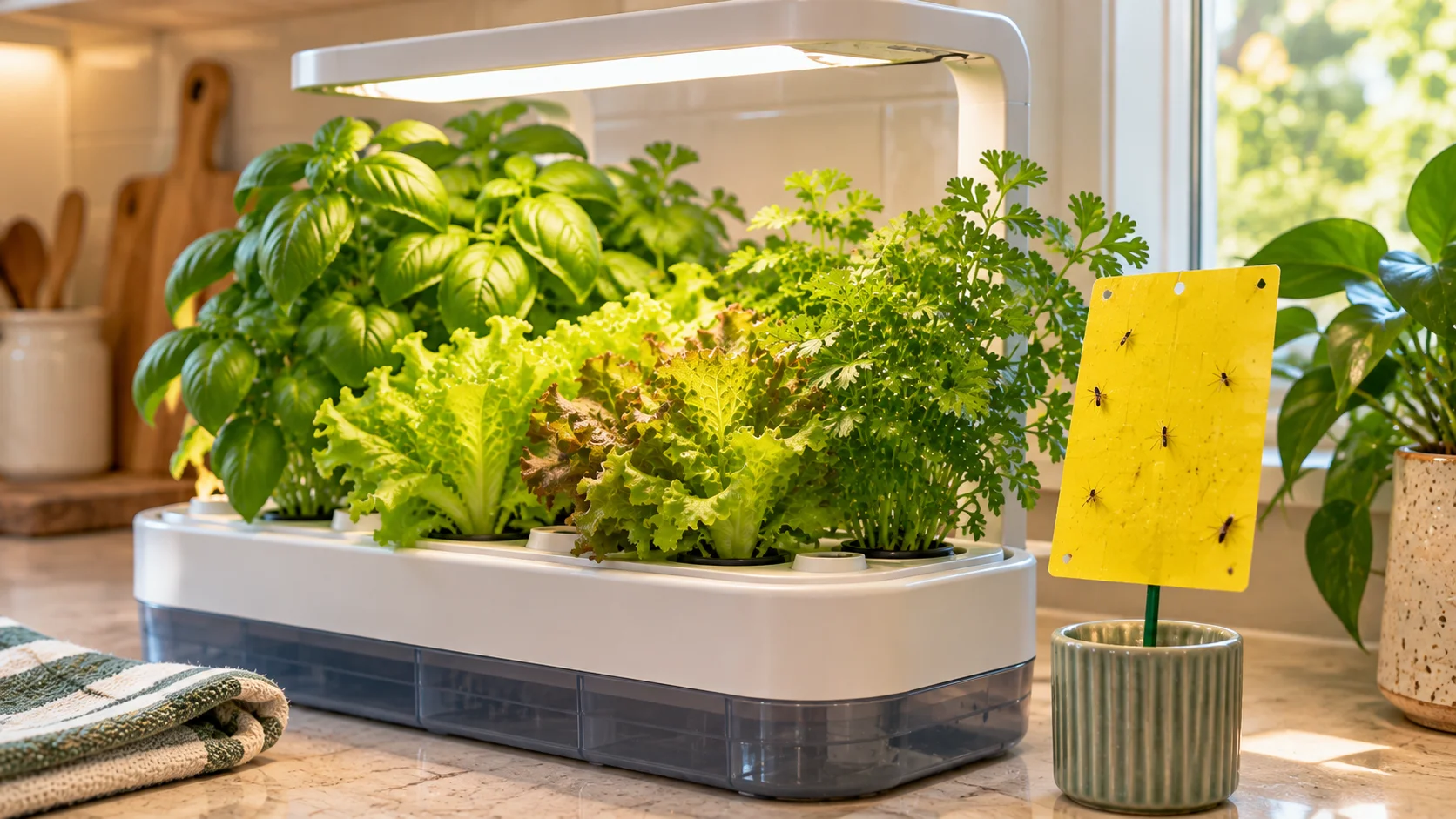
Yellow sticky cards are commonly used to monitor flying insects such as fungus gnats and whiteflies. Blue cards may also be useful for monitoring thrips.
The University of Minnesota Extension guide to insects on indoor plants explains how sticky traps can support indoor pest monitoring while emphasizing the importance of inspecting plants directly.
For a compact countertop garden, position a small monitoring card near the plants without allowing the sticky surface to touch edible foliage.
Check the card periodically for changes in insect activity. Remember that spider mites, eggs, and many immature pests won’t necessarily appear on sticky cards.
How to Prevent Bugs in an Indoor Hydroponic Garden
Preventing bugs in an indoor hydroponic garden starts with inspecting new plants, separating questionable plants, keeping the growing area clean, and checking established plants regularly.
No indoor growing method can guarantee that pests will never appear. However, a consistent prevention routine can make infestations easier to discover and address.
Inspect New Plants Before Bringing Them Near the Garden
Every new plant should be inspected before being placed near an established hydroponic garden.
Check the leaves, stems, growing media, and container for insects or suspicious damage. Pay special attention to leaf undersides and tender shoots.
Plants that have spent time outdoors should receive the same inspection before being brought inside.
Keep Questionable Plants Separate
New or potentially infested plants should be kept apart from established indoor plants while you watch for developing pest problems.
University Extension recommendations vary on the exact isolation period. Some recommend one to two weeks, while others suggest a longer period for newly acquired houseplants.
For apartment gardeners, the practical goal is to allow time for repeated inspection before placing a questionable plant beside a healthy hydroponic garden.
Keep the plants far enough apart to reduce contact between their foliage, and continue checking for insects or new damage during the observation period.
Remove Dead Leaves and Plant Debris
Dead leaves, damaged plant material, and accumulated debris should be removed regularly from the hydroponic growing area.
Removing plant debris doesn’t eliminate every pest, but it helps keep the growing area easier to inspect and reduces unnecessary decaying material around the system.
Pay attention to fallen leaves on the grow deck, plant openings, and the countertop surrounding the reservoir.
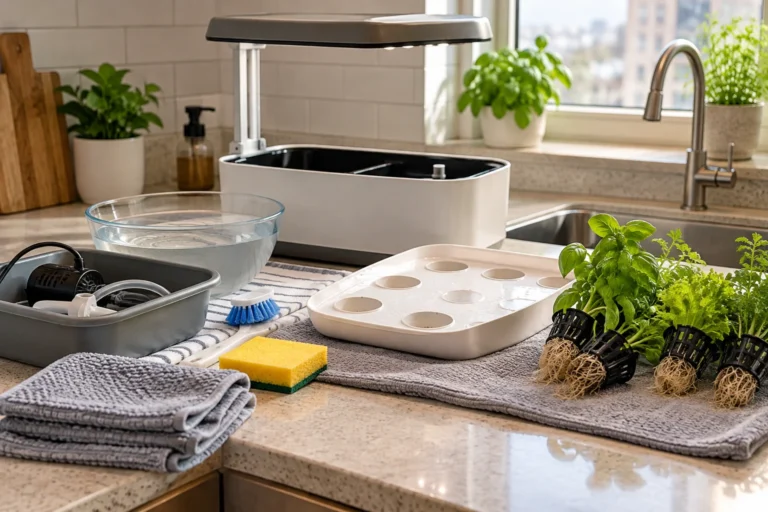
Regular equipment maintenance matters too. Our step-by-step guide on how to clean a hydroponic system explains how to maintain the reservoir, pump, tubing, and removable components in a small apartment setting.
Monitor the Garden Regularly
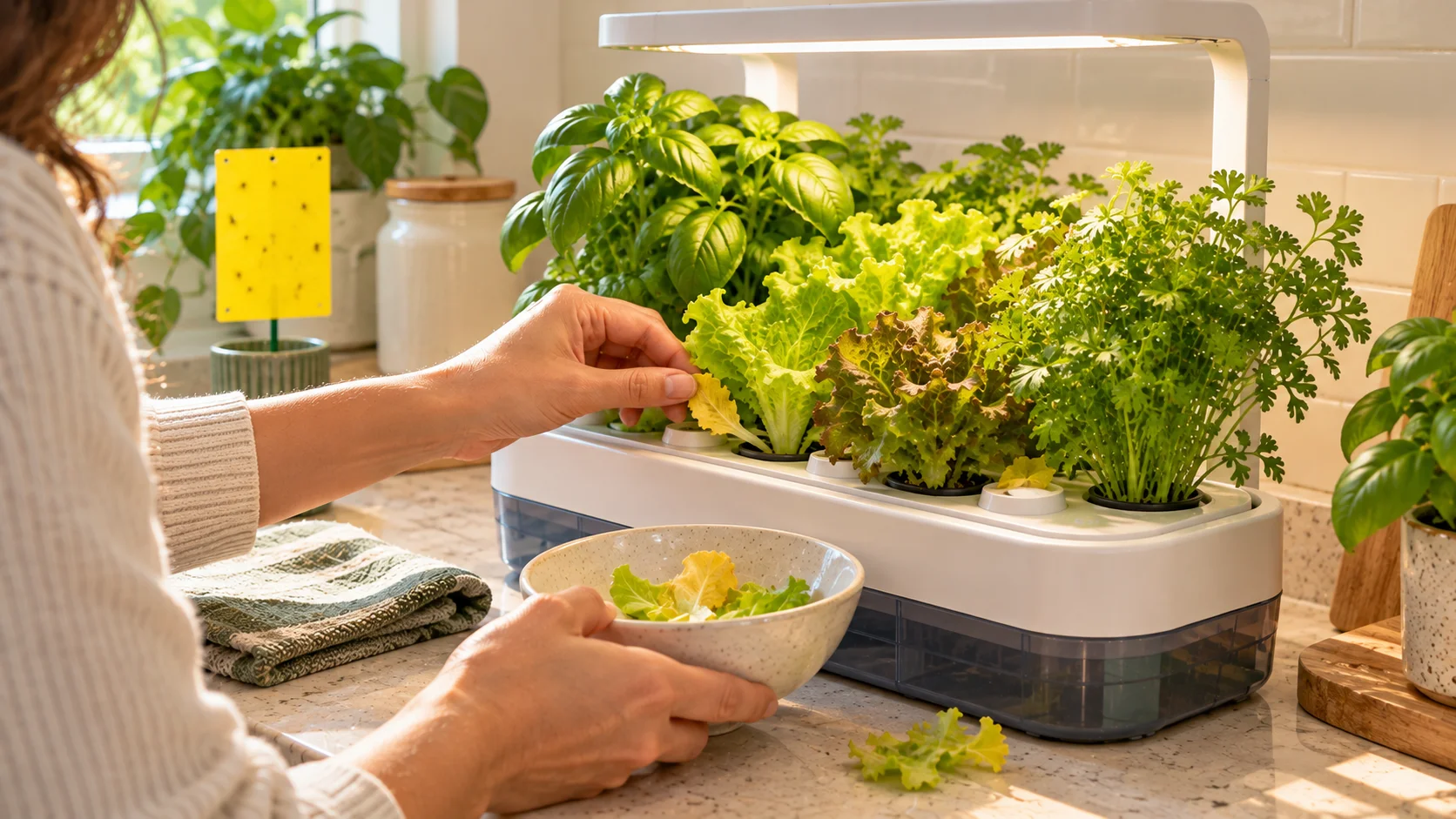
Regular pest monitoring helps apartment gardeners notice insects and plant damage before problems become severe.
Check leaves while harvesting, look for new damage when pruning, and inspect the growing area during routine water and nutrient maintenance.
You don’t need to examine every leaf with a magnifying glass each day. Instead, develop the habit of noticing changes and taking a closer look when something seems unusual.
A small countertop garden makes this easier because most plants are within reach.
What Should You Do If You Find Bugs on a Hydroponic Plant?
If you find bugs on a hydroponic plant, identify the pest first, inspect nearby plants, and separate the affected plant when practical. Remove heavily infested or dead plant material when appropriate, and choose any treatment carefully because hydroponic herbs and vegetables are often grown for eating.
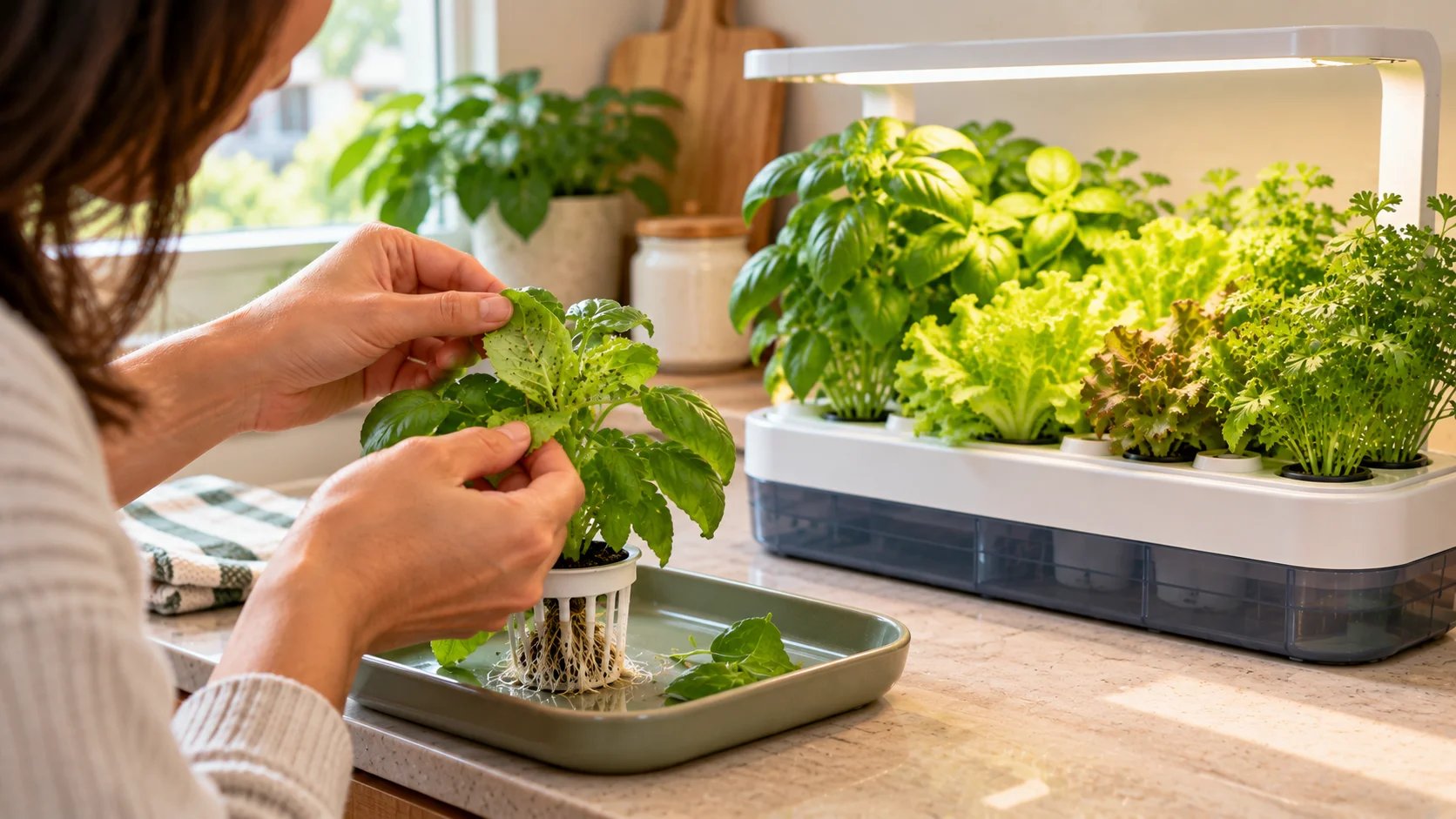
Avoid reaching for a pesticide before understanding the problem. A few fungus gnats around growing media require a different response from spider mites feeding on lettuce leaves.
Identify the Pest First
Correct pest identification helps prevent unnecessary or ineffective treatments.
Look at where the insect is located, what it looks like, and whether the plant shows matching damage.
Aphids may cluster around tender growth. Spider mites can produce stippling and webbing. Thrips may leave silvery damage, while whiteflies can flutter from leaf undersides.
Fungus gnats are more closely associated with suitable moist growing media.
If you can’t identify the pest confidently, continue inspecting the plant or consult a reliable Extension identification resource before applying a treatment.
Separate the Affected Plant When Practical
Separating an infested plant can reduce contact with healthy plants while you inspect and manage the problem.
Some countertop hydroponic systems use removable grow pods that make individual plant removal possible. Other systems have interconnected roots or components that make separation difficult.
Follow the manufacturer’s instructions before removing a plant. Don’t tear apart an established root system or damage equipment simply to isolate one plant.
If separation isn’t practical, inspect the neighboring plants carefully and monitor the affected area.
Remove Heavily Infested or Dead Plant Material When Appropriate
Removing badly infested leaves or dead plant material can help reduce the amount of affected tissue and make the remaining plant easier to inspect.
Use clean pruning tools and avoid removing more healthy foliage than necessary.
If a small herb plant is severely infested, discarding the affected plant may sometimes be more practical than allowing pests to remain near healthy plants.
For edible crops, also consider whether damaged or treated foliage is suitable for harvesting rather than assuming every leaf should still be eaten.
Choose a Treatment Appropriate for the Pest and Crop
Any pesticide used on hydroponically grown herbs or vegetables must be labeled for the target pest, edible crop, and intended application.
A spray marketed for ornamental houseplants isn’t automatically appropriate for basil, parsley, lettuce, or other plants you intend to eat.
Before using a product, check the label for:
Crops and pests covered
Approved application locations
Mixing and application instructions
Treatment frequency
Protective equipment requirements
Harvest restrictions or waiting periods
A small test application may reveal whether a plant is sensitive to a product, but it doesn’t establish that the pesticide is approved for edible crops.
Avoid assuming that homemade soap mixtures or natural-sounding ingredients are automatically safe for hydroponic vegetables.
Keep Pest Treatments Out of the Nutrient Reservoir Unless the Label Allows It
Pest-control products should not be added to a hydroponic nutrient reservoir unless their labels specifically allow that use.
A product approved for spraying plant foliage is not automatically approved for application to a recirculating nutrient solution.
This distinction is especially important in countertop systems where the reservoir, pump, roots, and growing deck are closely connected.
When using a labeled foliar treatment, protect the reservoir from unintended spray or runoff where practical. Follow the pesticide label and the hydroponic-system manufacturer’s instructions.
Never pour neem oil, insecticidal soap, or another general pest treatment directly into the nutrient solution simply because insects have appeared on the plants.
Should Bugs Stop You From Using an Indoor Hydroponic Garden?
The possibility of bugs alone shouldn’t stop you from trying an indoor hydroponic garden. Pest problems can occur, but routine inspection and basic prevention can help you recognize many issues before they become difficult to manage.
Hydroponic gardening still requires attention even when the system automatically manages lighting or water circulation. Plants need regular observation, dead material should be removed, and equipment requires maintenance.
For apartment gardeners, pest monitoring is one responsibility among several. Startup costs, electricity, nutrient management, cleaning, and equipment reliability also deserve consideration.
Our article on the 5 disadvantages of hydroponics for apartment gardeners explains those broader tradeoffs so you can decide whether an indoor growing system fits your space, budget, and maintenance preferences.
Frequently Asked Questions
Do Indoor Hydroponic Gardens Attract Bugs Without Soil?
Yes, hydroponic gardens can get bugs without soil because many pests feed directly on plant leaves, stems, and other plant tissues.
Aphids, spider mites, thrips, and whiteflies can infest indoor plants regardless of whether the plants grow in soil or a hydroponic system. Fungus gnats are more closely associated with suitable moist growing media.
How Do I Check Hydroponic Plants for Pests?
Check hydroponic plants by inspecting leaf undersides, tender growth, stems, flowers, growing media, and the area around the system.
Look for insects, eggs, webbing, sticky honeydew, unusual discoloration, silvery patches, and distorted leaves. A hand lens can help when pests are too small to see clearly.
Do Sticky Traps Catch Every Hydroponic Pest?
No, sticky traps mainly help detect certain flying insects and cannot replace direct plant inspection.
Yellow or blue sticky cards may help reveal fungus gnats, whiteflies, winged aphids, and thrips. Spider mites, eggs, and pests that remain on leaves may never appear on the cards.
Can I Use Ordinary Houseplant Bug Spray on Hydroponic Herbs?
Ordinary houseplant bug spray should not be used on edible hydroponic herbs unless its label permits use on the specific crop, pest, and application site.
Products intended only for ornamental houseplants may not be suitable for basil, parsley, lettuce, or other edible crops. Always follow the label, including application instructions and any harvest restrictions.
Does Cleaning the Reservoir Remove Bugs From the Leaves?
No, cleaning a hydroponic reservoir does not remove insects or mites already feeding on leaves and stems.
Reservoir cleaning helps maintain the equipment and growing environment, but aphids, spider mites, thrips, and whiteflies require attention to the affected plants themselves.
The Bottom Line
Indoor hydroponic gardens can get bugs, but growing without soil doesn’t automatically create a pest problem in an apartment. Aphids, spider mites, thrips, whiteflies, and fungus gnats are among the pests worth watching for.
Inspect new plants before bringing them near the garden, check leaf undersides and tender growth regularly, remove dead plant material, and use sticky cards to help monitor flying insects.
If pests appear, identify the problem before choosing a treatment. For edible hydroponic crops, follow pesticide labels carefully and keep treatments out of the nutrient reservoir unless the label specifically allows that use.
The goal isn’t to guarantee that a bug will never appear. It’s to keep your indoor hydroponic garden healthy by recognizing problems early and responding before they get out of hand.