How to Protect Balcony Plants From Strong Wind
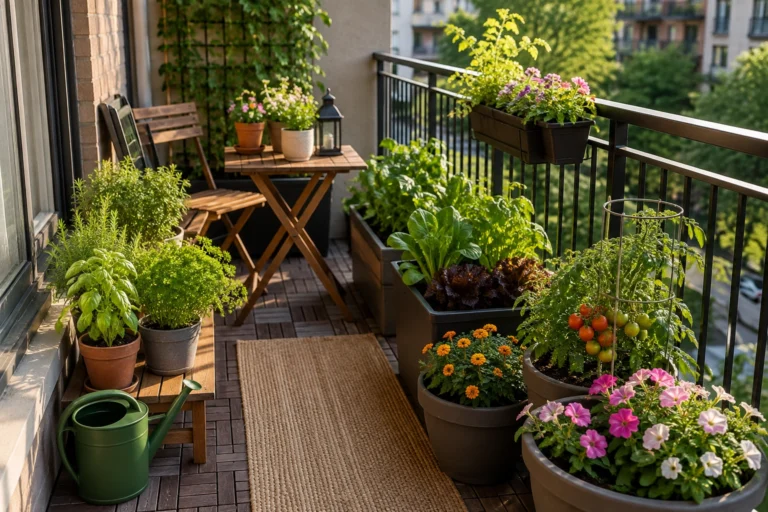
Knowing how to protect plants from wind starts with reducing exposure before damage occurs. On an exposed apartment balcony, move vulnerable containers to more sheltered locations, use stable pots, support tall plants, and consider a safely installed wind barrier where building rules allow one. Wind can damage leaves and stems, make containers less stable, and cause potting mix to dry faster, so the best protection combines placement, support, container stability, and regular moisture checks.
In This Guide
What Does Strong Wind Do to Balcony Plants?
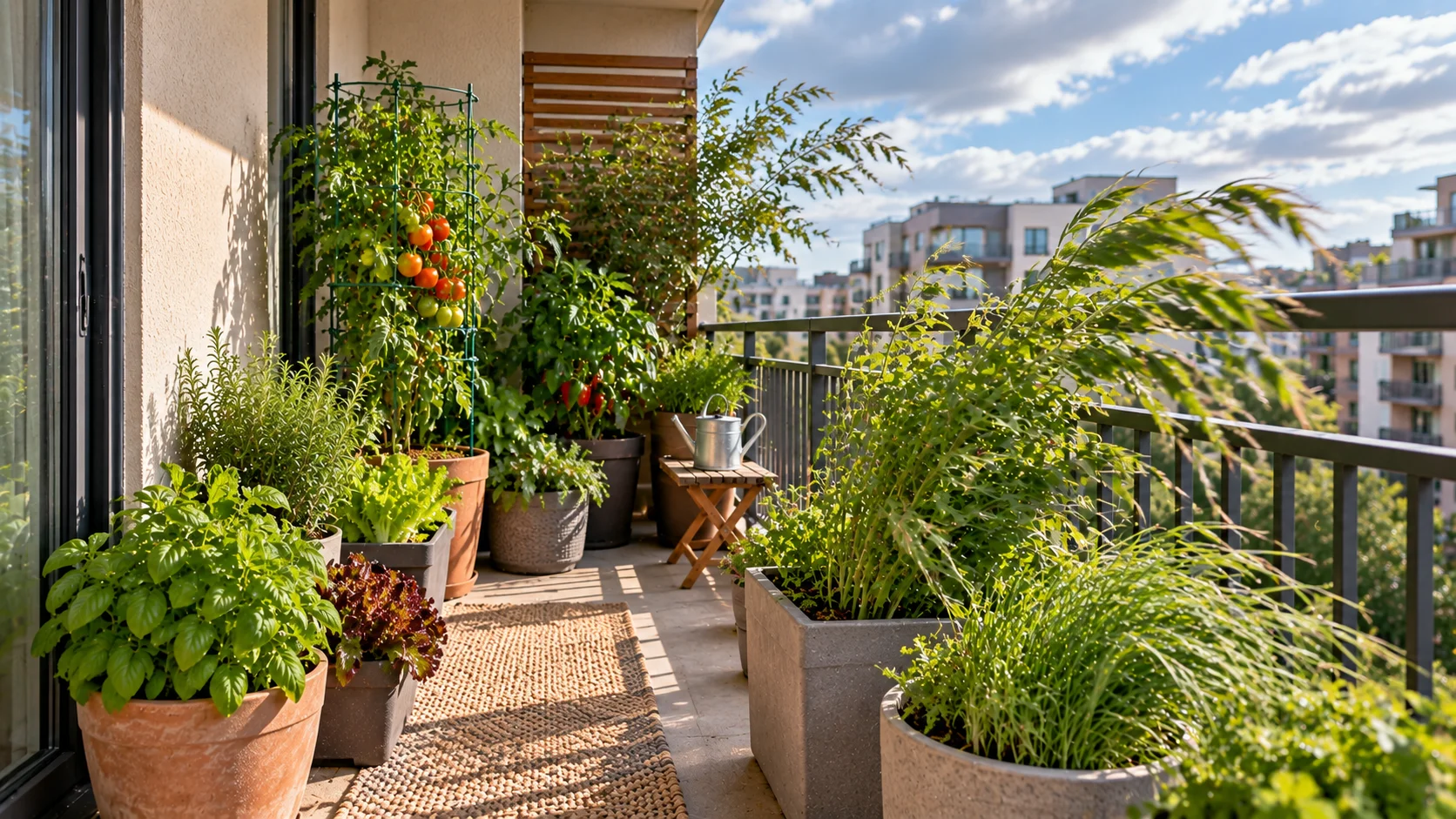
Strong wind can damage balcony plants by tearing foliage, breaking stems, pushing unsupported plants over, destabilizing containers, and increasing moisture loss.
Large vegetable plants can be vulnerable to breakage during strong winds, particularly when they are carrying a heavy load of fruit. University of Maryland Extension identifies tomatoes, peppers, eggplants, squash, and other large vegetable plants as susceptible to storm damage and recommends adequate support for large and tall plants.
Wind can also affect container moisture. University of Maryland Extension’s container vegetable guidance notes that breezes dry container media faster than locations sheltered from wind. That makes exposed balcony containers particularly important to monitor during warm, dry, or windy weather.
Wind is not the only possible explanation for damaged leaves, wilting, or declining plants. Heat, inadequate or excessive watering, disease, pests, and other environmental stresses can produce similar symptoms.
Move Balcony Plants to the Most Sheltered Location
Moving vulnerable containers away from the most exposed part of a balcony can reduce the amount of wind reaching the plants.
A balcony does not necessarily receive the same wind exposure everywhere. A container beside an exposed railing may experience considerably more moving air than a container positioned in a protected part of the same balcony.
University of Maryland Extension’s container gardening guidance notes that walls can provide protection from strong winds, although walls can also reduce air circulation. The goal is to find a useful balance rather than packing every plant tightly against a wall.
Watch Where the Strongest Wind Enters the Balcony
The most useful way to evaluate balcony wind is to observe which locations receive the strongest and most persistent exposure.
Look for plants that repeatedly lean in one direction, leaves that move much more aggressively in one area, or lightweight containers that become unstable during windy conditions. These observations can help identify where vulnerable plants may benefit from being repositioned.
The most exposed balcony edge does not automatically have to remain your primary growing location just because it has available space.
Do Not Solve Wind Exposure by Creating a Sunlight Problem
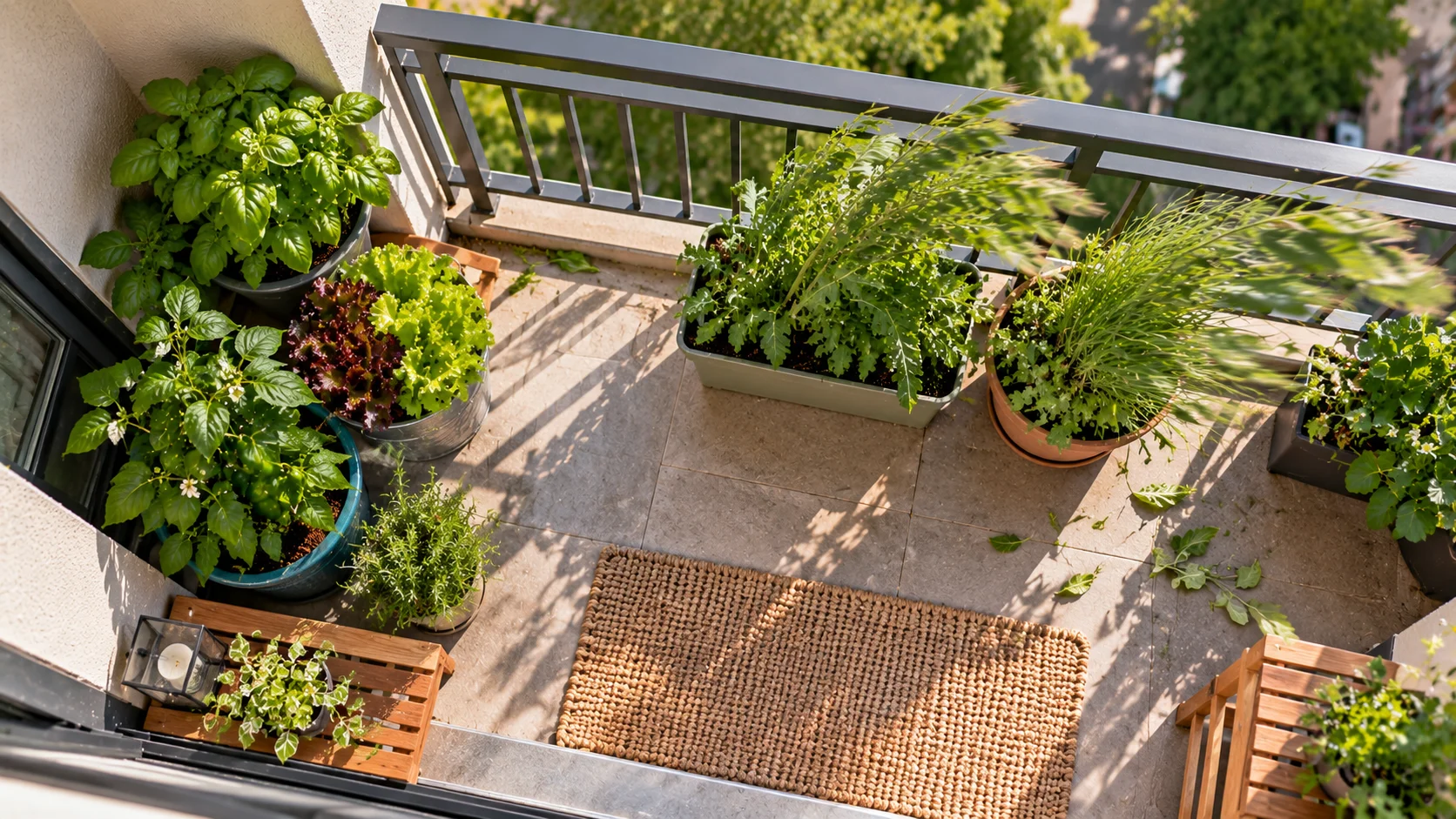
A sheltered balcony location is only useful when it still provides appropriate growing conditions for the plant.
Moving a sun-loving tomato into a protected but heavily shaded corner could reduce wind exposure while creating a different growing problem. University of Maryland Extension recommends about 6 to 8 hours of direct sunlight for warm-season container vegetables such as tomatoes, peppers, and eggplants.
Before relocating vegetables permanently, check how much sun your balcony garden gets and choose a location that balances appropriate light with protection from excessive wind.
Use Stable Containers That Are Less Likely to Tip
A stable vegetable container should be large enough for the plant’s roots and balanced enough to remain secure as the plant reaches mature size.
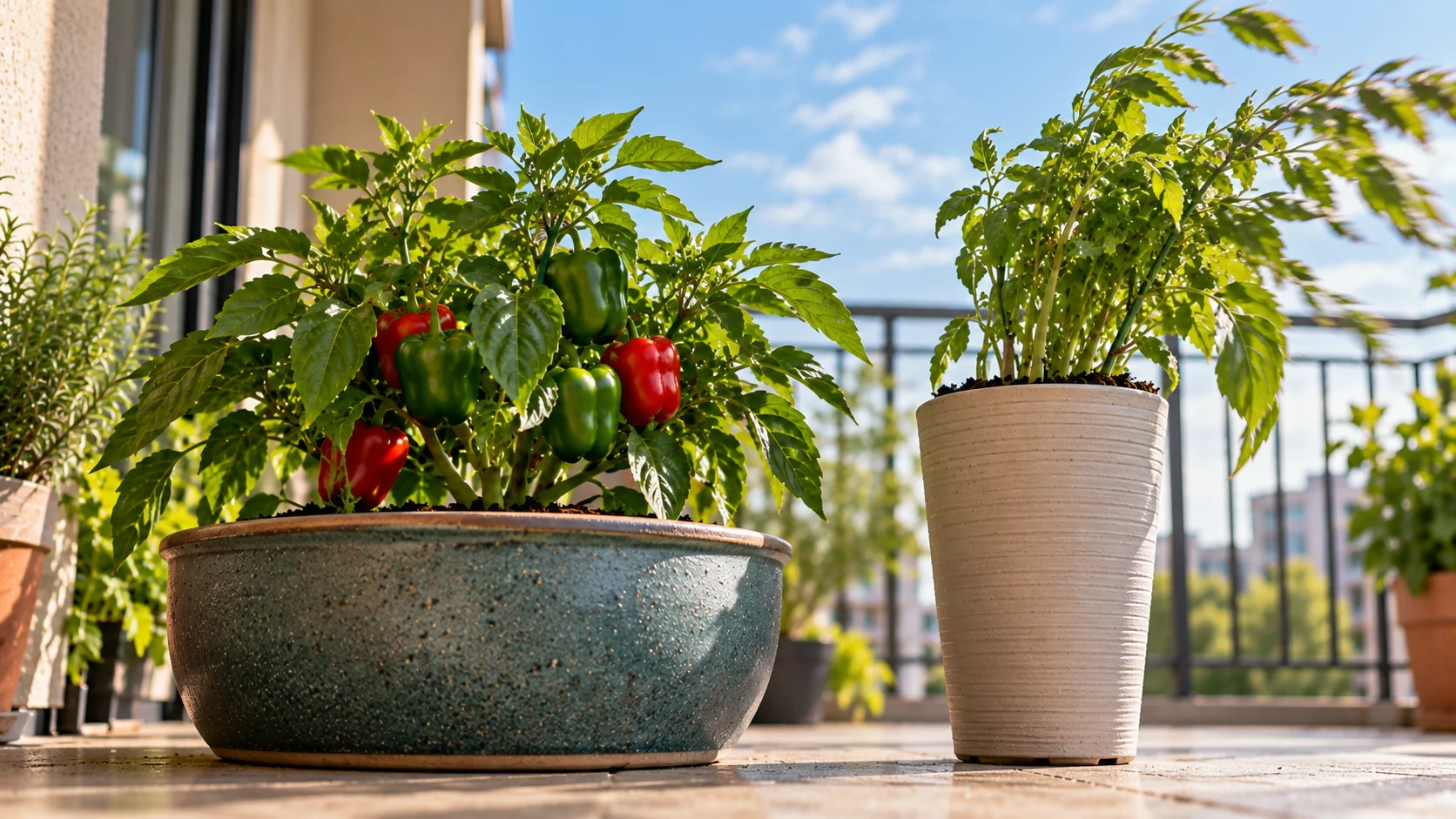
Container shape matters. A tall plant growing in a relatively small or lightweight container can become top-heavy as its canopy expands.
University of Maryland Extension’s guidance for choosing vegetable containers warns that tall plants in relatively small, lightweight containers can be blown over or become top-heavy. Maryland Extension also notes that, for the same volume, a wider container can be less top-heavy and more stable in a breeze than a taller container.
Tall Plants Can Make a Container Top-Heavy
A vegetable container that seems stable when a transplant is small may become much less stable after the plant reaches mature size.
A young tomato may have only a few stems and leaves above the pot. As the tomato grows, its larger canopy, support structure, and developing fruit create a much larger plant for the container to support.
Container stability should therefore be considered based on the mature plant, not just the seedling at planting time.
Choosing a container with enough room for mature root growth also matters. University of Maryland Extension recommends matching container size to plant size while considering both top growth and the root system.
Be Careful With Containers on Railings and Elevated Surfaces
Containers exposed to strong wind should not be positioned where tipping or falling could endanger people or property below.
Railing planters, hanging baskets, shelves, plant stands, and other elevated growing systems require particular care on exposed balconies. A setup that appears secure during calm weather can experience very different conditions when a mature plant and its foliage are exposed to stronger wind.
Check your building rules and the installation requirements for any planter or support system before using it on or near a balcony railing.
Support Tall and Fruiting Vegetable Plants
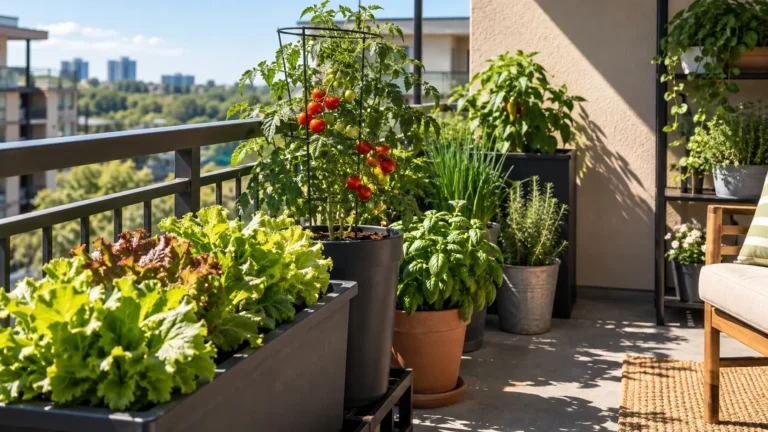
Tall and fruiting vegetables such as tomatoes, peppers, and eggplants should have adequate support because strong winds and heavy fruit loads can contribute to stem and branch breakage.
University of Maryland Extension’s guidance on broken vegetable stems recommends sufficient support for large and tall vegetable plants and specifically recommends supporting peppers and eggplants.
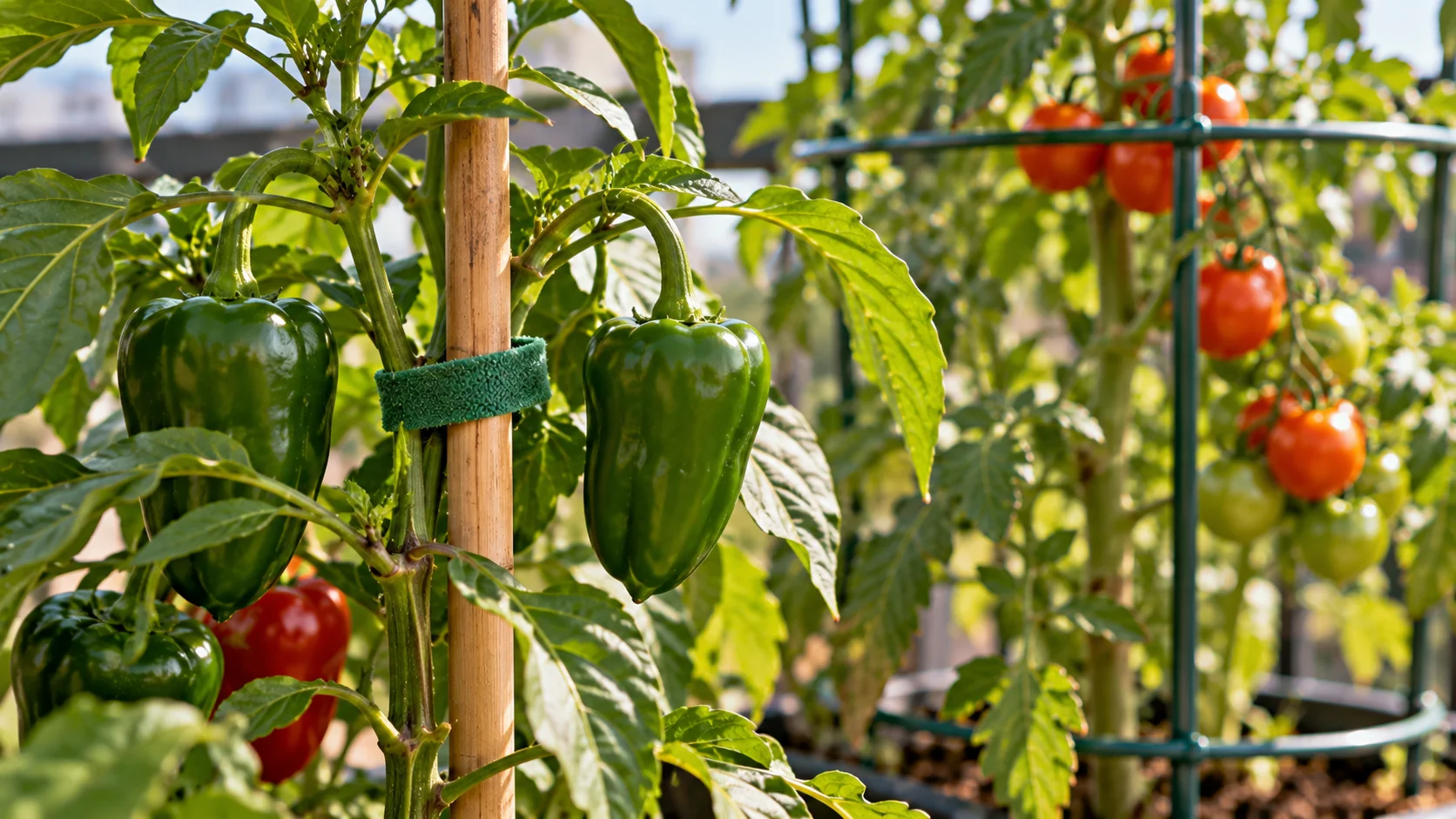
Appropriate support can include cages, stakes, trellises, or another system suited to the crop.
Support Tomatoes Before They Become Large
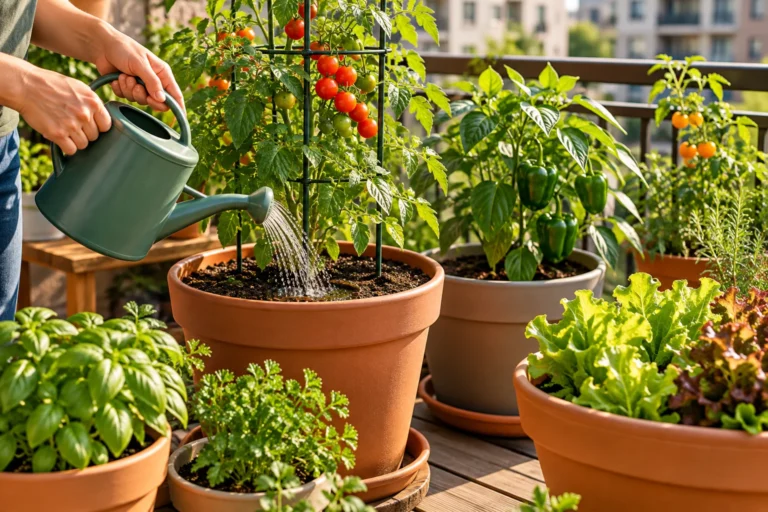
Tomato plants are easier to support when a cage, stake, or other suitable structure is established before the plant develops a large canopy.
Waiting until a tomato is already leaning or carrying substantial fruit can make correcting the plant more difficult and may increase the chance of damaging stems while repositioning them.
The appropriate support depends on the tomato variety and its mature growth habit. A compact determinate tomato and a vigorous indeterminate tomato can require very different support systems.
Make Sure the Plant and Container Are Stable Together
Supporting a plant does not solve a wind problem if the support causes the entire container to become unstable.
A tomato cage, stake, or trellis and the container holding it should function as one stable system. As the plant grows, periodically check whether the container remains secure and whether the support is still properly positioned.
This is another reason to plan your container vegetable garden layout around mature plants rather than the size of young transplants.
Can a Windbreak Protect Balcony Plants?
A windbreak can reduce wind exposure around balcony plants, but any barrier must be appropriate for the space, securely installed, and permitted by the building.
Windbreaks work by changing airflow rather than necessarily eliminating it. Research on larger landscape and agricultural windbreaks shows that barrier density affects how air moves through and over a windbreak.
However, agricultural windbreak research should not be interpreted as a precise specification for an apartment balcony. There is no universal screen material or porosity percentage that is appropriate for every balcony.
A Balcony Windbreak Does Not Need to Eliminate All Airflow
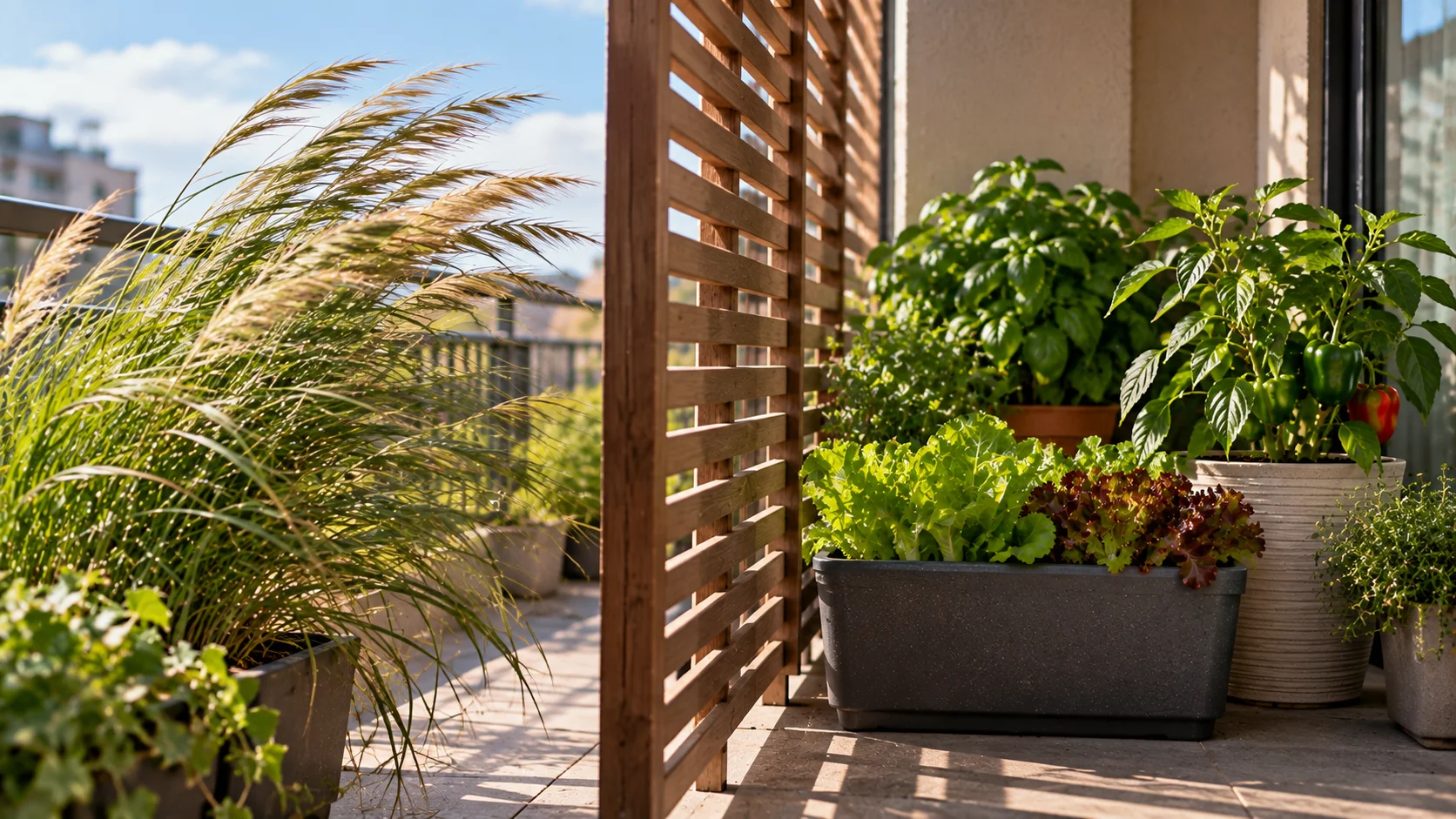
A balcony windbreak can reduce plant exposure without completely sealing the growing area from moving air.
The underlying windbreak principle is that the density of a barrier affects airflow. Larger-scale Extension research on windbreaks shows that air can move both through and over a barrier, so a completely solid barrier is not automatically necessary to reduce wind exposure.
For an apartment gardener, the practical goal is to reduce damaging exposure rather than reproduce an agricultural windbreak design on a balcony.
Check Building Rules Before Installing a Balcony Wind Screen
Check your lease, condominium or HOA rules where applicable, and building requirements before attaching a wind screen, trellis, panel, or other structure to a balcony.
This matters for more than appearance. Screens and panels can catch wind themselves, so an improperly installed barrier could create a different safety problem.
Do not assume that a railing can safely support a particular wind barrier simply because the material is lightweight. Follow the requirements for the building and the product rather than improvising an attachment method.
How Do You Stop Plant Pots From Blowing Over?
To reduce the chance of plant pots blowing over, use stable containers, keep vulnerable pots away from highly exposed edges, support top-heavy plants, and relocate portable containers before unusually strong winds arrive.
Container shape can also affect stability. University of Maryland Extension notes that wider containers can be less top-heavy and more stable in a breeze than taller containers holding the same volume. Container stability should therefore be evaluated together with the mature plant, its support system, and its location on the balcony.
Windy Balcony Plants May Dry Out Faster
Balcony plants exposed to steady wind can dry out faster than comparable plants in sheltered locations, so their potting mix may need to be checked more frequently.
University of Maryland Extension identifies container location as one factor affecting watering frequency and notes that breezes dry container media faster than areas sheltered from wind. Container size, sunlight, temperature, plant maturity, and plant type also affect how quickly potting mix dries.
Checking more frequently does not automatically mean watering more frequently.
Check the potting mix below the surface and make the watering decision based on actual moisture conditions rather than automatically adding water because the weather is windy.
For a complete watering strategy, see how often you should water balcony plants.
Grouping Containers Can Help Reduce Moisture Loss
Grouping containers can help slow evaporation by increasing humidity around plants, especially when the containers are already positioned in a location protected from wind.
Grouping containers can help slow evaporation by increasing humidity around plants, especially when the containers are already positioned in a location protected from wind.
University of Maryland Extension recommends grouping containers to help slow evaporation, particularly when the containers are positioned out of the wind.
Grouping does not mean crowding every plant together. Plants still need appropriate sunlight, room for mature growth, access for watering and harvesting, and enough separation to prevent larger plants from unnecessarily shading smaller crops.
When deciding which pots belong together, use your container vegetable garden layout to balance wind exposure with sunlight, mature plant size, support needs, and access.
What Should You Do Before Very Strong Winds?
Before unusually strong winds arrive, move vulnerable plants and loose gardening items to safer locations while conditions are still safe, and check any plant supports or permitted garden structures.
A simple pre-wind check can include:
- Move portable vulnerable plants to a more sheltered location.
- Check cages, stakes, and other plant supports.
- Move unstable containers away from exposed edges.
- Remove or safely store lightweight gardening items.
- Check hanging baskets and elevated planters.
- Follow manufacturer instructions for temporary garden structures or equipment.
- Inspect any permitted wind screen or garden structure before conditions deteriorate.
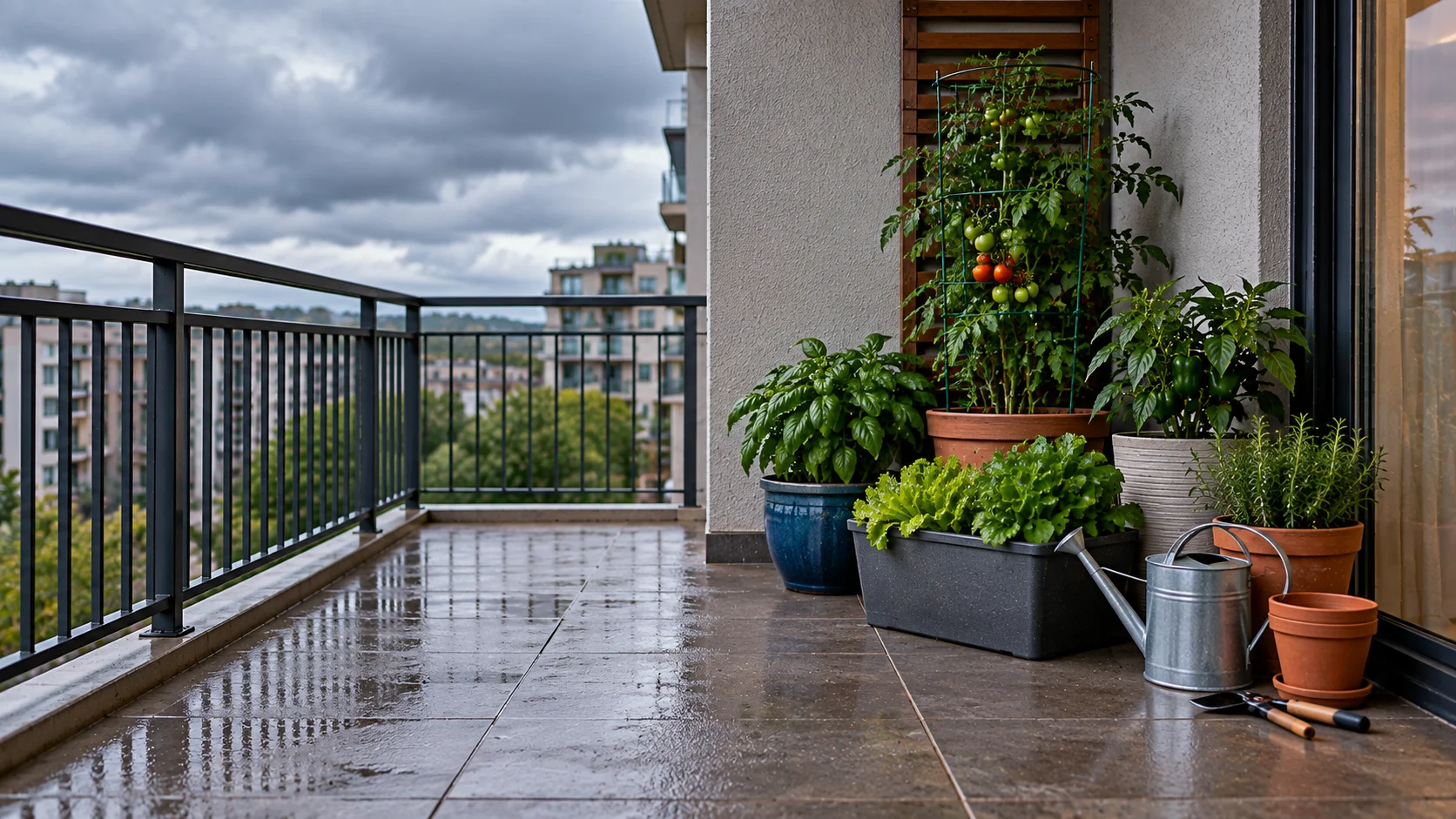
Do not go onto an exposed balcony during dangerous winds simply to rescue a plant, pot, or piece of gardening equipment. Plant protection should be handled before conditions become hazardous.
For gardeners building a vegetable-growing space from the beginning, the broader guide to starting an apartment balcony vegetable garden explains how sunlight, containers, drainage, plant selection, and other balcony conditions work together.
How Can You Tell if Wind Is Damaging Your Plants?
Wind damage can appear as torn foliage, broken stems, leaning plants, damaged supports, displaced containers, or unusually rapid drying in exposed locations.
Wind is more likely to be involved when damage follows windy weather and is concentrated on the most exposed plants or sides of plants.
These symptoms are not unique to wind. Heat, drought, overwatering, pests, disease, and other environmental stresses can produce overlapping symptoms.
Should You Choose Wind-Tolerant Plants for an Exposed Balcony?
Choosing plants suited to exposed conditions can make a windy balcony easier to manage, but plant selection does not replace stable containers, appropriate placement, or preparation for severe weather.
If wind is a regular feature of your balcony, use our guide to plants suited to different balcony conditions when deciding what to grow.
How to Protect Balcony Plants From Wind: Quick Checklist
| Check | What to Do |
|---|---|
| Wind exposure | Identify which parts of the balcony receive the strongest wind |
| Plant placement | Move vulnerable plants toward more sheltered locations |
| Containers | Choose stable containers and avoid unsafe elevated placement |
| Tall plants | Support tomatoes and other vulnerable vegetables before they become large |
| Windbreaks | Use barriers only when they are appropriate, secure, and permitted |
| Water | Check exposed container potting mix more frequently |
| Grouping | Group compatible containers in sheltered locations when it helps reduce moisture loss |
| Strong weather | Relocate or secure vulnerable items before conditions become dangerous |
| Building rules | Check restrictions before attaching screens or structures |
Frequently Asked Questions
Can Wind Damage Balcony Plants?
Yes. Strong wind can tear foliage, break stems, push unsupported plants over, destabilize containers, and increase moisture loss. Large vegetable plants and plants carrying heavy fruit can be particularly vulnerable to physical damage.
How Do You Stop Plant Pots From Blowing Over?
Reduce the risk of plant pots blowing over by choosing stable containers, moving vulnerable pots away from exposed edges, supporting top-heavy plants, and relocating portable containers before unusually strong winds. A wider container can also be less top-heavy than a taller container with the same volume.
Should You Use a Windbreak on a Balcony?
A windbreak can reduce exposure around balcony plants, but the barrier should be suitable for the space, securely installed, and permitted by the building. A balcony windbreak does not necessarily need to eliminate all airflow to reduce plant exposure.
Do Balcony Plants Need More Water When It Is Windy?
Wind can make container potting mix dry faster, but balcony plants should not automatically be watered on a fixed, more frequent schedule simply because conditions are windy. Check the moisture in the potting mix and water according to the plant’s actual needs.
The Bottom Line
The most effective way to protect balcony plants from strong wind is to reduce their exposure before damage occurs. Use sheltered locations when they still provide suitable sunlight, choose stable containers, support vulnerable plants, and check potting mix more frequently during windy weather. Any balcony wind screen or structure should also comply with building rules and be appropriate for the space.
Planning for wind before plants reach mature size makes an exposed balcony garden easier and safer to manage.