Very Small Garden Ideas on a Budget: 18 Affordable Ways to Start Growing
Very small garden ideas on a budget do not have to rely on cheap-looking planters or questionable DIY shortcuts. A better approach is to start with the light and space you already have, spend money on the things that directly affect plant health, and save on items that are mostly decorative or optional.
Many small garden ideas on a budget focus on décor, landscaping, or complete backyard makeovers. This guide takes a different approach. The goal is to help you create a small garden that actually grows well without buying more than you need.
If your bigger challenge is fitting plants into limited space, our guide to small space gardening explains how to make better use of the room you have. Here, the focus is on making better use of your gardening budget.
In This Guide
What Does Budget Gardening Actually Mean?
Budget gardening is not about choosing the cheapest possible option every time.
Sometimes spending less up front creates another expense later. A container may be too small for the mature plant. A location may not provide enough light. An unsuitable growing medium may make container care more difficult.
A better rule is simple:
Spend where plant health depends on it. Save where appearance or convenience is optional.
Container gardening can already be a practical choice for limited spaces because you can start with only a few plants and expand gradually. University Extension guidance also consistently recommends matching containers, light, growing media, and plant choices to the conditions rather than simply buying whatever looks appealing.
Where to Spend and Where to Save in a Very Small Garden
| Spend carefully on | Save money on |
|---|---|
| Appropriate potting mix | Decorative outer pots |
| Correct container size | Matching containers |
| Adequate drainage | Fancy accessories |
| Plants suited to your available light | Oversized mature plants |
| Necessary plant supports | Decorative structures |
| Supplemental light when it is actually needed | Unnecessary gardening gadget |
A plain nursery pot can grow a healthy plant just as successfully as a decorative container that costs several times more. But putting a large plant into a container that cannot support its mature size may lead to another purchase later.
That distinction is what makes a small garden truly budget-friendly.
18 Very Small Garden Ideas on a Budget
1. Start With One Small Growing Area
You do not need to fill an entire balcony, patio, windowsill, or room on your first trip to the garden center.
Choose one manageable growing area instead. It might be:
- a sunny windowsill;
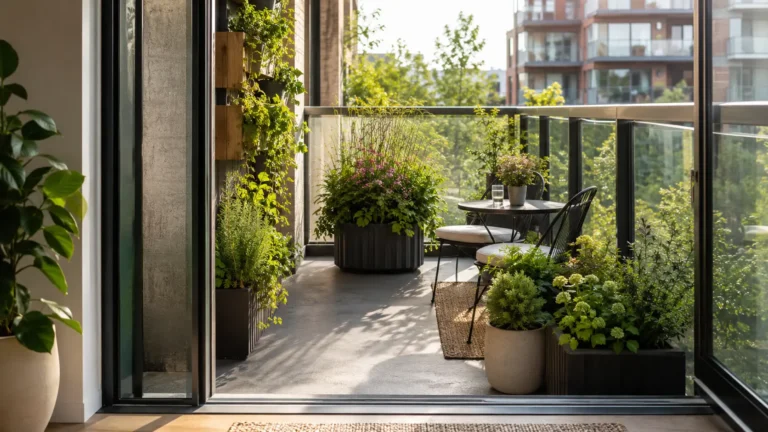
- one end of a balcony;
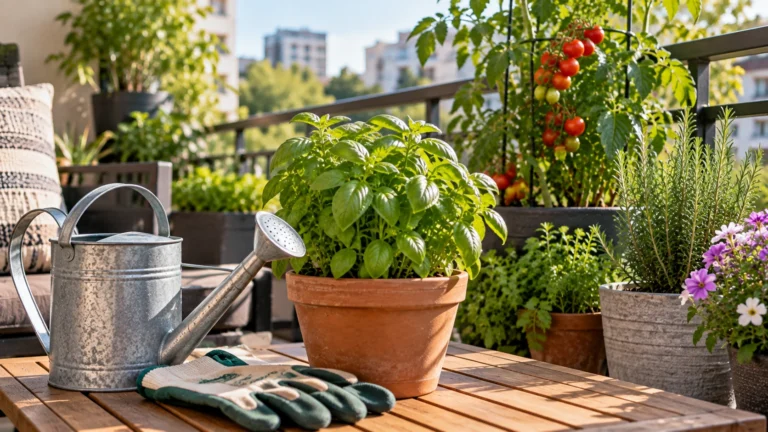
- a small outdoor table;
- a corner that can hold a few containers.
Starting small keeps your initial costs under control and gives you time to learn how the space behaves.
You may discover that one location receives more sun than expected, containers dry out quickly, or three plants are already enough to maintain comfortably.
Learning that with a few plants is much less expensive than learning it after buying twenty.
2. Check Your Light Before You Buy Plants
One of the easiest ways to waste money is buying plants before understanding the available light.
Watch your intended growing area during the day. Determine whether it receives strong direct sun, bright indirect light, or relatively little natural light.
Then choose plants for those conditions.
A plant that consistently struggles because the location is too dark may eventually need to be moved, supplemented with artificial light, or replaced.
The budget-friendly order is:
Check the light first. Buy the plant second.
3. Make a Short Shopping List Before Visiting the Garden Center
Garden centers make it easy for a small project to become a large purchase.
Before you go, divide your list into two categories:
Need now
- suitable containers;
- appropriate growing medium;
- seeds or plants;
- a basic way to water them.
Maybe later
- decorative planters;
- specialty plant stands;
- elaborate watering tools;
- moisture meters;
- decorative stakes;
- other gardening gadgets.
Optional products are not necessarily bad purchases. They simply should solve a real problem before they become part of your budget.
4. Reuse Suitable Containers You Already Own
Not every garden container has to come from the gardening aisle.
Depending on what you want to grow, you may already have sturdy containers that can be repurposed.
Before using one, check that it is:
- clean;
- suitable for the intended plant;
- large enough for the mature root system;
- stable when filled;
- able to drain excess water.
The important word here is suitable.
The goal is not to turn every household object into a flowerpot because it happens to be free. It is to avoid buying a new container when something you already own can safely do the job.
5. Make Drainage Non-Negotiable
A free container stops being a bargain if water cannot escape from it.
Plant roots need both moisture and oxygen. Containers that remain waterlogged can create serious root problems.
If you repurpose a container, make sure it provides appropriate drainage before planting.
Do not assume that adding rocks or gravel to the bottom fixes a container that cannot drain properly. University Extension guidance generally recommends using containers with drainage openings rather than relying on a layer of material at the bottom.
This is a perfect example of the budget principle:
Save money on appearance. Do not save money by ignoring what the plant needs.
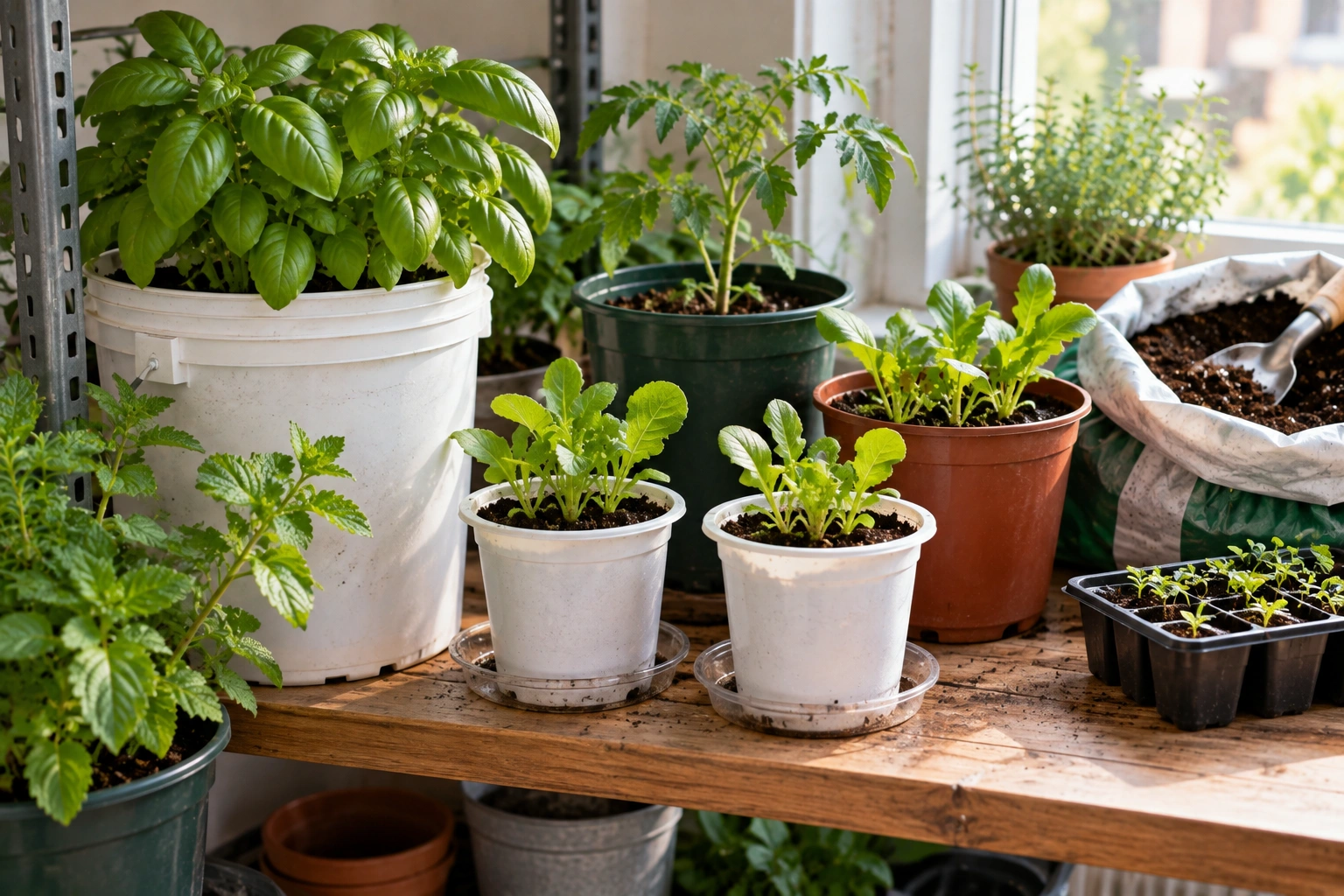
6. Reuse Clean Containers for Starting Seeds
Seed starting is one area where inexpensive reused materials can work particularly well.
Clean reused food containers can work for starting seedlings when they provide enough room and have drainage openings.
That can eliminate the need to buy individual seed-starting pots.
You will still need an appropriate seed-starting medium and enough light for healthy seedlings, but the container itself does not have to be expensive.
7. Start Suitable Plants From Seed
Seeds can offer excellent value when you want several plants of the same crop or intend to sow more than once.
Herbs, leafy greens, and many vegetables are commonly grown from seed, and one packet may provide far more plants than purchasing the same number as mature transplants.
But seed starting should not become an excuse to buy a room full of equipment.
For a very small garden, start only the number of plants your space can realistically support.
Seeds provide the most value when you are actually going to use what you start.
8. Split Seed Packets With Another Gardener
A very small garden creates an unusual problem: sometimes one seed packet contains far more than you need.
If you know another gardener interested in the same crops, consider sharing.
You might each purchase different varieties and divide the seeds. That gives both gardeners more variety without buying several full packets.
This works especially well when you have room for only a few containers.
Instead of asking, “How many seeds are in the packet?” ask:
How many plants can I realistically grow?
9. Choose Smaller Healthy Transplants When Instant Size Does Not Matter
Larger plants often cost more because someone has already spent time growing them to that size.
If you do not need an instantly mature-looking garden, a smaller healthy transplant may offer better value.
Compare plants based on:
- overall health;
- appropriate size;
- strong growth;
- suitability for your conditions.
For a budget garden, the biggest plant on the shelf is not automatically the best purchase.
A healthy smaller plant may simply need a little more time.
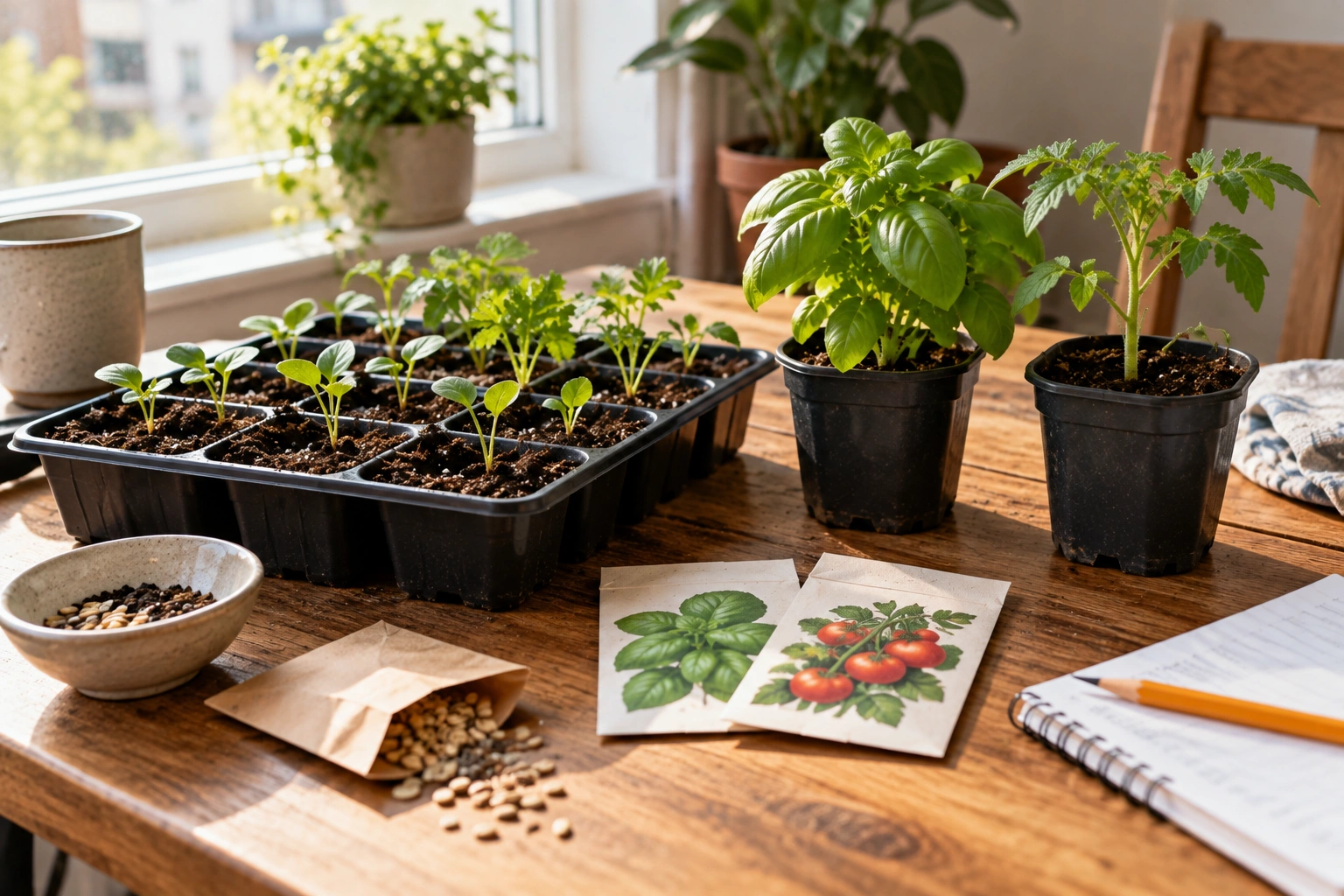
10. Grow Plants You Will Actually Use
Limited growing space becomes more valuable when the plants in it have a purpose for you.
If you grow food, prioritize herbs and vegetables your household regularly eats rather than filling containers with crops you rarely use.
For one gardener, that might mean basil, parsley, lettuce, or peppers. Another person may get more value from flowers they enjoy seeing every day.
The goal is not to prove that every plant will save money at the grocery store.
It is to make sure the limited space and money you invest go toward plants you genuinely value.
If food growing is your main goal, our apartment vegetable gardening guide covers the full setup and maintenance process.
11. Choose Compact, Bush, Dwarf, or Patio Varieties
Bush and dwarf varieties can sometimes reduce the need for oversized containers, extensive supports, or additional growing space.
That can make them a practical budget choice for a very small garden.
Mature size and root requirements still matter, so check the specific variety before buying. “Compact” does not automatically mean a plant can grow successfully in a tiny container.
12. Buy the Right Container Size the First Time
Repeatedly replacing containers because the original one was clearly too small can become expensive.
Before buying a pot, check the mature size and root requirements of the plant.
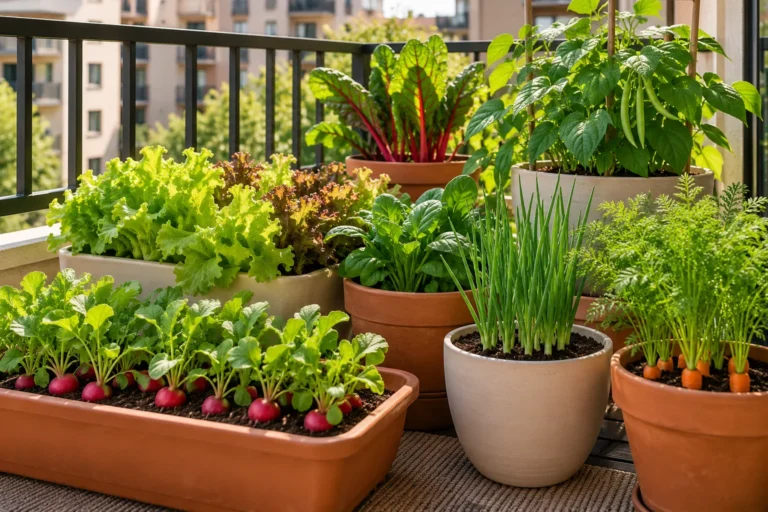
Different plants need very different amounts of root space. Lettuce and radishes, for example, generally require much less container volume than larger fruiting crops such as tomatoes, cucumbers, peppers, or eggplants.
Repotting is sometimes part of normal plant growth. The goal is simply to avoid unnecessary upgrades caused by choosing a container for price or appearance instead of suitability.
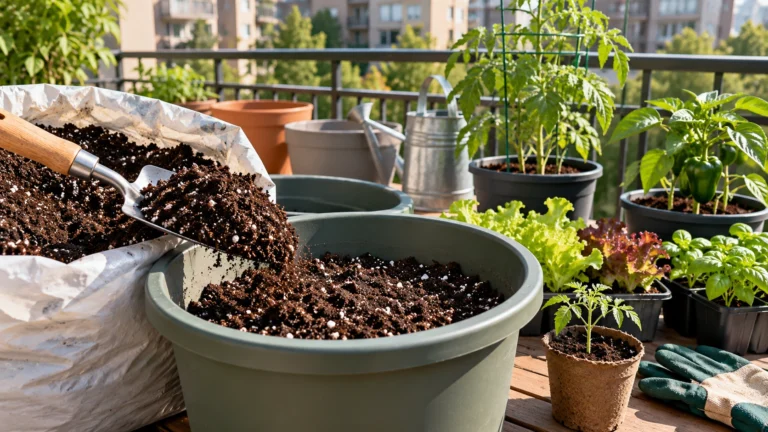
13. Save on the Pot, Not the Potting Mix
This is one of the easiest budget decisions to get backward.
A plain inexpensive container can work perfectly well.
Unsuitable soil may not.
Ordinary garden soil can become dense in containers, limiting the movement of air and water around roots. For seed starting, use a lightweight growing medium rather than ordinary garden soil..
You do not need the most expensive bag on the shelf.
You do need something appropriate for the plants and containers you are using.
If the choice is between a decorative planter and a growing medium suited to container roots, spend the money on the growing medium.
14. Buy Growing Medium in a Sensible Quantity
Estimate how much growing medium your planned containers require before shopping.
A larger bag may offer better value when you have several containers, but buying far more than you can use is not a savings strategy.
Choose the containers first, estimate the amount you need, and buy accordingly.
15. Use Simple Plant Supports Instead of Decorative Ones
If a plant needs a stake, cage, or trellis, pay for stability and function rather than decoration.
A simple support that safely handles the mature plant is enough.
There is no budget advantage in paying extra for an elaborate decorative structure unless you genuinely want it for the appearance.
16. Use Existing Surfaces Before Buying Plant Furniture
Before purchasing a plant stand, shelf, or dedicated gardening table, look at the safe surfaces you already have.
A wide windowsill, sturdy shelf, outdoor table, or existing bench may already provide what you need.
Make sure the surface can safely support watered containers. Wet growing medium can make containers much heavier than they appear when empty.
Use what already works before buying specialized furniture.
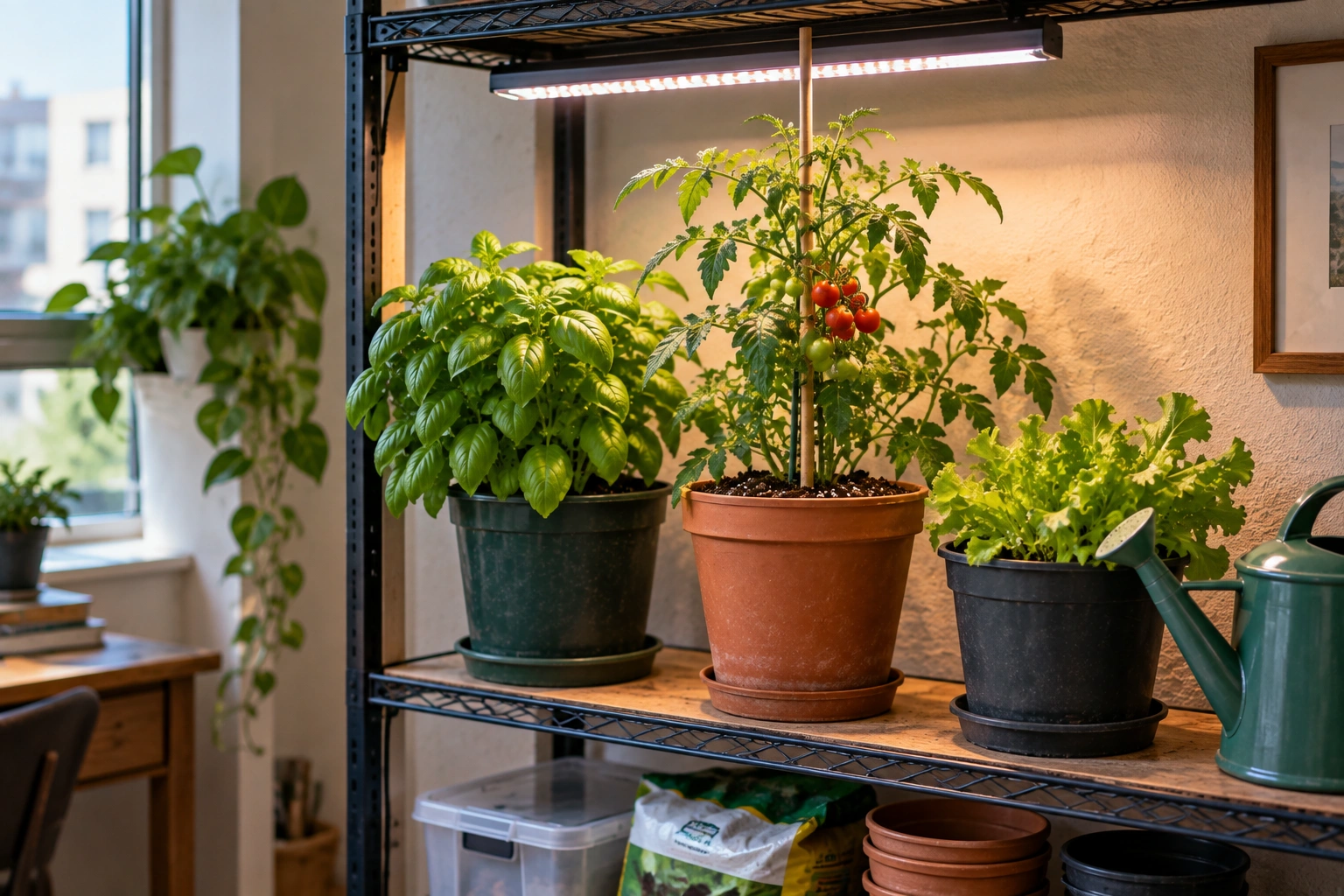
17. Buy a Grow Light Only When Your Plants Actually Need One
A grow light is worth buying when it solves a real light problem—not simply because indoor gardening setups often include one.
Before purchasing one, determine:
- what you want to grow;
- how much natural light the location receives;
- whether that natural light can meet the plant’s needs.
If the available light is sufficient, an additional fixture may not improve anything.
If natural light is not sufficient, supplemental lighting becomes a useful tool rather than another gardening gadget.
Our guide to grow lights for indoor plants explains what to consider before choosing one.
If you are considering a small clip-on option for a windowsill, shelf, or compact indoor setup, read our GooingTop Clip-On Grow Light Review to see whether it fits your needs.
18. Expand Only After You Know What Works
One of the easiest ways to protect a small gardening budget is to delay the next purchase.
Give your first few plants enough time to show you what the space is really like.
You might discover that:
- one side receives more sunlight than another;
- your containers dry out faster than expected;
- you prefer herbs to ornamental plants;
- a certain plant requires more maintenance than you want;
- you still have room for another container;
- your current garden already feels complete.
Once you know what works, your next purchase becomes a much more informed decision.
Expanding gradually is usually less expensive than buying everything for an imagined finished garden before you have grown anything in the space.
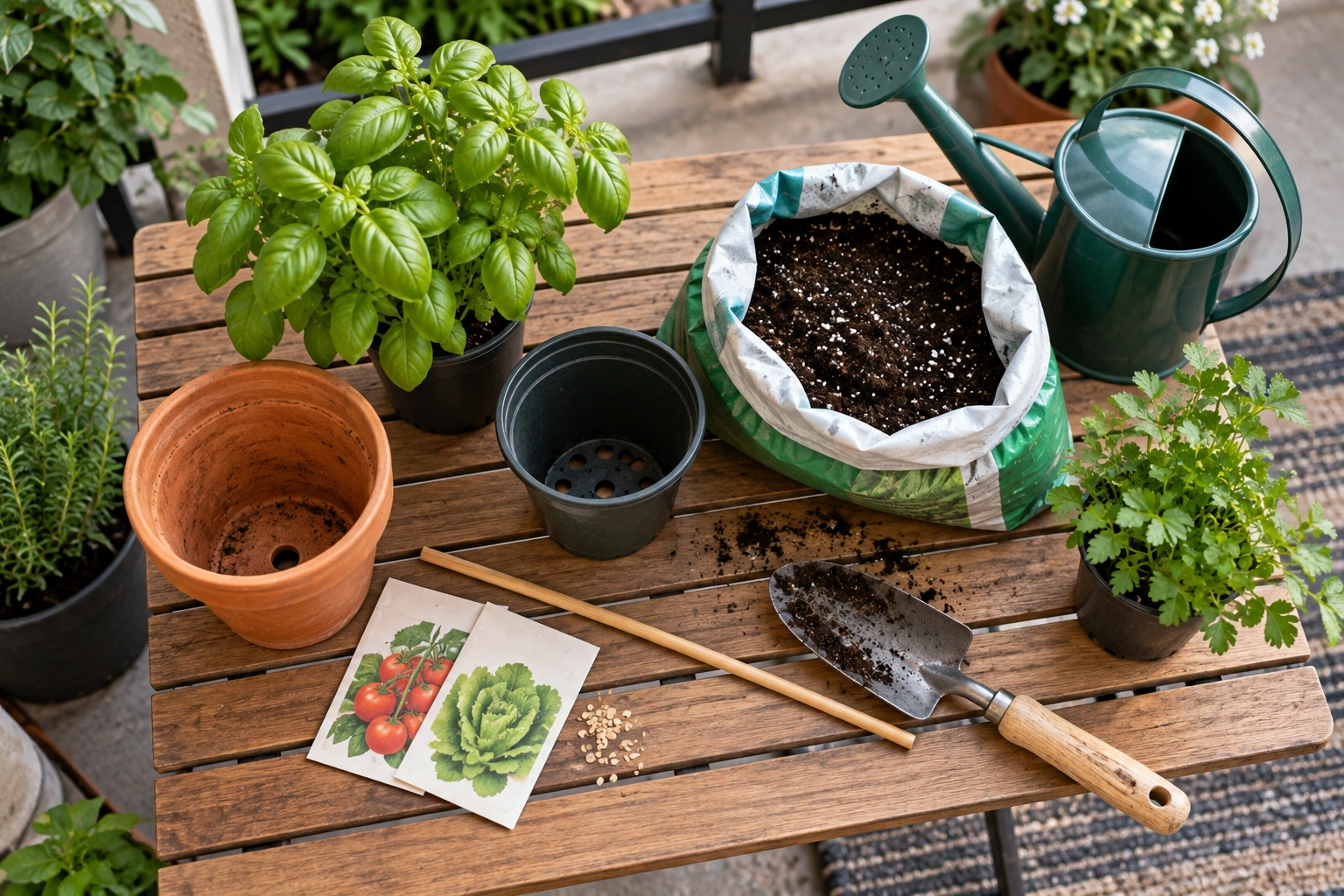
A Simple Low-Cost Starter Setup
There is no single shopping list that works for every small garden. Your light, space, climate, and growing goals will determine what you actually need.
A basic setup can remain surprisingly simple.
Sunny Windowsill
Start with:
- two or three appropriately sized containers;
- suitable potting mix;
- herbs or other plants that match the available light.
There is no need to cover the entire window immediately.
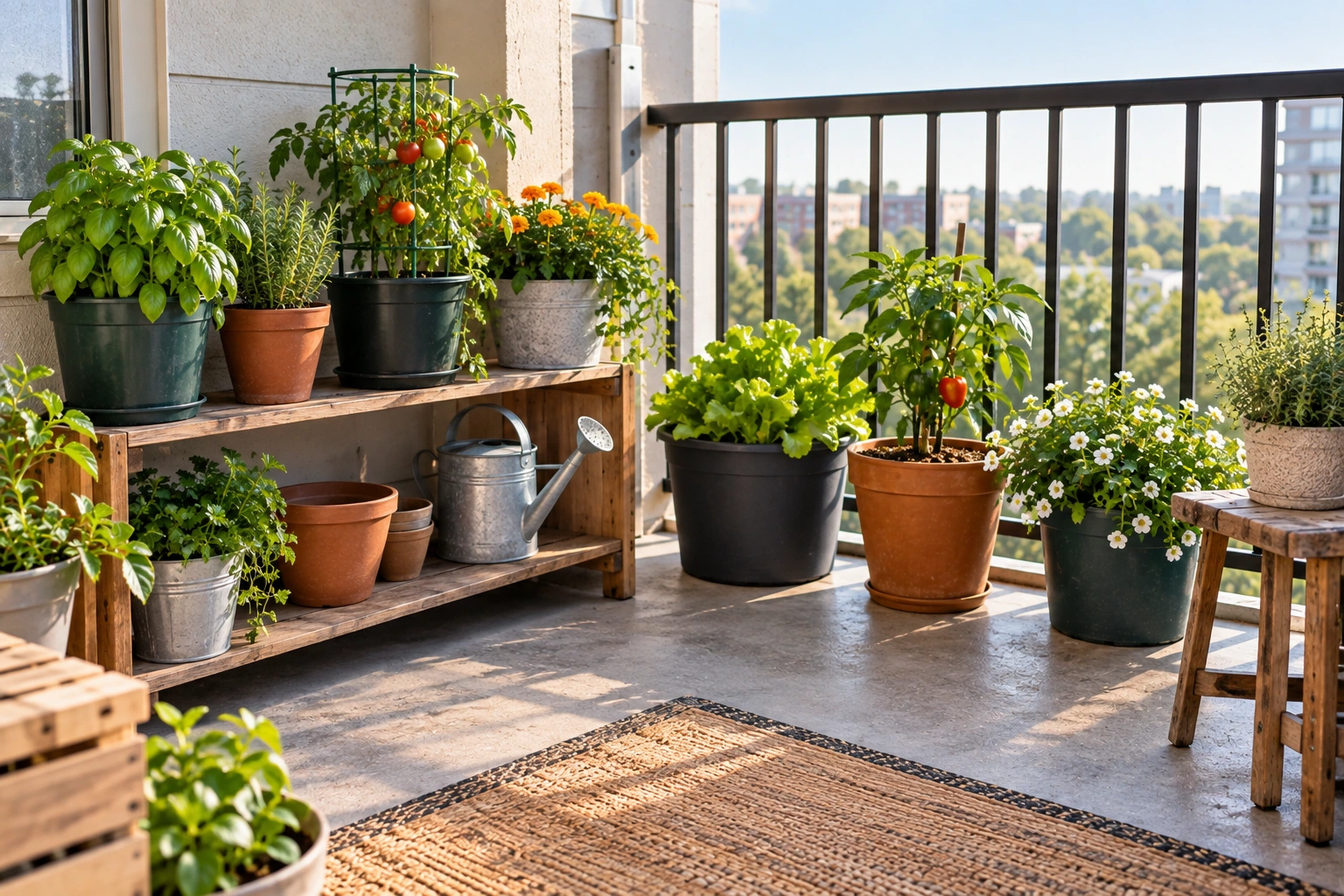
Small Balcony or Patio
Begin with:
- two to four suitable containers;
- a manageable mix of herbs, leafy greens, compact edibles, or flowers;
- growing medium appropriate for the plants.
Leave enough room to water and maintain everything comfortably.
If you are completely new to growing plants in a small home, our apartment gardening beginner guide covers the broader fundamentals.
Indoor Space With Limited Natural Light
Begin with a few plants matched to the natural light that is available.
Add supplemental lighting only if the plants you want to grow actually require more light than the location provides.
The inexpensive setup is the one that solves the conditions you really have—not the one that copies someone else’s indoor garden.
Budget Gardening Mistakes That Often Cost More Later
Some inexpensive choices become expensive when they lead to replacement plants, additional supplies, or repeated purchases.
Buying Plants Before Checking the Light
Choose the growing location first. Then choose plants suited to it.
This reduces the chance of replacing plants that never had appropriate conditions.
Choosing Containers Only Because They Are Cheap
Price matters, but so do mature plant size, drainage, stability, and durability.
An inexpensive container that works is a bargain.
One that immediately needs replacing is not.
Using Garden Soil in Containers to Save Money
Free soil is not necessarily appropriate container soil.
Container roots need a growing medium that allows water and air to move properly. Using unsuitable soil simply because it costs nothing can create problems that are more difficult to correct later.
Buying Too Many Plants at Once
Every additional plant may also require:
- another container;
- more growing medium;
- additional support;
- more watering;
- more maintenance.
Starting with fewer plants keeps both the cost and workload manageable.
Buying Decorative Gear Before Growing Supplies
Matching planters and attractive accessories can make a garden look polished, but they cannot compensate for inadequate light, poor drainage, or undersized containers.
Get the growing conditions right first.
Add decorative items later if they are still worth the money to you.
Choosing Plants That Outgrow the Available Space
Check mature plant dimensions before buying.
Do not make your decision based only on the size of the young plant sitting on the nursery shelf.
A poorly matched plant may eventually require a larger container, more growing medium, additional supports, or a new growing location.
When Spending a Little More Can Save Money
Budget gardening is about value, not automatically choosing the lowest price.
Sometimes spending slightly more on the right item prevents unnecessary replacements later.
A correctly sized container may cost more than a tiny decorative pot but remain useful much longer.
Appropriate growing medium costs more than free soil from the yard, but it is better suited to container roots.
A sturdy plant support may cost more than a flimsy one but remain useful when the plant becomes larger and heavier.
And when supplemental light is genuinely necessary, a light suited to the plants and growing area is more useful than repeatedly replacing plants that cannot thrive in the available conditions.
Before buying something, ask one question:
What problem does this solve?
If you cannot give a clear answer, you may not need it yet.
Frequently Asked Questions About Very Small Gardens on a Budget
What is the cheapest way to start a small garden?
Start with one small growing area and use suitable containers or surfaces you already own. Spend first on plants or seeds suited to your conditions, adequate drainage, and appropriate growing medium. Add other equipment only when it solves a real problem.
What can I reuse as a garden container?
Clean, sturdy containers can sometimes be reused when they provide adequate root space, stability, and drainage. Do not use something simply because it is free. It still needs to be appropriate for the plant.
Is it cheaper to grow plants from seeds?
It can be, especially when one packet provides several plants you intend to grow. But seed starting may also require suitable containers, growing medium, light, and time. If you need only one or two plants, small healthy transplants may sometimes be the simpler choice.
What should I spend money on first?
Prioritize the conditions plants need to grow successfully:
- appropriate light;
- enough root space;
- adequate drainage;
- suitable growing medium;
- plants matched to your conditions.
Decorative pots, specialized furniture, matching accessories, and gardening gadgets can wait.
Start Small and Spend Where It Matters
Very small garden ideas on a budget work best when the goal is not simply to buy the cheapest supplies.
Start with the light and space you already have. Choose a few plants suited to those conditions, and spend first on proper containers, drainage, and growing medium.
Once you know what grows well and what you enjoy maintaining, expand gradually.
You are not trying to build the finished garden all at once. You are spending money on the parts that prove they are worth keeping.