How to Grow Vegetables on a Windy Balcony
Grow vegetables on a windy balcony with the right plant choices, stable containers, and simple protection methods. Strong winds dry soil faster, stress plants, and tip top-heavy pots, but these challenges can be managed with practical adjustments.
In This Guide
Why Wind Makes High-Rise Balcony Gardening Harder
Wind creates several problems for balcony vegetables. Constant airflow increases evaporation, so containers dry out much faster than they would on a sheltered patio or ground-level garden. Gusts also bend and break stems, especially on taller plants, and can knock over lightweight or top-heavy pots.
High-rise balconies often face stronger and more consistent wind than lower floors because there are fewer buildings or trees to block airflow. Understanding these conditions helps you choose plants and setups that hold up better. More detailed protection techniques appear in the protect balcony plants from wind guide.
Best Wind-Resistant Vegetables for Balconies
Low-growing and compact plants handle wind far better than tall, top-heavy crops. These vegetables and herbs are among the most reliable choices when you want to grow vegetables on a windy balcony:
Leafy Greens
- Leaf lettuce – stays low and recovers quickly from wind stress
- Spinach – compact growth and good tolerance to drying conditions
- Swiss chard – sturdy stems and productive in containers
- Kale (dwarf varieties) – handles wind better than taller types
Fruiting & Pod Crops
- Bush beans – stay shorter and need less support than pole beans
- Compact or patio tomatoes – determinate types resist wind better than tall indeterminate varieties
- Compact peppers – smaller plants with sturdy stems
- Strawberries – low profile and well-suited to containers
Root Crops & Herbs
- Radishes – quick-growing and low to the ground
- Baby carrots – shallow and stable in wider pots
- Thyme – tough, low-growing, and drought-tolerant
- Chives – compact and resilient in windy conditions
- Parsley – handles moderate wind when kept watered
Avoid or limit tall indeterminate tomatoes, large zucchini, climbing beans, and other top-heavy plants unless you can provide strong staking and meaningful wind protection. Additional plant ideas appear in the best vegetables for small containers post.
Use Stable, Low-Profile Containers
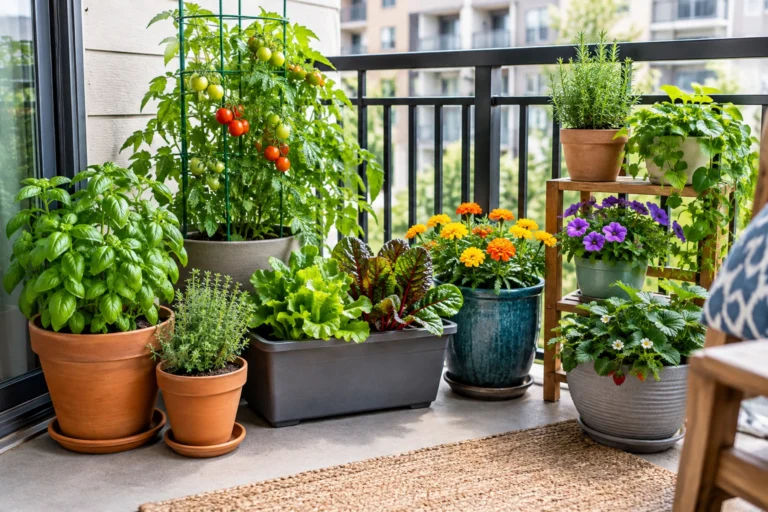
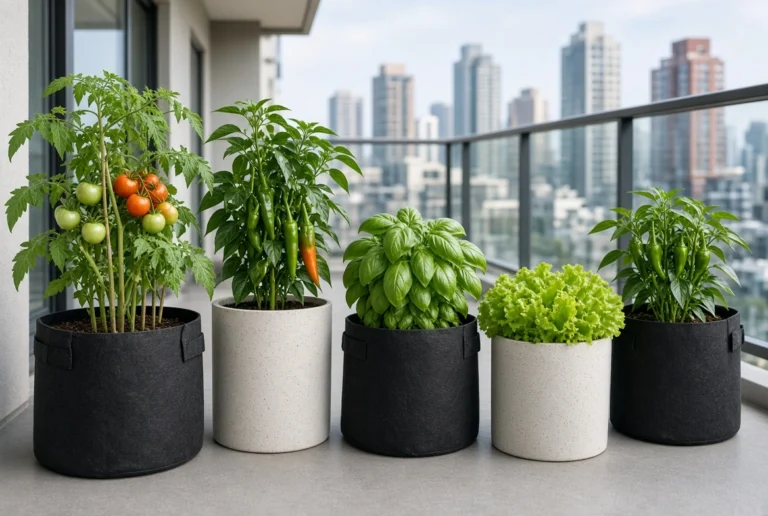
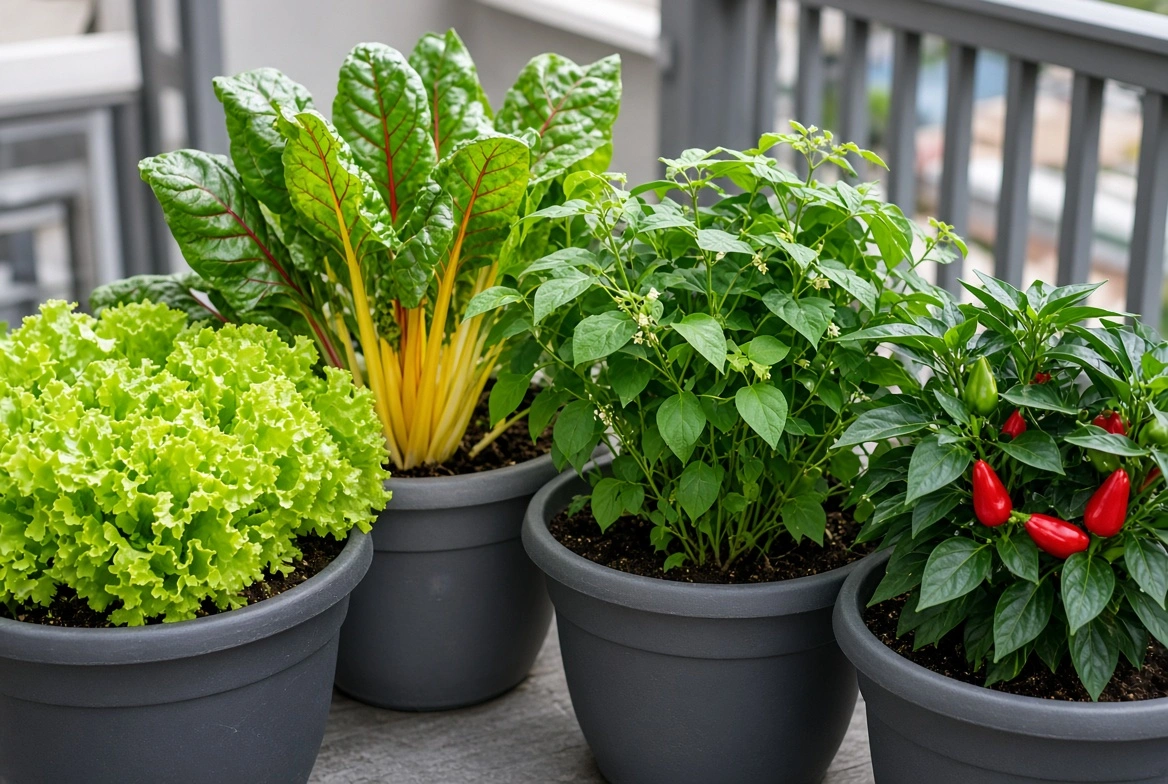
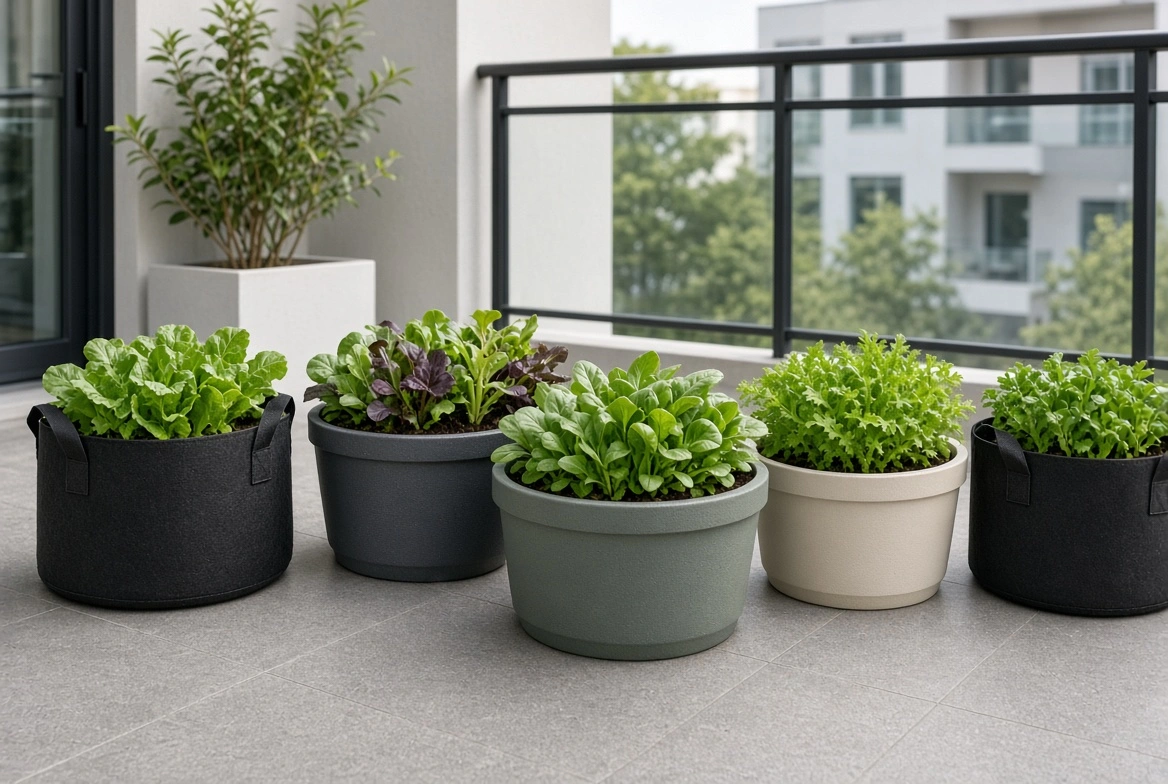
Wider and heavier containers resist tipping better than tall, narrow pots when you grow vegetables on a windy balcony. A wide base lowers the center of gravity and keeps plants more stable when wind hits. Fabric grow bags and low resin pots often work well because they can be placed close to the floor or railing and are easier to secure.
The University of Maryland Extension notes that tall plants in relatively small or lightweight containers can become top-heavy and blow over unless well-anchored. Choosing containers that are wider than they are tall improves balance.
Lightweight containers still have a place on weight-limited balconies. Pair them with careful placement and, when needed, extra ballast. Guidance on container weight appears in the apartment balcony weight limit article and the best lightweight containers for apartment balcony guide.
Support Plants and Prevent Tipping
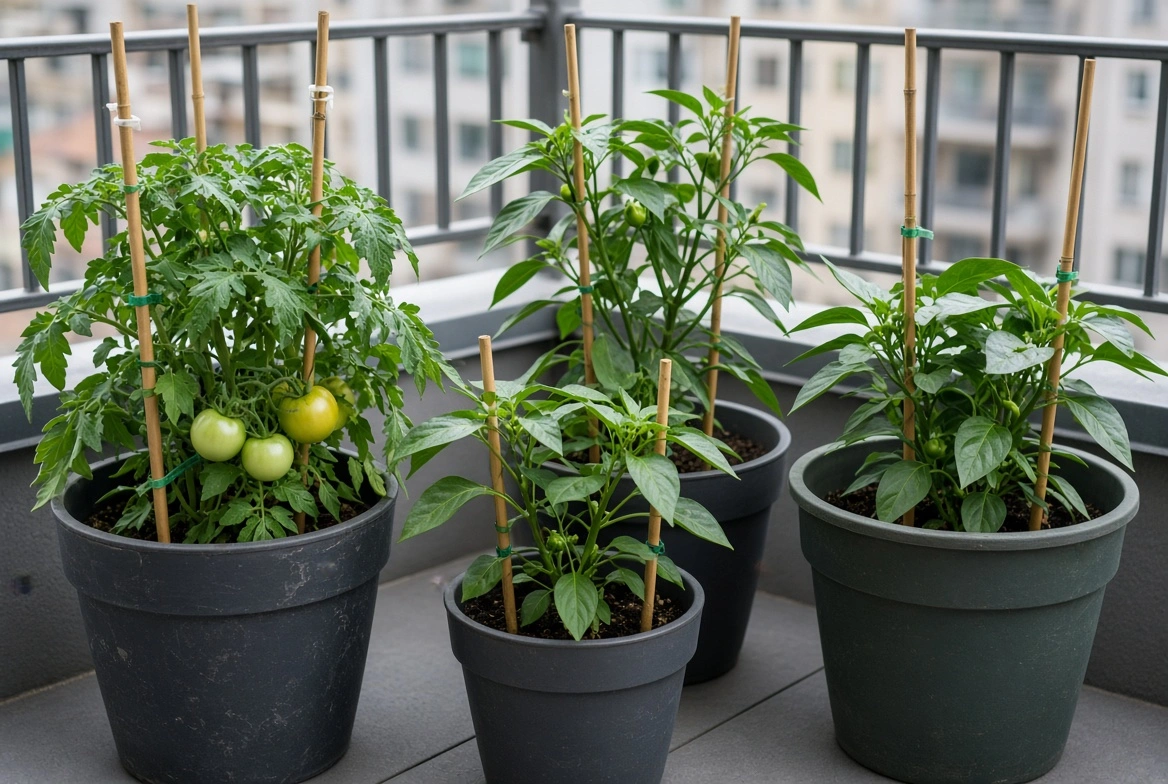
Stakes, cages, and ties help keep stems from snapping in strong gusts. Use sturdy stakes for peppers and compact tomatoes, and secure them early before plants become top-heavy. Soft plant ties or garden twine reduce damage to stems.
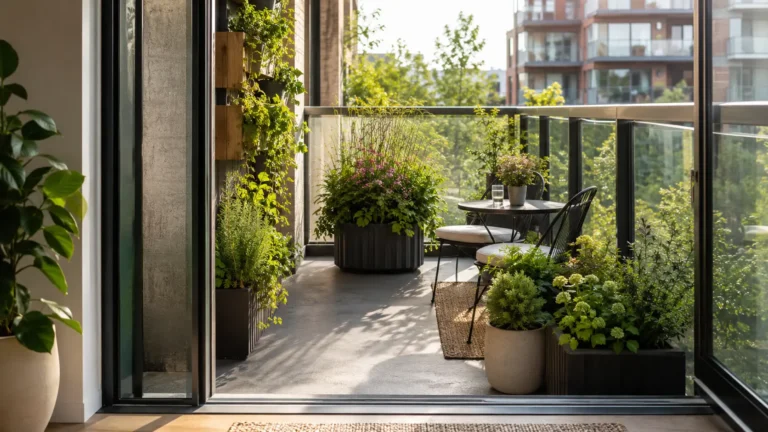
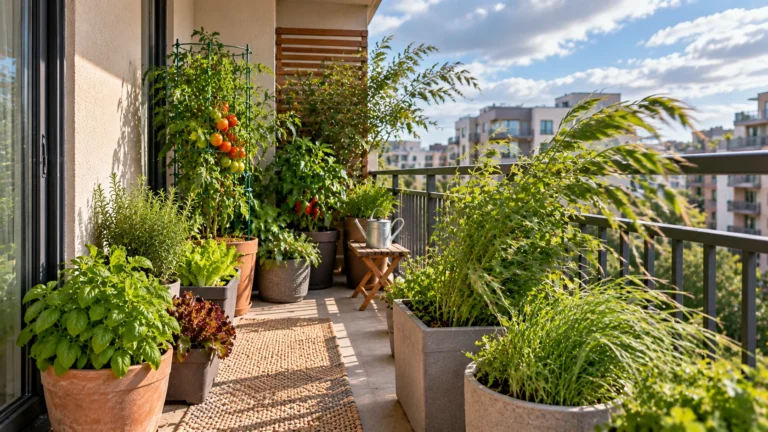
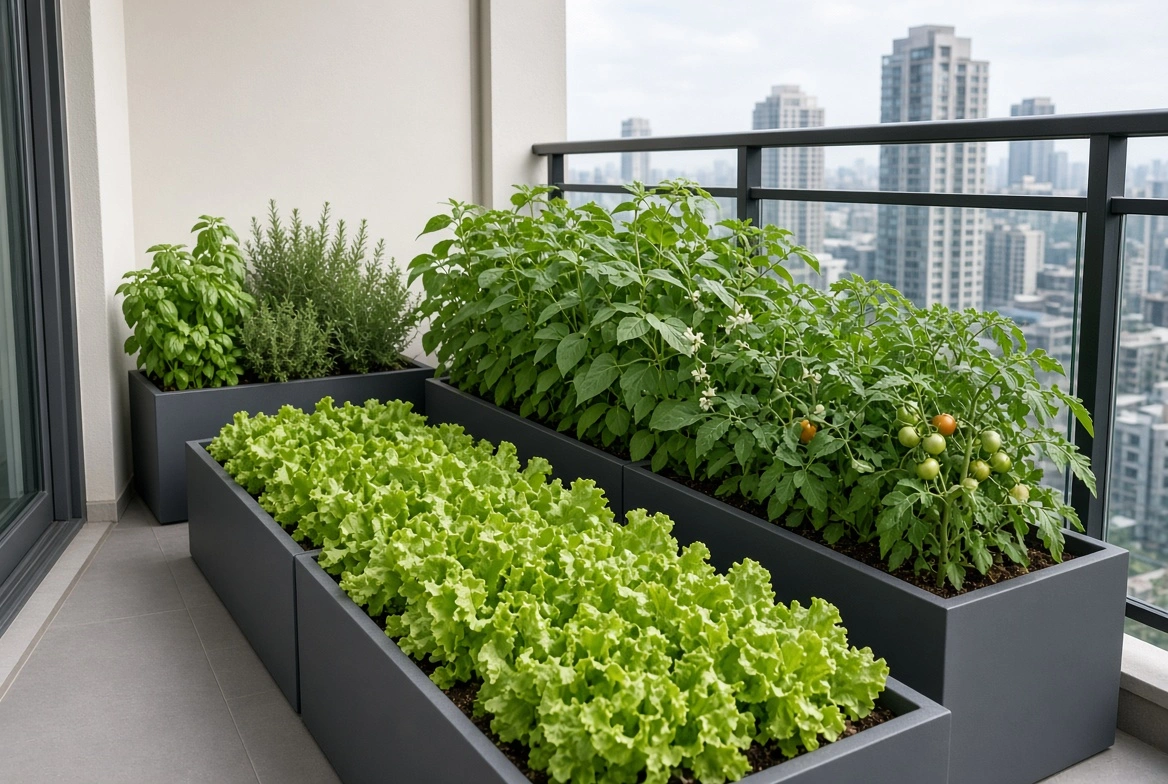
Grouping containers together creates a small windbreak effect and makes the whole arrangement more stable. Place the heaviest or most wind-resistant pots on the outer edge and keep more delicate plants toward the center or closer to the building wall.
For renters, avoid permanent attachments. Freestanding supports, clamp-on options, and heavy pots that do not require drilling keep the setup reversible. The renter-friendly balcony garden ideas post covers no-drill methods that can also help with wind protection.
Create Simple Windbreaks
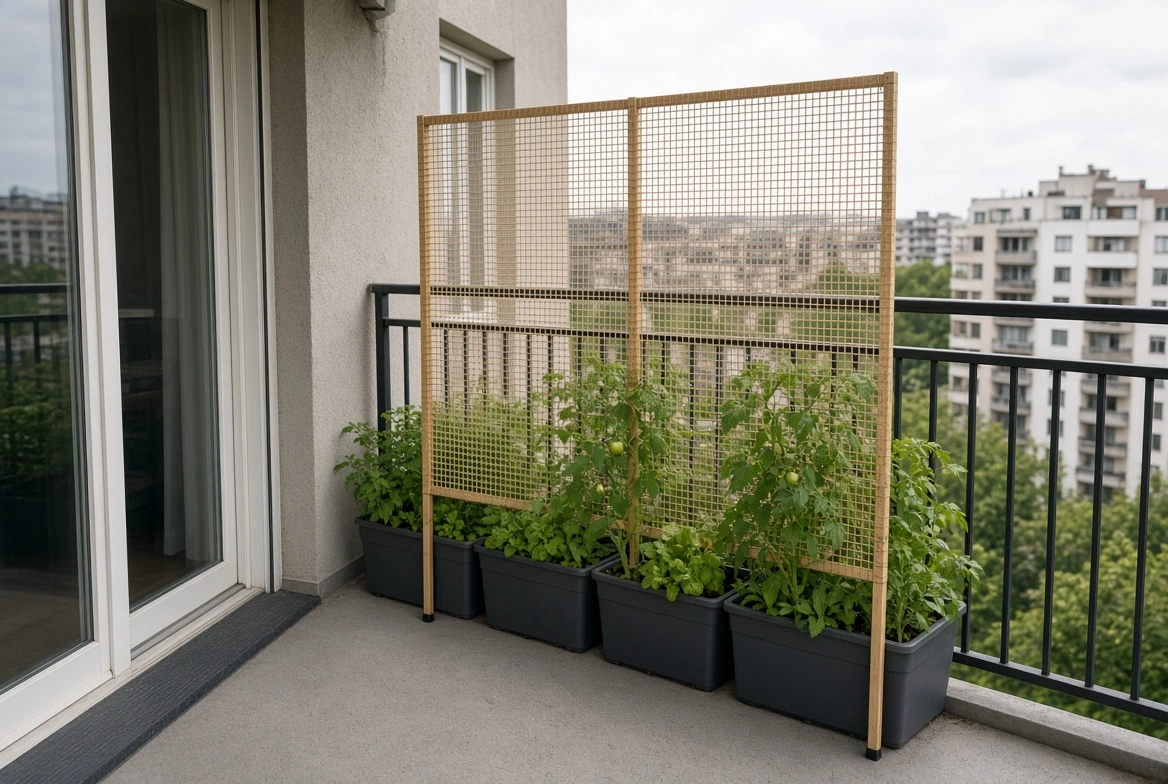
Temporary windbreaks reduce the force of gusts without permanent changes to the balcony. Options include:
- Lattice panels or outdoor fabric screens secured with temporary clamps or weights
- Grouped tall containers or a small freestanding shelf that blocks airflow
- Shade cloth or mesh that allows some light and air while cutting wind speed
Position windbreaks on the side that faces the strongest prevailing wind. Leave enough space for air circulation so plants do not stay overly damp. Always check building rules before installing any screening.
Adjust Watering and Soil for Faster Drying
Wind dramatically increases water loss from containers. Check soil moisture more often than you would in a sheltered garden. Water thoroughly until excess drains out, then empty saucers so roots do not sit in standing water.
A moisture-retentive potting mix helps. Mixes that contain coco coir or other water-holding ingredients reduce how quickly the soil dries. Avoid pure garden soil, which compacts and drains poorly in containers. More details on mixes are available in the potting mix for container vegetables article.
During hot, windy periods you may need to water daily or even twice a day for smaller pots. Larger containers dry out more slowly and give a useful buffer. The how often to water container vegetables guide provides additional timing advice.
Layout Strategies That Reduce Wind Exposure
Place the most vulnerable plants closest to the building wall, where wind is usually weaker. Use the outer edge of the balcony for lower, tougher plants or for containers that act as a buffer.
Keep pathways clear so you can reach plants easily for watering and harvesting. Crowding everything against the railing increases exposure and makes maintenance harder. A simple layout with heavier pots anchoring the outer row and more delicate crops inward works well on most high-rise balconies.
Practical Checklist for Windy Balcony Vegetables
| Challenge | Solution |
|---|---|
| Tipping pots | Use wide, low containers and group them |
| Broken stems | Stake early and choose compact varieties |
| Fast-drying soil | Water more often; use moisture-retentive mix |
| Leaf damage | Provide temporary windbreaks and group plants |
| Weight limits | Prefer lightweight but stable containers |
Frequently Asked Questions
Can you grow tomatoes on a windy balcony?
You can grow tomatoes on a windy balcony if you choose compact or determinate varieties and provide strong staking. Tall indeterminate tomatoes are more likely to suffer wind damage and are harder to keep upright.
What is the best container for a windy balcony?
The best container for a windy balcony is wider than it is tall and has enough weight or ballast to resist tipping. Fabric grow bags and low resin pots often perform well when placed carefully.
How do I stop pots from blowing over on a high-rise balcony?
Stop pots from blowing over by choosing wider containers, grouping them together, placing heavier pots on the windward side, and using temporary windbreaks. Avoid tall, narrow pots with top-heavy plants.
Do windy balconies need special potting mix?
Windy balconies benefit from a potting mix that holds moisture longer. Mixes containing coco coir or similar ingredients reduce how quickly the soil dries out under constant airflow.
Should I use a windbreak on my apartment balcony?
A temporary windbreak helps on very exposed high-rise balconies. Use freestanding or clamp-on screens that do not require drilling and that still allow some air movement so plants do not stay too wet.
Final Tips for Success
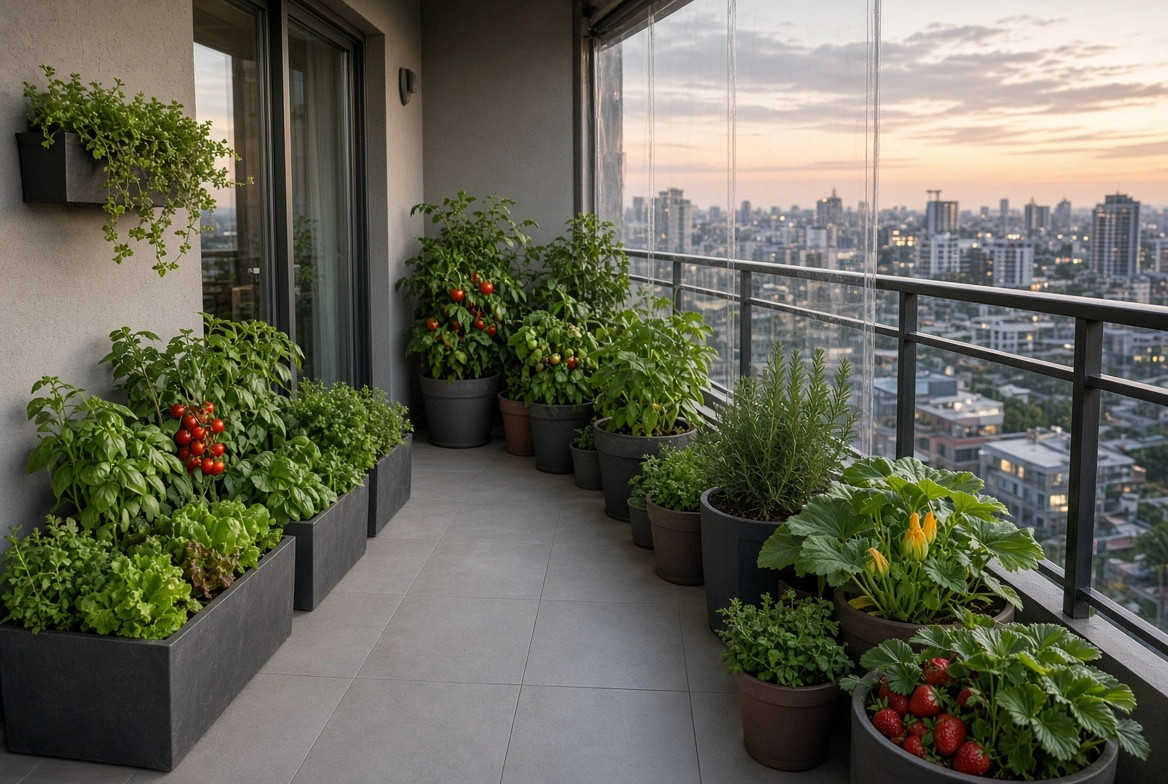
Start with a few compact, wind-tolerant vegetables and stable containers. Observe how wind moves across your specific balcony before expanding. Adjust watering, add support early, and use temporary wind protection where needed.
Grow vegetables on a windy balcony successfully by combining careful plant selection, stable containers, and consistent moisture management. These same principles, paired with the advice in your existing balcony guides, make consistent harvests realistic even in exposed high-rise conditions.