Sjzxuv Vertical Hydroponics Growing System Kit Review
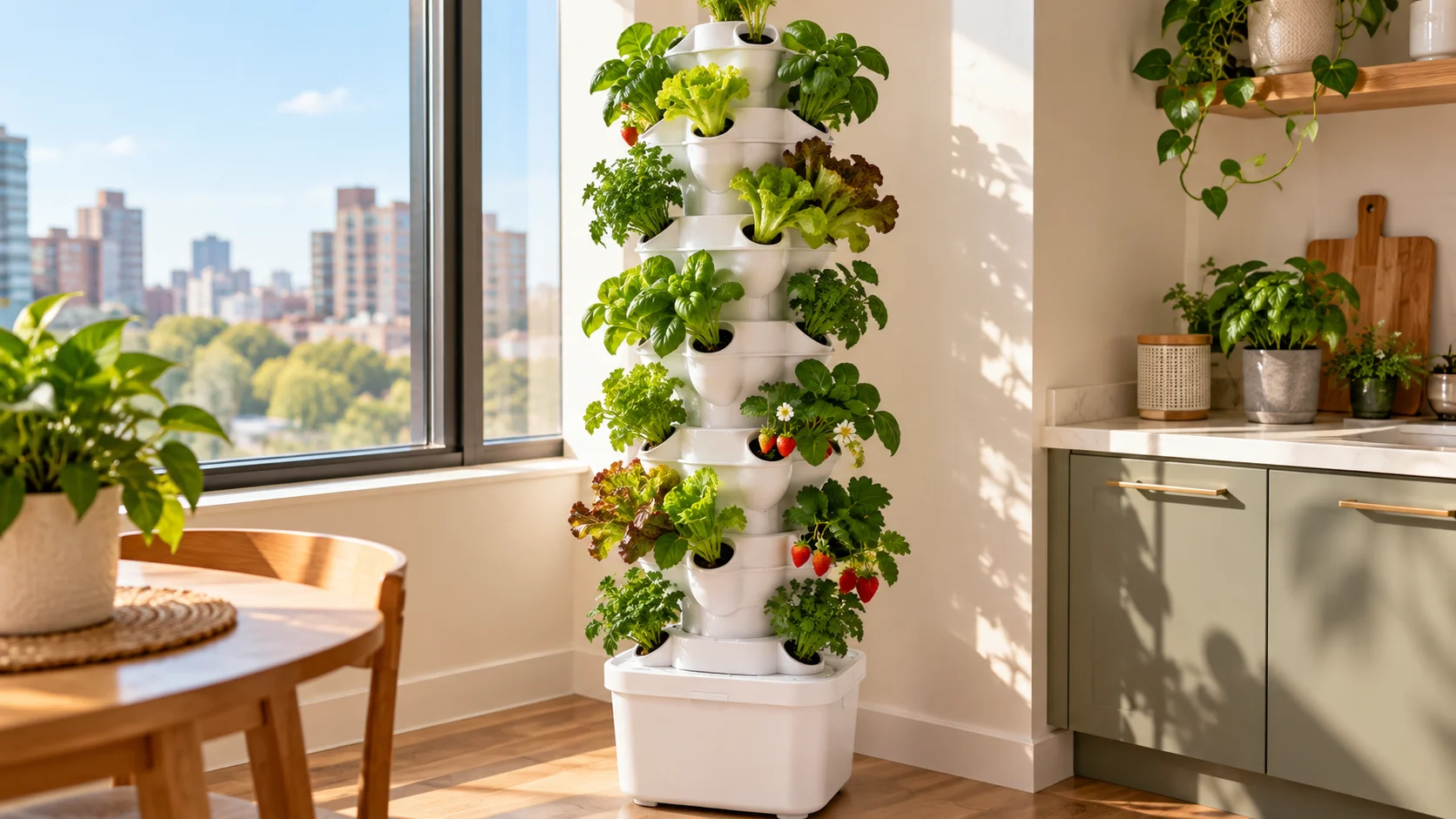
The Sjzxuv Vertical Hydroponics Growing System Kit takes a different approach from the countertop hydroponic gardens commonly marketed to apartment gardeners. Instead of placing a handful of plants beneath one integrated grow light, the 6C5K uses a six-tier vertical tower with 36 planting positions and a 12-liter recirculating reservoir.
That sounds like a lot of growing capacity for a relatively small footprint. But the number of planting openings is only part of the story.
A six-level tower also raises practical questions about mature plant spacing, lighting the lower levels, water distribution, root growth, and maintaining dozens of plants from one shared reservoir. And because we could not verify an integrated grow light for this model, indoor growers need to account for lighting separately.
Apartment Garden Guide did not personally test this product. This review is based on available product information, horticultural research, competitor research, and clearly attributed feedback from verified Amazon purchasers, including reviews specifically identifying the 6C5K model where Amazon displayed that information.
Disclosure: As an Amazon Associate, I earn from qualifying purchases.
Check the latest price and availability on Amazon
In This Review
Sjzxuv 6C5K at a Glance
| Specification | Sjzxuv 6C5K |
|---|---|
| Design | Six-tier vertical hydroponic tower |
| Planting positions | 36 |
| Reservoir | 12L |
| Dimensions listed | Approximately 9.84 × 7.48 × 33.26 inches |
| Water circulation | Recirculating pump |
| Integrated grow light | None verified |
| Timer/control | Configuration appears to vary by package or listing version |
| Model researched | 6C5K |
| ASIN researched | B0F8NDG4XR |
| Indoor/outdoor | Marketed for both; electrical weather rating not verified |
| Warranty | We could not reliably verify one |
The Sjzxuv 6C5K’s main appeal is straightforward: it puts 36 planting positions into a vertical growing system instead of spreading individual containers across a floor, shelf, or balcony.
That doesn’t mean you should expect to grow 36 full-size mature plants simultaneously. Lettuce, herbs, strawberries, and fruiting vegetables develop very different canopies and root systems, and larger plants can shade or crowd neighboring positions.
For apartment gardeners, the more important question is therefore not simply How many holes does it have? It’s How many of those positions can I use effectively for the crops I want to grow?
How We Reviewed the Sjzxuv 6C5K
Because Apartment Garden Guide has not personally used or tested this tower, we approached the review as an editorial research project rather than a hands-on test.
We researched the 6C5K configuration and ASIN B0F8NDG4XR, compared available specifications across product information, examined Amazon Verified Purchase feedback—including reviews specifically labeled Model 6C5K where that designation was shown—and compared the tower’s design with guidance from university Extension horticulture programs.
We also looked for an authoritative manufacturer manual or documentation that could resolve conflicting marketplace specifications. We weren’t able to locate sufficiently detailed official documentation for every feature.
That’s important because some marketplace information associated with this product family is inconsistent. Where we couldn’t independently establish a specification, we have not treated it as fact.
What Comes With the Sjzxuv?
The core system centers on the vertical growing tower, planting positions, reservoir, and recirculating water system.
Accessory descriptions require more caution.
Verified 6C5K purchasers have described receiving additional components, including a programmable smart plug, and one experienced hydroponic grower reported receiving clay pebbles with the system. However, package configurations can change.
Timer information is particularly inconsistent. Verified purchasers of the 6C5K describe an included programmable smart plug, while seller information has also referenced preset watering modes.
Because we could not find an official 6C5K manual that reconciles those descriptions, check the current Amazon listing for the exact accessories and timer configuration included with the package you’re considering.
36 Planting Sites vs. 36 Mature Plants
The Sjzxuv has 36 physical planting positions. That is different from promising enough room for 36 unrestricted mature plants.
Vertical hydroponic systems can support substantial planting density, but crop selection matters. Oklahoma State University Extension’s guidance on vertical hydroponic towers identifies lettuce, herbs, spinach, kale, Swiss chard, strawberries, and other crops as candidates for vertical hydroponic production.
The practical issue is what happens after those plants start growing.
Why Mature Plant Size Changes the Equation
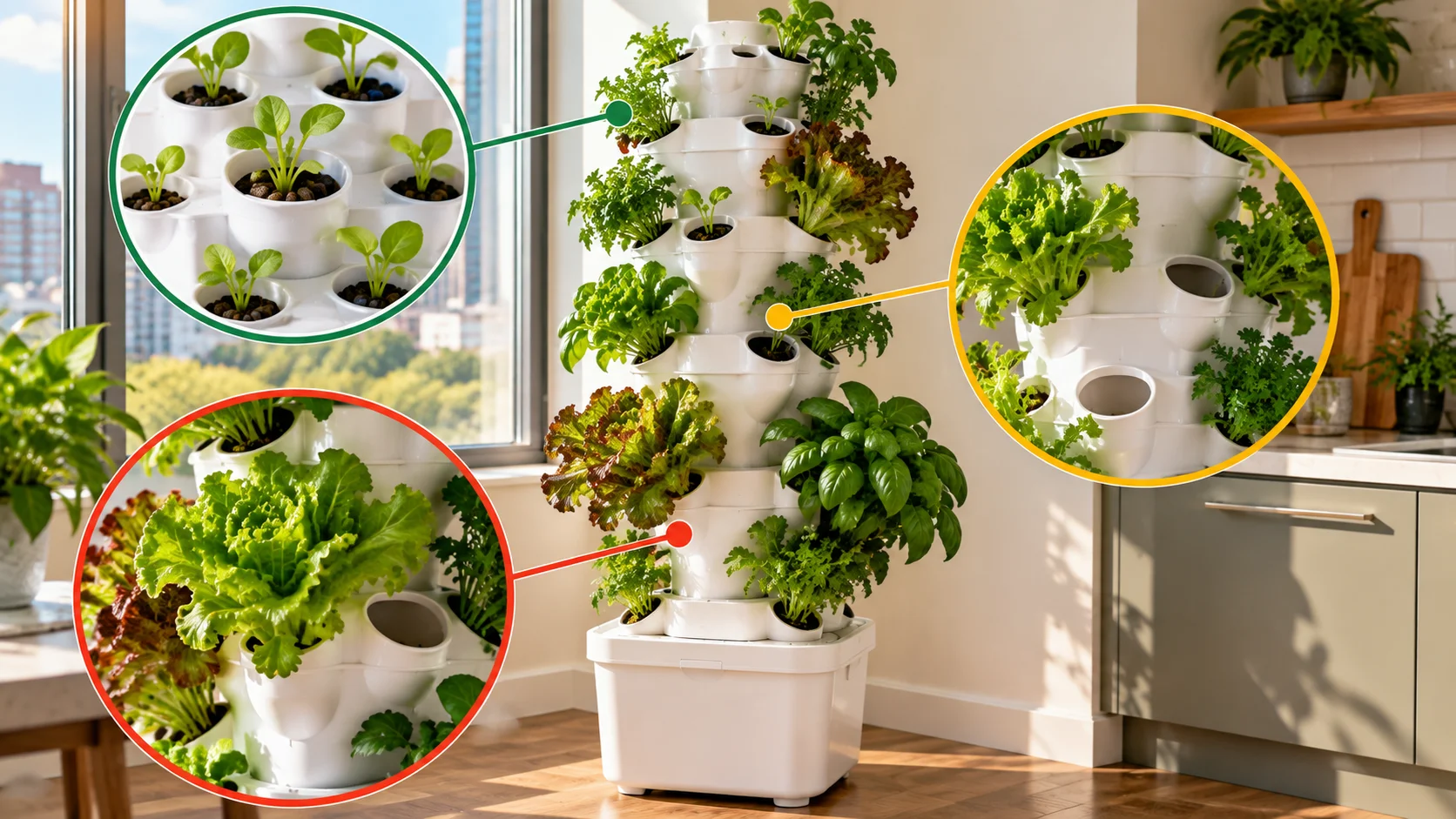
A young lettuce seedling occupies very little room. A mature lettuce plant can extend well beyond its planting cup. Basil can develop a substantial canopy, while strawberries produce foliage and runners. Tomatoes and peppers add even more demands for light, support, and growing space.
As plants expand, neighboring positions can begin competing for light and physical room. Dense foliage can also make harvesting, pruning, and inspecting the tower more difficult.
That means leaving some planting positions empty isn’t necessarily wasting capacity.
It can be good crop management.
Crops That Make the Most Sense
The following is Apartment Garden Guide’s horticultural assessment of how different crops fit this tower design. It is not a Sjzxuv manufacturer planting chart.
| Crop | Our Assessment | Main Consideration |
|---|---|---|
| Baby greens | Strong fit | Can be harvested before developing a large canopy |
| Leaf lettuce | Strong fit | Well suited to vertical hydroponics, but mature spacing still matters |
| Compact herbs | Strong fit | Frequent harvesting can help control size |
| Basil | Good fit | Regular harvesting and pruning can control the canopy |
| Parsley/cilantro | Good fit | Relatively practical for compact growing |
| Strawberries | Possible | Need adequate light, spacing, and ongoing plant management |
| Compact kale/chard | Possible | Larger leaves can shade neighboring positions |
| Dwarf peppers | More demanding | Need stronger light, support, and canopy space |
| Dwarf tomatoes | More demanding | Need fruiting light, support, pruning, and more room |
| Full-size tomatoes | Poor fit for dense planting | Mature plants are much larger than the tower's site spacing suggests |
| Cucumbers/large vines | Poor fit for dense planting | Vines and foliage require substantial additional management |
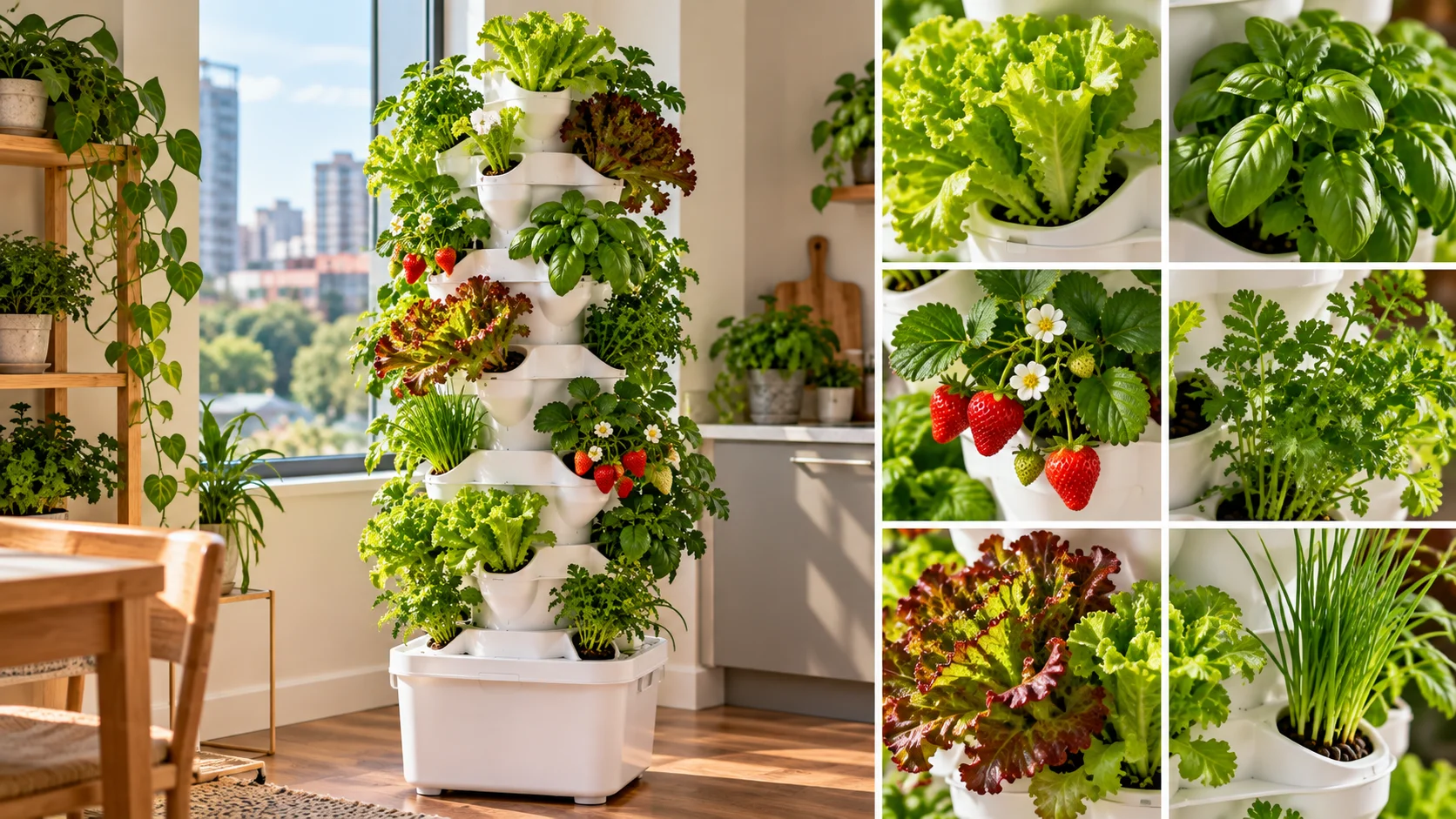
A Better Way to Use 36 Positions
Instead of asking how to squeeze 36 mature plants onto the tower simultaneously, it may be more useful to think about the planting sites as available growing positions at different stages of production.
Some sites might contain young plants while others hold developing greens and harvest-ready lettuce or herbs. Frequently harvested crops can also be kept smaller than plants allowed to grow continuously without pruning.
This kind of staggered approach can make more sense than trying to maximize the number of mature plants at one time.
The important distinction is simple:
The Sjzxuv gives you 36 planting opportunities. It does not remove the biological space requirements of the plants growing in them.
The Biggest Indoor Issue: Lighting Six Levels
The Sjzxuv’s vertical footprint can be attractive in an apartment, but the tower does not appear to include an integrated grow-light system.
That makes lighting one of the biggest differences between this tower and an all-in-one countertop hydroponic garden.
Why an Overhead Light May Not Be Enough
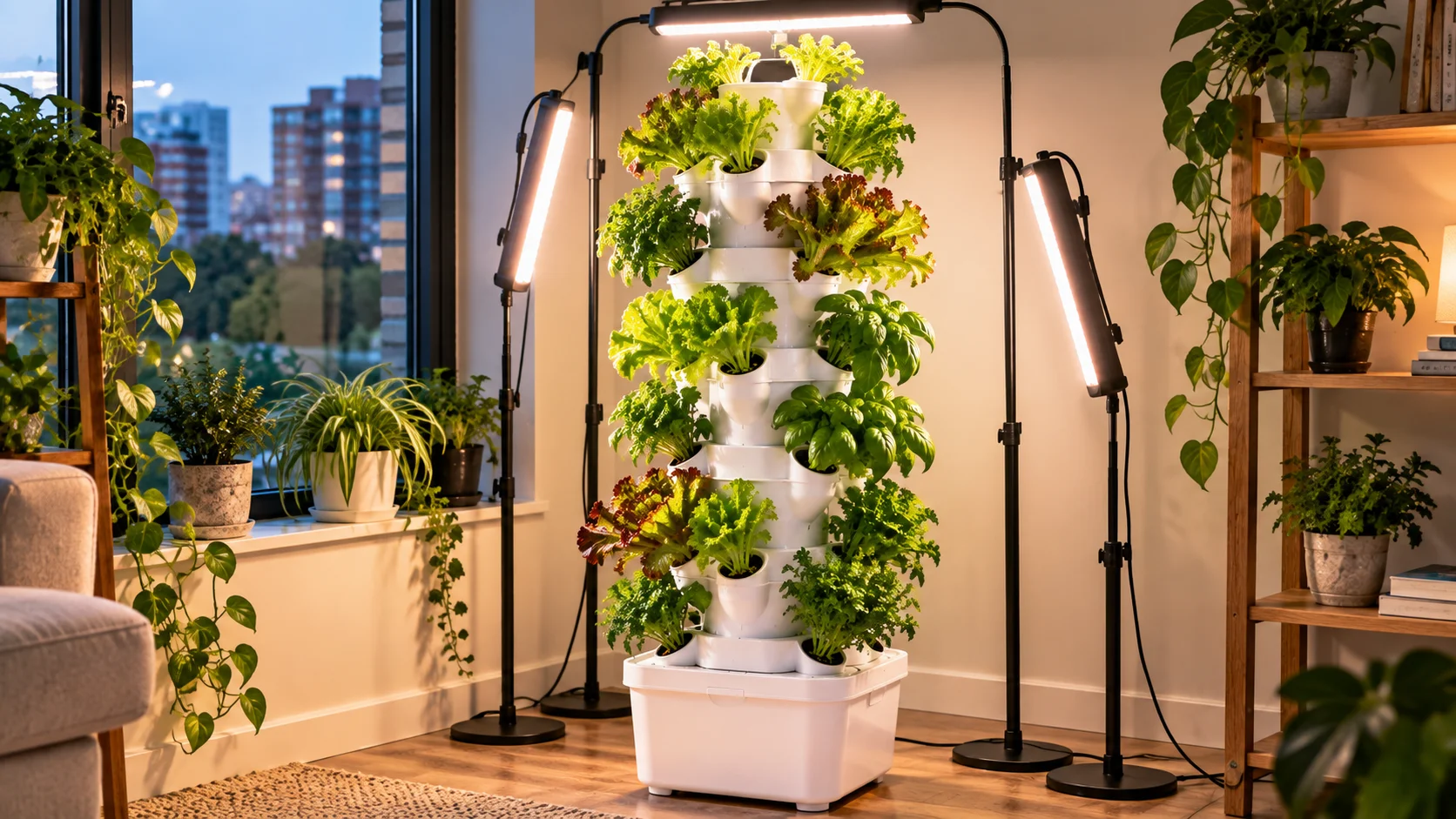
Light intensity changes with distance from the light source. University of Minnesota Extension’s indoor lighting guidance notes that PPFD decreases as plants move farther from the source and recommends approximately 6–12 inches between artificial lighting and hydroponic lettuce and herbs. It also recommends roughly 12–14 total hours of light per day for those crops when using supplemental lighting.
That’s particularly relevant to a tall tower.
A lamp positioned above the top tier can be much farther from plants near the bottom. Mature upper plants can also intercept light before it reaches foliage below.
The goal isn’t simply to put a lamp somewhere near the tower. It’s to provide appropriate light to plants distributed across multiple heights.
What One Verified Strawberry Grower Experienced
One verified purchaser reported growing strawberries in the tower but found that the top lighting in their setup wasn’t sufficient for what they wanted to grow. They added an external AeroGarden light and later reported that their strawberries were growing and fruiting.
That’s useful owner experience, but it isn’t a controlled test and doesn’t establish one required lighting setup for every Sjzxuv owner.
It does reinforce the broader horticultural issue: fruiting crops and plants spread across a vertical tower still need adequate usable light.
What This Means for Apartment Gardeners
Someone placing the tower beside a bright window has a different starting point from someone putting it in a dim kitchen corner.
Before buying, consider where the tower will sit, what crops you want to grow, and how you’ll provide supplemental lighting if the available natural light isn’t sufficient. If you need help choosing a fixture, our guide to the best grow lights for indoor plants explains the lighting options and considerations for growing plants indoors.
If you’re new to this growing method, our beginner’s guide to indoor hydroponic gardening for apartments explains the basic system choices, lighting considerations, crops, and maintenance in more detail.
How the 12L Reservoir Changes Maintenance
A 12-liter reservoir is approximately 3.2 U.S. gallons, giving the Sjzxuv considerably more water capacity than many small countertop gardens.
But reservoir size can’t be evaluated separately from the plants using it.
A tower filled with small seedlings won’t have the same water demand as one carrying a large canopy of mature lettuce, basil, and strawberries.
There Is No Reliable “Refill Every X Days” Rule
We found claims elsewhere suggesting predictable refill intervals for vertical hydroponic systems, but we don’t think it’s responsible to apply a fixed schedule to the Sjzxuv.
Water consumption changes with plant number, crop type, maturity, temperature, humidity, and available light.
The better approach is to monitor the reservoir regularly when establishing the system and pay closer attention as the plants mature.
One verified 6C5K purchaser with previous hydroponic-tower experience specifically reported that the water level was easy to see and refill. That’s encouraging, but it still doesn’t establish a universal refill interval.
Nutrients, pH, and EC Still Require Attention
Hydroponics eliminates soil; it doesn’t eliminate plant nutrition.
Oklahoma State recommends monitoring pH and EC in a vertical hydroponic system according to the crop being grown, maintaining the tank’s water level, and cleaning the tower between crop cycles.
In other words:
The pump automates circulation; it doesn’t automate hydroponic management.
You’ll still need to pay attention to the nutrient solution, water level, plant health, cleanliness, and how the crop is responding.
Check Water Flow Across All Six Tiers
This is one area where verified 6C5K purchasers reported different experiences.
One verified owner said water circulated well throughout the levels with even flow and no dry areas.
Another reported the opposite experience, saying only part of the tower received adequate water.
Those individual reports aren’t enough to establish either outcome as typical.
They do give us a practical setup recommendation: run and inspect the system before relying on it for established plants.
Check that water is moving through the levels as intended, and continue checking circulation as plants and roots mature. Oklahoma State’s vertical-hydroponic guidance similarly recommends checking pump operation and water movement while avoiding excessive splashing and leakage.
Roots and Cleaning
Root growth is another reason mature-plant capacity matters.
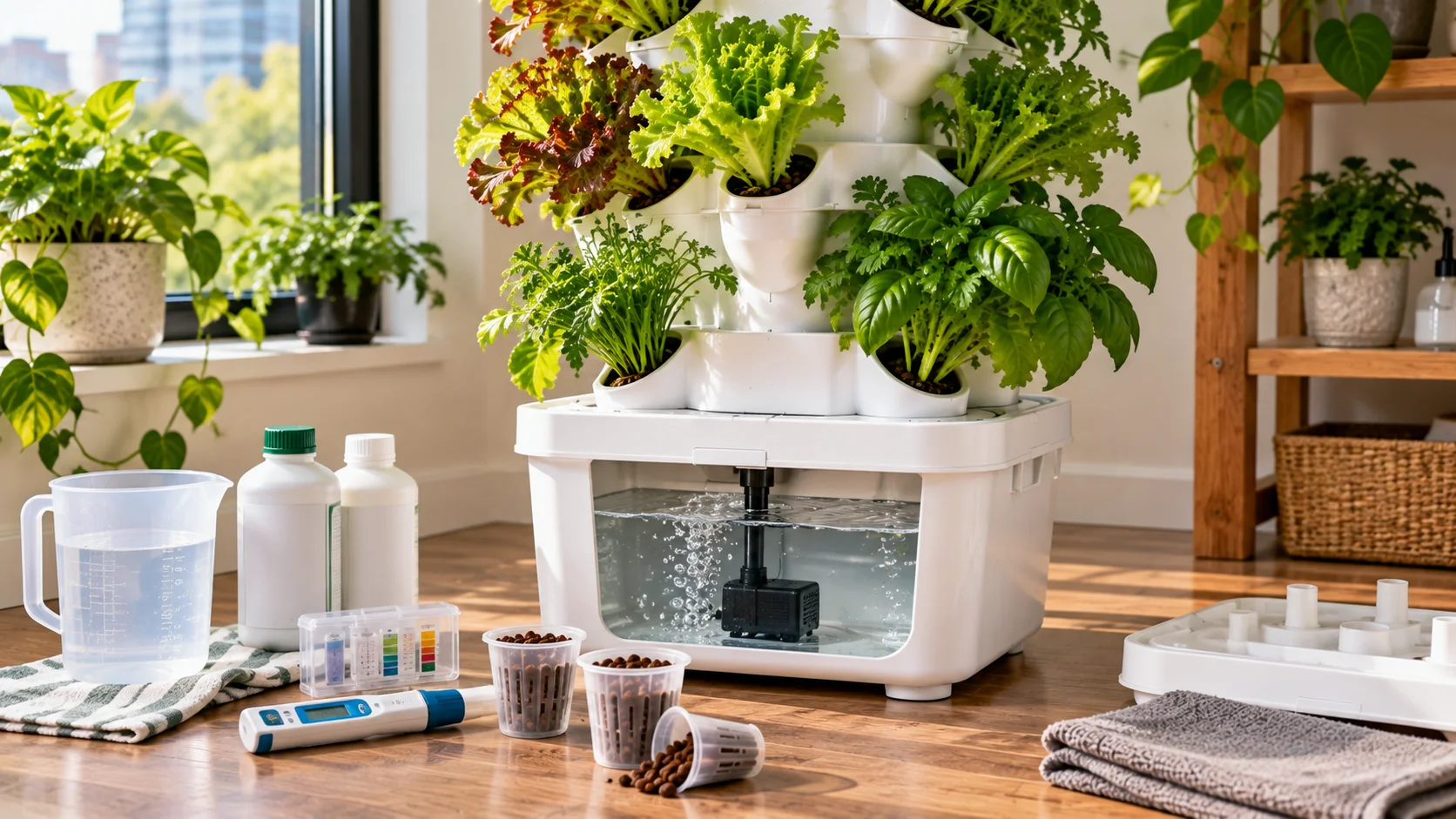
We did not find sufficient evidence to characterize root clogging as a documented Sjzxuv defect. However, larger plants naturally develop larger root systems, and a vertical recirculating system depends on keeping its water pathways functioning.
Inspecting roots, removing dead plant material, keeping the reservoir clean, and cleaning the tower between crop cycles should be treated as normal hydroponic maintenance rather than waiting for a circulation problem to develop.
What Verified Sjzxuv 6C5K Owners Report
At the time of our research, the Amazon listing we examined displayed a 3.9-out-of-5 rating from 111 global ratings.
That figure needs context.
Amazon listings can combine feedback across configurations, so we don’t assume all 111 ratings represent the exact 6C5K tower. Instead, we gave greater weight to reviews Amazon identified as Verified Purchases and, where shown, specifically labeled Model: 6C5K.
Assembly Is Generally a Positive
Several verified 6C5K purchasers described assembly positively.
One reported that the system took roughly 10 minutes to assemble and said the included instructions and QR-linked assembly video were straightforward. Another described setup as surprisingly easy.
That doesn’t mean every buyer will assemble the tower in 10 minutes. In fact, another verified 6C5K purchaser reported difficulty because the directions didn’t appear to match the parts they received.
The evidence therefore supports multiple positive assembly experiences, not a guaranteed assembly time.
Water Distribution Is Mixed
Owner feedback about circulation is much less consistent.
One verified purchaser described water reaching the tower levels evenly. Another reported uneven distribution severe enough that only part of the tower received adequate flow.
Without controlled testing or broader model-specific failure data, we can’t determine how common either experience is.
It’s one of the reasons we recommend checking water distribution throughout the entire tower during setup.
Pump Noise Appears Favorable, but Reliability Is Less Certain
One verified purchaser who said this wasn’t their first hydroponic tower described the pump as quiet while operating.
That’s useful anecdotal evidence, but we don’t have a measured decibel level.
Long-term reliability is also less clear. A separate verified 6C5K purchaser reported that their system stopped operating after several months.
One failure report doesn’t establish a pump failure rate, so we wouldn’t characterize the Sjzxuv pump as either reliably durable or generally failure-prone based on the evidence available.
Timer Experiences Need Caution
A verified 6C5K purchaser in 2026 reported receiving a smart plug that connected to an app and allowed pump scheduling.
Another owner described significant frustration programming the timer supplied with their system and eventually replaced it with a different timer.
Because owner reports span different purchase dates and package descriptions aren’t completely consistent, verify the current timer or smart-plug configuration on the Amazon listing before purchasing.
Plant Size and Lighting Matter in Real Use
Perhaps the most informative owner report came from the strawberry grower discussed earlier.
Their experience demonstrated both sides of the tower concept: plants can grow successfully in the system, but the grower added supplemental lighting and ultimately considered the planting cups restrictive for what they wanted to do long term.
That’s exactly why we don’t treat “36 sites” as the end of the capacity discussion.
Growing Strawberries, Tomatoes, and Peppers in the Sjzxuv
Leafy greens are the simplest fit for the tower, but they’re not the only crops apartment gardeners may want to try.
Fruiting plants simply change the requirements.
Strawberries
Strawberries are a realistic crop to consider. Oklahoma State includes strawberries among crops suitable for vertical hydroponic towers, and we found verified owner evidence of strawberries growing and producing fruit in a Sjzxuv setup.
But the same owner also needed supplemental lighting in their situation.
Strawberries develop foliage and runners and require more hands-on plant management than frequently harvested baby greens. Filling all 36 openings with mature strawberry plants shouldn’t be assumed to be the most practical configuration.
Dwarf Tomatoes and Peppers
Tomatoes and peppers can be grown hydroponically, but that doesn’t make them ideal for occupying every position on a compact vertical tower.
If you experiment with them here, compact or dwarf cultivars make more sense than full-size plants.
Even then, plan for:
- stronger fruiting light;
- more canopy space;
- physical support;
- pruning;
- pollination assistance indoors where necessary;
- increased water and nutrient demand as plants mature.
The main takeaway is important:
If tomatoes and peppers are your primary goal, the Sjzxuv’s advertised 36-site capacity shouldn’t be the reason you buy it.
A handful of properly spaced fruiting plants is a very different growing challenge from dozens of small leafy greens.
Is the Sjzxuv Practical in an Apartment?
Vertical gardening is one of the Sjzxuv’s most attractive characteristics for an apartment.
Instead of arranging numerous containers across a room or balcony, the growing positions are stacked upward. Oklahoma State specifically identifies vertical hydroponics as useful in small sunny spaces such as balconies, patios, and rooftops and notes that indoor production is possible when appropriate lighting is provided.
But the physical dimensions of the tower aren’t the same as its total operating footprint.
Indoor Use
You need room for more than the base.
Mature lettuce and basil can extend beyond the tower. Supplemental lights can require stands or mounting space. You’ll also need access to the reservoir and enough room to inspect, harvest, prune, and clean the system.
The Sjzxuv saves floor space by moving the garden vertically, but mature foliage and supplemental lighting can make its real operating footprint larger than the tower’s base dimensions suggest.
Balcony Use
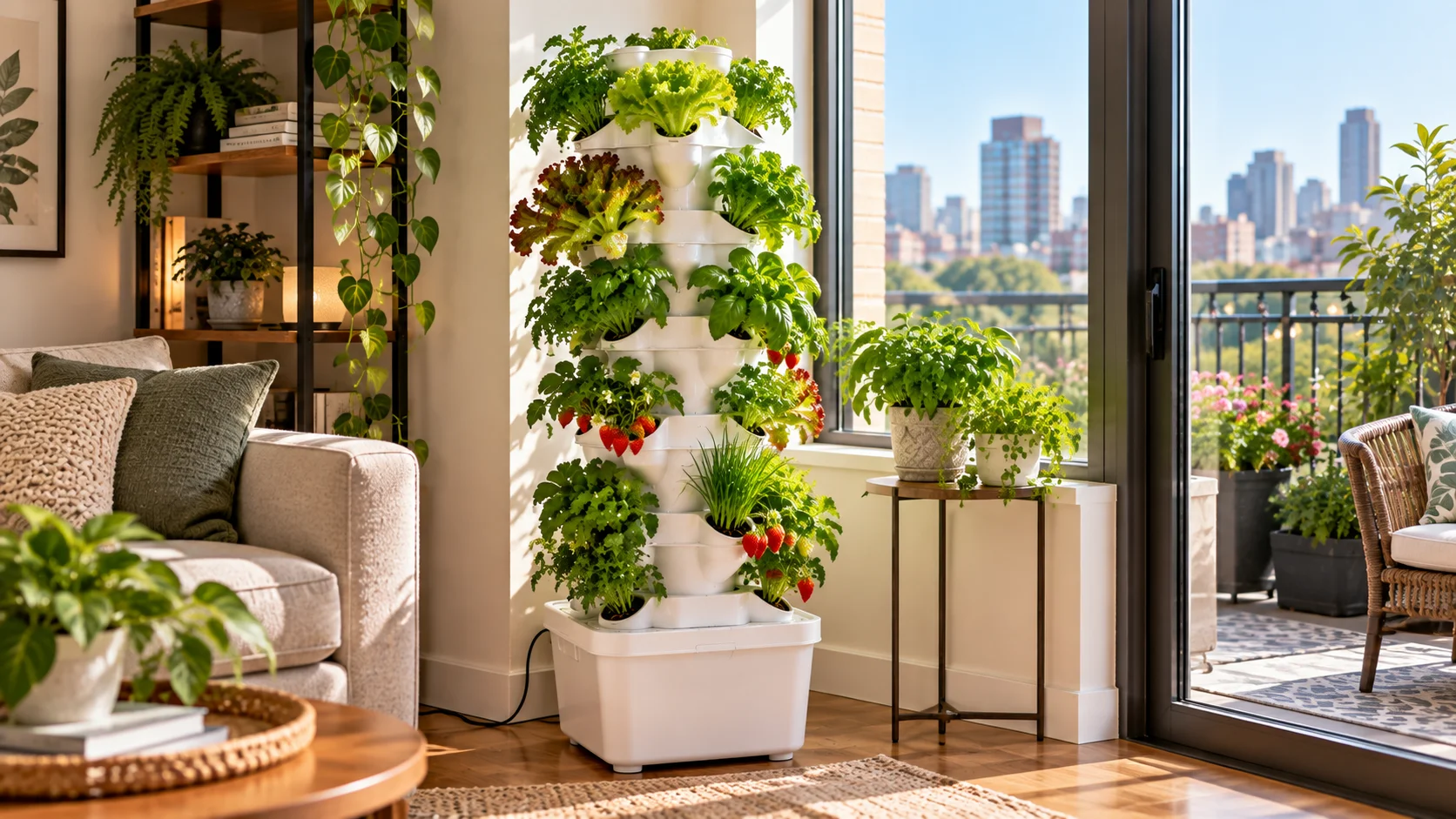
A sunny balcony may reduce the need for supplemental lighting, but it introduces a different set of considerations.
A mature tower presents a larger leafy canopy to wind than an empty tower. It also needs level placement, access for maintenance, water management, and suitable electrical power for the pump.
Think about:
- wind exposure and stability;
- whether the tower can remain level;
- water spills and runoff;
- heat around the reservoir;
- access to suitable electrical power;
- rain exposure around powered components;
- lease or building restrictions.
Sjzxuv may market the system for indoor and outdoor use, but we could not verify a weather/IP rating for its powered components. We therefore would not assume that the pump, timer, smart plug, or electrical connections can safely remain exposed to rain.
Sjzxuv vs. Other Vertical Hydroponic Systems
The Sjzxuv isn’t the only way to put a relatively large number of plants into a small footprint.
More importantly, competing systems solve different problems.
| Feature | Sjzxuv 6C5K | VEVOR 30-Pod Tower | Lettuce Grow Farmstand | Gardyn Home 4 |
|---|---|---|---|---|
| Design | Vertical recirculating tower | Six-tier vertical tower | Modular vertical Farmstand | Smart indoor vertical garden |
| Planting positions | 36 | 30 | 18, 24, or 36 | 30 |
| Reservoir | 12L | 20L | 20 gallons | Integrated reservoir |
| Integrated lighting | None verified | Available 16W LED configuration | Outdoor Farmstand relies primarily on suitable sunlight | Integrated lighting |
| Automated water circulation | Yes | Yes | Yes | Yes |
| Smart features | Package/version unclear | Smart socket on researched configuration | More traditional timer-based operation | Automated monitoring, lighting, and watering |
| Primary difference | High site count in compact tower | Integrated-light option and larger reservoir | Larger supported growing ecosystem | Premium automated indoor approach |
The comparison isn’t about declaring one system universally better. Each solves a different version of the small-space gardening problem.
Consider VEVOR If Integrated Lighting Matters
The researched VEVOR 30-pod six-tier hydroponic tower is a particularly useful comparison because it also uses six tiers but provides 30 planting positions rather than 36. The configuration we researched includes a 16W LED grow light and 20L reservoir. VEVOR lists it at approximately 16.93 × 16.93 × 39.37 inches.
The important tradeoff isn’t simply 30 versus 36 openings.
VEVOR addresses lighting within the package, while Sjzxuv leaves the indoor gardener responsible for developing a supplemental-light solution.
Check the latest Vevor 30-pod price and availability on Amazon
Consider Lettuce Grow If Manufacturer Support Matters
Lettuce Grow’s Farmstand specifications provide an interesting same-capacity comparison. The Farmstand is offered in 18-, 24-, and 36-port configurations, with six planting positions per level. The manufacturer lists a 22-inch diameter, a 20-gallon tank, GFCI outlet requirement, included pump and timer, and a three-year warranty. The 36-port version is listed at 6 feet 7 inches tall.
It’s therefore a much larger system and a different purchasing proposition.
The comparison shows what an established ecosystem and documented support structure can look like, but it also demonstrates that advertised plant capacity alone doesn’t tell you how physically compact a system will be.
Consider Gardyn If You Want a More Automated Indoor System
The Gardyn Home 4 takes another approach entirely.
Gardyn currently describes the Home 4 as supporting 30 plants in approximately 2 square feet with automated watering and lighting plus plant monitoring. It is positioned as a substantially more integrated premium indoor garden.
Sjzxuv is better understood as the underlying vertical growing structure and recirculating system.
With Gardyn, much more of the indoor-lighting and automation ecosystem is built around the product.
That distinction is more useful than trying to decide which system has the biggest number on its planting-site specification.
Check the latest Gardyn Home 4 price and availability on Amazon
Don’t Need 36 Sites? A Countertop Garden May Make More Sense
A six-tier tower makes sense when maximizing vertical planting opportunities is one of your priorities.
But many apartment gardeners don’t actually need 36 planting positions.
If your goal is a smaller indoor herb or lettuce garden, a countertop system that includes its own grow light can eliminate one of the Sjzxuv’s biggest planning challenges.
For example, our LETPOT LPH-SE review looks at a 12-pod countertop garden with a 24W full-spectrum grow light, adjustable light height, app controls, Wi-Fi connectivity, and automated pump system.
We have also reviewed the Ahopegarden Indoor Garden Hydroponics Growing System, MetryGrow MG-15 Hydroponic Growing System, and Owltron Hydroponics Growing System Kit. Those smaller countertop designs are more appropriate comparisons if integrated lighting and easier indoor placement matter more to you than maximizing the number of planting sites.
Who Is the Sjzxuv Best For?
The Sjzxuv’s design is most relevant to apartment gardeners who want to use vertical space for a relatively large number of planting positions and are comfortable taking a more hands-on approach than they would with a small all-in-one countertop garden.
It makes particular sense to investigate if you want to grow lettuce, baby greens, frequently harvested herbs, or a combination of compact crops and understand that some planting sites may need to remain open as larger plants mature.
It also suits someone comfortable selecting and positioning supplemental lighting when natural indoor light isn’t adequate.
Finally, you should be willing to monitor a shared nutrient reservoir rather than expecting the pump and timer to make the garden maintenance-free.
Who Should Consider Something Else?
The Sjzxuv is less compelling for someone who specifically wants an all-in-one indoor appliance with integrated grow lighting.
You may also prefer another system if you want extensive manufacturer documentation, a clearly documented warranty, or greater certainty about included smart controls.
Likewise, someone whose primary goal is growing numerous mature tomatoes, peppers, cucumbers, or other large fruiting plants shouldn’t choose this tower simply because it advertises 36 planting sites.
Those crops bring substantially different light, spacing, support, pruning, and root requirements.
Sjzxuv 6C5K Pros and Cons
Pros
- 36 planting positions provide substantial potential growing space in a vertical layout.
- The 12L reservoir is considerably larger than the reservoirs in many countertop hydroponic gardens.
- The design is particularly logical for leafy greens and compact herbs.
- Multiple verified 6C5K purchasers reported straightforward assembly.
- We found verified-owner evidence of plants, including strawberries, growing successfully in the system.
- One experienced hydroponic-tower owner described the pump as quiet.
- The vertical layout can make better use of limited floor space than numerous individual containers.
Cons
- We could not verify an integrated grow light, making lighting a major consideration indoors.
- 36 planting sites don’t mean 36 unrestricted mature plants.
- Verified purchasers reported mixed experiences with water distribution.
- Long-term pump reliability isn’t well established from the evidence available.
- Timer/smart-plug descriptions appear to vary by package or purchase date.
- Manufacturer documentation and warranty information are more difficult to verify than we’d like.
- We could not verify a weather/IP rating for the powered components.
- Strawberries and larger fruiting crops require more spacing, light, pruning, and general management.
Is the Sjzxuv Vertical Hydroponics Growing System Kit Worth Considering?
The Sjzxuv’s value depends much more on how you intend to use its 36 planting positions than on the number itself.
For someone interested in leafy greens, herbs, succession planting, and selectively spaced larger crops, the six-tier design offers a way to put a significant number of growing positions into a relatively compact floor area.
Its compromises are equally important.
Unlike an all-in-one countertop hydroponic garden, indoor lighting isn’t already solved for you. You’ll also be managing a shared 12L nutrient reservoir and should check water distribution across the tower rather than assuming every position receives identical flow.
For fruiting crops, practical capacity drops further as plants require additional light, canopy room, pruning, pollination, and support.
So the Sjzxuv makes the most sense when you value vertical planting flexibility and are willing to manage the system actively, rather than when you’re looking for the most automated indoor-gardening experience possible.
Check the latest price and availability on Amazon
Final Verdict
The Sjzxuv Vertical Hydroponics Growing System Kit offers an appealing concept for small-space gardeners: 36 planting positions arranged vertically around a 12L recirculating system.
Its strongest potential use isn’t necessarily filling every opening with a mature plant. The design makes more sense for leafy greens, herbs, young plants, succession growing, and selectively spaced larger crops.
The biggest indoor limitation is lighting. Because we could not verify an integrated grow light, apartment gardeners need to consider how usable light will reach plants across all six levels. The verified strawberry-grower experience we reviewed reinforces that concern rather than resolving it.
We also found enough mixed owner evidence around water distribution, timer configuration, and long-term reliability to avoid presenting the system as maintenance-free or completely proven.
For the right grower, the Sjzxuv provides a lot of planting flexibility in a vertical format. For someone who wants integrated lighting, extensive manufacturer support, and greater automation, a more self-contained hydroponic garden may make more sense.
Frequently Asked Questions
Does the Sjzxuv 6C5K really grow 36 plants?
The tower provides 36 planting positions, but that shouldn’t be interpreted as a guarantee that 36 full-size mature plants can grow comfortably at once.
Compact greens and young plants require much less canopy space than mature basil, strawberries, peppers, or tomatoes. As plants grow, leaving some neighboring sites unused may provide better access to light and physical growing space.
Does the Sjzxuv hydroponic tower include a grow light?
We could not verify an integrated grow light for the 6C5K configuration researched for this review.
If you’re growing indoors without adequate natural light, plan for supplemental lighting and check the current Amazon package description before purchasing in case the configuration changes.
Can you grow strawberries in the Sjzxuv tower?
Strawberries are a reasonable crop for vertical hydroponics, and we found a verified purchaser who reported growing and fruiting strawberries in the system.
However, that grower also added supplemental lighting. Strawberries require more attention to light, spacing, runners, and general plant management than small leafy greens.
Can you grow tomatoes and peppers in it?
Compact or dwarf tomatoes and peppers may be possible, but they shouldn’t be treated like lettuce.
Fruiting crops require stronger light, more canopy space, plant support, pruning, and potentially pollination assistance indoors. Using larger crops will also reduce the number of planting positions that can realistically be occupied at maturity.
How often does the 12L reservoir need refilling?
There isn’t a reliable universal interval.
Refill frequency changes with the number and size of plants, crop type, temperature, humidity, and available light. Monitor the reservoir regularly, particularly as plants mature and their water use increases.
Can the Sjzxuv be used outdoors?
The system is marketed for indoor and outdoor growing, but we could not verify a weather/IP rating for its powered components.
If you plan to use it on a balcony or patio, consider rain exposure, electrical safety, wind, stability, runoff, heat, and access to a suitable protected power source rather than assuming the electrical components are weatherproof.