Owltron Hydroponics Growing System Kit Review
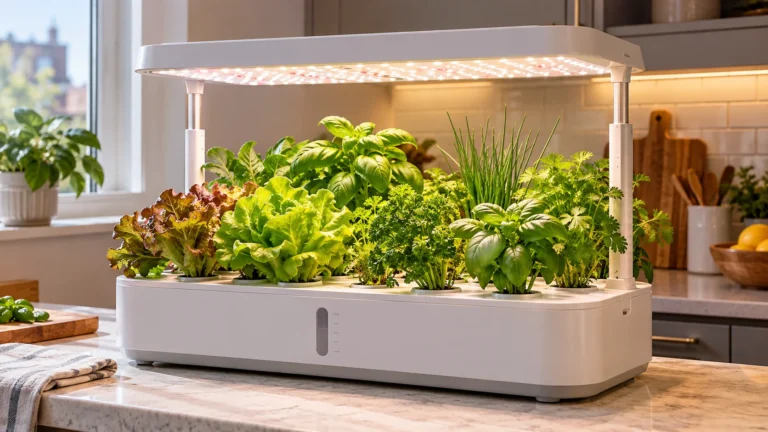
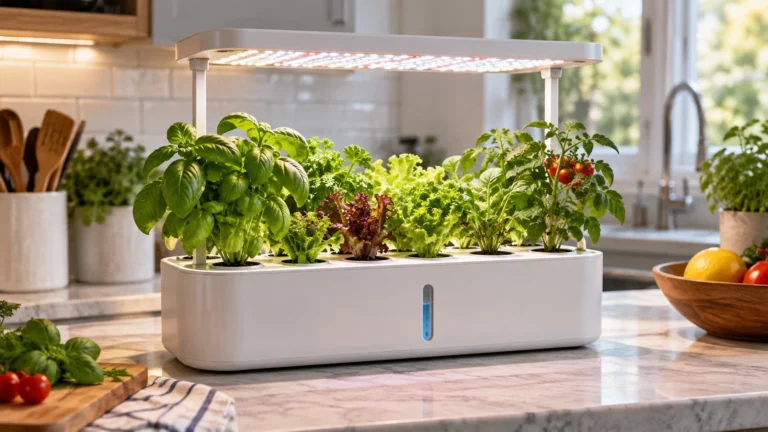
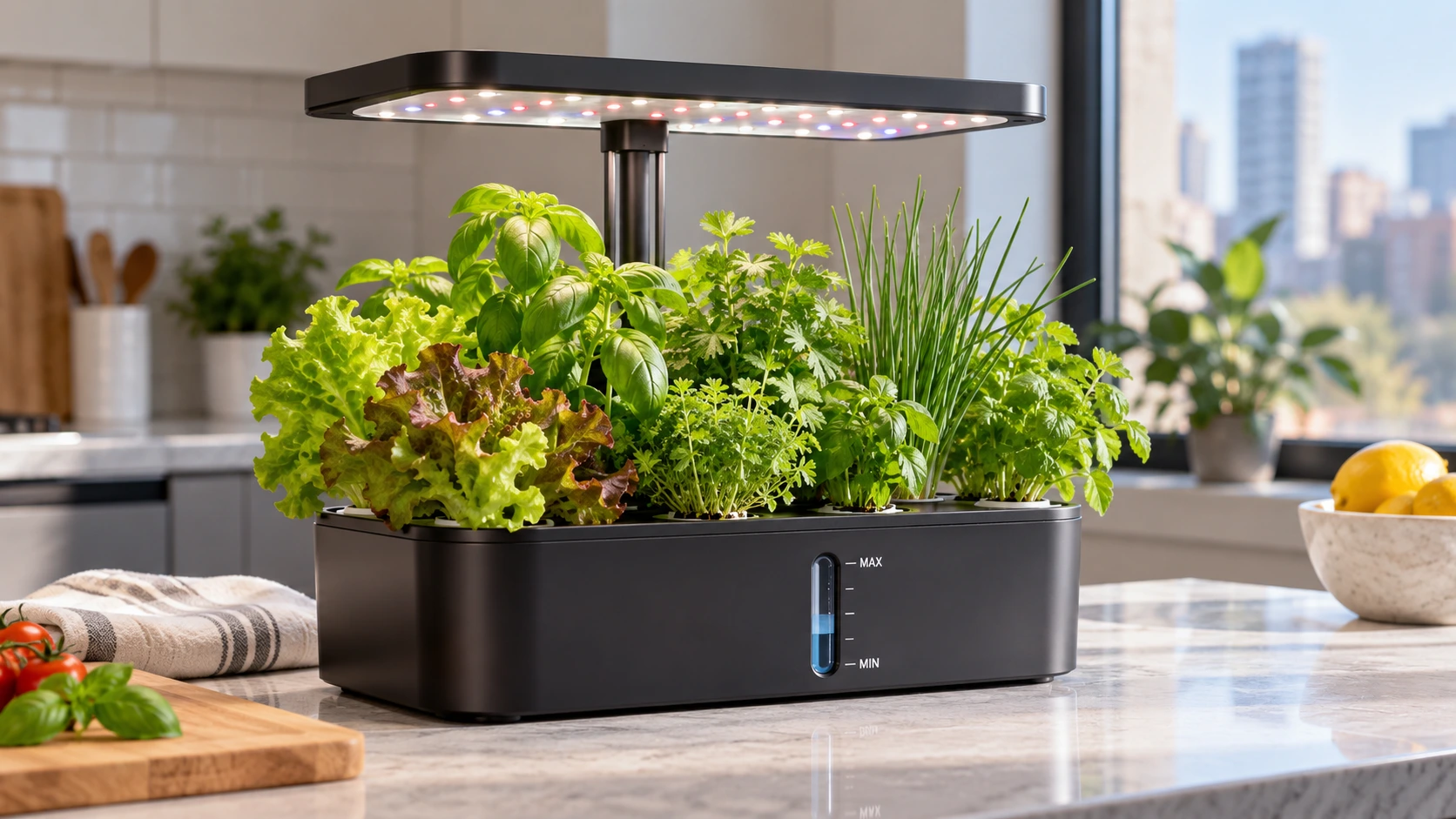
The Owltron Hydroponics Growing System Kit is a 12-pod countertop indoor garden built around a 24W full-spectrum LED grow light, five adjustable brightness levels, a 3.5L water reservoir, and an adjustable light that Owltron lists at up to 20 inches.
Those specifications make it interesting for apartment gardeners who want more planting positions and vertical flexibility without moving into a larger smart garden. But the 12 pod openings can also create unrealistic expectations. Twelve planting positions do not necessarily mean enough room for 12 mature plants—especially if you want to grow tomatoes, peppers, or other larger crops.
For this review, we researched the exact 12-pod Owltron model, checked its available specifications, investigated owner and independent testing evidence, and considered what its design realistically means for an apartment gardener. Apartment Garden Guide has not personally tested this system, so we will distinguish verified specifications from our gardening-specific analysis.
Disclosure: As an Amazon Associate, I earn from qualifying purchases.
Check the latest Owltron price and availability on Amazon.
In This Review
Quick Verdict: Who Is the Owltron Best For?
The Owltron looks best suited to herbs, leafy greens, seedlings, and other relatively compact plants. Its 12 planting positions provide flexibility, while the five brightness settings and adjustable light give you more manual control than a basic fixed-height indoor garden.
The main limitation is scale. All 12 positions share a 3.5L reservoir and the same overhead light. As plants become wider, taller, thirstier, and more heavily rooted, the number of pod openings becomes less important than the amount of actual growing space available.
Compact tomatoes and peppers may be possible to experiment with, but we would not choose this system on the assumption that it can comfortably support 12 mature fruiting plants.
The Owltron also lacks the documented app controls found on some competing indoor gardens. That may not matter if you prefer straightforward onboard controls, but it is worth considering before buying.
Owltron Hydroponics Growing System Kit Specifications
| Specification | Owltron 12-Pod |
|---|---|
| Planting positions | 12 |
| Water reservoir | 3.5L |
| Grow light | 24W full-spectrum LED |
| Light modes | Vegetable; Flower/Fruit |
| Brightness | 5 adjustable levels |
| Automatic light cycle | 16 hours on / 8 hours off |
| Published maximum light adjustment | Up to 20 inches |
| Pump | Circulation pump |
| Pump cycle | Every 30 minutes |
| Water monitoring | Water-level indicator |
| App/Wi-Fi | Not documented for this model |
| Materials | ABS/PVC with aluminum pole |
| Seeds | Not included |
| Warranty | Not reliably verified |
| PPFD | Not published |
| Assembled dimensions | Not reliably verified |
One specification deserves clarification from the start: Owltron’s 20-inch figure is a published maximum light adjustment, not necessarily 20 inches of usable plant height. We’ll explain why that distinction matters below.
How We Reviewed the Owltron
Apartment Garden Guide has not personally tested the Owltron Hydroponics Growing System Kit.
For this review, we examined the available product documentation for the exact 12-pod model, cross-checked important specifications, searched for independent hands-on testing and model-specific owner experiences, compared relevant countertop alternatives, and evaluated the system’s design against horticultural guidance from university Extension sources.
That distinction matters because we found substantially more reliable information about the Owltron’s hardware specifications than about its long-term growing performance.
We could verify specifications such as the 12 planting positions, 3.5L reservoir, 24W light, five brightness levels, 16/8 light cycle, and published 20-inch adjustment. We could not find the kind of rigorous independent test that would allow us to claim measured PPFD, a universal reservoir-refill interval, verified pump noise, or long-term performance with 12 mature plants.
Where the evidence doesn’t support a claim, we won’t guess.
What Comes With the Owltron?
The documented package contents for the 12-pod Owltron include:
- hydroponic growing system;
- quick-start guide;
- plug adapter;
- water-level indicator;
- A solid nutrient;
- B solid nutrient;
- 10 plant support rods;
- 12 planting baskets;
- 12 planting sponges;
- 12 humidity domes;
- 12 anti-algae lids; and
- 12 light-blocking stickers.
Seeds Are Not Included
You’ll need to supply your own seeds.
That adds another purchase before you can start growing, but it isn’t necessarily a disadvantage. Choosing your own seeds lets you select varieties based on what you actually eat and, more importantly for a small indoor garden, choose compact or dwarf cultivars rather than whatever happens to come bundled with the system.
The included A and B nutrients provide starter nutrient supplies, but we could not reliably verify how many complete growing cycles the included amount will support.
How the 24W Grow Light and Controls Work
The Owltron uses a 24W full-spectrum LED grow light with two named growing modes: Vegetable and Flower/Fruit.
It also provides five adjustable brightness levels. That gives you more manual control than a system with a fixed light output.
The built-in timer operates on a 16-hours-on/8-hours-off cycle, reducing the need to manually switch the light on and off every day.
That’s convenient, but the preset schedule is different from having fully customizable app-based scheduling. If you specifically want to choose exact daily on/off times or manage the garden remotely, the Owltron’s documented controls are relatively basic.
Wattage Doesn’t Tell Us the Whole Story
A 24W rating doesn’t tell us exactly how much usable light reaches the plant canopy.
University of Minnesota Extension’s indoor grow-light guidance recommends looking at another measure of light intensity in addition to wattage. It also notes that proper distance between an LED and the plant canopy matters.
We could not find a published PPFD map for this Owltron model or credible independent measurements showing light intensity at the center and edges of its growing deck.
That means we can verify that the Owltron has a 24W full-spectrum LED, but we cannot confirm that every one of its 12 planting positions receives exactly the same usable light.
We also would not assign arbitrary brightness settings to particular crops. Without measured output data, recommendations such as “Level 3 for lettuce” or “Level 5 for tomatoes” would be guesswork.
What Does the 20-Inch Adjustable Height Really Mean?
The adjustable light is one of the Owltron’s more interesting features.
Owltron lists the maximum adjustment at up to 20 inches, giving the system considerably more vertical flexibility than a very short fixed-height countertop garden.
But don’t interpret that number as:
20-inch adjustment = room for a 20-inch-tall plant.
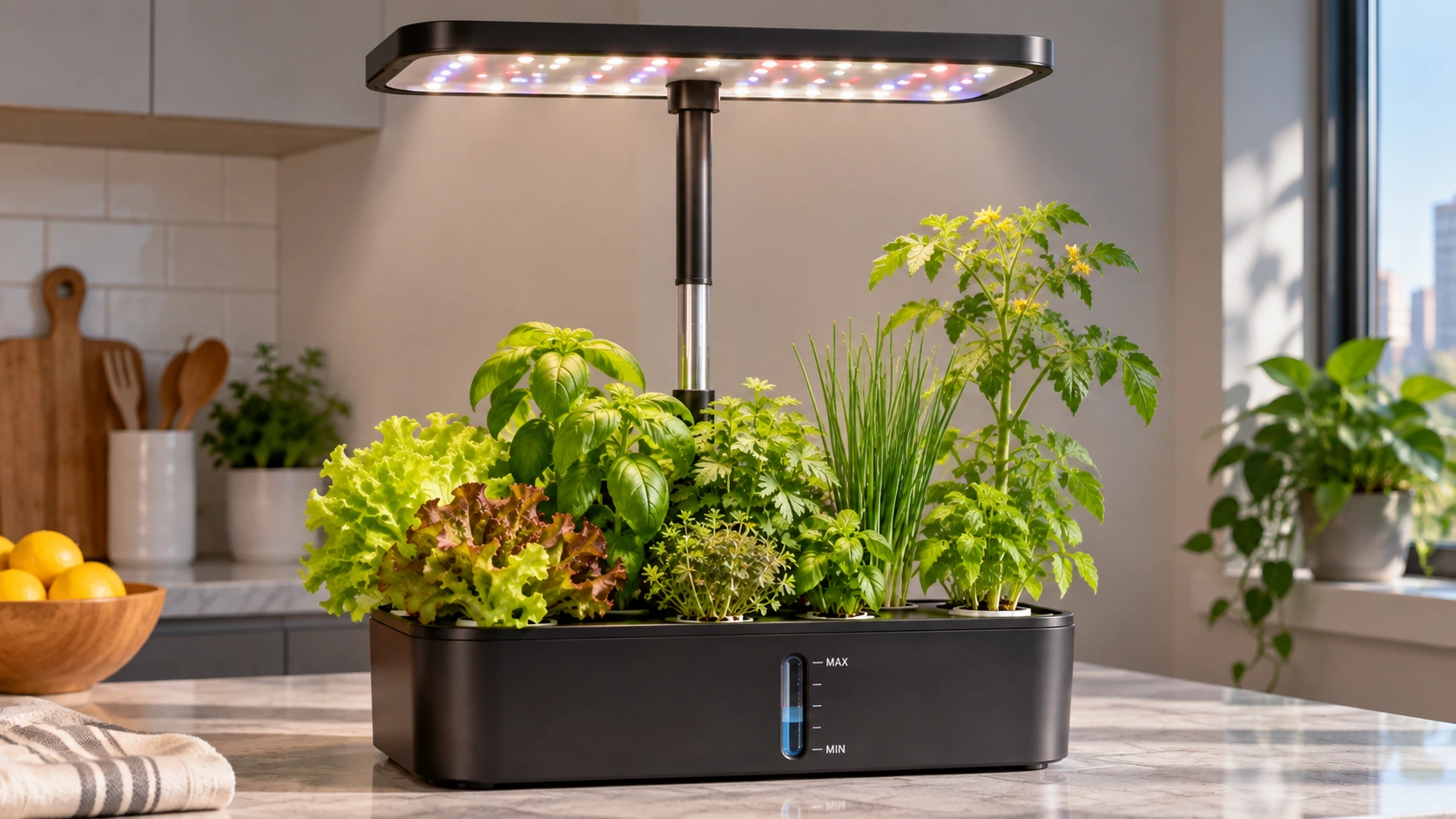
You Still Need Space Between the Plant and the Light
Plants need appropriate clearance below their grow light.
For example, University of Minnesota’s indoor-light guidance suggests roughly 6–12 inches between hydroponic lettuce/herbs and their light source.
That doesn’t establish the correct distance for every plant or every grow light. It does demonstrate why the maximum physical height of a garden shouldn’t automatically be treated as usable plant height.
In practical terms, Owltron’s adjustable pole gives you room to follow the canopy upward as plants grow.
Raising the Light Also Changes the Lighting Situation
There’s another reason the 20-inch number shouldn’t be considered in isolation.
Creating more physical room by raising the fixture also increases the distance between the light and shorter plants below it.
Because we don’t have Owltron PPFD measurements at different heights, we cannot tell you exactly how much usable light reaches a plant when the fixture is near its maximum extension.
This is particularly important if you’re considering the system primarily because you want to grow taller fruiting plants.
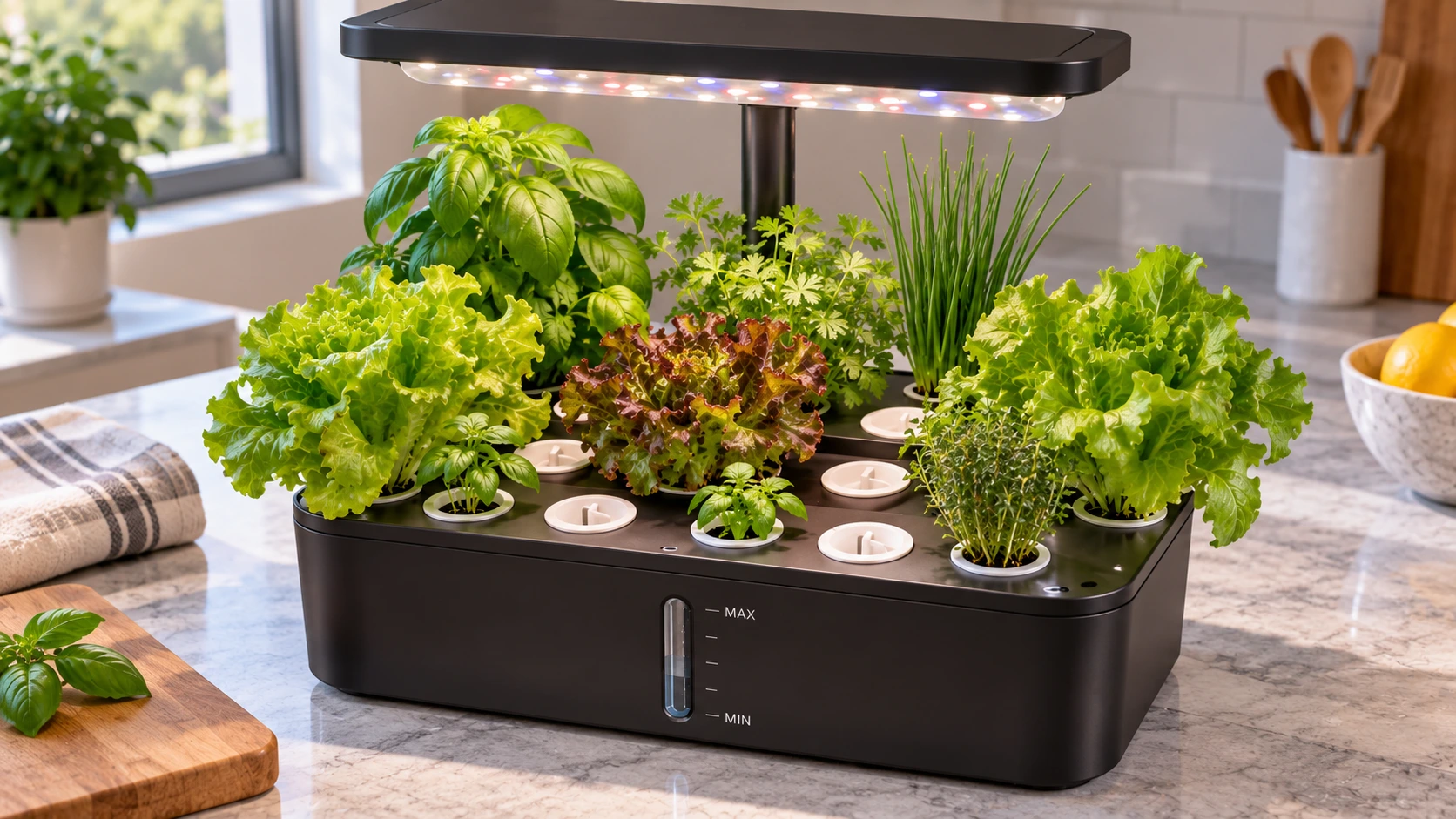
12 Pods vs. Realistic Mature Plant Capacity
The Owltron has 12 planting positions.
That doesn’t necessarily mean it has room for 12 mature plants.
This distinction is particularly important with countertop hydroponic gardens because plants compete for space both above and below the planting deck.
Why Crowding Matters Above the Reservoir
Twelve seedlings can look comfortably spaced when they’re small. Mature plants can be very different.
As plants grow, their leaves can begin:
- overlapping;
- shading neighboring plants;
- competing for the same light;
- reducing airflow; and
- occupying space above adjacent pod positions.
University of Minnesota Extension recommends spacing herbs according to their mature size and notes that crowding can contribute to weak growth, poor air circulation, and increased disease risk.
That’s why the Owltron’s pod count is better understood as planting flexibility rather than a guarantee of mature capacity.
You may be able to use many positions for small greens or young herbs while intentionally leaving positions empty around larger plants.
Root Crowding Matters Too
The same issue exists below the deck.
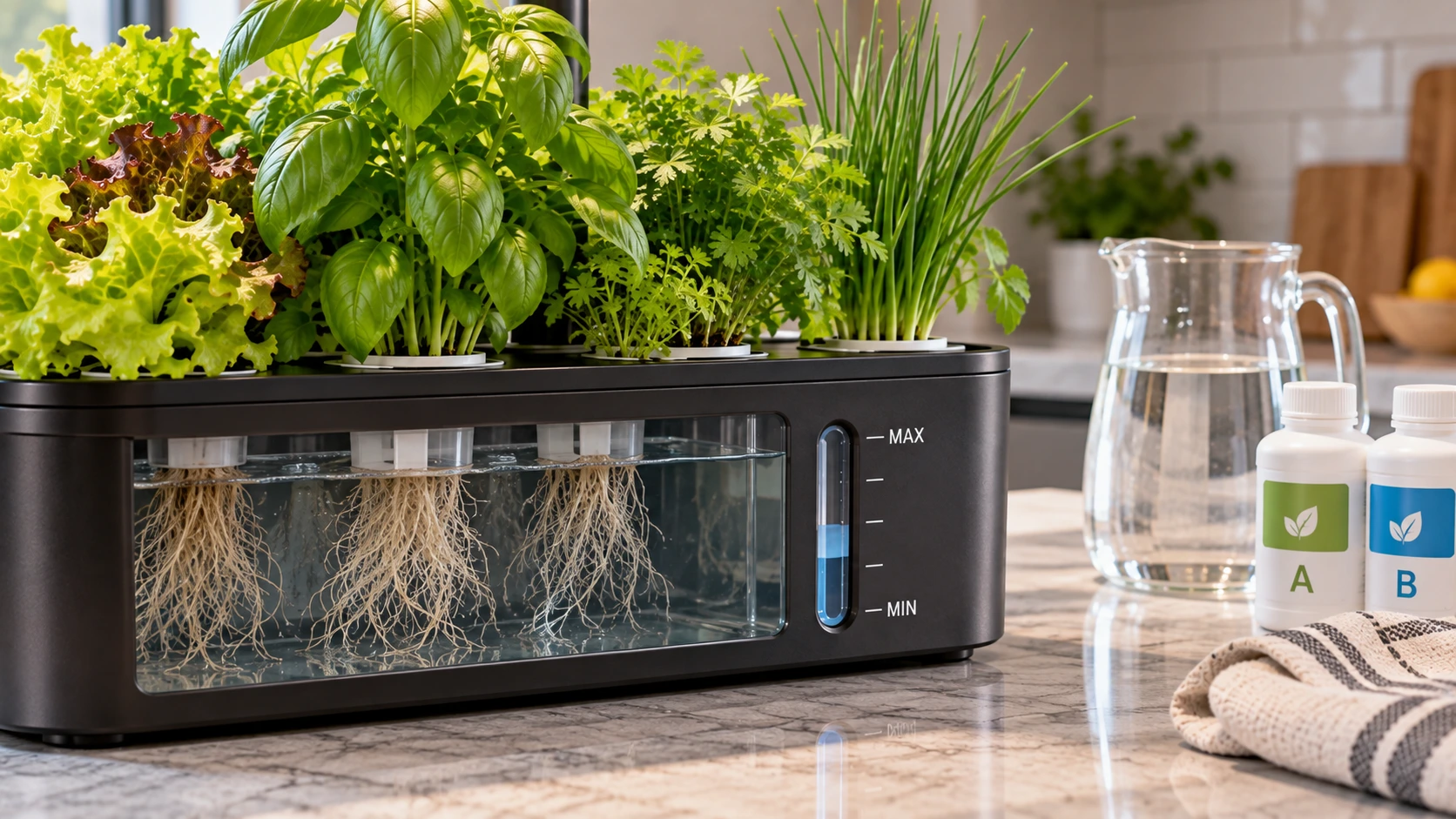
All occupied pods ultimately share the 3.5L reservoir.
As plants mature, their root systems expand into that shared space. Larger plants can therefore compete for physical root space, water, and nutrients even before their leaves appear overcrowded above the deck.
We did not find long-term testing showing that Owltron’s pump routinely becomes clogged with roots, so we won’t present that as a product defect.
Instead, treat root growth as something to inspect as the garden matures. Larger crops may eventually require fewer occupied positions, root management, or transplanting into a larger growing system.
What Can You Realistically Grow in the Owltron?
The Owltron’s design makes more sense for some crops than others.
Here’s how we would approach plant selection based on mature plant behavior and the system’s verified specifications:
| Crop or use | Our assessment | Why |
|---|---|---|
| Leaf lettuce | Strong fit | Compact and harvested for leaves |
| Baby greens | Strong fit | Small canopy and frequent harvesting |
| Basil | Strong fit | Can be managed through regular harvesting |
| Cilantro | Good fit | Relatively compact when harvested regularly |
| Chives | Good fit | Compact growth habit |
| Thyme/oregano | Good fit | Smaller herbs, though varieties differ |
| Tall/vigorous herbs | Conditional | Can compete for height and light |
| Strawberries | Conditional | Fruiting and pollination add complexity |
| Dwarf tomato | Conditional/experimental | Greater canopy, root and fruiting demands |
| Compact pepper | Conditional/experimental | More space, light and management needed |
| Indeterminate tomato | Poor long-term fit | Vigorous mature growth conflicts with countertop scale |
| Large vigorous pepper | Poorer long-term fit | Large canopy/root demand |
| Vining cucumber | Poor fit for most beginners | Vigorous growth and support requirements |
These are Apartment Garden Guide’s editorial assessments based on the system’s architecture and normal plant-growth requirements, not the results of our own Owltron growing trial.
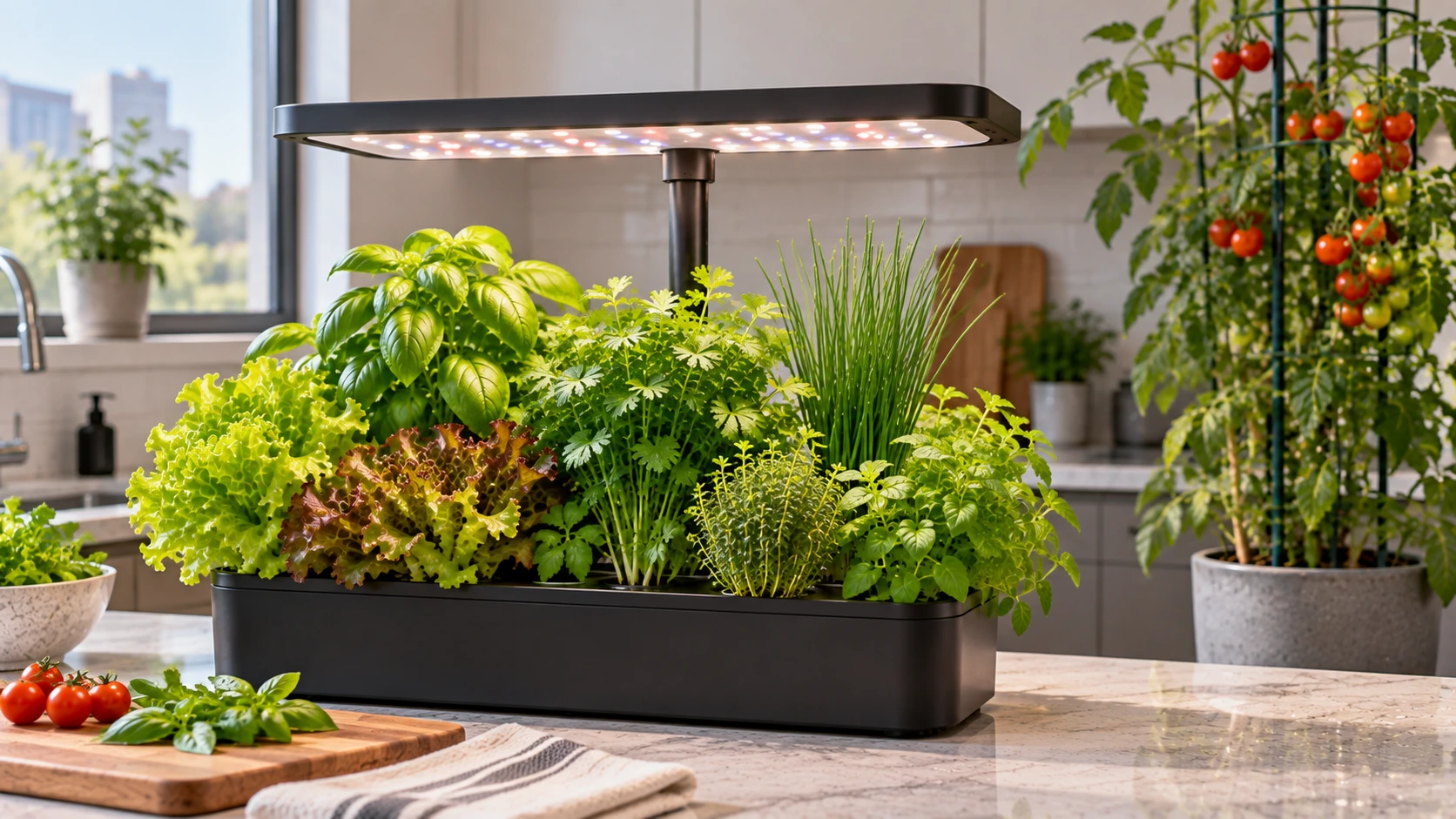
For most beginners, we’d start with leafy greens and manageable herbs rather than filling all 12 positions with fruiting crops.
Can You Grow Tomatoes and Peppers in the Owltron?
You can start tomatoes and peppers in a countertop hydroponic system, but whether they remain good long-term residents is a different question.
Owltron includes a Flower/Fruit light mode and markets the system for crops that include peppers and cherry tomatoes. That doesn’t mean every tomato or pepper cultivar is equally appropriate for a 3.5L, 12-position countertop garden.
Choose Compact or Dwarf Varieties
If you want to experiment with fruiting vegetables, plant selection matters.
University of Maryland Extension recommends looking for bush or dwarf varieties for container growing and notes that tomato and cucumber cultivars have been bred specifically for small-space gardening.
A conventional indeterminate cherry tomato can continue producing vigorous vines and may quickly overwhelm the available space. A genuinely compact or dwarf cultivar is a more sensible experiment.
The same principle applies to peppers.
Fruiting Plants Require More Management
A mature tomato or pepper typically demands more from a small indoor garden than lettuce or basil.
You may need to think about:
- canopy size;
- plant support;
- water consumption;
- nutrient demand;
- pollination;
- pruning;
- root growth; and
- competition for light.
Indoor fruiting crops may also need assistance with pollination when natural airflow and pollinator activity are limited.
Don’t Treat All 12 Pods as Fruiting-Plant Spaces
We don’t recommend assigning an arbitrary number such as “two tomatoes maximum,” because cultivar size and growing conditions vary.
The useful rule is simpler:
Expect a mature fruiting plant to require substantially more of the Owltron’s shared space than a small herb or leafy green.
If tomatoes or peppers are your primary reason for buying an indoor garden, the physical ability to insert 12 pods should not be your main selection criterion.
Reservoir, Nutrients, and Routine Maintenance
The Owltron’s 3.5L reservoir holds about 0.9 U.S. gallon.
That’s relatively compact for a system advertising 12 planting positions, which makes water monitoring increasingly important as plants mature.
Don’t Rely on a Fixed Refill Schedule
We found third-party claims suggesting a specific number of days between refills, but we did not find sufficient evidence to support a universal Owltron refill interval.
How quickly plants use water depends on factors including:
- number of occupied pods;
- crop type;
- plant maturity;
- room temperature;
- humidity; and
- growing conditions.
Twelve seedlings and several mature fruiting plants will not use water at the same rate.
Use the Owltron’s water-level indicator and monitor the reservoir instead of relying on a calendar-based refill schedule.
Nutrient Management
The system includes A and B solid nutrients, which makes it easier to get started.
But hydroponic nutrition still deserves attention.
Penn State Extension’s guidance on hydroponic plant nutrition explains that plants grown hydroponically depend on the nutrient solution for essential nutrients and that pH influences nutrient availability.
Follow Owltron’s nutrient-mixing instructions rather than assuming that adding extra nutrients will make plants grow faster.
If you’re new to growing without soil, our Indoor Hydroponic Garden: A Beginner’s Guide for Apartments explains hydroponic reservoirs, grow lights, nutrients, pH, and routine maintenance in more detail.
Check Root Growth as Plants Mature
Periodically inspect what’s happening inside the reservoir.
Young roots may occupy relatively little space, while established plants can develop much larger root systems. Make sure roots aren’t interfering with circulation and address excessive growth based on the plant you’re growing.
We would not follow a fixed root-pruning schedule simply because you’re using the Owltron. Root management should respond to actual plant growth and the condition of the reservoir.
What We Could Verify—and What We Couldn’t
One of the biggest limitations we found while researching the Owltron wasn’t necessarily a hardware feature. It was the lack of strong independent testing for this exact 12-pod model.
That makes it important to separate documented specifications from real-world performance claims.
What We Could Verify
The available product documentation supports:
- 12 planting positions;
- 3.5L reservoir;
- 24W full-spectrum LED;
- five brightness levels;
- Vegetable and Flower/Fruit modes;
- 16-hour-on/8-hour-off light cycle;
- up-to-20-inch published light adjustment;
- circulation pump operating on a 30-minute cycle;
- water-level indicator;
- included A/B nutrients; and
- the included growing accessories described earlier.
What We Could Not Independently Establish
We did not find sufficiently strong model-specific evidence establishing:
- PPFD across the growing deck;
- light distribution at different fixture heights;
- exact usable plant clearance;
- measured pump noise in decibels;
- a universal reservoir-refill interval;
- long-term durability;
- performance with 12 mature plants;
- long-term fruiting-crop performance; or
- a clearly documented warranty duration for this exact model.
We also found customer-review aggregations that appeared to mix feedback from Owltron’s 12-pod garden with its substantially different 15-pod smart system. We therefore did not use those combined ratings to claim a customer consensus.
A limited hydroponics-community r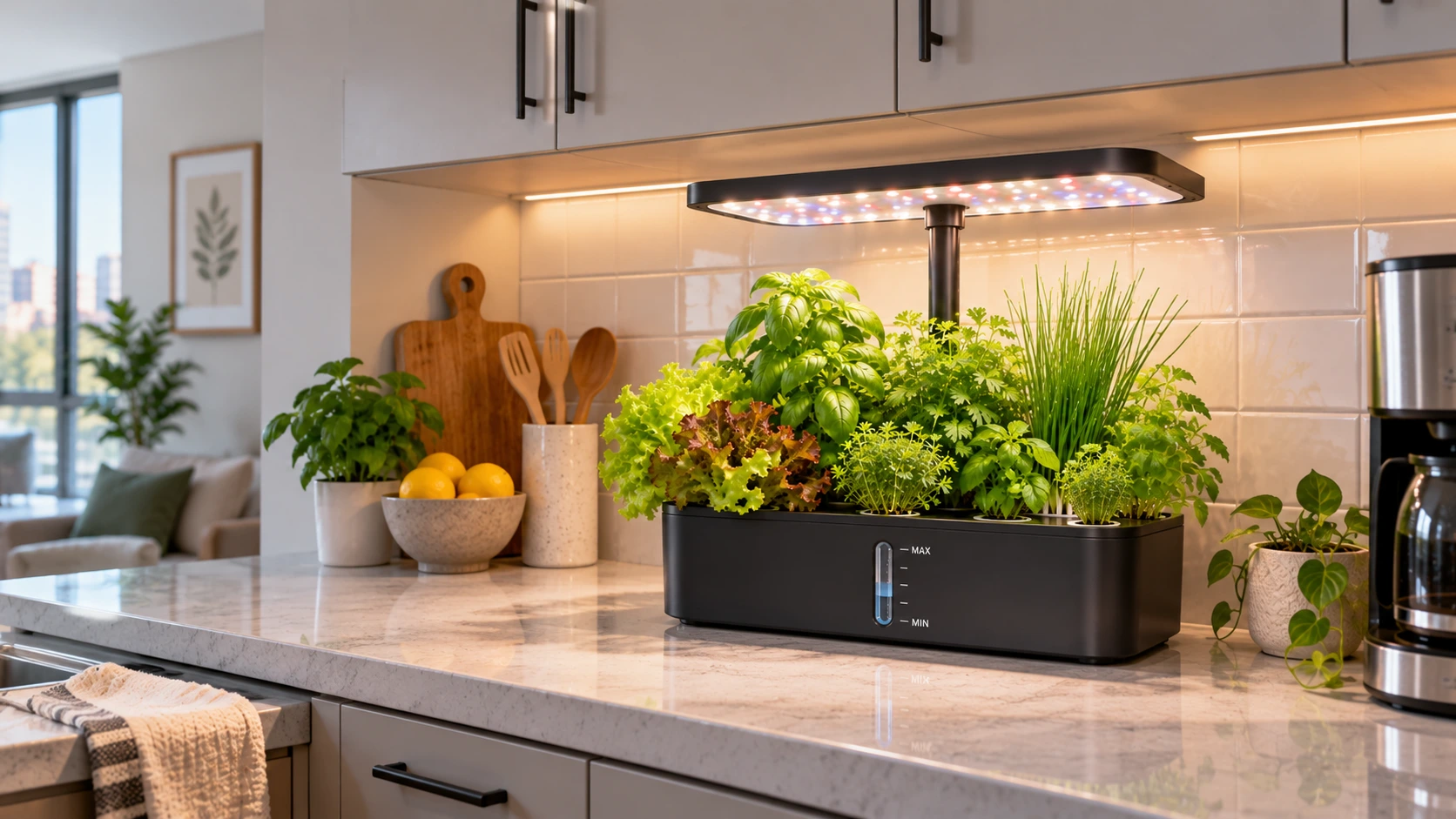 eport from someone who said they owned this Owltron raised concerns about light intensity when discussing pepper growing, but a single owner’s experience isn’t controlled testing and shouldn’t be treated as proof of general product performance.
For that reason, this review doesn’t contain a generic “customers love it” section or turn scattered anecdotes into conclusions.
Is the Owltron Practical for an Apartment?
Conceptually, yes. A self-contained countertop garden solves several problems apartment gardeners encounter.
You don’t need a backyard or balcony, the grow light is integrated, and the reservoir eliminates the need for traditional soil-filled vegetable containers.
There are still several space considerations that are easy to overlook.
Measure the Countertop Before Ordering
We were unable to verify reliable assembled footprint dimensions for this exact Owltron model from the documentation we considered strong enough to use.
Rather than giving you questionable dimensions from a third-party listing, we recommend checking the current listing measurements and comparing them with the actual location where you intend to use the system.
Don’t Forget Vertical Clearance
Counter width isn’t the only measurement that matters.
If you intend to place the Owltron beneath upper kitchen cabinets or a shelf, remember that its light assembly is designed to extend upward as plants grow.
Measure vertical clearance as well as countertop area.
Otherwise, you could technically have enough counter space for the base while not having enough overhead room to take advantage of the adjustable light.
Consider Grow-Light Spill
The Owltron runs its light for 16 hours during each automatic cycle.
In a separate kitchen, that may be insignificant. In a studio apartment or open living area, the grow light can contribute noticeable ambient light for much of the day.
Think about where the garden will sit if you’re sensitive to bright light near a television, workspace, or sleeping area.
What About Pump Noise?
Owltron describes its circulation pump as quiet, and some owner comments we found were consistent with low pump noise.
However, we found no independent decibel measurement for this exact 12-pod model.
Noise-sensitive buyers—particularly those considering a studio apartment or bedroom-adjacent location—should therefore treat “quiet” as a manufacturer characterization rather than a measured specification.
Who Is the Owltron Best For?
The Owltron makes the most sense for someone who wants to grow herbs, leafy greens, or other relatively compact plants indoors and values having more planting positions and adjustable light height.
It may be especially appealing if you:
- want to choose your own seeds;
- prefer manual brightness adjustment;
- want an automatic daily light cycle;
- don’t need Wi-Fi or app controls;
- plan to harvest herbs and greens regularly;
- are comfortable monitoring the water level; and
- understand that you may leave some pods unused as larger plants mature.
The system also provides an accessible way to experiment with indoor hydroponics without needing separate grow lights, reservoirs, and pumps.
Who Should Consider Something Else?
The Owltron may be less attractive if your priority is smart-home-style control, a larger reservoir, or growing several mature fruiting plants.
You may also prefer another system if you want:
- app-controlled lighting;
- remote water alerts;
- more reservoir capacity;
- a more heavily documented product;
- pre-seeded proprietary pods; or
- more room for larger crops.
Several alternatives approach those needs differently.
Owltron vs. Other Countertop Indoor Gardens
Comparing countertop gardens solely by pod count can be misleading. Reservoir size, vertical adjustment, lighting controls, automation, and the crops you actually intend to grow can matter just as much.
Owltron vs. LetPot Air: Height or Smart Controls?
The LetPot Air is a particularly useful comparison because it uses a 24W LED like the Owltron but takes a more connected approach to garden management.
The Owltron provides 12 planting positions, a 3.5L reservoir, five brightness levels, and an up-to-20-inch published light adjustment.
The LetPot Air provides 10 planting positions, a 4L reservoir, a 24W light, and a lower published maximum light height, but adds app-connected functionality such as customizable lighting schedules and refill notifications.
That creates a straightforward tradeoff.
The Owltron emphasizes more planting positions, greater published vertical adjustment, and manual brightness control.
The LetPot Air emphasizes connected automation and monitoring.
If you don’t care about controlling a countertop garden from your phone, Owltron’s simpler approach may be sufficient. If app-based scheduling and refill reminders matter, the LetPot Air offers a different ownership experience.
Owltron vs. Ahopegarden 12-Pod: Height or Larger Reservoir?
Ahopegarden offers a closer comparison in planting capacity because the model we’ve researched also provides 12 planting positions.
The major difference is reservoir capacity.
The Owltron uses a 3.5L reservoir, while the comparable Ahopegarden system uses a 5L reservoir and adds environmental/water-monitoring features.
That extra reservoir capacity could be useful as plants become larger, although it would be incorrect to assume that a particular percentage increase in reservoir size automatically translates into the same percentage increase in time between refills.
The Owltron’s stronger documented differentiators are its five brightness levels and up-to-20-inch published light adjustment.
For our detailed analysis of the alternative, read the Ahopegarden Indoor Garden Hydroponics Growing System Review.
Need More Capacity? Consider the MetryGrow MG-15
If the Owltron’s 12 positions and 3.5L reservoir feel restrictive, another approach is increasing both planting capacity and water capacity.
The MetryGrow MG-15 provides 15 planting positions and a 5.5L reservoir.
More pod positions still don’t eliminate mature-plant spacing requirements, but the additional reservoir capacity changes the maintenance equation compared with the Owltron’s 3.5L tank.
Our MetryGrow MG-15 Hydroponic Growing System Review examines that system in detail.
Want More Features? Consider the LETPOT LPH-SE
The LETPOT LPH-SE represents more of a step-up alternative than a direct budget-style substitute.
It keeps 12 planting positions while adding a larger reservoir and app-connected features.
If app controls, additional automation, and a larger reservoir matter more to you than keeping the system relatively simple, read our LETPOT LPH-SE Review: Is It Good for Apartment Gardening?.
Prefer a More Hands-Off System? Consider Click & Grow Smart Garden 9
The Click & Grow Smart Garden 9 takes a fundamentally different approach.
Rather than Owltron’s circulating nutrient-water setup and user-supplied seeds, Click & Grow emphasizes pre-seeded plant pods and passive watering.
It provides fewer planting positions—nine instead of twelve—but may appeal to someone who places greater value on a packaged growing experience than on experimenting with seeds and hydroponic nutrient management.
Because these are different growing approaches, we wouldn’t choose between them based solely on pod count.
If that more packaged approach sounds appealing, you can check the latest Click & Grow Smart Garden 9 price on Amazon.
Is the owltron Hydroponics Growing System Kit Worth the Price?
Whether the Owltron represents good value depends heavily on its current selling price, which is why we don’t recommend judging it against a fixed price embedded permanently in this review.
What you’re getting is a 12-position countertop system with:
- a 24W full-spectrum LED;
- five brightness settings;
- two named light modes;
- automatic 16/8 lighting;
- an up-to-20-inch published light adjustment;
- a 3.5L reservoir;
- circulating water;
- a water-level indicator; and
- starter growing supplies.
Its main compromises are the relatively small reservoir for 12 planting positions, lack of documented app connectivity, absence of published PPFD data, and limited high-quality independent testing for the exact model.
That makes the current price important.
If the Owltron is priced substantially below more feature-rich smart gardens, its simpler controls may make sense for someone primarily interested in herbs and leafy greens. If its price approaches systems with larger reservoirs and app-based controls, those additional features deserve consideration.
Check the current Owltron price and availability on Amazon.
Pros and Cons
Pros
- 12 planting positions provide flexibility for herbs and greens.
- Up-to-20-inch published light adjustment offers more vertical flexibility than short countertop gardens.
- Five brightness levels provide manual light control.
- 24W full-spectrum LED is built into the system.
- Automatic 16/8 light cycle reduces daily light management.
- Circulation pump is integrated.
- Includes baskets, sponges, humidity domes, anti-algae lids, support rods, and starter A/B nutrients.
- Bring-your-own-seeds approach lets you select compact cultivars.
- Particularly sensible for leafy greens and regularly harvested herbs.
Cons
- 3.5L reservoir is relatively small for 12 planting positions, especially as plants mature.
- No documented app or Wi-Fi control for this model.
- No published PPFD map showing usable light across the growing deck.
- The 20-inch adjustment should not be interpreted as 20 inches of usable plant height.
- We found limited high-quality independent long-term testing for the exact 12-pod system.
- Reliable assembled dimensions and a model-specific warranty duration were not clearly verified.
- Twelve pod openings can create unrealistic expectations for larger mature plants.
- Fruiting crops such as tomatoes and peppers require substantially more management than herbs and greens.
Final Verdict
The owltron Hydroponics Growing System Kit has an interesting combination of features for apartment gardeners: 12 planting positions, a verified 24W full-spectrum light, five brightness settings, automatic lighting, and an adjustable fixture that Owltron lists at up to 20 inches.
Its strongest use case isn’t trying to turn all 12 pods into mature vegetable plants. The design makes considerably more sense for leafy greens, manageable herbs, seedlings, and carefully selected compact crops, with some positions intentionally left open as larger plants mature.
The biggest considerations are the 3.5L shared reservoir, lack of published PPFD measurements, relatively basic non-app controls, and limited independent testing for this exact model. The adjustable height is useful, but physical height alone doesn’t establish that the light can support every fruiting crop at maximum extension.
For an apartment gardener who primarily wants herbs and greens and doesn’t need app connectivity, the Owltron’s feature set is worth comparing with its current price. Buyers focused on mature tomatoes and peppers, larger reservoirs, or smart controls should compare the alternatives before deciding.
See the latest Owltron price and availability on Amazon.
Frequently Asked Questions
Does the owltron Hydroponics Growing System Kit include seeds?
No. Seeds are not listed among the included supplies for the 12-pod system. The package includes planting baskets, sponges, humidity domes, anti-algae lids, light-blocking stickers, plant support rods, and A/B nutrients, but you’ll need to supply your own seeds.
That allows you to select compact varieties that better match a countertop garden.
How many plants can the Owltron grow?
The Owltron has 12 planting positions, but that should not be interpreted as guaranteed room for 12 mature plants.
Small leafy greens and herbs use considerably less space than mature tomatoes or peppers. As plants become larger, leaving some pod positions unused can reduce above-deck crowding and competition within the shared reservoir.
How tall can plants grow in the Owltron?
Owltron lists the adjustable light at up to 20 inches, but that doesn’t mean a plant can use the entire 20 inches.
You still need clearance between the plant canopy and LED fixture. The practical plant height therefore depends on the crop and appropriate light distance.
Can you grow tomatoes in the Owltron?
A compact or dwarf tomato may be worth experimenting with, but we wouldn’t treat the Owltron as a 12-tomato mature garden.
Tomatoes develop larger canopies and root systems than leafy greens and also introduce fruiting, support, pollination, water, and nutrient demands. If tomatoes are your priority, choose genuinely compact cultivars and expect each mature plant to occupy substantially more shared space.
Does the Owltron have Wi-Fi or app control?
We did not find documented Wi-Fi or app functionality for this exact 12-pod Owltron model.
Its documented controls include five brightness levels, Vegetable and Flower/Fruit modes, and an automatic 16-hour-on/8-hour-off light cycle.
Be careful when researching this feature online because Owltron also sells a different 15-pod smart hydroponic garden with app functionality.
How often do you need to refill the 3.5L reservoir?
There isn’t a reliable universal refill interval.
Water use depends on plant type, maturity, number of occupied pods, temperature, humidity, and other growing conditions. Use the Owltron’s water-level indicator and monitor the reservoir regularly rather than relying on a fixed number of days.