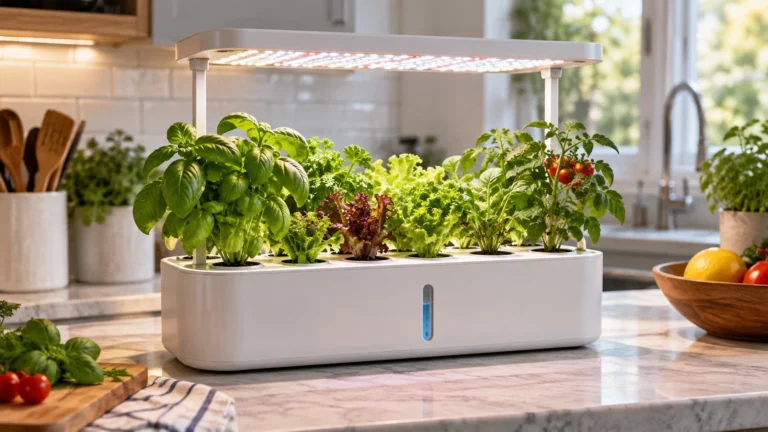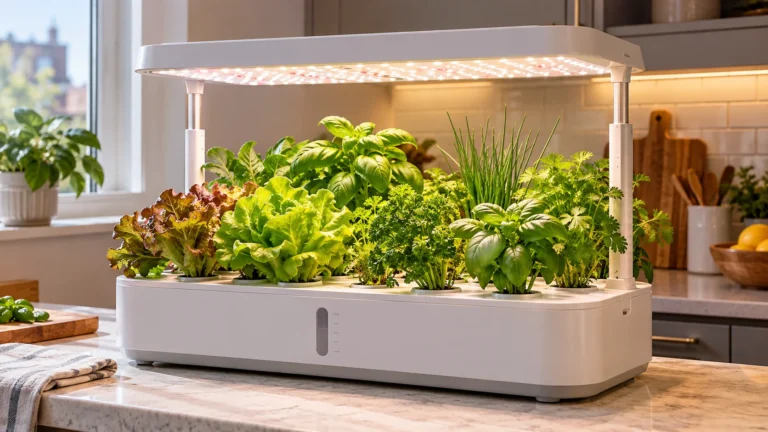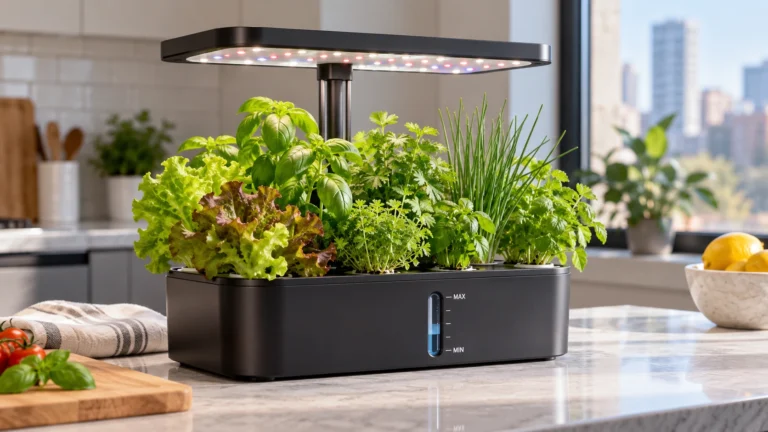
MetryGrow MG-15 Hydroponic Growing System Review
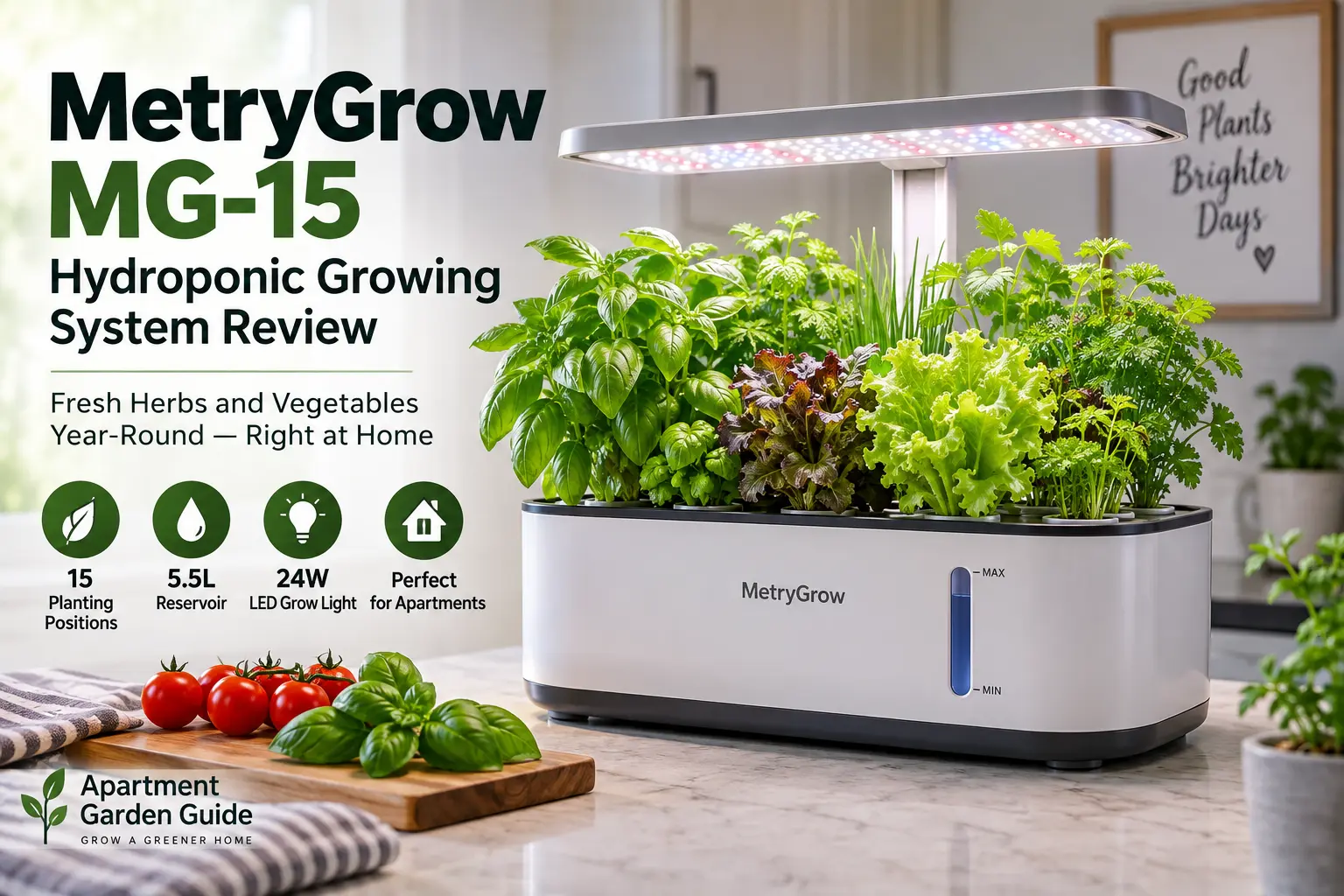
This MetryGrow MG-15 Hydroponic Growing System review examines whether its 15 planting positions, 5.5L reservoir, 24W grow light, and automatic controls make it a practical indoor garden for apartments and other small spaces.
The MG-15’s biggest attraction is capacity. Fifteen pod positions give you more planting flexibility than many countertop systems, while the built-in light and circulating reservoir remove the need for a sunny window or traditional soil.
But there is an important catch: 15 pod positions do not mean 15 mature plants of every type will comfortably fit beneath the light. Based on the system’s dimensions, published specifications, independent hands-on reports, and horticultural guidance, we think the MG-15 makes the most sense for herbs and leafy greens, with room for a smaller number of carefully selected compact fruiting plants.
Apartment Garden Guide has not personally tested the MetryGrow MG-15. This review is based on published product documentation, third-party hands-on reports, official competitor information, and university Extension horticultural guidance. Where specifications conflict or could not be independently verified, we’ve identified that rather than guessing.
Disclosure: As an Amazon Associate, I earn from qualifying purchases.
Check the latest MetryGrow MG-15 price and availability on Amazon
In This Review
MetryGrow MG-15 Hydroponic Growing System Specifications
Here are the important specifications we could establish from the available MG-15 instructions.
| Specification | MetryGrow MG-15 |
|---|---|
| Growing positions | 15 |
| Reservoir | 5.5L / about 1.45 gallons |
| Grow light | 24W full-spectrum LED |
| Light modes | Vegetable; Fruit & Flower |
| Automatic light cycle | 16 hours on / 8 hours off |
| Custom light schedule | Not documented |
| Pump | Circulating pump with 30-minute cycle |
| Water monitoring | Clear water-level window |
| Published light adjustment | 14 inches in available instructions; some third-party material states 17 inches |
| Wi-Fi/app controls | Not documented |
| Seeds included | No |
| Nutrients included | A/B nutrient set |
| Growing sponges | 15 |
| Plant baskets | 15 |
| Germination covers | 15 |
| Covers for unused pods | 8 |
| Support rods | 10 |
| Warranty | Duration not verified |
The available instructions specify a maximum adjustable light height of 14 inches. Some third-party descriptions have published 17 inches, so buyers may encounter conflicting figures online. We would use the 14-inch figure from the available instructions unless MetryGrow provides newer documentation establishing otherwise.
We also found package dimensions of approximately 17.17 × 7.6 × 6.81 inches, but those are identified as package dimensions, not clearly as the assembled countertop footprint. For that reason, we aren’t presenting them as the amount of counter space the assembled garden will occupy.
How We Reviewed the MG-15
Apartment Garden Guide did not receive or personally test an MG-15 for this review. Instead, we researched the available product instructions, published product information, third-party reports claiming hands-on use, current competitor documentation, and horticultural guidance relevant to indoor hydroponic growing.
That distinction matters. For example, marketing around countertop hydroponic systems sometimes promises dramatically faster growth than soil. We found no controlled MG-15-specific evidence that would justify treating a fixed “5X faster” claim as an established performance result, so we don’t use it as a reason to buy this system.
We also don’t assign the MG-15 an Apartment Garden Guide star rating. Without our own standardized hands-on testing methodology, a numerical score would imply a level of comparative testing we haven’t performed.
What Comes With the MetryGrow MG-15?
The documented MG-15 package includes the 15-pod base unit, adjustable light stand with 24W LED, 15 growing sponges, 15 plant baskets, 15 germination covers, eight covers for unused pod openings, A/B nutrients, 10 support rods, labels, and a power adapter.
Seeds are not included.
For some gardeners, that’s actually useful. You aren’t locked into a proprietary pre-seeded pod ecosystem, so you can select varieties based on the available growing space. That becomes especially important with a short countertop garden, where a compact basil, lettuce, pepper, or dwarf tomato cultivar may be a much more practical choice than a vigorous full-size variety.
How the MG-15 Grow Light and Controls Work
The MG-15 uses a 24W full-spectrum LED with two selectable growing modes. Vegetable Mode uses blue, red, and white light and is intended for leafy crops and herbs. Fruit & Flower Mode uses red and white light and is intended for flowering and fruiting plants. The built-in timer follows a 16-hour-on, 8-hour-off cycle.
The automation is convenient, but it isn’t particularly customizable. We found no documented Wi-Fi/app control or user-defined lighting schedule for the MG-15.
It’s also important not to read too much into the 24W number.
Wattage describes electrical power consumption; it does not by itself tell you how much useful light reaches every plant. University of Minnesota Extension’s indoor grow-light guidance recommends looking at another measure of light intensity alongside wattage and notes that hydroponic lettuce and herbs are commonly positioned about 6 to 12 inches from their grow light. The appropriate distance still depends on the actual fixture and plant response.
We found no published MG-15 PPFD map showing light intensity across all 15 pod positions. One publication claiming hands-on MG-15 use also reported somewhat stronger growth toward the center of the light than around the edges. That is useful observational evidence, but not the same as instrumented light testing.
For that reason, we’d raise the light as plants grow and pay attention to actual plant response rather than assuming every pod receives identical usable light.
How Much Growing Space Do 15 Pods Really Provide?
This is where the MG-15’s headline specification needs context.
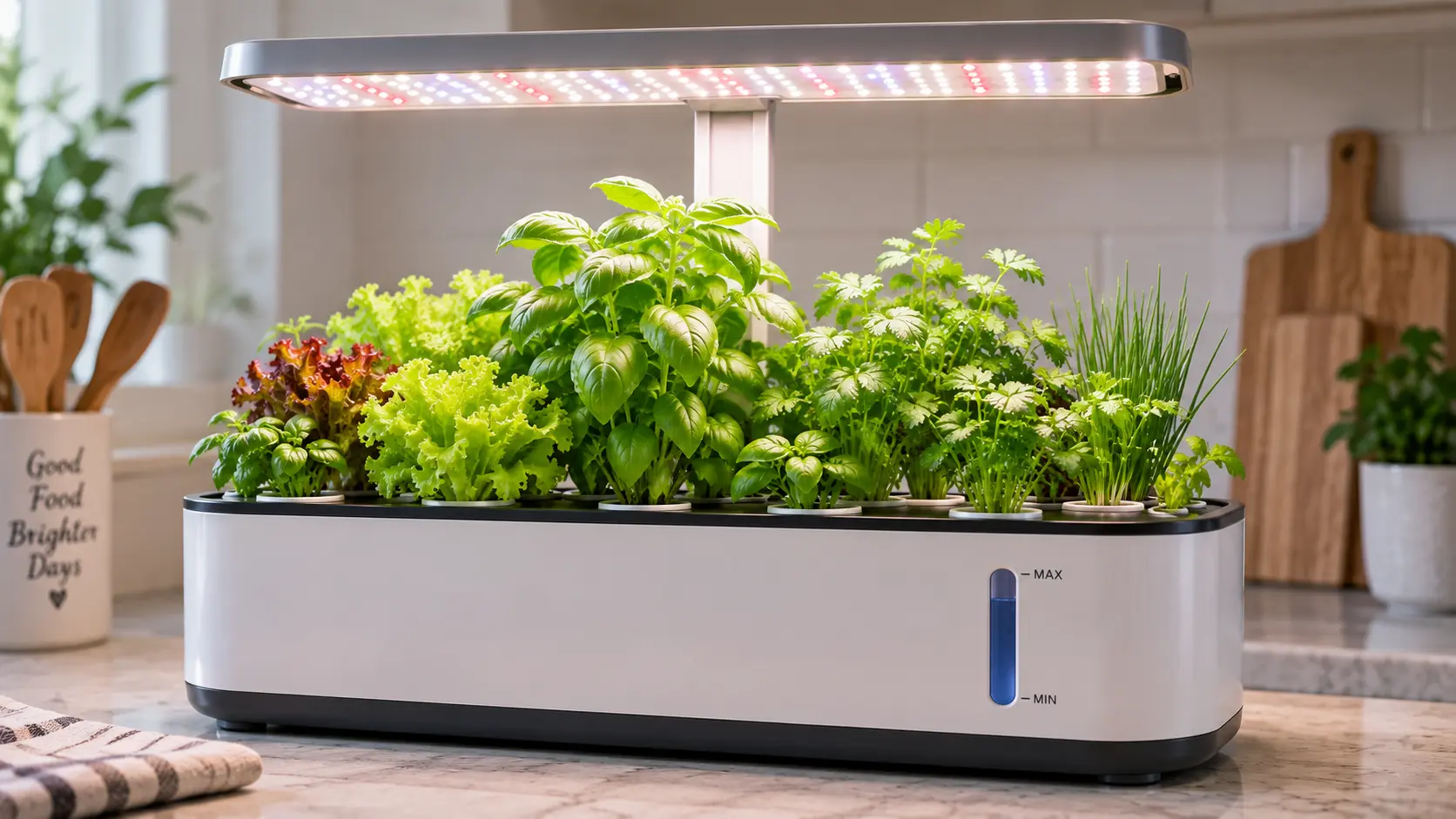
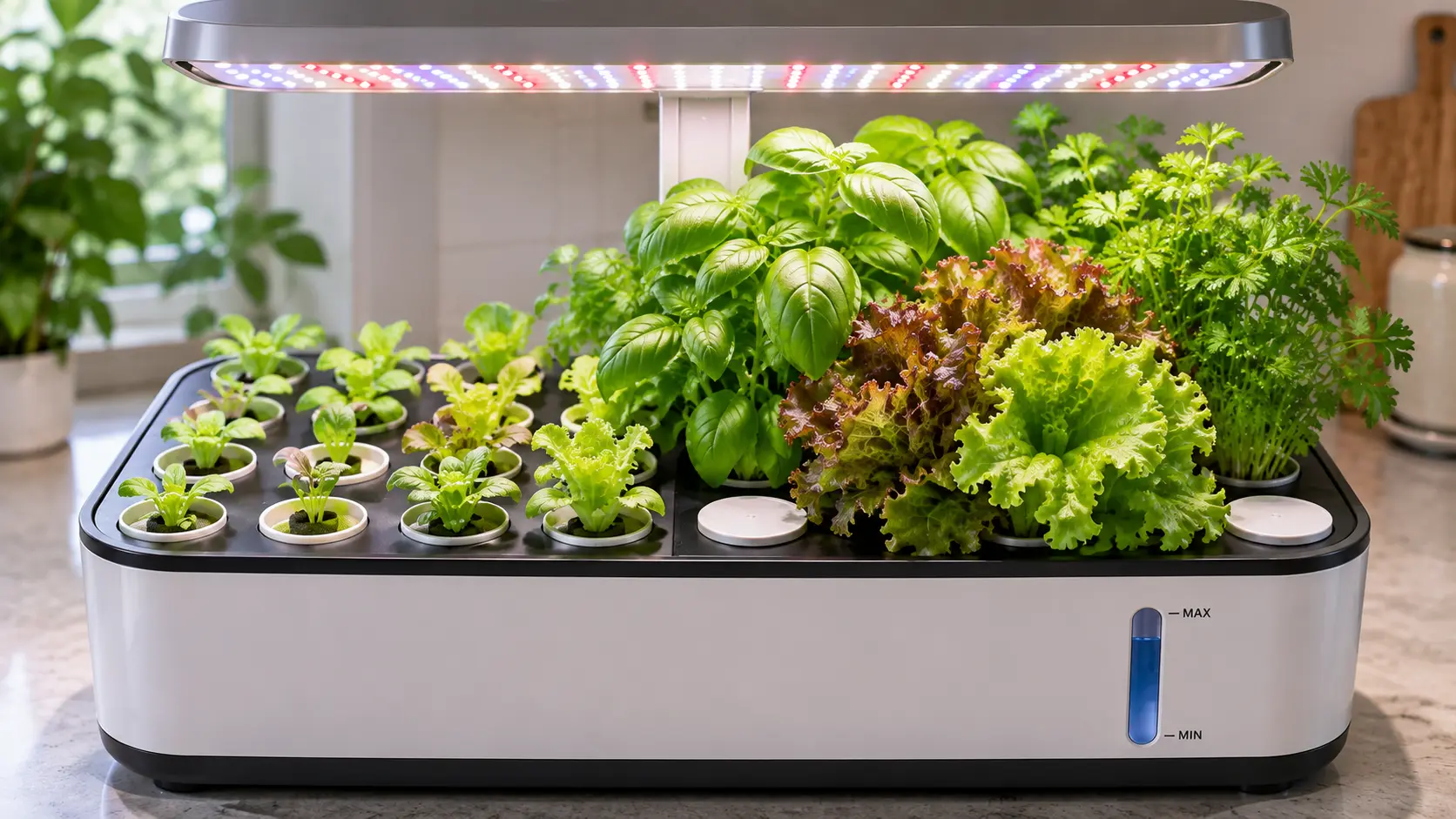
The grow deck provides 15 planting positions, but pod count and mature plant capacity are not the same thing.
Small seedlings occupy very little room. Mature basil, lettuce, peppers, and tomatoes can develop canopies many times wider than their original planting positions. Their roots also expand beneath the grow deck, while the leaves above compete for light and airflow.
Think of 15 pods as planting flexibility, not a promise of 15 mature plants.
If you’re growing small herbs and repeatedly harvesting them, you can make greater use of the available positions. If you’re growing a dwarf tomato or compact pepper, leaving neighboring positions unused can provide additional canopy and root-zone room.
This also matters for water consumption. Fifteen seedlings place far less demand on a 5.5L reservoir than a garden full of established plants.
What Can You Realistically Grow in the MG-15?
The MG-15 is marketed broadly enough to accommodate herbs, vegetables, flowers, and fruiting plants, but the fact that a seed can germinate hydroponically doesn’t automatically mean the mature plant is a good physical match for this particular garden.
Best Choices: Herbs and Leafy Greens
This is where we think the MG-15 makes its strongest case.
Good candidates include:
- leaf lettuce;
- basil;
- cilantro;
- parsley;
- chives; and
- other relatively compact leafy greens and herbs.
These plants take better advantage of the multiple planting positions because their size can be managed through regular harvesting.
Basil is particularly attractive. Published hands-on MG-15 coverage reports successfully growing basil and other herbs, while lettuce has also been grown in the system.
Even with herbs, don’t assume every mature plant needs to remain packed together. Regular harvesting and pruning can help prevent larger plants from shading smaller neighbors.
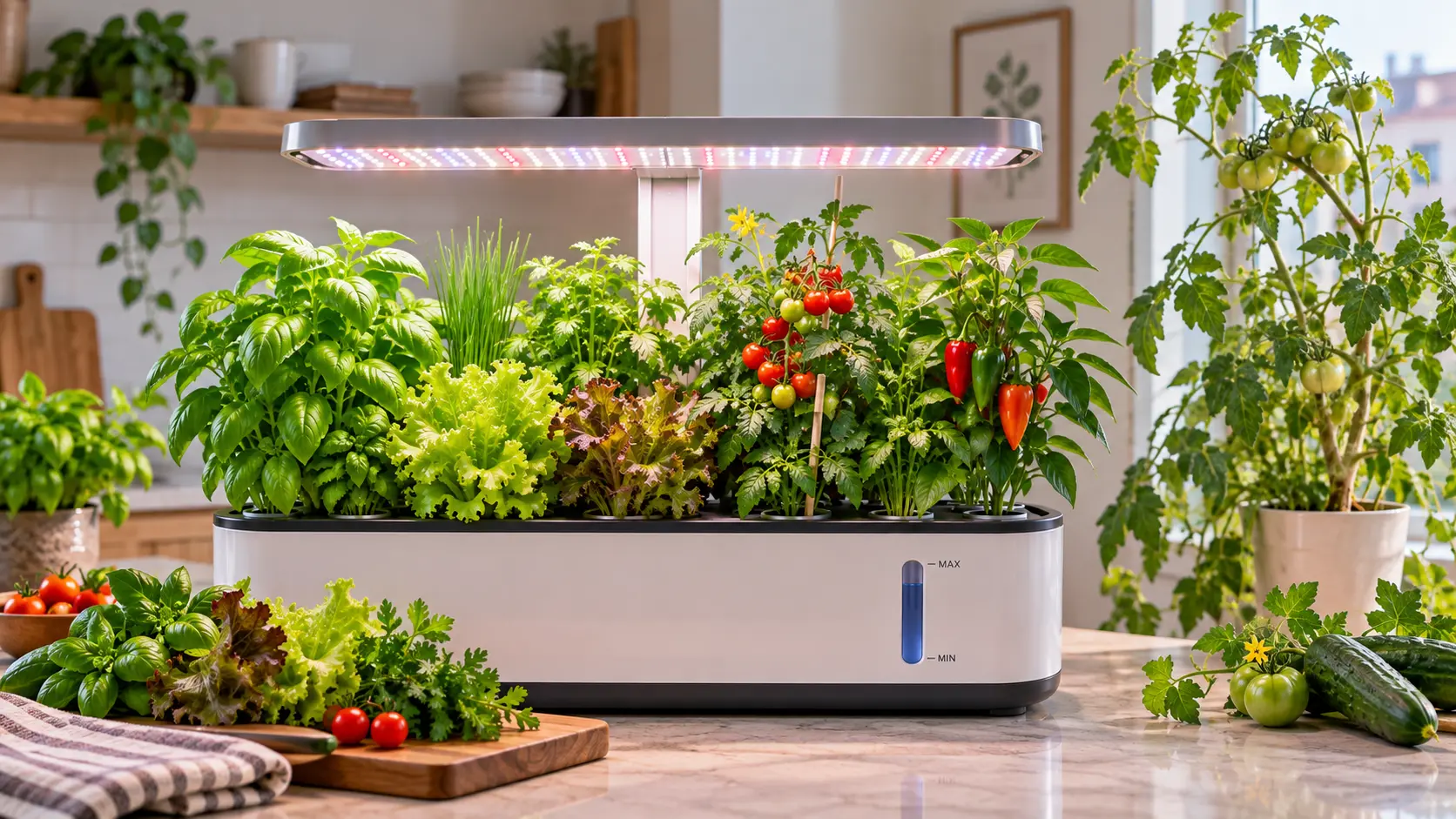
Possible With Care: Dwarf Tomatoes and Compact Peppers
Fruiting crops are possible, but plant selection becomes much more important.
Look for cultivars specifically bred to remain compact. A dwarf tomato or compact pepper should also get more space than a small lettuce or herb plant, so leaving neighboring pod positions unused may be worthwhile.
The included support rods can help stabilize plants, but they don’t solve the system’s fundamental height and canopy limitations. A support rod can hold a stem upright; it cannot create additional space beneath the LED.
Indoor fruiting crops can also require more active management, including pruning, greater water use, and assistance with pollination.
Poorer Fits: Tall and Sprawling Crops
Full-size indeterminate tomatoes, vigorous cucumbers, large pepper varieties, and sprawling or climbing crops are less natural matches.
That does not mean these crops can’t be grown hydroponically. They can. The limitation is the physical scale of this countertop system.
Even if the higher 17-inch figure appearing in some third-party material were applicable to a particular MG-15 version, this would still be a relatively short indoor garden. Plant selection matters more than the few inches separating the conflicting published measurements.
For buyers whose primary goal is taller fruiting crops, a system designed around greater vertical clearance may make more sense.
Reservoir, Pump, Nutrients, and Routine Maintenance
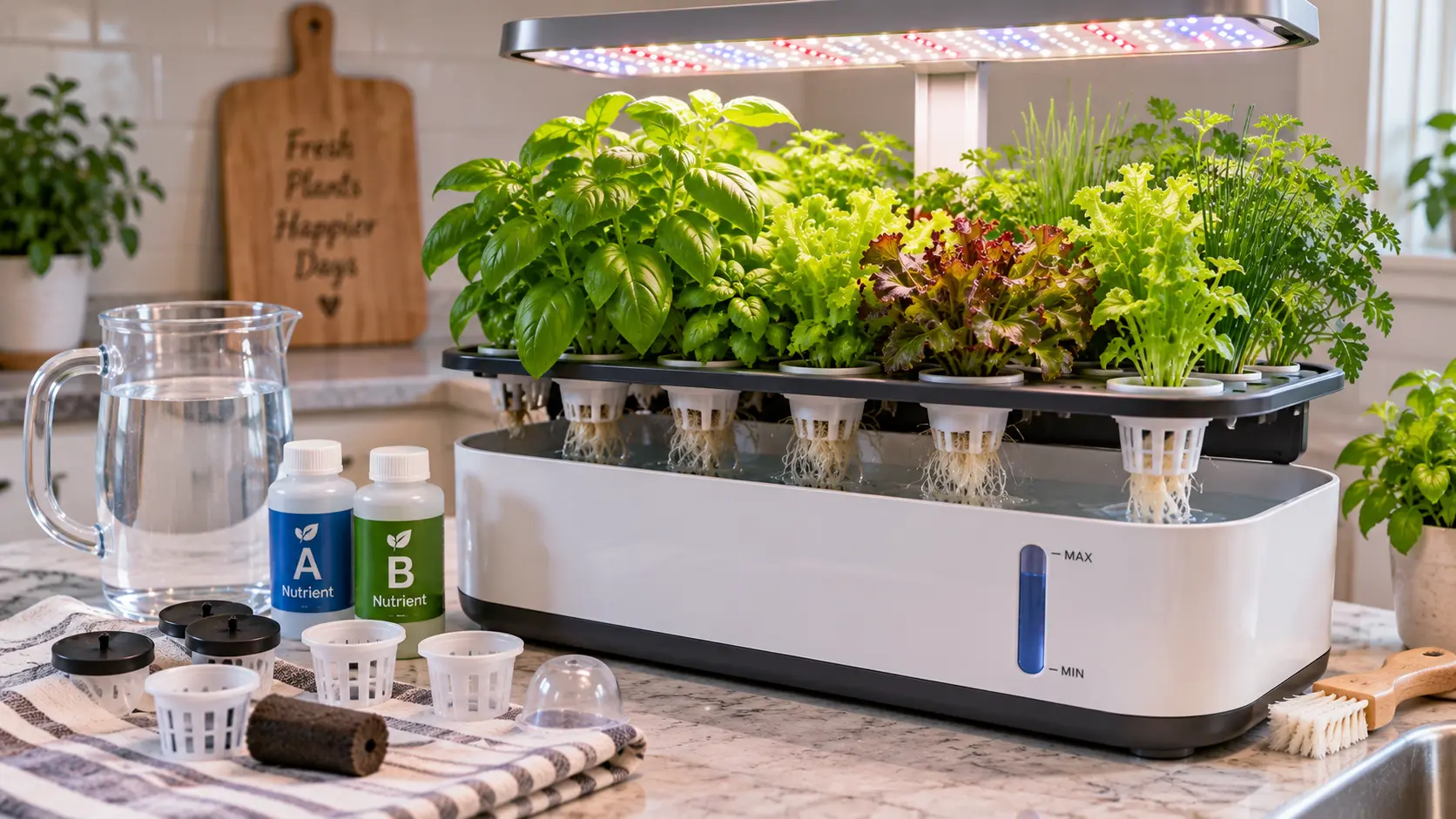
The MG-15 uses a 5.5L reservoir with a visible water-level window. Its pump operates on a 30-minute circulation cycle according to the available instructions.
A larger reservoir is useful, but we would not plan maintenance around the published suggestion that refilling may only be needed about once per month. Even the instructions qualify that interval according to plant consumption, and real water demand changes considerably as plants mature.
Our practical rule would be:
Watch the water-level window, not the calendar.
A lightly planted garden of young herbs may go much longer between top-offs than a system full of mature, actively transpiring plants.
The kit also includes A and B nutrients. Follow the current MG-15 mixing and replenishment instructions rather than treating the reservoir as a water-only tank.
If this is your first time growing without soil, our Indoor Hydroponic Garden: A Beginner’s Guide for Apartments explains reservoirs, nutrient solutions, grow lights, and the basic hydroponic growing process in more detail.
Nutrient management remains important even in an automated countertop garden. Penn State Extension’s guidance on hydroponic plant nutrition explains that plants grown hydroponically depend on nutrients supplied through the nutrient solution and that pH influences nutrient availability.
As plants mature, root growth also deserves attention. Large root systems can make removing plants and cleaning the reservoir more cumbersome, particularly when many pod positions are occupied simultaneously.
The automatic light and circulating pump reduce routine work, but this is not a plant-it-and-forget-it appliance. Expect to monitor water, replenish nutrients, harvest or prune plants, manage roots, and periodically clean the system.
What Independent Testing Says About the MetryGrow MG-15
Independent evidence for this particular model is thinner than we’d like, so this section requires some caution.
The Herb Prof reports setting up an MG-15 and growing basil, cilantro, and lettuce. Its account describes the pump as unobtrusive and says setup was relatively straightforward. It also reports somewhat stronger growth beneath the center of the light than toward its edges.
That provides some useful real-world context, but we would not treat a single publication’s experience as proof that every buyer will see the same germination speed, refill interval, noise level, or plant performance.
There are also reasons to read third-party MG-15 reviews carefully. Some published coverage contains inconsistent descriptions of features and setup, while much of the available information ultimately traces back to retailer or product-listing material.
For that reason, we give the greatest weight to independently verifiable specifications and use hands-on reports primarily to identify practical issues worth considering.
We also found insufficient direct owner-review evidence to justify a broad “What Customers Are Saying” section. Rather than manufacturing a customer consensus from limited or indirectly summarized feedback, we’ve left one out.
Is the MetryGrow MG-15 Good for Apartment Gardening?
The MG-15 has several characteristics that make sense for apartments.
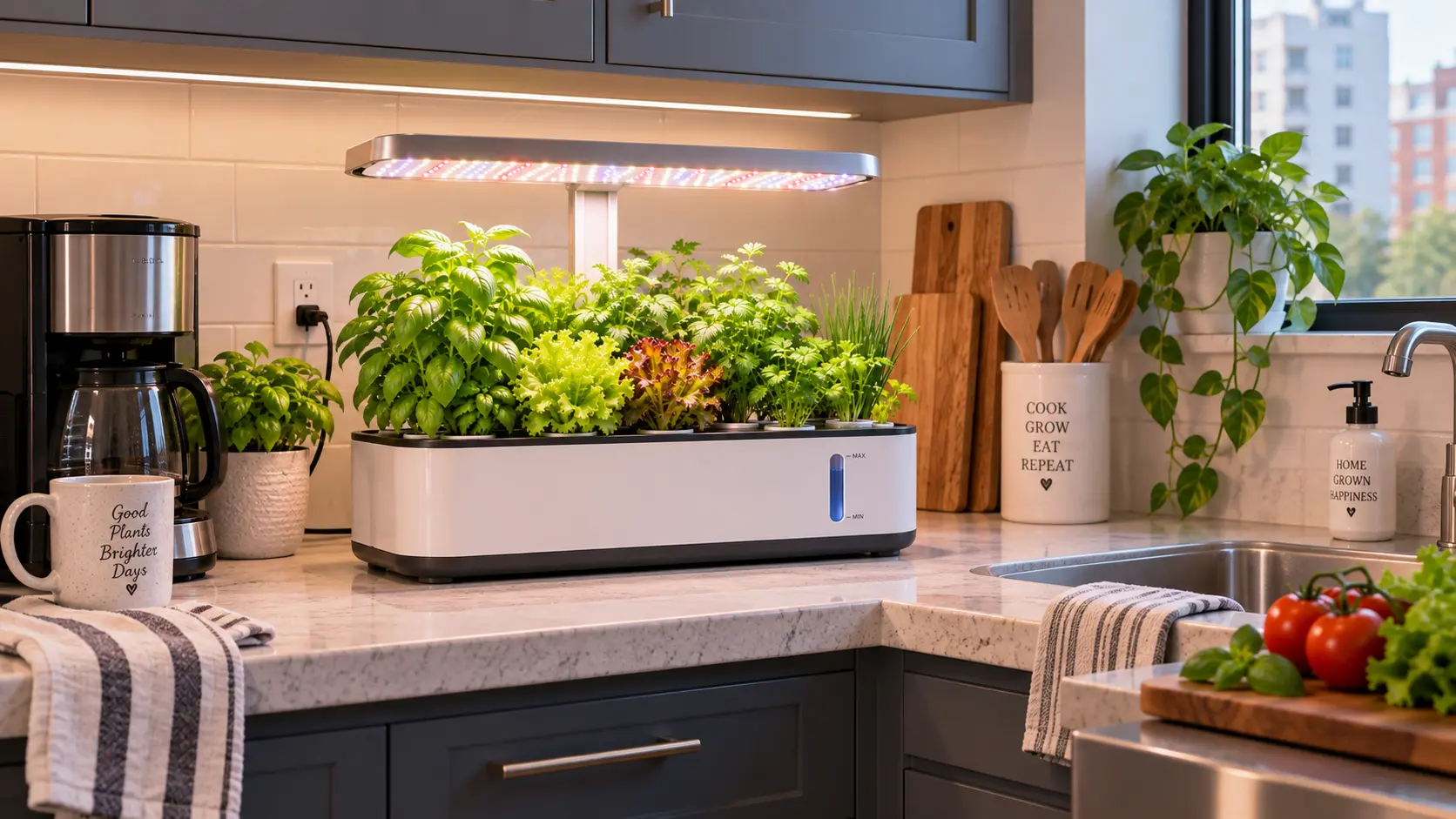
Because the grow light is integrated, the system doesn’t have to occupy your apartment’s sunniest window. That can be especially useful when natural light is limited or the best window is already being used by houseplants.
Its countertop format also avoids the space requirements of a floor-standing indoor garden.
But “countertop” doesn’t automatically mean it will fit every counter.
We could not verify a reliable assembled footprint separate from the published package dimensions, so measure the intended location against the current product information before ordering. Also allow room above the light, not just beneath the base.
A practical location should have:
- a nearby electrical outlet;
- adequate overhead clearance;
- enough working room to refill and clean the reservoir;
- a stable, water-resistant surface; and
- enough surrounding space for mature leaves.
I would also avoid positioning any hydroponic reservoir where an accidental spill could immediately reach sensitive electronics or water-damage-prone surfaces.
For a small apartment, the biggest advantage is therefore not merely that the MG-15 is “compact.” It’s that one appliance combines the reservoir, circulation system, grow deck, and artificial light into a single indoor growing area.
Who Is the MG-15 Best For?
The MG-15 makes the most sense for an apartment gardener who primarily wants fresh herbs and leafy greens, values having numerous planting positions, and doesn’t need app-connected controls.
It’s also a reasonable match for someone who wants to choose their own seeds instead of buying proprietary pre-seeded pods.
The automated light cycle and circulating pump remove a couple of recurring chores, but you’ll still need to monitor the reservoir, manage nutrients, harvest plants, and clean the system.
If you’re comfortable with that level of involvement, the MG-15 provides more growing flexibility than its simple controls might initially suggest.
Who Should Consider Another Hydroponic Garden?
Consider another system if your priorities are different.
A taller garden may be a better fit if your main goal is growing dwarf tomatoes, peppers, or other fruiting crops and you want additional room above the grow deck.
An app-connected system may also make more sense if you want customizable lighting schedules, remote controls, water notifications, or more detailed manufacturer support.
Warranty transparency is another consideration. We could not verify a specific MG-15 warranty duration from the available instructions; they direct owners to included documentation or MetryGrow support for warranty information.
MetryGrow MG-15 vs. Other Countertop Hydroponic Gardens
The MG-15’s strongest differentiator is not smart technology. It is the combination of 15 planting positions and a 5.5L reservoir.
Here’s how that compares with two relevant alternatives using current manufacturer specifications.
| Feature | MetryGrow MG-15 | LetPot Air | Ahopegarden 12-Pod Temp/Humidity |
|---|---|---|---|
| Planting positions | 15 | 10 | 12 |
| Reservoir | 5.5L | 4L | 5L |
| LED | 24W | 24W | 26W* |
| Published light height | 14" instructions; conflicting third-party figures | 14" | Manufacturer page contains conflicting current height figures |
| App control | Not documented | Yes | Not documented |
| Custom light scheduling | Not documented | Yes | Preset cycles |
| Water alert | Viewing window | App alert | Low-water alert |
| Main appeal | Capacity | Smart controls | Environmental/water monitoring |
*Ahopegarden’s current page lists 26W in one specification block but 19W elsewhere on the same page, so that specification should be confirmed against the exact current unit before purchase. The page also contains conflicting adjustable-height figures.
That inconsistency is precisely why we prefer current primary documentation but still flag contradictions when the manufacturer’s own page contains them.
MG-15 vs. LetPot Air
The LetPot Air’s official specifications list 10 pods, a 4L reservoir, 24W LED, and 14-inch maximum light-panel height. More importantly, LetPot adds app control that allows users to customize exact lighting times and receive water-refill alerts.
That creates a straightforward tradeoff.
The MetryGrow MG-15 emphasizes capacity, with five more planting positions and a larger reservoir.
The LetPot Air emphasizes control and automation, sacrificing pod capacity for app-based scheduling and monitoring.
If your priority is growing numerous herbs and greens, the MG-15’s additional pod positions may be more useful. If you care more about customizable automation, the LetPot Air has the clearer advantage in features.
MG-15 vs. Ahopegarden 12-Pod
Ahopegarden’s 12-pod Smart Garden with temperature and humidity monitoring provides provides 12 planting positions, a 5L tank, temperature and humidity monitoring, a low-water warning, adjustable LED lighting, and circulating water.
The MG-15 gives you three additional planting positions and another half-liter of published reservoir capacity.
The Ahopegarden, however, puts more emphasis on visible environmental monitoring and low-water notification.
The important question isn’t simply 15 versus 12. If you’re growing mostly compact herbs and greens, additional pod positions can be useful. If you’re growing larger plants, monitoring and usable plant spacing may matter more than three extra openings.
If you’re considering a smaller model from the same brand, our Ahopegarden Indoor Garden Hydroponics Growing System Review takes a closer look at the 10-pod system, including crop suitability, maintenance, growing-space limitations, and independent testing evidence.
Want More Growing Height? Consider the LetPot LPH-SE
The LPH-SE is a more feature-rich step-up alternative.
LetPot’s current LPH-SE specifications list 12 planting positions, a 5.5L reservoir, 24W full-spectrum LED, app and touch controls, customizable lighting schedules, and smart watering reminders.
There is currently an important documentation inconsistency around height. LetPot’s product-page introduction describes a 21-inch adjustable LED panel, while another feature on the same current page says the panel adjusts up to 30 inches. Because those figures conflict, we would verify the exact version being sold before choosing the LPH-SE specifically for plant height.
Even setting that discrepancy aside, the LPH-SE clearly offers substantially more smart-control functionality than the MG-15.
For our deeper analysis, read our LETPOT LPH-SE Review: Is It Good for Apartment Gardening?.
Is the MetryGrow MG-15 Hydroponic Growing System Worth the Price?
That depends on the current price, not a number captured on the day this review was written.
Hydroponic garden prices and promotions can change frequently, so we don’t think an evergreen review should tell you the MG-15 is a good value based on one temporary selling price.
Instead, compare what you’re getting.
The MG-15 provides:
- 15 planting positions;
- a 5.5L reservoir;
- a 24W LED;
- two lighting modes;
- automatic 16/8 lighting;
- circulating water;
- a visible water-level window;
- A/B nutrients; and
- most of the basic growing hardware needed to start once you supply seeds.
What it doesn’t appear to provide are the app controls, custom lighting schedules, and connected water notifications available from systems such as the LetPot Air.
If the MG-15 is meaningfully less expensive when you’re shopping and your priority is planting capacity rather than smart controls, its value proposition becomes stronger.
If its price is close to a better-documented app-connected alternative, the decision becomes less obvious.
Check the current MetryGrow MG-15 price and availability on Amazon
MetryGrow MG-15 Pros and Cons
Pros
- 15 planting positions provide considerable flexibility for herbs and greens.
- 5.5L reservoir is relatively substantial for a countertop system.
- 24W full-spectrum LED with Vegetable and Fruit & Flower modes.
- Automatic 16/8 light cycle eliminates manual daily switching for the standard schedule.
- Visible water-level window provides a simple way to monitor the reservoir.
- A/B nutrients and growing hardware are included, although seeds are not.
- No proprietary seed requirement, giving you more control over cultivar selection.
- Particularly well suited conceptually to herbs and leafy greens.
- Published hands-on coverage reports successful growing of crops including basil, cilantro, and lettuce.
Cons
- Available instructions specify 14 inches of light adjustment, while conflicting figures appear elsewhere online.
- Vertical room remains limited for vigorous fruiting crops.
- No documented Wi-Fi or app controls.
- No documented custom lighting schedule beyond the built-in cycle.
- Fifteen pod positions can become crowded as larger plants mature.
- We found no published MG-15 PPFD map establishing light distribution across all positions.
- Third-party hands-on evidence is relatively limited.
- Warranty duration could not be verified from the available instructions.
- Reservoir refill frequency can vary substantially with plant size and occupancy, so monthly refilling shouldn’t be treated as a guarantee.
Final Verdict
The MetryGrow MG-15 Hydroponic Growing System makes its strongest case as a relatively high-capacity countertop garden for apartment gardeners who want to grow herbs and leafy greens indoors.
Its 15 planting positions are genuinely useful—but only when interpreted correctly. They provide flexibility to start multiple plants and grow numerous compact crops; they don’t guarantee enough canopy and root space to mature 15 large vegetables simultaneously.
The 5.5L reservoir, 24W LED, automatic 16/8 light cycle, two growing modes, circulating pump, water-level window, and included growing supplies provide the basic functions we would expect from a beginner-oriented countertop hydroponic system.
The limitations are equally important. The light has relatively modest vertical adjustment according to the available instructions, there are no documented app controls or custom lighting schedules, warranty information isn’t particularly transparent, and independent hands-on evidence for this exact model remains limited.
For basil, lettuce, cilantro, parsley, chives, and similar compact crops, those limitations may matter much less than the ability to use numerous planting positions.
For someone primarily interested in taller fruiting plants or connected automation, systems with greater documented vertical flexibility or app controls deserve consideration.
The key is not to buy the MG-15 simply because 15 sounds better than 10 or 12. Buy based on the plants you actually intend to grow.
If the MG-15’s combination of 15 planting positions, a 5.5L reservoir, and straightforward controls matches what you want from a countertop garden, see the latest MetryGrow MG-15 price and availability on Amazon.
Frequently Asked Questions
What is the MetryGrow MG-15 Hydroponic Growing System?
The MetryGrow MG-15 is a countertop indoor hydroponic garden with 15 planting positions, a 5.5L water reservoir, 24W full-spectrum LED, two lighting modes, automatic 16/8 lighting, and a circulating pump. It grows plants without traditional soil by supporting roots with water and nutrient solution.
How many plants can the MG-15 grow?
The MG-15 has 15 pod positions, but the practical number of mature plants depends on what you’re growing. Small herbs and leafy greens can make better use of the available positions, while dwarf tomatoes, peppers, and other larger plants benefit from additional spacing.
Think of the 15 pods as planting capacity rather than a guarantee that 15 mature plants of every variety will comfortably fit.
What plants grow best in the MG-15?
We think herbs and leafy greens are the strongest matches. Basil, leaf lettuce, cilantro, parsley, chives, and other compact greens can take advantage of the multiple planting positions while remaining manageable through regular harvesting.
Compact or dwarf fruiting plants are possible, but they generally need more room.
How tall can plants grow in the MG-15?
The available MG-15 instructions specify an adjustable light stand of up to 14 inches. Some third-party material publishes a higher figure, which creates a specification discrepancy.
Either way, the MG-15 remains a relatively short countertop garden. Compact varieties are therefore a more natural fit than vigorous full-size tomatoes, cucumbers, or other tall crops.
Does the MG-15 include seeds?
No. The documented package includes growing sponges, baskets, germination covers, unused-pod covers, A/B nutrients, support rods, labels, and a power adapter, but seeds must be purchased separately.
Does the MG-15 have Wi-Fi or app control?
We found no documented Wi-Fi or app control for the MG-15. The system uses onboard controls and includes an automatic 16-hour-on, 8-hour-off lighting cycle.
Buyers who specifically want app-based lighting schedules and water alerts may prefer an alternative such as the LetPot Air.
How often does the MG-15 need more water?
There isn’t a reliable universal refill interval.
The available instructions say the 5.5L tank may need refilling approximately monthly depending on plant consumption, but water demand changes with crop type, plant size, temperature, and the number of mature plants in the system.
The more useful approach is simple: watch the water-level window rather than relying on a fixed calendar schedule.